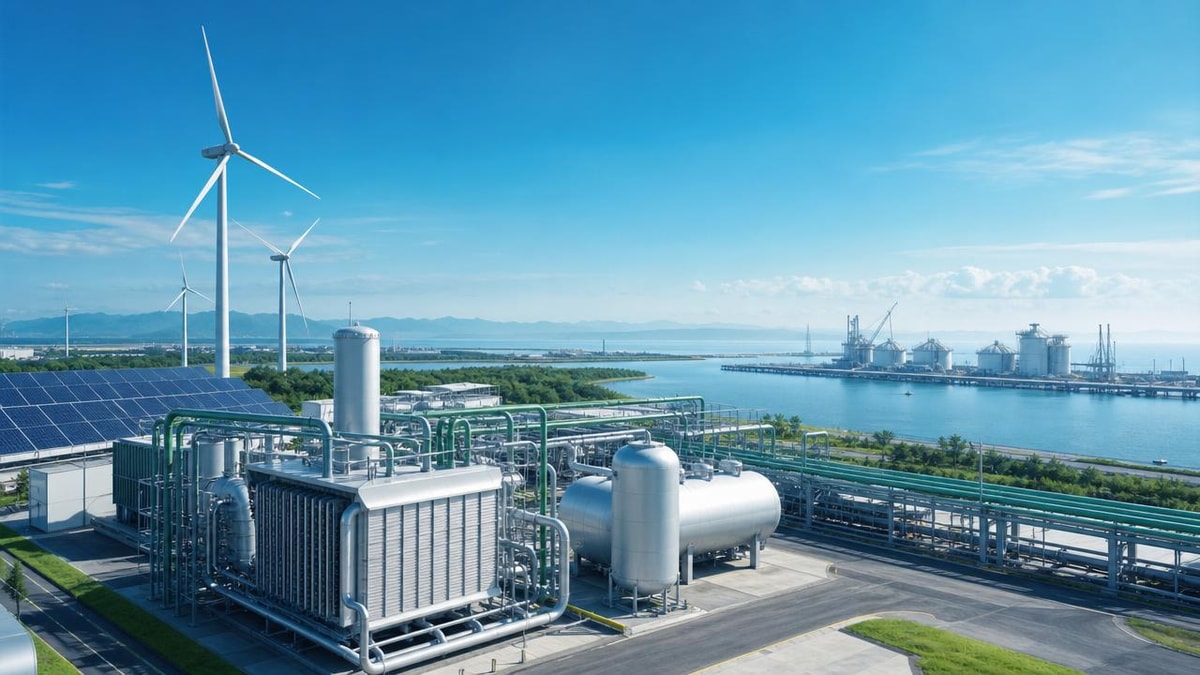
Green Hydrogen Production: What Decides Whether a Project Scales
Green hydrogen production is moving from policy vision to boardroom reality, but scale will belong to a small subset of projects. For enterprise decision-makers, the central issue is not whether green hydrogen matters, but whether a given project can move beyond pilot economics and become a durable industrial asset. In practice, scalable projects are decided by five interlocking factors: access to low-cost renewable power, bankable offtake, fit-for-purpose infrastructure, policy certainty, and disciplined execution on technology and capital structure.
That matters because the market is crowded with announcements, memorandums of understanding, and capacity targets that do not automatically translate into competitive supply. A project may have strong publicity and strategic relevance yet still fail on delivered hydrogen cost, weak grid access, water constraints, poor logistics, or uncertain customer demand. For companies evaluating sourcing, investment, partnerships, or long-term decarbonization pathways, the right lens is commercial scalability rather than theoretical production potential.
This article examines what actually determines whether green hydrogen production scales, where the biggest commercial bottlenecks remain, and how enterprise leaders can separate attractive concepts from bankable execution.
What is the real search intent behind “green hydrogen production” for business decision-makers?
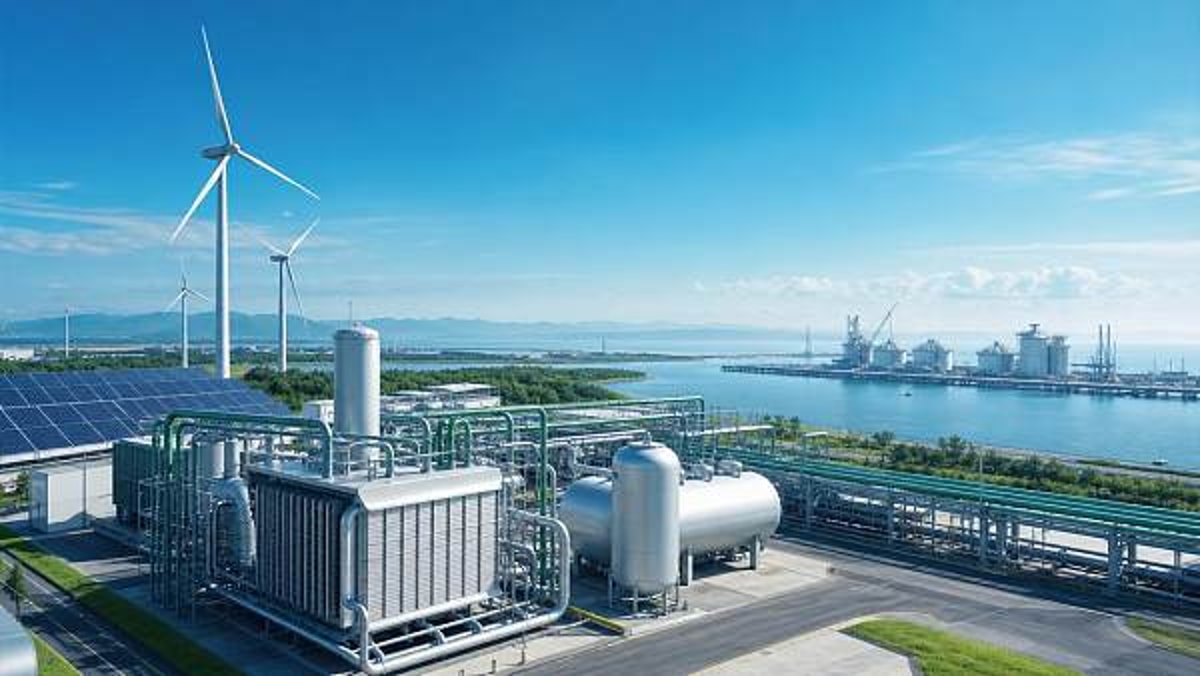
For this audience, the search intent is practical and strategic. They are not primarily looking for a basic definition of electrolysis or a high-level sustainability narrative. They want to know whether green hydrogen production can become cost-competitive, supply-secure, and operationally reliable enough to support procurement strategies, industrial fuel switching, project investment, or market entry decisions.
That means the most useful questions are commercial: Which projects are likely to scale first? What drives delivered cost? Where are the hidden execution risks? Which sectors will create durable demand? How dependent is project success on subsidies? And what indicators show that a developer is moving from announcement-stage ambition to real industrial deployment?
In other words, searchers using this keyword in a B2B context want a decision framework. They need help assessing viability, timing, and risk exposure rather than broad commentary on the energy transition.
Why only a fraction of green hydrogen projects will scale
The biggest misunderstanding in the market is to equate planned capacity with probable supply. Green hydrogen production has attracted significant capital interest because it sits at the intersection of decarbonization, energy security, and industrial policy. Yet the path from concept to scale is unusually demanding. Projects must solve power procurement, electrolyzer selection, water availability, land use, permitting, storage, transport, customer contracts, and financing at the same time.
That complexity creates a steep funnel. Many projects can secure early-stage publicity, feasibility funding, or strategic memorandums. Far fewer can lock in low-cost renewable energy over the long term. Fewer still can obtain transmission access, water rights, logistics solutions, and offtake agreements strong enough to satisfy lenders and equity partners.
The practical implication for buyers and investors is clear: supply concentration is likely. Instead of thousands of successful green hydrogen producers emerging evenly across regions, scale will likely cluster in locations with exceptional renewable resources, strong industrial demand, export infrastructure, and stable policy environments.
Low-cost renewable electricity is the first and most decisive variable
Electricity is the dominant input in green hydrogen production. As a result, project economics live or die on renewable power cost, utilization profile, and reliability. If power is expensive, intermittent without mitigation, or constrained by grid congestion, hydrogen output becomes too costly for broad industrial use.
Decision-makers should therefore treat access to competitive renewable electricity as more important than headline electrolyzer capacity. A project with modest initial capacity but excellent solar or wind resources, high operating hours, and favorable power purchase terms can scale more credibly than a larger project in a weaker energy market.
There is also a difference between nominal power access and commercially usable power. Some projects rely on assumptions about future transmission expansion, low curtailment, or oversized renewable buildouts that may not materialize on schedule. Others face difficult trade-offs between dedicated behind-the-meter generation and grid-connected supply. These details directly affect utilization rates and levelized hydrogen cost.
For enterprise buyers, one of the strongest early indicators of project quality is transparent power strategy. Serious developers can explain not only where electricity comes from, but at what expected cost, with what load profile, under which contractual structure, and with what fallback plan if grid or renewable buildout is delayed.
Offtake certainty matters as much as production capability
Many green hydrogen projects are evaluated as supply-side stories, but scalability depends equally on demand certainty. Lenders and investors want evidence that hydrogen produced will actually be purchased at prices that support project economics. Without bankable offtake, large-scale production remains difficult to finance.
This is especially important because green hydrogen still competes against lower-cost incumbent fuels in many applications. Unless the end use has strong decarbonization pressure, policy incentives, or technical necessity, buyers may hesitate to commit to long-duration contracts. That makes project bankability harder even when production technology is mature.
The strongest demand cases tend to come from sectors where direct electrification is difficult and emissions pressure is rising: ammonia, refining, methanol, steel, heavy transport fuels, and selected high-temperature industrial processes. Projects linked closely to these use cases usually have a more credible scaling pathway than merchant production models waiting for broad spot-market demand to emerge.
For procurement leaders, this means a project’s customer mix matters. Signed offtake with creditworthy industrial buyers is far more meaningful than broad statements about future export demand or “expected market interest.” A project that scales generally has identifiable customers, defined volumes, and realistic contract structures.
Infrastructure can erase the advantage of cheap production
Even when production cost looks attractive at the plant gate, delivered economics may not. Hydrogen is difficult and expensive to store, compress, transport, and distribute at scale. Infrastructure, therefore, is not a secondary issue. It is one of the core determinants of whether green hydrogen production becomes commercially usable in real supply chains.
Projects designed around local industrial consumption often have an advantage because they reduce transport complexity. If hydrogen can be consumed near the point of production, the business case avoids some of the largest logistics penalties. By contrast, export-oriented models may depend on conversion into ammonia or other carriers, adding cost, energy losses, and operational complexity.
Infrastructure readiness also includes pipelines, port assets, storage systems, water treatment, and grid interconnection. A project can have strong renewable resources but still stall if associated infrastructure is underdeveloped or subject to long permitting timelines. This is one reason why industrial clusters are emerging as preferred locations. They combine demand concentration with better chances of shared infrastructure and coordinated policy support.
For decision-makers evaluating suppliers or project partners, the key question is not “Can hydrogen be produced here?” but “Can it be delivered to the intended end use reliably and competitively at scale?” That distinction often separates investable projects from speculative ones.
Policy support helps start the market, but policy quality matters more than policy volume
Green hydrogen production remains heavily influenced by public policy because cost competitiveness is still developing. Tax credits, contracts for difference, carbon pricing, grant programs, clean fuel standards, and public procurement mechanisms can all improve economics. But for enterprise planning, the critical issue is not simply whether incentives exist. It is whether they are durable, clear, and administratively workable.
Uncertain or overly complex policy can undermine scale just as easily as insufficient support. If eligibility rules are ambiguous, local content requirements are difficult to meet, certification frameworks are unsettled, or timelines for disbursement are unclear, developers and buyers face execution risk that weakens investment confidence.
High-quality policy reduces uncertainty across the value chain. It helps developers finance projects, gives buyers confidence in long-term price trajectories, and supports standardization around emissions accounting and product certification. Poorly coordinated policy, by contrast, creates fragmentation between regions and delays contract formation.
For multinational companies, the policy landscape also affects sourcing strategy. It may be more rational to secure green hydrogen or derivatives from markets with stronger incentive frameworks and established export channels than to prioritize domestic production in higher-cost or less mature environments.
Technology readiness is important, but integration discipline is more important
Electrolysis technology is often presented as the defining issue in green hydrogen production, yet for most enterprise readers, the more relevant question is execution quality. Alkaline, PEM, and emerging electrolyzer technologies each have advantages and trade-offs, but project outcomes depend less on abstract technical superiority than on integration, supplier reliability, operating strategy, and maintenance performance.
A scalable project needs technology choices aligned with actual operating conditions. For example, a highly variable renewable profile may demand different system design and control strategies than a more stable power environment. Balance-of-plant engineering, water treatment, compression, storage, and safety systems all influence uptime and economics. These elements rarely receive as much attention as electrolyzer nameplate capacity, but they are crucial in real operations.
There is also a supply chain dimension. If key electrolyzer components face manufacturing bottlenecks, long lead times, or limited service support, scale may be delayed even when project financing is available. Decision-makers should therefore evaluate vendor bankability, warranty structure, commissioning experience, and after-sales capabilities, not just equipment efficiency claims.
In short, technology maturity matters, but bankable execution comes from systems integration and operational realism. The projects most likely to scale are usually the ones built on proven engineering pathways rather than overly aggressive performance assumptions.
Capital structure and timing will determine who survives the build-out phase
Green hydrogen production is capital intensive, and many projects are attempting to scale during a period of higher financing costs, uncertain commodity markets, and evolving regulation. This puts pressure on capital discipline. A project may appear attractive on strategic grounds yet struggle if it depends on unrealistic cost declines, weak sponsor backing, or aggressive construction schedules.
Enterprise leaders should pay attention to whether a project is phased sensibly. Staged development can reduce risk by aligning initial capacity with secured demand, infrastructure availability, and operational learning. Mega-scale announcements may attract attention, but modular expansion linked to proven milestones is often a stronger signal of execution credibility.
Financing quality also matters. Projects backed by experienced industrial sponsors, infrastructure investors, utilities, or major offtakers generally have a better chance of reaching final investment decision than stand-alone concepts dependent on future capital raises. Balance sheet strength, contracting strategy, and risk allocation across counterparties are all practical indicators of scale potential.
How enterprise decision-makers should evaluate a green hydrogen project
For procurement directors, strategy teams, and investment committees, the best approach is a structured filter rather than enthusiasm for sector growth alone. Start with delivered cost, not production cost. Hydrogen that appears economical at the source can become uncompetitive after storage, conversion, transport, and reconversion.
Next, assess demand credibility. Who is buying, under what contract, at what approximate price logic, and with what regulatory driver? Then evaluate infrastructure: grid, water, storage, transport, port access, and proximity to industrial consumption. After that, review policy dependency. Is the project viable only under one fragile subsidy regime, or is it positioned to remain relevant as incentives evolve?
Finally, examine execution capability. Does the developer have industrial delivery experience? Are technology partners established? Is expansion phased? Are timelines realistic? Can the project withstand delays in permitting, interconnection, or equipment delivery?
A concise board-level test is useful: if renewable power is competitive, demand is contracted, infrastructure is practical, policy is stable, and execution partners are credible, the project has a plausible path to scale. If two or more of those pillars are weak, scale becomes significantly less likely.
Where the strongest scaling opportunities are likely to emerge first
Not every market will scale green hydrogen production at the same speed. Early winners are likely to be regions that combine abundant low-cost renewables with concentrated industrial demand and supportive policy design. Industrial clusters, export hubs with conversion infrastructure, and markets where decarbonization regulations create clear buyer incentives are particularly well positioned.
Likewise, not every application will mature simultaneously. Green hydrogen will likely scale first where it solves a real industrial constraint or compliance need, not where it is simply an aspirational fuel alternative. That favors sectors such as fertilizer, refining transition pathways, green steel inputs, synthetic fuels, and selected chemicals value chains.
For enterprise leaders, this suggests a selective strategy. Rather than treating green hydrogen as a generic energy theme, it is more useful to map specific use cases, geographies, and counterparties where economics and policy are converging. Scale will not be universal at first, but it can be highly material in the right corridors.
Conclusion: scale is decided by commercial architecture, not ambition alone
Green hydrogen production has clear long-term strategic relevance, but scalable success will be earned through disciplined commercial design. The projects most likely to move beyond headlines are not necessarily the largest or the loudest. They are the ones that combine cheap clean power, bankable offtake, workable infrastructure, stable policy support, and credible execution under real market conditions.
For business decision-makers, that is the essential takeaway. Green hydrogen should be evaluated as an integrated industrial system, not a standalone technology promise. If the commercial architecture is strong, scale can follow. If it is weak, even well-funded projects may struggle to become reliable supply assets.
In the years ahead, the winners in green hydrogen production will be those that make complexity manageable and economics visible. For buyers, investors, and strategic partners, the smartest move is to focus less on announced capacity and more on the evidence that a project can deliver competitive molecules, to real customers, through durable infrastructure, at industrial scale.
Get weekly intelligence in your inbox.
No noise. No sponsored content. Pure intelligence.
 May 07, 2026Sustainable Building Materials That Cut Carbon Without Cutting DurabilitySustainable Building Materials That Cut Carbon Without Cutting Durability
 May 07, 2026Green Hydrogen Production: What Decides Whether a Project ScalesGreen Hydrogen Production: What Decides Whether a Project Scales
 May 07, 2026Wind Turbine Blades: Why Repairs Cost More Than PlannedWind Turbine Blades: Why Repairs Cost More Than Planned
 May 07, 2026Folding Solar Chargers: What Real Output Looks Like OutdoorsFolding Solar Chargers: What Real Output Looks Like Outdoors
 May 07, 2026Vehicle to Grid Revenue Looks Attractive, but What Are the Limits?Vehicle to Grid Revenue Looks Attractive, but What Are the Limits?
 May 07, 2026Wireless EV Charging Sounds Easy, So Why Is Adoption Slow?Wireless EV Charging Sounds Easy, So Why Is Adoption Slow?
 May 07, 2026Floating Solar Farms: The Hidden Tradeoffs Behind Water SavingsFloating Solar Farms: The Hidden Tradeoffs Behind Water Savings
 May 07, 2026Geothermal Heat Pumps: Why Installation Quotes Differ So WidelyGeothermal Heat Pumps: Why Installation Quotes Differ So Widely
 May 07, 2026Sodium Ion Batteries: Where They Make Sense Before 2030Sodium Ion Batteries: Where They Make Sense Before 2030
 May 07, 2026EV Battery Recycling Is Growing, but the Supply Chain Isn’t ReadyEV Battery Recycling Is Growing, but the Supply Chain Isn’t Ready
 May 07, 2026BMS Boards Selection Problems That Show Up After InstallationBMS Boards Selection Problems That Show Up After Installation
 May 07, 2026Deep Cycle Batteries: Why Runtime Estimates Often Miss the MarkDeep Cycle Batteries: Why Runtime Estimates Often Miss the Mark
 May 07, 2026Carbon Capture Technology Projects Often Stall at This StageCarbon Capture Technology Projects Often Stall at This Stage
 May 07, 2026What Makes Offshore Wind Technology So Expensive to Deploy?What Makes Offshore Wind Technology So Expensive to Deploy?
 May 07, 2026EV Charging Cables: Small Spec Differences, Big Fit ProblemsEV Charging Cables: Small Spec Differences, Big Fit Problems
 May 07, 2026Solid State Batteries: Progress Is Real, Timelines Are Not SimpleSolid State Batteries: Progress Is Real, Timelines Are Not Simple
 May 07, 2026Microgrid Controllers: What Changes Once Systems Scale UpMicrogrid Controllers: What Changes Once Systems Scale Up
 May 07, 2026Energy Efficient HVAC Claims That Deserve a Closer LookEnergy Efficient HVAC Claims That Deserve a Closer Look
 May 07, 2026Biomass Energy Equipment: Why Maintenance Costs Vary So MuchBiomass Energy Equipment: Why Maintenance Costs Vary So Much
 May 07, 2026Smart Meters Wholesale: Which Specs Matter Most in Bulk OrdersSmart Meters Wholesale: Which Specs Matter Most in Bulk Orders
 May 07, 2026Commercial Energy Storage Sizing Mistakes That Raise CostsCommercial Energy Storage Sizing Mistakes That Raise Costs
 May 07, 2026Residential Solar Kits: What Gets Overlooked Before BuyingResidential Solar Kits: What Gets Overlooked Before Buying
 May 07, 2026V2G Technology Is Moving Fast, but What Still Holds It Back?V2G Technology Is Moving Fast, but What Still Holds It Back?
 May 07, 2026Smart Street Lighting Upgrades: Where Savings Often SlipSmart Street Lighting Upgrades: Where Savings Often Slip
 May 07, 2026Portable Solar Panels That Work Better in Real Travel UsePortable Solar Panels That Work Better in Real Travel Use
 May 07, 2026How to Compare AGM Batteries Wholesale Beyond Unit PriceHow to Compare AGM Batteries Wholesale Beyond Unit Price
 May 07, 2026Do Solar Water Heaters Still Pay Off in Mild Climates?Do Solar Water Heaters Still Pay Off in Mild Climates?