Micro Machining Limits That Affect Part Reliability
In micro machining, the smallest process limit can become the biggest risk to part reliability. For quality and safety professionals, understanding how tolerances, tool wear, heat effects, and material behavior interact is essential to preventing hidden defects and performance failure. This article explores the critical micro machining constraints that directly influence consistency, durability, and compliance in high-precision components.
For quality control and safety teams, the core question is not whether micro machining can produce extremely small features. It is whether those features remain reliable under inspection, assembly stress, thermal cycling, vibration, fluid exposure, and long-term use. In many sectors, a part can pass dimensional inspection and still fail in service because process limits were misunderstood or treated as purely manufacturing concerns.
The most important judgment is this: part reliability in micro machining is usually constrained less by nominal machine capability and more by the interaction between scale, material behavior, tooling condition, heat generation, burr formation, and metrology uncertainty. If these limits are not built into process planning and supplier control, hidden defects become much more likely.
That is why quality and safety professionals should evaluate micro machining as a reliability system, not just a precision process. The right questions involve capability at feature scale, process stability over time, verification methods, critical failure modes, and whether the supplier can demonstrate repeatability under realistic production conditions rather than only ideal sample runs.
Why micro machining limits matter more for reliability than for appearance
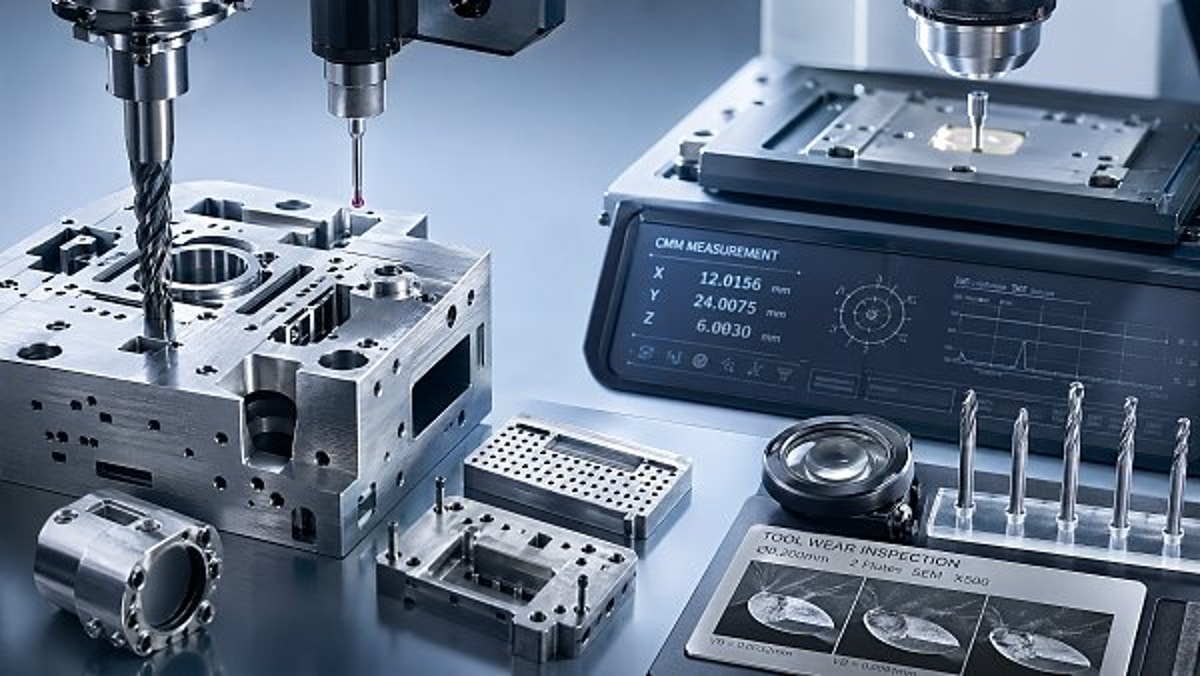
Micro machined parts are often used in applications where failure consequences are disproportionate to part size. A tiny channel in a medical component, a micro slot in a sensor housing, or a miniature conductive feature in smart electronics may look insignificant, yet it can govern flow rate, electrical performance, sealing, fatigue resistance, or alignment. At this scale, slight process variation can trigger major functional drift.
For quality personnel, this creates a familiar but amplified risk: visual acceptance and nominal dimensions do not always reflect reliability. A part may meet drawing requirements while carrying recast layers, micro cracks, smeared edges, tensile residual stress, or burr remnants that interfere with downstream assembly. These issues often escape simplified incoming inspection unless controls were defined earlier.
Safety managers face a related concern. Reliability failures at micro scale can be difficult to trace because they may emerge as intermittent field issues rather than immediate catastrophic breakage. A valve may stick only after repeated cycles. An electronic contact may degrade under heat. A miniature feature may initiate fracture after vibration exposure. The process limit, not the final geometry alone, often explains the failure.
This is why micro machining should be assessed through a reliability lens that includes manufacturing physics, inspection confidence, and end-use exposure. The smaller the feature, the less margin there is for hidden instability. In practice, process limits become product limits.
What are the most critical micro machining limits quality teams should watch?
The first major limit is the ratio between tool size and feature size. As features shrink, tool stiffness drops sharply. That increases the likelihood of deflection, runout sensitivity, edge chipping, and dimensional drift. A supplier may achieve the target geometry on a fresh tool, but hold consistency poorly over a production batch. For quality teams, this means capability claims must be tied to actual production duration and tool life data.
The second limit is minimum chip thickness. In conventional machining, cutting tends to be stable once the tool engages properly. In micro machining, however, the undeformed chip thickness may approach the cutting edge radius. When that happens, the process can shift from clean shearing toward ploughing and material smearing. The result is poor surface integrity, higher heat input, inconsistent edge quality, and a greater risk of subsurface damage.
The third limit is positional and thermal stability. At micron-level tolerances, small machine drift, spindle growth, fixture movement, and ambient temperature changes become meaningful. A process that appears capable in short trials may lose control over a longer shift or under different environmental conditions. Quality professionals should therefore ask whether capability studies were run under stable laboratory conditions or actual production settings.
A fourth limit is machine dynamics. Vibrations that are acceptable in larger-part machining can become destructive at micro scale. Chatter, harmonic response, and spindle imbalance can degrade feature geometry, create localized stress points, and increase burr formation. This is especially relevant for parts with thin walls, high aspect ratios, or delicate edge conditions that directly affect functional reliability.
How tolerances can be technically achievable but still unreliable in service
One of the most common misunderstandings in micro machining is to equate tolerance achievement with process maturity. A supplier may hold a dimensional tolerance on a coordinate measuring machine or optical system, yet the same part can perform inconsistently in service because the tolerance did not capture edge condition, wall integrity, concentricity under stress, or the true roughness profile inside small features.
For example, a micro hole can meet diameter tolerance while exhibiting taper, burrs at entry or exit, heat-affected material, or poor circularity that alters fluid behavior or fastener fit. Likewise, a thin rib may meet width requirements but carry residual stress that causes distortion later during cleaning, coating, sterilization, or assembly. These are reliability problems that dimensional acceptance alone cannot screen out.
This is why quality teams should separate drawing compliance from functional capability. If a micro feature influences load transfer, sealing, fatigue life, flow control, electrical continuity, or optical alignment, then process validation should include those performance-related characteristics. Tolerance is only one layer of control. Reliability often depends on geometric stability, surface condition, and material response after machining.
A practical approach is to identify which dimensions are merely fit-related and which are performance-critical. The latter deserve tighter process windows, more frequent monitoring, and validation under use conditions. This helps avoid a false sense of confidence created by nominally good inspection data.
Tool wear: the hidden reliability threat behind many micro machining defects
Tool wear affects all machining, but in micro machining it becomes a primary reliability driver because the cutting edge itself is so small relative to the feature being produced. A minor edge radius change, small chip-out, or coating degradation can shift the cut from sharp shearing to rubbing and smearing. That transition may happen before obvious dimensional failure appears.
For quality control personnel, this means waiting for out-of-tolerance results is often too late. By the time dimensional drift is visible, surface integrity may already be compromised across multiple parts. Wear-driven defects can include burr increase, roughness variation, loss of edge sharpness, thermal damage, inconsistent floor finish in pockets, and microscopic tearing at corners or hole exits.
Safety managers should also note that wear-related changes tend to produce variability, which is more dangerous than a stable but imperfect process. Variable parts are harder to detect, harder to trace, and more likely to create sporadic field failures. This is especially problematic in regulated or high-liability sectors where intermittent failures raise both operational and compliance risk.
The most effective mitigation is a documented tool life strategy linked to critical features, not just general shop practice. Suppliers should be able to show tool replacement triggers, wear monitoring methods, first-piece and last-piece comparison data, and evidence that process capability remains acceptable across the full planned batch size. If they cannot, reliability risk rises significantly.
Heat, burrs, and surface integrity: where small defects create large consequences
At micro scale, heat does not need to be extreme to become harmful. Because feature volumes are small and thermal mass is limited, local temperature rise can alter surface layers, induce residual stress, and accelerate tool degradation. Even when no visible burn marks exist, heat can contribute to recast material, metallurgical change, or edge softening that affects fatigue and wear resistance.
Burr formation is another major concern. In larger parts, small burrs may be removable without much consequence. In micro machined components, burrs can obstruct channels, contaminate assemblies, interfere with contact surfaces, prevent sealing, or break off later in service. Deburring itself introduces risk, because aggressive secondary operations may deform tiny features or remove too much material.
Surface integrity is often the bridge between manufacturing variation and field failure. A part with acceptable dimensions but poor surface integrity may crack sooner, wear faster, leak unexpectedly, or show unstable electrical behavior. For reliability-focused teams, this means surface roughness values alone are not enough. The more important question is whether the machining process preserved the intended material condition at and below the surface.
High-value control methods include cross-sectional analysis for selected parts, burr classification standards, edge-condition inspection, and process-specific limits on heat input. These are more informative than relying only on dimensional reports, especially when micro features are functionally critical.
Material behavior at micro scale is not always predictable from standard machining experience
A key reason micro machining limits are frequently underestimated is that materials do not always behave the same way at very small feature scales. Grain size, phase distribution, hardness variation, ductility, and anisotropy can influence the cut more strongly when the feature dimensions approach the scale of the material structure itself. This can make results less predictable than larger-scale machining data would suggest.
Ductile materials may smear rather than cut cleanly under certain edge conditions. Hard or brittle materials may micro-chip or crack at corners. Composites and layered materials may delaminate or produce inconsistent edge quality. Even within the same alloy family, different heat treatments or lot variations can change tool wear rate and burr behavior enough to affect reliability outcomes.
For quality teams, this reinforces the need for material-specific validation. A supplier that performs well on one stainless steel grade or one polymer formulation may not be equally capable on a slightly different variant. Process windows in micro machining are often narrow, so assumptions based on “similar materials” can create hidden failure risk.
The best practice is to request evidence tied to the exact material, thickness, feature type, and post-processing route used in the intended application. When that is not possible, pilot builds should include destructive and functional evaluation, not only dimensional checks. This reduces surprises later in scale-up.
Metrology limits: if you cannot measure the risk, you cannot control reliability
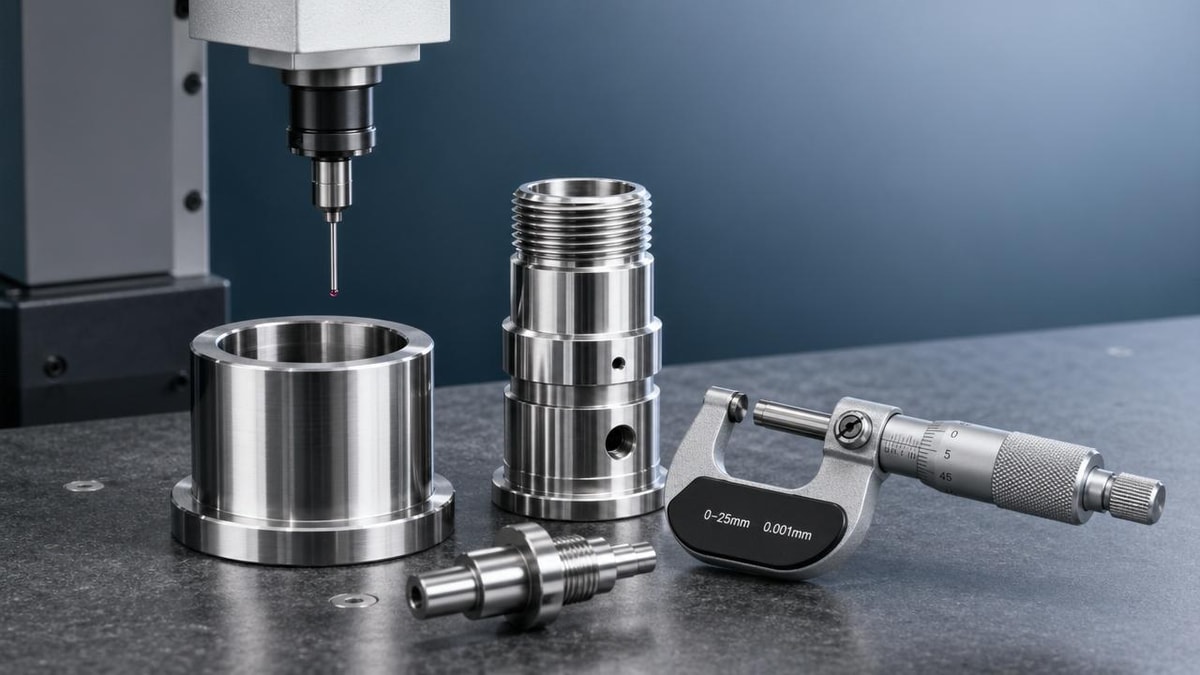
In micro machining, inspection is often treated as the final safeguard. Yet metrology has its own limits, and these limits can hide real reliability issues. Very small features may be difficult to access, difficult to illuminate, or sensitive to measurement method. Contact probes can distort delicate parts. Optical systems can misread reflective or transparent surfaces. Internal features may be inferred rather than directly verified.
This creates a serious challenge for quality professionals. A measurement report may appear precise while actually carrying significant uncertainty relative to the tolerance band. If uncertainty is not understood, borderline results may be accepted too easily, and process trends may be missed. In effect, the inspection system can become less capable than the process risk requires.
Reliability-focused inspection planning should therefore distinguish between dimensional verification and defect detection. It should also define which characteristics need 100% inspection, which need sampling, and which require periodic destructive confirmation. For some micro features, process validation and machine monitoring provide more useful control than attempting to inspect every detail directly.
Ask suppliers how they validate measurement systems for micro features, how they handle gauge repeatability and reproducibility, and how they inspect internal or high-aspect-ratio geometries. Strong answers indicate a mature reliability culture. Weak answers usually point to hidden process risk.
How to evaluate supplier capability for reliable micro machining
For procurement, quality, and safety teams, supplier evaluation should move beyond “Can you make this part?” to “Can you make this part reliably, repeatedly, and verifiably?” The difference matters. A technically impressive sample does not guarantee production control, especially when tools, materials, and environmental conditions begin to vary over time.
Start by reviewing whether the supplier understands the functional criticality of each micro feature. A reliable partner will ask how the part is used, which characteristics are safety-related, what downstream processes may influence distortion, and which failure modes are unacceptable. If the conversation remains limited to print tolerances and pricing, the reliability discussion is not mature enough.
Next, examine process evidence. Useful indicators include capability studies on critical dimensions, tool life management records, burr control methods, thermal management practices, machine calibration routines, and examples of how they responded to prior nonconformances. A supplier with strong micro machining capability should be able to explain process windows, not just machine specifications.
Finally, look for cross-functional discipline. Reliable micro machining usually requires coordination among engineering, production, inspection, and quality assurance. If those functions appear siloed, hidden defects are more likely to pass through. For high-consequence parts, pilot lots with reliability-oriented validation are often worth the added time and cost.
A practical checklist for quality and safety professionals
When reviewing a micro machined part or supplier, focus first on feature criticality. Identify which micro features directly affect safety, sealing, fatigue life, flow, electrical behavior, or assembly precision. Those features should receive the highest scrutiny in process validation and incoming inspection planning.
Then verify whether process limits are known and documented. Ask about tool wear criteria, thermal drift control, burr management, machine environment, fixturing stability, and capability over full batch duration. If controls exist only informally, reliability risk remains high even when early samples look acceptable.
Next, test inspection confidence. Confirm that measurement uncertainty is appropriate for the tolerance range, that internal and delicate features are truly verifiable, and that edge condition or surface integrity risks are not being ignored simply because they are harder to measure. If necessary, require supplementary methods such as microscopy, sectioning, or functional testing.
Finally, connect manufacturing data to field reliability. Review complaints, escape history, wear trends, and post-processing effects. In micro machining, the strongest quality decisions come from linking shop-floor evidence to end-use behavior rather than treating inspection and reliability as separate topics.
Conclusion: the real limit in micro machining is uncontrolled variability
The most important takeaway is that micro machining limits affect reliability long before a part obviously goes out of tolerance. Tool wear, thermal effects, burr formation, material response, machine dynamics, and metrology uncertainty all narrow the margin between acceptable geometry and functional failure. For quality and safety professionals, the real threat is uncontrolled variability hidden inside nominal compliance.
That is why effective oversight of micro machining requires more than reviewing dimensions on a report. It requires understanding which process constraints can create latent defects, asking whether the supplier can control those constraints over time, and validating the features that actually matter in service. When this discipline is applied early, teams reduce field risk, improve consistency, and make better sourcing and release decisions.
In short, reliable micro machining is not defined by how small a feature can be made once. It is defined by how confidently that feature can be made, measured, and trusted every time the part enters real-world use.
Get weekly intelligence in your inbox.
No noise. No sponsored content. Pure intelligence.
 May 01, 2026Beijing’s New E-Bike Rules Trigger Dual-Certification Demand for China’s Swappable Battery CabinetsBeijing’s New E-Bike Rules Trigger Dual-Certification Demand for China’s Swappable Battery Cabinets
 May 01, 2026GNA’s GEO Service Assessment Elevates AI Search as Digital Procurement Metric for Chinese ExportersGNA’s GEO Service Assessment Elevates AI Search as Digital Procurement Metric for Chinese Exporters
 May 01, 20262026 China Cycle Expo: Chinese EPS Systems Achieve UL 2849:2026 Full Certification2026 China Cycle Expo: Chinese EPS Systems Achieve UL 2849:2026 Full Certification
 May 01, 2026GB 42236-2026 Enforces EV Charger Efficiency & Overload Protection from May 2026GB 42236-2026 Enforces EV Charger Efficiency & Overload Protection from May 2026
 May 01, 2026GB/T 43790-2026 Drone EMC Standard Effective May 2026GB/T 43790-2026 Drone EMC Standard Effective May 2026
 May 01, 20262026 Foshan Tanzhou Auto Industry Expo Opens2026 Foshan Tanzhou Auto Industry Expo Opens
 May 01, 2026China’s New Hazardous Chemicals Safety Law Takes Effect May 2026China’s New Hazardous Chemicals Safety Law Takes Effect May 2026
 May 01, 2026New Maritime and Fisheries Laws Take Effect May 1, 2026New Maritime and Fisheries Laws Take Effect May 1, 2026
 May 01, 2026Supply Chain Automation Works Best Where Delays RepeatSupply Chain Automation Works Best Where Delays Repeat
 May 01, 2026High Strength Steel Forgings: What Should Be Tested First?High Strength Steel Forgings: What Should Be Tested First?
 May 01, 2026Automotive Steel Forging: Cost Pressure vs Part ReliabilityAutomotive Steel Forging: Cost Pressure vs Part Reliability
 May 01, 2026Why High Durability Steel Forgings Fail Earlier Than ExpectedWhy High Durability Steel Forgings Fail Earlier Than Expected
 May 01, 2026Construction Aluminum Extrusions: Which Finish Lasts Longer?Construction Aluminum Extrusions: Which Finish Lasts Longer?
 May 01, 2026Lightweight Aluminum Extrusions: Where Savings Really HappenLightweight Aluminum Extrusions: Where Savings Really Happen
 May 01, 2026Aerospace Aluminum Extrusions Need More Than Low WeightAerospace Aluminum Extrusions Need More Than Low Weight
 May 01, 2026Precision Lathe Turning Problems That Show Up After AssemblyPrecision Lathe Turning Problems That Show Up After Assembly
 May 01, 2026High Precision Lathe Turning: Tolerance Claims to VerifyHigh Precision Lathe Turning: Tolerance Claims to Verify
 May 01, 2026When CNC Lathe Turning Is Better Than General MachiningWhen CNC Lathe Turning Is Better Than General Machining
 May 01, 2026Medical Device Prototyping Needs More Than SpeedMedical Device Prototyping Needs More Than Speed
 May 01, 20263D Printing Prototyping: Fast Turnaround or Better Finish?3D Printing Prototyping: Fast Turnaround or Better Finish?
 May 01, 2026Low Cost Rapid Prototyping: Where Quality Gets LostLow Cost Rapid Prototyping: Where Quality Gets Lost
 May 01, 2026Quick EV Charger Installation Still Needs Site ChecksQuick EV Charger Installation Still Needs Site Checks
 May 01, 2026Public Parking EV Chargers: What Slows Installation DownPublic Parking EV Chargers: What Slows Installation Down
 May 01, 2026Choosing a Lithium Ion Battery Manufacturer in ChinaChoosing a Lithium Ion Battery Manufacturer in China
 May 01, 2026How to Vet a Lithium Ion Battery OEM SupplierHow to Vet a Lithium Ion Battery OEM Supplier
 May 01, 2026EV Lithium Ion Batteries: Range Is Not the Only MetricEV Lithium Ion Batteries: Range Is Not the Only Metric
 May 01, 2026Lithium Ion ESS Batteries: Safety Details Worth CheckingLithium Ion ESS Batteries: Safety Details Worth Checking