What Slows Down OEM Consumer Electronics Projects Most?
OEM consumer electronics projects are rarely delayed by one issue alone. More often, hidden bottlenecks in OEM machined parts sourcing, supplier coordination, quality validation, and payment workflows create costly setbacks. For procurement teams, engineers, and decision-makers, understanding what slows execution most is the first step toward faster launches, lower risk, and more resilient cross-border manufacturing outcomes.
In practice, delays usually emerge at the intersection of design, sourcing, supplier communication, compliance checks, and commercial approvals. A housing that looks simple on a CAD file may require 2 to 3 tooling revisions. A component quoted in 5 days may actually need 3 weeks once surface treatment, tolerance verification, and export packing are included. By the time these issues become visible, launch windows have already narrowed.
For smart electronics brands, OEM buyers, project managers, and technical evaluators, the goal is not only to identify late-stage problems. It is to build a workflow that exposes friction earlier, aligns stakeholders faster, and protects production schedules from avoidable surprises. The most common slowdown factors are predictable, which means they can also be managed with the right structure.
Where OEM Consumer Electronics Timelines Typically Break Down
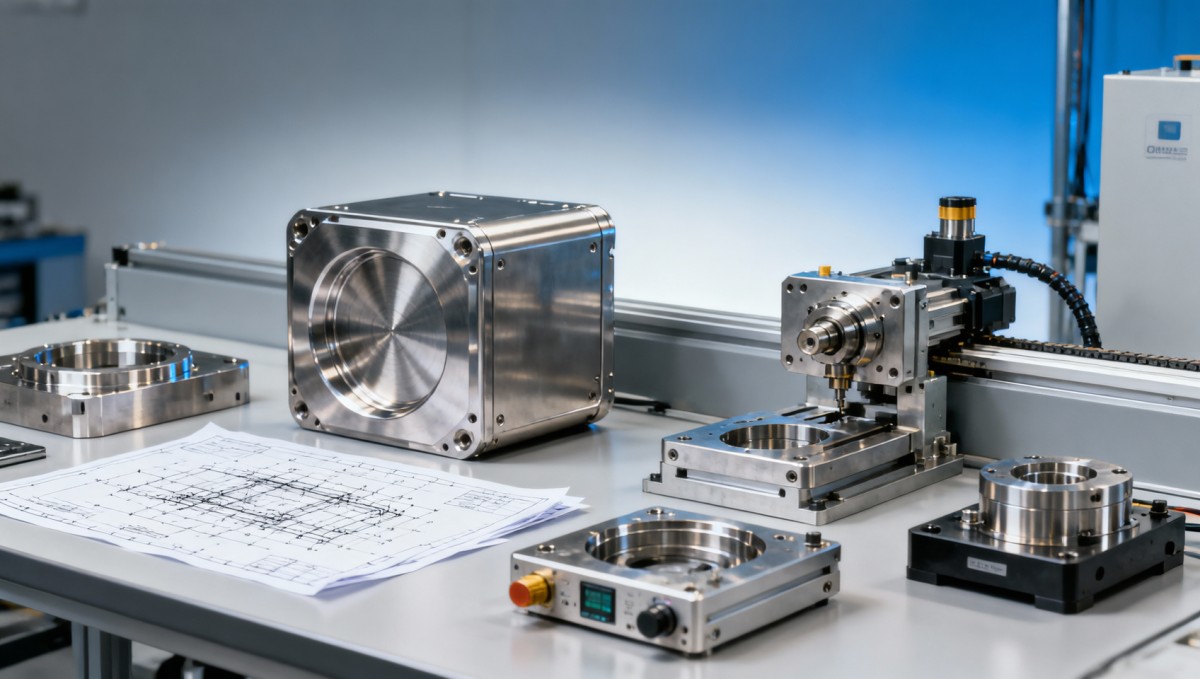
Most OEM consumer electronics projects do not fail because of one major event. They slow down because several small operational gaps stack up across the first 30 to 90 days. These gaps often begin before production starts, especially during supplier qualification, mechanical part review, and cross-functional approval cycles.
A typical project may involve 5 to 12 core stakeholders: industrial design, mechanical engineering, electronics engineering, sourcing, quality, finance, logistics, and the contract manufacturer. If even 1 approval loop is unclear, prototype release can slip by 7 to 14 days. If 2 or 3 loops overlap, the downstream effect can delay pilot production by several weeks.
Consumer electronics are especially vulnerable because product lifecycles are short. Many launches work backward from seasonal sales windows, channel commitments, or distributor campaigns. Missing a deadline by 4 weeks can reduce inventory turnover, compress margins, and weaken the commercial value of the entire SKU.
The Four Most Frequent Delay Zones
In cross-border OEM manufacturing, the most frequent delay zones are usually mechanical parts sourcing, engineering change control, quality validation, and payment or commercial confirmation. These are not isolated functions. They are linked, and a slowdown in one area usually forces a pause in another.
- Mechanical parts sourcing: CNC, die-cast, stamped, or molded parts may require tighter tolerances than initially specified, often within ±0.05 mm to ±0.20 mm depending on the enclosure or fit requirement.
- Engineering change control: late file revisions, incomplete BOM updates, and unclear revision history can restart quoting and sample validation.
- Quality validation: cosmetic standards, drop-test expectations, and incoming inspection criteria are often defined too late.
- Payment workflow: purchase orders, deposit timing, and finance approvals can hold back raw material booking or tooling launch.
The table below outlines where delays usually start and how they affect the next project stage.
The key takeaway is that schedule risk compounds. A 1-week delay in machined parts sourcing can easily become a 3-week launch issue once tooling, cosmetic approval, and logistics booking are affected. Teams that map these dependencies early usually recover faster than teams that react only after milestones slip.
Why OEM Machined Parts Sourcing Slows Projects More Than Expected
Among all OEM consumer electronics bottlenecks, machined parts sourcing is one of the most underestimated. Housings, brackets, heat sinks, camera bezels, and connector supports appear straightforward, but they often carry strict dimensional, cosmetic, and assembly requirements. If the sourcing team treats them as generic metal parts, the project timeline becomes exposed very quickly.
A single aluminum or stainless steel part may require CNC machining, deburring, sandblasting, anodizing, laser marking, and 100% cosmetic inspection. Each step adds handoff risk. A supplier that can machine within 4 days may still need another 5 to 8 days to complete finishing and appearance checks, especially for visible external components.
Delays also come from quoting accuracy. If a drawing lacks GD&T detail, surface roughness notes, or assembly fit references, suppliers often quote based on assumptions. That may produce a fast initial quote, but it usually leads to rework later. Requoting after DFM review can add 3 to 7 days, and first article rejection may add another 1 to 2 weeks.
High-Risk Issues in Mechanical Procurement
For procurement managers and engineering leads, the most damaging issues are rarely price-related at the beginning. The real problems are manufacturability gaps, unclear finishing expectations, and weak sample-to-mass-production transfer control.
Typical hidden sourcing risks
- Tolerance stack-up is not verified against mating plastic or PCB components, creating fit failures during assembly.
- The specified finish is achievable on prototypes but unstable in mass production at volumes above 5,000 to 10,000 units.
- The approved sample is made with slower manual processing, while production will rely on a different process route.
- MOQ and tooling assumptions are not aligned with launch volume, causing sourcing teams to change suppliers mid-project.
The table below helps compare common machined parts risks and the best stage to control them.
For OEM electronics projects, the best sourcing teams treat mechanical parts as schedule-critical components, not low-complexity commodities. That shift alone improves launch predictability because it forces earlier DFM review, clearer sample criteria, and more realistic lead-time planning.
Supplier Coordination Failures That Extend Lead Times
Even when drawings are mature and suppliers are technically capable, projects can still stall because coordination is weak. In OEM consumer electronics, supplier coordination is not only about sending purchase orders. It includes version control, response timing, escalation logic, and the clarity of decision ownership across time zones and departments.
A common failure pattern appears when the brand, trading partner, machining supplier, and final assembler all manage different parts of the same build. If technical questions take 48 to 72 hours to answer, a project can lose 1 full week in email loops alone. When open issues exceed 10 to 15 items, teams often stop distinguishing between critical blockers and minor improvements.
Coordination risk rises sharply when projects move from prototype to pilot. At that stage, schedule pressure increases, but many teams still rely on informal updates instead of milestone-based project control. Without a structured handoff, sample feedback may never become an approved production action list.
How to Reduce Multi-Party Friction
The most effective OEM programs usually standardize communication around 4 to 6 mandatory control points. These include RFQ freeze, DFM closure, sample approval, pilot readiness, mass production release, and shipping confirmation. Each point should have one owner, one due date, and one approved document set.
- Use a single revision source for drawings, BOMs, and finishing notes to avoid split-document decisions.
- Define issue response windows, such as 24 hours for urgent blockers and 48 hours for standard engineering questions.
- Separate “must-fix before build” items from “optimize later” items so production is not held by lower-priority feedback.
- Hold weekly milestone reviews with procurement, engineering, quality, and supplier representatives present together.
When coordination improves, time savings are often indirect but meaningful. Teams avoid duplicate sampling, eliminate avoidable requotes, and shorten decision cycles. On a 12-week launch plan, reducing communication delay by just 2 to 3 days at each milestone can recover 10 or more calendar days overall.
What project leaders should monitor weekly
Project managers should not only track overall lead time. They should monitor unresolved engineering questions, material booking status, first article pass rate, cosmetic defect trend, and payment release progress. These operational signals reveal whether a schedule is stable or only appears stable on paper.
Quality Validation Delays and the Cost of Late Definition
Quality validation becomes a major bottleneck when requirements are discussed too late. In consumer electronics, quality is not only functional. It also includes cosmetics, fit and finish, assembly consistency, labeling accuracy, drop resistance, and packaging integrity. If these standards are not defined before pilot build, teams often debate defects after production has already started.
A product may pass electrical tests but still fail commercial acceptance because of gap inconsistency, anodizing shade variation, or visible scratches under retail lighting. For visible components, acceptable appearance distance may need to be defined at 30 cm or 50 cm, with clear defect size thresholds such as 0.2 mm or 0.5 mm depending on product class.
Late definition causes two kinds of waste. First, there is direct delay from re-inspection, sorting, and rework, often 3 to 10 days per batch. Second, there is decision waste: teams argue over subjective standards because no approved limit sample or inspection matrix exists.
A Practical Quality Gate Structure
OEM buyers and quality managers can reduce validation delay by setting quality gates early and linking them to the production phase. The goal is to identify what must be checked at sample stage, pilot stage, and mass production stage rather than trying to solve everything at final inspection.
The table below shows a practical quality gate model for OEM consumer electronics projects.
This structure works because it stops teams from mixing design validation with production validation. It also gives procurement and finance clearer confidence to release orders, since quality criteria are documented instead of interpreted ad hoc.
- Approve cosmetic boundary samples before volume build.
- Define CTQ dimensions and measurement method before first article inspection.
- Align pass/fail criteria across supplier, assembler, and buyer quality teams.
Quality validation should accelerate decisions, not slow them down. That only happens when standards are explicit, phase-specific, and tied to accountable sign-off owners.
Payment Workflows, Approval Chains, and Other Commercial Bottlenecks
Many OEM consumer electronics projects are delayed by non-technical issues. One of the biggest is the payment workflow. Even after engineering is ready, suppliers may not book material, reserve machine hours, or launch tooling until a deposit is received or a purchase order is fully approved. In fast-moving electronics programs, a 3-day finance delay can trigger a 7-day supply response delay.
This issue becomes more severe in global sourcing environments where the buyer, sourcing office, and manufacturer operate under different approval hierarchies. Commercial checks often involve unit price review, tooling ownership terms, incoterms, tax handling, and payment milestones such as 30/70 or 50/50 structures. If these points are not agreed before sample approval, the handoff to production becomes fragile.
Financial approvers often focus on cost protection, while project teams focus on time. Both are valid, but when the process is not synchronized, the business ends up paying more. Expedite freight, split shipments, and repeated supplier restarts usually cost more than early administrative discipline.
How to Make Commercial Execution Faster
The best approach is to move commercial readiness earlier in the project. By the time a pilot sample is under review, the commercial structure should already be 80% to 90% clear. That means payment triggers, tooling terms, lead-time commitments, quality responsibilities, and shipment release rules should be aligned before the final go-ahead meeting.
A simple control checklist for buyers and finance teams
- Confirm PO accuracy against the latest revision, quantity, and agreed lead time.
- Pre-approve deposit timing so tooling and raw material booking are not paused.
- Align shipment release documents, including inspection result format and packing list expectations.
- Define who can approve deviations within 24 hours if a minor commercial variance appears.
For distributors, procurement leaders, and enterprise decision-makers, this is not only an operational issue. It is a strategic control issue. When payment workflows are predictable, suppliers commit capacity earlier, quality teams schedule inspections sooner, and logistics teams avoid last-minute freight premiums.
In many cases, commercial bottlenecks are easier to fix than technical ones. They require clearer authority, tighter sequencing, and earlier cross-functional involvement rather than new equipment or new factories.
A Faster Execution Framework for Procurement, Engineering, and Quality Teams
To shorten OEM consumer electronics project timelines, teams need an execution model that treats sourcing, engineering, quality, and finance as one system. The practical objective is to reduce avoidable waiting time between milestones. A good framework does not eliminate every risk, but it makes risk visible early enough to manage.
A useful model is a 5-step control structure: define, validate, align, release, and monitor. In most electronics programs, each step should have a target completion window. For example, RFQ and DFM alignment may need 5 to 7 working days, prototype feedback 7 to 10 days, pilot validation 10 to 14 days, and commercial release 2 to 5 days if approvals are pre-structured.
This framework is valuable for operators, technical reviewers, sourcing teams, project owners, and business evaluators because it clarifies when a project is truly ready to move forward and when it is only appearing to move. That distinction protects both delivery performance and cost control.
Recommended 5-Step Project Control Model
- Define: freeze drawings, CTQ dimensions, cosmetic expectations, and commercial assumptions before formal RFQ.
- Validate: complete DFM review, first article checks, and sample approval with documented change closure.
- Align: confirm supplier capacity, process route, quality gates, and payment milestones across all stakeholders.
- Release: issue PO, deposit, tooling start, and pilot schedule only after dependencies are verified.
- Monitor: track milestone adherence, open blockers, batch quality trends, and shipment readiness weekly.
Teams that implement this discipline usually improve decision speed more than they improve raw production speed. That matters because many late projects are not factory problems first; they are management visibility problems first.
FAQ for OEM Electronics Buyers and Project Leaders
How long should OEM machined parts sourcing take?
For standard prototype parts, 7 to 15 days is common if drawings are complete and finishing is simple. For visible parts requiring multiple finishing steps or stricter tolerances, 2 to 4 weeks is more realistic. The risk increases if DFM review happens after the quote instead of before it.
What should procurement focus on first: price or manufacturability?
Manufacturability should come first during the early project phase. A low quote that ignores tolerance, finish stability, or scaling capacity often leads to rework and schedule loss later. Once the part is proven buildable and repeatable, price optimization becomes safer and more meaningful.
How can finance teams support faster launches without losing control?
Finance teams can help by predefining approval thresholds, acceptable payment terms, and deviation authority levels before pilot approval. If small commercial exceptions can be cleared within 24 hours instead of 3 days, schedule stability improves without weakening oversight.
Which metric best indicates that a project may slip?
One of the strongest warning signs is the number of unresolved cross-functional blockers. If more than 8 to 10 issues remain open across engineering, quality, and commercial teams near pilot stage, the probability of launch delay rises sharply. This is especially true when issue owners and due dates are unclear.
OEM consumer electronics projects slow down most when technical, supply, quality, and payment decisions are managed as separate tasks instead of one connected execution chain. The biggest bottlenecks usually appear in OEM machined parts sourcing, supplier coordination, quality validation, and commercial approvals. Each one can add only a few days on its own, but together they can shift an entire launch window.
For procurement teams, engineers, quality leaders, and enterprise decision-makers, the most effective strategy is early definition, tighter milestone control, and clearer accountability across all stakeholders. TradeNexus Pro helps B2B leaders understand these operational patterns with deeper supply chain intelligence, practical sourcing insight, and market-focused analysis built for real industrial decisions.
If you are evaluating OEM execution risk, supplier readiness, or smarter sourcing strategies for consumer electronics, contact us to discuss your project priorities, request a tailored solution, or explore more cross-border manufacturing insights.
Get weekly intelligence in your inbox.
No noise. No sponsored content. Pure intelligence.
 Apr 18, 2026TradeNexus Pro Launches Global Compliance RadarTradeNexus Pro Launches Global Compliance Radar
 Apr 18, 2026JIS T 2304:2026 Takes Effect June 1, 2026 for IVD SoftwareJIS T 2304:2026 Takes Effect June 1, 2026 for IVD Software
 Pathway for Rehab Devices with AI Modules") Apr 18, 2026FDA Updates 510(k) Pathway for Rehab Devices with AI ModulesFDA Updates 510(k) Pathway for Rehab Devices with AI Modules
Apr 18, 2026FDA Updates 510(k) Pathway for Rehab Devices with AI ModulesFDA Updates 510(k) Pathway for Rehab Devices with AI Modules Apr 18, 2026India BIS Approves 3 Chinese IoT Labs for IS 16444:2026 CertificationIndia BIS Approves 3 Chinese IoT Labs for IS 16444:2026 Certification
 Apr 18, 2026THE Alliance Launches Green Slot Priority for China PortsTHE Alliance Launches Green Slot Priority for China Ports
 Apr 18, 2026TÜV Rheinland Releases Dual-Standard ESS Certification Guide for ChinaTÜV Rheinland Releases Dual-Standard ESS Certification Guide for China
 Apr 18, 2026Vietnam Imposes AD Duties on Chinese Electronic ComponentsVietnam Imposes AD Duties on Chinese Electronic Components
 Apr 18, 2026SASO Launches PV Carbon Footprint Labeling from July 2026SASO Launches PV Carbon Footprint Labeling from July 2026
 Apr 18, 2026U.S. Adds 17 Smart Warehouse Robot Components to Export Control ListU.S. Adds 17 Smart Warehouse Robot Components to Export Control List
 Apr 18, 2026EU Enforces EN IEC 62443-4-2:2026 for Industrial Control Devices from 18 Apr 2026EU Enforces EN IEC 62443-4-2:2026 for Industrial Control Devices from 18 Apr 2026
 Apr 17, 2026Temperature data loggers drift unpredictably inside lithium-ion battery storage enclosuresTemperature data loggers drift unpredictably inside lithium-ion battery storage enclosures
 Apr 17, 2026Are solar microinverters really worth the extra cost?Are solar microinverters really worth the extra cost?
 Apr 17, 2026Bifacial solar panels: How much more energy can they generate?Bifacial solar panels: How much more energy can they generate?
 Apr 17, 2026Gear manufacturing: How to optimize production for high precision?Gear manufacturing: How to optimize production for high precision?
 Apr 17, 2026Why power transmission components fail earlier than expectedWhy power transmission components fail earlier than expected
 Apr 17, 2026Linear motion systems: belt drive or ball screw for speed?Linear motion systems: belt drive or ball screw for speed?
 Apr 17, 2026Industrial bearing suppliers: what signals reliable quality?Industrial bearing suppliers: what signals reliable quality?
 Apr 17, 2026When pneumatic valves wholesale gets expensive laterWhen pneumatic valves wholesale gets expensive later
 Apr 17, 2026Hydraulic cylinder fabrication mistakes that cause oil leaksHydraulic cylinder fabrication mistakes that cause oil leaks
 Apr 17, 2026Heavy equipment manufacturing delays often start hereHeavy equipment manufacturing delays often start here
 Apr 17, 2026Custom heatsinks: when a larger size solves nothingCustom heatsinks: when a larger size solves nothing
 Apr 17, 2026Electronic enclosure fabrication: steel or aluminum?Electronic enclosure fabrication: steel or aluminum?
 Apr 17, 2026Automotive parts machining tolerances that drive up scrapAutomotive parts machining tolerances that drive up scrap
 Apr 17, 2026Medical device manufacturing changes under tighter traceabilityMedical device manufacturing changes under tighter traceability
 Apr 17, 2026How to Choose Solid State Batteries in 2026How to Choose Solid State Batteries in 2026
 Apr 17, 2026Are Solid State Batteries Worth the Cost Yet?Are Solid State Batteries Worth the Cost Yet?
 Apr 17, 2026Commercial Energy Storage Sizing: What Matters Most?Commercial Energy Storage Sizing: What Matters Most?