How to Compare Industrial IoT Gateways Without Overbuying
Choosing among industrial IoT gateways can quickly lead to over-specification, inflated budgets, and deployment delays. For procurement teams, the real challenge is comparing connectivity, protocol support, edge processing, security, and lifecycle value without paying for features that add little operational return. This guide helps buyers evaluate industrial IoT gateways with practical criteria that support smarter sourcing decisions and long-term scalability.
What should procurement teams compare first in industrial IoT gateways?
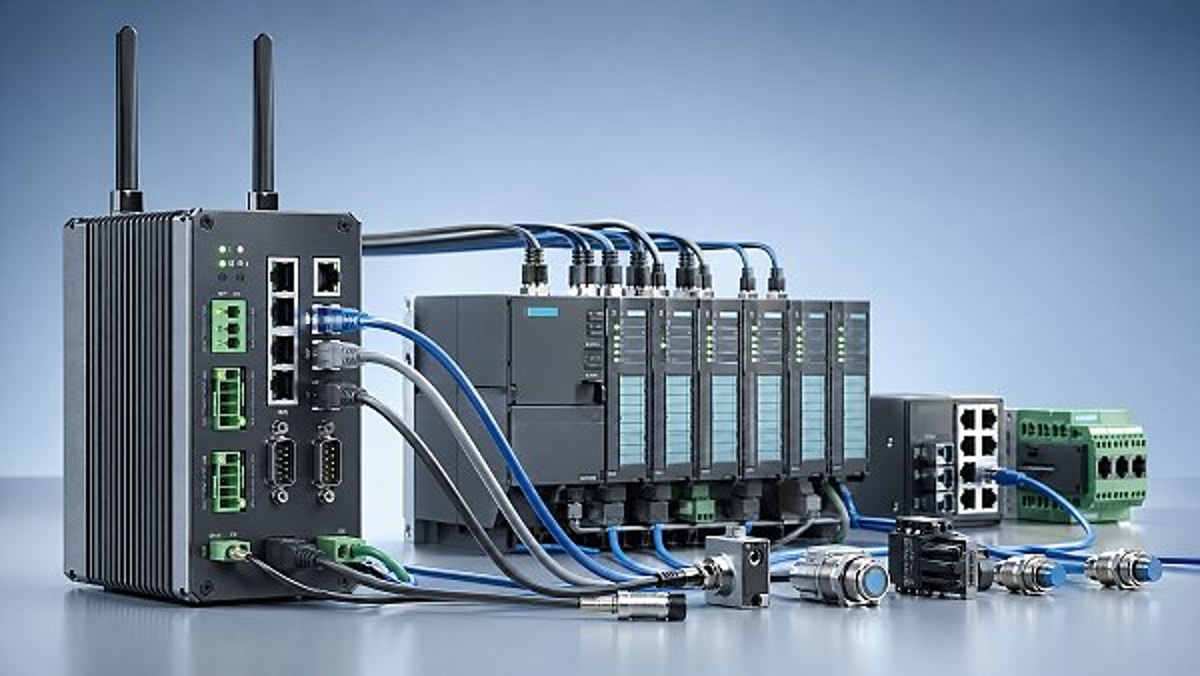
In cross-industry sourcing, industrial IoT gateways are often evaluated too late in the project cycle, after sensor choices, PLC interfaces, and cloud preferences have already narrowed the options. That approach usually creates two problems: buyers either choose a gateway that cannot support required field protocols, or they purchase a premium model with computing, wireless, and security functions the site will never use.
A more effective method is to compare industrial IoT gateways across 5 core dimensions at the start: protocol compatibility, network connectivity, edge computing requirement, environmental fit, and lifecycle support. For procurement personnel managing multiple vendors and internal stakeholders, these five dimensions create a practical shortlisting structure that reduces unnecessary technical debates and speeds supplier qualification.
In sectors such as advanced manufacturing, green energy, healthcare technology, smart electronics, and supply chain software integration, the gateway is not just a communication box. It often acts as the bridge between legacy equipment and modern dashboards, MES platforms, cloud services, or predictive maintenance tools. That means a small mistake in gateway specification can affect deployment for 2–4 quarters, not just 2–4 weeks.
For buyers, the best question is not “Which industrial IoT gateway has the most features?” It is “Which gateway solves the required data and control tasks with the lowest total risk?” That shift helps prevent overbuying and keeps the procurement process aligned with actual operating outcomes.
Five baseline checkpoints before requesting quotations
- Confirm how many southbound protocols are actually needed on day 1, such as Modbus RTU, Modbus TCP, OPC UA, CAN, or serial-to-Ethernet conversion. Many sites need only 1–3, not a long universal list.
- Map upstream data destinations: local SCADA, private server, public cloud, or hybrid architecture. This affects whether MQTT, HTTPS, OPC UA, or custom API support matters.
- Define installation conditions, including temperature range, vibration exposure, cabinet space, and power input. A gateway for a clean indoor line differs from one used in outdoor energy assets.
- Estimate node scale for the next 12–36 months. A pilot with 20 devices does not justify the same architecture as a multi-site rollout with 500–2,000 endpoints.
- Check support expectations, such as firmware update policy, documentation quality, and local integration availability during the first 30–90 days after delivery.
This baseline comparison is especially useful for procurement leaders using platforms like TradeNexus Pro, where supplier discovery is strongest when technical requirements are translated into business-ready screening criteria. Instead of comparing brochure language, buyers can compare fit, implementation risk, and future change cost.
How do industrial IoT gateways differ by use case and architecture?
Not every industrial IoT gateway is built for the same deployment pattern. Some are optimized for lightweight data forwarding from PLCs and meters. Others are designed for edge analytics, device orchestration, or secure remote access. Procurement teams should classify the use case before reviewing supplier offers, otherwise side-by-side comparisons become misleading.
In manufacturing cells, gateways often need deterministic connectivity to legacy controllers, moderate edge buffering, and stable Ethernet performance. In green energy assets, buyers may prioritize wide-area communications such as 4G or 5G, remote diagnostics, and reliable operation across wider temperature bands. In healthcare technology environments, data integrity, segmented networks, and change management controls may carry more weight than raw compute power.
For smart electronics and supply chain monitoring, industrial IoT gateways may also support barcode systems, environmental sensors, or machine condition inputs while feeding centralized software platforms. In these mixed environments, overbuying usually happens when a team selects a gateway designed for advanced edge applications even though the real need is protocol normalization and secure transport.
The table below helps procurement teams compare common gateway positioning models by scenario, data complexity, and buying logic rather than by feature count alone.
The main lesson is straightforward: industrial IoT gateways should be sourced by architecture role, not by maximum specification. If the deployment only needs data collection every 1–5 seconds and local buffering during short network interruptions, a compact gateway may outperform a larger platform from a cost-to-value perspective.
A practical classification buyers can use
Tier 1: Data acquisition gateways
Best for sites that need protocol conversion, light preprocessing, and cloud or server forwarding. These units are usually sufficient for pilots, retrofit projects, and line-level visibility programs.
Tier 2: Integration gateways
Designed for multi-protocol environments, moderate local rules, and tighter application integration. They fit organizations consolidating OT and IT data across 2–10 facilities.
Tier 3: Edge computing gateways
These are suitable when local analytics, containerized applications, image-adjacent workloads, or autonomous responses are required. Procurement should approve this tier only when a clear software roadmap and support model already exist.
Which technical specifications really affect cost and long-term value?
Technical comparison is where many industrial IoT gateway purchases drift into overbuying. Suppliers may present long specification sheets, but not every parameter changes operational value. Procurement teams should separate “must-have for deployment” from “nice-to-have for future possibility.” That distinction is what protects budgets and avoids idle capability.
The first cost driver is communication design. A gateway with dual Ethernet, serial ports, digital I/O, Wi-Fi, cellular, GNSS, and fieldbus expansion may look flexible, but most installations will use only 2–4 of those interfaces. Paying for dormant ports across a 100-unit rollout can materially raise project cost without reducing implementation risk.
The second driver is compute and storage. If the gateway simply packages data and transmits it upstream, high-end processors and large local storage provide limited return. By contrast, if the application requires store-and-forward buffering for 7–30 days, event filtering, local dashboarding, or containerized workloads, then higher compute becomes justified.
The third driver is manageability. Centralized device management, certificate handling, remote firmware deployment, and access logging matter much more when fleets reach 50, 200, or 1,000 units. For single-site deployments, these functions remain useful, but their premium should be weighed carefully against rollout scale.
Use the following table to distinguish decision-critical specifications from features that often inflate the purchase scope of industrial IoT gateways.
A disciplined buyer will also ask for performance context, not just specifications. For example, it is more useful to know how many devices the gateway can poll reliably, how it handles link interruption, and what update procedure is supported, than to focus only on processor speed. Industrial IoT gateways should be evaluated against workload realism, not consumer-style feature appeal.
Three technical questions that prevent expensive mistakes
- What data must be processed locally versus transmitted upstream? This defines the right compute tier.
- How many devices, tags, or signals will be connected in phase 1 and phase 2 over 12–24 months? This defines scaling needs.
- Which interfaces are mandatory on delivery, and which can remain optional accessories? This controls capital cost from the start.
How should buyers evaluate security, compliance, and supplier readiness?
Security is a common justification for buying more expensive industrial IoT gateways, yet procurement should examine the specifics. A secure gateway is not simply one with a broad security claim. The real indicators are whether it supports controlled user access, encrypted communications, firmware update discipline, certificate handling where relevant, event logging, and network segmentation practices that fit the deployment environment.
In regulated or quality-sensitive sectors, compliance review should begin early. Buyers do not need to demand every possible standard, but they do need to understand what applies to electrical safety, EMC, radio communication, and installation environment. If the gateway will be deployed across more than one region, procurement should also verify whether the offered model family supports the required market access path rather than assuming all variants do.
Supplier readiness matters just as much as hardware specification. A capable industrial IoT gateway can still become a weak purchase if documentation is incomplete, integration support is slow, or firmware maintenance is unclear after the first shipment. For buyers working under 6–12 week implementation windows, these non-hardware factors often determine project success.
TradeNexus Pro is especially valuable here because procurement teams need more than a product list. They need a structured view of supplier credibility, sector relevance, integration maturity, and cross-border sourcing implications. In a fragmented market, decision quality improves when buyer questions are matched to sector-specific intelligence rather than generic catalog search.
A practical due diligence checklist
- Request documented support for user roles, credential control, and encrypted communication methods used in your target architecture.
- Confirm the firmware maintenance approach over a realistic lifecycle, often 3–7 years for industrial deployments.
- Check whether installation guides, protocol manuals, and API references are available before purchase order approval.
- Ask how support is handled during commissioning, especially within the first 2–8 weeks when most configuration issues appear.
- Verify regional certifications and communication module variants if the rollout spans different markets or radio environments.
Common compliance misconception
One frequent mistake is assuming that a gateway suitable for a pilot automatically suits scaled deployment. Pilot conditions may tolerate manual updates and isolated networking, while fleet deployment usually requires repeatable update procedures, clearer logs, and more formal installation controls. Procurement should evaluate industrial IoT gateways at the target rollout scale, not only at pilot scale.
How can procurement avoid overbuying while still planning for scale?
The safest way to avoid overbuying industrial IoT gateways is to build a phased sourcing model. Instead of purchasing for every possible future requirement, buyers can define a minimum viable architecture for phase 1, then identify upgrade paths for phase 2 and phase 3. This approach protects capital expenditure while preserving room for data expansion, added locations, or new software integrations.
A strong procurement framework usually includes 4 steps: requirement mapping, shortlist filtering, pilot validation, and scale-up negotiation. In practice, the pilot should test protocol reliability, remote access policy, buffering behavior, and integration workload. A 2–6 week validation period is often more useful than long feature comparisons because it exposes hidden setup costs before volume commitment.
Cost assessment should also move beyond unit price. Industrial IoT gateways create downstream cost in configuration labor, accessories, mounting, SIM plans where applicable, cloud onboarding, maintenance visits, and downtime exposure if the chosen unit is poorly matched. Procurement teams that compare only hardware price may save 8%–15% upfront and lose far more during rollout.
The sourcing table below can help teams compare gateway offers in a way that aligns budget control with long-term operational value.
This model encourages a balanced decision. The right industrial IoT gateway is not the cheapest or the most advanced. It is the option that supports current requirements, leaves a rational upgrade path, and minimizes technical debt across sourcing, integration, and operation.
Four common overbuying mistakes
- Buying for hypothetical edge AI use cases with no approved software plan.
- Selecting broad wireless capability when wired infrastructure already covers the site.
- Demanding every possible protocol instead of listing the 3–5 protocols actually used.
- Ignoring support readiness and focusing only on technical maximums and unit price.
FAQ: what do buyers ask most often about industrial IoT gateways?
How many protocols should an industrial IoT gateway support?
Only the protocols required by the current device environment and near-term expansion plan. For many sites, 1–3 core protocols cover the initial rollout. Buyers should avoid paying for a broad protocol library unless there is a documented multi-vendor integration roadmap within the next 12–24 months.
When is edge computing worth the extra cost?
It becomes worthwhile when the application needs local filtering, event logic, temporary autonomy during outages, or on-site application workloads. If the gateway only transmits machine data upstream every few seconds or minutes, a lighter industrial IoT gateway is often more cost-effective and easier to maintain.
What is a realistic evaluation timeline before purchase?
A practical process often takes 2–6 weeks for technical screening and pilot validation, followed by 1–3 weeks for commercial alignment depending on supplier responsiveness. Complex multi-site projects may take longer, but buyers should still structure the decision into staged gates rather than letting feature comparisons expand indefinitely.
Should procurement prioritize hardware brand or integration fit?
Integration fit should come first. A recognized brand can reduce perceived risk, but it does not guarantee protocol compatibility, implementation speed, or manageable lifecycle cost. Industrial IoT gateways should be selected according to deployment conditions, software path, and support structure.
Why work with us when evaluating industrial IoT gateways?
TradeNexus Pro helps procurement teams compare industrial IoT gateways with sharper commercial and technical clarity. Instead of navigating fragmented supplier claims, buyers can use TNP to assess sector relevance, technology fit, sourcing risk, and market positioning across advanced manufacturing, green energy, smart electronics, healthcare technology, and supply chain SaaS environments.
For organizations planning a pilot, retrofitting legacy assets, or standardizing gateway selection across regions, we support the decision process with insight that matters at purchasing level: which specifications drive value, which options commonly lead to overbuying, how deployment conditions affect shortlisting, and what supplier questions should be resolved before volume orders are issued.
You can engage with TNP to clarify parameter confirmation, industrial IoT gateway selection logic, expected delivery windows, phased rollout planning, integration priorities, certification considerations, and quotation comparison criteria. This is especially useful when internal teams need a neutral framework to align engineering, operations, and procurement within one sourcing decision.
If your team is currently comparing industrial IoT gateways, contact TradeNexus Pro to refine the shortlist, define the right technical baseline, review supplier readiness, and avoid paying for features that do not improve operational return. A well-structured evaluation today can reduce rework, protect budget, and create a cleaner path to scale over the next 12–36 months.
Get weekly intelligence in your inbox.
No noise. No sponsored content. Pure intelligence.
 May 01, 2026Beijing’s New E-Bike Rules Trigger Dual-Certification Demand for China’s Swappable Battery CabinetsBeijing’s New E-Bike Rules Trigger Dual-Certification Demand for China’s Swappable Battery Cabinets
 May 01, 2026GNA’s GEO Service Assessment Elevates AI Search as Digital Procurement Metric for Chinese ExportersGNA’s GEO Service Assessment Elevates AI Search as Digital Procurement Metric for Chinese Exporters
 May 01, 20262026 China Cycle Expo: Chinese EPS Systems Achieve UL 2849:2026 Full Certification2026 China Cycle Expo: Chinese EPS Systems Achieve UL 2849:2026 Full Certification
 May 01, 2026GB 42236-2026 Enforces EV Charger Efficiency & Overload Protection from May 2026GB 42236-2026 Enforces EV Charger Efficiency & Overload Protection from May 2026
 May 01, 2026GB/T 43790-2026 Drone EMC Standard Effective May 2026GB/T 43790-2026 Drone EMC Standard Effective May 2026
 May 01, 20262026 Foshan Tanzhou Auto Industry Expo Opens2026 Foshan Tanzhou Auto Industry Expo Opens
 May 01, 2026China’s New Hazardous Chemicals Safety Law Takes Effect May 2026China’s New Hazardous Chemicals Safety Law Takes Effect May 2026
 May 01, 2026New Maritime and Fisheries Laws Take Effect May 1, 2026New Maritime and Fisheries Laws Take Effect May 1, 2026
 May 01, 2026Supply Chain Automation Works Best Where Delays RepeatSupply Chain Automation Works Best Where Delays Repeat
 May 01, 2026High Strength Steel Forgings: What Should Be Tested First?High Strength Steel Forgings: What Should Be Tested First?
 May 01, 2026Automotive Steel Forging: Cost Pressure vs Part ReliabilityAutomotive Steel Forging: Cost Pressure vs Part Reliability
 May 01, 2026Why High Durability Steel Forgings Fail Earlier Than ExpectedWhy High Durability Steel Forgings Fail Earlier Than Expected
 May 01, 2026Construction Aluminum Extrusions: Which Finish Lasts Longer?Construction Aluminum Extrusions: Which Finish Lasts Longer?
 May 01, 2026Lightweight Aluminum Extrusions: Where Savings Really HappenLightweight Aluminum Extrusions: Where Savings Really Happen
 May 01, 2026Aerospace Aluminum Extrusions Need More Than Low WeightAerospace Aluminum Extrusions Need More Than Low Weight
 May 01, 2026Precision Lathe Turning Problems That Show Up After AssemblyPrecision Lathe Turning Problems That Show Up After Assembly
 May 01, 2026High Precision Lathe Turning: Tolerance Claims to VerifyHigh Precision Lathe Turning: Tolerance Claims to Verify
 May 01, 2026When CNC Lathe Turning Is Better Than General MachiningWhen CNC Lathe Turning Is Better Than General Machining
 May 01, 2026Medical Device Prototyping Needs More Than SpeedMedical Device Prototyping Needs More Than Speed
 May 01, 20263D Printing Prototyping: Fast Turnaround or Better Finish?3D Printing Prototyping: Fast Turnaround or Better Finish?
 May 01, 2026Low Cost Rapid Prototyping: Where Quality Gets LostLow Cost Rapid Prototyping: Where Quality Gets Lost
 May 01, 2026Quick EV Charger Installation Still Needs Site ChecksQuick EV Charger Installation Still Needs Site Checks
 May 01, 2026Public Parking EV Chargers: What Slows Installation DownPublic Parking EV Chargers: What Slows Installation Down
 May 01, 2026Choosing a Lithium Ion Battery Manufacturer in ChinaChoosing a Lithium Ion Battery Manufacturer in China
 May 01, 2026How to Vet a Lithium Ion Battery OEM SupplierHow to Vet a Lithium Ion Battery OEM Supplier
 May 01, 2026EV Lithium Ion Batteries: Range Is Not the Only MetricEV Lithium Ion Batteries: Range Is Not the Only Metric
 May 01, 2026Lithium Ion ESS Batteries: Safety Details Worth CheckingLithium Ion ESS Batteries: Safety Details Worth Checking