IoT energy monitors: where data gets useful and where it doesn't
IoT energy monitors promise real-time visibility, sharper cost control, and stronger net zero solutions—but not every dashboard delivers actionable value. For buyers, operators, and project leads comparing energy auditing tools, smart plugs wholesale options, and adjacent power technologies like solar charge controllers or bms boards, the real question is simple: which data improves decisions, and which data just adds noise?
That distinction matters across manufacturing plants, logistics hubs, commercial buildings, cold-chain facilities, healthcare operations, and electronics assembly lines. A monitoring system that reports 500 data points per hour but cannot isolate abnormal load behavior, peak-demand spikes, or power quality instability may look sophisticated while adding little operational value.
For procurement teams, the challenge is not only technical compatibility. It is also financial justification, deployment complexity, cybersecurity exposure, data ownership, maintenance requirements, and integration with broader energy management workflows. In many B2B settings, a monitor is useful only when it shortens decision cycles from weeks to days and supports measurable action.
This article examines where IoT energy monitors deliver clear business value, where they fall short, and how decision-makers can distinguish signal from noise when evaluating smart energy monitoring, submetering, and connected power devices.
Where IoT energy monitoring creates measurable value

The strongest use case for IoT energy monitors is not generalized visibility. It is targeted visibility tied to a specific operational question. In a factory, that question may be why one production line consumes 12% more electricity than a comparable line. In a warehouse, it may be whether HVAC loads surge between 14:00 and 18:00. In a commercial facility, it may be whether standby consumption remains above 8% overnight.
When deployed with correct meter placement, event tagging, and baseline comparisons, energy monitors can support 3 high-value outcomes: load profiling, anomaly detection, and cost allocation. These are practical, not theoretical, benefits. They help operations teams identify inefficient assets, help finance teams validate utility bills, and help project managers prioritize retrofits with clearer payback logic.
Real value usually appears when data resolution is matched to the process. For example, 1-minute interval data may be sufficient for branch-level office energy review, while 1-second to 15-second resolution may be more useful in high-cycling industrial equipment, compressor systems, or process cooling applications. More granularity is not always better if the team lacks the workflow to interpret it.
Another area where data becomes useful is peak-demand control. In many sites, a small number of short-duration spikes can shape a large share of the monthly electricity charge. If the monitoring platform can trigger alerts within 30–60 seconds and map spikes to specific equipment groups, facilities teams can adjust sequencing, startup timing, or battery-supported loads to reduce demand penalties.
Operational scenarios where monitoring pays off fastest
Payback is often fastest in sites with variable loads, multiple tenants, or energy-intensive process zones. In these environments, a monitor supports measurable action rather than passive reporting.
- Multi-line manufacturing: compare line efficiency by shift, product batch, or machine group over 7-day and 30-day windows.
- Cold storage and healthcare environments: detect compressor short-cycling, door-related losses, and abnormal nighttime baseload.
- Commercial buildings: verify HVAC scheduling, lighting control effectiveness, and plug-load drift after occupancy hours.
- Logistics and distribution sites: separate forklift charging, conveyor systems, and HVAC loads to avoid blended consumption assumptions.
The common thread is that the data links directly to an operating decision. If no one owns that decision, even a technically sound system will underperform from a business perspective.
Useful data versus decorative data
The following comparison helps buyers distinguish decision-grade monitoring from dashboard-heavy systems that look impressive but rarely change behavior.
The practical lesson is simple: useful data always sits close to a decision, a threshold, or a workflow. If it cannot trigger maintenance, scheduling, procurement, or engineering action, it is likely just adding screen complexity.
Where energy data stops being useful
IoT energy monitors lose value in 4 common situations. First, the hardware is installed without a monitoring strategy. Second, the software reports raw data without context. Third, the data arrives faster than teams can review it. Fourth, the site lacks the authority to act on what the monitor reveals. These problems are common in cross-functional B2B environments where engineering, procurement, finance, and operations work on different timelines.
A frequent mistake is over-metering. A site may install dozens of smart plugs, branch meters, or wireless current transformers, hoping that full visibility automatically creates savings. In practice, too many low-priority points can dilute attention. If 80% of alerts come from minor fluctuations while only 20% relate to cost-driving assets, teams start ignoring notifications altogether.
Another weak point is poor data normalization. Comparing two assets without adjusting for runtime, production volume, ambient conditions, occupancy, or shift pattern can produce misleading conclusions. A machine that uses 18 kWh per hour may be more efficient than one using 14 kWh per hour if output is 35% higher. Raw energy data is not the same as actionable performance insight.
Integration gaps also reduce usefulness. A standalone dashboard may show a pattern, but if it cannot connect to building management systems, maintenance tickets, ERP records, or utility tariff schedules, the burden of interpretation remains manual. That slows response time and weakens business cases for further rollout.
Common failure modes in B2B deployments
Before buying, teams should test for failure modes that are more damaging than limited functionality. These issues often surface after installation, when budget and patience are already under pressure.
- Alert fatigue caused by thresholds that are too sensitive or too generic across different load types.
- Meter placement that follows electrical convenience rather than operational logic, making root-cause analysis difficult.
- Cloud dashboards with delayed refresh times of 5–15 minutes, which are unsuitable for short demand events.
- Inconsistent calibration or CT sizing errors that create trust issues with finance and engineering teams.
- Cybersecurity concerns when unmanaged devices are added to production or healthcare-adjacent networks.
These are not minor technical details. Once users lose confidence in data accuracy or usability, adoption declines quickly, and the system becomes an underused reporting layer instead of a management tool.
Signs that a dashboard is generating noise
The table below highlights practical warning signs that buyers and operators should identify during pilots, factory acceptance checks, or first 30-day reviews.
In short, energy data becomes noise when it lacks ownership, context, or verifiable links to cost, risk, uptime, or compliance. Smart monitoring should reduce uncertainty, not create a second layer of ambiguity.
How buyers should evaluate an IoT energy monitoring solution
For procurement managers and enterprise decision-makers, evaluating an IoT energy monitor should go beyond device price. The more relevant question is total decision value over 12–36 months. That includes meter accuracy, installation method, communication protocol, software usability, integration path, cybersecurity controls, and support responsiveness.
In many projects, the most cost-effective option is not the cheapest hardware. A lower-cost device with weak data export capability or limited event logic may increase engineering hours later. Conversely, a more robust platform with open APIs, flexible alert rules, and easier scaling may reduce operating friction even if initial capex is 15%–25% higher.
Teams comparing smart plugs wholesale options, submeters, and branch-circuit monitoring should also think about use-case hierarchy. Smart plugs are practical for distributed plug loads, pilot programs, and smaller commercial zones. Submeters are better for panel-level or tenant-level visibility. Industrial-grade monitors are usually required for 3-phase loads, higher current ranges, and power quality analysis.
An effective sourcing process typically includes a 5-step evaluation: site audit, point selection, pilot deployment, data validation, and commercial review. Skipping the pilot stage can save 2–4 weeks initially but often increases rework if communication reliability, CT compatibility, or dashboard logic proves weak after rollout.
Key technical and commercial checkpoints
The table below can be used by procurement, engineering, and finance teams during supplier comparison. It focuses on questions that materially affect performance and adoption.
A structured checklist reduces purchasing risk, especially when multiple facilities or business units will eventually use the same platform. Standardizing the evaluation process also helps finance approvers compare proposals on equivalent terms.
Recommended decision criteria
- Prioritize devices and software that support your top 3 use cases, not every possible feature.
- Request a pilot period of at least 30 days to capture weekday, weekend, and partial monthly cycles.
- Ask suppliers how data is retained, exported, and owned after 12, 24, and 36 months.
- Verify whether the system can handle adjacent power assets such as solar charge controllers, BMS boards, battery banks, or EV charging loads.
- Confirm how firmware updates, cybersecurity patching, and device replacement are managed across distributed sites.
For distributors and channel partners, another factor is deployment simplicity. Products that shorten installation time from 2 hours to 45 minutes per panel can materially improve rollout economics in multi-site projects.
Implementation, integration, and the role of adjacent power technologies
IoT energy monitors work best when they are part of a broader power management strategy. In real facilities, energy monitoring does not sit alone. It often interacts with solar generation, battery storage, backup systems, smart plugs, HVAC control, and branch circuit protection. That is why implementation should begin with an electrical and operational map, not only a shopping list.
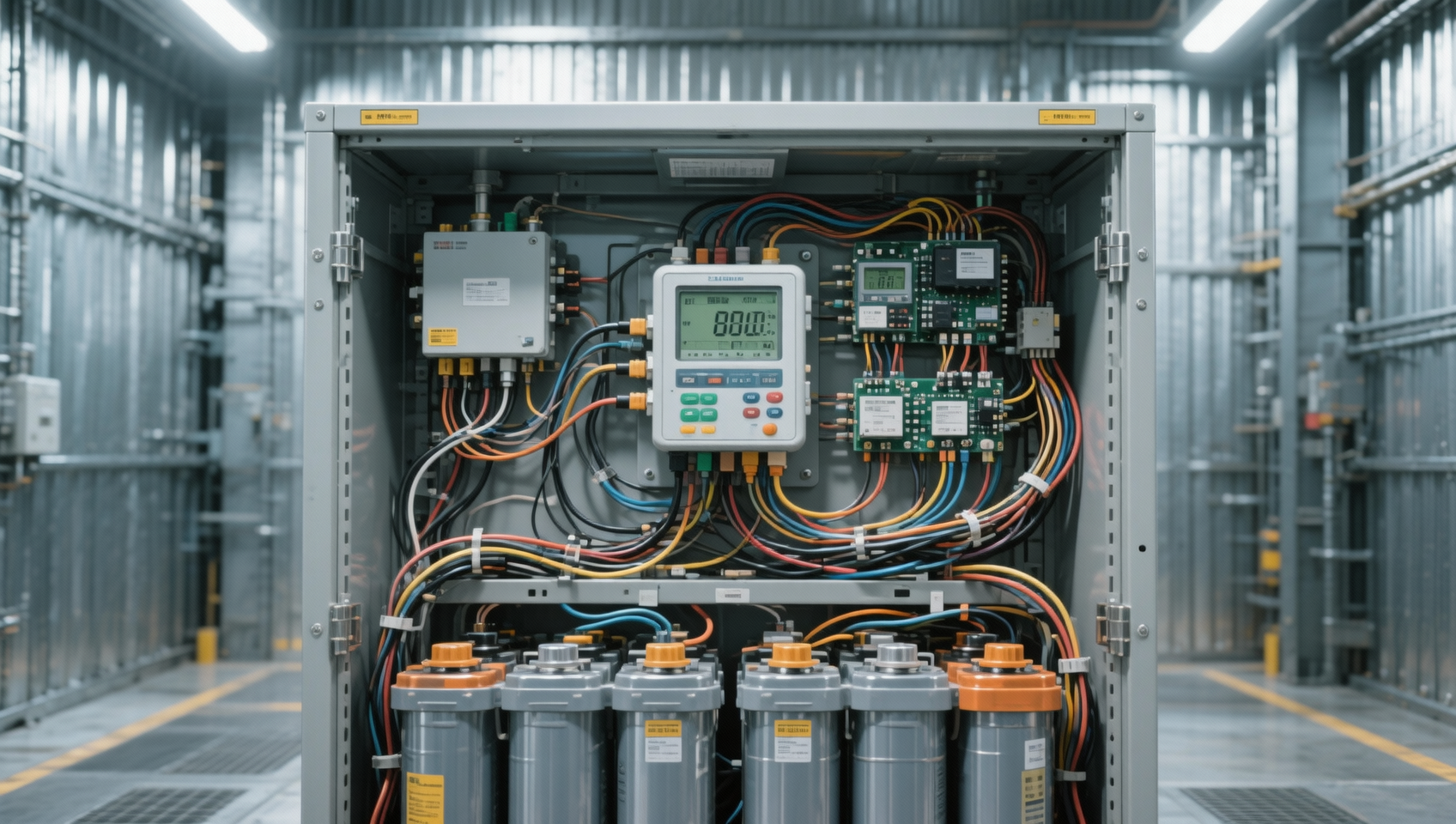
For example, in sites using solar charge controllers and battery systems, energy data becomes more useful when the monitor shows import, export, storage state, and critical load behavior together. Without that context, a load spike may be misread as inefficiency when it is actually a planned charging event. The same logic applies to BMS boards in battery-backed systems, where cell protection data and power flow data need aligned timestamps.
Project managers should also separate the implementation into phases. A practical model is 3 stages: baseline measurement, controlled intervention, and verification. Stage 1 may last 2–6 weeks depending on load variability. Stage 2 introduces changes such as scheduling, equipment tuning, or load shifting. Stage 3 confirms whether the change produces stable savings over another 4–8 weeks.
Integration discipline matters. A monitor that cannot exchange data with maintenance software, building controls, or energy reporting tools may still work, but it will create manual reporting overhead. In enterprise environments, that overhead often determines whether a project expands from 1 site to 10 sites.
A practical rollout model
The sequence below helps reduce technical and organizational friction during deployment.
- Identify 5–10 highest-impact loads rather than trying to meter every circuit on day one.
- Capture baseline data for at least one billing cycle or a minimum of 4 weeks.
- Set no more than 6–10 critical alerts in the first month to avoid alert fatigue.
- Assign clear owners: operator, facility engineer, finance reviewer, and project sponsor.
- Review outcomes every 2 weeks and adjust thresholds, meter grouping, and reports.
This phased approach is especially helpful in mixed portfolios where factories, offices, and logistics sites have different load signatures. It also helps procurement teams scale with evidence rather than assumptions.
Implementation risks to control early
- Incorrect current transformer sizing can distort readings and create distrust from day one.
- Weak wireless coverage in metal-dense facilities can cause data loss unless gateways are planned carefully.
- Unclear naming conventions make dashboards difficult to use across shifts and departments.
- Disconnected battery, solar, and grid datasets reduce the value of monitoring in hybrid energy systems.
The best implementations treat monitoring as an operational system, not a reporting accessory. That mindset is what turns energy data into a controllable business asset.
FAQ for buyers, operators, and project leads
How do I know whether an IoT energy monitor is suitable for my site?
Start with load complexity and decision need. If your site has recurring demand spikes, unclear tenant allocation, multiple process zones, or rising utility costs without a clear cause, monitoring is usually justified. If your load profile is simple and stable, monthly billing data may already answer most questions. A pilot on 3–10 priority circuits is often enough to determine value.
What metrics should procurement and finance care about most?
Focus on 4 areas: measurement reliability, implementation cost, software usability, and payback pathway. Finance teams should ask how savings will be verified, over what baseline period, and whether subscription fees rise as more devices or users are added. Procurement should compare total 24-month cost, not only unit price.
Are smart plugs enough, or do I need industrial-grade submeters?
Smart plugs are useful for device-level tracking, pilot programs, and commercial plug loads. They are generally not sufficient for 3-phase motors, high-current process loads, or detailed power quality analysis. Industrial or panel-level metering is usually a better fit for manufacturing, healthcare infrastructure, and mixed-use facilities with larger electrical systems.
How long does a typical deployment take?
A small pilot may take 2–4 weeks from survey to live dashboard. A multi-panel facility rollout often takes 4–10 weeks depending on shutdown windows, electrical access, network setup, and software configuration. The most reliable ROI assessments usually need at least 1 full billing cycle after commissioning.
What is the biggest mistake companies make?
They buy for visibility instead of decisions. A successful project starts by defining what the team will change if a threshold is exceeded, a load drifts, or a peak event appears. Without that operational response plan, even high-quality energy data will struggle to deliver measurable business value.
IoT energy monitors become genuinely useful when they help teams answer a specific question faster, act with less uncertainty, and verify outcomes over time. They become far less useful when they collect more data than the organization can interpret, own, or integrate into real workflows.
For B2B buyers across manufacturing, green energy, smart electronics, healthcare technology, and supply chain environments, the right choice is rarely the dashboard with the most metrics. It is the solution that links meter data to operational control, procurement logic, financial validation, and scalable deployment.
If your team is comparing energy auditing tools, connected metering strategies, smart plugs wholesale sourcing, or adjacent power technologies such as solar charge controllers and BMS boards, a structured evaluation will protect both budget and implementation outcomes. Contact TradeNexus Pro to explore tailored supplier insights, solution comparisons, and practical guidance for your next energy monitoring project.
Get weekly intelligence in your inbox.
No noise. No sponsored content. Pure intelligence.
 Apr 18, 2026TradeNexus Pro Launches Global Compliance RadarTradeNexus Pro Launches Global Compliance Radar
 Apr 18, 2026JIS T 2304:2026 Takes Effect June 1, 2026 for IVD SoftwareJIS T 2304:2026 Takes Effect June 1, 2026 for IVD Software
 Pathway for Rehab Devices with AI Modules") Apr 18, 2026FDA Updates 510(k) Pathway for Rehab Devices with AI ModulesFDA Updates 510(k) Pathway for Rehab Devices with AI Modules
Apr 18, 2026FDA Updates 510(k) Pathway for Rehab Devices with AI ModulesFDA Updates 510(k) Pathway for Rehab Devices with AI Modules Apr 18, 2026India BIS Approves 3 Chinese IoT Labs for IS 16444:2026 CertificationIndia BIS Approves 3 Chinese IoT Labs for IS 16444:2026 Certification
 Apr 18, 2026THE Alliance Launches Green Slot Priority for China PortsTHE Alliance Launches Green Slot Priority for China Ports
 Apr 18, 2026TÜV Rheinland Releases Dual-Standard ESS Certification Guide for ChinaTÜV Rheinland Releases Dual-Standard ESS Certification Guide for China
 Apr 18, 2026Vietnam Imposes AD Duties on Chinese Electronic ComponentsVietnam Imposes AD Duties on Chinese Electronic Components
 Apr 18, 2026SASO Launches PV Carbon Footprint Labeling from July 2026SASO Launches PV Carbon Footprint Labeling from July 2026
 Apr 18, 2026U.S. Adds 17 Smart Warehouse Robot Components to Export Control ListU.S. Adds 17 Smart Warehouse Robot Components to Export Control List
 Apr 18, 2026EU Enforces EN IEC 62443-4-2:2026 for Industrial Control Devices from 18 Apr 2026EU Enforces EN IEC 62443-4-2:2026 for Industrial Control Devices from 18 Apr 2026
 Apr 17, 2026Temperature data loggers drift unpredictably inside lithium-ion battery storage enclosuresTemperature data loggers drift unpredictably inside lithium-ion battery storage enclosures
 Apr 17, 2026Are solar microinverters really worth the extra cost?Are solar microinverters really worth the extra cost?
 Apr 17, 2026Bifacial solar panels: How much more energy can they generate?Bifacial solar panels: How much more energy can they generate?
 Apr 17, 2026Gear manufacturing: How to optimize production for high precision?Gear manufacturing: How to optimize production for high precision?
 Apr 17, 2026Why power transmission components fail earlier than expectedWhy power transmission components fail earlier than expected
 Apr 17, 2026Linear motion systems: belt drive or ball screw for speed?Linear motion systems: belt drive or ball screw for speed?
 Apr 17, 2026Industrial bearing suppliers: what signals reliable quality?Industrial bearing suppliers: what signals reliable quality?
 Apr 17, 2026When pneumatic valves wholesale gets expensive laterWhen pneumatic valves wholesale gets expensive later
 Apr 17, 2026Hydraulic cylinder fabrication mistakes that cause oil leaksHydraulic cylinder fabrication mistakes that cause oil leaks
 Apr 17, 2026Heavy equipment manufacturing delays often start hereHeavy equipment manufacturing delays often start here
 Apr 17, 2026Custom heatsinks: when a larger size solves nothingCustom heatsinks: when a larger size solves nothing
 Apr 17, 2026Electronic enclosure fabrication: steel or aluminum?Electronic enclosure fabrication: steel or aluminum?
 Apr 17, 2026Automotive parts machining tolerances that drive up scrapAutomotive parts machining tolerances that drive up scrap
 Apr 17, 2026Medical device manufacturing changes under tighter traceabilityMedical device manufacturing changes under tighter traceability
 Apr 17, 2026How to Choose Solid State Batteries in 2026How to Choose Solid State Batteries in 2026
 Apr 17, 2026Are Solid State Batteries Worth the Cost Yet?Are Solid State Batteries Worth the Cost Yet?
 Apr 17, 2026Commercial Energy Storage Sizing: What Matters Most?Commercial Energy Storage Sizing: What Matters Most?