What often goes wrong with smart plugs wholesale orders
Smart plugs wholesale orders often fail over hidden certification gaps, unstable firmware, weak supplier transparency, and mismatched demand forecasts. For buyers comparing smart plugs wholesale with adjacent categories like iot energy monitors, energy auditing tools, or broader net zero solutions, understanding these risks early helps reduce returns, protect compliance, and improve sourcing decisions before volume commitments are made.
In B2B sourcing, smart plugs look simple on paper: compact hardware, familiar electrical standards, and broad application across homes, offices, hospitality, retail, and light commercial energy management. Yet bulk purchasing failures usually do not come from the visible features. They come from what procurement teams do not verify in the first 2 to 4 weeks of supplier assessment.
For importers, distributors, project managers, quality teams, and enterprise decision-makers, the commercial risk is rarely limited to unit price. A shipment of 5,000 to 20,000 pieces can trigger delayed launches, compliance holds, customer complaints, app failure tickets, and costly reverse logistics. The gap between a sample that works and a wholesale lot that performs consistently is where many buying plans break down.
This article explains what often goes wrong with smart plugs wholesale orders, why those failures happen, and how buyers can build a more defensible sourcing process. It also helps readers compare smart plugs with related categories such as energy monitoring devices and net zero implementation tools, where software quality, data handling, and compliance expectations increasingly overlap.
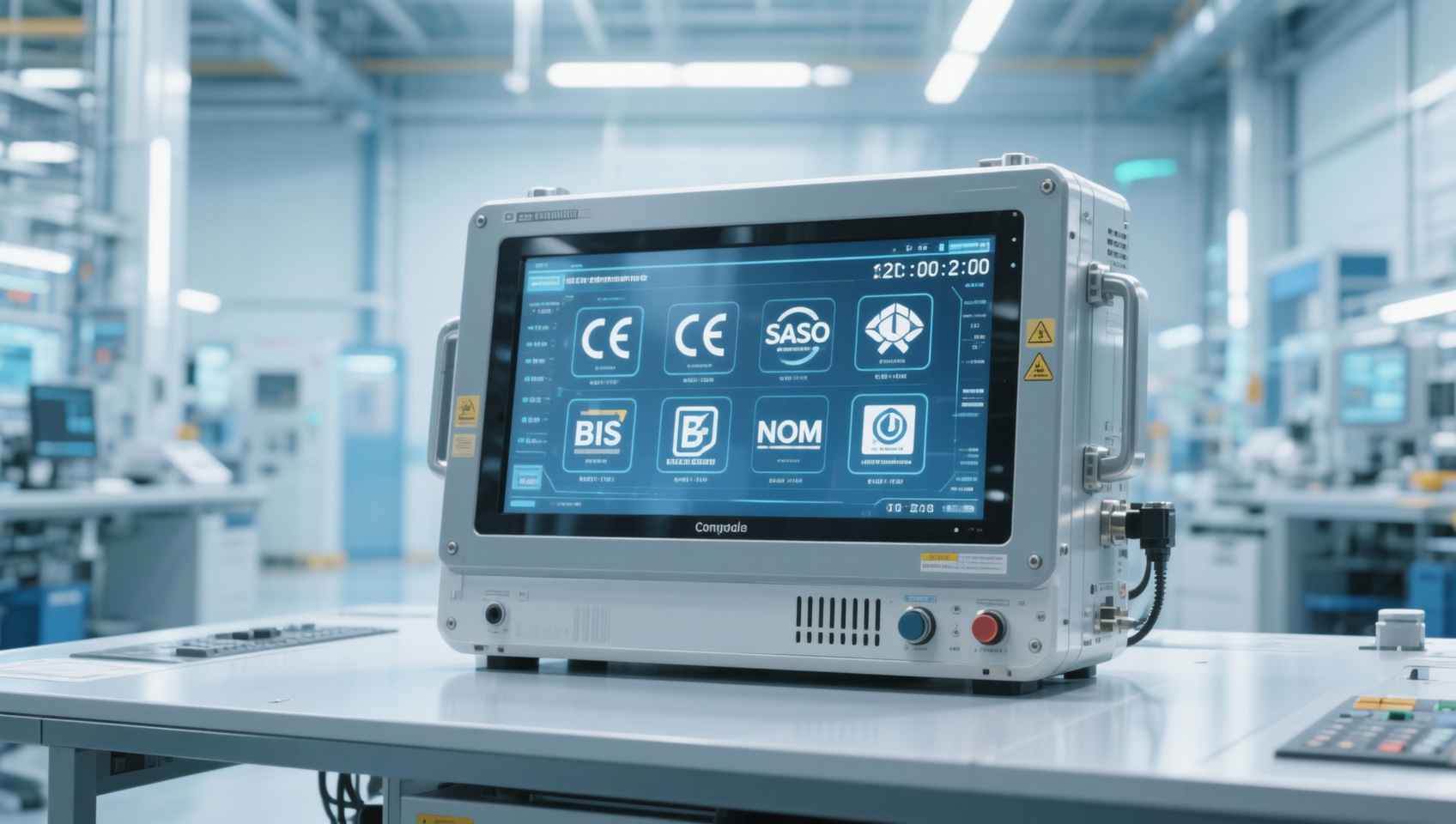
Certification gaps are often discovered too late
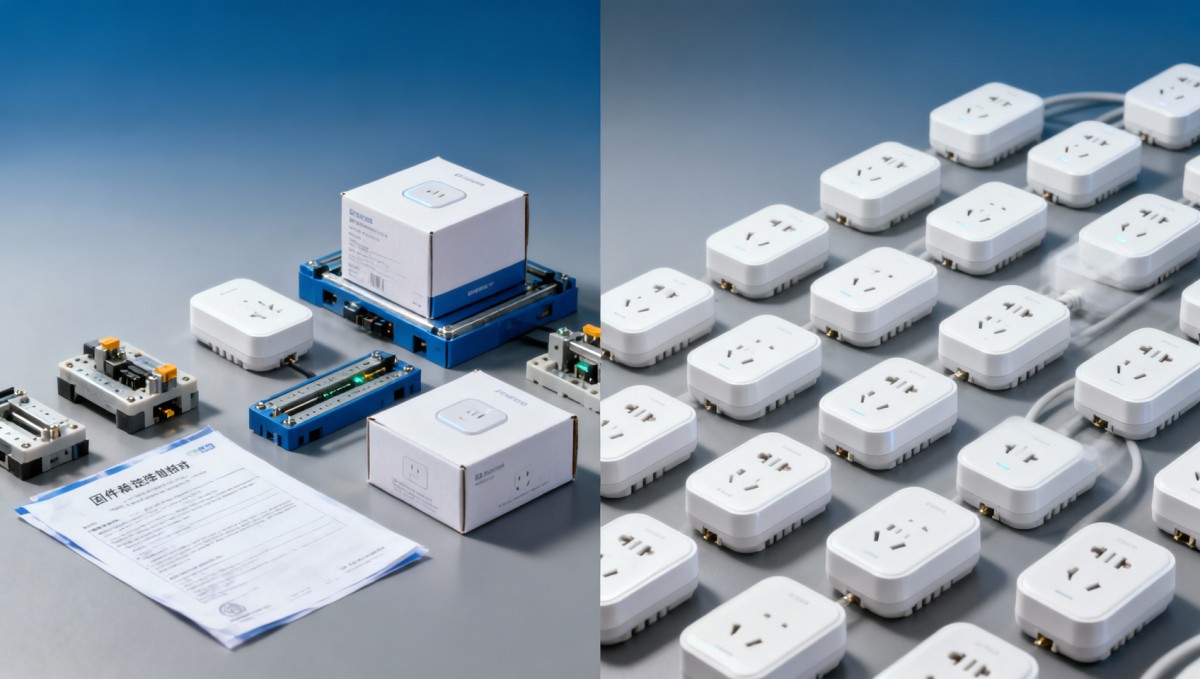
One of the most common problems in smart plugs wholesale orders is assuming that a factory’s general export experience equals product-level compliance readiness. In practice, buyers may receive documentation that is outdated, market-mismatched, incomplete, or valid only for a different plug format. That issue usually surfaces after deposit payment, pre-shipment inspection, or customs review.
Smart plugs sit at the intersection of electrical safety, wireless communication, and software behavior. That means a buyer may need to review 3 layers of conformity at once: plug and socket safety, radio or wireless requirements, and app-related declarations for the destination market. Missing just 1 of these layers can delay launch by 2 to 8 weeks depending on the country and channel.
This becomes more complicated when one SKU is sold into multiple regions. A unit built for North America, the EU, and the UK may differ in voltage assumptions, plug geometry, labeling format, packaging language, and wireless testing scope. Procurement teams that only confirm “certified” status without checking market alignment often end up with inventory that cannot legally move through distribution.
Where compliance review usually fails
The most frequent compliance errors are operational, not theoretical. A supplier may show a valid report for an earlier hardware revision, provide test reports under a different brand holder, or issue packaging that omits required warning statements. These details look minor during quotation review, but they become expensive once 1,000 or more cartons are already packed.
- Certificate scope does not match the exact plug type, Wi-Fi module, or rated load sold in the purchase order.
- Label artwork lacks destination-market markings, voltage data, importer details, or disposal symbols.
- Firmware changes are introduced after testing, but technical files are not updated accordingly.
- The supplier uses subcontracted modules without disclosing whether the final assembly remains compliant.
A disciplined buyer should tie compliance review to the final bill of materials, not to a generic product brochure. Even a small revision in relay specification, PCB layout, or communication module can require revalidation. For wholesale orders above 3,000 units, asking for a document pack before deposit is usually far cheaper than correcting rejected inventory later.
The table below outlines practical compliance checkpoints that procurement and quality teams can use before confirming a smart plugs wholesale order.
The key lesson is simple: certifications should be validated as a commercial control point, not treated as paperwork after sourcing is already locked. For many buyers, this single adjustment reduces the chance of failed smart plugs wholesale orders more than negotiating an extra 2% discount ever will.
Firmware instability can turn a hardware purchase into a service problem
Another major reason smart plugs wholesale orders go wrong is that buyers evaluate hardware samples but under-evaluate software reliability. A smart plug is no longer just an electrical accessory. It is a connected endpoint that depends on firmware, cloud communication, app integration, OTA update logic, and stable user provisioning across thousands of devices.
In many wholesale projects, the first 20 to 50 evaluation samples perform well in a controlled environment. Problems appear only when the deployment expands to 500, 2,000, or 10,000 units across different routers, signal conditions, time zones, and user habits. At scale, weak firmware can create disconnect loops, energy data inaccuracies, scheduling failures, or pairing issues after power loss.
For distributors and resellers, firmware instability is especially dangerous because the cost does not stay with the manufacturer. It moves downstream into technical support tickets, replacement handling, negative reviews, installer frustration, and brand erosion. In some channels, a return rate above 3% to 5% can already damage profitability on a connected device line.
Why sample approval is not enough
A passing sample test should never be mistaken for production-scale readiness. Buyers need to ask how the firmware is maintained, how often updates are issued, whether rollback is possible, and who controls the cloud architecture. If the supplier cannot explain version control in clear terms, the risk level is already rising.
Questions that expose hidden software risk
- How many firmware revisions have been released in the last 12 months, and what bugs were fixed?
- Can the product recover automatically after internet interruption, router reset, or local power cycling?
- Is energy monitoring accuracy maintained within the declared tolerance after updates?
- Who owns the app account system and data path if the supplier changes cloud partners?
These questions matter even more when smart plugs are sold alongside iot energy monitors or energy auditing tools. Once energy data becomes part of reporting or optimization workflows, device instability stops being a convenience issue. It becomes a data integrity issue, which affects project decisions, customer trust, and in some cases commercial billing assumptions.
A practical sourcing approach is to run a 30-day to 60-day pilot under mixed conditions. Test at least 3 router brands, multiple user accounts, repeated power cycles, and scheduled switching routines. If possible, observe failure behavior after app updates and network interruptions. The objective is not to prove perfection. It is to reveal repeatable weaknesses before volume commitment.
Weak supplier transparency creates preventable downstream risk
Many smart plugs wholesale problems originate from supplier opacity rather than direct manufacturing defects. Buyers may receive acceptable quotations and polished catalogs, yet still have poor visibility into subcontractors, component substitutions, testing routines, and production traceability. When transparency is weak, the buyer usually discovers it only after quality variance appears between batches.
The smart plug category is vulnerable to this because product architecture may combine relays, PCBs, casings, wireless modules, power measurement components, packaging, and software resources from different sources. If a supplier changes even 1 of these elements to protect margin or reduce lead time, the delivered performance may shift in ways that are not visible at final carton inspection.
Transparency matters for finance approvers and decision-makers as much as for engineers. A lower quoted price can quickly become more expensive if the supplier cannot provide batch records, incoming material controls, or corrective action reports within 24 to 72 hours of a complaint. In wholesale, response speed is part of product value.
Signs a supplier relationship needs deeper validation
- The factory cannot clearly explain its key component sources or dual-sourcing policy for critical parts.
- Quality reports are generic and not linked to lot numbers, test frequency, or pass-fail thresholds.
- Engineering changes are communicated informally rather than through a revision approval process.
- The supplier resists pilot orders, third-party inspections, or burn-in testing discussions.
For buyers handling 2,000 to 50,000 units per year, requesting transparency is not excessive. It is standard risk control. Even a basic supplier review should cover production capacity per month, quality escalation contacts, incoming inspection method, final test coverage, and post-shipment support timelines. Without these, the order may be tradable, but it is not truly manageable.
The table below helps procurement teams compare supplier transparency factors that often influence the success or failure of smart plugs wholesale orders.
A transparent supplier does not need to reveal every confidential detail, but they should provide enough operational evidence for a buyer to make a controlled decision. In wholesale smart devices, procurement success depends as much on process visibility as on product features.
Demand forecasting mistakes distort pricing, MOQ, and inventory health
Even when the product is compliant and the supplier is capable, smart plugs wholesale orders can still go wrong because forecast assumptions are weak. Buyers may order too aggressively after a good sample round, or too cautiously and lose leverage on tooling, packaging, and logistics efficiency. In either case, the mismatch creates avoidable cost pressure.
Forecasting smart plugs is more complex than forecasting basic electrical accessories because demand often depends on ecosystem fit. Sales velocity can change sharply depending on app language support, compatibility with voice assistants, energy monitoring demand, utility rebate programs, installation simplicity, and whether the plug is being sold as a standalone item or part of a larger energy management bundle.
A buyer comparing smart plugs wholesale with iot energy monitors or energy auditing tools should also consider use-case maturity. In some projects, smart plugs are impulse-adopted because of low unit cost, but the long-term reorder rate may be weaker than expected if the customer really needs circuit-level visibility or enterprise energy reporting. Over-ordering in the wrong category ties up cash and warehouse space for 90 to 180 days.
How to align ordering with actual channel demand
A practical model is to separate demand into 3 horizons: pilot, launch, and stabilized reorder. Pilot volume may be 100 to 500 units for field validation. Launch volume may be 1,000 to 5,000 units depending on channel depth. Reorder planning should only be scaled after measuring 60-day sell-through, return rate, and support ticket frequency.
Forecast variables worth reviewing before signing
- Expected monthly sell-through by channel rather than total annual ambition.
- Return-rate tolerance, ideally modeled at 1%, 3%, and 5% scenarios.
- Lead time assumptions, usually 25 to 45 days for repeat orders and longer during component constraints.
- Packaging mix for retail, e-commerce, or project deployment.
Demand planning also influences negotiated price. A supplier may offer attractive pricing at 5,000 units, but if the buyer can only move 1,500 units per quarter, the carrying cost may erase the headline savings. Procurement should therefore compare landed cost per sellable month, not just cost per unit at MOQ.
This is especially relevant for distributors serving net zero solutions portfolios. Some end users need smart plugs for appliance-level control, while others need broader measurement and analytics infrastructure. Forecasting improves when the product is positioned by job-to-be-done instead of assuming all “energy-saving” products compete the same way.
A stronger sourcing process reduces failure rates before mass commitment
The best way to prevent smart plugs wholesale mistakes is to replace assumption-driven buying with a staged sourcing framework. This does not need to be overly complex. In most B2B settings, a 5-step review process can surface the majority of commercial and technical risks before the order reaches a non-recoverable stage.
A robust workflow should connect procurement, engineering, quality, operations, and finance. When those functions review different checkpoints at different times, hidden issues survive longer than they should. Cross-functional review in the first 3 weeks usually saves far more time than emergency correction in week 9 or 10.
Recommended 5-step buying framework
- Define the exact use case: residential resale, hospitality deployment, energy-saving bundle, or enterprise monitoring support.
- Validate compliance and documentation against the target market, SKU, and final packaging.
- Run a controlled pilot for 30 to 60 days covering connectivity, scheduling, app behavior, and support load.
- Audit supplier transparency: revision control, lot traceability, response timing, and production capacity.
- Scale ordering in stages tied to sell-through, defect rate, and channel feedback rather than optimism alone.
The table below summarizes a practical decision matrix for smart plugs wholesale evaluation. It can be adapted by procurement teams, distributors, or project owners reviewing connected device sourcing options.
This framework is useful not only for smart plugs, but also for adjacent B2B connected-device categories where software, compliance, and forecasting intersect. In a market shaped by smart electronics and energy efficiency initiatives, disciplined sourcing is now a competitive advantage, not just a purchasing function.
FAQ for buyers evaluating smart plugs wholesale
How long does a typical smart plugs wholesale cycle take?
For a new supplier, a realistic cycle is often 6 to 10 weeks from first technical review to shipment readiness. That may include 1 to 2 weeks for documentation review, 2 to 4 weeks for sample and pilot validation, and 3 to 4 weeks for production scheduling. Complex packaging or market-specific labeling can extend the timeline.
What defect indicators should quality teams monitor first?
The first indicators are usually pairing failure rate, relay switching consistency, power measurement accuracy if advertised, and reconnection behavior after outage. If any of these show unstable patterns above a low single-digit rate during pilot use, deeper investigation is justified before scaling the order.
Are smart plugs always the right choice for energy management projects?
Not always. Smart plugs are effective for appliance-level switching and selective load visibility, but they may be too limited for facilities needing circuit-level analytics, audit-grade reporting, or broader decarbonization planning. In those cases, iot energy monitors, energy auditing tools, or integrated net zero solutions may fit the business outcome better.
What should distributors ask before approving a repeat order?
They should review 4 points: actual sell-through, field return rate, firmware update history since the first lot, and any component or packaging revisions. Repeat ordering without checking these variables can lock a distributor into the same avoidable problems that damaged the first shipment.
Smart plugs wholesale orders tend to fail not because the category is inherently risky, but because buyers underestimate how many variables sit behind a small connected product. Certification scope, firmware reliability, supplier transparency, and realistic demand planning all shape the final outcome. When these areas are reviewed systematically, buyers gain better control over cost, compliance, and long-term channel performance.
For procurement leaders, distributors, project teams, and enterprise evaluators navigating smart electronics and adjacent energy-management categories, a structured sourcing approach creates stronger commercial results than price-first decision-making alone. If you want deeper market guidance, category comparison support, or a more strategic view of connected-device sourcing, explore more solutions through TradeNexus Pro and get a tailored perspective for your next sourcing decision.
Get weekly intelligence in your inbox.
No noise. No sponsored content. Pure intelligence.
 Apr 18, 2026TradeNexus Pro Launches Global Compliance RadarTradeNexus Pro Launches Global Compliance Radar
 Apr 18, 2026JIS T 2304:2026 Takes Effect June 1, 2026 for IVD SoftwareJIS T 2304:2026 Takes Effect June 1, 2026 for IVD Software
 Pathway for Rehab Devices with AI Modules") Apr 18, 2026FDA Updates 510(k) Pathway for Rehab Devices with AI ModulesFDA Updates 510(k) Pathway for Rehab Devices with AI Modules
Apr 18, 2026FDA Updates 510(k) Pathway for Rehab Devices with AI ModulesFDA Updates 510(k) Pathway for Rehab Devices with AI Modules Apr 18, 2026India BIS Approves 3 Chinese IoT Labs for IS 16444:2026 CertificationIndia BIS Approves 3 Chinese IoT Labs for IS 16444:2026 Certification
 Apr 18, 2026THE Alliance Launches Green Slot Priority for China PortsTHE Alliance Launches Green Slot Priority for China Ports
 Apr 18, 2026TÜV Rheinland Releases Dual-Standard ESS Certification Guide for ChinaTÜV Rheinland Releases Dual-Standard ESS Certification Guide for China
 Apr 18, 2026Vietnam Imposes AD Duties on Chinese Electronic ComponentsVietnam Imposes AD Duties on Chinese Electronic Components
 Apr 18, 2026SASO Launches PV Carbon Footprint Labeling from July 2026SASO Launches PV Carbon Footprint Labeling from July 2026
 Apr 18, 2026U.S. Adds 17 Smart Warehouse Robot Components to Export Control ListU.S. Adds 17 Smart Warehouse Robot Components to Export Control List
 Apr 18, 2026EU Enforces EN IEC 62443-4-2:2026 for Industrial Control Devices from 18 Apr 2026EU Enforces EN IEC 62443-4-2:2026 for Industrial Control Devices from 18 Apr 2026
 Apr 17, 2026Temperature data loggers drift unpredictably inside lithium-ion battery storage enclosuresTemperature data loggers drift unpredictably inside lithium-ion battery storage enclosures
 Apr 17, 2026Are solar microinverters really worth the extra cost?Are solar microinverters really worth the extra cost?
 Apr 17, 2026Bifacial solar panels: How much more energy can they generate?Bifacial solar panels: How much more energy can they generate?
 Apr 17, 2026Gear manufacturing: How to optimize production for high precision?Gear manufacturing: How to optimize production for high precision?
 Apr 17, 2026Why power transmission components fail earlier than expectedWhy power transmission components fail earlier than expected
 Apr 17, 2026Linear motion systems: belt drive or ball screw for speed?Linear motion systems: belt drive or ball screw for speed?
 Apr 17, 2026Industrial bearing suppliers: what signals reliable quality?Industrial bearing suppliers: what signals reliable quality?
 Apr 17, 2026When pneumatic valves wholesale gets expensive laterWhen pneumatic valves wholesale gets expensive later
 Apr 17, 2026Hydraulic cylinder fabrication mistakes that cause oil leaksHydraulic cylinder fabrication mistakes that cause oil leaks
 Apr 17, 2026Heavy equipment manufacturing delays often start hereHeavy equipment manufacturing delays often start here
 Apr 17, 2026Custom heatsinks: when a larger size solves nothingCustom heatsinks: when a larger size solves nothing
 Apr 17, 2026Electronic enclosure fabrication: steel or aluminum?Electronic enclosure fabrication: steel or aluminum?
 Apr 17, 2026Automotive parts machining tolerances that drive up scrapAutomotive parts machining tolerances that drive up scrap
 Apr 17, 2026Medical device manufacturing changes under tighter traceabilityMedical device manufacturing changes under tighter traceability
 Apr 17, 2026How to Choose Solid State Batteries in 2026How to Choose Solid State Batteries in 2026
 Apr 17, 2026Are Solid State Batteries Worth the Cost Yet?Are Solid State Batteries Worth the Cost Yet?
 Apr 17, 2026Commercial Energy Storage Sizing: What Matters Most?Commercial Energy Storage Sizing: What Matters Most?