AGM Batteries Wholesale: Hidden Costs Buyers Often Miss
AGM batteries wholesale pricing can look attractive at first glance, but many buyers overlook freight, storage, compliance, warranty risk, and lifecycle costs that affect total value. For procurement teams comparing deep cycle batteries, battery management systems, bms boards, or solar charge controllers for integrated energy projects, understanding these hidden expenses is essential to making smarter sourcing decisions and protecting long-term margins.
Why AGM battery wholesale quotes often look lower than the real project cost
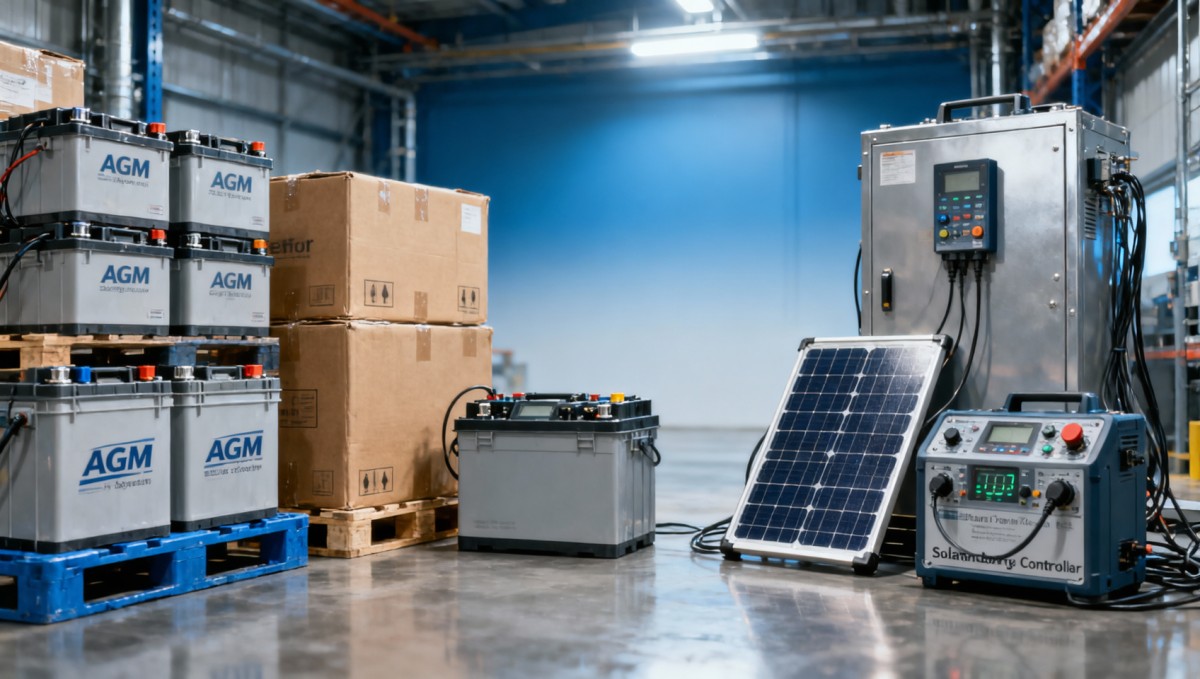
In B2B sourcing, the listed unit price for AGM batteries wholesale is rarely the full commercial picture. Buyers in backup power, telecom, mobility equipment, solar storage, and industrial support systems often compare offers only on per-unit cost, then discover the total landed cost is 12%–30% higher once freight, palletization, customs handling, documentation, and storage conditions are added.
This issue becomes more serious when AGM batteries are purchased as part of a wider energy package that may also include deep cycle batteries, a battery management system, bms boards, chargers, inverters, or solar charge controllers. A mismatch in voltage, charge profile, connector type, or packaging standard can create rework costs that never appear in the supplier’s first quotation.
For procurement teams, the hidden cost problem is not only financial. It also affects lead time, warranty claims, project commissioning, and distributor reputation. A shipment delayed by 7–15 days due to missing transport paperwork can disrupt installation windows, labor scheduling, and customer acceptance milestones.
TradeNexus Pro helps decision-makers avoid shallow price comparisons by focusing on sourcing context, not just product listings. For enterprise buyers, that means evaluating supplier readiness, packaging discipline, documentation quality, and integration compatibility before the purchase order is released.
The most common cost categories buyers underestimate
Many wholesale buyers assume AGM batteries are straightforward sealed lead-acid products with predictable cost structures. In reality, total cost exposure depends on order volume, route, shelf time, and application profile. A battery that is low-cost on paper may become expensive when stored too long or cycled outside its intended depth-of-discharge range.
- Inbound logistics costs, including hazardous goods handling where required, terminal fees, and special pallet wrapping for vibration-sensitive transport.
- Warehouse carrying costs when stock turns slowly, especially if inventory remains idle for 60–120 days before deployment.
- Compatibility costs linked to chargers, battery racks, terminals, cable harnesses, and integration with solar charge controllers or backup systems.
- Warranty administration costs, including failure inspection, return logistics, replacement lead time, and customer service burden.
Which hidden costs matter most in cross-border and multi-site procurement?
For importers, distributors, and project managers, not all hidden costs carry the same weight. The biggest cost drivers usually appear in four stages: pre-shipment validation, transport execution, storage and handling, and post-installation support. In cross-border procurement, even a small documentation gap can trigger delays, inspection fees, or local relabeling requirements.
AGM batteries are often selected for maintenance-sensitive environments because they are sealed and practical for standby or moderate deep cycle use. Yet this convenience can lead buyers to underestimate handling conditions. Exposure to high warehouse temperatures, low stock rotation, or irregular charging maintenance can shorten usable life well before batteries reach the customer site.
Multi-site procurement creates another layer of risk. If one project requires 12V 100Ah batteries for telecom backup and another needs a different terminal format for mobility equipment, standardizing on the wrong SKU can generate avoidable adapter costs, installation delays, and spare-parts complexity across 3–5 operating locations.
The table below shows where hidden costs typically emerge during wholesale AGM battery procurement and why buyers should assign responsibility across sourcing, quality, logistics, and engineering teams before order confirmation.
A useful buying principle is simple: if a quote does not describe handling, storage, documentation, and warranty workflow, the quote is incomplete. Procurement teams should evaluate the offer as a process cost, not a carton cost. This is especially important when batteries support critical uptime targets or distributor resale commitments.
Where lifecycle cost overtakes purchase price
AGM battery wholesale decisions often fail when buyers optimize for acquisition price but ignore replacement frequency. If one supplier offers a lower upfront cost but the batteries require earlier replacement under repetitive cycling, the annualized cost can exceed that of a higher-grade option. This matters in UPS support, light motive use, and renewable backup systems with regular discharge events.
Lifecycle cost also interacts with system design. A battery installed with an unsuitable charging profile or a poorly matched solar charge controller may suffer chronic undercharging or overcharging. In those cases, the battery itself gets blamed even though system integration is the real cost driver.
How should buyers compare AGM batteries with other energy storage options?
Not every application should default to AGM batteries. For some buyers, gel batteries, flooded lead-acid, or lithium-based systems may provide a better balance of cycle life, maintenance effort, and operating footprint. The right comparison depends on discharge depth, recharge frequency, operating temperature, and whether the project prioritizes low initial capital or lower lifetime intervention.
AGM batteries remain attractive in many wholesale channels because they are familiar, comparatively easy to deploy, and practical for standby power, security systems, emergency lighting, telecom cabinets, and selected mobility or solar support applications. However, when discharge is frequent and deep, buyers should carefully review total replacement intervals and charging behavior.
The next table provides a practical comparison framework for procurement teams evaluating AGM batteries against common alternatives in integrated energy projects and industrial backup environments.
This comparison does not mean AGM batteries are the wrong choice. It means the right buyer asks a narrower question: for this duty cycle, environment, and service expectation, what is the lowest-risk cost per usable year? That framing helps procurement teams align battery selection with project reality rather than catalogue appearance.
Decision factors that matter more than brochure claims
For project managers and engineering leads, three factors usually matter more than headline specs: charge regime compatibility, operating temperature range, and maintenance model. If the installation runs in hot rooms, outdoor enclosures, or irregular charging conditions, the purchasing team should challenge any quote that does not explain expected performance under those conditions.
A practical 5-point comparison checklist
- Confirm actual use pattern: standby, cyclic, hybrid, or solar-assisted operation.
- Review charging equipment compatibility, including voltage setpoints and current limits.
- Check physical interfaces such as terminal type, rack layout, and cable spacing.
- Estimate stock rotation and storage duration before commissioning.
- Calculate replacement and service cost over a 12–36 month planning horizon.
What should procurement teams verify before placing an AGM battery wholesale order?
A disciplined pre-order process can prevent most hidden costs. In B2B battery sourcing, the goal is not just to confirm capacity and quantity. It is to align commercial, technical, and logistics expectations before production or shipment begins. This is where many distributors and project buyers save more money than they could ever recover through unit-price negotiation alone.
For AGM batteries wholesale orders tied to integrated systems, procurement should coordinate with technical teams on at least 6 checkpoints: voltage platform, capacity range, expected discharge profile, charger settings, installation environment, and storage plan. If the project also uses a battery management system or bms boards for other chemistries, interface boundaries should be clearly documented.
Lead time verification is equally important. Standard production and dispatch windows may be 2–4 weeks for routine volumes, but this can change when orders require terminal customization, private labeling, mixed-SKU pallets, or additional export documentation. A tight installation schedule should never rely on a quote that leaves these variables undefined.
The following procurement matrix can help buyers classify what must be checked before committing budget, especially when the order supports resale channels or project delivery milestones.
When buyers document these items early, sourcing discussions become more productive. Price remains important, but it is evaluated alongside claim exposure, delivery certainty, and installation readiness. That is a stronger basis for enterprise purchasing than negotiating only on nominal battery cost.
Standards, compliance, and packaging questions that should not be skipped
Compliance is a common blind spot in AGM batteries wholesale buying. Depending on destination market and transport method, buyers may need to review transport classification, product labeling, safety handling instructions, and importer-specific documentation. These are not box-ticking exercises. Missing or inconsistent paperwork can push costs into customs storage, relabeling, or shipment hold fees.
Packaging detail also matters. Industrial buyers should ask how many units are packed per pallet, whether terminals are protected against movement, and whether packaging supports sea freight, inland trucking, or multiple transfer points. A damaged terminal or cracked casing can turn a low-cost shipment into a costly claims event.
Common buyer mistakes, practical fixes, and next-step questions
Across distribution and project procurement, the same mistakes appear repeatedly. Buyers focus on amp-hour labels but do not test commercial assumptions. They assume all AGM batteries behave similarly, or they merge standby and cyclic applications into one purchase decision. They also underestimate the cost of slow claim handling when batteries are tied to service-level commitments.
The practical fix is to treat sourcing as a cross-functional review. Procurement validates commercial terms. Engineering checks fit and charging logic. Operations reviews storage and deployment timing. Quality verifies documentation. This 4-part process usually reveals risk earlier than any post-shipment inspection can.
TradeNexus Pro is built for exactly this level of decision support. Instead of offering broad but shallow product noise, TNP helps global buyers, distributors, and enterprise teams compare sourcing variables that affect long-term margins: technology fit, supply chain shifts, specification clarity, and practical implementation risk across advanced manufacturing, green energy, smart electronics, healthcare technology, and supply chain SaaS ecosystems.
If your team is evaluating AGM batteries wholesale for resale, backup systems, telecom deployment, solar support, or mixed energy projects, start by narrowing the decision to the variables that really change cost over time: storage duration, charge regime, route complexity, and after-sales workflow.
FAQ for procurement, engineering, and distribution teams
How do I know if a low AGM battery wholesale price is genuinely competitive?
Compare the full landed and operating cost, not just the ex-factory number. Review freight, packaging, storage risk, documentation completeness, and claim handling. A quote that is 8% lower on paper may become more expensive after 2–3 hidden cost categories are added.
Are AGM batteries suitable for solar projects with regular cycling?
They can be suitable in selected low-to-moderate cycling applications, but buyers must verify the actual duty cycle and charging control. If a solar project sees frequent deep discharge, evaluate lifecycle cost carefully and confirm compatibility with the solar charge controller and broader energy architecture.
What is a realistic lead time for wholesale battery procurement?
For standard configurations, buyers often see 2–4 weeks for production and dispatch, with added transit time depending on route. Customized terminals, labels, mixed pallets, or extra compliance paperwork can extend the process beyond that range, so project schedules should include a buffer.
Should AGM battery buyers also review battery management systems or bms boards?
If the project includes multiple battery chemistries or integrated storage architecture, yes. AGM batteries themselves do not use the same BMS logic as lithium systems, but system-level compatibility still matters. Procurement should check how chargers, monitoring, controllers, and adjacent battery subsystems interact.
Why choose us for sourcing intelligence and supplier evaluation support?
TradeNexus Pro supports B2B buyers who need more than product visibility. We help procurement directors, project leaders, distributors, and business evaluators assess sourcing decisions through commercial, technical, and supply-chain lenses. That includes guidance on specification confirmation, application fit, delivery timelines, documentation readiness, and risk screening for integrated energy procurement.
If you are comparing AGM batteries wholesale offers, deep cycle battery alternatives, solar charge controller pairings, or system-level component choices, you can consult TNP for supplier shortlisting logic, procurement comparison frameworks, compliance checkpoints, and project-oriented evaluation criteria. This is especially useful when your team needs to align quotation review with engineering feasibility and long-term margin protection.
Contact us to discuss parameter confirmation, battery selection strategy, expected delivery windows, packaging and export documentation, sample evaluation options, warranty workflow questions, or RFQ comparison support. A better sourcing outcome usually begins with sharper questions before the first order is placed.
Get weekly intelligence in your inbox.
No noise. No sponsored content. Pure intelligence.
 Apr 18, 2026TradeNexus Pro Launches Global Compliance RadarTradeNexus Pro Launches Global Compliance Radar
 Apr 18, 2026JIS T 2304:2026 Takes Effect June 1, 2026 for IVD SoftwareJIS T 2304:2026 Takes Effect June 1, 2026 for IVD Software
 Pathway for Rehab Devices with AI Modules") Apr 18, 2026FDA Updates 510(k) Pathway for Rehab Devices with AI ModulesFDA Updates 510(k) Pathway for Rehab Devices with AI Modules
Apr 18, 2026FDA Updates 510(k) Pathway for Rehab Devices with AI ModulesFDA Updates 510(k) Pathway for Rehab Devices with AI Modules Apr 18, 2026India BIS Approves 3 Chinese IoT Labs for IS 16444:2026 CertificationIndia BIS Approves 3 Chinese IoT Labs for IS 16444:2026 Certification
 Apr 18, 2026THE Alliance Launches Green Slot Priority for China PortsTHE Alliance Launches Green Slot Priority for China Ports
 Apr 18, 2026TÜV Rheinland Releases Dual-Standard ESS Certification Guide for ChinaTÜV Rheinland Releases Dual-Standard ESS Certification Guide for China
 Apr 18, 2026Vietnam Imposes AD Duties on Chinese Electronic ComponentsVietnam Imposes AD Duties on Chinese Electronic Components
 Apr 18, 2026SASO Launches PV Carbon Footprint Labeling from July 2026SASO Launches PV Carbon Footprint Labeling from July 2026
 Apr 18, 2026U.S. Adds 17 Smart Warehouse Robot Components to Export Control ListU.S. Adds 17 Smart Warehouse Robot Components to Export Control List
 Apr 18, 2026EU Enforces EN IEC 62443-4-2:2026 for Industrial Control Devices from 18 Apr 2026EU Enforces EN IEC 62443-4-2:2026 for Industrial Control Devices from 18 Apr 2026
 Apr 17, 2026Temperature data loggers drift unpredictably inside lithium-ion battery storage enclosuresTemperature data loggers drift unpredictably inside lithium-ion battery storage enclosures
 Apr 17, 2026Are solar microinverters really worth the extra cost?Are solar microinverters really worth the extra cost?
 Apr 17, 2026Bifacial solar panels: How much more energy can they generate?Bifacial solar panels: How much more energy can they generate?
 Apr 17, 2026Gear manufacturing: How to optimize production for high precision?Gear manufacturing: How to optimize production for high precision?
 Apr 17, 2026Why power transmission components fail earlier than expectedWhy power transmission components fail earlier than expected
 Apr 17, 2026Linear motion systems: belt drive or ball screw for speed?Linear motion systems: belt drive or ball screw for speed?
 Apr 17, 2026Industrial bearing suppliers: what signals reliable quality?Industrial bearing suppliers: what signals reliable quality?
 Apr 17, 2026When pneumatic valves wholesale gets expensive laterWhen pneumatic valves wholesale gets expensive later
 Apr 17, 2026Hydraulic cylinder fabrication mistakes that cause oil leaksHydraulic cylinder fabrication mistakes that cause oil leaks
 Apr 17, 2026Heavy equipment manufacturing delays often start hereHeavy equipment manufacturing delays often start here
 Apr 17, 2026Custom heatsinks: when a larger size solves nothingCustom heatsinks: when a larger size solves nothing
 Apr 17, 2026Electronic enclosure fabrication: steel or aluminum?Electronic enclosure fabrication: steel or aluminum?
 Apr 17, 2026Automotive parts machining tolerances that drive up scrapAutomotive parts machining tolerances that drive up scrap
 Apr 17, 2026Medical device manufacturing changes under tighter traceabilityMedical device manufacturing changes under tighter traceability
 Apr 17, 2026How to Choose Solid State Batteries in 2026How to Choose Solid State Batteries in 2026
 Apr 17, 2026Are Solid State Batteries Worth the Cost Yet?Are Solid State Batteries Worth the Cost Yet?
 Apr 17, 2026Commercial Energy Storage Sizing: What Matters Most?Commercial Energy Storage Sizing: What Matters Most?