AGM Batteries Wholesale: How to Judge Supplier Consistency
In agm batteries wholesale, supplier consistency is not just about price—it determines product reliability, delivery stability, and long-term procurement risk. For buyers comparing deep cycle batteries, battery management systems, bms boards, and related energy products such as solar charge controllers or portable solar panels, knowing how to evaluate manufacturing discipline and supply performance is essential to making confident, scalable sourcing decisions.
Why supplier consistency matters more than a low unit price
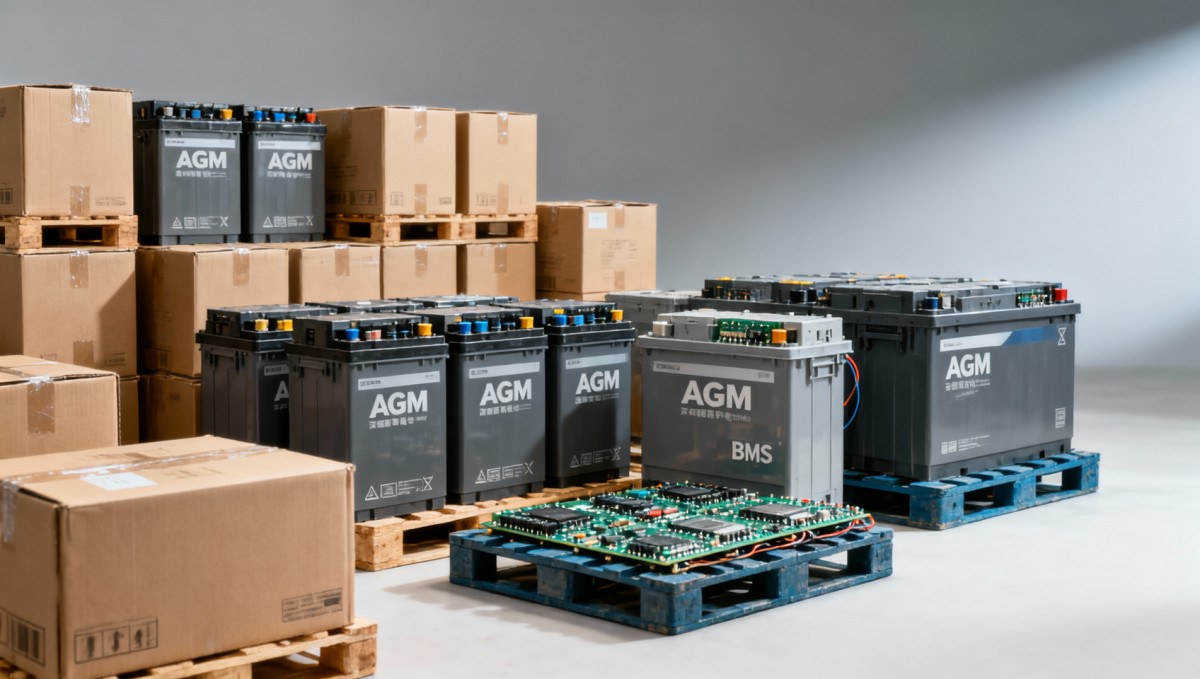
In AGM batteries wholesale, a low quote can look attractive during the first purchasing round, but inconsistent supply quickly turns savings into operational cost. For operators, unstable battery quality means more field complaints, uneven discharge behavior, and shorter replacement cycles. For procurement teams, the real issue is whether the same supplier can deliver the same product specification across 3 batches, 6 months, or even 12 months without hidden variation.
Consistency affects more than battery life. It impacts warranty exposure, inventory planning, after-sales labor, and compatibility with chargers, inverters, battery management systems, and adjacent energy products. In mixed procurement environments where one distributor may source AGM batteries together with solar charge controllers, cable sets, and bms boards, one unstable supplier can disrupt the full project schedule.
Enterprise decision-makers usually focus on 3 practical questions: can the supplier maintain repeatable quality, can it keep lead times within a predictable range such as 2–4 weeks or 4–8 weeks depending on order size, and can it communicate process deviations before they become shipment problems. These questions matter far more than a one-time discount.
What consistency means in a B2B battery supply context
Supplier consistency is a combined measure of manufacturing discipline, raw material stability, process control, packaging accuracy, documentation quality, and logistics execution. In practical sourcing, it means the product arriving in month 1 should match the rated configuration, terminal format, labeling, and performance window delivered in month 4 and month 9.
It also means the supplier can support small pilot orders, mid-volume replenishment, and larger container-level demand without changing core materials or outsourcing key assembly steps without notice. For distributors and project managers, this reduces the risk of customer-side failure analysis later.
- Stable specification control across repeated purchase orders, not only on the first sample run.
- Predictable delivery windows, with early notice if lead time moves from 15 days to 30 days.
- Repeatable documentation including labels, test sheets, cartons, and shipment marks.
- Reliable issue handling when defects appear in incoming inspection or field use.
How to judge an AGM battery supplier before placing a larger order
Before scaling from trial purchase to regular AGM batteries wholesale, buyers should evaluate the supplier through a structured screening process rather than product samples alone. A single acceptable sample proves very little. What matters is whether the supplier can repeat that result across multiple production lots, especially if your procurement plan includes 100 units, 500 units, or recurring monthly orders.
A useful approach is to divide supplier review into 4 layers: factory process, product consistency, service responsiveness, and commercial reliability. This helps purchasing teams compare suppliers using the same framework, especially when reviewing battery vendors alongside related energy component suppliers.
Core checks procurement teams should perform
The table below summarizes practical evaluation points for supplier consistency in AGM batteries wholesale. These are not theoretical criteria. They are decision tools for purchasing personnel, commercial evaluators, and engineering project leads who need a repeatable sourcing method.
A strong supplier will not avoid these questions. Instead, it will answer them with process detail, documented ranges, and realistic lead times. When answers stay vague, or every issue is explained only through sales language, consistency risk is usually higher than the quote suggests.
A practical 5-point supplier review checklist
- Request sample plus batch photos from different dates, not one sample only.
- Confirm whether critical parts or assembly steps are controlled in-house or outsourced.
- Check whether labels, cartons, and pallet marks stay consistent across shipments.
- Ask for normal and peak lead times, such as 15–20 days versus 30–45 days.
- Review complaint handling flow, including who owns technical analysis and replacement decisions.
For buyers using TNP as a strategic intelligence source, this kind of structured review helps filter superficial suppliers and prioritize those that can support long-cycle procurement planning across manufacturing, energy storage, smart electronics, and multi-country distribution channels.
Which technical and operational signals reveal a stable supplier
When comparing AGM batteries wholesale sources, technical consistency and operational consistency should be judged together. A supplier may show acceptable electrical data on paper but still perform poorly in packaging control, terminal fit, shipment preparation, or stock allocation. Procurement decisions become safer when buyers read technical and operational signs as one system.
In battery projects linked to telecom backup, mobility equipment, standby systems, energy kits, or dealer distribution, even small changes in dimensions, charging recommendations, or carton count can create installation and after-sales friction. This is why engineering teams and commercial teams should align before approval.
Signals worth checking in pre-order assessment
The following comparison table helps decision-makers identify whether a supplier is operating with controlled process discipline or simply reacting order by order. It is especially useful when evaluating AGM battery suppliers that also offer related products such as deep cycle batteries, BMS boards, or solar system accessories.
A stable supplier does not need to claim perfection. What matters is visibility. If the factory can show how it controls revisions, allocates production, and handles exceptions, buyers can build safer forecasts. If none of those mechanisms are visible, risk remains high even if the quotation is competitive.
Technical checks often overlooked by non-engineering buyers
Purchasing teams often focus on rated capacity and unit price, but consistency also depends on storage guidance, charging window compatibility, terminal torque requirements, and shelf-life handling before installation. If a shipment sits for 60–90 days before use, poor documentation can lead to preventable performance complaints.
This is where cross-functional review matters. Project leads should verify use conditions, operators should confirm installation realities, and business evaluators should test whether the supplier communicates constraints clearly. TNP’s sector-focused intelligence model is especially useful for this kind of decision because battery sourcing rarely stands alone; it sits inside a wider system of supply chain interdependence.
Procurement mistakes that increase wholesale battery risk
Many problems in AGM batteries wholesale do not begin at the factory. They begin during sourcing. Buyers under budget pressure often compare quotes from several suppliers using only 2 variables: nominal specification and ex-works price. That shortcut may work for a one-off order, but it fails in repeat purchasing, dealer distribution, and project-based delivery where timing and consistency matter as much as specification.
The most common mistake is assuming that an acceptable sample equals a stable supplier. In reality, a hand-picked sample may not reflect bulk production. Another mistake is placing mixed-product orders without checking whether the supplier has enough coordination capacity to manage batteries, accessories, cartons, documents, and shipment timing together.
Common sourcing misconceptions
- “If the first order is fine, future orders will be the same.” Repeatability should be tested over at least 2–3 batches where possible.
- “Any battery supplier can support distributor business.” Distribution requires label consistency, replenishment timing, and lower issue rates over time.
- “Technical documents are only for engineers.” In practice, they help procurement prevent wrong storage, wrong charging, and wrong installation claims.
- “Lead time is just a logistics issue.” Production slot control, material planning, and export coordination all shape whether promised dates are realistic.
Another high-risk area is compliance communication. Buyers should not assume that packaging marks, transport documents, or destination-specific paperwork will automatically match their market needs. If a project involves multiple countries, warehouses, or downstream channel partners, the cost of documentation correction can be larger than the initial price gap between suppliers.
A safer implementation process for bulk orders
A controlled sourcing process usually works better than direct volume commitment. Instead of moving from quote to large order immediately, use a phased approach with 3 steps: sample validation, pilot batch review, and regular procurement release. This is especially important when the supplier relationship is new or when batteries will be sold under distributor channels.
- Sample validation: confirm dimensions, terminal format, packaging, and key operating instructions.
- Pilot batch: inspect consistency across a limited order, such as one initial commercial shipment.
- Regular release: approve rolling forecasts, reorder windows, and escalation contacts for deviations.
This phased model reduces surprises and gives enterprise buyers better leverage in price, quality control, and future supply planning. It also provides a stronger internal basis for procurement approvals, especially when business evaluators must defend supplier choice to finance, engineering, or senior management.
FAQ: what buyers often ask about AGM batteries wholesale consistency
How many orders does it take to judge supplier consistency?
One sample order is rarely enough. A more reliable judgment usually needs at least 2–3 purchasing stages: sample review, one pilot commercial batch, and one repeat order. This allows buyers to compare documentation, packaging, communication speed, and delivery accuracy over time, not just the physical battery itself.
What should distributors pay special attention to?
Distributors should look beyond battery specification and focus on replenishment rhythm, carton labeling consistency, after-sales handling rules, and the supplier’s ability to maintain the same product profile for channel customers. If your business relies on repeat local sales every month or every quarter, consistency is often more important than first-order price advantage.
Are technical documents really important in wholesale battery purchasing?
Yes. Even when the end user is not highly technical, procurement teams still need clear data on charging guidance, storage conditions, installation precautions, and terminal details. These documents reduce mistakes during warehousing, system integration, and customer support. They are also useful when batteries are purchased together with solar charge controllers, inverters, or BMS-related components.
What is a reasonable lead-time expectation?
There is no universal number, because order size, seasonality, and shipment mode all affect timing. However, buyers should expect suppliers to explain lead time in a practical range, such as 2–4 weeks for standard planning or longer in peak periods, and to clarify whether delays come from production, materials, or vessel booking. A vague answer is usually a bigger warning sign than a longer but realistic schedule.
Why work with a sector-focused B2B intelligence platform
For global buyers, the challenge is no longer finding suppliers. The challenge is separating consistent suppliers from attractive but unstable options. TradeNexus Pro supports this decision process by focusing on sectors where procurement quality, technical detail, and supply continuity directly influence business outcomes. That matters when battery sourcing intersects with green energy systems, smart electronics, manufacturing inputs, and software-driven supply chain planning.
Instead of relying on broad marketplace noise, decision-makers can use TNP to understand sourcing logic, compare supplier capability signals, and frame internal discussions around risk, delivery, and scalability. This is especially useful for procurement directors, project leaders, and distributors who need insight that is commercially practical rather than generic.
Why choose us for sourcing insight and supplier evaluation support
If you are reviewing AGM batteries wholesale opportunities, TNP can help you move from broad supplier browsing to structured decision-making. You can consult on parameter confirmation, batch consistency questions, product selection logic, delivery cycle expectations, compliance communication, and mixed-product sourcing risks involving deep cycle batteries, BMS boards, or solar-related accessories.
Our value is not limited to content visibility. We help B2B buyers build clearer evaluation frameworks, sharpen supplier questions, and reduce uncertainty before larger commitments are made. That is useful whether you are validating a pilot order, comparing distributors’ supply partners, or preparing an internal sourcing recommendation.
What you can contact us about
- Parameter confirmation for AGM batteries and adjacent energy products.
- Supplier comparison methods for consistency, lead time, and communication discipline.
- Procurement planning for sample orders, pilot batches, and repeat purchasing cycles.
- Questions around delivery windows, packaging expectations, and documentation readiness.
- Discussion of custom sourcing scenarios, quotation alignment, and channel distribution needs.
If your team needs a more reliable way to judge supplier consistency before scaling an AGM batteries wholesale program, reach out with your target specification, order volume range, expected delivery timeline, and market requirements. That gives us a practical starting point for product selection, supplier evaluation, and risk-focused procurement planning.
Get weekly intelligence in your inbox.
No noise. No sponsored content. Pure intelligence.
 Apr 18, 2026TradeNexus Pro Launches Global Compliance RadarTradeNexus Pro Launches Global Compliance Radar
 Apr 18, 2026JIS T 2304:2026 Takes Effect June 1, 2026 for IVD SoftwareJIS T 2304:2026 Takes Effect June 1, 2026 for IVD Software
 Pathway for Rehab Devices with AI Modules") Apr 18, 2026FDA Updates 510(k) Pathway for Rehab Devices with AI ModulesFDA Updates 510(k) Pathway for Rehab Devices with AI Modules
Apr 18, 2026FDA Updates 510(k) Pathway for Rehab Devices with AI ModulesFDA Updates 510(k) Pathway for Rehab Devices with AI Modules Apr 18, 2026India BIS Approves 3 Chinese IoT Labs for IS 16444:2026 CertificationIndia BIS Approves 3 Chinese IoT Labs for IS 16444:2026 Certification
 Apr 18, 2026THE Alliance Launches Green Slot Priority for China PortsTHE Alliance Launches Green Slot Priority for China Ports
 Apr 18, 2026TÜV Rheinland Releases Dual-Standard ESS Certification Guide for ChinaTÜV Rheinland Releases Dual-Standard ESS Certification Guide for China
 Apr 18, 2026Vietnam Imposes AD Duties on Chinese Electronic ComponentsVietnam Imposes AD Duties on Chinese Electronic Components
 Apr 18, 2026SASO Launches PV Carbon Footprint Labeling from July 2026SASO Launches PV Carbon Footprint Labeling from July 2026
 Apr 18, 2026U.S. Adds 17 Smart Warehouse Robot Components to Export Control ListU.S. Adds 17 Smart Warehouse Robot Components to Export Control List
 Apr 18, 2026EU Enforces EN IEC 62443-4-2:2026 for Industrial Control Devices from 18 Apr 2026EU Enforces EN IEC 62443-4-2:2026 for Industrial Control Devices from 18 Apr 2026
 Apr 17, 2026Temperature data loggers drift unpredictably inside lithium-ion battery storage enclosuresTemperature data loggers drift unpredictably inside lithium-ion battery storage enclosures
 Apr 17, 2026Are solar microinverters really worth the extra cost?Are solar microinverters really worth the extra cost?
 Apr 17, 2026Bifacial solar panels: How much more energy can they generate?Bifacial solar panels: How much more energy can they generate?
 Apr 17, 2026Gear manufacturing: How to optimize production for high precision?Gear manufacturing: How to optimize production for high precision?
 Apr 17, 2026Why power transmission components fail earlier than expectedWhy power transmission components fail earlier than expected
 Apr 17, 2026Linear motion systems: belt drive or ball screw for speed?Linear motion systems: belt drive or ball screw for speed?
 Apr 17, 2026Industrial bearing suppliers: what signals reliable quality?Industrial bearing suppliers: what signals reliable quality?
 Apr 17, 2026When pneumatic valves wholesale gets expensive laterWhen pneumatic valves wholesale gets expensive later
 Apr 17, 2026Hydraulic cylinder fabrication mistakes that cause oil leaksHydraulic cylinder fabrication mistakes that cause oil leaks
 Apr 17, 2026Heavy equipment manufacturing delays often start hereHeavy equipment manufacturing delays often start here
 Apr 17, 2026Custom heatsinks: when a larger size solves nothingCustom heatsinks: when a larger size solves nothing
 Apr 17, 2026Electronic enclosure fabrication: steel or aluminum?Electronic enclosure fabrication: steel or aluminum?
 Apr 17, 2026Automotive parts machining tolerances that drive up scrapAutomotive parts machining tolerances that drive up scrap
 Apr 17, 2026Medical device manufacturing changes under tighter traceabilityMedical device manufacturing changes under tighter traceability
 Apr 17, 2026How to Choose Solid State Batteries in 2026How to Choose Solid State Batteries in 2026
 Apr 17, 2026Are Solid State Batteries Worth the Cost Yet?Are Solid State Batteries Worth the Cost Yet?
 Apr 17, 2026Commercial Energy Storage Sizing: What Matters Most?Commercial Energy Storage Sizing: What Matters Most?