Are sodium ion batteries ready for daily energy storage use?
As commercial energy storage moves from pilot projects to daily deployment, sodium ion batteries are drawing serious attention alongside solid state batteries. For buyers, engineers, and project leaders evaluating off grid solar systems, solar microinverters, thin film solar cells, and bifacial solar panels, the real question is no longer novelty but readiness, safety, cost, and supply chain fit.
That question matters because daily energy storage is no longer a niche requirement. It now supports factories smoothing peak demand, commercial buildings improving backup resilience, remote sites reducing diesel use, and solar-integrated systems balancing variable generation over 1 to 8 hours. In these use cases, a battery does not need to be the most advanced chemistry on paper; it needs to be bankable, serviceable, and predictable under real operating conditions.
For procurement teams and technical evaluators, sodium ion batteries sit at an interesting crossroads. They promise lower dependence on constrained raw materials, competitive safety characteristics, and acceptable performance for medium-duration storage. At the same time, they still trail mature lithium iron phosphate systems in scale, installed base, and field history. The practical answer is not a simple yes or no. It depends on the application window, temperature profile, footprint limits, project budget, and supply chain priorities.
Where Sodium Ion Batteries Stand Today
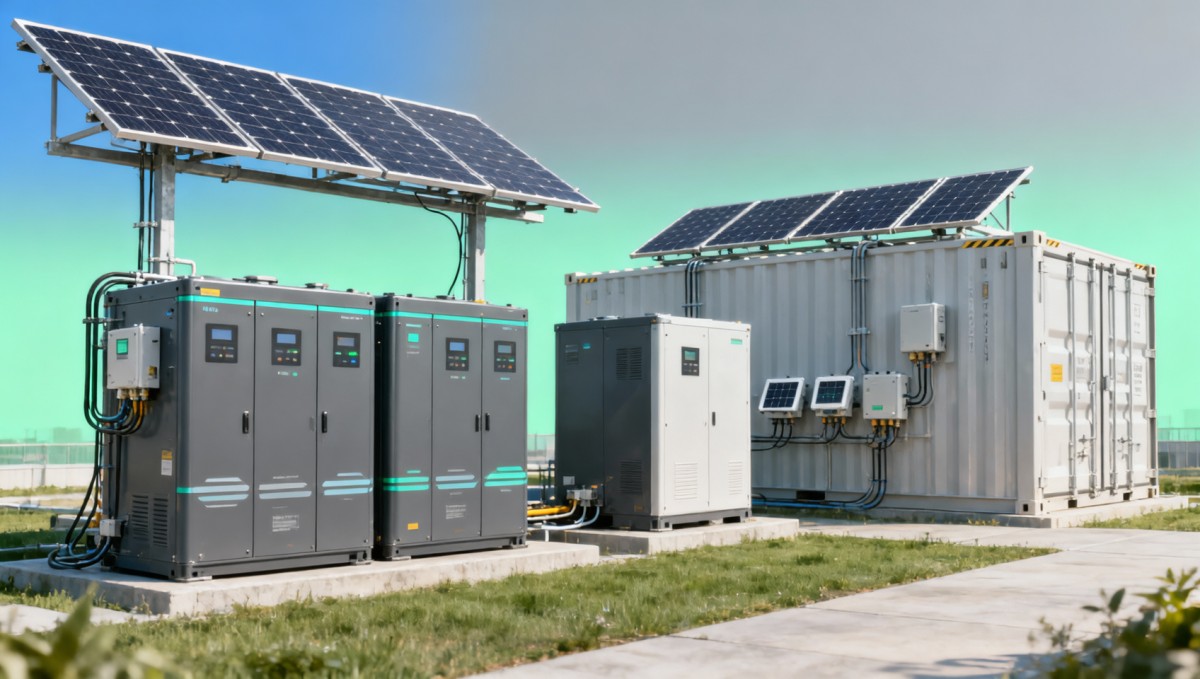
Sodium ion batteries are rechargeable systems that move sodium ions between the cathode and anode, much like lithium-based chemistries move lithium ions. Their commercial appeal comes from sodium’s abundance and the possibility of reducing exposure to lithium, cobalt, and nickel pricing volatility. In daily energy storage, this matters most where the project owner values cost stability, broader material sourcing, and thermal robustness more than extreme energy density.
In current market terms, sodium ion is best understood as an emerging commercial option rather than a fully dominant standard. It is moving beyond laboratory validation and early demonstration, but it has not yet replaced lithium iron phosphate for mainstream stationary storage. For many users, the nearer comparison is not with EV batteries but with commercial and industrial storage systems in the 10 kWh to multi-MWh range, where cycle life, operating temperature, inverter compatibility, and replacement planning carry more weight than pack compactness.
One important distinction is use-case fit. In a containerized battery energy storage system serving 2 to 4 charge-discharge cycles per day, lower volumetric energy density may be manageable. In a space-constrained telecom shelter or a retrofit plant room, that same limitation may be decisive. This is why sodium ion readiness should be judged by scenario, not by headline chemistry claims.
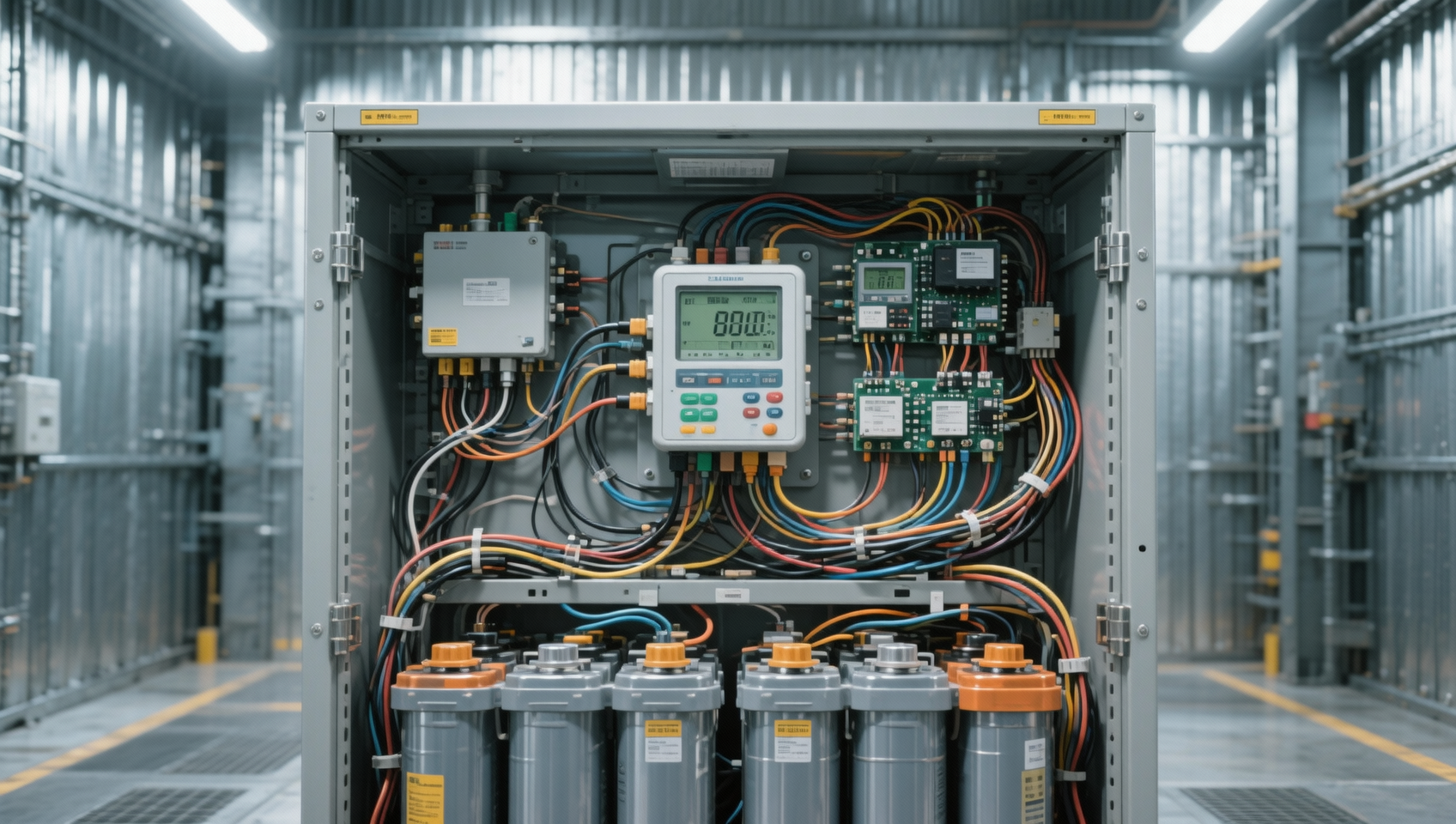
Another point often overlooked is integration maturity. A battery chemistry is only one part of the system stack. Daily-use readiness depends on battery management systems, PCS compatibility, thermal design, module standardization, and service diagnostics. Buyers should ask whether the supplier can support routine integration with off grid solar systems, hybrid inverters, and AC-coupled architectures, not just whether the cell itself looks promising.
Why the market is paying attention
Interest has increased for four practical reasons:
- Material strategy: sodium is widely available, which may reduce long-term raw material concentration risk.
- Safety positioning: stationary storage buyers continue to prioritize thermal behavior and lower fire-risk profiles.
- Low-temperature potential: some sodium ion designs show useful performance in colder environments, often below 0°C.
- Grid and solar fit: many applications need 1–6 hour storage, where energy density is less critical than cost, cycling, and system uptime.
The table below frames sodium ion against two reference points commonly discussed in energy storage planning: lithium iron phosphate and solid state concepts.
The key takeaway is that sodium ion batteries are commercially relevant today, but mainly in applications that tolerate somewhat larger system volume and prioritize safety, procurement flexibility, and predictable medium-duration storage over maximum compactness.
Are They Ready for Daily Use in Real Operating Environments?
For daily energy storage use, readiness should be measured against routine duty cycles, not promotional claims. A practical system may need to operate 300 to 365 days per year, complete 1 to 2 full cycles daily, tolerate ambient conditions from -10°C to 45°C, and maintain usable capacity over 3,000 to 6,000 cycles depending on design. Sodium ion batteries are beginning to look viable within this window, especially for commercial backup, solar self-consumption, and light industrial peak shaving.
The strongest fit today is stationary deployment where floor space is available and energy density is not the top limiting factor. Examples include small commercial microgrids, solar-plus-storage for logistics yards, remote telecom or utility support nodes, agricultural sites, and industrial campuses with medium-duration load balancing needs. In many of these settings, a battery cabinet that is 10% to 30% larger may be acceptable if the project gains cost resilience and simpler sourcing.
However, readiness is still conditional. Buyers should not assume that every sodium ion product on the market has equivalent field performance. The difference between a pilot-grade battery module and a daily-duty commercial storage unit is significant. Ask for cycle test conditions, thermal management details, depth-of-discharge assumptions, expected degradation curve after 1,000 and 3,000 cycles, and the warranty triggers tied to throughput or retained capacity.
System operators should also evaluate inverter and control compatibility early. A battery can look attractive on cell-level specifications but still create commissioning delays if the EMS, PCS, or solar microinverters do not communicate cleanly with the BMS. In projects that include bifacial solar panels or thin film solar cells, load and generation patterns can vary more widely across the day, so charge acceptance, ramp response, and controls integration become critical to smooth operation.
Daily-use checkpoints for technical teams
- Confirm operating temperature range and whether heating or cooling is required below 0°C or above 40°C.
- Check expected cycle life at realistic depth of discharge, such as 80% or 90%, not just laboratory maximums.
- Review response time, charge acceptance, and peak power behavior for solar and backup switching events.
- Verify spare parts, firmware support, and service response windows, ideally within 24–72 hours for active projects.
Where readiness is strongest
Sodium ion batteries are most ready where the project profile rewards stable daily cycling and moderate footprint flexibility. These include 5 kWh to 200 kWh commercial systems, renewable smoothing in remote facilities, and modular storage connected to off grid solar systems. They are less ready for highly space-constrained deployments or projects demanding the most mature long-term financing assumptions available today.
Performance, Safety, and Cost: What Buyers Should Compare
When comparing sodium ion batteries for procurement, decision-makers should avoid a single-metric view. Price per kWh matters, but it is only one layer. Daily-use storage economics depend on at least five variables: usable energy, cycle life, system efficiency, thermal management requirements, and maintenance complexity. A battery that appears 8% cheaper upfront may become more expensive over 5 to 10 years if replacement intervals are shorter or if HVAC loads rise.
Safety remains one of sodium ion’s most attractive commercial talking points, but it should still be validated at system level. Ask whether the product includes cell-level monitoring, module isolation strategy, overcharge protection, propagation resistance design, and enclosure standards suitable for indoor or outdoor installation. Site safety teams should also review fire separation distance, ventilation needs, and emergency shutdown procedures before final approval.
On performance, the most important question is not whether sodium ion matches every lithium benchmark. It is whether it meets the project load profile. For a facility that cycles 1.2 times per day and values backup support for 2 to 4 hours, sodium ion may be entirely adequate. For a premium urban installation where every square meter matters, the lower energy density can reduce its competitiveness.
Cost evaluation should also include logistics and sourcing. If a buyer is trying to reduce exposure to constrained lithium supply chains or hedge future price swings, sodium ion can offer strategic value that does not show up in an initial capex-only comparison. This is particularly relevant for distributors and EPC partners planning multi-project procurement over the next 12 to 24 months.
A practical comparison framework
The table below highlights the dimensions that matter most in commercial procurement and technical review.
For most B2B buyers, the right approach is to score chemistry options across lifecycle cost, safety, serviceability, and project-fit rather than focusing only on nominal capacity or launch-stage marketing claims.
Best-Fit Applications and Where Caution Is Still Needed
Sodium ion batteries are not an all-purpose replacement for existing storage chemistries, but they can be highly effective in the right operating envelope. One good fit is daily solar energy shifting in small and medium commercial facilities, especially when paired with off grid solar systems or hybrid installations. In these projects, batteries often cycle once per day, support 2 to 6 hours of discharge, and prioritize cost control and safety over ultra-compact footprint.
Another strong use case is remote or temperature-variable infrastructure. Utility edge sites, agricultural pumping stations, temporary industrial compounds, and telecom support systems often need rugged, low-maintenance energy storage more than they need maximum energy density. If sodium ion products maintain acceptable charge-discharge performance in colder conditions, they can reduce auxiliary heating requirements and simplify system planning in certain climates.
Caution is still needed in high-density urban installations, premium real estate environments, and projects with tight container volume limits. In these cases, battery room size, transport restrictions, and cabinet count can materially affect total installed cost. Similarly, financial approvers may require stronger operating history before accepting sodium ion as the primary storage chemistry in large-scale deployments above several MWh.
Distributors and project managers should also watch for version stability. Emerging battery categories can evolve quickly over 6 to 18 months, which may affect module interchangeability, firmware revisions, and spare parts planning. Procurement contracts should define revision control, replacement equivalence, and support obligations clearly to avoid mixed-generation system issues later.
Application screening guide
Before specifying sodium ion batteries, teams can use the following screen to decide whether the chemistry is aligned with the project.
- Choose sodium ion when the system needs 1–6 hour storage, daily cycling, strong safety positioning, and moderate space flexibility.
- Proceed carefully when the installation is space-constrained, financing depends on long operating history, or the site requires highly standardized spare stock.
- Delay adoption if the vendor cannot show integration readiness with your PCS, EMS, solar microinverters, or protection architecture.
Common buyer misconceptions
One misconception is that sodium ion is only a future technology. In reality, some products are already commercial enough for pilot-to-routine use. Another is that lower energy density automatically makes the chemistry unsuitable. For fixed-site storage, footprint is just one of several design factors. The more accurate view is that sodium ion should be treated as application-specific: strong in some daily-use settings, not universal across every storage need.
How Procurement and Engineering Teams Should Evaluate Suppliers
A sound procurement process for sodium ion batteries should combine technical due diligence with supply chain screening. Start by reviewing cell-to-system transparency. Can the vendor explain module architecture, battery management logic, cooling approach, and warranty assumptions without vague language? If the answer is unclear, the project risk is usually higher than the quoted savings suggest.
Second, assess manufacturing and delivery readiness. For commercial deployment, indicative lead times of 4 to 12 weeks may be workable for standard configurations, while custom enclosure integration or control system adaptation can push schedules longer. Procurement teams should verify not just quoted lead time, but also ramp capacity, packaging methods, commissioning support, and replacement parts availability for at least 2 to 5 years.
Third, align technical acceptance with site operations. Quality, safety, and project management teams should share a short acceptance checklist before contract award. This avoids the common problem of selecting a battery on price, then discovering late-stage issues around fire clearance, communication protocols, or operating temperature limits. A 5-step review process usually saves time compared with resolving problems during installation.
Finally, build the commercial case around the actual business objective. Some buyers need tariff reduction within 12 months. Others need backup continuity for critical equipment, or a scalable storage layer for solar assets such as bifacial solar panels and thin film solar cells. The best supplier is not only the one with the attractive chemistry, but the one whose documentation, controls, and service model fit the project’s commercial outcome.
Supplier evaluation checklist
The table below can be used by purchasing managers, engineering leads, and financial approvers during vendor review.
This framework is especially useful for cross-functional reviews where engineers, buyers, safety managers, and finance teams need a common basis for decision-making instead of debating chemistry in abstract terms.
A practical 5-step adoption path
- Define the duty cycle: daily throughput, backup duration, ambient temperature, and space envelope.
- Shortlist 2–3 vendors with system-level documentation, not just cell claims.
- Run compatibility review with inverter, EMS, and protection systems.
- Pilot or stage deployment in one site before portfolio-level rollout.
- Track first 90–180 days of operating data before expanding procurement volumes.
Key Questions Before You Specify Sodium Ion Batteries
Before final specification, teams should ask whether the battery matches the business model as well as the technical requirement. A warehouse with rooftop solar and predictable daytime surplus has a different storage profile from a clinic needing emergency backup or a factory trying to shave evening demand peaks. The right answer may be sodium ion in one case and a more established lithium-based architecture in another.
It is also worth separating near-term readiness from long-term portfolio strategy. Sodium ion batteries may be ready for selected daily-use projects today, especially in commercial and industrial applications where 1–4 hour shifting, moderate footprint, and supply chain resilience matter. But for mission-critical or highly finance-driven projects, many buyers will still prefer a staged approach: initial pilot deployment, measured field validation, then scaled adoption.
That balanced view is often the most commercially sound. It allows decision-makers to access the strategic benefits of sodium ion without assuming that every new product is equally mature. In a market increasingly shaped by supply chain uncertainty, project timelines, and safety scrutiny, disciplined evaluation is more valuable than chemistry hype.
For TradeNexus Pro readers across procurement, engineering, distribution, and project leadership, the central conclusion is clear: sodium ion batteries are becoming ready for daily energy storage use in defined applications, but success depends on matching the chemistry to the duty cycle, system architecture, and supplier capability. If you are assessing commercial storage options, now is the right time to compare project-fit scenarios, validate integration details, and build a sourcing plan that balances technical confidence with future supply resilience.
FAQ
How do sodium ion batteries compare with solid state batteries for near-term projects?
For near-term daily energy storage, sodium ion is generally closer to practical deployment than solid state batteries. Solid state remains promising, especially for higher energy density goals, but many stationary buyers still find sodium ion more realistic over the next 12 to 24 months where application fit is favorable.
Are sodium ion batteries suitable for off grid solar systems?
Yes, in many cases they can be. They are especially relevant where the system cycles daily, space is manageable, and the owner values safety and material sourcing diversity. Compatibility with inverter controls and expected nighttime discharge duration should be checked early.
What should procurement teams prioritize first?
Start with four items: verified cycle-life conditions, operating temperature range, system integration support, and warranty structure. These factors usually have more impact on lifecycle value than headline cell specifications alone.
Organizations evaluating the next generation of commercial storage should treat sodium ion as a serious option, not a curiosity. It already has meaningful relevance for solar-linked, commercial, remote, and medium-duration applications where daily reliability, safety, and sourcing strategy matter. To identify the right fit for your operating profile, procurement timeline, and technical architecture, consult a qualified supplier network, request a project-specific comparison, and get a tailored storage roadmap before finalizing your next deployment.
Get weekly intelligence in your inbox.
No noise. No sponsored content. Pure intelligence.
 Apr 18, 2026TradeNexus Pro Launches Global Compliance RadarTradeNexus Pro Launches Global Compliance Radar
 Apr 18, 2026JIS T 2304:2026 Takes Effect June 1, 2026 for IVD SoftwareJIS T 2304:2026 Takes Effect June 1, 2026 for IVD Software
 Pathway for Rehab Devices with AI Modules") Apr 18, 2026FDA Updates 510(k) Pathway for Rehab Devices with AI ModulesFDA Updates 510(k) Pathway for Rehab Devices with AI Modules
Apr 18, 2026FDA Updates 510(k) Pathway for Rehab Devices with AI ModulesFDA Updates 510(k) Pathway for Rehab Devices with AI Modules Apr 18, 2026India BIS Approves 3 Chinese IoT Labs for IS 16444:2026 CertificationIndia BIS Approves 3 Chinese IoT Labs for IS 16444:2026 Certification
 Apr 18, 2026THE Alliance Launches Green Slot Priority for China PortsTHE Alliance Launches Green Slot Priority for China Ports
 Apr 18, 2026TÜV Rheinland Releases Dual-Standard ESS Certification Guide for ChinaTÜV Rheinland Releases Dual-Standard ESS Certification Guide for China
 Apr 18, 2026Vietnam Imposes AD Duties on Chinese Electronic ComponentsVietnam Imposes AD Duties on Chinese Electronic Components
 Apr 18, 2026SASO Launches PV Carbon Footprint Labeling from July 2026SASO Launches PV Carbon Footprint Labeling from July 2026
 Apr 18, 2026U.S. Adds 17 Smart Warehouse Robot Components to Export Control ListU.S. Adds 17 Smart Warehouse Robot Components to Export Control List
 Apr 18, 2026EU Enforces EN IEC 62443-4-2:2026 for Industrial Control Devices from 18 Apr 2026EU Enforces EN IEC 62443-4-2:2026 for Industrial Control Devices from 18 Apr 2026
 Apr 17, 2026Temperature data loggers drift unpredictably inside lithium-ion battery storage enclosuresTemperature data loggers drift unpredictably inside lithium-ion battery storage enclosures
 Apr 17, 2026Are solar microinverters really worth the extra cost?Are solar microinverters really worth the extra cost?
 Apr 17, 2026Bifacial solar panels: How much more energy can they generate?Bifacial solar panels: How much more energy can they generate?
 Apr 17, 2026Gear manufacturing: How to optimize production for high precision?Gear manufacturing: How to optimize production for high precision?
 Apr 17, 2026Why power transmission components fail earlier than expectedWhy power transmission components fail earlier than expected
 Apr 17, 2026Linear motion systems: belt drive or ball screw for speed?Linear motion systems: belt drive or ball screw for speed?
 Apr 17, 2026Industrial bearing suppliers: what signals reliable quality?Industrial bearing suppliers: what signals reliable quality?
 Apr 17, 2026When pneumatic valves wholesale gets expensive laterWhen pneumatic valves wholesale gets expensive later
 Apr 17, 2026Hydraulic cylinder fabrication mistakes that cause oil leaksHydraulic cylinder fabrication mistakes that cause oil leaks
 Apr 17, 2026Heavy equipment manufacturing delays often start hereHeavy equipment manufacturing delays often start here
 Apr 17, 2026Custom heatsinks: when a larger size solves nothingCustom heatsinks: when a larger size solves nothing
 Apr 17, 2026Electronic enclosure fabrication: steel or aluminum?Electronic enclosure fabrication: steel or aluminum?
 Apr 17, 2026Automotive parts machining tolerances that drive up scrapAutomotive parts machining tolerances that drive up scrap
 Apr 17, 2026Medical device manufacturing changes under tighter traceabilityMedical device manufacturing changes under tighter traceability
 Apr 17, 2026How to Choose Solid State Batteries in 2026How to Choose Solid State Batteries in 2026
 Apr 17, 2026Are Solid State Batteries Worth the Cost Yet?Are Solid State Batteries Worth the Cost Yet?
 Apr 17, 2026Commercial Energy Storage Sizing: What Matters Most?Commercial Energy Storage Sizing: What Matters Most?