BMS Boards: Key Features That Prevent Pack Failure
In high-demand energy systems, bms boards are the frontline defense against battery pack failure, helping operators, buyers, and project leaders improve safety, lifespan, and performance. As battery management systems become essential across deep cycle batteries, portable solar panels, folding solar chargers, mppt controllers, and solar charge controllers, understanding the features that truly matter is critical for smarter sourcing and more reliable system design.
Why do BMS boards matter so much in real-world battery pack reliability?
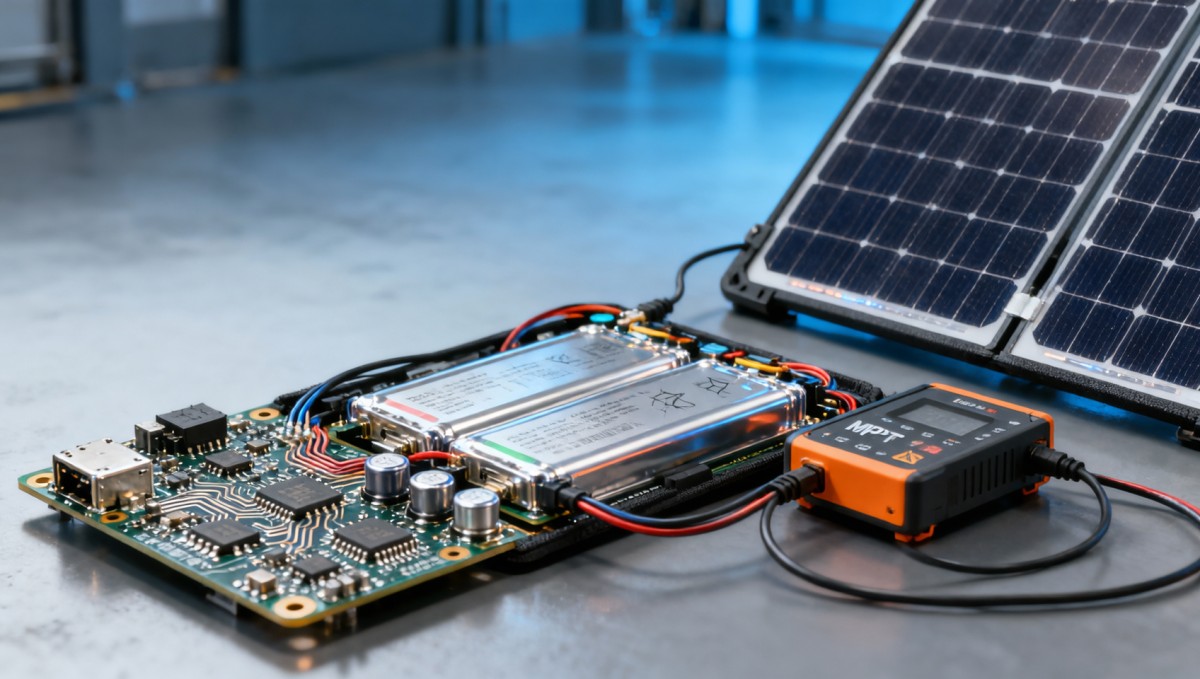
A battery pack rarely fails because of a single dramatic event. In most industrial and commercial applications, failure builds through repeated stress: cell imbalance, heat accumulation, overcurrent, weak low-voltage cutoffs, poor communication, or charging mismatches over weeks or months. That is why bms boards are not just accessory electronics. They are the control layer that decides whether a pack remains stable through 300–800 cycles of demanding use or degrades early under avoidable conditions.
For operators, the most visible benefit is protection against unsafe behavior during charging and discharge. For procurement teams, the value is lower field failure risk, fewer replacement disputes, and clearer technical comparison between suppliers. For project managers, the right battery management system reduces commissioning uncertainty, especially when integrating lithium packs with mppt controllers, inverter systems, portable solar panels, and mobile energy equipment.
In cross-sector use cases such as smart electronics, green energy, and mobile industrial power, battery packs often face ambient temperatures from 0°C to 45°C and charge-discharge variation across daily duty cycles. Under those conditions, a weak bms board may still pass a basic bench test, but it often struggles during sustained operation. This gap between lab acceptability and field performance is where many purchasing errors begin.
TradeNexus Pro tracks these decision points from a B2B sourcing perspective. Instead of treating battery protection as a generic feature, TNP helps buyers and technical evaluators examine how bms boards influence pack consistency, warranty exposure, integration effort, and supplier credibility across multiple supply chain stages.
The main failure pathways a BMS board is expected to control
When teams review battery pack reliability, it helps to separate visible symptoms from root causes. A pack that drops capacity too fast, cuts off unexpectedly, or overheats during peak load may be showing deeper control issues rather than purely bad cells. In many cases, the BMS logic, component quality, sensing accuracy, and balancing behavior determine how quickly those issues escalate.
- Overcharge and over-discharge protection, which are essential for preventing cell voltage from moving outside the safe operating window during repeated daily cycling.
- Overcurrent and short-circuit response, where reaction speed and cutoff strategy directly affect pack safety, connector stress, and downstream device survival.
- Thermal monitoring across 2–6 sensing points in many medium-size packs, helping prevent charging or discharging under unsafe temperature conditions.
- Cell balancing, which becomes more critical as pack series count increases and mismatch accumulates over 100+ operating cycles.
If a supplier only highlights nominal voltage and current but cannot explain balancing current, temperature strategy, or MOSFET protection design, that is a warning sign for buyers. Real prevention depends on specific control features, not generic sales language.
Which key features on BMS boards actually prevent pack failure?
Not every battery management system delivers the same level of protection. Some boards are suitable only for low-demand consumer packs, while others are built for higher-current industrial, solar, and mobility applications. For buyers comparing options, at least 5 core areas should be reviewed: voltage protection, current handling, thermal logic, balancing strategy, and communication capability. These features influence both safety and serviceability.
The table below summarizes the practical feature set that most procurement teams should verify before approving bms boards for deep cycle batteries, solar storage modules, or portable power products. It is especially useful when comparing suppliers that appear similar on headline specifications but differ on actual control depth.
This comparison shows why a “same voltage, same current” claim is not enough. Two bms boards with similar labels may differ sharply in balancing effectiveness, cutoff accuracy, and communication support. Those differences matter more as the application moves from light-use electronics to energy storage, field-deployed solar equipment, or multi-pack systems.
Voltage and current protection are the first screening layer
The first question should be simple: can the board protect each cell and the full pack under realistic load conditions? In many B2B projects, a pack may operate at 10A–30A continuously, with higher pulse loads during startup or motor activation. A board that only survives short bursts in a test bench can still fail in field operation if thermal design and current derating are not clear.
Procurement teams should ask for continuous current rating, peak current duration, and protection reset logic. Automatic recovery may suit some portable devices, but controlled restart may be safer for industrial equipment. This is not a minor design detail. It affects user experience, service calls, and downstream hardware risk.
Balancing and thermal control are often underestimated
A battery pack can look healthy at shipment and still drift into imbalance after 3–6 months of cycling. This is especially common when packs are used with portable solar panels or folding solar chargers where input conditions vary through the day. Without adequate balancing, one weak cell can trigger early cutoff and reduce the practical capacity of the entire pack.
Thermal management matters just as much. Charging lithium chemistry at low temperature or discharging heavily at elevated temperature can shorten service life even if no immediate failure occurs. Good bms boards should define charge and discharge lockout thresholds, support multiple NTC inputs where needed, and maintain stable sensing under vibration and long-term use.
How should buyers compare BMS boards for solar, portable power, and deep cycle systems?
A useful sourcing comparison starts with the application, not the board alone. The right battery management system for a compact smart electronics product may not be appropriate for deep cycle batteries in backup energy storage. Buyers should define pack chemistry, series count, continuous current, communication needs, and installation environment before issuing RFQs. In practice, 4 evaluation layers work well: electrical fit, protection depth, integration fit, and supplier execution.
The table below helps teams compare bms boards across common B2B scenarios. It is not a universal pass-fail matrix, but it provides a more decision-ready framework than generic brochure language. This is particularly useful for distributors, project leads, and procurement personnel managing multiple suppliers across green energy and smart electronics categories.
The key lesson is that application context changes what “best fit” means. A low-cost board may work for a simple pack, but once duty cycle, field charging variability, or communication requirements increase, the long-term cost of under-specification can exceed the initial savings.
A practical procurement checklist for enterprise teams
For cross-functional teams, the most efficient review process usually includes 6 checks before vendor approval. This avoids repeated back-and-forth between engineering, sourcing, and management during pilot builds or mass purchase planning.
- Confirm chemistry and cell count compatibility, such as Li-ion or LiFePO4, and verify the exact series configuration.
- Verify continuous current, 5–10 second peak load handling, and thermal derating conditions.
- Check balancing method, balancing trigger threshold, and whether balancing works effectively near full charge.
- Review communication options including CAN, RS485, or UART if the system needs monitoring or fleet management.
- Ask for protection logic details, including delay times, recovery conditions, and temperature cutoff behavior.
- Assess sample lead time, pilot quantity support, and batch consistency plan before scaling to medium or large orders.
This checklist is especially valuable for distributors and agents who must compare multiple suppliers quickly while still protecting end-customer expectations. A structured comparison reduces the risk of choosing on headline price alone.
What technical and compliance questions should not be skipped?
Technical fit is not only about nominal specs. In B2B procurement, the real cost often appears later through certification delays, compatibility issues, or unclear fault behavior in field operation. That is why buyers should connect BMS board evaluation with system-level requirements, especially if the final product enters export markets or regulated industry channels.
For many battery applications, teams should at least discuss electrical protection design, thermal sensing strategy, connector and wiring limitations, and documentation support. If the pack is part of equipment that may require transport, product safety, or market access review, the BMS design should align with the broader compliance path rather than being treated as a late-stage component purchase.
Common reference points may include transport-related battery handling requirements, electrical safety documentation, and application-specific integration expectations. The exact standard set depends on the end product and target market, but the procurement principle is consistent: confirm early, not after tooling or batch production begins. A 2–4 week delay caused by documentation gaps can easily outweigh any unit-price advantage.
Questions that reveal supplier maturity
Experienced buyers know that strong suppliers can explain not only what a board does, but how it behaves under edge conditions. This matters for enterprise decision-makers evaluating long-term reliability and support burden.
- What happens when one temperature sensor fails or drifts out of range during operation?
- How is overcurrent tested: continuous load, pulse load, or simulated short-circuit only?
- Does the board support event logging or fault code output for after-sales diagnosis?
- What is the normal sample preparation timeline, such as 7–15 days, and what changes in pilot or production runs?
Questions like these help distinguish a board assembled for basic functionality from one developed for repeatable deployment. They also support commercial evaluation by making service expectations more measurable.
Misconceptions that often lead to pack problems
One common mistake is assuming that a higher current label automatically means better durability. In reality, board layout, heat dissipation, component selection, and test method all influence actual performance. Another mistake is focusing on the BMS board alone without checking charger behavior, connector rating, enclosure airflow, and cell matching quality.
A third misconception is that balancing can repair poor cell selection. It cannot. Balancing helps maintain consistency, but it does not turn a poorly matched pack into a robust long-life system. Project leaders should treat cell quality, mechanical design, and BMS logic as a coordinated control package.
How can TradeNexus Pro support smarter sourcing and faster project decisions?
For buyers and project teams working across advanced manufacturing, green energy, smart electronics, healthcare technology, and supply chain SaaS-enabled operations, product information alone is rarely enough. Decision quality improves when teams can connect technical criteria with supplier context, market movement, and implementation risk. That is where TradeNexus Pro adds value beyond a basic listing or broad industry portal.
TNP helps procurement directors, supply chain managers, technical reviewers, and channel partners focus on commercially relevant details: which features on bms boards matter for specific applications, how integration with mppt controllers or solar charge controllers changes requirements, what questions reduce sourcing risk, and where supplier claims need deeper verification. This makes internal evaluation faster and more aligned across engineering and purchasing.
In practical terms, enterprise users often need support in 5 areas: parameter confirmation, application-fit screening, sample planning, lead-time assessment, and compliance discussion. TNP’s industry-focused content environment is designed for that decision workflow, especially when projects move from concept validation to pilot procurement and then into repeat orders.
Why this matters for procurement, distribution, and project delivery
Distributors and agents need product narratives that are technically credible and commercially usable. Project managers need fewer surprises during integration. Decision-makers need clearer risk visibility before budget approval. A well-structured intelligence platform helps each group work from the same fact base rather than from fragmented vendor claims.
If you are evaluating bms boards for deep cycle batteries, portable energy products, or solar-linked storage, TradeNexus Pro can help you narrow the field with more precision. You can consult on key parameters such as cell count, current range, balancing method, communication needs, and temperature strategy; discuss typical sample support and delivery timelines; and clarify whether your target solution needs custom logic, integration guidance, or documentation support for downstream market requirements.
Contact us for decision-ready guidance
If your team is comparing battery management systems, planning a new battery pack program, or troubleshooting field failures tied to protection logic, use TradeNexus Pro as a practical decision partner. You can reach out for parameter review, product selection support, delivery cycle discussion, custom solution matching, certification-path considerations, sample coordination, and quotation communication. This is especially useful when multiple stakeholders need a clearer technical-commercial basis before moving forward.
Get weekly intelligence in your inbox.
No noise. No sponsored content. Pure intelligence.
 Apr 18, 2026TradeNexus Pro Launches Global Compliance RadarTradeNexus Pro Launches Global Compliance Radar
 Apr 18, 2026JIS T 2304:2026 Takes Effect June 1, 2026 for IVD SoftwareJIS T 2304:2026 Takes Effect June 1, 2026 for IVD Software
 Pathway for Rehab Devices with AI Modules") Apr 18, 2026FDA Updates 510(k) Pathway for Rehab Devices with AI ModulesFDA Updates 510(k) Pathway for Rehab Devices with AI Modules
Apr 18, 2026FDA Updates 510(k) Pathway for Rehab Devices with AI ModulesFDA Updates 510(k) Pathway for Rehab Devices with AI Modules Apr 18, 2026India BIS Approves 3 Chinese IoT Labs for IS 16444:2026 CertificationIndia BIS Approves 3 Chinese IoT Labs for IS 16444:2026 Certification
 Apr 18, 2026THE Alliance Launches Green Slot Priority for China PortsTHE Alliance Launches Green Slot Priority for China Ports
 Apr 18, 2026TÜV Rheinland Releases Dual-Standard ESS Certification Guide for ChinaTÜV Rheinland Releases Dual-Standard ESS Certification Guide for China
 Apr 18, 2026Vietnam Imposes AD Duties on Chinese Electronic ComponentsVietnam Imposes AD Duties on Chinese Electronic Components
 Apr 18, 2026SASO Launches PV Carbon Footprint Labeling from July 2026SASO Launches PV Carbon Footprint Labeling from July 2026
 Apr 18, 2026U.S. Adds 17 Smart Warehouse Robot Components to Export Control ListU.S. Adds 17 Smart Warehouse Robot Components to Export Control List
 Apr 18, 2026EU Enforces EN IEC 62443-4-2:2026 for Industrial Control Devices from 18 Apr 2026EU Enforces EN IEC 62443-4-2:2026 for Industrial Control Devices from 18 Apr 2026
 Apr 17, 2026Temperature data loggers drift unpredictably inside lithium-ion battery storage enclosuresTemperature data loggers drift unpredictably inside lithium-ion battery storage enclosures
 Apr 17, 2026Are solar microinverters really worth the extra cost?Are solar microinverters really worth the extra cost?
 Apr 17, 2026Bifacial solar panels: How much more energy can they generate?Bifacial solar panels: How much more energy can they generate?
 Apr 17, 2026Gear manufacturing: How to optimize production for high precision?Gear manufacturing: How to optimize production for high precision?
 Apr 17, 2026Why power transmission components fail earlier than expectedWhy power transmission components fail earlier than expected
 Apr 17, 2026Linear motion systems: belt drive or ball screw for speed?Linear motion systems: belt drive or ball screw for speed?
 Apr 17, 2026Industrial bearing suppliers: what signals reliable quality?Industrial bearing suppliers: what signals reliable quality?
 Apr 17, 2026When pneumatic valves wholesale gets expensive laterWhen pneumatic valves wholesale gets expensive later
 Apr 17, 2026Hydraulic cylinder fabrication mistakes that cause oil leaksHydraulic cylinder fabrication mistakes that cause oil leaks
 Apr 17, 2026Heavy equipment manufacturing delays often start hereHeavy equipment manufacturing delays often start here
 Apr 17, 2026Custom heatsinks: when a larger size solves nothingCustom heatsinks: when a larger size solves nothing
 Apr 17, 2026Electronic enclosure fabrication: steel or aluminum?Electronic enclosure fabrication: steel or aluminum?
 Apr 17, 2026Automotive parts machining tolerances that drive up scrapAutomotive parts machining tolerances that drive up scrap
 Apr 17, 2026Medical device manufacturing changes under tighter traceabilityMedical device manufacturing changes under tighter traceability
 Apr 17, 2026How to Choose Solid State Batteries in 2026How to Choose Solid State Batteries in 2026
 Apr 17, 2026Are Solid State Batteries Worth the Cost Yet?Are Solid State Batteries Worth the Cost Yet?
 Apr 17, 2026Commercial Energy Storage Sizing: What Matters Most?Commercial Energy Storage Sizing: What Matters Most?