BMS boards: the small compatibility issues that cause big delays
In battery projects, small compatibility gaps in bms boards can trigger costly delays across sourcing, testing, and deployment. For buyers and engineers comparing components such as mppt controllers, solar charge controllers, iot energy monitors, and smart plugs wholesale solutions, understanding these hidden mismatches is critical. This article explains where issues start, how they affect timelines and safety, and what decision-makers should verify before approval.
In practice, many delays do not come from major design errors. They come from small mismatches between the BMS board, battery chemistry, communication protocol, charger logic, inverter settings, and field monitoring devices. A project can look ready on paper, yet lose 2–6 weeks because one parameter table, connector layout, or firmware rule was not aligned early enough.
For procurement teams, project managers, quality staff, and financial approvers, the issue is not only technical. Compatibility problems affect sample rounds, approval cycles, shipment release, warranty exposure, and even site safety planning. That is why BMS board evaluation should be treated as a cross-functional decision, not only an engineering task.
Where small BMS board mismatches usually begin
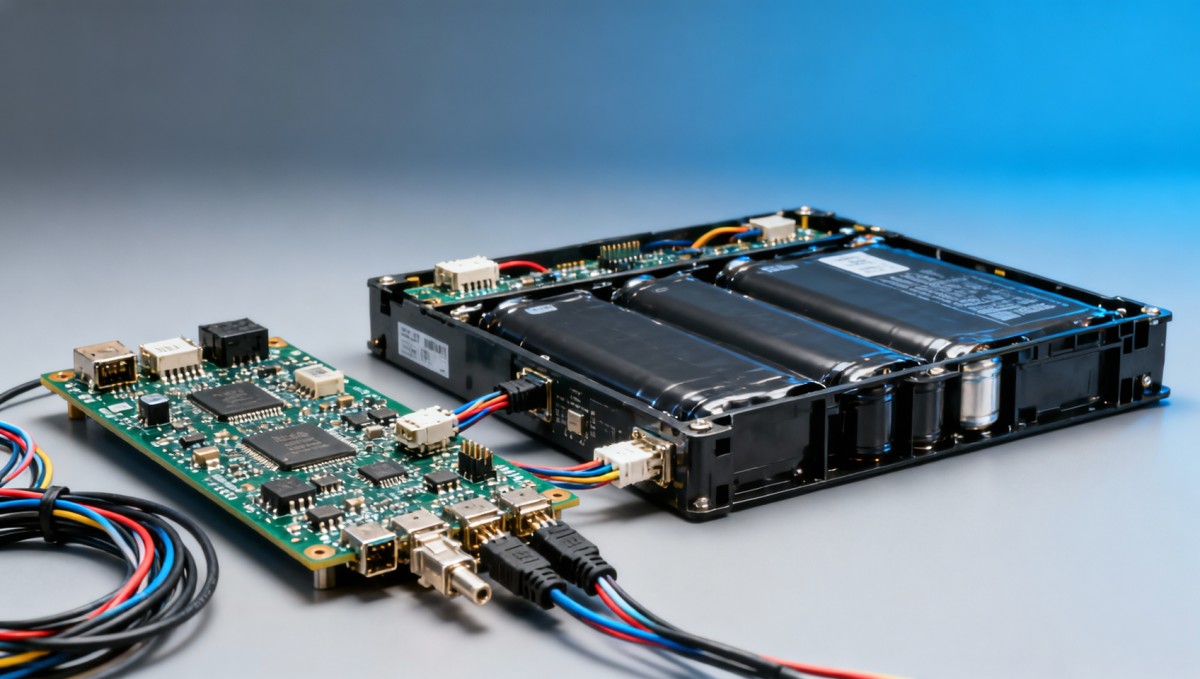
A battery management system board sits at the center of cell protection, balancing, charging control, and data reporting. Even when two boards appear similar in voltage range or current rating, hidden differences can create immediate integration friction. In most B2B projects, the first problems appear in four areas: battery chemistry settings, communication interfaces, protection thresholds, and mechanical integration.
Chemistry mismatch is one of the most common examples. A BMS board configured for LiFePO4 behaves differently from one intended for NMC or LTO cells. The nominal voltage window, charge cut-off logic, low-temperature charging rule, and balancing strategy can vary enough to require firmware changes or a different board revision. If this is discovered after sampling, timelines often slip by 7–21 days.
Communication mismatch is equally disruptive. A project may require CAN, RS485, UART, Modbus, or Bluetooth-based diagnostics. If the BMS board outputs a format that the inverter, MPPT controller, IoT energy monitor, or EMS gateway cannot interpret, system commissioning slows down. The hardware may be functional, but the ecosystem is not interoperable, which means field data, alarms, and remote updates may fail.
Mechanical details are often underestimated. Connector pitch differences of 1–2 mm, enclosure clearance limits, harness pin assignments, or thermal sensor placement can force redesign of cable assemblies or battery packs. On a pilot build of 50–200 units, such changes may seem manageable. On a commercial order, they can delay production release, inspection, and packaging workflows across multiple suppliers.
Typical root causes behind late-stage compatibility issues
- Board specification reviewed only by engineering, without procurement and quality input.
- Firmware version not locked before pilot testing or pre-shipment inspection.
- Cell supplier changed, but the BMS balancing and protection profile stayed unchanged.
- Communication protocol listed generally as “CAN” or “RS485” without frame definition.
- Chargers and solar charge controllers selected before BMS charge acceptance logic was confirmed.
Why these issues escape early review
Many RFQs focus on headline specifications such as 24 V, 48 V, 100 A, or 200 A continuous current. Those values matter, but they do not reveal balancing current, wake-up behavior, low-temperature protection, fault recovery sequence, or data frame compatibility. In large sourcing cycles, these smaller items are often buried in revision notes instead of procurement checklists.
The table below shows how small BMS board gaps commonly translate into project delays and commercial risk.
The key takeaway is simple: a BMS board is not just an electrical part. It is a system-level control interface. If a team evaluates only voltage and current, the project may pass sourcing review but fail integration review. That gap is where many expensive delays start.
How compatibility gaps affect sourcing, testing, and deployment schedules
The commercial cost of a compatibility issue usually unfolds in stages. First comes sourcing disruption. A buyer may receive samples that meet the quoted specification but still require a firmware adjustment, harness change, or protocol patch. This adds another engineering loop, another quotation review, and often another internal approval step for cost or lead time.
Next comes test delay. If a battery pack has to be retested for overvoltage, undervoltage, short-circuit response, or balancing accuracy, the lab schedule shifts. Even a moderate retest program can consume 5–10 working days, especially when multiple components such as solar charge controllers, MPPT controllers, or IoT monitoring modules are part of the validation sequence.
Deployment delay can be even more expensive. When the BMS board does not communicate correctly with smart plugs, energy dashboards, or site-level controllers, installers may finish physical installation but fail final commissioning. This means labor is already on site, yet the system cannot be released. For distributed commercial projects, each extra site visit increases logistics cost and approval friction.
Safety and compliance teams should also pay close attention. A BMS board with mismatched temperature sensing, inaccurate state-of-charge calculation, or unsuitable fault thresholds can create operational uncertainty. The pack may not fail immediately, but it may operate outside the preferred safety envelope. In procurement terms, that raises the risk of returns, service claims, and delayed customer acceptance.
A realistic timeline view for B2B teams
In a typical battery project, the delay chain often looks like this:
- Initial sample approval in 3–7 days based on headline parameters.
- Integration issue discovered during charger or inverter communication test.
- Supplier sends revised firmware or adapter harness after 7–14 days.
- Retest and quality confirmation add another 5–10 working days.
- Mass production release moves back by 2–4 weeks.
Impact by stakeholder group
For project managers, the main problem is schedule compression. For procurement teams, it is supplier coordination and revision control. For finance approvers, it is unplanned testing cost and delayed revenue recognition. For distributors and resellers, it is missed delivery windows and uncertain after-sales obligations. One small BMS board mismatch can therefore affect 6–8 internal functions, not just engineering.
The matrix below helps decision-makers estimate where time loss appears most often.
A useful planning principle is to treat BMS board compatibility as a schedule risk item from day 1. If no structured review happens before sampling, teams often end up paying for emergency fixes later, when time and change capacity are both more limited.
What buyers and engineers should verify before approval
Before approving a BMS board for pilot or bulk order, teams should verify more than nominal ratings. A solid approval package normally covers electrical fit, firmware fit, communication fit, safety logic, and documentation completeness. If even one of these areas remains vague, the chance of rework rises sharply during integration.
Electrical fit starts with cell count, nominal pack voltage, peak current, continuous current, and balancing current. For many commercial energy storage or smart electronics applications, balancing current in the range of 30–150 mA may be common, but what matters is whether that level is suitable for the cell capacity and expected cycle profile. A mismatch here can affect pack consistency over months, not only at shipment.
Communication fit should be documented in detail. It is not enough to ask whether the board supports CAN or RS485. Buyers should request message IDs, baud rate, register map, fault code logic, update method, and compatibility with adjacent components such as solar charge controllers, IoT energy monitors, or smart plugs used for load control and data collection.
Documentation fit is often the final filter. A supplier should be able to provide revision-controlled specifications, pinout drawings, firmware version references, test procedures, and basic troubleshooting notes. Without these documents, even a technically suitable board becomes risky at scale because incoming inspection and after-sales support cannot be standardized efficiently.
Core approval checklist for cross-functional teams
- Confirm battery chemistry, cell count, and voltage thresholds match the actual pack design.
- Verify continuous current and peak current under the real duty cycle, not only catalog values.
- Review low-temperature charge lockout and thermal sensor quantity for the intended environment.
- Match communication protocol, data format, and alarm logic to inverter, charger, or EMS requirements.
- Check connector pinout, cable length, and mounting constraints before tooling release.
- Lock firmware version and change-control rules before pilot approval.
Questions financial and quality teams should ask
Financial approvers should ask whether the selected board reduces future retest and field support cost, not only unit price. Quality teams should ask whether the supplier’s documentation supports incoming inspection in a repeatable way. If the answer is unclear, the cheapest option may become the most expensive option over a 6–12 month deployment cycle.
The following table can be used as a practical procurement and engineering review tool.
When this checklist is used before purchase approval, teams usually identify gaps early enough to manage them during sampling rather than after mass production planning. That timing difference is what protects project schedules.
Integration strategies that reduce delay risk across the supply chain
The best way to avoid BMS board compatibility delays is to move verification upstream. Instead of waiting until the battery pack is fully assembled, teams should align the BMS board with chargers, inverters, MPPT controllers, monitoring devices, and software gateways during the design review stage. A 5-step integration workflow is usually more effective than reactive troubleshooting.
First, define the operating envelope. This includes voltage range, current peaks, ambient temperature range, cycle pattern, and emergency behavior. For many industrial and commercial applications, teams review operating temperatures such as -10°C to 55°C, but the exact charge permission logic at low temperature matters more than the range itself.
Second, validate interface compatibility in pairs. Test BMS-to-charger, BMS-to-inverter, and BMS-to-IoT monitor separately before full system testing. This modular approach isolates issues faster and can reduce troubleshooting time by several days. It also makes distributor and after-sales training easier because fault pathways are documented more clearly.
Third, establish change control. A revised BMS board without updated documentation is a hidden liability. Any change in firmware, connector, balancing setting, or alarm logic should trigger a mini-review involving engineering, procurement, and quality. Even if the revision appears minor, the downstream effect may not be minor.
Recommended 5-step control process
- Create a shared compatibility matrix covering battery pack, charger, inverter, EMS, and field monitoring tools.
- Run bench tests on communication and fault behavior before pack sealing or enclosure finalization.
- Freeze firmware and connector definitions before pilot production of 20–100 units.
- Use incoming inspection to verify board revision, labels, and protocol documentation on every batch.
- Capture field feedback from the first 30–60 days to confirm no hidden alarm or reset issue remains.
Common implementation mistakes
One common mistake is assuming that a successful lab demo guarantees field compatibility. Another is allowing the charger vendor, battery pack vendor, and software vendor to work from different document revisions. A third is skipping distributor training on alarm interpretation. These gaps can turn a technically sound system into a slow and expensive deployment.
For international B2B sourcing, coordination matters as much as component quality. A board that is electrically acceptable but poorly documented can still harm lead times, especially when stakeholders operate across 2–4 time zones and approval depends on several departments. Strong integration discipline therefore protects both engineering performance and commercial execution.
FAQ for procurement, quality, and project teams
How do I know if a BMS board is really compatible with my system?
Check five layers: battery chemistry, cell count, current profile, communication protocol, and connector layout. Then confirm firmware version, alarm logic, and reset behavior. If the supplier can only confirm voltage and current but cannot provide protocol mapping or threshold details, compatibility is not fully verified.
How long does BMS-related revalidation usually take?
Minor protocol or firmware fixes may add 5–10 working days. If harnesses, thermal sensors, or pack structure also need revision, the delay can extend to 2–4 weeks. In projects involving multiple linked products such as solar charge controllers and remote energy monitors, the retest window is often longer because each interface must be rechecked.
Which indicators matter most for buyers comparing suppliers?
Beyond price, focus on documentation depth, firmware control, protocol clarity, sample response time, and revision traceability. A supplier that answers technical questions within 24–72 hours and provides structured test documents generally reduces project uncertainty more than a lower-cost supplier with incomplete data.
Are communication issues only relevant in large energy storage projects?
No. Communication matters in compact smart electronics and distributed power products as well. Even smaller systems using IoT energy monitors or smart plug control can suffer from missing alarms, incorrect state display, or unreliable remote shutdown if the BMS board communication layer is not aligned early.
Small BMS board compatibility issues create big delays because they sit at the intersection of hardware, firmware, data, safety, and supply chain execution. The most resilient projects treat BMS review as a structured business decision, not just a component check. By validating chemistry fit, protocol mapping, mechanical details, and revision control before approval, teams can reduce retesting, protect timelines, and improve deployment confidence. If you are evaluating battery components, adjacent power-control devices, or system integration pathways, contact TradeNexus Pro to explore tailored sourcing intelligence, technical comparison support, and solution-focused guidance for your next project.
Get weekly intelligence in your inbox.
No noise. No sponsored content. Pure intelligence.
 Apr 18, 2026TradeNexus Pro Launches Global Compliance RadarTradeNexus Pro Launches Global Compliance Radar
 Apr 18, 2026JIS T 2304:2026 Takes Effect June 1, 2026 for IVD SoftwareJIS T 2304:2026 Takes Effect June 1, 2026 for IVD Software
 Pathway for Rehab Devices with AI Modules") Apr 18, 2026FDA Updates 510(k) Pathway for Rehab Devices with AI ModulesFDA Updates 510(k) Pathway for Rehab Devices with AI Modules
Apr 18, 2026FDA Updates 510(k) Pathway for Rehab Devices with AI ModulesFDA Updates 510(k) Pathway for Rehab Devices with AI Modules Apr 18, 2026India BIS Approves 3 Chinese IoT Labs for IS 16444:2026 CertificationIndia BIS Approves 3 Chinese IoT Labs for IS 16444:2026 Certification
 Apr 18, 2026THE Alliance Launches Green Slot Priority for China PortsTHE Alliance Launches Green Slot Priority for China Ports
 Apr 18, 2026TÜV Rheinland Releases Dual-Standard ESS Certification Guide for ChinaTÜV Rheinland Releases Dual-Standard ESS Certification Guide for China
 Apr 18, 2026Vietnam Imposes AD Duties on Chinese Electronic ComponentsVietnam Imposes AD Duties on Chinese Electronic Components
 Apr 18, 2026SASO Launches PV Carbon Footprint Labeling from July 2026SASO Launches PV Carbon Footprint Labeling from July 2026
 Apr 18, 2026U.S. Adds 17 Smart Warehouse Robot Components to Export Control ListU.S. Adds 17 Smart Warehouse Robot Components to Export Control List
 Apr 18, 2026EU Enforces EN IEC 62443-4-2:2026 for Industrial Control Devices from 18 Apr 2026EU Enforces EN IEC 62443-4-2:2026 for Industrial Control Devices from 18 Apr 2026
 Apr 17, 2026Temperature data loggers drift unpredictably inside lithium-ion battery storage enclosuresTemperature data loggers drift unpredictably inside lithium-ion battery storage enclosures
 Apr 17, 2026Are solar microinverters really worth the extra cost?Are solar microinverters really worth the extra cost?
 Apr 17, 2026Bifacial solar panels: How much more energy can they generate?Bifacial solar panels: How much more energy can they generate?
 Apr 17, 2026Gear manufacturing: How to optimize production for high precision?Gear manufacturing: How to optimize production for high precision?
 Apr 17, 2026Why power transmission components fail earlier than expectedWhy power transmission components fail earlier than expected
 Apr 17, 2026Linear motion systems: belt drive or ball screw for speed?Linear motion systems: belt drive or ball screw for speed?
 Apr 17, 2026Industrial bearing suppliers: what signals reliable quality?Industrial bearing suppliers: what signals reliable quality?
 Apr 17, 2026When pneumatic valves wholesale gets expensive laterWhen pneumatic valves wholesale gets expensive later
 Apr 17, 2026Hydraulic cylinder fabrication mistakes that cause oil leaksHydraulic cylinder fabrication mistakes that cause oil leaks
 Apr 17, 2026Heavy equipment manufacturing delays often start hereHeavy equipment manufacturing delays often start here
 Apr 17, 2026Custom heatsinks: when a larger size solves nothingCustom heatsinks: when a larger size solves nothing
 Apr 17, 2026Electronic enclosure fabrication: steel or aluminum?Electronic enclosure fabrication: steel or aluminum?
 Apr 17, 2026Automotive parts machining tolerances that drive up scrapAutomotive parts machining tolerances that drive up scrap
 Apr 17, 2026Medical device manufacturing changes under tighter traceabilityMedical device manufacturing changes under tighter traceability
 Apr 17, 2026How to Choose Solid State Batteries in 2026How to Choose Solid State Batteries in 2026
 Apr 17, 2026Are Solid State Batteries Worth the Cost Yet?Are Solid State Batteries Worth the Cost Yet?
 Apr 17, 2026Commercial Energy Storage Sizing: What Matters Most?Commercial Energy Storage Sizing: What Matters Most?