Commercial energy storage sizing mistakes that raise project costs
Sizing errors in commercial energy storage can quietly inflate CAPEX, reduce system efficiency, and delay ROI. For buyers and technical teams comparing sodium ion batteries, solid state batteries, off grid solar systems, solar microinverters, thin film solar cells, and bifacial solar panels, even small miscalculations can trigger major cost overruns. This guide explains the most common sizing mistakes and how to avoid them before procurement, design, and project approval.
In commercial and industrial projects, storage sizing is not just a battery question. It affects inverter selection, transformer loading, cable sizing, fire safety design, control logic, utility interconnection, and cash-flow assumptions. A system that looks acceptable on a bid sheet can become expensive once demand peaks, cycling depth, backup duration, and ambient temperature are tested against real operating conditions.
For procurement teams, project managers, safety reviewers, and financial approvers, the goal is straightforward: size the system around the actual load profile, operating window, and tariff structure rather than around headline battery capacity. Getting that right early can reduce rework, shorten approval cycles by 2–6 weeks, and improve return forecasts before purchase orders are issued.
Why storage sizing mistakes become expensive so quickly
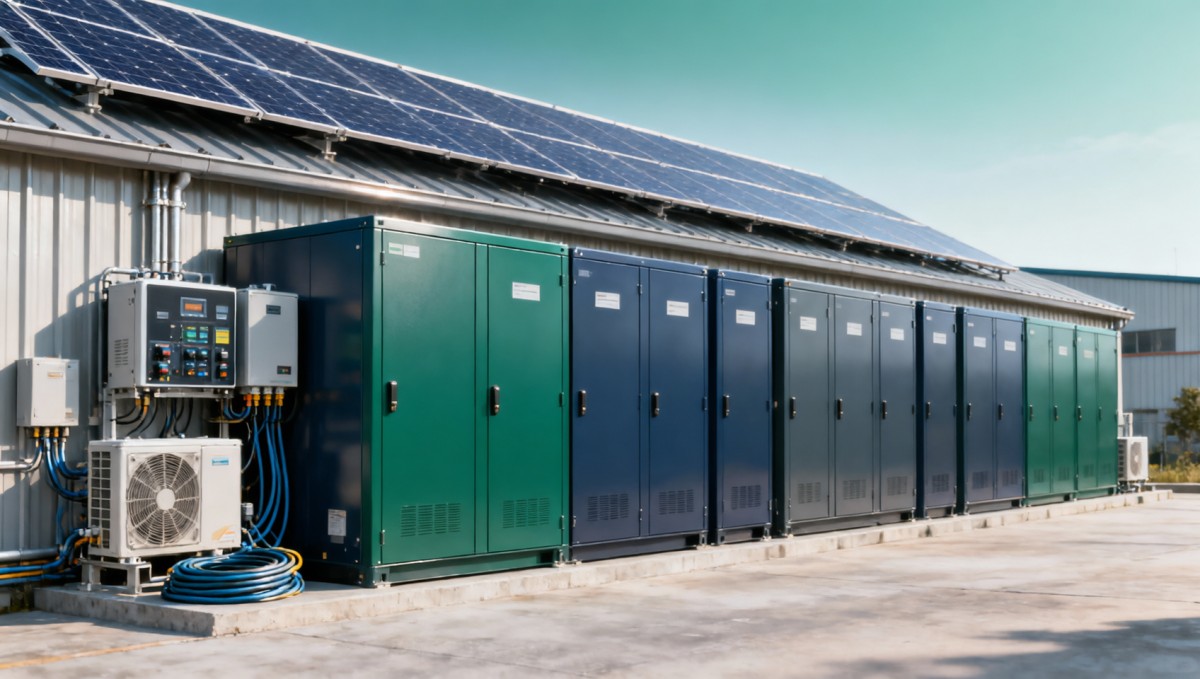
The most common commercial energy storage sizing mistake is confusing nameplate capacity with usable capacity. A 1 MWh battery rarely delivers the full 1 MWh in daily operation. Once depth of discharge limits, reserve margin, conversion losses, and temperature derating are included, usable energy may fall to 700–900 kWh depending on chemistry and control strategy. If procurement is based only on brochure figures, the project can be underbuilt from day one.
Another hidden cost comes from using monthly utility bills instead of 15-minute or 30-minute interval data. Demand charge reduction projects, peak shaving, and backup support require load shape visibility. Two sites with the same monthly kWh consumption can need very different battery sizes if one has sharp 20-minute peaks and the other has stable daytime demand. That difference can shift battery sizing by 25% or more.
The problem becomes more complex when storage is paired with off grid solar systems, solar microinverters, thin film solar cells, or bifacial solar panels. Solar output varies by orientation, weather, clipping behavior, and site shading. If storage is sized on average solar yield instead of seasonal low-production periods, the battery may sit undercharged during critical windows and force expensive diesel backup or grid imports.
Technology selection also matters. Sodium ion batteries may offer attractive temperature tolerance and cost stability for some projects, while solid state batteries may be evaluated for future safety or energy-density advantages. But no chemistry can compensate for poor demand modeling. The system must match the use case: peak shaving, load shifting, self-consumption optimization, backup power, EV charging support, or hybrid operation.
The cost chain behind one wrong assumption
- Undersizing can increase grid imports, trigger demand penalties, and force an early retrofit within 6–18 months.
- Oversizing can raise battery CAPEX, increase HVAC and enclosure costs, and reduce asset utilization below target cycle rates.
- Incorrect discharge duration assumptions can mismatch the PCS and battery ratio, reducing usable output during peak events.
- Ignoring degradation can shift real payback from 4–6 years to 7–9 years in some tariff environments.
In practice, storage sizing should be treated as a cross-functional design exercise. Engineering, operations, finance, procurement, and safety teams each evaluate different risk layers. When those layers are isolated, project costs rise through redesign, delayed approvals, and low first-year performance.
The most common sizing mistakes in commercial projects
Many project teams start with a simple target such as “reduce the peak by 500 kW” or “store 2 hours of solar energy.” These are useful starting points, but they are not complete sizing methods. Commercial energy storage must be built around at least four variables: load variability, discharge duration, round-trip efficiency, and operating reserve. Missing even one of these can distort the specification.
A frequent mistake is selecting battery power and battery energy in the wrong ratio. A 500 kW / 500 kWh system and a 500 kW / 1,500 kWh system deliver very different business outcomes. The first supports roughly 1 hour at rated output before losses and reserve. The second supports closer to 3 hours. If the tariff requires a 2–4 hour discharge window, the shorter-duration system may fail to produce expected savings.
Another error is not accounting for auxiliary loads. HVAC, EMS controls, BMS operation, fire suppression monitoring, and standby consumption can absorb 1%–5% of stored energy depending on system architecture and climate. In hot regions, thermal management energy use may rise further in summer. These losses must be included, especially in backup or off-grid configurations.
Project teams also underestimate environmental derating. High ambient temperatures above 35°C, low winter temperatures below 0°C, dust, humidity, and altitude can all affect available capacity or power delivery. For outdoor systems serving manufacturing plants, logistics centers, or healthcare facilities, site conditions often matter more than catalog values.
Typical mistakes and their financial effect
The table below summarizes common commercial energy storage sizing mistakes and where they usually show up in budget or performance reviews.
The table shows a consistent pattern: the biggest budget overruns usually come from inputs that looked harmless during early screening. Good sizing discipline means validating interval data, thermal conditions, reserve margin, and end-of-life performance before negotiating final equipment quantities.
A practical rule for reserve margin
For many commercial projects, keeping a 10%–20% operating reserve helps protect backup readiness, improve cycle control, and reduce stress at the top and bottom of the charge window. The exact number depends on tariff strategy, outage risk, chemistry, and dispatch logic, but a zero-reserve assumption is rarely robust.
How to size storage correctly across solar, battery chemistry, and load profiles
A reliable sizing process starts with the load profile, not the battery catalog. Teams should collect at least 8–12 weeks of interval data, and 12 months is better when seasonality matters. Facilities with refrigeration, clean rooms, process heating, or EV charging often show highly variable daily peaks. Without that data, a battery selected for average operation may fail during the few hours that drive most cost penalties.
The second step is to define the project objective in measurable terms. Peak shaving may target a 200 kW reduction for 1.5 hours on 10–20 days each month. Backup power may require 2 hours for critical loads only, not for the full facility. Solar self-consumption projects may focus on shifting midday excess generation into a 4 pm–9 pm demand window. The battery size changes significantly depending on which objective is primary.
When evaluating sodium ion batteries, solid state batteries, or other storage options, compare not just nominal energy density, but also operating temperature range, expected cycle behavior, safety strategy, footprint, and supply chain maturity. For some buyers, a larger footprint with better thermal resilience may be more valuable than a compact design with tighter operating limits.
Solar generation assumptions need equal discipline. Bifacial solar panels can improve yield under suitable albedo and site layout, while thin film solar cells may suit certain rooftop or low-light conditions. Solar microinverters can influence system architecture and monitoring granularity. But none of these technologies should be paired with storage on annual average production alone. Design teams should test at least three scenarios: best month, median month, and low-yield month.
A simple sizing workflow for commercial teams
- Define the main value stream: demand charge reduction, backup, energy arbitrage, self-consumption, or hybrid support.
- Collect interval load data in 15-minute or 30-minute resolution for 3–12 months.
- Separate critical loads from non-critical loads if backup is part of the project.
- Apply usable capacity, round-trip efficiency, and reserve margin assumptions.
- Run summer, winter, and shoulder-season scenarios before freezing the equipment list.
The table below provides a practical planning reference for common commercial use cases. It is not a universal rule, but it helps buyers frame early conversations with EPCs, integrators, and finance teams.
The key insight is that storage should be sized to the operational event, not to a generic battery ratio. A project designed for 90 minutes of peak shaving should not inherit a 4-hour architecture simply because it was available in a standard package, unless future use cases justify the extra capital.
Procurement, approval, and safety checks before finalizing capacity
Sizing discipline must continue through procurement. Buyers often receive proposals with different assumptions for usable capacity, degradation, ambient temperature, warranty throughput, and PCS overload capability. Unless those assumptions are normalized, the lowest bid can be misleading. A lower upfront price may reflect thinner reserve margins, shorter duration, or excluded balance-of-system scope.
For technical evaluators and project owners, it helps to compare offers across at least six criteria: rated power, usable energy, efficiency, operating temperature, augmentation strategy, and integration scope. Safety teams should also confirm enclosure layout, fault isolation logic, ventilation design, and fire response planning. In many jurisdictions, those details can influence both approval time and insurance conditions.
Financial reviewers need a clear connection between the sizing model and expected savings. If the ROI case assumes 250 cycles per year, but the actual dispatch pattern supports only 140–180 cycles, the economics will shift. Likewise, if augmentation is expected in year 5 or year 7, that cost should appear in the long-term budget model rather than being treated as a future exception.
Installation and commissioning schedules should also be checked against system complexity. A relatively standard behind-the-meter project may move from order to commissioning in 8–16 weeks, while larger hybrid systems with solar, switchgear upgrades, and utility coordination can require 4–8 months. Incorrect early sizing often extends this timeline because electrical and civil packages need revision.
Commercial storage procurement checklist
- Verify whether quoted energy is nominal or usable at the application-specific discharge window.
- Request performance assumptions for year 1 and end-of-life, not just initial operation.
- Confirm whether EMS, switchgear, HVAC, fire safety, and commissioning are included in scope.
- Review operating constraints at 0°C, 25°C, and 35°C if the site sees seasonal extremes.
- Check if the battery is optimized for daily cycling, standby backup, or hybrid solar operation.
Questions procurement teams should ask suppliers
Ask for a dispatch model based on your own facility data, not a generic profile. Ask what happens if your actual peak lasts 110 minutes instead of 60, or if your solar charging window falls by 20% in winter. Ask whether the warranty structure supports the expected cycle count and throughput. These questions expose weak assumptions before contract signing rather than after commissioning.
FAQ: practical answers for buyers and project teams
How much operating data is enough for commercial energy storage sizing?
A minimum of 8–12 weeks of interval data can support preliminary sizing, but 12 months is preferred for final design. Seasonal operations, cooling loads, process cycles, and occupancy shifts can materially change battery requirements. If only monthly bills are available, treat any system size as provisional.
Should buyers size for today’s load or future expansion?
The answer depends on growth certainty. If a site expansion, EV fleet rollout, or new production line is expected within 12–24 months, it may be smarter to design switchgear, controls, and physical space for expansion while installing only the initial battery blocks needed today. That approach can reduce stranded capital while preserving upgrade flexibility.
Are sodium ion batteries or solid state batteries automatically better for commercial projects?
Not automatically. The better choice depends on operating temperature, energy density requirements, safety strategy, project timeline, and commercial maturity. Procurement teams should compare the full application fit, including footprint, dispatch behavior, service support, and bankability, rather than selecting by chemistry trend alone.
What is the biggest red flag in a storage proposal?
A proposal that promises savings without showing interval-load assumptions, usable capacity calculations, reserve margins, and degradation treatment should be reviewed carefully. In most cases, unclear modeling is a larger risk than a moderate difference in battery unit price.
Commercial energy storage sizing is a strategic decision that affects capital cost, system resilience, operating savings, and project timing. The most expensive mistakes usually come from incomplete load analysis, unrealistic duration assumptions, missing reserve margins, and weak alignment between solar generation and battery dispatch.
For organizations evaluating battery systems alongside solar microinverters, off grid solar systems, thin film solar cells, bifacial solar panels, sodium ion batteries, or emerging solid state batteries, the safest path is a data-based sizing model tied directly to the site’s real operating profile and procurement constraints.
If your team is comparing suppliers, refining a specification, or preparing project approval documents, TradeNexus Pro can help you assess technology fit, supplier positioning, and commercial decision factors with greater precision. Contact us to discuss your application, request a tailored evaluation framework, or explore more solutions for commercial energy storage planning.
Get weekly intelligence in your inbox.
No noise. No sponsored content. Pure intelligence.
 Apr 18, 2026TradeNexus Pro Launches Global Compliance RadarTradeNexus Pro Launches Global Compliance Radar
 Apr 18, 2026JIS T 2304:2026 Takes Effect June 1, 2026 for IVD SoftwareJIS T 2304:2026 Takes Effect June 1, 2026 for IVD Software
 Pathway for Rehab Devices with AI Modules") Apr 18, 2026FDA Updates 510(k) Pathway for Rehab Devices with AI ModulesFDA Updates 510(k) Pathway for Rehab Devices with AI Modules
Apr 18, 2026FDA Updates 510(k) Pathway for Rehab Devices with AI ModulesFDA Updates 510(k) Pathway for Rehab Devices with AI Modules Apr 18, 2026India BIS Approves 3 Chinese IoT Labs for IS 16444:2026 CertificationIndia BIS Approves 3 Chinese IoT Labs for IS 16444:2026 Certification
 Apr 18, 2026THE Alliance Launches Green Slot Priority for China PortsTHE Alliance Launches Green Slot Priority for China Ports
 Apr 18, 2026TÜV Rheinland Releases Dual-Standard ESS Certification Guide for ChinaTÜV Rheinland Releases Dual-Standard ESS Certification Guide for China
 Apr 18, 2026Vietnam Imposes AD Duties on Chinese Electronic ComponentsVietnam Imposes AD Duties on Chinese Electronic Components
 Apr 18, 2026SASO Launches PV Carbon Footprint Labeling from July 2026SASO Launches PV Carbon Footprint Labeling from July 2026
 Apr 18, 2026U.S. Adds 17 Smart Warehouse Robot Components to Export Control ListU.S. Adds 17 Smart Warehouse Robot Components to Export Control List
 Apr 18, 2026EU Enforces EN IEC 62443-4-2:2026 for Industrial Control Devices from 18 Apr 2026EU Enforces EN IEC 62443-4-2:2026 for Industrial Control Devices from 18 Apr 2026
 Apr 17, 2026Temperature data loggers drift unpredictably inside lithium-ion battery storage enclosuresTemperature data loggers drift unpredictably inside lithium-ion battery storage enclosures
 Apr 17, 2026Are solar microinverters really worth the extra cost?Are solar microinverters really worth the extra cost?
 Apr 17, 2026Bifacial solar panels: How much more energy can they generate?Bifacial solar panels: How much more energy can they generate?
 Apr 17, 2026Gear manufacturing: How to optimize production for high precision?Gear manufacturing: How to optimize production for high precision?
 Apr 17, 2026Why power transmission components fail earlier than expectedWhy power transmission components fail earlier than expected
 Apr 17, 2026Linear motion systems: belt drive or ball screw for speed?Linear motion systems: belt drive or ball screw for speed?
 Apr 17, 2026Industrial bearing suppliers: what signals reliable quality?Industrial bearing suppliers: what signals reliable quality?
 Apr 17, 2026When pneumatic valves wholesale gets expensive laterWhen pneumatic valves wholesale gets expensive later
 Apr 17, 2026Hydraulic cylinder fabrication mistakes that cause oil leaksHydraulic cylinder fabrication mistakes that cause oil leaks
 Apr 17, 2026Heavy equipment manufacturing delays often start hereHeavy equipment manufacturing delays often start here
 Apr 17, 2026Custom heatsinks: when a larger size solves nothingCustom heatsinks: when a larger size solves nothing
 Apr 17, 2026Electronic enclosure fabrication: steel or aluminum?Electronic enclosure fabrication: steel or aluminum?
 Apr 17, 2026Automotive parts machining tolerances that drive up scrapAutomotive parts machining tolerances that drive up scrap
 Apr 17, 2026Medical device manufacturing changes under tighter traceabilityMedical device manufacturing changes under tighter traceability
 Apr 17, 2026How to Choose Solid State Batteries in 2026How to Choose Solid State Batteries in 2026
 Apr 17, 2026Are Solid State Batteries Worth the Cost Yet?Are Solid State Batteries Worth the Cost Yet?
 Apr 17, 2026Commercial Energy Storage Sizing: What Matters Most?Commercial Energy Storage Sizing: What Matters Most?