How Battery Management Systems Cut Maintenance Risk
In energy systems built around deep cycle batteries, portable solar panels, and solar charge controllers, battery management systems play a critical role in reducing maintenance risk. From bms boards in compact storage units to larger setups using mppt controllers, smarter battery oversight helps operators, buyers, and project leaders improve safety, extend service life, and make better investment decisions.
Why battery management systems matter in real operating environments
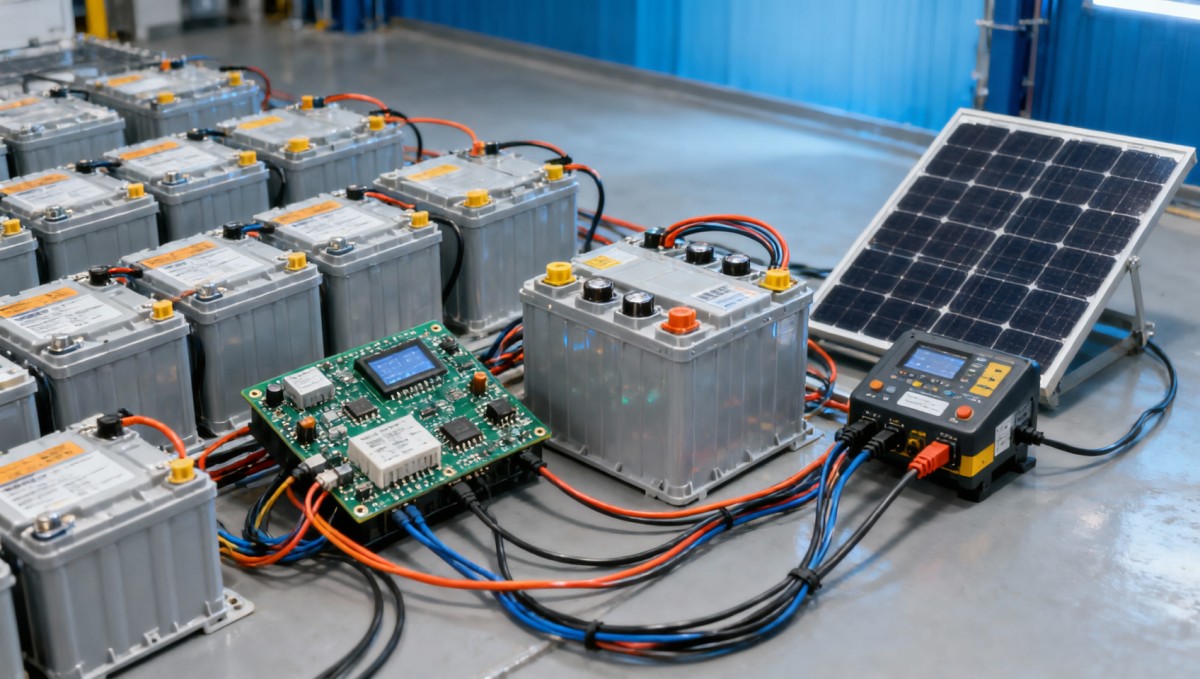
A battery management system does much more than display voltage. In practical B2B use, it monitors cell voltage, current, temperature, state of charge, and protection events across a battery pack. For operators working with lithium-based storage, this is the control layer that helps prevent overcharge, over-discharge, thermal stress, and uneven cell aging. When maintenance teams lack this visibility, small deviations can turn into service interruptions, warranty disputes, or premature battery replacement.
Maintenance risk usually rises in 3 situations: variable load cycles, inconsistent charging behavior, and poor environmental control. This is common in mobile energy units, off-grid backup systems, warehouse equipment, field healthcare devices, and solar-linked installations. A well-matched BMS board reduces manual inspection pressure by flagging abnormal conditions early, often within the same operating cycle rather than after weeks of hidden drift.
For procurement teams, the business case is straightforward. Better monitoring can reduce unplanned interventions, improve service scheduling, and support clearer total cost of ownership analysis over 12–36 months. For project leaders, the benefit is operational predictability. For distributors and resellers, the benefit is lower after-sales friction because the system records fault logic instead of leaving failures open to guesswork.
TradeNexus Pro tracks these decisions across advanced manufacturing, green energy, smart electronics, healthcare technology, and supply chain SaaS. That cross-sector view matters because battery management risk is rarely isolated. It affects product uptime, inventory planning, replacement cycles, field service capacity, and supplier evaluation at the same time.
What maintenance risk usually looks like without proper battery oversight
- Cell imbalance grows silently over 20–100 cycles, reducing usable capacity before teams notice a clear fault.
- Manual checks become reactive, especially when sites inspect packs only monthly or quarterly.
- Charging mismatches between solar charge controllers, MPPT controllers, and battery chemistry create avoidable stress.
- Lack of event records makes root-cause analysis slower for purchasers, service teams, and channel partners.
Which scenarios gain the most from a battery management system
Not every battery application carries the same maintenance profile. The strongest return from battery management systems appears where deep cycling, irregular loads, remote deployment, or high service sensitivity are present. In these environments, a BMS is not just a protection feature; it is a risk control tool that helps standardize maintenance decisions across multiple sites, teams, and suppliers.
Portable solar setups are a good example. They often combine portable solar panels, deep cycle batteries, and compact solar charge controllers in changing weather and usage conditions. Operators may move equipment frequently, while charging windows vary day by day. A BMS helps keep charging and discharging within safe ranges, reducing the risk of hidden battery damage caused by repeated partial charging, heat exposure, or unmanaged depth of discharge.
Larger commercial systems also benefit, especially when MPPT controllers are used to optimize energy harvest. Higher utilization often means more thermal events, more frequent cycling, and greater dependence on accurate balancing. For project managers handling 5kWh–100kWh installations, the BMS becomes central to maintenance planning because it connects system performance with alarm history, service intervals, and replacement forecasting.
Healthcare devices, smart electronics, and industrial backup systems add another layer of complexity. Here, uptime matters more than simple battery runtime. A short voltage drop or a recurring temperature event can disrupt sensitive equipment. Buyers in these sectors often prioritize diagnostic transparency, communication interfaces, and fault logging over low entry price because the cost of interruption is much higher than the cost of better monitoring.
Application scenarios and maintenance priorities
The table below helps compare typical battery management system needs across major B2B scenarios. It is useful for procurement screening, project scoping, and distributor-side recommendation planning.
The main takeaway is that maintenance risk changes by operating context. A compact bms board may be sufficient for a small mobile system, but a multi-site commercial project usually needs communication capability, clearer threshold configuration, and data traceability. Matching BMS functionality to actual use conditions is often more important than choosing the highest nominal specification.
How to evaluate BMS features before procurement
Procurement teams often compare price first, but battery management systems should be screened by operating fit. At minimum, buyers should assess 5 core areas: battery chemistry compatibility, voltage and current range, balancing method, communication capability, and protection logic. If the battery pack, solar charge controller, and inverter behavior are not considered together, hidden integration costs usually appear after delivery rather than before purchase.
Temperature monitoring is one of the most overlooked decision points. In many industrial or outdoor settings, batteries can face 0°C–45°C ambient conditions, with even higher internal temperature during charging. A BMS that only protects at extreme thresholds may still leave the system operating in a harmful zone for too long. Buyers should look for practical alert levels, not just final cut-off values.
Communication is another major differentiator. For single-site manual operations, a simple status interface may be enough. For distributed assets, RS485, CAN, or equivalent communication support can simplify preventive maintenance and fault analysis. This matters to project owners running 10, 50, or 200 units because service teams need standardized diagnostics rather than site-by-site improvisation.
Commercial assessment teams should also ask how the supplier supports integration with MPPT controllers, deep cycle batteries, and energy storage assemblies from different vendors. Compatibility is rarely only electrical. It also includes alarm behavior, data format, wiring practicality, and technical support response during installation and commissioning.
BMS procurement checklist for lower maintenance risk
- Confirm chemistry and pack architecture first, such as lithium iron phosphate, nominal voltage class, and series cell count.
- Check continuous current and peak current ranges against actual load, not only nameplate equipment values.
- Review balancing function, trigger conditions, and whether balancing works only near full charge or across a wider band.
- Ask for alarm and protection logic, including overvoltage, undervoltage, overcurrent, short-circuit, and temperature thresholds.
- Clarify lead time, sample availability, firmware handling, and after-sales diagnostic support before final approval.
Comparison table for procurement decisions
The table below compares common battery management system configurations from a buyer’s perspective. It is designed to support sourcing discussions, distributor recommendations, and project-level tradeoff analysis.
This comparison shows why lowest-price sourcing is often misleading. In a small one-off installation, a simple BMS may be acceptable. In enterprise procurement, however, serviceability and data access often save more value than they add in purchase cost. That is especially true when downtime, technician travel, or replacement logistics are expensive.
What standards, integration checks, and implementation steps should teams review
Battery management systems sit at the intersection of electronics, energy storage, and safety. That means implementation should include both technical and compliance review. The exact standards depend on region, battery chemistry, end product, and installation type, but buyers should at least confirm whether the supplier can discuss electrical protection, transport handling, and product-level testing in a clear and consistent way.
In practical procurement, teams should verify 4 implementation stages: requirement definition, compatibility review, pilot validation, and deployment handover. A pilot phase of 2–4 weeks is often more useful than long theoretical comparison because it reveals wiring issues, communication mismatches, thermal behavior, and alarm settings under actual load conditions. This is where many maintenance risks are identified early enough to avoid rollout problems.
System integration checks should cover the full charging path. That includes battery pack configuration, solar charge controller or MPPT controller settings, cut-off behavior, cable sizing, and operating environment. If one part of the system allows a charging or discharge profile that the BMS repeatedly has to interrupt, the result may be nuisance trips, operator confusion, or shortened battery life.
For distributors, agents, and project contractors, good implementation planning also reduces after-sales burden. A documented checklist, threshold review, and commissioning record can shorten troubleshooting time from several service calls to a more focused single intervention. That is important when product support teams are stretched across multiple countries or installations.
A practical 6-point implementation checklist
- Define battery chemistry, nominal pack voltage, and expected daily cycle depth before selecting the BMS board.
- Confirm charge controller behavior, including bulk, absorption, and float logic where applicable.
- Check temperature sensor placement and operating thresholds for indoor, outdoor, or mobile use cases.
- Validate communication and alarm mapping during pilot testing, especially for fleet or remote monitoring needs.
- Document protection events and reset procedures for operators, service teams, and channel partners.
- Review replacement strategy, spare availability, and lead-time exposure before full deployment.
Common misconceptions that increase maintenance risk
One common mistake is assuming every lithium battery includes equivalent battery management logic. In reality, protection depth, balancing quality, and data transparency vary widely. Another mistake is treating the BMS as a standalone part rather than as a system component linked to charge source, load behavior, and ambient conditions. A third mistake is skipping the service perspective during sourcing. If fault records are hard to access, maintenance cost can rise even when protection exists on paper.
Frequently asked questions and next steps for buyers
Teams comparing battery management systems often ask similar questions during sourcing, pilot review, and commercial evaluation. The answers below focus on maintenance reduction, procurement clarity, and project fit rather than marketing claims.
How do I know whether a BMS is suitable for deep cycle batteries?
Start with chemistry, cycle depth, and charge profile. Deep cycle use means the battery regularly moves through meaningful discharge ranges rather than staying near full charge. The BMS should therefore support accurate low-voltage protection, balancing, and thermal monitoring under repeated cycles. Buyers should also check whether the connected solar charge controller or MPPT controller uses a charging profile aligned with the battery manufacturer’s recommended window.
Which projects benefit most from a data-visible BMS rather than a basic protection board?
Projects with remote sites, more than 10 deployed units, higher uptime demands, or distributed maintenance teams usually gain the most. A data-visible BMS helps with alarm interpretation, service prioritization, and replacement planning. This is especially valuable in green energy systems, industrial fleets, healthcare support equipment, and smart electronics infrastructure where troubleshooting delays have operational consequences.
What should procurement teams ask about lead time and support?
Ask about sample availability, typical production lead time, firmware version control, replacement handling, and technical response during commissioning. In many B2B projects, the difference between a 7–15 day sample cycle and a 4–8 week production cycle affects planning more than unit price alone. Support quality also matters when the BMS must integrate with third-party batteries, chargers, or monitoring tools.
Why work with TradeNexus Pro when assessing battery management system options?
TradeNexus Pro helps procurement directors, project leaders, distributors, and enterprise evaluators move beyond surface-level product comparison. Our sector-focused intelligence connects battery management decisions with supply chain reliability, integration risk, technology maturity, and commercial fit across advanced manufacturing, green energy, smart electronics, healthcare technology, and supply chain SaaS. That broader view is useful when your decision affects not only a component purchase, but also service cost, deployment timing, and channel performance.
If you are reviewing bms boards, deep cycle battery systems, portable solar panels, solar charge controllers, or MPPT-linked storage solutions, contact TradeNexus Pro for practical support. You can consult on parameter confirmation, product selection, delivery cycle planning, compatibility assessment, certification-related questions, sample coordination, and quotation alignment. This makes it easier to compare options with a clearer view of maintenance risk, operational impact, and procurement value before committing to rollout.
Get weekly intelligence in your inbox.
No noise. No sponsored content. Pure intelligence.
 Apr 18, 2026TradeNexus Pro Launches Global Compliance RadarTradeNexus Pro Launches Global Compliance Radar
 Apr 18, 2026JIS T 2304:2026 Takes Effect June 1, 2026 for IVD SoftwareJIS T 2304:2026 Takes Effect June 1, 2026 for IVD Software
 Pathway for Rehab Devices with AI Modules") Apr 18, 2026FDA Updates 510(k) Pathway for Rehab Devices with AI ModulesFDA Updates 510(k) Pathway for Rehab Devices with AI Modules
Apr 18, 2026FDA Updates 510(k) Pathway for Rehab Devices with AI ModulesFDA Updates 510(k) Pathway for Rehab Devices with AI Modules Apr 18, 2026India BIS Approves 3 Chinese IoT Labs for IS 16444:2026 CertificationIndia BIS Approves 3 Chinese IoT Labs for IS 16444:2026 Certification
 Apr 18, 2026THE Alliance Launches Green Slot Priority for China PortsTHE Alliance Launches Green Slot Priority for China Ports
 Apr 18, 2026TÜV Rheinland Releases Dual-Standard ESS Certification Guide for ChinaTÜV Rheinland Releases Dual-Standard ESS Certification Guide for China
 Apr 18, 2026Vietnam Imposes AD Duties on Chinese Electronic ComponentsVietnam Imposes AD Duties on Chinese Electronic Components
 Apr 18, 2026SASO Launches PV Carbon Footprint Labeling from July 2026SASO Launches PV Carbon Footprint Labeling from July 2026
 Apr 18, 2026U.S. Adds 17 Smart Warehouse Robot Components to Export Control ListU.S. Adds 17 Smart Warehouse Robot Components to Export Control List
 Apr 18, 2026EU Enforces EN IEC 62443-4-2:2026 for Industrial Control Devices from 18 Apr 2026EU Enforces EN IEC 62443-4-2:2026 for Industrial Control Devices from 18 Apr 2026
 Apr 17, 2026Temperature data loggers drift unpredictably inside lithium-ion battery storage enclosuresTemperature data loggers drift unpredictably inside lithium-ion battery storage enclosures
 Apr 17, 2026Are solar microinverters really worth the extra cost?Are solar microinverters really worth the extra cost?
 Apr 17, 2026Bifacial solar panels: How much more energy can they generate?Bifacial solar panels: How much more energy can they generate?
 Apr 17, 2026Gear manufacturing: How to optimize production for high precision?Gear manufacturing: How to optimize production for high precision?
 Apr 17, 2026Why power transmission components fail earlier than expectedWhy power transmission components fail earlier than expected
 Apr 17, 2026Linear motion systems: belt drive or ball screw for speed?Linear motion systems: belt drive or ball screw for speed?
 Apr 17, 2026Industrial bearing suppliers: what signals reliable quality?Industrial bearing suppliers: what signals reliable quality?
 Apr 17, 2026When pneumatic valves wholesale gets expensive laterWhen pneumatic valves wholesale gets expensive later
 Apr 17, 2026Hydraulic cylinder fabrication mistakes that cause oil leaksHydraulic cylinder fabrication mistakes that cause oil leaks
 Apr 17, 2026Heavy equipment manufacturing delays often start hereHeavy equipment manufacturing delays often start here
 Apr 17, 2026Custom heatsinks: when a larger size solves nothingCustom heatsinks: when a larger size solves nothing
 Apr 17, 2026Electronic enclosure fabrication: steel or aluminum?Electronic enclosure fabrication: steel or aluminum?
 Apr 17, 2026Automotive parts machining tolerances that drive up scrapAutomotive parts machining tolerances that drive up scrap
 Apr 17, 2026Medical device manufacturing changes under tighter traceabilityMedical device manufacturing changes under tighter traceability
 Apr 17, 2026How to Choose Solid State Batteries in 2026How to Choose Solid State Batteries in 2026
 Apr 17, 2026Are Solid State Batteries Worth the Cost Yet?Are Solid State Batteries Worth the Cost Yet?
 Apr 17, 2026Commercial Energy Storage Sizing: What Matters Most?Commercial Energy Storage Sizing: What Matters Most?