How to Compare BMS Boards for Custom Battery Packs
Choosing the right BMS boards for custom battery packs affects safety, cycle life, cost, and scalability. For buyers, engineers, and project leaders comparing battery management systems, this guide explains the key specifications, testing points, and sourcing factors that matter most. It also shows how BMS selection connects with deep cycle batteries, agm batteries wholesale decisions, and broader energy applications such as portable solar panels, folding solar chargers, mppt controllers, and solar charge controllers.
What should you compare first when evaluating BMS boards?
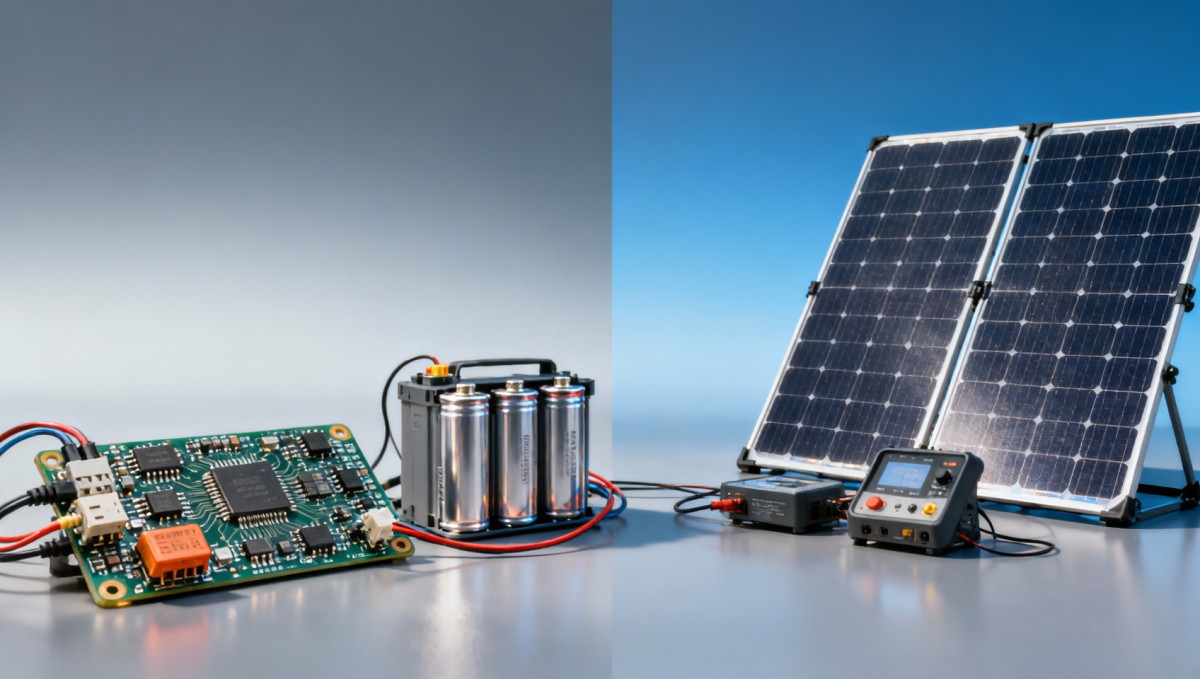
A BMS board is not just a protection accessory. In a custom battery pack, it acts as the control layer that monitors voltage, current, temperature, balancing behavior, and shutdown logic. For procurement teams and technical evaluators, the first comparison should focus on pack chemistry, series count, current demand, and the actual load profile over 24-hour, weekly, and seasonal use cycles.
Many sourcing errors happen because buyers compare only the headline current rating. A board marked for 100A continuous discharge may still be unsuitable if the battery pack faces 3 to 5-second surge loads, low-temperature charging below 0°C, or enclosure temperatures that regularly reach 45°C to 60°C. Real operating conditions matter more than catalog claims.
In B2B projects, the right comparison method also depends on system context. A BMS board for deep cycle batteries used in backup storage differs from one supporting mobile devices, e-bikes, telecom cabinets, or portable solar panels. When folding solar chargers, mppt controllers, or solar charge controllers are involved, charging behavior and communication compatibility become more important than simple protection cutoffs.
TradeNexus Pro helps decision-makers narrow this complexity by organizing supplier intelligence, technical filters, and sector-specific sourcing insight across green energy, smart electronics, and advanced manufacturing. That matters when a project team must compare 3 to 6 candidate BMS boards within a short RFQ cycle and still avoid field failure risk.
The 5 core checkpoints before asking for a quote
- Cell chemistry and configuration: confirm whether the board is designed for Li-ion, LiFePO4, LTO, or lead-acid-adjacent control applications, and verify the exact series count such as 4S, 8S, 13S, or 16S.
- Charge and discharge limits: compare continuous current, peak current, short-circuit response, and recovery logic instead of relying on one nominal ampere figure.
- Balancing method: passive balancing may suit cost-sensitive builds, while active balancing can be more relevant for larger-capacity packs or systems expected to cycle frequently.
- Thermal sensing and protections: verify the number of temperature probes, charging cutoff thresholds, discharge cutoff thresholds, and fault logging behavior.
- Communication and integration: determine whether UART, RS485, CAN, or Bluetooth is needed for inverter, charger, controller, or fleet-level monitoring.
Quick comparison of practical evaluation dimensions
Before committing to tooling, sampling, or volume purchase, teams usually need a side-by-side matrix. The table below summarizes the BMS board comparison criteria most relevant to battery pack customization, sourcing reviews, and project approval meetings.
This comparison framework helps buyers move from general screening to technical shortlisting. It is especially useful when the same battery pack platform may serve multiple downstream products, from backup power to solar-linked devices, where one unsuitable threshold can create warranty disputes across the channel.
Which technical specifications matter most for custom battery packs?
When engineers and procurement officers compare BMS boards, they should prioritize specifications that influence both electrical safety and lifecycle cost. The most important include cell voltage measurement accuracy, balancing current, quiescent current, current sensing method, temperature feedback points, and communication support. These are not abstract lab numbers; they directly influence field performance over 300, 800, or 2,000 charge-discharge cycles, depending on chemistry and use pattern.
For example, voltage measurement accuracy affects whether cells are protected evenly. A tighter tolerance can improve pack consistency, especially in higher series configurations. Balancing current matters when packs contain cells with natural drift or when charging windows are short. In practical sourcing, a lower-cost board may look attractive until the project team calculates the labor cost of post-assembly sorting and warranty service.
Current sensing architecture also deserves close review. Shunt-based designs are common, but the implementation quality varies. If a pack is intended for repeated peak loads, such as a portable power station feeding an inverter through an mppt controller chain, then heat dissipation, copper thickness, and shutdown timing become decisive. A board that survives bench testing for 20 minutes may still fail after 6 to 8 hours of continuous real-world operation.
Communication is often underestimated during early procurement. If the battery pack must interact with solar charge controllers, remote monitoring systems, or OEM dashboards, the BMS board needs compatible protocol options and configurable parameters. Otherwise, teams may spend 2 to 4 weeks solving integration issues that could have been screened out during vendor comparison.
Parameter ranges buyers should discuss with suppliers
The following table does not prescribe one universal value. Instead, it highlights the practical parameter bands and discussion points that procurement and engineering teams should verify before approving samples or placing a repeat order.
For project managers, these parameter checks create a more disciplined vendor dialogue. Instead of asking whether a BMS board is “good for solar” or “suitable for deep cycle batteries,” they can request exact charge cutoff logic, balancing behavior, communication options, and lead-time commitments tied to the intended pack architecture.
Technical red flags that deserve immediate attention
- No clear statement of test conditions for current ratings, especially when thermal performance determines actual usable output.
- Protection thresholds are listed but recovery logic is omitted, creating uncertainty in field restart behavior.
- Communication support is advertised, but parameter access or protocol documentation is unavailable before purchase.
- The supplier cannot explain how the board behaves with chargers, inverters, mppt controllers, or solar charge controllers in a complete system.
How do application scenarios change the right BMS board choice?
The best BMS board for a custom battery pack depends heavily on where and how the pack will operate. A storage-focused pack designed around deep cycle batteries may prioritize stable balancing and low standby current. A mobile pack used with folding solar chargers or portable solar panels may prioritize lightweight layout, compact dimensions, and flexible charging management. An industrial pack may need stronger communication and event logging.
This application view is important for distributors and OEM buyers because one sourcing decision can affect multiple SKUs. If the same board is used in backup power, light mobility, and solar-linked equipment, teams must verify not just electrical compatibility but also enclosure fit, connector layout, thermal path, and service access. A mismatch may not appear in the first 10 sample units but can become expensive at 500 or 5,000 units.
AGM batteries wholesale discussions also create comparison pressure. In some tenders, decision-makers evaluate whether a battery system should remain with AGM architecture or shift toward lithium pack solutions that require a dedicated BMS board. In such cases, the board becomes part of a broader ROI and maintenance conversation rather than a standalone electronics purchase.
At TradeNexus Pro, scenario-based comparison is especially valuable because cross-sector buyers often need to understand adjacent technologies, not just the BMS itself. That includes battery packs working with solar charging, intelligent controls, remote monitoring, or distributed energy equipment across several regions and compliance environments.
Scenario comparison for sourcing teams
A scenario table helps non-design stakeholders quickly identify which BMS board characteristics matter most in each use case. It also reduces confusion between laboratory specifications and procurement-ready requirements.
The key lesson is simple: application context changes the weighting of every BMS board decision. The board that looks cost-effective for one pack type may be the wrong choice once charging variability, service conditions, or communication requirements are added to the project scope.
What should procurement teams ask about cost, lead time, compliance, and service?
Procurement decisions should go beyond unit price. A lower-cost BMS board can increase the total project cost if it causes slower integration, higher assembly rejection rates, or more field returns. In many custom battery pack programs, the most useful cost review includes four layers: board cost, engineering adaptation cost, testing cost, and after-sales handling cost over the first 12 to 24 months.
Lead time is equally important. Standard boards may ship faster, often in days or a few weeks depending on stock and order volume, while customized firmware, connectors, or communication features can extend the cycle. Project managers should separate sample lead time, pilot batch lead time, and mass production lead time instead of accepting one generic delivery promise.
Compliance review should remain practical and evidence-based. Requirements vary by destination market and end product, but teams commonly ask about material declarations, electrical safety documentation, transport-related battery pack considerations, and whether the supplier can support integration records needed for downstream certification. The BMS board alone does not guarantee final product compliance, but weak documentation can slow export or customer approval.
Service capability matters most when the pack is sold through dealers, distributors, or OEM channels. Buyers should ask how fault analysis is handled, whether parameter revisions are possible, how replacement boards are tracked, and what diagnostic data can be shared. A supplier with clear service workflow can reduce downtime during the first 30, 60, and 90 days after deployment.
A 6-point procurement checklist for BMS boards
- Request full electrical parameters with test conditions, not only marketing specifications.
- Confirm whether the board has been used in comparable battery pack applications and ask for generic reference scenarios if direct case disclosure is limited.
- Check integration compatibility with chargers, inverters, mppt controllers, or solar charge controllers used in your project.
- Verify sample availability, firmware adjustment process, and expected turnaround for engineering feedback.
- Ask what documentation accompanies shipment, including wiring diagrams, alarm definitions, and parameter lists.
- Review the replacement and root-cause analysis process before placing a larger order.
Common buying mistakes to avoid
One common mistake is treating all BMS boards with the same voltage and current label as interchangeable. Another is assuming that a battery pack proven with one charger will behave identically with another controller or solar input profile. A third is ignoring thermal conditions inside the final enclosure, where cable density and ambient heat can reduce usable current margin.
A more subtle mistake appears in channel sales. Distributors sometimes select a board that performs adequately for one flagship pack but lacks enough flexibility for future variations. That can force fragmented inventory, separate service procedures, and repeated qualification work. Early standardization, when feasible, often lowers operational complexity.
For enterprises comparing agm batteries wholesale pathways with lithium-based custom packs, the correct question is not only purchase price. The better question is how the full system behaves over service intervals, transport conditions, charging logic, and maintenance workload. The BMS board sits at the center of that transition.
FAQ: practical questions buyers and engineers often ask
How do I know whether a BMS board is suitable for deep cycle batteries?
Start by defining the chemistry and use profile. If the project is replacing or competing with traditional deep cycle batteries, compare expected cycle frequency, depth of discharge, standby behavior, and charging method. A suitable BMS board should support stable operation over long discharge periods, maintain consistent cell protection, and work cleanly with the charger or controller used in the system.
Can one BMS board work across portable solar panels, folding solar chargers, and fixed solar systems?
Sometimes, but only if the voltage architecture, charge behavior, and communication needs are compatible. Portable solar panels and folding solar chargers often create variable input conditions, while fixed systems using mppt controllers or solar charge controllers may require different charging logic and fault visibility. A board that works in all three scenarios should be validated through system-level testing, not assumed from the datasheet alone.
What is a reasonable sample evaluation process before volume purchasing?
A practical process usually includes 3 stages: bench validation, pack integration, and application simulation. During these stages, teams review protection thresholds, communication behavior, thermal rise, balancing response, and restart logic. If the final product targets multiple regions or channels, include packaging, documentation, and after-sales traceability checks before scaling to pilot batch.
What should distributors and agents focus on beyond technical parameters?
They should assess supply continuity, firmware consistency, replacement handling, and documentation quality. For channel business, repeatability matters as much as performance. If a BMS board changes layout or parameters without clear version control, field support becomes harder. That creates risk for distributor reputation, spare stock planning, and customer retention.
Why consult TradeNexus Pro when comparing BMS boards for custom projects?
Comparing BMS boards is no longer a narrow component decision. It touches battery pack architecture, charger compatibility, supply chain reliability, service readiness, and downstream commercial fit. TradeNexus Pro supports buyers, sourcing managers, project leaders, and enterprise decision-makers with focused market intelligence across green energy, smart electronics, advanced manufacturing, healthcare technology, and supply chain SaaS where electrification and battery integration increasingly intersect.
If your team is evaluating custom battery packs for deep cycle battery alternatives, portable solar panels, folding solar chargers, mppt controllers, solar charge controllers, or broader energy storage programs, TNP can help you structure the right comparison path. That includes parameter confirmation, supplier screening, sourcing risk review, lead-time assessment, and scenario-based procurement judgment.
You can consult on concrete issues such as 4S to 16S board selection, current rating verification, balancing method choice, communication interface needs, sample planning, documentation requirements, and expected delivery stages from sample to batch order. This is especially valuable when technical, purchasing, and commercial teams need one aligned decision framework instead of fragmented assumptions.
For companies seeking clearer BMS board comparisons and stronger battery project decisions, contact TradeNexus Pro to discuss product selection, custom solution direction, certification-related preparation, sample support, and quotation communication. The goal is not just to source a board, but to secure a battery management choice that fits performance, cost, and long-term business execution.
Get weekly intelligence in your inbox.
No noise. No sponsored content. Pure intelligence.
 Apr 18, 2026TradeNexus Pro Launches Global Compliance RadarTradeNexus Pro Launches Global Compliance Radar
 Apr 18, 2026JIS T 2304:2026 Takes Effect June 1, 2026 for IVD SoftwareJIS T 2304:2026 Takes Effect June 1, 2026 for IVD Software
 Pathway for Rehab Devices with AI Modules") Apr 18, 2026FDA Updates 510(k) Pathway for Rehab Devices with AI ModulesFDA Updates 510(k) Pathway for Rehab Devices with AI Modules
Apr 18, 2026FDA Updates 510(k) Pathway for Rehab Devices with AI ModulesFDA Updates 510(k) Pathway for Rehab Devices with AI Modules Apr 18, 2026India BIS Approves 3 Chinese IoT Labs for IS 16444:2026 CertificationIndia BIS Approves 3 Chinese IoT Labs for IS 16444:2026 Certification
 Apr 18, 2026THE Alliance Launches Green Slot Priority for China PortsTHE Alliance Launches Green Slot Priority for China Ports
 Apr 18, 2026TÜV Rheinland Releases Dual-Standard ESS Certification Guide for ChinaTÜV Rheinland Releases Dual-Standard ESS Certification Guide for China
 Apr 18, 2026Vietnam Imposes AD Duties on Chinese Electronic ComponentsVietnam Imposes AD Duties on Chinese Electronic Components
 Apr 18, 2026SASO Launches PV Carbon Footprint Labeling from July 2026SASO Launches PV Carbon Footprint Labeling from July 2026
 Apr 18, 2026U.S. Adds 17 Smart Warehouse Robot Components to Export Control ListU.S. Adds 17 Smart Warehouse Robot Components to Export Control List
 Apr 18, 2026EU Enforces EN IEC 62443-4-2:2026 for Industrial Control Devices from 18 Apr 2026EU Enforces EN IEC 62443-4-2:2026 for Industrial Control Devices from 18 Apr 2026
 Apr 17, 2026Temperature data loggers drift unpredictably inside lithium-ion battery storage enclosuresTemperature data loggers drift unpredictably inside lithium-ion battery storage enclosures
 Apr 17, 2026Are solar microinverters really worth the extra cost?Are solar microinverters really worth the extra cost?
 Apr 17, 2026Bifacial solar panels: How much more energy can they generate?Bifacial solar panels: How much more energy can they generate?
 Apr 17, 2026Gear manufacturing: How to optimize production for high precision?Gear manufacturing: How to optimize production for high precision?
 Apr 17, 2026Why power transmission components fail earlier than expectedWhy power transmission components fail earlier than expected
 Apr 17, 2026Linear motion systems: belt drive or ball screw for speed?Linear motion systems: belt drive or ball screw for speed?
 Apr 17, 2026Industrial bearing suppliers: what signals reliable quality?Industrial bearing suppliers: what signals reliable quality?
 Apr 17, 2026When pneumatic valves wholesale gets expensive laterWhen pneumatic valves wholesale gets expensive later
 Apr 17, 2026Hydraulic cylinder fabrication mistakes that cause oil leaksHydraulic cylinder fabrication mistakes that cause oil leaks
 Apr 17, 2026Heavy equipment manufacturing delays often start hereHeavy equipment manufacturing delays often start here
 Apr 17, 2026Custom heatsinks: when a larger size solves nothingCustom heatsinks: when a larger size solves nothing
 Apr 17, 2026Electronic enclosure fabrication: steel or aluminum?Electronic enclosure fabrication: steel or aluminum?
 Apr 17, 2026Automotive parts machining tolerances that drive up scrapAutomotive parts machining tolerances that drive up scrap
 Apr 17, 2026Medical device manufacturing changes under tighter traceabilityMedical device manufacturing changes under tighter traceability
 Apr 17, 2026How to Choose Solid State Batteries in 2026How to Choose Solid State Batteries in 2026
 Apr 17, 2026Are Solid State Batteries Worth the Cost Yet?Are Solid State Batteries Worth the Cost Yet?
 Apr 17, 2026Commercial Energy Storage Sizing: What Matters Most?Commercial Energy Storage Sizing: What Matters Most?