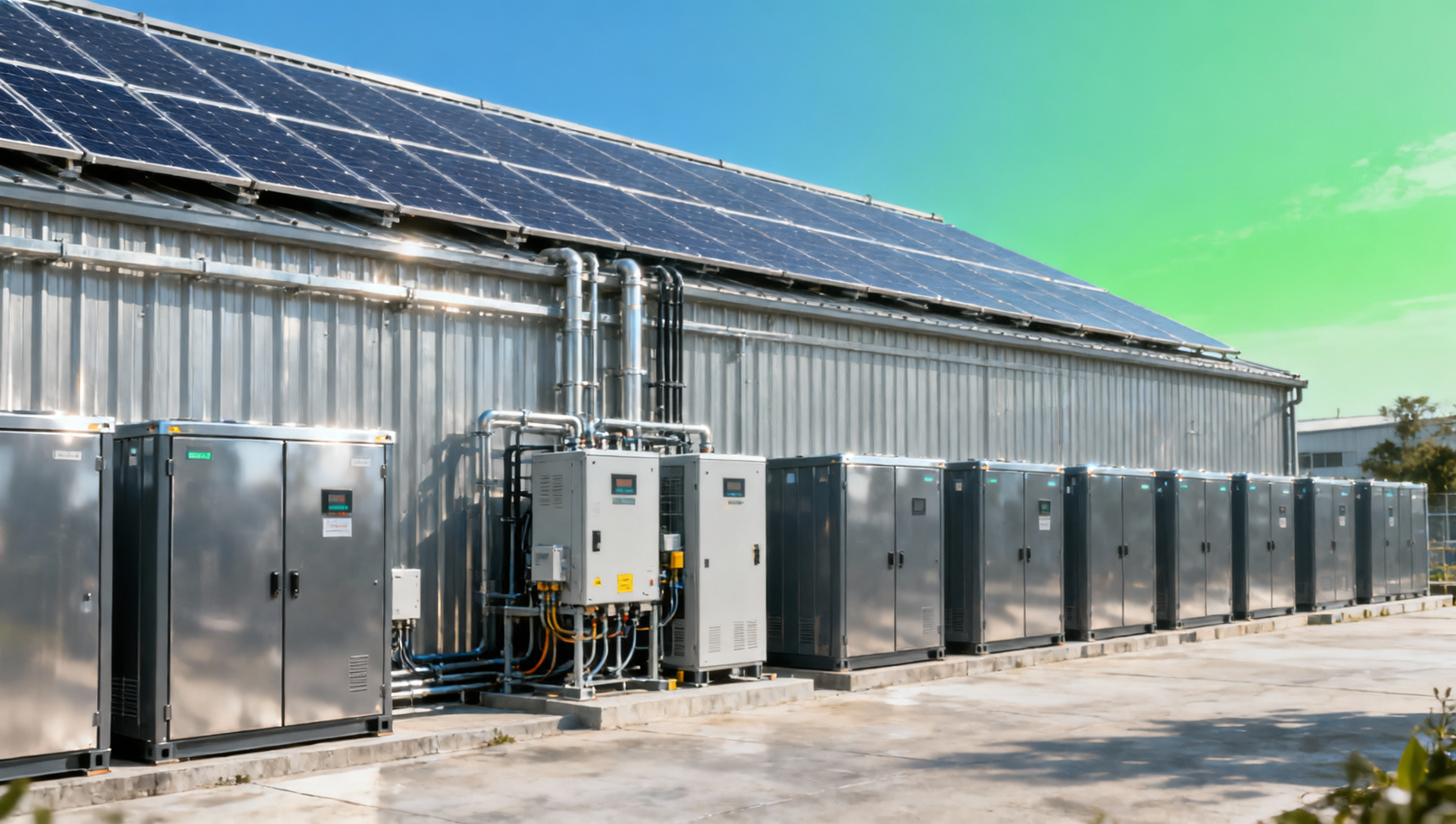
Three Ministries Launch Hydrogen Energy Pilot: Green Compliance Opens New Export Window for Chinese Electrolyzers and Storage Equipment

Introduction
On March 24, 2026, China's Ministry of Industry and Information Technology (MIIT), National Energy Administration (NEA), and Ministry of Finance jointly initiated a comprehensive hydrogen energy application pilot program. Targeting city clusters like Beijing-Tianjin-Hebei, Yangtze River Delta, and Pearl River Delta, the initiative validates the entire green hydrogen supply chain from production to end-use. With mandatory compliance to ISO 21927 and IEC 62282-2 standards, this move creates a dual-track opportunity for domestic electrolyzer, solid-state hydrogen storage tank, and hydrogen refueling equipment manufacturers to test locally while gaining international certification recognition. Industries spanning hydrogen equipment manufacturing, export trade, and renewable energy integration should monitor this development closely, as it significantly reduces technical acceptance barriers for overseas buyers.
Event Overview
The pilot program, announced on March 24, 2026, focuses on large-scale verification of green hydrogen production, storage, transportation, refueling, and utilization in designated city clusters. Key requirements include adherence to international standards (ISO 21927 for hydrogen safety and IEC 62282-2 for fuel cell modules) and mutual recognition of export certifications. No additional budget or timeline details have been disclosed beyond the initial announcement.
Impact on Sub-Sectors
Hydrogen Equipment Manufacturers
Domestic producers of electrolyzers and storage tanks gain immediate access to large-scale application scenarios, allowing performance validation under real-world conditions. The explicit reference to international standards signals alignment with global market requirements, particularly for exporters targeting Europe and Southeast Asia where these certifications are mandatory.
Export-Oriented Technology Providers
Companies specializing in hydrogen refueling systems and compression equipment benefit from reduced compliance costs. The government-backed certification mutual recognition mechanism may shorten the approval周期 by 6-12 months for target markets like Germany and Japan, where Chinese hydrogen equipment currently faces lengthy type-approval processes.
Renewable Energy Integrators
Project developers combining wind/solar with hydrogen production receive policy validation for hybrid systems. The pilot's emphasis on green hydrogen (produced via renewable-powered electrolysis) indirectly supports solar/wind farm operators seeking diversified revenue streams through hydrogen coupling projects.
Key Focus Areas and Recommended Actions
Prioritize Standardization Documentation
Manufacturers should immediately audit existing product documentation against ISO 21927 and IEC 62282-2 requirements, particularly for explosion-proof designs (for storage tanks) and modular safety protocols (for electrolyzers). Non-compliant components may require redesign before the pilot's equipment procurement phase.
Monitor Certification Mutual Recognition Progress
Export-focused firms must track which countries agree to accept Chinese pilot program certifications. Early indications suggest the EU and ASEAN markets will be primary targets, but bilateral agreements with specific nations (e.g., Germany's TÜV recognition) could emerge faster than multilateral frameworks.
Evaluate Supply Chain Readiness
With pilot projects expected to commence in Q4 2026, upstream suppliers of membrane electrode assemblies (MEAs) and composite storage materials should assess production capacity. The program's scale may create temporary shortages of critical components meeting the specified international standards.
Editorial Perspective
From an industry standpoint, this pilot represents more than a technical trial—it's a strategic bridge connecting China's hydrogen manufacturing capabilities with global decarbonization demand. The timing coincides with the EU's revised Renewable Energy Directive III (RED III) implementation, which sets strict green hydrogen origin rules. Analysis suggests Chinese manufacturers who complete this pilot could gain first-mover advantage in supplying RED III-compliant equipment to European off-takers from 2027 onward. However, actual commercial impact depends on whether the certification mutual recognition achieves parity with established schemes like CertifHy.
Conclusion
This initiative marks a calculated shift from domestic hydrogen infrastructure buildup to international market penetration under globally recognized frameworks. While the pilot's immediate effect is limited to selected city clusters, its long-term value lies in establishing China's hydrogen equipment standards as exportable commodities rather than purely domestic solutions. Industry participants should view this as a preparatory phase for 2027-2030 global hydrogen trade flows, with technical compliance now becoming as crucial as cost competitiveness.
Information Sources
Primary source: Joint announcement by MIIT, NEA, and Ministry of Finance on March 24, 2026. Ongoing developments regarding certification mutual recognition agreements require monitoring through official channels like the China Hydrogen Alliance.
Get weekly intelligence in your inbox.
No noise. No sponsored content. Pure intelligence.
 Apr 18, 2026TradeNexus Pro Launches Global Compliance RadarTradeNexus Pro Launches Global Compliance Radar
 Apr 18, 2026JIS T 2304:2026 Takes Effect June 1, 2026 for IVD SoftwareJIS T 2304:2026 Takes Effect June 1, 2026 for IVD Software
 Pathway for Rehab Devices with AI Modules") Apr 18, 2026FDA Updates 510(k) Pathway for Rehab Devices with AI ModulesFDA Updates 510(k) Pathway for Rehab Devices with AI Modules
Apr 18, 2026FDA Updates 510(k) Pathway for Rehab Devices with AI ModulesFDA Updates 510(k) Pathway for Rehab Devices with AI Modules Apr 18, 2026India BIS Approves 3 Chinese IoT Labs for IS 16444:2026 CertificationIndia BIS Approves 3 Chinese IoT Labs for IS 16444:2026 Certification
 Apr 18, 2026THE Alliance Launches Green Slot Priority for China PortsTHE Alliance Launches Green Slot Priority for China Ports
 Apr 18, 2026TÜV Rheinland Releases Dual-Standard ESS Certification Guide for ChinaTÜV Rheinland Releases Dual-Standard ESS Certification Guide for China
 Apr 18, 2026Vietnam Imposes AD Duties on Chinese Electronic ComponentsVietnam Imposes AD Duties on Chinese Electronic Components
 Apr 18, 2026SASO Launches PV Carbon Footprint Labeling from July 2026SASO Launches PV Carbon Footprint Labeling from July 2026
 Apr 18, 2026U.S. Adds 17 Smart Warehouse Robot Components to Export Control ListU.S. Adds 17 Smart Warehouse Robot Components to Export Control List
 Apr 18, 2026EU Enforces EN IEC 62443-4-2:2026 for Industrial Control Devices from 18 Apr 2026EU Enforces EN IEC 62443-4-2:2026 for Industrial Control Devices from 18 Apr 2026
 Apr 17, 2026Temperature data loggers drift unpredictably inside lithium-ion battery storage enclosuresTemperature data loggers drift unpredictably inside lithium-ion battery storage enclosures
 Apr 17, 2026Are solar microinverters really worth the extra cost?Are solar microinverters really worth the extra cost?
 Apr 17, 2026Bifacial solar panels: How much more energy can they generate?Bifacial solar panels: How much more energy can they generate?
 Apr 17, 2026Gear manufacturing: How to optimize production for high precision?Gear manufacturing: How to optimize production for high precision?
 Apr 17, 2026Why power transmission components fail earlier than expectedWhy power transmission components fail earlier than expected
 Apr 17, 2026Linear motion systems: belt drive or ball screw for speed?Linear motion systems: belt drive or ball screw for speed?
 Apr 17, 2026Industrial bearing suppliers: what signals reliable quality?Industrial bearing suppliers: what signals reliable quality?
 Apr 17, 2026When pneumatic valves wholesale gets expensive laterWhen pneumatic valves wholesale gets expensive later
 Apr 17, 2026Hydraulic cylinder fabrication mistakes that cause oil leaksHydraulic cylinder fabrication mistakes that cause oil leaks
 Apr 17, 2026Heavy equipment manufacturing delays often start hereHeavy equipment manufacturing delays often start here
 Apr 17, 2026Custom heatsinks: when a larger size solves nothingCustom heatsinks: when a larger size solves nothing
 Apr 17, 2026Electronic enclosure fabrication: steel or aluminum?Electronic enclosure fabrication: steel or aluminum?
 Apr 17, 2026Automotive parts machining tolerances that drive up scrapAutomotive parts machining tolerances that drive up scrap
 Apr 17, 2026Medical device manufacturing changes under tighter traceabilityMedical device manufacturing changes under tighter traceability
 Apr 17, 2026How to Choose Solid State Batteries in 2026How to Choose Solid State Batteries in 2026
 Apr 17, 2026Are Solid State Batteries Worth the Cost Yet?Are Solid State Batteries Worth the Cost Yet?
 Apr 17, 2026Commercial Energy Storage Sizing: What Matters Most?Commercial Energy Storage Sizing: What Matters Most?