Why Modular ESS Design Helps Future Expansion
As energy demand grows and project timelines tighten, ESS energy storage modular design gives enterprises a practical path to scale with less risk. For decision-makers planning long-term capacity, modular systems support phased investment, faster deployment, and easier integration across changing operational needs. This article explores why modular architecture is becoming a strategic advantage for future expansion.
Why does modular ESS design matter for expansion planning?
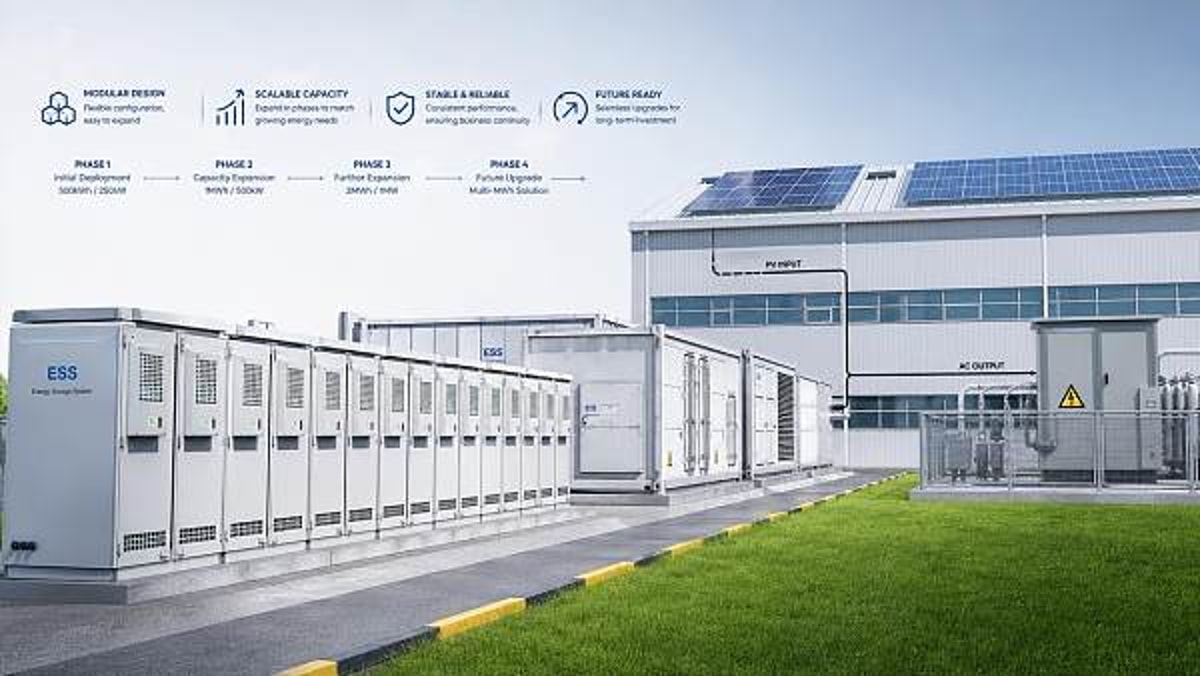
For enterprise buyers, expansion is rarely a single event. It is a sequence of capital decisions shaped by electricity demand, site constraints, utility tariffs, sustainability targets, and supply chain timing. That is why ESS energy storage modular design has moved from a technical preference to a board-level planning issue. A modular architecture allows companies to start with a right-sized deployment and add capacity as demand, regulation, or operating strategy changes.
In practical terms, modular systems break a large energy storage project into repeatable building blocks. These blocks may include battery racks, power conversion units, thermal management components, fire protection sections, and software-controlled control layers. Instead of rebuilding the whole system when demand rises, a company can expand in stages while preserving earlier investment and reducing downtime risk.
This matters across multiple sectors covered by TradeNexus Pro, from advanced manufacturing plants managing peak loads to healthcare technology facilities seeking power resilience, and from smart electronics campuses optimizing energy cost to green energy operators balancing renewable intermittency. In each case, the ability to expand without redesigning the entire asset base supports more disciplined procurement and better capital allocation.
- Phased deployment lowers upfront capital pressure and aligns investment with actual load growth.
- Standardized modules simplify engineering, installation, training, and maintenance planning.
- Expansion can often be completed faster than a custom rebuild, which helps when project windows are tight.
- Operational redundancy improves because the system can continue running even when one module is isolated for service.
What does ESS energy storage modular design actually include?
Decision-makers often hear the term “modular” used loosely. In procurement, that creates risk. True ESS energy storage modular design is not only about stacking battery cabinets. It should include modularity in power architecture, controls, safety, servicing, and future integration pathways. If only the battery portion is modular, expansion may still require expensive electrical rework or software limitations later.
Core layers of a modular architecture
- Battery module layer: repeatable storage blocks that can be added or replaced without affecting the full array.
- Power conversion layer: scalable inverters or PCS units sized to accommodate staged capacity growth.
- Control layer: energy management software able to recognize new modules, rebalance loads, and maintain system visibility.
- Protection layer: compartmentalized safety design that supports isolation, monitoring, and incident response.
- Mechanical and site layer: containerized or cabinet-based deployment that supports site-specific expansion without major redesign.
When these layers are aligned, enterprises gain more than flexibility. They gain a predictable expansion model. That predictability is crucial for procurement teams evaluating total lifecycle cost, spare parts strategy, commissioning schedules, and vendor dependency.
Where does modular ESS create the most business value?
The value of ESS energy storage modular design becomes clear when expansion is uncertain but likely. This is common in sectors where production volumes fluctuate, new lines are added, renewable energy penetration rises, or resilience requirements intensify. The table below maps typical business scenarios to the benefits of a modular approach.
The business case is strongest when demand growth is real but difficult to forecast precisely. In those conditions, modular expansion reduces the cost of being wrong. Overbuild less at the start, then add capacity when operational data confirms the need.
Modular vs centralized ESS: what should procurement teams compare?
Not every project requires the same architecture. Some centralized systems still fit stable, single-phase deployments. But when buyers compare options, they should look beyond headline price and focus on expansion economics, installation complexity, maintenance strategy, and control flexibility. The next table highlights the procurement-level differences.
This comparison does not mean modular is always cheaper on day one. In some projects, unit costs may appear higher initially. However, for businesses expanding in stages, the lower risk of stranded capacity and the reduced cost of future changes often make ESS energy storage modular design the more resilient long-term choice.
Which technical factors determine whether expansion will be smooth?
A modular label alone does not guarantee easy scaling. Technical decisions made early can either support future expansion or create bottlenecks. Enterprise decision-makers should ask suppliers for a clear expansion pathway before approving the first phase.
Key technical checks before phase one
- Confirm DC and AC scalability. Battery capacity and power output should both be expandable. Increasing energy without matching power conversion can limit usable value.
- Review battery management and energy management compatibility. The control system should support future module recognition, balancing logic, and performance monitoring across mixed deployment dates.
- Check thermal and safety segmentation. Expansion should not compromise cooling effectiveness, fire isolation strategy, or service access.
- Assess grid interconnection limits. Some sites can add battery modules easily but face utility approval constraints when increasing export or import capacity.
- Validate spare capacity in switchgear, cabling routes, software licenses, and civil layout. These are common hidden barriers to smooth modular growth.
TradeNexus Pro frequently tracks a recurring issue across industrial procurement: companies focus on battery chemistry and overlook interface architecture. Yet expansion usually fails not because the storage unit cannot be added, but because the surrounding electrical and control infrastructure was not prepared for modular growth.
How should enterprises evaluate cost beyond the initial quote?
When evaluating ESS energy storage modular design, the cheapest first-phase quote can be misleading. Decision-makers should model cost in phases and include installation repetition, commissioning complexity, downtime exposure, future retrofit work, and performance degradation alignment. A good procurement review separates visible CAPEX from expansion-triggered CAPEX.
Cost drivers worth modeling
- Phase-one oversizing cost if a non-modular system is purchased for uncertain future demand.
- Engineering change cost when future expansion requires redesign of enclosures, switchgear, or software architecture.
- Production interruption cost if upgrades force longer shutdown periods.
- Maintenance cost differences between module-level replacement and broader system intervention.
- Residual value and upgrade flexibility if operating priorities shift from peak shaving to backup power or renewable integration.
For enterprise buyers, the more useful question is not “What is the cost per unit today?” It is “What is the cost of reaching our likely capacity in three steps while preserving reliability and procurement flexibility?” That is where modular design often proves its value.
What standards and compliance points should not be ignored?
Expansion plans must fit the compliance environment of the target market. While specific requirements vary by region and application, buyers should request a clear compliance map covering electrical safety, fire protection, grid interconnection, transport, and site installation rules. Modular ESS can simplify standardization, but every added unit must still fit the approved safety and operating framework.
The advantage of a well-documented modular platform is consistency. Procurement teams can review one architecture deeply, then replicate with fewer uncertainties in later phases. That reduces review friction across engineering, EHS, finance, and operations teams.
What are the most common mistakes in modular ESS procurement?
Many expansion problems begin in phase one. Buyers assume future scalability exists because brochures say “modular,” but practical expansion later reveals electrical, software, or civil limitations. These are the most common mistakes enterprise teams should avoid.
- Buying for today’s load only, with no reserved pathway for future inverter, switchgear, or site expansion.
- Comparing solutions only on battery capacity while ignoring control platform openness and upgrade policy.
- Failing to align expansion stages with tariff structures, renewable rollout, and production planning cycles.
- Underestimating maintenance access, spare module strategy, and training requirements for local teams.
- Not clarifying whether future add-on modules can match performance, chemistry generation, and warranty terms.
For multi-site enterprises, standardization is especially important. A modular ESS platform can support portfolio-wide replication, but only if procurement sets common evaluation criteria early. That is one reason decision-makers rely on focused B2B intelligence platforms such as TradeNexus Pro: expansion choices do not happen in isolation. They sit inside broader supply chain, compliance, and technology roadmaps.
FAQ: what do decision-makers ask before approving a modular ESS project?
How do we know if ESS energy storage modular design is right for our facility?
It is usually the right fit when demand growth is phased, site uptime is critical, or business priorities may change over the project life. If your load profile, production plan, renewable integration path, or backup requirements are likely to evolve, a modular system reduces the cost and disruption of future changes.
Does modular always mean lower total cost?
Not always on day one. A centralized design may show a lower unit cost in a fixed, fully defined project. But if expansion is uncertain or staged, modular design often reduces oversizing risk, retrofit cost, and downtime cost. Total cost should be modeled across at least two or three likely growth scenarios.
What should procurement request from suppliers before phase one?
Ask for an expansion roadmap covering module increments, PCS scalability, software compatibility, safety concept, spare parts strategy, commissioning sequence, and site prerequisites. Also request clarity on what will need replacement or redesign when capacity doubles later.
Can modular ESS support different use cases over time?
Yes, if the controls and power architecture are designed with that flexibility in mind. Many enterprises begin with peak shaving or demand charge management, then later add backup support or renewable smoothing. The transition is easier when the system was specified for multi-use operation from the start.
Why choose us for strategic ESS research and supplier evaluation?
TradeNexus Pro helps enterprise decision-makers move beyond generic product claims. Our coverage connects energy storage procurement with the realities that actually shape project success: supply chain shifts, deployment timing, cross-sector technology changes, and expansion risk. For buyers evaluating ESS energy storage modular design, that means sharper questions, faster filtering of unsuitable options, and more confidence in staged investment decisions.
You can engage with TNP to clarify the issues that matter before procurement slows down or costs escalate. Typical consultation topics include:
- Parameter confirmation for phased capacity planning, power-to-energy ratios, and site expansion assumptions.
- Product and solution selection guidance based on industry use case, load profile, resilience goals, and future integration needs.
- Delivery cycle analysis tied to supplier readiness, regional sourcing conditions, and implementation milestones.
- Custom scenario review for manufacturing, green energy, healthcare technology, smart electronics, and supply chain software-enabled operations.
- Certification and compliance discussion points to align project design with local approval and operational governance needs.
- Quote comparison support so finance and procurement teams can distinguish low initial price from strong lifecycle value.
If your team is planning a new installation or a phased upgrade, contact TradeNexus Pro to discuss modular ESS pathways, supplier screening criteria, likely delivery constraints, and expansion-ready project frameworks. The earlier these questions are addressed, the easier it becomes to build storage capacity that grows with the business instead of limiting it.
- ESS energy storage modular design
- ESS energy storage
- supply chain software
- Advanced Manufacturing
- Green Energy
- Smart Electronics
- Healthcare Technology
- B2B Intelligence
- Enterprise Decision
- renewable energy
- energy storage
- energy management
- renewable integration
- Supply Chain Shifts
- B2B intelligence platform
Get weekly intelligence in your inbox.
No noise. No sponsored content. Pure intelligence.
 May 01, 2026Beijing’s New E-Bike Rules Trigger Dual-Certification Demand for China’s Swappable Battery CabinetsBeijing’s New E-Bike Rules Trigger Dual-Certification Demand for China’s Swappable Battery Cabinets
 May 01, 2026GNA’s GEO Service Assessment Elevates AI Search as Digital Procurement Metric for Chinese ExportersGNA’s GEO Service Assessment Elevates AI Search as Digital Procurement Metric for Chinese Exporters
 May 01, 20262026 China Cycle Expo: Chinese EPS Systems Achieve UL 2849:2026 Full Certification2026 China Cycle Expo: Chinese EPS Systems Achieve UL 2849:2026 Full Certification
 May 01, 2026GB 42236-2026 Enforces EV Charger Efficiency & Overload Protection from May 2026GB 42236-2026 Enforces EV Charger Efficiency & Overload Protection from May 2026
 May 01, 2026GB/T 43790-2026 Drone EMC Standard Effective May 2026GB/T 43790-2026 Drone EMC Standard Effective May 2026
 May 01, 20262026 Foshan Tanzhou Auto Industry Expo Opens2026 Foshan Tanzhou Auto Industry Expo Opens
 May 01, 2026China’s New Hazardous Chemicals Safety Law Takes Effect May 2026China’s New Hazardous Chemicals Safety Law Takes Effect May 2026
 May 01, 2026New Maritime and Fisheries Laws Take Effect May 1, 2026New Maritime and Fisheries Laws Take Effect May 1, 2026
 May 01, 2026Supply Chain Automation Works Best Where Delays RepeatSupply Chain Automation Works Best Where Delays Repeat
 May 01, 2026High Strength Steel Forgings: What Should Be Tested First?High Strength Steel Forgings: What Should Be Tested First?
 May 01, 2026Automotive Steel Forging: Cost Pressure vs Part ReliabilityAutomotive Steel Forging: Cost Pressure vs Part Reliability
 May 01, 2026Why High Durability Steel Forgings Fail Earlier Than ExpectedWhy High Durability Steel Forgings Fail Earlier Than Expected
 May 01, 2026Construction Aluminum Extrusions: Which Finish Lasts Longer?Construction Aluminum Extrusions: Which Finish Lasts Longer?
 May 01, 2026Lightweight Aluminum Extrusions: Where Savings Really HappenLightweight Aluminum Extrusions: Where Savings Really Happen
 May 01, 2026Aerospace Aluminum Extrusions Need More Than Low WeightAerospace Aluminum Extrusions Need More Than Low Weight
 May 01, 2026Precision Lathe Turning Problems That Show Up After AssemblyPrecision Lathe Turning Problems That Show Up After Assembly
 May 01, 2026High Precision Lathe Turning: Tolerance Claims to VerifyHigh Precision Lathe Turning: Tolerance Claims to Verify
 May 01, 2026When CNC Lathe Turning Is Better Than General MachiningWhen CNC Lathe Turning Is Better Than General Machining
 May 01, 2026Medical Device Prototyping Needs More Than SpeedMedical Device Prototyping Needs More Than Speed
 May 01, 20263D Printing Prototyping: Fast Turnaround or Better Finish?3D Printing Prototyping: Fast Turnaround or Better Finish?
 May 01, 2026Low Cost Rapid Prototyping: Where Quality Gets LostLow Cost Rapid Prototyping: Where Quality Gets Lost
 May 01, 2026Quick EV Charger Installation Still Needs Site ChecksQuick EV Charger Installation Still Needs Site Checks
 May 01, 2026Public Parking EV Chargers: What Slows Installation DownPublic Parking EV Chargers: What Slows Installation Down
 May 01, 2026Choosing a Lithium Ion Battery Manufacturer in ChinaChoosing a Lithium Ion Battery Manufacturer in China
 May 01, 2026How to Vet a Lithium Ion Battery OEM SupplierHow to Vet a Lithium Ion Battery OEM Supplier
 May 01, 2026EV Lithium Ion Batteries: Range Is Not the Only MetricEV Lithium Ion Batteries: Range Is Not the Only Metric
 May 01, 2026Lithium Ion ESS Batteries: Safety Details Worth CheckingLithium Ion ESS Batteries: Safety Details Worth Checking