How Energy Analytics Supports Better EV Charging Planning
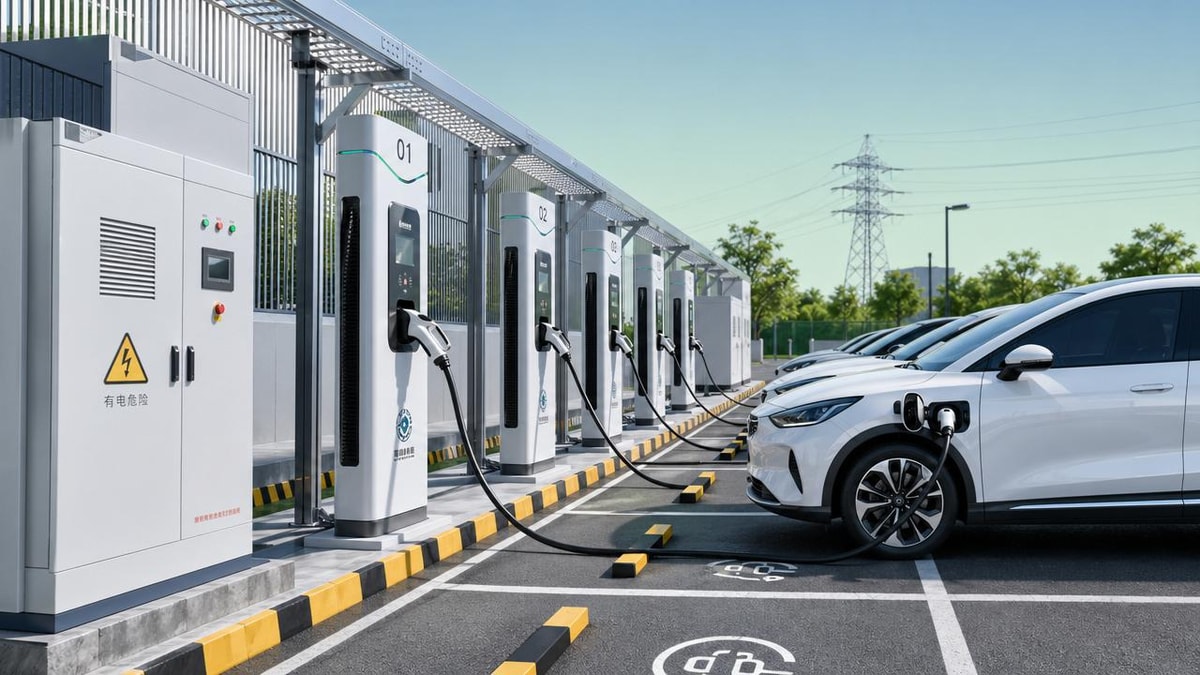
As EV adoption accelerates, project managers and engineering leads face growing pressure to align charging infrastructure with real-world demand, grid capacity, and investment goals. Energy analytics makes this planning smarter by turning usage patterns, load data, and site performance into actionable insights. With a data-driven approach, teams can reduce deployment risks, improve scalability, and build EV charging networks that are both efficient and future-ready.
Why Scenario Differences Matter in EV Charging Planning
For project managers, the hardest part of EV charging deployment is rarely the charger itself. The real challenge is matching charger quantity, power rating, operating profile, and future expansion to the actual behavior of vehicles, drivers, and buildings. A workplace campus with 8-hour parking cycles behaves very differently from a logistics yard with overnight fleet return windows or a retail site where average dwell time may stay below 90 minutes.
This is where energy analytics becomes valuable. Instead of planning from assumptions alone, teams can evaluate interval load data, peak demand patterns, transformer headroom, charging session forecasts, and site operating schedules. In many projects, a 15-minute load profile reveals more practical planning insight than a high-level annual consumption figure, because charging peaks often create localized stress long before annual energy totals appear problematic.
Different scenarios also change the definition of success. In one project, the priority may be minimizing utility upgrade costs. In another, it may be maximizing charger availability during a 2-hour turnover window. In a third, it may be balancing carbon goals with phased capital deployment over 12 to 36 months. Energy analytics supports better EV charging planning because it helps decision-makers see these differences early, before procurement, civil works, and commissioning begin.
Key planning variables that change by site type
Before selecting hardware or approving a site layout, engineering teams should map several variables that differ sharply across applications. These variables directly affect charger count, charger speed, network controls, and grid impact.
- Parking duration: short-stay sites often favor higher power per port, while long-dwell sites can use lower power more efficiently.
- Arrival clustering: if 60% to 80% of vehicles arrive within a narrow 1- to 2-hour period, unmanaged load spikes become more likely.
- Existing electrical capacity: available spare capacity at the panel, feeder, or transformer level often determines whether deployment is simple or requires staged upgrades.
- Operational criticality: fleet dispatch sites usually require higher reliability thresholds than public destination charging areas.
In practical terms, energy analytics should not be treated as an afterthought added after installation. It should be part of front-end site assessment, design verification, and rollout sequencing. That is especially important for organizations managing multiple assets across manufacturing, logistics, healthcare, and commercial property portfolios.
A simple screening checklist
A quick screening process can help teams avoid premature equipment decisions and identify where energy analytics will create the most value in the planning phase.
- Collect at least 3 to 12 months of interval energy data if available.
- Define user type: employee vehicles, fleet vehicles, customer vehicles, or mixed use.
- Estimate dwell time ranges and likely concurrent charging demand.
- Check whether demand charges, utility interconnection timelines, or backup power requirements affect project economics.
The following comparison helps show why the same EV charging strategy rarely works across all sites, even within the same enterprise portfolio. Energy analytics gives project teams a way to compare site conditions using operational facts rather than generic rules of thumb.
This table highlights a recurring lesson: charger power alone does not define project quality. Better EV charging planning depends on how accurately teams connect electrical behavior, user behavior, and business objectives. Energy analytics is the bridge between those three factors.
Three Common Application Scenarios and What to Evaluate First
Scenario 1: Workplace and corporate campuses
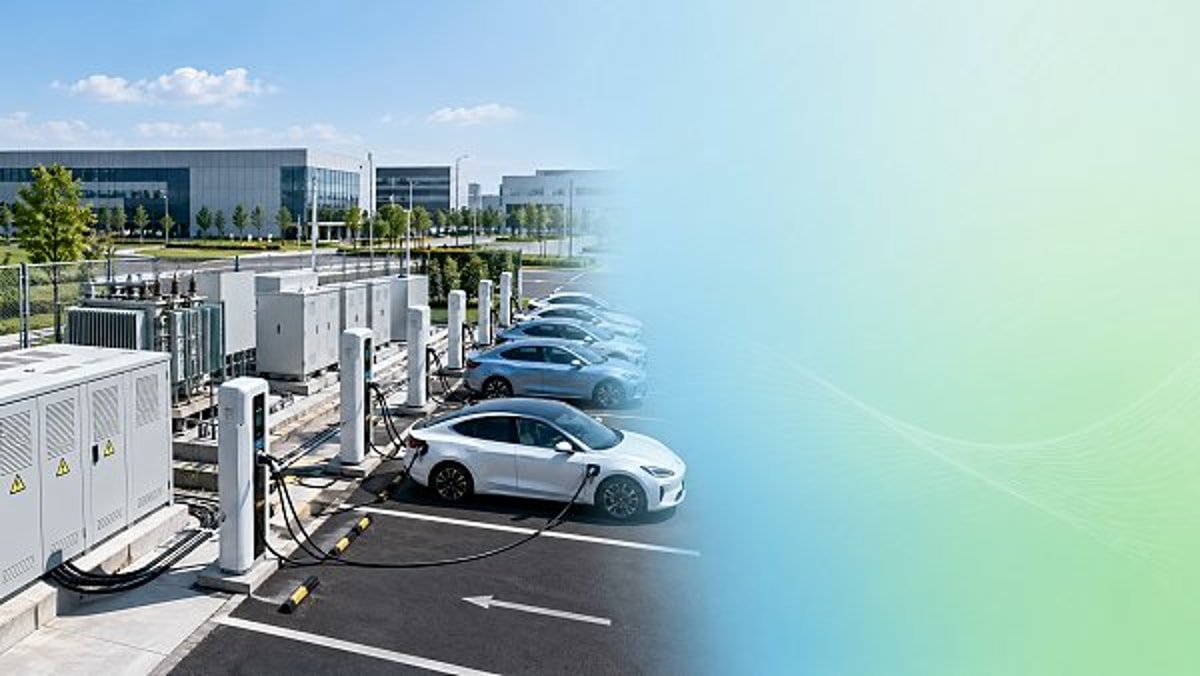
Workplace charging often looks simple at first because vehicles remain parked for 6 to 10 hours. However, that long dwell time can create a false sense of flexibility. If most employees plug in between 8:00 and 9:30 a.m., unmanaged charging may coincide with HVAC startup, lighting loads, and other building demand peaks. Energy analytics helps teams identify whether lower-power ports combined with load management can achieve the same user satisfaction as fewer higher-power chargers.
For this scenario, project managers should study utilization assumptions carefully. Installing too many high-capacity chargers can increase infrastructure costs without improving service. In many workplace settings, the planning question is not how fast each vehicle can charge, but how many vehicles need meaningful energy replenishment during a typical workday. Analytics on arrival patterns, average state-of-charge assumptions, and expected weekly charging frequency can improve capital efficiency.
Another issue is phased expansion. A campus may begin with 20 to 40 ports and plan for 2x or 3x growth over the next few years. Energy analytics supports this by showing where feeder sizing, conduit pathways, and panel design should anticipate later additions. That avoids expensive rework when EV adoption rises faster than internal forecasts.
What to confirm for workplace charging
- Average dwell time versus actual energy need per vehicle during one working day.
- Coincidence with building demand peaks in 15-minute or 30-minute intervals.
- Whether dynamic load balancing can defer service upgrades for 12 to 24 months.
Scenario 2: Fleet depots and logistics facilities
Fleet charging is often the most analytics-intensive scenario because vehicles have duty-cycle obligations. Missing a charging target is not just an inconvenience; it can disrupt morning routes, shift schedules, or service commitments. At a depot, energy analytics should focus on fleet return times, required energy by departure, charger-to-vehicle assignment logic, and the margin between site capacity and simultaneous charging demand.
In many logistics operations, vehicles do not return evenly. A depot might see a concentrated arrival block between 6:00 p.m. and 9:00 p.m., while departure readiness is required by 5:00 a.m. The planning problem therefore becomes a scheduling problem as much as an electrical one. Analytics can identify whether staggered charging, smart sequencing, or mixed charger power levels are sufficient, or whether the site needs a larger utility connection.
This scenario also benefits from monitoring resilience factors. If there is limited redundancy and one charger failure affects several routes, the cost of under-planning becomes operationally significant. Better EV charging planning in fleet contexts should therefore include contingency analysis, such as how the site performs if 10% to 15% of chargers are unavailable or if a winter energy requirement increases per vehicle charging demand.
What to confirm for depot charging
- Energy needed per vehicle per shift and acceptable recharge window.
- Number of vehicles that may require charging at the same time under worst-case operations.
- Whether software-controlled charging can keep total site demand below tariff breakpoints or transformer limits.
Scenario 3: Retail, hospitality, and public destination charging
Public-facing sites operate under a different logic. Here, convenience, turnover, and visibility may matter more than maximizing energy delivered per session. A retail center may experience strong variability by daypart, season, or event schedule. Energy analytics helps estimate how many users will actually charge, how long they typically stay, and whether charging load aligns with existing cooling, food service, or tenant demand peaks.
This is also the scenario where utilization risk can be high. Some sites overbuild too early, while others install too few chargers and create queues during peak periods. Planning should consider realistic ranges for occupancy, session frequency, and charging turnover. For example, a site with 30- to 60-minute dwell times may require a different power mix than a hotel site where vehicles remain parked for 8 to 12 hours overnight.
Because these assets often sit within broader mixed-use properties, teams should use energy analytics to understand not only charging behavior but portfolio interactions. One property may tolerate daytime charging loads better than another depending on the tenant profile, refrigeration loads, or seasonal demand charges. That makes site-specific analysis more useful than copying a deployment ratio from another location.
How Requirements Change Across Power, Cost, and Expansion Decisions
Once the site scenario is clear, project teams still need to translate energy analytics into design and budget choices. The most common decisions involve charger power level, number of ports, load management strategy, civil scope, and timing of utility upgrades. These are not isolated choices. A decision to install fewer high-power chargers can affect user wait times, future flexibility, and monthly peak demand charges.
For engineering leads, one practical benefit of energy analytics is sensitivity testing. Instead of planning around one forecast, teams can compare a base case, a high-adoption case, and a constrained-capacity case. A 20-port layout may look acceptable in year one, but if EV adoption doubles within 24 months, the conduit, switchgear, and transformer strategy should already account for that trajectory.
Cost planning also improves when analytics is used early. Upfront equipment cost is only one portion of the project. Utility service work, trenching, panel upgrades, demand charges, controls integration, and maintenance access all affect total project value. Better EV charging planning means understanding where a lower first-cost design could create higher operating cost or earlier retrofit pressure later on.
Comparison of planning priorities by decision category
The table below shows how energy analytics informs decisions beyond simple charger sizing. It is especially useful for multi-stakeholder reviews involving facilities, finance, operations, and procurement teams.
A useful interpretation of this table is that energy analytics reduces both technical and commercial uncertainty. It does not eliminate trade-offs, but it gives teams a stronger basis for deciding whether to prioritize user experience, lower capex, lower opex, or expansion readiness in each scenario.
Common requirement shifts by organization type
Requirements also differ by organization maturity. A single-site operator may focus on fast deployment and manageable utility costs, while a multinational operator may need portfolio-wide data consistency, procurement comparability, and scalable controls standards across 10, 50, or 100 sites. Energy analytics becomes even more important as the number of assets grows, because poor assumptions replicate quickly across a network.
- Single-site projects often prioritize near-term capacity and payback clarity.
- Regional portfolios often prioritize repeatable design rules and utility coordination.
- Global enterprises often prioritize governance, reporting consistency, and future integration with broader energy management systems.
Common Misjudgments That Energy Analytics Can Prevent
A common planning mistake is assuming that more charger power always solves demand uncertainty. In reality, oversized charging can intensify peak demand exposure, inflate infrastructure cost, and still fail to improve utilization if the wrong users are targeted. Energy analytics helps verify whether project risk comes from insufficient power, poor scheduling, bad site placement, or unrealistic adoption assumptions.
Another frequent issue is relying on average usage rather than peak coincidence. A site may have acceptable average daily consumption but still face constraints during a narrow 30-minute or 1-hour peak period. For project managers, those peaks are where utility upgrade decisions, protection design, and tariff impacts often emerge. Better EV charging planning depends on understanding those edge conditions, not just average behavior.
Teams also sometimes overlook business process constraints. A technically feasible charging plan can fail if parking turnover rules, route dispatch timing, contractor access, or maintenance windows are ignored. Energy analytics is most effective when combined with operational interviews and site walkthroughs, because numbers alone do not show where workflows create congestion or service disruption risks.
Misjudgments to watch during early planning
- Using annual consumption totals instead of interval demand data for charger sizing decisions.
- Assuming user adoption will be linear rather than clustered by department, route, or location.
- Ignoring make-ready design for expansion, even when EV penetration may increase materially within 18 to 36 months.
- Treating all sites in a portfolio as interchangeable despite different load shapes, tariffs, and operating patterns.
Where cautious judgment is especially important
Caution is particularly important in mixed-use facilities, older industrial sites, and locations with limited electrical documentation. In these environments, energy analytics should be paired with verification of as-built conditions, protection coordination assumptions, and available distribution capacity. A site that appears to have spare headroom on paper may be constrained by real-world loading patterns or aging infrastructure.
The same applies to projects with aggressive delivery schedules. If installation must happen within one or two quarters, analytics can help identify which sites are “ready now” versus which require utility engagement, design revision, or phased commissioning. That sequencing logic often matters more to project success than selecting the most advanced charger specification.
How to Turn Energy Analytics Into a Practical Deployment Plan
The most effective approach is to connect site data, engineering constraints, and business priorities in one planning workflow. For project managers and engineering leads, that usually means creating a structured review process before final procurement. The goal is not just to identify which chargers fit, but which deployment strategy fits the scenario, budget cycle, and expansion path.
A practical process often begins with data collection and scenario segmentation, followed by concept design, capacity testing, and phased rollout planning. In many organizations, this can be done over a 4- to 10-week assessment window for initial sites, with later sites moving faster once templates and thresholds are established. Energy analytics becomes the decision engine that supports standardization without ignoring local conditions.
For organizations managing assets across green energy, advanced manufacturing, smart facilities, healthcare campuses, or supply chain operations, this structured approach also improves cross-functional communication. Facilities teams can discuss headroom and outages, procurement can compare options, finance can assess demand-charge exposure, and operations can validate user behavior assumptions using one shared planning framework.
Recommended action path for project teams
- Segment sites by use case: workplace, depot, destination, or mixed-use environment.
- Gather interval energy data, operating hours, and expected charging behavior for each segment.
- Model at least three cases: current demand, near-term growth, and high-concurrency peak conditions.
- Compare charger mix, controls strategy, and utility upgrade timing before finalizing procurement.
- Build a phased deployment plan that includes expansion triggers, such as utilization thresholds or fleet conversion milestones.
Why work with TradeNexus Pro
TradeNexus Pro supports enterprise decision-makers who need more than surface-level market commentary. For teams evaluating energy analytics, EV charging planning, and related infrastructure strategy, TNP provides deep sector intelligence, technically grounded content, and a high-authority environment shaped for procurement leaders, supply chain managers, and project stakeholders working across critical growth industries.
If you are comparing site scenarios, confirming planning parameters, or building a multi-site charging roadmap, we can help you refine the discussion around key inputs such as load profile assumptions, deployment phasing, equipment selection logic, delivery timelines, and integration priorities. That includes support for scenario-based evaluation, supplier landscape review, and structured decision preparation for internal approval.
Contact us to discuss your specific application scenario, whether you need guidance on parameter confirmation, charger and system selection, rollout sequencing, customization direction, delivery-cycle considerations, or broader market intelligence for EV charging investments. With better energy analytics and the right planning framework, your project team can move forward with stronger confidence and fewer avoidable surprises.
Get weekly intelligence in your inbox.
No noise. No sponsored content. Pure intelligence.
 May 01, 2026Beijing’s New E-Bike Rules Trigger Dual-Certification Demand for China’s Swappable Battery CabinetsBeijing’s New E-Bike Rules Trigger Dual-Certification Demand for China’s Swappable Battery Cabinets
 May 01, 2026GNA’s GEO Service Assessment Elevates AI Search as Digital Procurement Metric for Chinese ExportersGNA’s GEO Service Assessment Elevates AI Search as Digital Procurement Metric for Chinese Exporters
 May 01, 20262026 China Cycle Expo: Chinese EPS Systems Achieve UL 2849:2026 Full Certification2026 China Cycle Expo: Chinese EPS Systems Achieve UL 2849:2026 Full Certification
 May 01, 2026GB 42236-2026 Enforces EV Charger Efficiency & Overload Protection from May 2026GB 42236-2026 Enforces EV Charger Efficiency & Overload Protection from May 2026
 May 01, 2026GB/T 43790-2026 Drone EMC Standard Effective May 2026GB/T 43790-2026 Drone EMC Standard Effective May 2026
 May 01, 20262026 Foshan Tanzhou Auto Industry Expo Opens2026 Foshan Tanzhou Auto Industry Expo Opens
 May 01, 2026China’s New Hazardous Chemicals Safety Law Takes Effect May 2026China’s New Hazardous Chemicals Safety Law Takes Effect May 2026
 May 01, 2026New Maritime and Fisheries Laws Take Effect May 1, 2026New Maritime and Fisheries Laws Take Effect May 1, 2026
 May 01, 2026Supply Chain Automation Works Best Where Delays RepeatSupply Chain Automation Works Best Where Delays Repeat
 May 01, 2026High Strength Steel Forgings: What Should Be Tested First?High Strength Steel Forgings: What Should Be Tested First?
 May 01, 2026Automotive Steel Forging: Cost Pressure vs Part ReliabilityAutomotive Steel Forging: Cost Pressure vs Part Reliability
 May 01, 2026Why High Durability Steel Forgings Fail Earlier Than ExpectedWhy High Durability Steel Forgings Fail Earlier Than Expected
 May 01, 2026Construction Aluminum Extrusions: Which Finish Lasts Longer?Construction Aluminum Extrusions: Which Finish Lasts Longer?
 May 01, 2026Lightweight Aluminum Extrusions: Where Savings Really HappenLightweight Aluminum Extrusions: Where Savings Really Happen
 May 01, 2026Aerospace Aluminum Extrusions Need More Than Low WeightAerospace Aluminum Extrusions Need More Than Low Weight
 May 01, 2026Precision Lathe Turning Problems That Show Up After AssemblyPrecision Lathe Turning Problems That Show Up After Assembly
 May 01, 2026High Precision Lathe Turning: Tolerance Claims to VerifyHigh Precision Lathe Turning: Tolerance Claims to Verify
 May 01, 2026When CNC Lathe Turning Is Better Than General MachiningWhen CNC Lathe Turning Is Better Than General Machining
 May 01, 2026Medical Device Prototyping Needs More Than SpeedMedical Device Prototyping Needs More Than Speed
 May 01, 20263D Printing Prototyping: Fast Turnaround or Better Finish?3D Printing Prototyping: Fast Turnaround or Better Finish?
 May 01, 2026Low Cost Rapid Prototyping: Where Quality Gets LostLow Cost Rapid Prototyping: Where Quality Gets Lost
 May 01, 2026Quick EV Charger Installation Still Needs Site ChecksQuick EV Charger Installation Still Needs Site Checks
 May 01, 2026Public Parking EV Chargers: What Slows Installation DownPublic Parking EV Chargers: What Slows Installation Down
 May 01, 2026Choosing a Lithium Ion Battery Manufacturer in ChinaChoosing a Lithium Ion Battery Manufacturer in China
 May 01, 2026How to Vet a Lithium Ion Battery OEM SupplierHow to Vet a Lithium Ion Battery OEM Supplier
 May 01, 2026EV Lithium Ion Batteries: Range Is Not the Only MetricEV Lithium Ion Batteries: Range Is Not the Only Metric
 May 01, 2026Lithium Ion ESS Batteries: Safety Details Worth CheckingLithium Ion ESS Batteries: Safety Details Worth Checking