Are Folding Solar Chargers Worth It for Field Use?
For field teams balancing reliability, mobility, and procurement cost, folding solar chargers are gaining serious attention. But are they truly worth it compared with portable solar panels, solar charge controllers, and mppt controllers in demanding off-grid environments? This article examines real-world performance, charging efficiency, durability, and integration with deep cycle batteries and battery management systems to help operators, buyers, and project decision-makers make smarter energy choices.
When Are Folding Solar Chargers Actually Worth It in Field Operations?
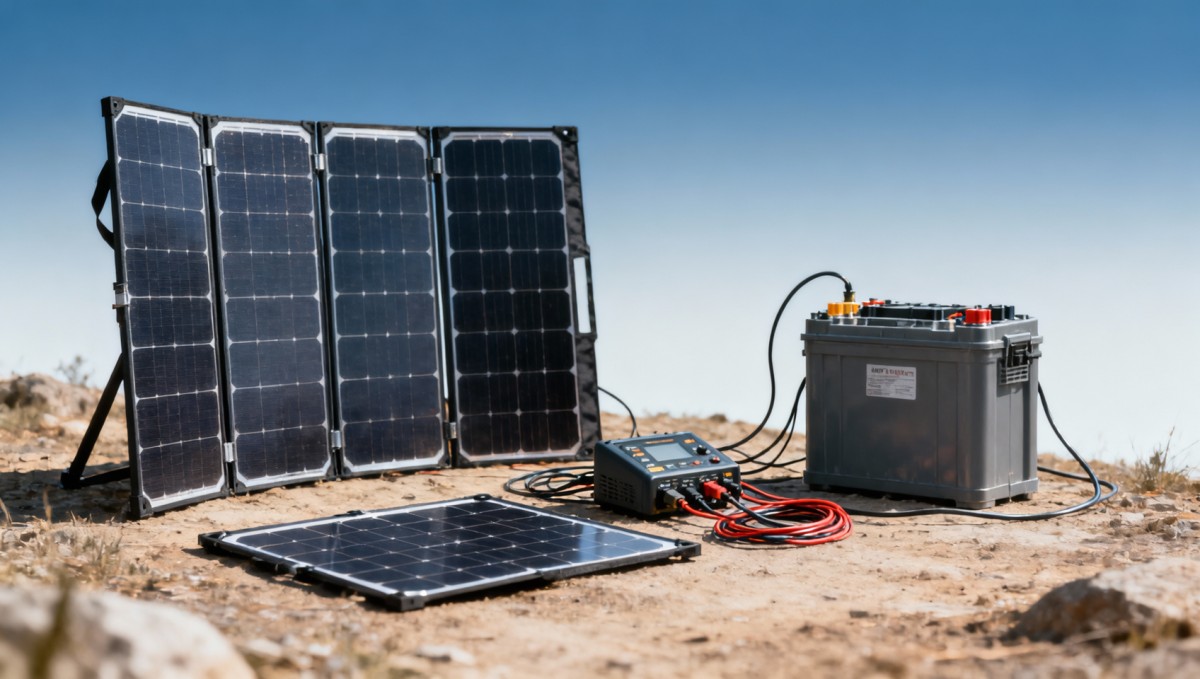
Folding solar chargers are worth serious consideration when mobility matters as much as power generation. In field inspection, temporary deployment, emergency backup, and mobile instrumentation support, teams often need a charging solution that can be carried by one operator, deployed within 2–5 minutes, and packed down without tools. In these cases, a folding solar charger can outperform rigid portable solar panels on convenience, even if it does not always win on raw daily energy harvest.
For procurement personnel, the real question is not whether folding solar chargers are universally better. The question is whether their power-to-portability ratio fits the operating profile. A 40W–200W folding panel can be highly practical for radios, tablets, laptops, sensors, satellite communicators, and small battery packs. It becomes less attractive when the field load includes refrigeration, pumps, extended lighting, or telecom equipment that demands stable charging over 8–12 hours.
Project managers and engineering leads should also distinguish between direct charging and system charging. A folding solar charger used for USB or DC output is a different tool from a portable solar panel array feeding a solar charge controller, mppt controller, and deep cycle battery bank. Many disappointing results come from deploying the first type where the second type was required.
In cross-sector B2B procurement, this distinction matters because purchase decisions affect logistics, maintenance frequency, downtime risk, and replacement cycles. TradeNexus Pro regularly tracks these decision patterns across green energy, smart electronics, advanced manufacturing field service, healthcare mobility support, and supply chain SaaS-enabled asset operations, where portable power must be evaluated as an operational system rather than a standalone gadget.
Three conditions that usually justify investment
- The field team relocates frequently, often once per day or several times per week, making low packed volume and lighter weight a measurable advantage.
- The load profile is moderate and predictable, such as 20Wh–500Wh per day rather than multi-kilowatt-hour demand.
- The project needs a fast-start energy setup without permanent mounting, civil work, or a complex commissioning cycle.
If those three conditions are present, a folding solar charger often delivers a favorable operational return. If not, a larger portable solar panel system with charge regulation and battery buffering may be the better B2B choice.
Folding Solar Charger vs Portable Solar Panel System: What Changes in Real Use?
Buyers often compare folding solar chargers and portable solar panels as if they are interchangeable. They are not. A folding solar charger is usually optimized for portability, rapid deployment, and smaller loads. A portable solar panel system is more often designed for structured energy delivery, including regulated charging, battery support, and longer duty cycles. The difference affects output stability, charging speed, field reliability, and procurement cost.
The table below outlines the practical differences that matter during technical evaluation, distributor screening, and project budgeting. It is especially useful for teams comparing direct-use chargers with broader off-grid power kits that include a solar charge controller or mppt controller.
The practical takeaway is simple: folding solar chargers win on speed, portability, and ease of use, while portable solar panel systems win on energy consistency and system integration. For buyers managing multi-site deployments, the wrong comparison often leads to underpowered kits, field complaints, and repeat purchasing within one or two operating cycles.
Why output differences matter more than nameplate wattage
Nameplate wattage does not equal field output. Solar generation changes with panel angle, cloud cover, cable loss, temperature, and shading. In practical field use, a charger rated at 100W may deliver far less than that for much of the day. This is not a product defect; it is an operating reality. Procurement teams should evaluate usable energy over a 4–6 hour effective sun window, not headline wattage alone.
This is where system design matters. A folding solar charger with unmanaged outputs may be adequate for opportunistic charging. But if the mission requires stable charging into deep cycle batteries, regulated voltage, and protection against overcharge or inefficient harvest, a solar charge controller becomes necessary. In many variable-light environments, an mppt controller can improve energy capture compared with simpler regulation methods, especially during partial shading and changing irradiance.
For business evaluators, this means the true purchasing unit is often not the panel itself. It is the entire field energy chain: panel, controller, battery, connectors, cable quality, and battery management system. That system view reduces total cost surprises later.
What Technical Performance Should Buyers and Operators Check First?
When folding solar chargers move from consumer use into industrial or institutional field use, technical screening should become much stricter. Operators care about whether devices charge reliably by the end of a shift. Procurement teams care about failure rates, compatibility, and replacement cost. Decision-makers care about whether the setup supports operating continuity over 3–12 month deployment periods.
At minimum, buyers should review five areas: rated power, real connector options, charging regulation, environmental durability, and battery compatibility. If the charger will be used with deep cycle batteries, portable power stations, or distributed field electronics, output type and control stability become more important than appearance or folding style.
The next table can be used as a shortlisting tool during supplier assessment. It is particularly relevant for distributors, sourcing teams, and project leads who need to compare offers from multiple vendors without relying on vague claims.
A useful rule is to separate personal-device charging from asset-power charging. For personal electronics, a lighter folding solar charger may be enough. For operational assets, charging should be treated as an engineered process with load calculation, controller selection, and battery protection logic. That is where mppt controllers and battery management systems become important.
Four technical questions that prevent bad purchases
- What is the daily energy demand in Wh, not just the device voltage?
- Will the charger feed devices directly, or charge a battery for later use?
- Is the site exposed to intermittent shade, where an mppt controller may improve usable harvest?
- How many folding cycles, transport cycles, and weather exposure events are expected per month?
These questions sound basic, but they often separate a workable field deployment from a procurement error. TradeNexus Pro often sees B2B buyers focus on panel price first, then discover later that connectors, control logic, and battery fit were the real cost drivers.
A note on deep cycle batteries and battery management systems
If the operating plan includes storing solar energy for nighttime or cloudy-day use, deep cycle batteries are central to system value. However, they should not be treated as simple add-ons. Charging profile, voltage regulation, and discharge protection all affect service life. A battery management system is especially important in lithium-based storage because balancing, thermal protection, and over-discharge limits directly influence safety and usable capacity across repeated cycles.
For field buyers, this means a folding solar charger can be part of a sound energy package, but only if the downstream storage and control architecture is selected correctly. Without that, users may blame the panel for failures caused elsewhere in the chain.
Which Field Scenarios Favor Folding Solar Chargers, and Which Do Not?
Not every off-grid application benefits equally from folding solar chargers. The strongest use cases are those where the team is highly mobile, the equipment load is moderate, and grid access is inconsistent but not permanently absent. Inspection crews, humanitarian response units, outdoor technical support teams, and temporary monitoring projects often fit this pattern. In these environments, quick handling and easy transport can outweigh absolute panel efficiency.
By contrast, remote sites with continuous demand usually require more than a folding charger can deliver on its own. Telecom relay support, refrigeration, pump operation, security systems, or round-the-clock lighting normally call for structured portable solar panels, proper battery storage, and regulated charging with predictable daily energy planning.
The following scenario matrix helps procurement teams match product type to operating need. It can also support distributor conversations and internal purchase approvals by showing why one solar option fits a use case better than another.
The pattern is clear. Folding solar chargers are strongest in light-to-medium field power tasks. Once the project moves toward continuous load support, more structured system design is required. That does not reduce the value of foldable units; it simply places them in the right segment of the energy toolkit.
Common misjudgments in scenario planning
- Assuming a folding solar charger can replace a full portable solar panel and battery system for overnight loads.
- Ignoring weather variability across 2–4 week deployments, especially in partly shaded or unstable conditions.
- Choosing output capacity based on the charger rating rather than the total daily consumption of all connected devices.
- Overlooking spare cable and connector requirements, which can become a major field support issue for distributed teams.
These issues show why B2B buyers need scenario-led sourcing rather than generic product comparison. The most cost-effective purchase is the one that matches actual duty cycle, transport pattern, and charging architecture from the start.
How Should Procurement Teams Evaluate Cost, Risk, and Alternatives?
Cost evaluation should go beyond unit price. A lower-cost folding solar charger can become expensive if it requires frequent replacement, cannot support target devices, or forces crews to carry backup generators and extra batteries. For enterprise buyers, the better metric is operating value over the expected project period, often 6–24 months for rotating field equipment.
The main cost variables usually include panel power range, controller inclusion, battery compatibility, ruggedization level, accessories, and after-sales support. For channel partners and distributors, packaging and SKU simplicity can also matter because standardization reduces inventory friction. For corporate sourcing teams, delivery lead time of 2–6 weeks may be as important as list price when projects have fixed mobilization dates.
Alternatives should also be assessed realistically. Power banks solve short-duration charging but depend on prior grid charging. Fuel generators deliver higher output but add fuel logistics, noise, maintenance, and emissions. Portable power stations offer convenience, yet still need reliable recharging input. A folding solar charger sits between these options as a low-noise, low-maintenance, renewable source for modest and mobile field loads.
This makes the technology most compelling when teams want to reduce generator runtime, extend battery autonomy, or support a lean off-grid setup without building a larger solar infrastructure. In mixed fleets, many organizations find value in combining solutions rather than selecting a single power source for every task.
A practical 5-point procurement checklist
- Define the daily load in Wh for each user group, including peak charging hours and backup needs.
- Confirm whether the charger must work with a solar charge controller, mppt controller, or power station input.
- Check transport constraints such as carry weight, folded dimensions, and deployment frequency.
- Verify environmental exposure, including dust, moisture, and repeated setup over several weeks or months.
- Review supplier support on sample evaluation, connector documentation, lead time, and replacement policy.
Standards and compliance considerations
When sourcing for enterprise or international deployment, buyers should ask for common electrical safety and transport documentation relevant to the destination market and product category. Requirements differ depending on whether the package includes only the panel, or also batteries, controllers, and power electronics. If lithium storage is included, transport and battery documentation become more important for shipping, warehousing, and import review.
Procurement teams should avoid assuming that all field charging kits carry the same compliance obligations. A folding solar charger by itself is one thing. A bundled energy system with battery management system, deep cycle battery, and charge control electronics can involve additional review steps. Early clarification shortens the approval cycle and reduces project delays.
FAQ: What Do Buyers and Field Teams Most Often Ask?
The questions below reflect common search intent from operators, sourcing teams, and project decision-makers evaluating folding solar chargers for professional field use.
Are folding solar chargers good enough for deep cycle batteries?
They can be, but usually not through direct unmanaged connection. Deep cycle batteries benefit from regulated charging, and in many field scenarios an external solar charge controller or mppt controller is the safer and more effective choice. The larger the battery and the more critical the runtime, the more important control logic becomes. For occasional topping up, a foldable panel may help. For routine charging, proper system matching is essential.
Do folding solar chargers work well in cloudy or partially shaded areas?
They still work, but output drops in real conditions. In partial shade, inconsistent irradiance can significantly affect charging speed. If the field mission depends on reliable harvest over 4–8 hours per day, buyers should consider system losses, storage buffering, and whether an mppt controller can improve usable capture. Cloud tolerance should be treated as a system planning issue, not just a panel feature question.
What power range is practical for mobile field teams?
For phones, tablets, cameras, and communication gear, 40W–100W is often practical when portability is the priority. For mixed loads or short-term field stations, 100W–200W may be more appropriate, especially if paired with a storage battery. Above that range, portability may remain acceptable for vehicle-supported teams, but the procurement conversation usually shifts toward broader portable solar panel systems.
What is the biggest buying mistake?
The biggest mistake is confusing occasional charging support with full operational energy coverage. Many buyers select a folding solar charger based on portability alone and only later discover that their load profile required storage, regulated charging, and more panel capacity. A close second is ignoring connector and battery compatibility during supplier comparison.
Why Work With TradeNexus Pro for Smarter Solar Sourcing Decisions?
For B2B buyers, the value of a folding solar charger is rarely decided by marketing claims alone. It depends on deployment context, battery strategy, controller architecture, logistics, and supplier fit. TradeNexus Pro helps procurement leaders, project managers, distributors, and enterprise evaluators cut through surface-level comparisons by focusing on practical energy workflows across green energy, smart electronics, advanced manufacturing, healthcare technology, and supply chain operations.
If your team is comparing folding solar chargers with portable solar panels, solar charge controllers, or mppt controllers, TNP can support a more informed evaluation path. That includes load-matching logic, field scenario review, supplier screening criteria, accessory and connector planning, and decision frameworks for deep cycle batteries and battery management systems.
You can contact TradeNexus Pro to discuss specific procurement questions such as suitable power range, panel-to-battery matching, controller selection, expected delivery windows, sample review priorities, deployment risk points, and channel-fit recommendations for regional distribution. For organizations planning 1-site pilots or multi-site rollouts, that clarity can reduce buying errors before they become operational problems.
If you need help comparing solution pathways, preparing a sourcing shortlist, validating technical parameters, or structuring an RFQ for field solar charging equipment, reach out with your use case, target devices, operating hours, and battery plan. A better brief leads to a better buying decision.
Get weekly intelligence in your inbox.
No noise. No sponsored content. Pure intelligence.
 Apr 18, 2026TradeNexus Pro Launches Global Compliance RadarTradeNexus Pro Launches Global Compliance Radar
 Apr 18, 2026JIS T 2304:2026 Takes Effect June 1, 2026 for IVD SoftwareJIS T 2304:2026 Takes Effect June 1, 2026 for IVD Software
 Pathway for Rehab Devices with AI Modules") Apr 18, 2026FDA Updates 510(k) Pathway for Rehab Devices with AI ModulesFDA Updates 510(k) Pathway for Rehab Devices with AI Modules
Apr 18, 2026FDA Updates 510(k) Pathway for Rehab Devices with AI ModulesFDA Updates 510(k) Pathway for Rehab Devices with AI Modules Apr 18, 2026India BIS Approves 3 Chinese IoT Labs for IS 16444:2026 CertificationIndia BIS Approves 3 Chinese IoT Labs for IS 16444:2026 Certification
 Apr 18, 2026THE Alliance Launches Green Slot Priority for China PortsTHE Alliance Launches Green Slot Priority for China Ports
 Apr 18, 2026TÜV Rheinland Releases Dual-Standard ESS Certification Guide for ChinaTÜV Rheinland Releases Dual-Standard ESS Certification Guide for China
 Apr 18, 2026Vietnam Imposes AD Duties on Chinese Electronic ComponentsVietnam Imposes AD Duties on Chinese Electronic Components
 Apr 18, 2026SASO Launches PV Carbon Footprint Labeling from July 2026SASO Launches PV Carbon Footprint Labeling from July 2026
 Apr 18, 2026U.S. Adds 17 Smart Warehouse Robot Components to Export Control ListU.S. Adds 17 Smart Warehouse Robot Components to Export Control List
 Apr 18, 2026EU Enforces EN IEC 62443-4-2:2026 for Industrial Control Devices from 18 Apr 2026EU Enforces EN IEC 62443-4-2:2026 for Industrial Control Devices from 18 Apr 2026
 Apr 17, 2026Temperature data loggers drift unpredictably inside lithium-ion battery storage enclosuresTemperature data loggers drift unpredictably inside lithium-ion battery storage enclosures
 Apr 17, 2026Are solar microinverters really worth the extra cost?Are solar microinverters really worth the extra cost?
 Apr 17, 2026Bifacial solar panels: How much more energy can they generate?Bifacial solar panels: How much more energy can they generate?
 Apr 17, 2026Gear manufacturing: How to optimize production for high precision?Gear manufacturing: How to optimize production for high precision?
 Apr 17, 2026Why power transmission components fail earlier than expectedWhy power transmission components fail earlier than expected
 Apr 17, 2026Linear motion systems: belt drive or ball screw for speed?Linear motion systems: belt drive or ball screw for speed?
 Apr 17, 2026Industrial bearing suppliers: what signals reliable quality?Industrial bearing suppliers: what signals reliable quality?
 Apr 17, 2026When pneumatic valves wholesale gets expensive laterWhen pneumatic valves wholesale gets expensive later
 Apr 17, 2026Hydraulic cylinder fabrication mistakes that cause oil leaksHydraulic cylinder fabrication mistakes that cause oil leaks
 Apr 17, 2026Heavy equipment manufacturing delays often start hereHeavy equipment manufacturing delays often start here
 Apr 17, 2026Custom heatsinks: when a larger size solves nothingCustom heatsinks: when a larger size solves nothing
 Apr 17, 2026Electronic enclosure fabrication: steel or aluminum?Electronic enclosure fabrication: steel or aluminum?
 Apr 17, 2026Automotive parts machining tolerances that drive up scrapAutomotive parts machining tolerances that drive up scrap
 Apr 17, 2026Medical device manufacturing changes under tighter traceabilityMedical device manufacturing changes under tighter traceability
 Apr 17, 2026How to Choose Solid State Batteries in 2026How to Choose Solid State Batteries in 2026
 Apr 17, 2026Are Solid State Batteries Worth the Cost Yet?Are Solid State Batteries Worth the Cost Yet?
 Apr 17, 2026Commercial Energy Storage Sizing: What Matters Most?Commercial Energy Storage Sizing: What Matters Most?