Bifacial Solar Panels: Do They Boost Output Enough?
Bifacial solar panels are gaining attention as buyers compare real-world yield gains against upfront costs, installation complexity, and long-term ROI. For teams evaluating off grid solar systems, solar microinverters, and broader commercial energy storage strategies, the key question is simple: do bifacial solar panels generate enough extra output to justify the investment? This article breaks down the technical factors, performance conditions, and business implications that matter most.
For operators, technical evaluators, project managers, finance approvers, and channel partners, the answer is rarely a simple yes or no. Bifacial modules can outperform conventional monofacial panels, but the gain depends heavily on site design, surface reflectivity, mounting height, row spacing, inverter architecture, and long-term maintenance discipline.
In B2B procurement, the decision should be based on bankable yield assumptions rather than headline efficiency claims. A system that adds 5% energy output with minimal balance-of-system changes may be attractive; a system that promises 20% more energy but requires costly redesign, stricter cleaning, and structural changes may not pass internal approval.
That is why bifacial solar panels are best evaluated as part of a broader energy strategy. Their value becomes clearer when they are matched to off grid solar systems, solar microinverters, carports, commercial rooftops, ground-mount arrays, or sites paired with commercial energy storage where every incremental kilowatt-hour carries operational value.
How Bifacial Solar Panels Actually Increase Output
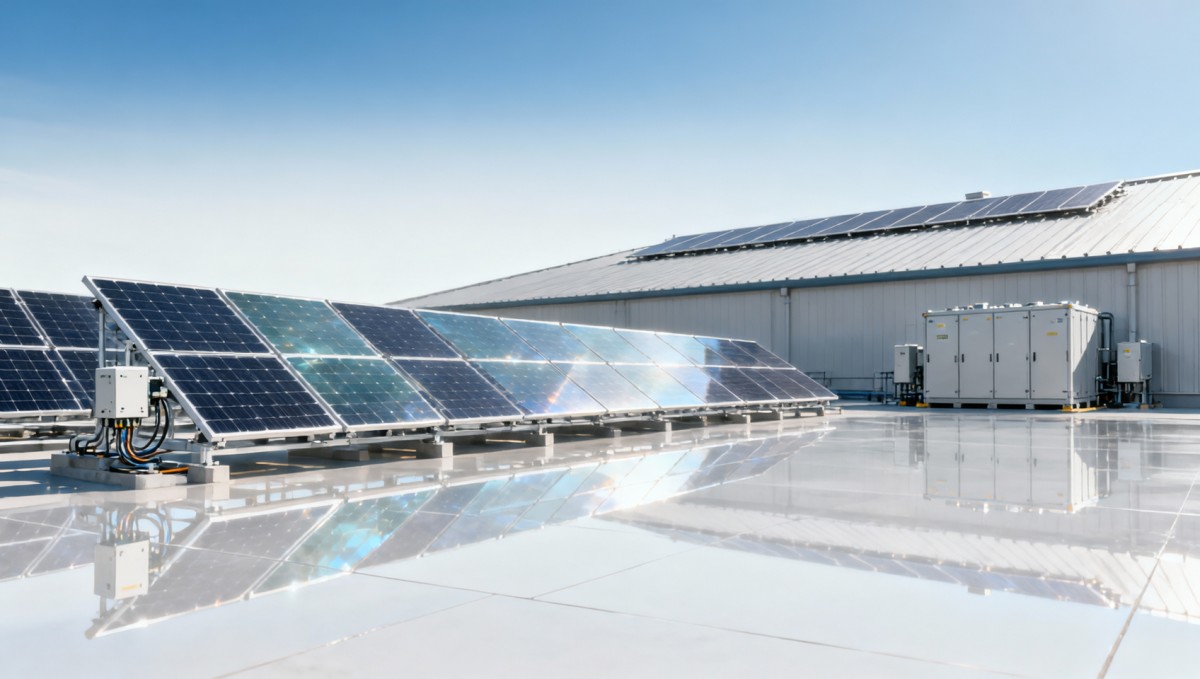
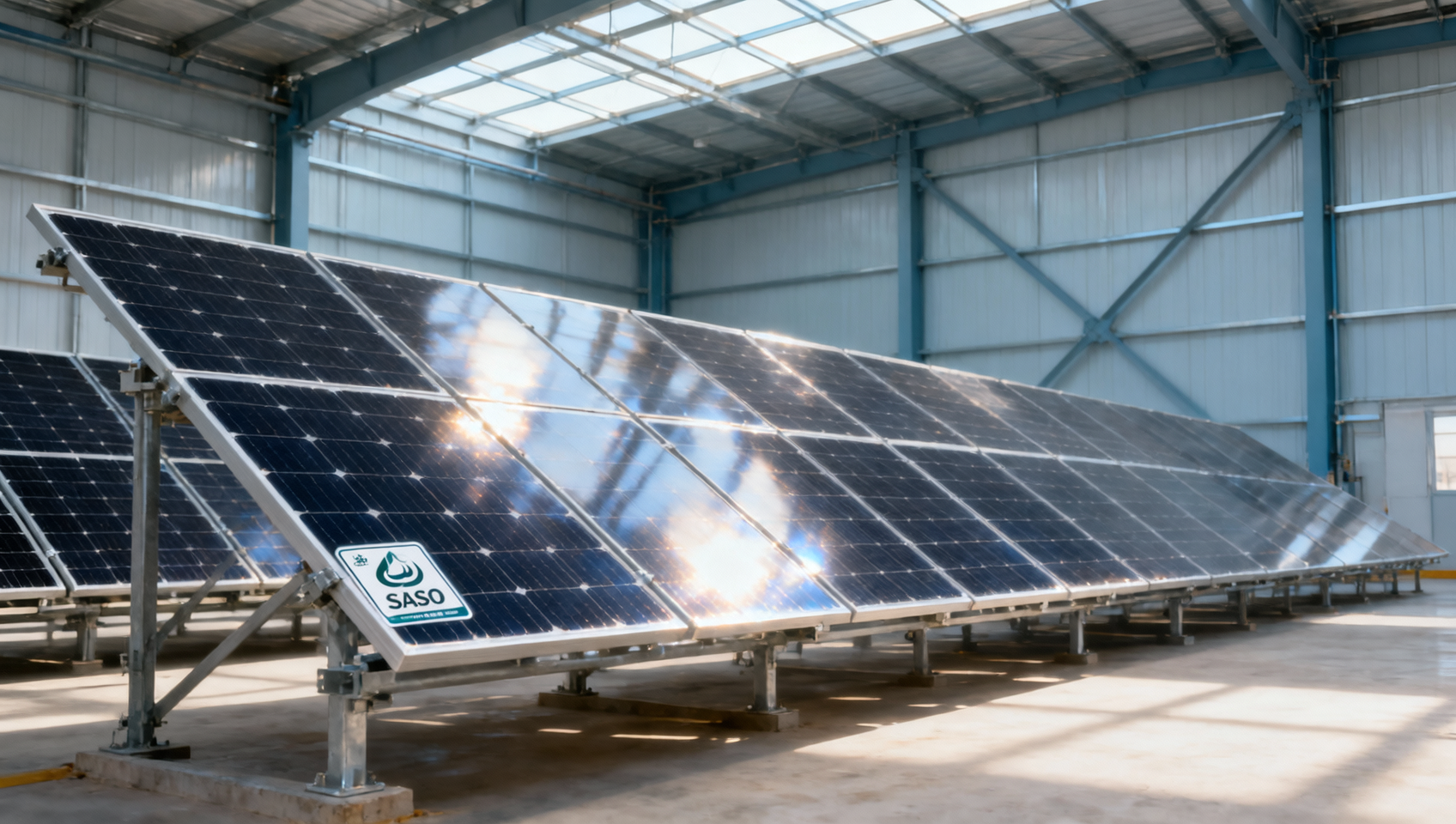
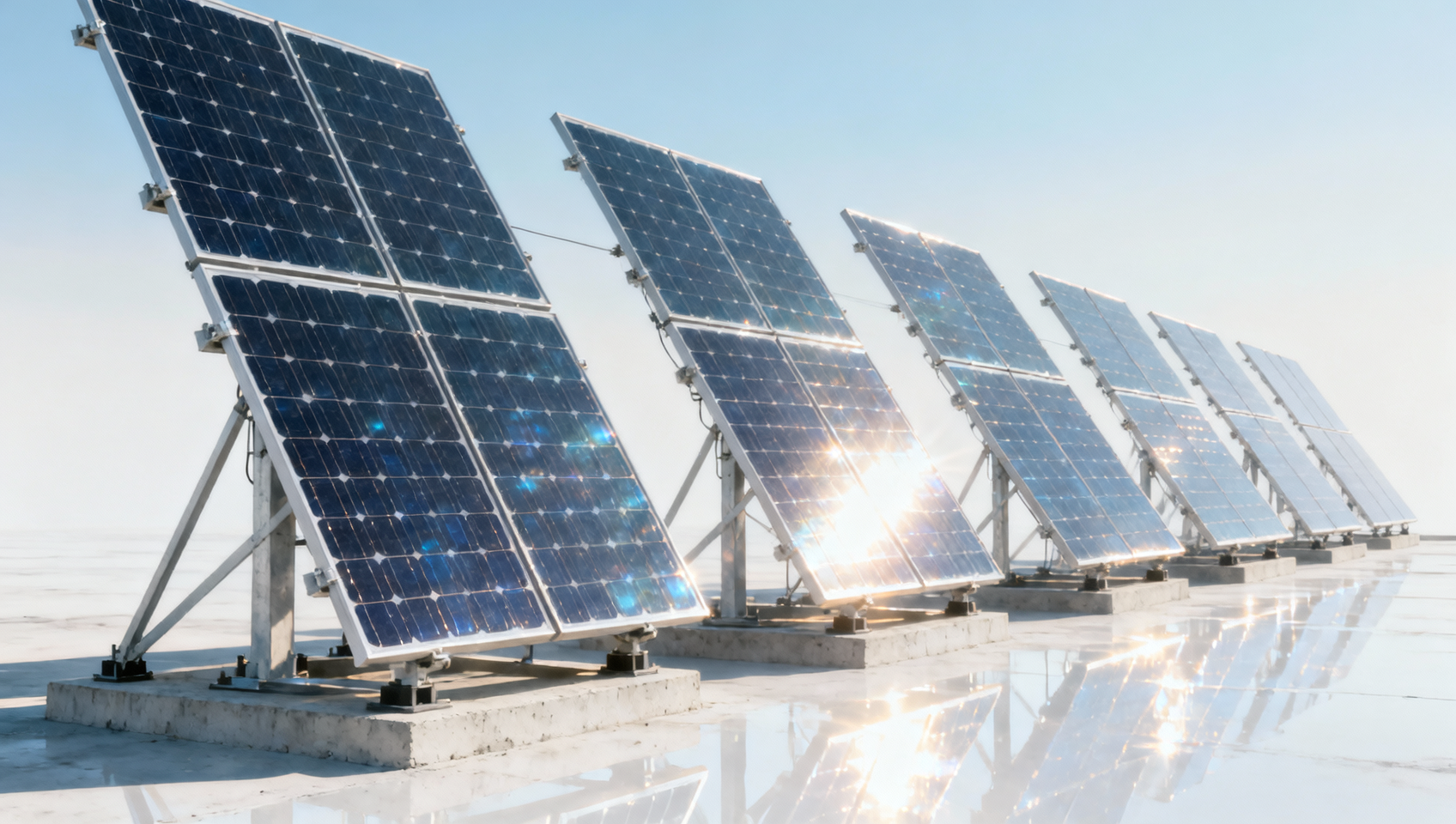
A bifacial solar panel captures irradiance from both the front and rear side of the module. The front works like a standard panel, while the rear side converts reflected and scattered light coming from the ground, nearby surfaces, or surrounding structures. In practical terms, this means energy gain is linked not only to sunlight intensity but also to the installation environment.
Typical rear-side gain in commercial projects often falls in the 5% to 15% range, although well-optimized ground-mount systems on high-albedo surfaces can exceed that. At the lower end, rooftop systems with limited rear exposure may only gain 3% to 8%. These ranges matter because they directly shape payback expectations and procurement thresholds.
The term “bifaciality factor” is also important. This usually describes how effectively the rear side converts light compared with the front side. Many commercially available modules are in a range of roughly 65% to 80% rear-side efficiency relative to the front. A higher bifaciality factor can improve yield, but only if the system design allows the rear side to receive useful light.
For project teams, the key technical insight is that module technology alone does not create the gain. The gain comes from the interaction between module design and site engineering. Without adequate elevation, spacing, and reflective ground conditions, the rear side contribution can be too small to materially improve project economics.
Core conditions that influence rear-side generation
Four variables usually determine whether bifacial solar panels deliver meaningful uplift. First is albedo, or the reflectivity of the surface below the array. Light-colored gravel, white membranes, sand, or coated surfaces generally perform better than dark asphalt. Second is mounting height, because modules installed 0.8 to 1.5 meters above the surface usually receive more rear irradiance than low-clearance installations.
Third is row spacing. If rows are too close, self-shading reduces rear-side contribution. Fourth is the support structure and electrical architecture. Excessive rail shading, poorly routed cabling, or mismatched inverter design can reduce the expected gain. In systems with solar microinverters, panel-level optimization may help in shaded or irregular layouts, especially where mismatch losses are otherwise significant.
- High-albedo surfaces can materially improve rear irradiance and support output gains above 10% in favorable designs.
- Mounting heights below 0.3 meters often limit rear-side exposure, especially on flat commercial roofs.
- Dense array layouts may improve land use efficiency but reduce bifacial advantage through rear shading.
- System monitoring at module or string level is important for verifying whether modeled gain is actually achieved.
Where the Output Gains Are Strong Enough to Matter
Not every project type benefits equally from bifacial solar panels. In many B2B environments, the most attractive use cases are ground-mount systems, elevated canopies, logistics yards, agrivoltaic layouts, and industrial carports. These settings provide more rear exposure and often justify the additional engineering effort because annual energy yield is a key performance metric.
Commercial rooftops are more mixed. A white TPO or PVC membrane roof can improve rear-side reflection, but low-clearance ballasted systems often constrain airflow and rear irradiance. In these cases, the gain may be moderate rather than transformative. Decision-makers should compare expected output uplift against structural limits, roof penetration policy, cleaning access, and maintenance costs over 20 to 30 years.
For off grid solar systems, bifacial modules can be valuable where land is available and daytime generation has a direct operational benefit. A telecom site, mining camp, agricultural pump station, or remote industrial facility may see better economics if higher daytime output reduces diesel runtime or lowers battery cycling depth. In such scenarios, even an extra 6% to 12% generation can improve fuel displacement and storage performance.
The following comparison helps teams decide where bifacial modules usually make financial and operational sense.
The main takeaway is that bifacial solar panels are not universally superior. They are conditionally superior. Their strongest performance appears in layouts where the rear side can consistently “see” reflected light. When that condition is missing, buyers may be better served by focusing on stronger module warranties, inverter choice, or storage integration instead of bifacial capability alone.
Operational fit by stakeholder group
Operators usually care about cleaning frequency, monitoring clarity, and service access. Technical evaluators focus on energy models, shading coefficients, and compatibility with solar microinverters or string inverters. Finance teams prioritize IRR, payback period, and risk-adjusted output assumptions. Quality and safety managers look at glass-glass durability, mechanical load, grounding, and installation safety at height.
For distributors and EPC partners, bifacial modules can also become a portfolio differentiator in markets where buyers increasingly ask for lifecycle value instead of lowest upfront price. Still, channel success depends on setting realistic gain expectations. Overselling a 15% uplift on a poor site can damage trust and trigger post-installation disputes.
Cost, ROI, and Procurement Reality in B2B Projects
The central business question is not whether bifacial solar panels generate more electricity. They usually do. The real question is whether the additional output is large enough to offset the combined premium in module price, design complexity, mounting adjustments, and possible construction changes. In many projects, the answer depends on a margin of only 2 to 5 percentage points in lifetime return.
Module pricing fluctuates, but bifacial products have often narrowed the price gap versus monofacial alternatives. Even so, total installed cost can still rise if the project requires taller racking, modified structural calculations, wider row spacing, or upgraded monitoring. Procurement teams should examine total system economics rather than module cost per watt alone.
A practical way to evaluate the investment is to model three scenarios: conservative gain, expected gain, and high-performance gain. For example, a buyer might test 4%, 8%, and 12% energy uplift over a 25-year operating period. This approach reduces the risk of approving a project based on optimistic conditions that are unlikely to persist after dust buildup, shading changes, or maintenance gaps.
It is also important to compare where the extra capital could otherwise be deployed. In some facilities, allocating budget to better solar microinverters, a larger DC/AC ratio, or commercial energy storage may generate more predictable value than paying for bifacial capability on a suboptimal site.
Procurement checklist for financial and technical approval
Before approving a procurement package, teams should align commercial assumptions with site engineering. The table below summarizes the most relevant decision variables for B2B buyers.
This checklist often reveals whether bifacial solar panels are a yield-enhancing investment or simply a premium feature with limited project impact. For finance approvers, the most bankable projects are those where the modeled gain remains positive even under conservative reflectivity and soiling assumptions.
A practical ROI rule of thumb
If bifacial modules add only a small upfront premium and the site can reliably support more than 6% annual energy uplift, the case is often worth serious review. If the system redesign is substantial and projected gain remains below 5%, buyers should challenge whether simpler alternatives could produce a stronger return with lower execution risk.
- Start with baseline monofacial yield and installed cost.
- Add bifacial-specific cost increments including structure, labor, and design changes.
- Model at least 3 energy-gain scenarios over 20 to 30 years.
- Stress test assumptions for dirt, shading, and maintenance delays.
- Compare against alternative uses of capex such as storage or inverter optimization.
Design Choices That Can Make or Break Bifacial Performance
Even strong module specifications cannot compensate for weak system design. In practice, some bifacial projects underperform not because the panels are flawed, but because rear-side access to light is blocked by low mounting, dense rows, dark surfaces, or excessive structural shading. This is especially relevant in cost-sensitive commercial projects where every design compromise affects output.
Mounting geometry is one of the most important variables. Raising modules from 0.2 meters to 1.0 meter above the surface can significantly improve rear irradiance, though the exact benefit varies by site. Similarly, row spacing should be balanced between land efficiency and self-shading. What looks optimal on a layout drawing may reduce annual yield if rear-side exposure is sacrificed for denser packing.
Electrical architecture also matters. In sites with complex shading, orientation variation, or phased expansion, solar microinverters may offer better module-level visibility and help recover mismatch-related losses. In more uniform utility-style arrays, string inverters may remain cost-effective. The correct choice depends on site topology, monitoring expectations, service model, and fault isolation requirements.
For projects tied to commercial energy storage, output timing can matter as much as total output. If extra daytime generation charges batteries more consistently, the operational value of bifacial gain can exceed a simple levelized cost calculation. This is relevant for facilities trying to reduce peak tariff exposure, diesel backup dependence, or process interruptions.
Common design errors to avoid
- Using bifacial modules on dark roofing without verifying whether the rear side will receive enough reflected light.
- Installing modules too close to the roof or ground, limiting airflow and rear irradiance.
- Ignoring shading from cable trays, torque tubes, cross rails, or parapets in energy modeling.
- Assuming rear-side gain will remain constant despite seasonal dirt, snow, vegetation growth, or site changes.
- Specifying bifacial panels without a monitoring plan capable of validating actual gain after commissioning.
Suggested design review points
A practical review should cover at least 6 checkpoints: albedo estimate, mounting height, row spacing, structural shadow map, cleaning access, and inverter configuration. For quality and safety teams, add glass durability, wind and snow load review, cable routing, grounding, and fall-protection planning. These checks reduce the gap between modeled output and delivered performance.
Project managers should also define a verification window after commissioning, often the first 90 to 180 days. During this period, actual energy yield can be compared against expected performance under similar irradiation conditions. Early variance detection helps determine whether the rear-side gain is material or being suppressed by avoidable design or installation issues.
When Bifacial Solar Panels Are the Right Choice for Your Business
Bifacial solar panels are usually the right choice when three conditions align. First, the site can physically support meaningful rear-side exposure. Second, the commercial model rewards additional kilowatt-hours, whether through self-consumption, fuel displacement, storage charging, or tariff reduction. Third, the buyer has the technical discipline to design, monitor, and maintain the system properly over its full operating life.
They are often a strong fit for industrial parks, logistics hubs, remote energy users, agricultural operations, and commercial facilities that combine solar generation with storage or daytime-heavy loads. They may be less compelling for highly constrained rooftops, shaded urban buildings, or budget-limited retrofits where the practical gain is too small to justify design changes.
For distributors and solution providers, the best sales approach is consultative rather than generic. Instead of leading with a claim that bifacial is “better,” lead with site-specific value drivers: reflective surface quality, expected gain range, maintenance feasibility, and system integration options. Buyers respond better to transparent trade-offs than to broad performance promises.
For enterprise decision-makers, the goal is not to chase the highest theoretical efficiency. It is to secure reliable, auditable returns from an energy asset expected to operate for 20 to 30 years. In that context, bifacial solar panels can absolutely boost output enough, but only when the project is engineered for them instead of merely equipped with them.
FAQ: What buyers ask before approval
Do bifacial solar panels always produce more energy?
Usually yes, but not always enough to change project economics. On weak sites, gain may stay near 0% to 5%. On optimized sites, it can reach 8% to 15% or more. The business case depends on whether that gain exceeds the added installed cost and complexity.
Are they suitable for off grid solar systems?
They can be highly suitable where extra daytime production reduces generator fuel use or improves battery charging. The strongest results are usually seen in open sites with reflective ground, available space, and a load profile that benefits from mid-day energy.
Should buyers pair bifacial modules with solar microinverters?
Not by default. Solar microinverters are most attractive where there is module-level shading, orientation diversity, or a strong need for granular monitoring. In uniform large arrays, string inverters may still provide better overall economics. The right choice depends on layout, O&M model, and fault visibility requirements.
What maintenance issues should teams plan for?
Plan for periodic cleaning, rear-side inspection, vegetation control where relevant, and checks for structural shading or debris buildup. A cleaning interval of every 3 to 6 months is common in many commercial environments, but dust-heavy or agricultural sites may need more frequent attention.
For B2B teams evaluating solar investments, the most reliable path is a site-led decision process rather than a product-led one. Bifacial solar panels can deliver worthwhile gains, especially in well-designed ground-mount, canopy, and reflective-surface applications, but the uplift must be tested against installation geometry, inverter strategy, maintenance discipline, and total project economics.
If your organization is comparing bifacial modules, off grid solar systems, solar microinverters, or commercial energy storage options, a structured technical and financial review will reveal whether the added output is truly bankable. To explore a tailored evaluation framework, procurement checklist, or solution strategy for your market, contact TradeNexus Pro to get a customized recommendation and deeper sector intelligence.
Get weekly intelligence in your inbox.
No noise. No sponsored content. Pure intelligence.
 Apr 18, 2026TradeNexus Pro Launches Global Compliance RadarTradeNexus Pro Launches Global Compliance Radar
 Apr 18, 2026JIS T 2304:2026 Takes Effect June 1, 2026 for IVD SoftwareJIS T 2304:2026 Takes Effect June 1, 2026 for IVD Software
 Pathway for Rehab Devices with AI Modules") Apr 18, 2026FDA Updates 510(k) Pathway for Rehab Devices with AI ModulesFDA Updates 510(k) Pathway for Rehab Devices with AI Modules
Apr 18, 2026FDA Updates 510(k) Pathway for Rehab Devices with AI ModulesFDA Updates 510(k) Pathway for Rehab Devices with AI Modules Apr 18, 2026India BIS Approves 3 Chinese IoT Labs for IS 16444:2026 CertificationIndia BIS Approves 3 Chinese IoT Labs for IS 16444:2026 Certification
 Apr 18, 2026THE Alliance Launches Green Slot Priority for China PortsTHE Alliance Launches Green Slot Priority for China Ports
 Apr 18, 2026TÜV Rheinland Releases Dual-Standard ESS Certification Guide for ChinaTÜV Rheinland Releases Dual-Standard ESS Certification Guide for China
 Apr 18, 2026Vietnam Imposes AD Duties on Chinese Electronic ComponentsVietnam Imposes AD Duties on Chinese Electronic Components
 Apr 18, 2026SASO Launches PV Carbon Footprint Labeling from July 2026SASO Launches PV Carbon Footprint Labeling from July 2026
 Apr 18, 2026U.S. Adds 17 Smart Warehouse Robot Components to Export Control ListU.S. Adds 17 Smart Warehouse Robot Components to Export Control List
 Apr 18, 2026EU Enforces EN IEC 62443-4-2:2026 for Industrial Control Devices from 18 Apr 2026EU Enforces EN IEC 62443-4-2:2026 for Industrial Control Devices from 18 Apr 2026
 Apr 17, 2026Temperature data loggers drift unpredictably inside lithium-ion battery storage enclosuresTemperature data loggers drift unpredictably inside lithium-ion battery storage enclosures
 Apr 17, 2026Are solar microinverters really worth the extra cost?Are solar microinverters really worth the extra cost?
 Apr 17, 2026Bifacial solar panels: How much more energy can they generate?Bifacial solar panels: How much more energy can they generate?
 Apr 17, 2026Gear manufacturing: How to optimize production for high precision?Gear manufacturing: How to optimize production for high precision?
 Apr 17, 2026Why power transmission components fail earlier than expectedWhy power transmission components fail earlier than expected
 Apr 17, 2026Linear motion systems: belt drive or ball screw for speed?Linear motion systems: belt drive or ball screw for speed?
 Apr 17, 2026Industrial bearing suppliers: what signals reliable quality?Industrial bearing suppliers: what signals reliable quality?
 Apr 17, 2026When pneumatic valves wholesale gets expensive laterWhen pneumatic valves wholesale gets expensive later
 Apr 17, 2026Hydraulic cylinder fabrication mistakes that cause oil leaksHydraulic cylinder fabrication mistakes that cause oil leaks
 Apr 17, 2026Heavy equipment manufacturing delays often start hereHeavy equipment manufacturing delays often start here
 Apr 17, 2026Custom heatsinks: when a larger size solves nothingCustom heatsinks: when a larger size solves nothing
 Apr 17, 2026Electronic enclosure fabrication: steel or aluminum?Electronic enclosure fabrication: steel or aluminum?
 Apr 17, 2026Automotive parts machining tolerances that drive up scrapAutomotive parts machining tolerances that drive up scrap
 Apr 17, 2026Medical device manufacturing changes under tighter traceabilityMedical device manufacturing changes under tighter traceability
 Apr 17, 2026How to Choose Solid State Batteries in 2026How to Choose Solid State Batteries in 2026
 Apr 17, 2026Are Solid State Batteries Worth the Cost Yet?Are Solid State Batteries Worth the Cost Yet?
 Apr 17, 2026Commercial Energy Storage Sizing: What Matters Most?Commercial Energy Storage Sizing: What Matters Most?