Bulk Solar Panel Orders: What Often Drives Up Final Cost
For finance approvers, a solar panels wholesale bulk order may look cost-efficient on paper, yet the final invoice often tells a different story. Beyond unit pricing, hidden expenses such as logistics, certification, warranty exposure, currency risk, and supplier reliability can quickly erode projected savings. Understanding what truly drives total procurement cost is essential to making lower-risk, higher-value purchasing decisions.
Why does a solar panels wholesale bulk order often cost more than expected?
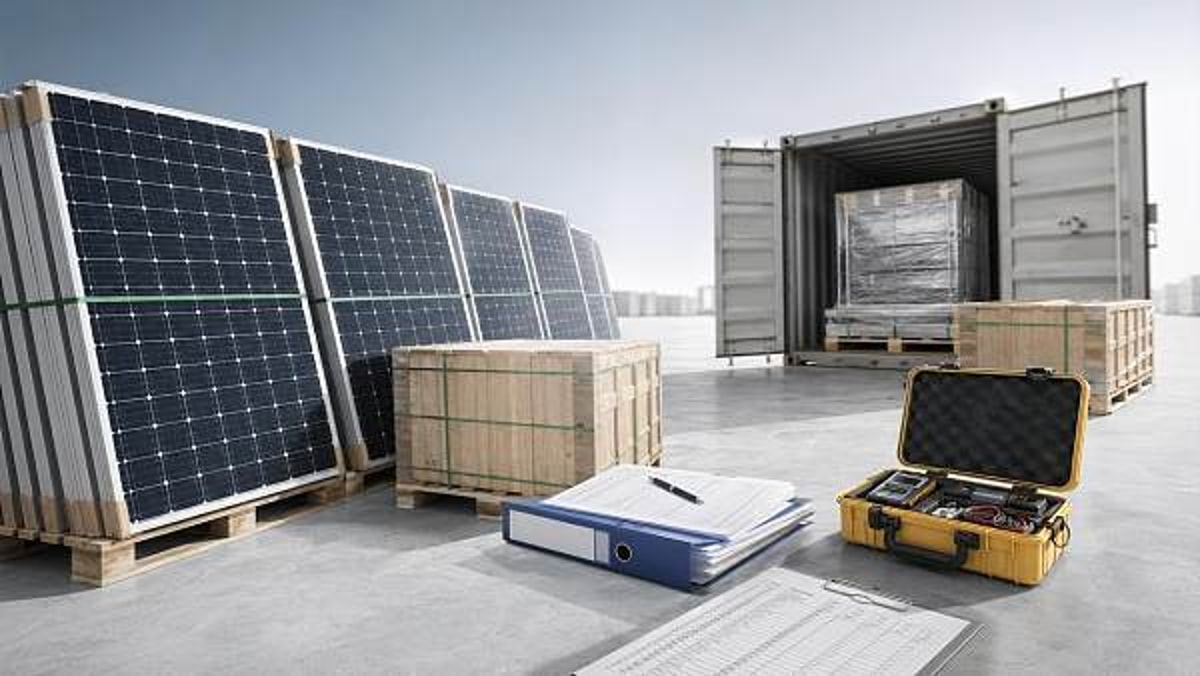
In boardrooms and procurement reviews, the first number that draws attention is usually the module price per watt. That is understandable. A large solar panels wholesale bulk order is often justified by scale discounts, forecasted energy savings, and stronger negotiating power. Yet finance approvers rarely approve only a product price. They approve risk, timing, working capital exposure, and downstream accountability.
The cost gap appears when teams compare supplier quotations without normalizing freight terms, documentation scope, packaging methods, testing requirements, and after-sales obligations. A supplier with a lower ex-works offer may still result in a higher landed cost than a slightly higher-priced vendor that includes bankable packaging, faster export handling, and lower defect risk.
This matters across industries. Manufacturers may need rooftop systems for multi-site facilities. Logistics operators may be under pressure to reduce warehouse energy costs. Healthcare technology firms may demand tighter uptime assumptions. In each case, finance teams need more than a quote sheet. They need a total-cost view supported by verifiable market intelligence and supplier context.
- Unit cost is only one line item; shipping, insurance, customs, local handling, and commissioning can materially change the approved budget.
- Technical mismatch can increase balance-of-system expense, especially when dimensions, voltage windows, or mounting assumptions differ from project design.
- Supplier instability can create hidden financing costs through delays, reorders, or warranty uncertainty.
Which cost components should finance approvers model before approval?
Before approving a solar panels wholesale bulk order, finance leaders should move from price-based comparison to landed-cost modeling. The practical question is not “Which quote is lower?” but “Which procurement path is least likely to create budget overrun over the full purchase cycle?”
The table below outlines the most common cost drivers that inflate final spend. It is especially useful when comparing suppliers that appear similar at first glance but carry different commercial or operational assumptions.
A disciplined finance review treats these items as forecastable variables, not surprises. When they are modeled early, the conversation shifts from price chasing to budget certainty. That is usually where better approvals are made.
The hidden impact of working capital
Bulk solar procurement also ties up cash. Deposits, long production lead times, and milestone payments may lock capital for weeks or months before assets start generating savings. For finance approvers, this can be as important as the negotiated discount. A lower-price order that requires heavier upfront payment may be less attractive than a structured payment schedule with better delivery reliability.
How supplier choice changes the real cost of bulk procurement
Not all suppliers create the same cost profile. In a solar panels wholesale bulk order, the supplier’s operational discipline, export experience, and documentation quality directly affect how much friction the buyer absorbs. Finance teams should evaluate suppliers as risk carriers, not just product vendors.
A useful comparison is shown below. It highlights why a quote with a lower nominal module price may still fail a finance-led procurement review.
For finance approvers, the core lesson is simple: the cheapest quote can be the most expensive route if it introduces rework, delay penalties, insurance claims, or financing stress. This is why high-value B2B procurement increasingly depends on verified market insight, not isolated quote comparison.
Why intelligence platforms matter in supplier screening
TradeNexus Pro supports this decision process by connecting procurement leaders and finance stakeholders with deeper sector context. In green energy and cross-border sourcing, pricing alone rarely explains risk. Market signals, supply chain changes, regional trade conditions, and supplier behavior patterns often explain it better. Access to curated intelligence helps finance teams challenge assumptions before capital is committed.
What technical and compliance details commonly trigger extra spend?
Finance approvers are not expected to act as design engineers, but they do need to understand which technical details can expand project cost after approval. In a solar panels wholesale bulk order, a mismatch between modules and project specifications often affects inverters, racking, cable lengths, installation labor, and acceptance timelines.
Technical details that can move the budget
- Module dimensions and weight can change pallet density, container loading efficiency, and mounting design.
- Voltage and current characteristics must align with inverter windows; mismatch can force redesign or reduce energy yield assumptions.
- Degradation assumptions affect long-term financial modeling, especially for projects relying on internal rate of return or payback calculations.
- Packaging standards matter because transit damage in bulk shipments can quickly offset negotiated unit savings.
Compliance items finance should ask about
Compliance is another area where hidden costs emerge. Depending on destination market and project type, buyers may need evidence related to electrical safety, manufacturing consistency, transport documentation, and environmental declarations. Even when certification itself is standard, incomplete paperwork can delay customs clearance or project commissioning.
Common checkpoints include product conformity documents, country-specific import requirements, packaging marks, serial traceability, and warranty statements that can actually be enforced. Finance teams should not assume the procurement department has already de-risked these items unless the review record clearly shows it.
How should finance teams evaluate a solar panels wholesale bulk order step by step?
A practical approval workflow reduces late-stage surprises. It also creates a cleaner audit trail for capital expenditure decisions. For organizations managing multi-site facilities or cross-border procurement, a standardized sequence is more effective than reviewing each bulk order from scratch.
- Define the commercial baseline. Confirm module quantity, wattage class, delivery terms, payment terms, and target delivery window.
- Build a landed-cost sheet. Include freight, duties, tax, inland handling, inspection, insurance, and likely contingency.
- Review technical compatibility. Validate that the selected modules fit the actual site or system design assumptions.
- Assess supplier execution risk. Look at documentation readiness, batch traceability, communication discipline, and after-sales structure.
- Test downside scenarios. Model delay cost, claim handling cost, exchange-rate movement, and replacement risk.
- Approve only after cross-functional alignment. Procurement, operations, technical teams, and finance should sign off on the same assumptions.
This process is especially valuable when multiple sectors intersect. For example, an advanced manufacturing site may prioritize uptime, while a supply chain SaaS operator leasing logistics space may emphasize cost recovery and deployment speed. The approval framework stays consistent even when the operational logic changes.
Common misconceptions that lead to budget overruns
Several misconceptions repeatedly distort approval decisions in bulk solar procurement. Most are not technical mistakes. They are financial assumptions that fail to capture operational reality.
Misconception 1: Larger volume always means lower total cost
Larger orders can improve unit pricing, but they may also increase storage cost, transport complexity, exposure to damage, and concentration risk with one supplier. Volume only helps when the full supply chain can absorb it efficiently.
Misconception 2: Certification solves all procurement risk
A certificate does not guarantee smooth logistics, consistent packaging, or responsive claim handling. Compliance is necessary, but it is not a substitute for supplier execution quality.
Misconception 3: Warranty value is the same across suppliers
Warranty language may look similar on paper, yet practical enforcement can differ widely. Finance teams should ask how claims are processed, who covers transport for replacements, and how response times are documented.
FAQ: what do finance approvers most often ask about bulk solar procurement?
How do I compare two solar panels wholesale bulk order quotes fairly?
Normalize every quote to the same commercial basis. That means matching Incoterms, payment schedule, warranty scope, testing level, freight assumption, and tax treatment. If one supplier is quoting FOB and another is quoting CIF, the price difference is not directly comparable. Build a single landed-cost template and force all offers into it.
What is the biggest hidden cost after module price?
In many projects, logistics and delay-related costs outrank all other hidden items. Ocean freight swings, customs delays, local delivery charges, and installation rescheduling can quickly absorb the savings from a low product price. The exact ranking varies by market, but logistics risk is consistently under-modeled.
When should finance reject a low-price offer?
Reject or escalate when the quote lacks clarity on delivery terms, test evidence, warranty administration, or documentation responsibility. Also pause if the payment structure is aggressive relative to lead time, or if technical assumptions appear disconnected from the project design. A low price is not a saving if it transfers unmanaged risk back to the buyer.
How can TradeNexus Pro help with better approvals?
TradeNexus Pro helps decision-makers move beyond fragmented supplier claims by providing focused intelligence across green energy, advanced manufacturing, smart electronics, healthcare technology, and supply chain SaaS. For finance approvers, that means access to sharper market context, clearer procurement signals, and better-informed cross-functional discussion before approving a solar panels wholesale bulk order.
Why choose us for procurement intelligence and next-step support?
When a solar panels wholesale bulk order reaches financial approval, the real challenge is rarely finding another quote. The challenge is understanding which quote is commercially durable, technically aligned, and least likely to create downstream cost leakage. That is where TradeNexus Pro adds value.
Our platform is built for enterprise decision-makers who need sector-focused insight rather than broad, shallow sourcing noise. We help procurement and finance teams evaluate the variables that actually affect final cost: supplier reliability, market timing, logistics complexity, technical fit, and cross-border documentation discipline.
- Request support for parameter confirmation, including wattage class, shipment assumptions, and technical alignment questions.
- Discuss product selection logic for different business scenarios, from manufacturing sites to warehouse energy programs.
- Review delivery cycle expectations, documentation checkpoints, and supplier evaluation criteria before issuing a purchase order.
- Explore certification-related concerns, sample support planning, and quotation comparison methods that reduce approval risk.
If your team is preparing, comparing, or challenging a solar panels wholesale bulk order, connect with TradeNexus Pro for a more informed review path. A better decision usually starts with better visibility into cost structure, not a faster signature on the lowest visible price.
Get weekly intelligence in your inbox.
No noise. No sponsored content. Pure intelligence.
 May 01, 2026Beijing’s New E-Bike Rules Trigger Dual-Certification Demand for China’s Swappable Battery CabinetsBeijing’s New E-Bike Rules Trigger Dual-Certification Demand for China’s Swappable Battery Cabinets
 May 01, 2026GNA’s GEO Service Assessment Elevates AI Search as Digital Procurement Metric for Chinese ExportersGNA’s GEO Service Assessment Elevates AI Search as Digital Procurement Metric for Chinese Exporters
 May 01, 20262026 China Cycle Expo: Chinese EPS Systems Achieve UL 2849:2026 Full Certification2026 China Cycle Expo: Chinese EPS Systems Achieve UL 2849:2026 Full Certification
 May 01, 2026GB 42236-2026 Enforces EV Charger Efficiency & Overload Protection from May 2026GB 42236-2026 Enforces EV Charger Efficiency & Overload Protection from May 2026
 May 01, 2026GB/T 43790-2026 Drone EMC Standard Effective May 2026GB/T 43790-2026 Drone EMC Standard Effective May 2026
 May 01, 20262026 Foshan Tanzhou Auto Industry Expo Opens2026 Foshan Tanzhou Auto Industry Expo Opens
 May 01, 2026China’s New Hazardous Chemicals Safety Law Takes Effect May 2026China’s New Hazardous Chemicals Safety Law Takes Effect May 2026
 May 01, 2026New Maritime and Fisheries Laws Take Effect May 1, 2026New Maritime and Fisheries Laws Take Effect May 1, 2026
 May 01, 2026Supply Chain Automation Works Best Where Delays RepeatSupply Chain Automation Works Best Where Delays Repeat
 May 01, 2026High Strength Steel Forgings: What Should Be Tested First?High Strength Steel Forgings: What Should Be Tested First?
 May 01, 2026Automotive Steel Forging: Cost Pressure vs Part ReliabilityAutomotive Steel Forging: Cost Pressure vs Part Reliability
 May 01, 2026Why High Durability Steel Forgings Fail Earlier Than ExpectedWhy High Durability Steel Forgings Fail Earlier Than Expected
 May 01, 2026Construction Aluminum Extrusions: Which Finish Lasts Longer?Construction Aluminum Extrusions: Which Finish Lasts Longer?
 May 01, 2026Lightweight Aluminum Extrusions: Where Savings Really HappenLightweight Aluminum Extrusions: Where Savings Really Happen
 May 01, 2026Aerospace Aluminum Extrusions Need More Than Low WeightAerospace Aluminum Extrusions Need More Than Low Weight
 May 01, 2026Precision Lathe Turning Problems That Show Up After AssemblyPrecision Lathe Turning Problems That Show Up After Assembly
 May 01, 2026High Precision Lathe Turning: Tolerance Claims to VerifyHigh Precision Lathe Turning: Tolerance Claims to Verify
 May 01, 2026When CNC Lathe Turning Is Better Than General MachiningWhen CNC Lathe Turning Is Better Than General Machining
 May 01, 2026Medical Device Prototyping Needs More Than SpeedMedical Device Prototyping Needs More Than Speed
 May 01, 20263D Printing Prototyping: Fast Turnaround or Better Finish?3D Printing Prototyping: Fast Turnaround or Better Finish?
 May 01, 2026Low Cost Rapid Prototyping: Where Quality Gets LostLow Cost Rapid Prototyping: Where Quality Gets Lost
 May 01, 2026Quick EV Charger Installation Still Needs Site ChecksQuick EV Charger Installation Still Needs Site Checks
 May 01, 2026Public Parking EV Chargers: What Slows Installation DownPublic Parking EV Chargers: What Slows Installation Down
 May 01, 2026Choosing a Lithium Ion Battery Manufacturer in ChinaChoosing a Lithium Ion Battery Manufacturer in China
 May 01, 2026How to Vet a Lithium Ion Battery OEM SupplierHow to Vet a Lithium Ion Battery OEM Supplier
 May 01, 2026EV Lithium Ion Batteries: Range Is Not the Only MetricEV Lithium Ion Batteries: Range Is Not the Only Metric
 May 01, 2026Lithium Ion ESS Batteries: Safety Details Worth CheckingLithium Ion ESS Batteries: Safety Details Worth Checking