Common Solar Charge Controller Sizing Mistakes to Avoid
Choosing the right solar charge controllers is critical, yet many buyers and operators still oversize or undersize systems, risking poor performance, battery damage, and wasted investment. Whether you work with MPPT controllers, deep cycle batteries, battery management systems, or portable solar panels, understanding common sizing mistakes can improve reliability, safety, and procurement decisions across modern renewable energy projects.
Why do solar charge controller sizing mistakes happen so often?
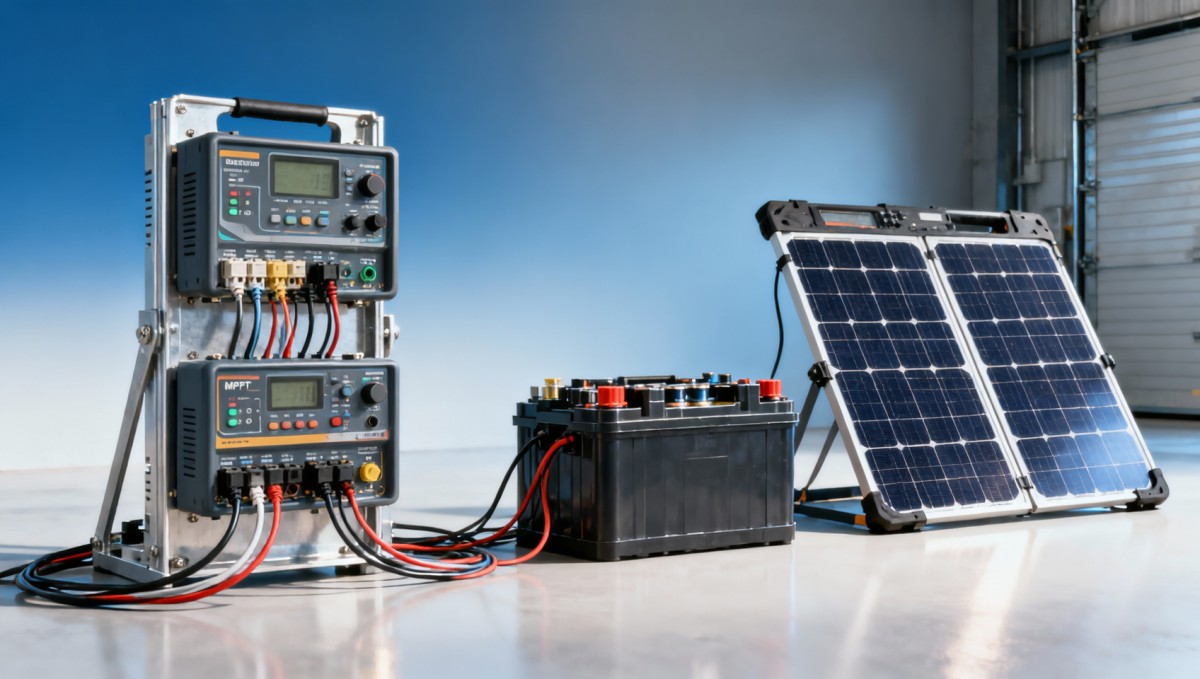
In commercial and industrial solar projects, sizing errors rarely come from one bad formula alone. They usually start when teams focus on panel wattage but ignore system voltage, charging current, ambient temperature, battery chemistry, and real operating hours. A controller that looks acceptable on paper can become undersized once irradiance peaks, cable losses, and expansion plans are considered.
This problem affects several decision layers. Operators want stable charging and easy maintenance. Procurement teams want consistent specifications from multiple suppliers. Project managers need predictable commissioning over a 2–4 week installation window. Enterprise buyers and distributors also need product choices that fit both current demand and future product portfolios without excessive stock risk.
A common mistake is assuming the controller only needs to match the nominal solar array value. In practice, solar modules can exceed their rated output under cold and bright conditions, while battery banks may demand different charge profiles depending on whether the system uses lead-acid, AGM, gel, or lithium batteries with an integrated battery management system.
For B2B buyers, the financial impact is wider than hardware replacement. Undersized controllers can shorten battery life within 12–24 months instead of normal service expectations. Oversized units increase capital cost, reduce pricing competitiveness, and may complicate spare-part planning across 3 or more project sites.
The 4 most common root causes
- Using panel nameplate wattage alone and ignoring open-circuit voltage rise in low-temperature conditions.
- Selecting controller current based on average production rather than peak charging current.
- Failing to match the controller charging profile with battery chemistry and battery management system requirements.
- Not reserving a practical design margin, typically 20%–25%, for future expansion, dust losses, seasonal variation, and field uncertainty.
Which sizing mistakes create the biggest technical and commercial risk?
The first major error is undersizing current capacity. If a 12V battery bank is paired with a solar array capable of delivering charging current above controller limits during strong sun, the controller may clip output, overheat, or cycle protection features too often. In remote or off-grid systems, even 1–2 hours of repeated current limiting per day can reduce effective charging and leave deep cycle batteries undercharged.
The second error is overlooking voltage limits. MPPT charge controllers can harvest more energy than PWM types, but only if the array open-circuit voltage stays within the controller’s safe input range under the coldest expected site conditions. A string that appears acceptable at 25°C may exceed controller input limits at lower temperatures and cause failure during startup.
The third error is mismatching battery charging logic. Lithium batteries often rely on communication or carefully controlled charging windows, while lead-acid banks need temperature compensation and equalization settings. If procurement selects controllers without confirming these functions, the project may require extra accessories, additional programming time, or partial redesign during commissioning.
The fourth error is sizing only for day-one demand. Many renewable projects expand from pilot scale to multi-load deployment within 6–18 months. When no reserve margin is built in, buyers end up replacing controllers rather than scaling efficiently. That creates avoidable logistics cost, new lead-time exposure, and warranty management complexity.
Mistake patterns by project type
The table below helps procurement and engineering teams compare where solar charge controller sizing mistakes most often occur across typical B2B applications, from portable systems to fixed-site industrial power backups.
These patterns show why a correct solar charge controller sizing process must include current, voltage, battery type, and expansion planning together. Looking at one parameter in isolation is where many procurement problems begin.
A practical check before approval
- Confirm battery bank voltage: 12V, 24V, or 48V are common reference levels.
- Calculate expected maximum charging current, then add a 20%–25% engineering margin.
- Check the lowest site temperature and recalculate array open-circuit voltage.
- Verify battery compatibility, communication needs, and programmable charging stages.
How should buyers size a solar charge controller correctly?
A reliable sizing approach starts with system architecture, not just product catalog filtering. Buyers should define the solar array power, battery bank voltage, daily load profile, site climate, and expected reserve days. In many B2B deployments, the best results come from separating the process into 3 stages: electrical validation, battery compatibility review, and procurement comparison.
For current sizing, a common field method is to divide total solar wattage by battery voltage, then apply a safety factor. For example, a 1,200W array on a 24V battery bank suggests about 50A nominal charging current before margin. Adding 25% points buyers toward a controller in the 60A–70A class, depending on manufacturer ratings and site conditions.
For voltage sizing, procurement should not rely on nominal panel voltage labels alone. The controller must tolerate the highest possible open-circuit voltage from the configured string. This is especially important for MPPT charge controllers in cold climates, where voltage can rise above standard test assumptions. A cautious design review reduces expensive replacement cycles and field claims.
Battery charging mode is equally important. Deep cycle batteries used in backup, mobility, marine, and remote infrastructure applications often require different charging stages. If the project uses lithium packs, battery management system compatibility should be checked before ordering samples. That saves 7–15 days of revalidation work later in the project schedule.
Sizing decision table for procurement teams
The following table summarizes the key solar charge controller sizing checkpoints that procurement personnel, project managers, and technical evaluators should align before issuing RFQs or approving vendor lists.
For many companies, this table becomes the bridge between engineering logic and purchasing discipline. It helps avoid the common situation where one supplier quotes on wattage, another on current, and a third on battery type, making comparison difficult and delaying final approval.
When MPPT is worth the extra budget
MPPT charge controllers generally make more sense when the array voltage is substantially higher than battery voltage, when solar conditions vary during the day, or when space constraints require better harvest efficiency. In larger distributed systems, the gain in usable energy and wiring flexibility can justify the cost difference over PWM, especially across operating cycles of 3–5 years.
However, the premium only pays off if sizing is done correctly. An oversized MPPT controller may lock budget into unused capacity, while an undersized unit may cap system output and erase the expected efficiency benefit. Buyers should therefore compare complete system value, not controller price alone.
What should project managers and distributors check before placing an order?
Before release of purchase orders, teams should align technical data, commercial terms, and deployment assumptions. In practice, many avoidable returns come from incomplete RFQ documents. A robust RFQ for solar charge controllers should specify battery chemistry, nominal system voltage, array configuration, operating temperature range, installation environment, and whether the project requires remote monitoring or communication interfaces.
Distributors and agents should also think about after-sales burden. If the selected controller family covers only one narrow current class, inventory flexibility remains low. A portfolio spanning, for example, 20A, 40A, and 60A ranges may support faster response across small portable solar panels, rural power packages, and light commercial backup kits without excessive SKU complexity.
From a compliance and risk standpoint, buyers should review basic electrical safety expectations, installation manuals, warranty conditions, and regional documentation requirements. While exact requirements differ by market, asking suppliers for test references, operating limits, and battery compatibility notes helps reduce ambiguity during cross-border sourcing and onboarding.
This is where TradeNexus Pro adds value beyond generic product directories. TNP supports global procurement directors, supply chain managers, and business evaluators with structured market intelligence, supplier-context reading, and cross-sector perspective. For teams comparing vendors over a 1–3 month sourcing cycle, better upstream intelligence often prevents costly downstream revisions.
5-point pre-order checklist
- Confirm the controller’s maximum PV input voltage against the coldest-site string voltage calculation.
- Check rated charging current and whether the manufacturer specifies derating above certain temperature bands.
- Verify support for the target battery type, charging stages, and battery management system coordination if lithium is used.
- Review lead time, spare unit strategy, and replacement policy for projects spanning multiple regions or multiple phases.
- Request wiring diagrams, commissioning guidance, and sample evaluation terms before volume release.
A realistic sourcing workflow
In many B2B environments, an efficient workflow includes 4 steps: requirement definition, supplier shortlist, sample validation, and batch order confirmation. Sample review often takes 7–15 days, while larger commercial orders may require 2–6 weeks depending on inventory position, documentation needs, and shipment route.
When stakeholders use a unified checklist, controller sizing becomes easier to audit and compare. That matters for procurement teams responsible for cost control, but it matters even more for enterprise decision-makers who need a repeatable sourcing standard across projects, geographies, and installation partners.
FAQ: how to avoid costly solar charge controller sizing decisions?
The following questions reflect real search and sourcing concerns from operators, engineers, and procurement teams. They also help clarify where solar charge controller sizing decisions intersect with battery life, field reliability, and total project cost.
How do I know if my solar charge controller is undersized?
Warning signs include frequent current limiting, unusually warm controller housing, chronic low battery state-of-charge, and solar production that appears lower than expected during clear midday conditions. If your array wattage divided by battery voltage already approaches the controller’s current rating, the unit may be too small once real-world variation is added.
Is it safe to oversize a solar charge controller?
Moderate oversizing can be reasonable, especially when expansion is planned within 6–18 months. But excessive oversizing is not automatically better. It can raise upfront cost, reduce pricing competitiveness in tenders, and complicate standardization if the chosen model does not align with the rest of the fleet. Buyers should size with planned reserve, not arbitrary excess.
Do deep cycle batteries and lithium batteries require different controller settings?
Yes. Deep cycle lead-acid batteries often require bulk, absorption, and float charging, and may need temperature compensation. Lithium batteries usually require tighter voltage limits and, in some systems, coordination with a battery management system. A controller that supports both chemistries can simplify inventory, but only if setup options are clearly documented and verified.
What matters more: controller current rating or PV input voltage?
Both are critical. Current rating determines how much charging power the controller can process safely, while PV input voltage determines whether the solar string can be connected without overvoltage risk. A project can fail from either side. That is why serious procurement reviews always check both values together instead of selecting by wattage alone.
Why consult TradeNexus Pro before finalizing controller selection?
Solar charge controller sizing mistakes are not only technical errors; they are procurement and strategy errors. They affect lifecycle cost, supplier fit, service burden, and expansion planning. TradeNexus Pro helps buyers move beyond fragmented online listings by connecting product evaluation with broader intelligence across green energy, smart electronics, advanced manufacturing, and supply chain decision-making.
For procurement directors, project leaders, distributors, and enterprise evaluators, TNP offers a practical advantage: clearer market context, better structured comparison inputs, and decision support for complex sourcing environments. This is especially useful when teams must compare multiple controller options, battery architectures, and deployment models across several countries or customer segments.
If you are reviewing MPPT controllers, portable solar panels, deep cycle battery compatibility, or battery management system integration, use TNP to shorten the path from specification uncertainty to supplier-ready evaluation. A better decision often starts with the right questions, not just the lowest quotation.
Contact TradeNexus Pro to discuss controller sizing parameters, application matching, battery compatibility checks, expected lead times, sample support, compliance documentation needs, and quotation benchmarking. If your team is planning a pilot, scale-up, or distributor portfolio update, TNP can help you frame a clearer sourcing brief before cost, reliability, and delivery risks multiply.
Get weekly intelligence in your inbox.
No noise. No sponsored content. Pure intelligence.
 Apr 18, 2026TradeNexus Pro Launches Global Compliance RadarTradeNexus Pro Launches Global Compliance Radar
 Apr 18, 2026JIS T 2304:2026 Takes Effect June 1, 2026 for IVD SoftwareJIS T 2304:2026 Takes Effect June 1, 2026 for IVD Software
 Pathway for Rehab Devices with AI Modules") Apr 18, 2026FDA Updates 510(k) Pathway for Rehab Devices with AI ModulesFDA Updates 510(k) Pathway for Rehab Devices with AI Modules
Apr 18, 2026FDA Updates 510(k) Pathway for Rehab Devices with AI ModulesFDA Updates 510(k) Pathway for Rehab Devices with AI Modules Apr 18, 2026India BIS Approves 3 Chinese IoT Labs for IS 16444:2026 CertificationIndia BIS Approves 3 Chinese IoT Labs for IS 16444:2026 Certification
 Apr 18, 2026THE Alliance Launches Green Slot Priority for China PortsTHE Alliance Launches Green Slot Priority for China Ports
 Apr 18, 2026TÜV Rheinland Releases Dual-Standard ESS Certification Guide for ChinaTÜV Rheinland Releases Dual-Standard ESS Certification Guide for China
 Apr 18, 2026Vietnam Imposes AD Duties on Chinese Electronic ComponentsVietnam Imposes AD Duties on Chinese Electronic Components
 Apr 18, 2026SASO Launches PV Carbon Footprint Labeling from July 2026SASO Launches PV Carbon Footprint Labeling from July 2026
 Apr 18, 2026U.S. Adds 17 Smart Warehouse Robot Components to Export Control ListU.S. Adds 17 Smart Warehouse Robot Components to Export Control List
 Apr 18, 2026EU Enforces EN IEC 62443-4-2:2026 for Industrial Control Devices from 18 Apr 2026EU Enforces EN IEC 62443-4-2:2026 for Industrial Control Devices from 18 Apr 2026
 Apr 17, 2026Temperature data loggers drift unpredictably inside lithium-ion battery storage enclosuresTemperature data loggers drift unpredictably inside lithium-ion battery storage enclosures
 Apr 17, 2026Are solar microinverters really worth the extra cost?Are solar microinverters really worth the extra cost?
 Apr 17, 2026Bifacial solar panels: How much more energy can they generate?Bifacial solar panels: How much more energy can they generate?
 Apr 17, 2026Gear manufacturing: How to optimize production for high precision?Gear manufacturing: How to optimize production for high precision?
 Apr 17, 2026Why power transmission components fail earlier than expectedWhy power transmission components fail earlier than expected
 Apr 17, 2026Linear motion systems: belt drive or ball screw for speed?Linear motion systems: belt drive or ball screw for speed?
 Apr 17, 2026Industrial bearing suppliers: what signals reliable quality?Industrial bearing suppliers: what signals reliable quality?
 Apr 17, 2026When pneumatic valves wholesale gets expensive laterWhen pneumatic valves wholesale gets expensive later
 Apr 17, 2026Hydraulic cylinder fabrication mistakes that cause oil leaksHydraulic cylinder fabrication mistakes that cause oil leaks
 Apr 17, 2026Heavy equipment manufacturing delays often start hereHeavy equipment manufacturing delays often start here
 Apr 17, 2026Custom heatsinks: when a larger size solves nothingCustom heatsinks: when a larger size solves nothing
 Apr 17, 2026Electronic enclosure fabrication: steel or aluminum?Electronic enclosure fabrication: steel or aluminum?
 Apr 17, 2026Automotive parts machining tolerances that drive up scrapAutomotive parts machining tolerances that drive up scrap
 Apr 17, 2026Medical device manufacturing changes under tighter traceabilityMedical device manufacturing changes under tighter traceability
 Apr 17, 2026How to Choose Solid State Batteries in 2026How to Choose Solid State Batteries in 2026
 Apr 17, 2026Are Solid State Batteries Worth the Cost Yet?Are Solid State Batteries Worth the Cost Yet?
 Apr 17, 2026Commercial Energy Storage Sizing: What Matters Most?Commercial Energy Storage Sizing: What Matters Most?