Folding Solar Chargers: What to Look for Before Ordering
Before ordering folding solar chargers, buyers need more than a quick spec check. From portable solar panels and solar charge controllers to mppt controllers, battery management systems, and deep cycle batteries, each component affects charging speed, durability, and field reliability. This guide helps procurement teams, project managers, and distributors evaluate the features that matter most for performance, cost control, and long-term deployment value.
What should buyers evaluate first when comparing folding solar chargers?
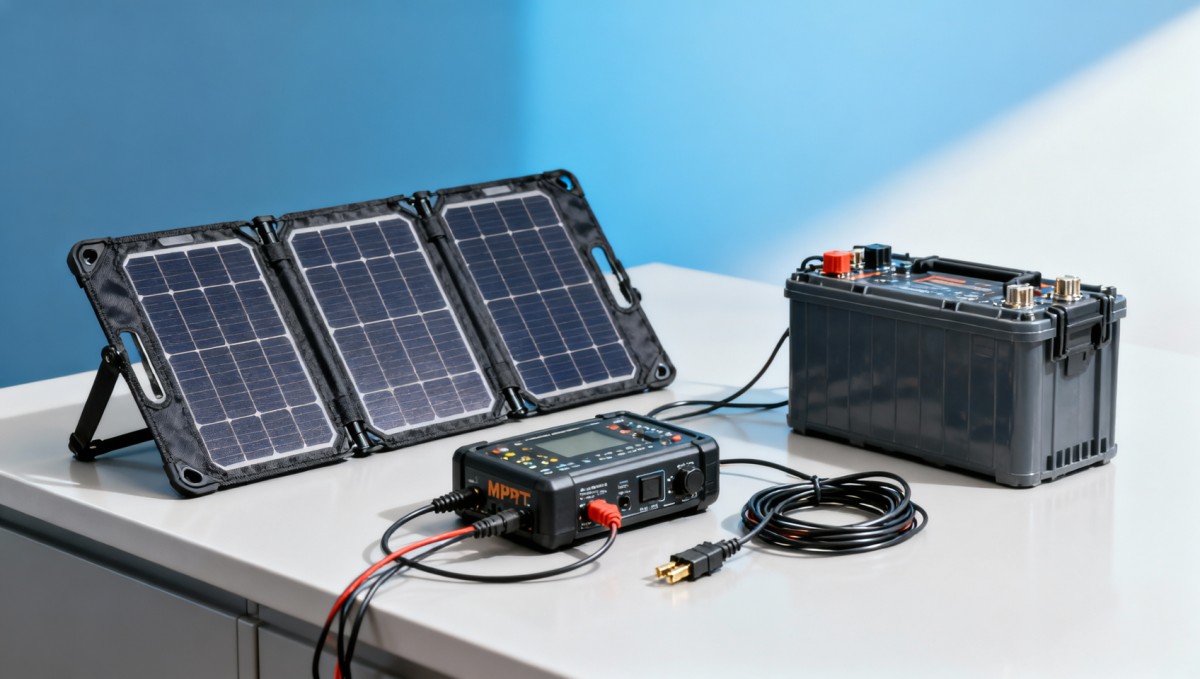
A folding solar charger may look simple on a product sheet, but B2B buyers know that field performance depends on a chain of components rather than one advertised wattage figure. For procurement teams, the first screening step is to separate consumer-grade units from deployment-ready systems intended for repetitive outdoor use, emergency backup, mobile projects, telecom service teams, or remote maintenance crews.
In most commercial evaluations, 5 core checkpoints matter: panel output under variable light, controller type, battery compatibility, connector robustness, and transport durability. These five factors affect not only charging efficiency but also replacement cycles, warranty claims, and downtime risk. A 60W folding solar charger with poor voltage stability can be less useful than a well-regulated 40W unit in real operating conditions.
For cross-functional decision-makers, it also helps to define the use case before requesting quotations. Is the charger intended for direct USB charging, 12V battery topping, field equipment support, or off-grid kits paired with deep cycle batteries? A clear application profile can shorten supplier communication by 1–2 sourcing rounds and reduce the chance of buying mismatched components.
TradeNexus Pro supports this early screening process by focusing on supplier-side technical depth, procurement logic, and cross-sector market intelligence. For buyers in green energy, smart electronics, and industrial service environments, that means comparing not only price lists but also practical deployment value, compliance expectations, and supply chain resilience.
Three early questions that prevent costly ordering mistakes
- What must the folding solar charger power: phones and tablets, communication gear, monitoring devices, power banks, or deep cycle batteries?
- Will the system operate in short daily windows of 2–4 hours, or remain deployed for repeated outdoor use across several weeks or seasons?
- Does the project require direct charging only, or an integrated setup with a solar charge controller, mppt controller, and battery management system?
These questions establish the baseline specification. Without them, buyers often compare products with different electrical architectures, leading to unreliable price comparisons and weaker negotiation outcomes.
Which technical specifications matter most in real-world B2B use?
The most misunderstood issue in folding solar chargers is rated output versus delivered output. Nameplate power is usually measured under standard test conditions, but field charging depends on sunlight angle, temperature, shading, and controller behavior. In practical procurement, buyers should assess the whole operating range rather than a single peak number. Typical portable solar panels in this category range from 20W to 200W, with very different use cases across that span.
Voltage and current matching are equally important. A folding solar charger designed for USB devices may not safely or efficiently charge a 12V battery bank without a proper solar charge controller. If the project includes lithium batteries, battery chemistry compatibility and battery management system behavior become critical. If it includes lead-acid or deep cycle batteries, charging stages and low-light behavior deserve close review.
Controller selection often determines whether the system is suitable for commercial use. PWM control may work in basic low-cost applications, but mppt controllers are typically more effective when panel voltage exceeds battery voltage by a meaningful margin or when environmental conditions fluctuate. For mobile field kits and mission-critical charging tasks, that gain in harvesting efficiency can matter over a 6–12 month usage cycle.
Mechanical construction should not be treated as secondary. Buyers should inspect hinge quality, fabric backing, junction box sealing, cable strain relief, and folded thickness. A charger that travels weekly in service vehicles or is deployed by operators in rough conditions needs a more durable build than one used only occasionally at trade events or for light backup use.
Technical performance checklist for procurement teams
The table below summarizes the most common evaluation points for folding solar chargers in B2B procurement. It is designed for buyers comparing portable solar panels, control options, and battery-facing use cases.
When reading supplier data, do not focus only on wattage. The better approach is to compare one complete charging path: panel output, controller type, battery interface, connector set, and protective features. That method produces a more reliable shortlist and better aligns technical review with commercial risk management.
How MPPT changes the buying decision
An mppt controller is not mandatory for every folding solar charger, but it becomes more relevant when the charger will support batteries rather than just USB outputs. It is especially useful when panel voltage varies, sunlight is inconsistent, or deployment requires better energy harvesting over 3–5 operational hours rather than ideal noon conditions only.
For distributors and project managers, MPPT can also improve the perceived professionalism of the final solution. However, it adds cost, interface complexity, and qualification requirements. The decision should be based on load profile, battery type, and expected usage frequency, not on marketing language alone.
How do application scenarios change the right folding solar charger choice?
Different operating environments require different charger architectures. A field technician supporting smart electronics maintenance may need a compact folding solar charger with USB-C and DC output. A telecom backup team may require portable solar panels connected to a solar charge controller and deep cycle batteries. A distributor serving outdoor emergency kits may prioritize packaging consistency, accessory options, and low return rates.
For enterprise buyers, the mistake is assuming one configuration fits every deployment. In reality, at least 4 scenario groups are common: personal device support, mobile workstation backup, remote monitoring systems, and temporary battery charging. Each group implies different demands for output voltage, accessory kits, environmental resistance, and transport frequency.
This is where B2B intelligence becomes valuable. TradeNexus Pro helps buyers connect scenario planning with supplier discovery, component trends, and market movement across green energy and smart electronics. That broader view is useful when project teams need scalable sourcing rather than a one-off retail purchase.
The table below offers a practical scenario map for buyers, distributors, and evaluation teams. It can be used during RFQ preparation, internal alignment meetings, or vendor comparison rounds.
Scenario-based selection reduces overbuying and under-specifying at the same time. It also helps distributors build a cleaner product ladder, such as entry, mid-range, and field-grade offerings, instead of pushing one generic folding solar charger into every account opportunity.
Common scenario-specific priorities
- Operators usually prioritize setup speed, cable usability, and predictable charging behavior under partial sun.
- Procurement staff often focus on SKU clarity, accessory standardization, and warranty handling across 6–18 month purchasing cycles.
- Project managers care about field reliability, deployment training, and the risk of battery damage caused by poor control logic.
- Distributors and agents usually need channel-friendly packaging, repeatable lead times, and manageable after-sales claims.
If those priorities are mixed together without ranking, internal buying discussions become slow and unfocused. A structured scenario review keeps technical and commercial teams aligned.
What should procurement teams ask suppliers before placing an order?
A good folding solar charger order starts with a disciplined RFQ. Buyers should request not only product specifications but also confirmation of connector options, charging logic, operating limits, packaging details, spare part policy, and batch consistency. In many sourcing projects, the difference between a smooth order and a costly one is the quality of pre-order clarification rather than the unit price alone.
Lead time should be reviewed in layers. A standard configuration may ship in 2–4 weeks, while custom branding, accessory modifications, or controller integration can extend planning by another 1–3 weeks depending on parts availability. Procurement managers should also ask whether the quoted lead time covers final packaging, export documentation, and pre-shipment inspection.
For technical due diligence, request wiring diagrams or charging path descriptions for any product sold as battery-compatible. If the folding solar charger is promoted for lithium support, ask how the battery management system or charging protection is handled. If it is designed for deep cycle batteries, ask about recommended battery sizes, charge stages, and cable length limits.
Compliance should also be handled early. Depending on destination market and product structure, buyers may need to review electrical safety, transport, environmental, or labeling requirements. Even when a folding solar charger is relatively low power, accessory batteries, adapters, and bundled electronics can trigger additional review points.
A practical 6-point supplier question list
- What is the usable output profile under non-ideal sunlight, not only the rated panel wattage?
- Is the charger designed for direct device charging, battery charging, or both?
- Which controller is included: none, PWM, or MPPT, and what battery types are supported?
- What are the standard lead time, packaging format, and minimum order structure for repeat orders?
- What inspection steps are performed before shipment, such as output testing, visual checks, or accessory verification?
- Which market-facing documents can be provided for compliance, labeling, or channel distribution support?
These six questions are useful for sourcing teams, business evaluators, and distributors alike. They improve comparability across suppliers and help enterprise decision-makers understand whether a quoted solution is operationally ready or still immature.
Cost control without buying the wrong specification
The cheapest folding solar charger may create the highest lifecycle cost if it requires frequent replacement, causes slow charging in the field, or cannot support the intended battery setup. Instead of chasing the lowest initial quotation, buyers should compare 4 cost layers: acquisition, accessories, operational performance, and after-sales handling.
In many B2B cases, a mid-tier configuration provides the best balance. For example, paying more for reinforced connectors, a better controller, or improved fold durability can reduce service complaints over multiple quarters. That is especially relevant for distributors and project managers responsible for repeat deployments or downstream channel reputation.
What mistakes do buyers make with batteries, controllers, and compliance?
One frequent mistake is assuming every folding solar charger can safely charge every battery. That is not how off-grid charging works. Battery chemistry, nominal voltage, charging stages, and protection logic all matter. A charger that works well for USB power banks may be unsuitable for lithium packs without proper control, and unsuitable for deep cycle batteries if voltage regulation is weak or unstable.
Another mistake is ignoring the difference between a panel and a charging system. Portable solar panels generate power, but the total system also includes a solar charge controller, connectors, cable routing, and possibly a battery management system. If one link is wrong, charging may be slow, inconsistent, or damaging to the connected battery over time.
Compliance misunderstandings also appear in cross-border trade. Requirements vary by destination market, product bundle, and whether batteries or electronic accessories are included. Procurement teams should not wait until booking shipment to confirm labeling, test documentation, or packaging declarations. A delay at that stage can disrupt project schedules by days or even several weeks.
The final major mistake is neglecting user training. Even a well-specified folding solar charger performs poorly if operators deploy it in shade, use the wrong connector order, or leave batteries unmanaged. For projects with multiple field users, a short setup guide and a 3-step deployment checklist can significantly improve consistency.
FAQ for buyers and project teams
How do I know whether I need an MPPT controller?
If your folding solar charger will be used mainly for direct USB charging, an mppt controller may not be necessary. If it will charge batteries, especially in changing light or over longer duty periods of 3–5 hours per day, MPPT deserves serious consideration. It is most valuable when system voltage management and energy harvesting consistency matter more than entry-level price.
Are folding solar chargers suitable for deep cycle batteries?
They can be, but only if the voltage range, controller logic, and cable setup match the battery system. Buyers should ask for recommended battery size ranges, charging guidance, and compatible controller types before ordering. A folding solar charger alone is not enough evidence of suitability for deep cycle batteries.
What is a realistic lead time for a commercial order?
For standard SKUs, a common planning window is 2–4 weeks. Customized accessories, branding, controller changes, or packaging updates may extend that timeline by 1–3 weeks. Buyers should confirm whether the schedule includes testing, packaging, export preparation, and any compliance-related document handling.
What should distributors prioritize when selecting channel products?
Distributors should look beyond headline wattage and prioritize low return risk, clear SKU segmentation, connector consistency, packaging quality, and repeat order stability. Products that are easy to explain, easy to deploy, and easy to support usually outperform technically confusing items, even if the nominal specification appears more modest.
Why work with TradeNexus Pro when sourcing or evaluating folding solar chargers?
TradeNexus Pro is built for teams that need more than product browsing. In sectors such as green energy, smart electronics, advanced manufacturing, and supply chain SaaS, sourcing decisions increasingly depend on technical context, supply-side transparency, and strategic market timing. That is especially true for folding solar chargers, where system compatibility and field performance matter more than simplified catalog claims.
For procurement directors, project leaders, and distributors, TNP provides a stronger decision environment by connecting market intelligence with practical buying criteria. Instead of comparing isolated listings, users can evaluate solution logic, component relevance, deployment fit, and supplier positioning in a more structured way. That helps reduce the noise often found in broad sourcing channels.
If your team is reviewing folding solar chargers for field operations, emergency kits, battery support systems, or channel distribution, you can use TNP to clarify 5 key areas: parameter confirmation, controller and battery matching, expected lead time, customization scope, and compliance preparation. These are the points that most often affect final purchasing success.
Contact TradeNexus Pro to discuss supplier screening, product selection, delivery planning, sample evaluation, certification-related questions, or quotation benchmarking. Whether you are building a new sourcing list or validating an existing offer, a structured review can help your team make faster, safer, and more commercially sound decisions.
Get weekly intelligence in your inbox.
No noise. No sponsored content. Pure intelligence.
 Apr 18, 2026TradeNexus Pro Launches Global Compliance RadarTradeNexus Pro Launches Global Compliance Radar
 Apr 18, 2026JIS T 2304:2026 Takes Effect June 1, 2026 for IVD SoftwareJIS T 2304:2026 Takes Effect June 1, 2026 for IVD Software
 Pathway for Rehab Devices with AI Modules") Apr 18, 2026FDA Updates 510(k) Pathway for Rehab Devices with AI ModulesFDA Updates 510(k) Pathway for Rehab Devices with AI Modules
Apr 18, 2026FDA Updates 510(k) Pathway for Rehab Devices with AI ModulesFDA Updates 510(k) Pathway for Rehab Devices with AI Modules Apr 18, 2026India BIS Approves 3 Chinese IoT Labs for IS 16444:2026 CertificationIndia BIS Approves 3 Chinese IoT Labs for IS 16444:2026 Certification
 Apr 18, 2026THE Alliance Launches Green Slot Priority for China PortsTHE Alliance Launches Green Slot Priority for China Ports
 Apr 18, 2026TÜV Rheinland Releases Dual-Standard ESS Certification Guide for ChinaTÜV Rheinland Releases Dual-Standard ESS Certification Guide for China
 Apr 18, 2026Vietnam Imposes AD Duties on Chinese Electronic ComponentsVietnam Imposes AD Duties on Chinese Electronic Components
 Apr 18, 2026SASO Launches PV Carbon Footprint Labeling from July 2026SASO Launches PV Carbon Footprint Labeling from July 2026
 Apr 18, 2026U.S. Adds 17 Smart Warehouse Robot Components to Export Control ListU.S. Adds 17 Smart Warehouse Robot Components to Export Control List
 Apr 18, 2026EU Enforces EN IEC 62443-4-2:2026 for Industrial Control Devices from 18 Apr 2026EU Enforces EN IEC 62443-4-2:2026 for Industrial Control Devices from 18 Apr 2026
 Apr 17, 2026Temperature data loggers drift unpredictably inside lithium-ion battery storage enclosuresTemperature data loggers drift unpredictably inside lithium-ion battery storage enclosures
 Apr 17, 2026Are solar microinverters really worth the extra cost?Are solar microinverters really worth the extra cost?
 Apr 17, 2026Bifacial solar panels: How much more energy can they generate?Bifacial solar panels: How much more energy can they generate?
 Apr 17, 2026Gear manufacturing: How to optimize production for high precision?Gear manufacturing: How to optimize production for high precision?
 Apr 17, 2026Why power transmission components fail earlier than expectedWhy power transmission components fail earlier than expected
 Apr 17, 2026Linear motion systems: belt drive or ball screw for speed?Linear motion systems: belt drive or ball screw for speed?
 Apr 17, 2026Industrial bearing suppliers: what signals reliable quality?Industrial bearing suppliers: what signals reliable quality?
 Apr 17, 2026When pneumatic valves wholesale gets expensive laterWhen pneumatic valves wholesale gets expensive later
 Apr 17, 2026Hydraulic cylinder fabrication mistakes that cause oil leaksHydraulic cylinder fabrication mistakes that cause oil leaks
 Apr 17, 2026Heavy equipment manufacturing delays often start hereHeavy equipment manufacturing delays often start here
 Apr 17, 2026Custom heatsinks: when a larger size solves nothingCustom heatsinks: when a larger size solves nothing
 Apr 17, 2026Electronic enclosure fabrication: steel or aluminum?Electronic enclosure fabrication: steel or aluminum?
 Apr 17, 2026Automotive parts machining tolerances that drive up scrapAutomotive parts machining tolerances that drive up scrap
 Apr 17, 2026Medical device manufacturing changes under tighter traceabilityMedical device manufacturing changes under tighter traceability
 Apr 17, 2026How to Choose Solid State Batteries in 2026How to Choose Solid State Batteries in 2026
 Apr 17, 2026Are Solid State Batteries Worth the Cost Yet?Are Solid State Batteries Worth the Cost Yet?
 Apr 17, 2026Commercial Energy Storage Sizing: What Matters Most?Commercial Energy Storage Sizing: What Matters Most?