Hybrid Inverters for Solar Systems: Match Capacity First
When specifying hybrid inverters for solar energy systems, capacity matching should come before feature comparisons or price checks. For project managers and engineering leads, the right inverter size directly affects system stability, battery performance, expansion flexibility, and long-term ROI. This guide explains why sizing first helps reduce technical risk, avoid costly redesigns, and support smarter procurement decisions.
Why should capacity come first when selecting hybrid inverters for solar energy systems?
In practice, hybrid inverters for solar energy systems sit at the center of power conversion, battery coordination, load management, and grid interaction. Because they act as the system’s control and energy-routing core, capacity is not just one specification among many. It determines whether the inverter can safely absorb PV input, support battery charging and discharging rates, cover critical loads, and handle demand spikes without clipping, overheating, or forcing inefficient operating behavior.
Project teams often lose time by comparing communication protocols, smart app features, or unit pricing before validating the sizing logic. That sequence increases procurement risk. A lower-priced inverter with an attractive interface can still become the wrong asset if its rated output, surge capability, MPPT window, or battery throughput does not align with the actual project profile. Once electrical design, switchgear selection, and installation plans are based on an undersized or mismatched unit, revisions become expensive.
Capacity-first selection also supports better cross-functional decisions. Procurement wants commercial clarity, engineering wants technical fit, and operations wants reliability. Starting with capacity creates a shared baseline: peak demand, daily energy flow, backup autonomy expectations, battery sizing, and future expansion assumptions. From there, feature comparison becomes meaningful rather than distracting.
What does “capacity matching” actually mean for a hybrid solar project?
Capacity matching is broader than simply choosing an inverter with the same nominal kilowatt rating as the PV array. For hybrid inverters for solar energy systems, matching means balancing several power and energy relationships at once. The inverter must fit the solar generation profile, the battery power capability, the site load behavior, and the grid or backup operating mode.
A well-matched design usually evaluates at least five dimensions:
- Rated AC output versus continuous site load
- Surge or overload capability versus motor starts and transient events
- PV input capacity and MPPT range versus array configuration
- Battery charge/discharge power versus storage strategy
- Future expansion room versus business growth or phased installation
For example, a commercial facility may have moderate daytime consumption but very sharp startup peaks from pumps, HVAC equipment, or processing machinery. In that case, the nominal inverter capacity can appear adequate on paper while still causing protection trips in actual operation. On the other hand, an oversized unit may reduce efficiency at partial load and increase capital cost without meaningful resilience gains. Capacity matching therefore means fitting the inverter to the real electrical behavior of the site, not to a simplified nameplate assumption.
Which project factors should engineering leads confirm before comparing brands or prices?
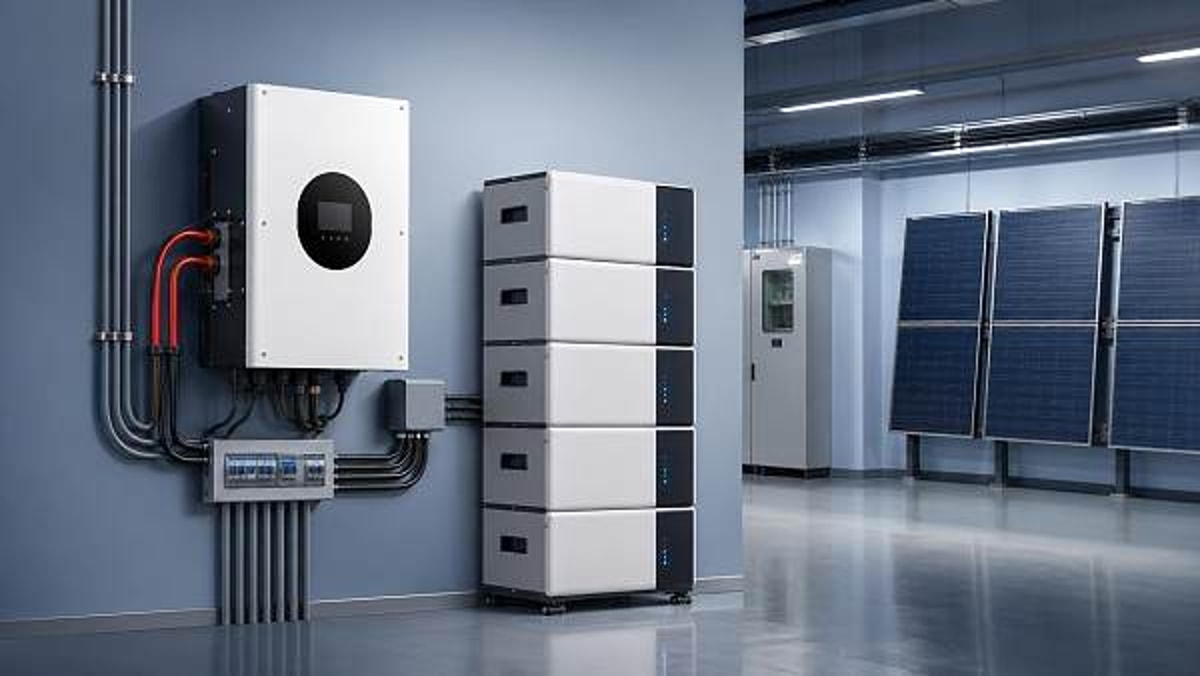
Before requesting quotations for hybrid inverters for solar energy systems, engineering leads should lock down the load profile and operating priorities. This is especially important in multi-stakeholder projects where the end user, EPC team, and procurement department may each define success differently. A technically sound shortlist starts with verified site data and clear operating objectives.
The first item to confirm is load character. Is the site mostly resistive, or does it include motors, compressors, refrigeration, or variable-speed drives? Are there critical loads that must remain online during an outage? Is the project optimized for self-consumption, backup power, time-of-use arbitrage, or demand charge reduction? Each objective changes how the inverter should be sized and configured.
The second item is battery strategy. Not all hybrid inverters for solar energy systems interact with batteries in the same way. Some are better suited to frequent cycling, while others are positioned for backup reserve applications. Battery chemistry, C-rate, usable depth of discharge, and communication compatibility can directly affect the inverter’s ideal capacity range. If the battery system cannot deliver enough power, a larger inverter may provide little practical benefit. If the inverter cannot fully utilize the battery, the storage investment may underperform.
The third item is environmental and grid context. Ambient temperature, installation altitude, enclosure conditions, and local grid quality all influence real output capability. A unit that appears sufficient at standard test assumptions may derate in hot equipment rooms or unstable utility environments. For project managers, this is where technical diligence protects budget certainty.
How can teams quickly assess whether a hybrid inverter is likely undersized, oversized, or appropriately matched?
A practical screening method is to compare inverter behavior against expected operating scenarios, not just headline specifications. The table below gives a fast evaluation framework that project teams can use during early selection and supplier discussions.
This kind of assessment is especially valuable for integrated procurement reviews. Instead of asking only, “Which inverter is cheaper?” teams can ask, “Which inverter best fits continuous power, battery throughput, transient demand, and expansion planning?” That shift usually leads to stronger lifecycle economics.
What are the most common sizing mistakes with hybrid inverters for solar energy systems?
One common mistake is sizing from solar panel capacity alone. A project may install a certain DC array size and assume the inverter should simply follow that number. But hybrid inverters for solar energy systems must coordinate generation with storage and loads, so AC-side demand and battery-side power are equally important. A DC-centric approach often misses the true operational requirement.
Another mistake is ignoring surge loads. Many facilities do not fail during normal operation; they fail during startup conditions, transfer events, or simultaneous equipment cycling. If the inverter cannot tolerate those peaks, system reliability suffers even when average demand seems acceptable. This is a major issue in manufacturing, cold-chain, healthcare-support infrastructure, and other mission-sensitive environments.
A third mistake is treating future expansion as a vague possibility rather than a design parameter. If the customer expects additional EV charging, added production lines, extended backup coverage, or larger battery banks within 12 to 24 months, capacity planning should reflect that now. Retrofitting around an inadequately sized inverter can trigger redesigns in protection devices, cabling, switchboards, and commissioning plans.
Finally, teams sometimes assume all hybrid products offer similar battery management behavior. In reality, firmware logic, battery communication support, charging priorities, and grid-support functions can vary widely. The result is that two inverters with similar power ratings may perform very differently under the same project conditions.
How does correct inverter sizing affect ROI, risk, and implementation timelines?
Correct sizing improves ROI by protecting energy harvest, reducing avoidable clipping, enabling useful battery cycling, and lowering the chance of post-installation adjustments. For project managers, the ROI impact is not only about electrical efficiency. It also includes fewer design changes, smoother approvals, and reduced commissioning friction.
From a risk perspective, properly matched hybrid inverters for solar energy systems reduce the probability of nuisance trips, thermal stress, incompatible storage behavior, and unmet backup expectations. These issues can become highly visible after handover, especially in commercial and industrial environments where system availability affects operating continuity.
Implementation speed also benefits. When sizing is validated early, suppliers can quote against clear parameters, engineers can finalize single-line diagrams faster, and installers can avoid last-minute substitutions. In contrast, weak front-end sizing often creates a chain reaction: revised BOS components, changed battery assumptions, delayed approvals, and longer site acceptance testing.
For B2B decision-makers using intelligence-led procurement models such as those promoted by TradeNexus Pro, this is the broader lesson: technical fit is part of commercial discipline. Better sizing data leads to better vendor comparison, stronger negotiation leverage, and more reliable project outcomes.
When comparing suppliers, what questions should you ask first?
Once the project team has a preliminary capacity range, supplier conversations become far more productive. Instead of starting with catalog features, ask suppliers to explain fit against your actual operating profile. This makes it easier to separate technically grounded partners from generic resellers.
- What continuous AC output and surge capability does this model provide under the site’s real ambient conditions?
- How does the inverter handle battery charge and discharge power relative to our selected storage system?
- What PV oversizing ratio is supported without unacceptable clipping or control instability?
- Which loads are suitable for backup mode, and what transfer behavior should we expect?
- What derating factors, firmware constraints, or compatibility limitations should be included in the design review?
- If we expand the array or battery later, which elements will need redesign?
These questions help project managers test whether a vendor understands application engineering rather than only product positioning. In many cases, the strongest supplier is not the one with the longest feature sheet, but the one that can justify the right capacity match with transparent assumptions.
What should project teams confirm before moving from evaluation to procurement?
Before issuing a purchase decision, confirm the final load profile, backup scope, battery configuration, operating temperature assumptions, and future expansion path. Make sure the selected hybrid inverter is evaluated not only for normal production hours but also for edge cases such as startup surges, partial-grid instability, and seasonal changes in PV generation. Review warranty terms, supported battery brands, software update policy, and local service capability as part of the same decision package.
For teams sourcing hybrid inverters for solar energy systems across multiple sites or regions, standardizing the evaluation checklist is often more valuable than standardizing the exact model. Site conditions differ, and capacity matching should remain the first filter. A well-built procurement process therefore starts with application data, then narrows supplier options, and only then compares pricing and delivery.
If you need to confirm a specific solution, parameter set, deployment timeline, quotation scope, or cooperation model, prioritize these discussions first: actual peak and continuous loads, critical backup requirements, battery power limits, expected future expansion, environmental derating, and integration responsibilities between EPC, storage supplier, and inverter vendor. Those answers will do more to improve project success than any early focus on features alone.
Get weekly intelligence in your inbox.
No noise. No sponsored content. Pure intelligence.
 May 01, 2026Beijing’s New E-Bike Rules Trigger Dual-Certification Demand for China’s Swappable Battery CabinetsBeijing’s New E-Bike Rules Trigger Dual-Certification Demand for China’s Swappable Battery Cabinets
 May 01, 2026GNA’s GEO Service Assessment Elevates AI Search as Digital Procurement Metric for Chinese ExportersGNA’s GEO Service Assessment Elevates AI Search as Digital Procurement Metric for Chinese Exporters
 May 01, 20262026 China Cycle Expo: Chinese EPS Systems Achieve UL 2849:2026 Full Certification2026 China Cycle Expo: Chinese EPS Systems Achieve UL 2849:2026 Full Certification
 May 01, 2026GB 42236-2026 Enforces EV Charger Efficiency & Overload Protection from May 2026GB 42236-2026 Enforces EV Charger Efficiency & Overload Protection from May 2026
 May 01, 2026GB/T 43790-2026 Drone EMC Standard Effective May 2026GB/T 43790-2026 Drone EMC Standard Effective May 2026
 May 01, 20262026 Foshan Tanzhou Auto Industry Expo Opens2026 Foshan Tanzhou Auto Industry Expo Opens
 May 01, 2026China’s New Hazardous Chemicals Safety Law Takes Effect May 2026China’s New Hazardous Chemicals Safety Law Takes Effect May 2026
 May 01, 2026New Maritime and Fisheries Laws Take Effect May 1, 2026New Maritime and Fisheries Laws Take Effect May 1, 2026
 May 01, 2026Supply Chain Automation Works Best Where Delays RepeatSupply Chain Automation Works Best Where Delays Repeat
 May 01, 2026High Strength Steel Forgings: What Should Be Tested First?High Strength Steel Forgings: What Should Be Tested First?
 May 01, 2026Automotive Steel Forging: Cost Pressure vs Part ReliabilityAutomotive Steel Forging: Cost Pressure vs Part Reliability
 May 01, 2026Why High Durability Steel Forgings Fail Earlier Than ExpectedWhy High Durability Steel Forgings Fail Earlier Than Expected
 May 01, 2026Construction Aluminum Extrusions: Which Finish Lasts Longer?Construction Aluminum Extrusions: Which Finish Lasts Longer?
 May 01, 2026Lightweight Aluminum Extrusions: Where Savings Really HappenLightweight Aluminum Extrusions: Where Savings Really Happen
 May 01, 2026Aerospace Aluminum Extrusions Need More Than Low WeightAerospace Aluminum Extrusions Need More Than Low Weight
 May 01, 2026Precision Lathe Turning Problems That Show Up After AssemblyPrecision Lathe Turning Problems That Show Up After Assembly
 May 01, 2026High Precision Lathe Turning: Tolerance Claims to VerifyHigh Precision Lathe Turning: Tolerance Claims to Verify
 May 01, 2026When CNC Lathe Turning Is Better Than General MachiningWhen CNC Lathe Turning Is Better Than General Machining
 May 01, 2026Medical Device Prototyping Needs More Than SpeedMedical Device Prototyping Needs More Than Speed
 May 01, 20263D Printing Prototyping: Fast Turnaround or Better Finish?3D Printing Prototyping: Fast Turnaround or Better Finish?
 May 01, 2026Low Cost Rapid Prototyping: Where Quality Gets LostLow Cost Rapid Prototyping: Where Quality Gets Lost
 May 01, 2026Quick EV Charger Installation Still Needs Site ChecksQuick EV Charger Installation Still Needs Site Checks
 May 01, 2026Public Parking EV Chargers: What Slows Installation DownPublic Parking EV Chargers: What Slows Installation Down
 May 01, 2026Choosing a Lithium Ion Battery Manufacturer in ChinaChoosing a Lithium Ion Battery Manufacturer in China
 May 01, 2026How to Vet a Lithium Ion Battery OEM SupplierHow to Vet a Lithium Ion Battery OEM Supplier
 May 01, 2026EV Lithium Ion Batteries: Range Is Not the Only MetricEV Lithium Ion Batteries: Range Is Not the Only Metric
 May 01, 2026Lithium Ion ESS Batteries: Safety Details Worth CheckingLithium Ion ESS Batteries: Safety Details Worth Checking