Portable Solar Panels: What Buyers Regret Getting Wrong
Many buyers assume portable solar panels are simple plug-and-play tools, yet costly mistakes often begin with poor system matching. From folding solar chargers and solar charge controllers to mppt controllers, deep cycle batteries, and battery management systems, every component affects field performance, safety, and ROI. This guide explains what purchasers, operators, and project leaders most regret overlooking before investing in portable solar panels.
Why do buyers regret portable solar panel purchases in the first place?
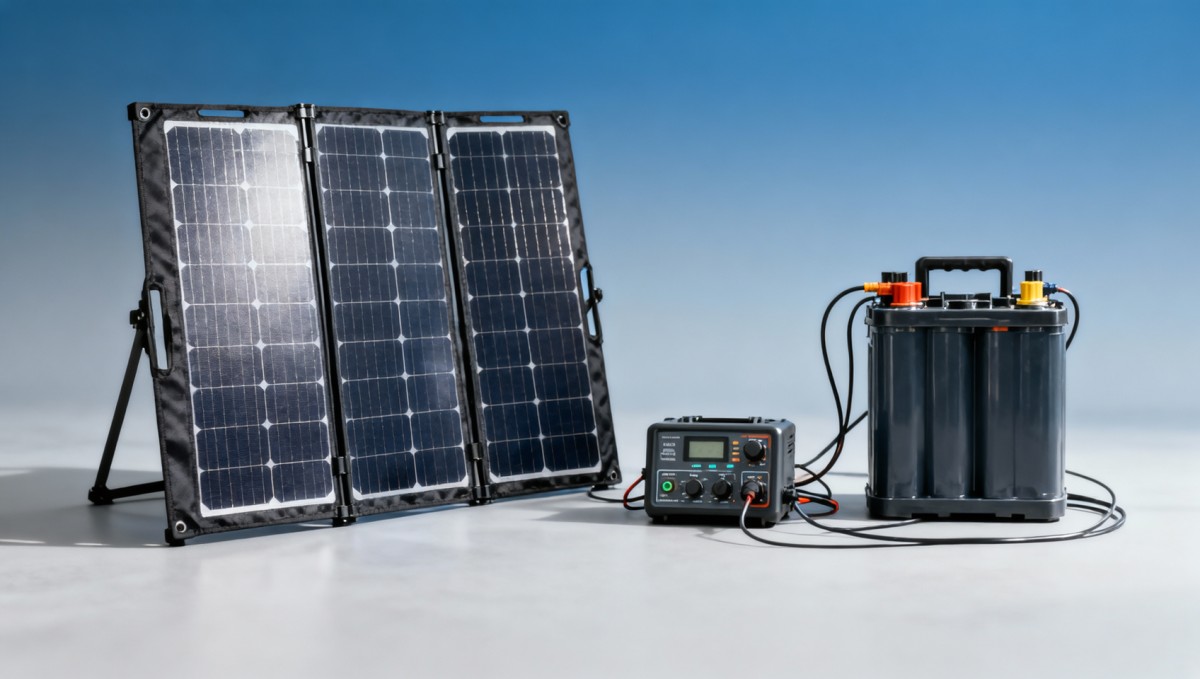
In B2B and project-driven environments, regret rarely comes from the solar panel alone. It usually starts with a mismatch between daily load demand, charging window, battery chemistry, controller type, and field conditions. A buyer may select a 200W folding panel because it looks portable, only to find that the actual system needs 400W–600W of effective charging input to support an 8–12 hour operating cycle.
Operators often regret underestimating the difference between rated power and usable energy harvest. A portable solar panel may carry a nominal wattage label, but output depends on irradiance, angle, temperature, shading, connector loss, and controller efficiency. In practical deployments, especially in mobile worksites or backup field kits, available harvest can swing widely across a single 6–8 hour daylight window.
Procurement teams regret treating portable solar panels as single-line items rather than system assets. The panel, charge controller, deep cycle battery, inverter, cable gauge, battery management system, and enclosure form one operating chain. If one component is undersized or incompatible, the project pays twice: once at purchase and again during troubleshooting, replacement, or downtime.
For enterprise decision-makers, the most expensive mistake is buying for brochure simplicity instead of mission profile. TradeNexus Pro tracks this pattern across green energy sourcing and smart electronics integration: decisions made without scenario-specific power mapping tend to create hidden cost layers in logistics, maintenance, field training, and spare parts planning within the first 3–6 months.
The 4 most common regret triggers
- Panel wattage was chosen before defining device load, battery autonomy, and recharge target.
- A PWM controller was used where an MPPT controller would have materially improved harvest efficiency in variable sunlight.
- Battery capacity was sized for nameplate output, not real-world charging variability or cloudy-day reserve.
- Procurement focused on upfront unit price while ignoring connector standards, replacement lead times, and compliance documentation.
What should buyers calculate before selecting portable solar panels?
A disciplined purchase starts with energy math, not product photos. Buyers should first define daily consumption in watt-hours, then determine how many charging hours are realistically available. For instance, a 500Wh daily load with a 20% system loss factor and a 5-hour effective solar window points to a significantly different portable solar panel size than a nominal rating alone would suggest.
The next step is battery autonomy. Many regrets come from sizing the panel but not the storage. If field operations need 1–2 days of reserve due to weather variability, a deep cycle battery bank must be calculated around usable capacity, discharge limits, and chemistry-specific management. Lithium systems may allow deeper discharge, but they also require a battery management system aligned with charging profile and temperature range.
Voltage compatibility matters more than many buyers expect. A 12V portable solar panel setup for communication gear, monitoring devices, or mobile electronics may not scale smoothly if later expanded to 24V storage or different inverter requirements. Project managers should evaluate the next 12–24 months of load growth before locking into connectors, controllers, and battery architecture.
The table below helps procurement and technical teams align portable solar panels with system sizing questions before requesting quotations or samples.
This framework also helps distributors and sourcing teams compare suppliers on a like-for-like basis. Instead of asking only for panel wattage and price, they can request charge profile, operating temperature range, connector type, recommended battery pairing, and controller compatibility. That reduces quote ambiguity and shortens technical clarification cycles from weeks to days.
A practical 5-step sizing workflow
- List every load, its wattage, and daily runtime.
- Convert total demand into daily Wh and add a 15%–25% system-loss margin.
- Estimate local effective sun hours instead of assuming full-day rated output.
- Determine battery reserve for at least 1 day, and 2 days for critical field tasks.
- Match panel voltage, controller type, cable loss, and battery chemistry before procurement approval.
Where TNP adds decision value
TradeNexus Pro supports procurement directors and project leaders by turning scattered vendor claims into structured decision inputs. For portable solar panels, this means comparing not only specifications but also use-case fit, supply chain reliability, and integration constraints across green energy, smart electronics, and industrial field operations.
Portable solar panel system matching: what components are most often overlooked?
The biggest regret in portable solar panel deployments is usually not the module itself but the parts around it. Folding solar chargers are often purchased for mobility, yet buyers forget that real-world performance depends on controller efficiency, cable resistance, battery absorption behavior, and connector durability under repeated handling. In mobile deployment, every extra connection point introduces a possible failure node.
Solar charge controllers deserve special scrutiny. A PWM controller can work for compact, cost-sensitive systems, especially where panel voltage closely matches battery voltage. However, for higher-voltage panels, colder climates, or changing sunlight conditions, MPPT controllers often recover more useful energy. That difference becomes important when the charging window is only 4–5 productive hours or when loads must be ready again the next morning.
Deep cycle batteries are another regret point. Buyers may choose low upfront cost without considering usable depth of discharge, cycle life, transport weight, or recharge acceptance rate. Lead-acid remains relevant in some budget-focused settings, but frequent mobile use, repeated cycling, and strict weight limits often shift the decision toward lithium-based systems with battery management systems that protect against overcharge, over-discharge, and temperature stress.
The comparison below highlights where portable solar panel systems often go wrong during component selection.
For project engineers and resellers, the lesson is clear: quote the system path, not just the panel. A procurement brief should include at least 6 technical checkpoints—panel output class, controller type, battery chemistry, operating temperature range, connector standard, and expansion path. Without these, portable solar panels may still be delivered on time but fail operational acceptance later.
3 signs a proposed system is under-specified
- The quotation lists panel wattage but omits charge controller model or operating logic.
- Battery capacity is shown without usable discharge guidance or battery management details.
- No one has clarified whether the system must support direct load, battery charging, or both simultaneously.
Which procurement mistakes cost the most over time?
The most expensive procurement mistake is focusing on lowest acquisition cost without mapping lifecycle friction. A cheaper portable solar panel kit may require extra adapters, replacement cables, protective cases, field training, or battery upgrades within the first operating season. For distributors and enterprise buyers, these hidden costs can easily outweigh the initial price difference between two shortlisted options.
A second cost driver is logistics mismatch. Portable solar panels often serve remote maintenance, temporary infrastructure, emergency backup, mobile diagnostics, or outdoor communications. In these cases, weight, foldability, setup time, and packing durability matter. A system that saves 8% on purchase price but adds 15–20 minutes of deployment time per job can erode labor efficiency across dozens of field visits each month.
Compliance and documentation also influence total cost. Serious buyers should ask for standard electrical documentation, safety information, connector specifications, and, where relevant, transport or battery handling details. Missing documents delay approvals, especially when the equipment enters enterprise procurement workflows, multi-country distribution, or industrial project packages with formal technical review gates.
The table below compares common buying approaches and the hidden trade-offs behind portable solar panels in B2B procurement.
This is where TradeNexus Pro becomes practical for commercial evaluation teams. TNP helps buyers compare sourcing options beyond marketing language by organizing supplier positioning, technical differentiation, and use-case relevance. That is especially valuable when portable solar panels are part of a broader procurement decision touching green energy transition, smart field devices, or cross-border distribution strategy.
Procurement checklist for cost control
- Confirm whether the quote covers panel only, or a complete charging system.
- Review controller type, battery recommendation, connector standard, and replacement part availability.
- Check delivery lead time, sample policy, and technical documentation before supplier finalization.
- Estimate labor impact: setup time, packing time, and field reset time across real use cycles.
How should operators, project managers, and distributors evaluate real-world fit?
Portable solar panels do not serve one universal profile. A field technician powering sensors, a project team supporting temporary site communications, and a distributor building a resale bundle each need different priorities. Operators focus on setup speed and charging reliability. Procurement teams focus on specification clarity and replacement continuity. Decision-makers focus on ROI, deployment risk, and scalability over the next procurement cycle.
A good evaluation starts with use frequency. If the system is used once per quarter for emergency backup, the configuration can differ from a kit deployed 3–5 times per week in mobile inspection work. Frequent handling raises the value of rugged cabling, fold durability, stable kickstand geometry, and predictable battery recharge behavior. These details often matter more than a small difference in rated wattage.
Project managers should also define implementation boundaries early. Will the portable solar panel system support direct daytime load, battery-only evening use, or mixed operation? Will it be handled by trained technicians or general site personnel? Clear answers prevent over-engineering in low-complexity scenarios and under-specification in mission-critical ones.
For distributors and agents, product fit is commercial as well as technical. The best resale opportunity often sits in clearly packaged applications rather than generic wattage claims. A portable solar panel offer tied to telecom backup, field measurement kits, outdoor service fleets, or mobile healthcare support is easier to sell and easier to document.
Scenario-based evaluation questions
For operators
Can one person deploy the system in under 10–15 minutes? Is charging status visible without opening multiple components? Does the setup remain stable under ordinary outdoor movement and repeated daily handling?
For procurement teams
Can suppliers provide a clear bill of materials, operating guidance, cable specification, and controller pairing notes? Are sample review and lead-time commitments realistic for the project schedule?
For enterprise decision-makers
Does the proposed portable solar panel solution reduce fuel, generator dependence, or field charging bottlenecks over a 12-month horizon? Is the system expandable if project scope or device count increases?
FAQ: what do buyers most often ask before ordering portable solar panels?
How do I know whether a folding solar charger is enough?
Start with daily energy demand in Wh, not with panel size alone. If your equipment uses 300Wh per day and the site only delivers about 4 effective sun hours, a compact charger may be insufficient once controller loss, battery charging loss, and weather variability are added. A field margin of 15%–25% is usually a more responsible planning baseline than nameplate assumptions.
When is an MPPT controller worth the extra cost?
An MPPT controller becomes more attractive when panel voltage is notably above battery voltage, when sunlight conditions vary, or when the charging window is limited. In portable solar panel systems supporting business-critical loads, better energy capture can matter more than controller price, especially where missed charging cycles affect next-day operations.
What battery type causes the least regret?
There is no universal answer. Lead-acid can still suit budget-sensitive, low-frequency use. Lithium-based deep cycle batteries often fit frequent mobile deployment better because of lower weight, higher usable capacity, and faster charge acceptance. However, they should be paired with a battery management system and reviewed for transport, temperature, and charging compatibility.
What is a realistic delivery planning window?
For standard portable solar panel products, technical review and commercial confirmation may move quickly, but practical sourcing still depends on sample validation, accessory availability, and shipping method. Buyers often plan 1–2 weeks for technical alignment and a further lead time based on configuration complexity and logistics route.
Why work with TradeNexus Pro when evaluating portable solar panels?
Portable solar panels sit at the intersection of green energy, smart electronics, and supply chain decision-making. That is exactly where TradeNexus Pro delivers value. Instead of leaving buyers to compare fragmented claims across generic marketplaces, TNP provides a structured environment for assessing technology fit, supplier relevance, and procurement risk through an industry-focused lens.
For procurement directors and business evaluation teams, TNP helps translate technical details into sourcing judgment. You can use the platform to clarify parameter ranges, compare system architectures, understand component dependencies, and reduce the chance of buying portable solar panels that look convenient but fail in real operating conditions.
For project leaders, distributors, and cross-border commercial teams, TNP supports faster decision cycles by connecting market insight with application logic. Whether you need a simple folding solar charger package, a deeper portable power kit with MPPT and battery management, or a sourcing benchmark across multiple sectors, the goal is to shorten evaluation time while improving technical confidence.
If you are reviewing portable solar panels for field operations, enterprise procurement, resale strategy, or project deployment, contact TradeNexus Pro for targeted support on parameter confirmation, product selection, delivery planning, custom system configuration, documentation expectations, sample coordination, and quotation alignment. The earlier these issues are clarified, the fewer regrets appear after purchase.
Get weekly intelligence in your inbox.
No noise. No sponsored content. Pure intelligence.
 Apr 18, 2026TradeNexus Pro Launches Global Compliance RadarTradeNexus Pro Launches Global Compliance Radar
 Apr 18, 2026JIS T 2304:2026 Takes Effect June 1, 2026 for IVD SoftwareJIS T 2304:2026 Takes Effect June 1, 2026 for IVD Software
 Pathway for Rehab Devices with AI Modules") Apr 18, 2026FDA Updates 510(k) Pathway for Rehab Devices with AI ModulesFDA Updates 510(k) Pathway for Rehab Devices with AI Modules
Apr 18, 2026FDA Updates 510(k) Pathway for Rehab Devices with AI ModulesFDA Updates 510(k) Pathway for Rehab Devices with AI Modules Apr 18, 2026India BIS Approves 3 Chinese IoT Labs for IS 16444:2026 CertificationIndia BIS Approves 3 Chinese IoT Labs for IS 16444:2026 Certification
 Apr 18, 2026THE Alliance Launches Green Slot Priority for China PortsTHE Alliance Launches Green Slot Priority for China Ports
 Apr 18, 2026TÜV Rheinland Releases Dual-Standard ESS Certification Guide for ChinaTÜV Rheinland Releases Dual-Standard ESS Certification Guide for China
 Apr 18, 2026Vietnam Imposes AD Duties on Chinese Electronic ComponentsVietnam Imposes AD Duties on Chinese Electronic Components
 Apr 18, 2026SASO Launches PV Carbon Footprint Labeling from July 2026SASO Launches PV Carbon Footprint Labeling from July 2026
 Apr 18, 2026U.S. Adds 17 Smart Warehouse Robot Components to Export Control ListU.S. Adds 17 Smart Warehouse Robot Components to Export Control List
 Apr 18, 2026EU Enforces EN IEC 62443-4-2:2026 for Industrial Control Devices from 18 Apr 2026EU Enforces EN IEC 62443-4-2:2026 for Industrial Control Devices from 18 Apr 2026
 Apr 17, 2026Temperature data loggers drift unpredictably inside lithium-ion battery storage enclosuresTemperature data loggers drift unpredictably inside lithium-ion battery storage enclosures
 Apr 17, 2026Are solar microinverters really worth the extra cost?Are solar microinverters really worth the extra cost?
 Apr 17, 2026Bifacial solar panels: How much more energy can they generate?Bifacial solar panels: How much more energy can they generate?
 Apr 17, 2026Gear manufacturing: How to optimize production for high precision?Gear manufacturing: How to optimize production for high precision?
 Apr 17, 2026Why power transmission components fail earlier than expectedWhy power transmission components fail earlier than expected
 Apr 17, 2026Linear motion systems: belt drive or ball screw for speed?Linear motion systems: belt drive or ball screw for speed?
 Apr 17, 2026Industrial bearing suppliers: what signals reliable quality?Industrial bearing suppliers: what signals reliable quality?
 Apr 17, 2026When pneumatic valves wholesale gets expensive laterWhen pneumatic valves wholesale gets expensive later
 Apr 17, 2026Hydraulic cylinder fabrication mistakes that cause oil leaksHydraulic cylinder fabrication mistakes that cause oil leaks
 Apr 17, 2026Heavy equipment manufacturing delays often start hereHeavy equipment manufacturing delays often start here
 Apr 17, 2026Custom heatsinks: when a larger size solves nothingCustom heatsinks: when a larger size solves nothing
 Apr 17, 2026Electronic enclosure fabrication: steel or aluminum?Electronic enclosure fabrication: steel or aluminum?
 Apr 17, 2026Automotive parts machining tolerances that drive up scrapAutomotive parts machining tolerances that drive up scrap
 Apr 17, 2026Medical device manufacturing changes under tighter traceabilityMedical device manufacturing changes under tighter traceability
 Apr 17, 2026How to Choose Solid State Batteries in 2026How to Choose Solid State Batteries in 2026
 Apr 17, 2026Are Solid State Batteries Worth the Cost Yet?Are Solid State Batteries Worth the Cost Yet?
 Apr 17, 2026Commercial Energy Storage Sizing: What Matters Most?Commercial Energy Storage Sizing: What Matters Most?