Solar charge controllers fail early for reasons often overlooked
Solar charge controllers often fail long before expected—not just from heat or poor installation, but from overlooked system mismatches, low-grade bms boards, unstable mppt controllers, and weak monitoring practices. For buyers, engineers, and project managers evaluating solar charge controllers, iot energy monitors, and broader net zero solutions, understanding these hidden risks is essential to improving reliability, safety, and lifecycle cost.
In commercial and industrial solar systems, early controller failure rarely comes from a single dramatic event. More often, it develops through small technical compromises: an undersized enclosure, an MPPT unit operating too close to its current ceiling, poor battery communication, or irregular maintenance intervals that allow minor drift to become permanent damage. These issues matter to operators, procurement teams, safety managers, and financial approvers because controller reliability directly influences downtime, battery life, and replacement budgets.
For B2B buyers and project stakeholders, the practical question is not only which solar charge controller to purchase, but how to evaluate the full operating environment around it. That includes PV array behavior, battery chemistry, charging profiles, data visibility, service access, and supplier consistency. A controller specified for 5 years of service can fail in 12–24 months if the surrounding system is poorly matched, while a properly engineered setup can remain stable for 6–10 years under demanding field conditions.
Why solar charge controllers fail earlier than expected
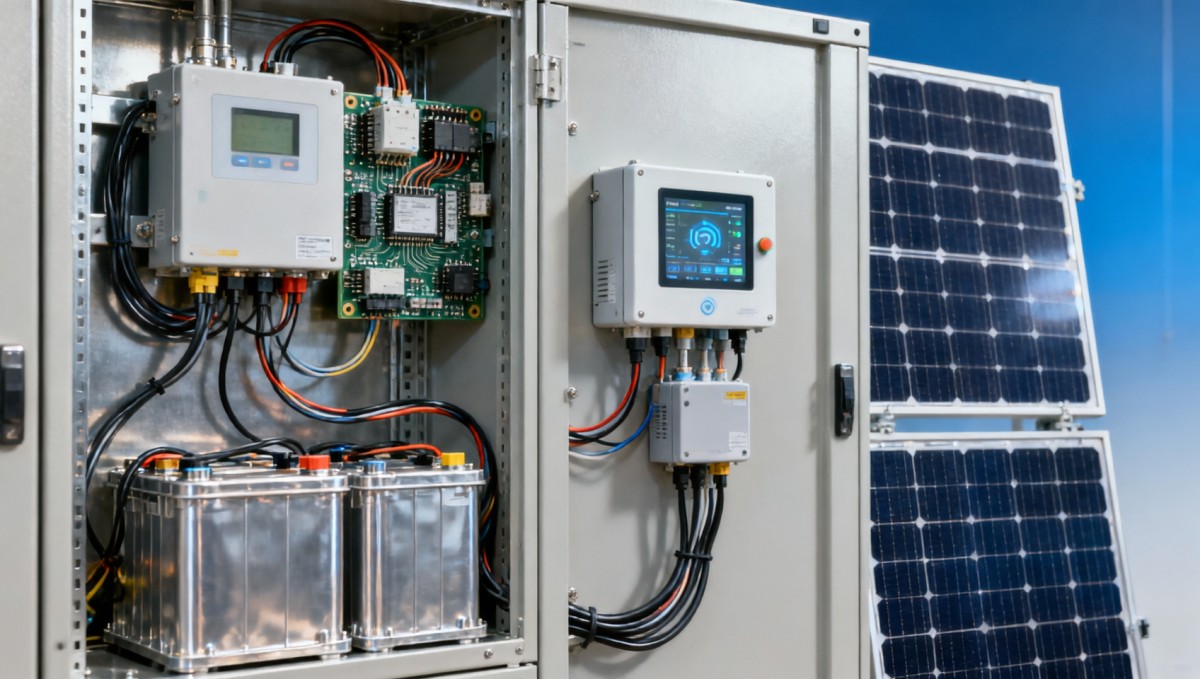
A solar charge controller sits at the center of the charging path, but it is often treated as a secondary component. In reality, it must continuously balance PV input variation, battery charging stages, thermal stress, and load-side fluctuations. When one of these variables exceeds design assumptions by 10%–20% on a repeated basis, internal components such as MOSFETs, capacitors, and current sensing circuits age much faster than planned.
One overlooked cause is array oversizing without proper derating analysis. Many project teams intentionally oversize the PV array by 15%–30% to improve low-light harvest. That can work, but only if the controller’s voltage and current windows are respected across seasonal temperature swings. On a cold morning, open-circuit voltage may rise significantly, and a controller operating near its maximum PV input can enter repeated protective shutdown or suffer cumulative stress.
Another frequent issue is battery-system incompatibility. A controller may be technically suitable for lithium, AGM, or gel batteries, yet still fail in practice because the charging logic, temperature compensation, and communication behavior do not align with the installed battery pack and BMS board. Low-grade BMS boards can cut charge abruptly, introduce unstable feedback, or report inaccurate state-of-charge values, forcing the controller into unstable operating cycles several times per day.
Environmental assumptions also drive early failure. Installers may focus on ambient temperature, but internal enclosure temperature can run 10°C–18°C above ambient in poorly ventilated cabinets. Add dust, salt mist, or humidity above 85% RH, and corrosion risk rises sharply. In these conditions, a controller with acceptable laboratory performance may underperform within 18 months if field protection measures are weak.
Common hidden triggers in B2B solar projects
The most expensive failures are rarely random. They are usually linked to repeatable engineering and procurement blind spots that appear during design review, vendor comparison, or commissioning.
- PV string voltage too close to the controller maximum, leaving less than a 10% safety buffer during cold-weather rise.
- Controller current loading above 80% for long daytime periods, accelerating thermal fatigue in power stages.
- Mismatch between battery chemistry and charging profile, especially with lithium packs using inconsistent BMS communication.
- Enclosure airflow below field needs, causing heat buildup during peak irradiance from 11:00 to 15:00.
- Weak monitoring practices that miss warning signs such as repeated fault resets, output derating, or irregular absorption-stage timing.
Failure patterns by root cause
The table below helps procurement and engineering teams distinguish between visible symptoms and underlying technical causes when assessing solar charge controller reliability.
For procurement teams, the key takeaway is that symptom-based replacement is expensive. A failed controller may be only the visible endpoint of deeper design and monitoring weaknesses. Root-cause review before reorder can reduce repeat failures and improve lifecycle cost control.
The system mismatch problem: controller, battery, and BMS must work as one
In many net zero and distributed energy projects, teams compare controller ratings in isolation: maximum PV voltage, battery voltage, and nominal current. That is necessary, but insufficient. The more important question is whether the solar charge controller, battery pack, and BMS can operate as one coordinated charging system under variable conditions over 24 hours, across 4 seasons, and through repeated partial-charge cycles.
A low-grade BMS board is a major source of hidden instability. On paper, it may support overvoltage, undervoltage, and overcurrent protection. In practice, poor balancing accuracy, weak temperature sensing, or delayed communication can create abrupt charge interruptions. Each interruption forces the MPPT controller to restart tracking, re-evaluate charging state, and handle transient current behavior. Repeating this cycle 20–50 times per week can shorten component life significantly.
Battery chemistry further complicates controller selection. Lead-acid systems tolerate some charging imprecision but suffer sulfation if undercharged over time. Lithium systems are more efficient, yet more dependent on accurate voltage windows and BMS coordination. A controller that supports generic lithium charging may still be unsuitable if the battery supplier expects CAN, RS485, or brand-specific charge logic not consistently implemented in the field.
For distributors, integrators, and project managers, this means the controller should be assessed not just by power class, but by communication stability, charge-stage flexibility, and behavior during BMS intervention. In commercial installations above 48V battery architecture, even small charging mismatches can cascade into performance loss, false alarms, and early board replacement.
What to verify before approving a controller-battery combination
- Confirm that PV input voltage under lowest expected temperature remains below the controller maximum with a practical safety margin of 10%–15%.
- Check whether battery chemistry requires fixed profiles, adaptive charging, or active communication with the controller.
- Review BMS behavior during charge cutoff, restart delay, cell balancing, and temperature protection events.
- Verify cable sizing, terminal temperature rise, and grounding approach for continuous current loading above 40A or 60A.
- Require data logging capability at intervals of 1–5 minutes rather than relying only on manual inspection.
Practical compatibility checkpoints
Compatibility review should include charging stages, communication method, error handling, and restart logic. For example, if the BMS disconnects charging at cell high voltage, the controller should resume cleanly without repeated spike behavior. If the battery supplier cannot provide this behavior map, the project risk remains high even when rated voltages appear compatible.
The following table outlines a practical decision framework for teams comparing controller-battery combinations in procurement or technical review.
This framework is especially useful for commercial buyers comparing multiple vendors. A controller that appears competitively priced may become more expensive over 24–36 months if compatibility uncertainty leads to repeated troubleshooting, battery degradation, or field replacement visits.
Why unstable MPPT behavior and weak monitoring increase lifecycle cost
MPPT controllers are widely chosen because they can improve energy harvest over PWM designs, especially when PV voltage is substantially above battery voltage. However, not all MPPT performance is equal. A controller may advertise high conversion efficiency under controlled test points, yet remain unstable under fast irradiance changes, partial shading, battery interruptions, or marginal thermal conditions. That instability can lead to hidden energy loss even before outright failure occurs.
For operators, the danger is that poor tracking quality does not always trigger immediate alarms. Instead, the system may deliver 5%–12% less usable charging energy during variable weather, while controller components run hotter due to repeated adjustment cycles. Over a 2-year period, this combination of lower harvest and higher stress can materially affect battery performance, generator backup runtime, and maintenance budget.
Weak monitoring practices make the problem worse. Many sites still rely on monthly manual checks, basic indicator lights, or occasional handheld meter readings. That approach is insufficient for modern distributed energy assets. Without IoT energy monitors or at least structured controller logs, teams miss early signs such as rising heat events, unusual restart counts, charging-stage imbalance, or recurring low-voltage cutoffs during normal solar windows.
For enterprise decision-makers, monitoring is not just a maintenance feature. It is an asset-protection and cost-governance tool. A controller replacement may represent a moderate hardware cost, but the real expense often lies in truck rolls, site access, downtime, battery impact, and the internal labor required for root-cause review.
Minimum monitoring stack for reliable solar controller operation
A practical monitoring setup does not need to be complex, but it must be consistent enough to catch trend changes before hardware damage becomes visible.
- Track PV input voltage and current at intervals no longer than 5 minutes during daytime operation.
- Record battery voltage, charge current, temperature, and fault states in the same timeline.
- Count restart events, protective cutoffs, and communication failures on a weekly basis.
- Set alert thresholds for sustained internal temperature rise, repeated overcurrent events, and abnormal float or absorption durations.
- Review trend data at least once every 30 days for stable sites and every 7–14 days for newly commissioned systems.
How monitoring changes purchasing decisions
When buyers compare controllers, they often rank maximum current, efficiency claims, and price first. Yet the presence of usable data outputs, remote diagnostics, and fault history can be just as important. A unit with slightly higher upfront cost but better visibility may reduce troubleshooting time by 30%–50% over the service period, especially across multi-site deployments.
The table below shows how monitoring maturity affects reliability management in solar controller projects.
For distributors and project owners scaling net zero solutions across multiple sites, advanced monitoring creates a measurable management advantage. It turns controller performance from a black box into a trackable operating asset, which supports both technical reliability and procurement accountability.
How buyers and project teams should evaluate solar charge controllers before purchase
A strong procurement process should evaluate solar charge controllers as part of a system, not as isolated catalog items. This is particularly important for industrial, remote, telecom, agricultural, and hybrid microgrid applications where daily cycling and service access constraints increase failure consequences. Instead of asking only whether a controller is compatible, buyers should ask whether it is resilient under the exact load, climate, battery, and maintenance conditions expected in the project.
Technical review should begin with electrical margins. A practical screening rule is to avoid controller operation near absolute maximum ratings during normal conditions. If daytime current regularly exceeds 80%–85% of the rated limit, or if seasonal voltage peaks approach the maximum PV input threshold, the design may be technically permissible but commercially fragile. Derating and reserve headroom are often more valuable than nominal nameplate capacity.
Serviceability also deserves more attention. Teams should review terminal design, diagnostics access, event logging, replaceability, and supplier support workflow. A controller installed in a difficult-to-access cabinet with poor local visibility may convert a minor fault into a high-cost service visit. For multi-site portfolios, standardized interfaces and spare-part planning can reduce response time from several days to less than 24 hours.
Commercial buyers should also look at total cost over 3–5 years rather than initial unit price alone. A controller with weak data visibility, uncertain BMS interoperability, and limited support documentation may create hidden costs in commissioning delays, extra labor, battery issues, and post-install claims handling. This is especially relevant for enterprises where finance teams need predictable lifecycle spending rather than low entry cost.
A procurement checklist that reduces early failure risk
- Request the controller’s input voltage range, maximum PV open-circuit limit, and recommended derating practice for low-temperature conditions.
- Validate battery compatibility by chemistry and communication method, not by marketing label alone.
- Check whether event logs, remote monitoring, and fault codes are available without proprietary lock-in.
- Ask for installation environment guidance, including ventilation clearance, humidity tolerance, and dust protection expectations.
- Review support response process, spare availability window, and documentation quality for commissioning teams.
- Compare projected replacement and maintenance cost over 36–60 months, not just purchase price.
Evaluation factors by stakeholder role
Different stakeholders prioritize different risks. Engineering teams focus on voltage, current, heat, and battery interaction. Procurement looks at lead time, support, and standardization. Finance reviews lifecycle exposure. Safety and quality teams assess failure modes, enclosure conditions, and maintenance control. A good vendor conversation addresses all four perspectives early, ideally before final bid comparison.
Reliable controller selection is therefore not only a technical decision. It is a cross-functional purchasing decision that connects performance, safety, service, and long-term cost discipline. In larger organizations, formalizing these criteria can reduce the chance of choosing a controller that meets specification sheets but fails operational reality.
Implementation, maintenance, and field practices that extend controller life
Even a well-chosen solar charge controller can fail early if commissioning and maintenance are weak. Field reliability improves when teams treat startup as a controlled verification process rather than a quick handover step. During the first 7–30 days, the focus should be on confirming voltage margins, charging-stage behavior, cable temperature, fault frequency, and battery communication stability under actual operating conditions.
Maintenance discipline matters most in sites exposed to dust, vibration, humidity, or unstable loads. A controller may remain electrically healthy while terminals loosen, filters clog, or heat dissipation worsens over time. Quarterly inspection is common for moderate-risk commercial sites, while harsh environments may justify monthly visual checks and trend review. The goal is to catch drift before it becomes hardware damage.
Project managers should also establish a clear escalation path for controller events. If the same alarm appears more than 3 times in a 14-day period, the issue should trigger technical review rather than routine reset. Repeated reset culture hides underlying design mismatch and increases the probability of cascading failure into batteries, loads, or upstream protection components.
For distributors and enterprise operators, standard work instructions improve consistency across sites. This includes startup checklists, firmware control, monitoring templates, maintenance intervals, and documented replacement criteria. Standardization reduces variation, which is one of the biggest hidden drivers of uneven reliability across solar portfolios.
Recommended implementation and maintenance sequence
- Pre-commissioning review: verify array voltage, controller settings, battery profile, cable integrity, and enclosure airflow.
- Initial energized test: observe charging transition, MPPT stability, and thermal behavior during at least one strong solar window.
- First 30-day review: compare actual logs against expected charging pattern, alarm count, and battery recovery behavior.
- Routine maintenance: inspect terminals, cleanliness, corrosion signs, fan or vent condition, and fault history every 1–3 months.
- Escalation control: investigate repeated alarms, communication drops, or unusual temperature rise before authorizing simple reset-and-return.
FAQ for technical and procurement teams
How much controller headroom is practical?
In many B2B applications, keeping typical operating current at or below 80% of the rated limit and preserving 10%–15% voltage margin below the maximum PV input is a practical reliability target. The exact number depends on climate, duty cycle, and enclosure conditions, but running continuously near the upper boundary reduces tolerance for real-world variation.
Can a low-cost BMS board really damage a solar charge controller?
Yes. If the BMS repeatedly cuts charging, misreads temperature, or provides unstable communication, the controller can be forced into frequent restart and transition cycles. The result may not be immediate failure, but repeated electrical and thermal stress can shorten service life and destabilize battery performance.
Is remote monitoring necessary for smaller commercial systems?
Not every site needs a complex platform, but even smaller systems benefit from basic remote data if service access is limited or uptime matters. A simple IoT energy monitor can help identify trends long before a fault becomes visible, especially in installations spread across multiple locations.
Solar charge controllers fail early for reasons that are often preventable: poor headroom, unstable MPPT behavior, weak BMS coordination, and limited monitoring discipline. For procurement teams, engineers, operators, and enterprise decision-makers, the most effective strategy is to evaluate the controller as part of a complete charging ecosystem rather than as a standalone device. That approach reduces repeat failures, protects batteries, and improves lifecycle cost predictability.
TradeNexus Pro helps B2B stakeholders cut through superficial product comparisons by focusing on real operating risks, system integration logic, and decision-grade market insight across green energy and adjacent industrial sectors. If you are comparing solar charge controllers, IoT energy monitors, or broader net zero solutions, contact us to discuss your application, request a tailored evaluation framework, or explore more implementation-focused guidance for your next project.
Get weekly intelligence in your inbox.
No noise. No sponsored content. Pure intelligence.
 Apr 18, 2026TradeNexus Pro Launches Global Compliance RadarTradeNexus Pro Launches Global Compliance Radar
 Apr 18, 2026JIS T 2304:2026 Takes Effect June 1, 2026 for IVD SoftwareJIS T 2304:2026 Takes Effect June 1, 2026 for IVD Software
 Pathway for Rehab Devices with AI Modules") Apr 18, 2026FDA Updates 510(k) Pathway for Rehab Devices with AI ModulesFDA Updates 510(k) Pathway for Rehab Devices with AI Modules
Apr 18, 2026FDA Updates 510(k) Pathway for Rehab Devices with AI ModulesFDA Updates 510(k) Pathway for Rehab Devices with AI Modules Apr 18, 2026India BIS Approves 3 Chinese IoT Labs for IS 16444:2026 CertificationIndia BIS Approves 3 Chinese IoT Labs for IS 16444:2026 Certification
 Apr 18, 2026THE Alliance Launches Green Slot Priority for China PortsTHE Alliance Launches Green Slot Priority for China Ports
 Apr 18, 2026TÜV Rheinland Releases Dual-Standard ESS Certification Guide for ChinaTÜV Rheinland Releases Dual-Standard ESS Certification Guide for China
 Apr 18, 2026Vietnam Imposes AD Duties on Chinese Electronic ComponentsVietnam Imposes AD Duties on Chinese Electronic Components
 Apr 18, 2026SASO Launches PV Carbon Footprint Labeling from July 2026SASO Launches PV Carbon Footprint Labeling from July 2026
 Apr 18, 2026U.S. Adds 17 Smart Warehouse Robot Components to Export Control ListU.S. Adds 17 Smart Warehouse Robot Components to Export Control List
 Apr 18, 2026EU Enforces EN IEC 62443-4-2:2026 for Industrial Control Devices from 18 Apr 2026EU Enforces EN IEC 62443-4-2:2026 for Industrial Control Devices from 18 Apr 2026
 Apr 17, 2026Temperature data loggers drift unpredictably inside lithium-ion battery storage enclosuresTemperature data loggers drift unpredictably inside lithium-ion battery storage enclosures
 Apr 17, 2026Are solar microinverters really worth the extra cost?Are solar microinverters really worth the extra cost?
 Apr 17, 2026Bifacial solar panels: How much more energy can they generate?Bifacial solar panels: How much more energy can they generate?
 Apr 17, 2026Gear manufacturing: How to optimize production for high precision?Gear manufacturing: How to optimize production for high precision?
 Apr 17, 2026Why power transmission components fail earlier than expectedWhy power transmission components fail earlier than expected
 Apr 17, 2026Linear motion systems: belt drive or ball screw for speed?Linear motion systems: belt drive or ball screw for speed?
 Apr 17, 2026Industrial bearing suppliers: what signals reliable quality?Industrial bearing suppliers: what signals reliable quality?
 Apr 17, 2026When pneumatic valves wholesale gets expensive laterWhen pneumatic valves wholesale gets expensive later
 Apr 17, 2026Hydraulic cylinder fabrication mistakes that cause oil leaksHydraulic cylinder fabrication mistakes that cause oil leaks
 Apr 17, 2026Heavy equipment manufacturing delays often start hereHeavy equipment manufacturing delays often start here
 Apr 17, 2026Custom heatsinks: when a larger size solves nothingCustom heatsinks: when a larger size solves nothing
 Apr 17, 2026Electronic enclosure fabrication: steel or aluminum?Electronic enclosure fabrication: steel or aluminum?
 Apr 17, 2026Automotive parts machining tolerances that drive up scrapAutomotive parts machining tolerances that drive up scrap
 Apr 17, 2026Medical device manufacturing changes under tighter traceabilityMedical device manufacturing changes under tighter traceability
 Apr 17, 2026How to Choose Solid State Batteries in 2026How to Choose Solid State Batteries in 2026
 Apr 17, 2026Are Solid State Batteries Worth the Cost Yet?Are Solid State Batteries Worth the Cost Yet?
 Apr 17, 2026Commercial Energy Storage Sizing: What Matters Most?Commercial Energy Storage Sizing: What Matters Most?