Solar microinverters vs string inverters for shaded rooftops
For shaded rooftops, choosing between solar microinverters and string inverters can directly affect energy yield, maintenance costs, and long-term ROI. As off grid solar systems and commercial energy storage gain traction, buyers and technical teams need a clearer view of how shading, system design, and panel layout influence performance. This guide explores the practical trade-offs to help evaluators, procurement leaders, and project decision-makers choose the right solar setup with confidence.
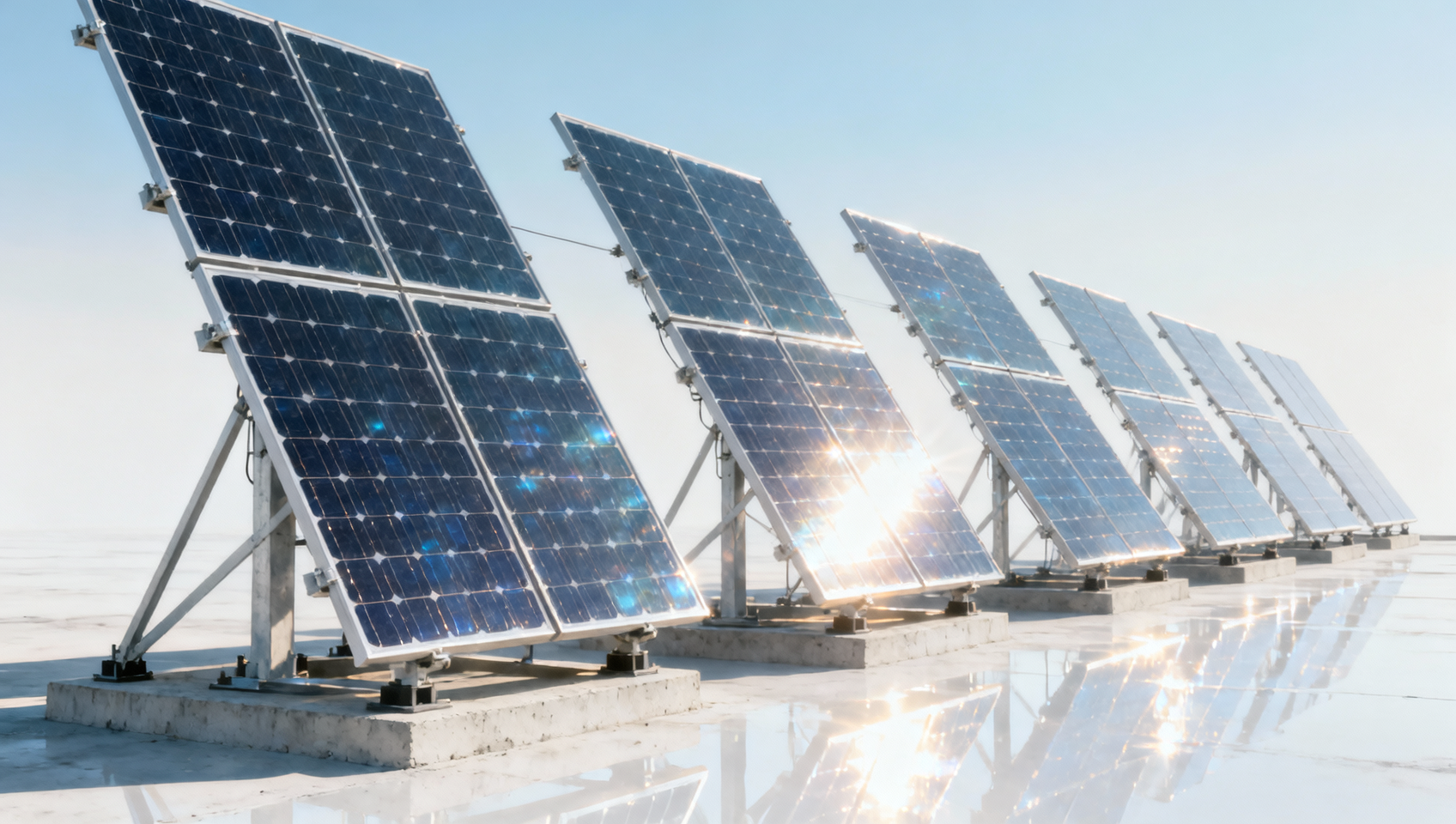
In B2B solar procurement, shaded roof conditions are rarely a minor design detail. Partial tree cover, adjacent buildings, HVAC equipment, parapet walls, and irregular roof geometry can reduce output unevenly across an array. That makes inverter architecture a strategic decision, not just an electrical one. For project managers, EPC teams, distributors, and financial approvers, the right choice should balance yield, serviceability, safety, and expansion flexibility over a 10–25 year operating horizon.
Why shading changes the inverter decision
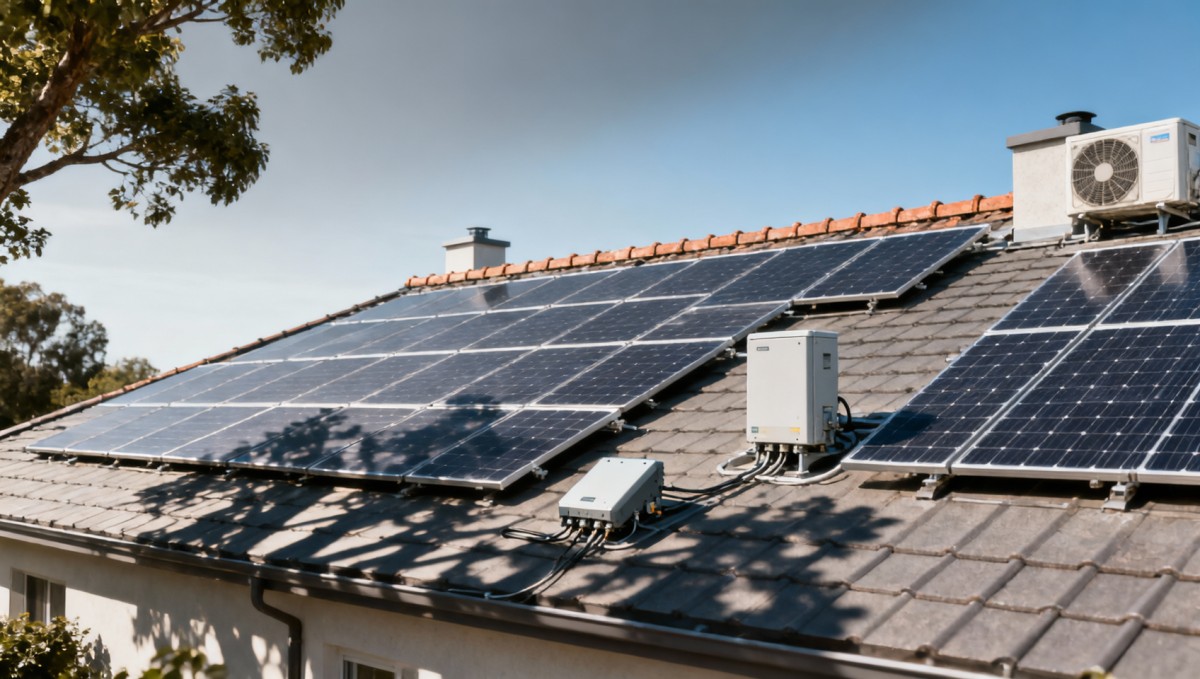
On an unshaded roof with uniform orientation, string inverters often perform efficiently and economically. On shaded rooftops, however, mismatch losses become more pronounced. If 10%–20% of modules receive intermittent shade during peak sun hours, the production impact can exceed the shaded area itself, especially when modules are electrically grouped in ways that force stronger panels to follow weaker ones.
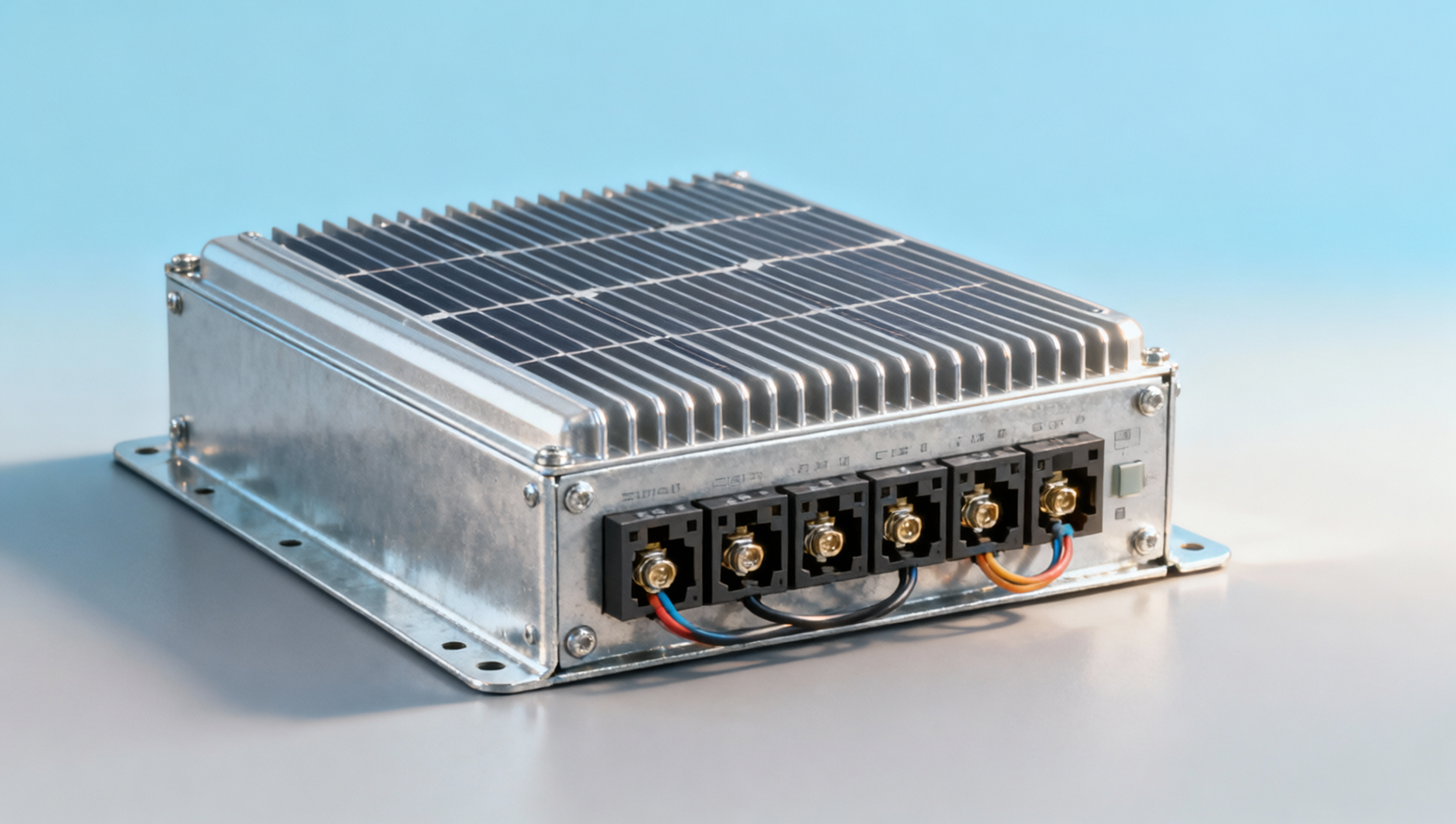
Microinverters work at the module level, converting DC to AC on each panel. That means one shaded panel has less impact on neighboring modules. String inverters centralize conversion for a series of panels, which simplifies hardware count but can reduce array performance when shading patterns are dynamic across the day. The practical difference is most visible on roofs with 2–4 different tilt angles, east-west exposure, or recurring morning and late-afternoon obstruction.
For technical assessment teams, the key issue is not whether shading exists, but how often it occurs and how unevenly it affects the array. A roof with 30 minutes of winter shading may not justify module-level electronics. A roof with daily shade on 15% of modules between 9 a.m. and 11 a.m. often will. Procurement should therefore request a shade study, production simulation, and layout-level loss estimate before comparing equipment pricing.
Safety and maintenance also enter the equation. Many commercial facilities now prioritize rapid shutdown capability, lower DC voltage on roofs, and easier fault isolation. These factors can make microinverters attractive for schools, mixed-use buildings, healthcare sites, and light industrial rooftops where compliance and service access matter as much as nameplate efficiency.
Common shading sources on commercial and mixed-use roofs
- Tree lines that create seasonal shading for 1–3 hours per day.
- Mechanical rooftop equipment such as chillers, vents, and duct risers.
- Nearby high-rise structures that create moving shadows across strings.
- Complex roof shapes with multiple azimuths, setbacks, or parapet shadows.
Microinverters vs string inverters: technical comparison for shaded roofs
The best way to compare inverter types is to align them with real operating conditions rather than brochure claims. Microinverters tend to improve energy harvest in partial shade, simplify module-level monitoring, and support irregular layouts. String inverters usually provide a lower upfront cost per watt, centralized maintenance, and strong performance on more uniform roofs. Neither option is universally better; each fits a different project profile.
For example, in a 50 kW rooftop system with 120 modules across 3 roof planes, microinverters can reduce mismatch losses and make design more forgiving. In a 200 kW installation with long, consistent rows and limited obstruction, string inverters may deliver a better capital-efficiency ratio. The shaded rooftop question is therefore tied to layout complexity, service strategy, and expected annual loss profile.
The table below summarizes the main differences relevant to buyers, designers, and operations teams evaluating shaded rooftops.
The main takeaway is straightforward: if shading is irregular and roof planes are mixed, microinverters usually improve usable production and simplify diagnostics. If the roof is mostly uniform and budget sensitivity is high, string inverters remain highly competitive. In many commercial tenders, the better choice becomes clear only after comparing modeled yield loss against the additional hardware cost over 5, 10, and 15 years.
Where each option usually fits best
Microinverters are often preferred when:
- The roof has 3 or more orientations or significant obstruction zones.
- Module-level monitoring is required for asset management or tenant billing.
- The project may expand in phases over 12–36 months.
String inverters are often preferred when:
- The array has long, uniform rows with limited shading.
- CAPEX discipline outweighs small yield gains.
- On-site maintenance teams prefer centralized power electronics.
Cost, maintenance, and ROI implications for B2B buyers
In commercial evaluation, the cheapest inverter architecture on day 1 is not always the lowest-cost option across the project lifecycle. Buyers should compare total installed cost, expected shading losses, maintenance labor, spare parts strategy, and downtime risk. A system that costs 6%–12% more upfront but recovers 4%–9% more annual energy under real shaded conditions may deliver a stronger payback profile over 8–12 years.
Maintenance models also differ. With microinverters, failures are distributed at module level, which can reduce single-point outage risk but may require roof access for replacement. With string inverters, service events are centralized and often faster to isolate physically, but one inverter issue can affect a larger section of the array. For logistics teams and facility operators, this shifts spare inventory planning and service scheduling requirements.
Financial approvers should ask for three scenarios: low-shade, medium-shade, and high-shade yield projections. They should also request a sensitivity review based on power prices, self-consumption ratio, and expected curtailment. On facilities using commercial energy storage, inverter architecture can also influence AC coupling strategy, monitoring integration, and future system upgrades.
Lifecycle cost comparison points
The following table helps procurement and finance teams compare the commercial impact of each design approach without relying on generic “better efficiency” claims.
A practical ROI model should include at least 6 inputs: installed cost, annual production, degradation assumption, maintenance frequency, replacement assumptions, and electricity value. For procurement leaders, this method prevents over-focusing on inverter purchase price while ignoring yield risk and O&M complexity. In shaded projects, lifecycle economics usually matter more than headline conversion efficiency.
Buyer checklist before issuing an RFQ
- Request a shade map showing seasonal impact, not only noon conditions.
- Ask for annual yield simulations for both microinverter and string layouts.
- Compare monitoring depth, warranty structure, and likely service path.
- Review AC/DC architecture if off grid solar systems or storage may be added later.
- Confirm replacement logistics, lead times, and field support coverage.
How to choose the right setup by roof type, project size, and operating model
Selection should begin with roof behavior, not product preference. A small commercial roof of 10 kW–30 kW with frequent edge shading has different priorities from a logistics facility running a 250 kW array. If the project includes tenants, critical loads, or planned battery integration, the monitoring and control architecture deserves extra attention. Good selection decisions usually come from matching 4 variables: shading profile, array geometry, maintenance access, and expansion plans.
For operations teams, panel-level data can be valuable when performance accountability is strict. For example, if site managers need to identify underperforming modules within 1 service cycle, microinverters offer a clearer path. If the site already has trained electrical personnel and a maintenance contractor familiar with centralized inverter replacement, string systems can remain a reliable and lower-complexity option in suitable layouts.
Project managers should also review environmental and installation factors. High-heat rooftops, difficult access, and aggressive commissioning schedules can influence labor productivity. In some regions, a 2-day installation advantage or a 1-week faster commissioning window can materially affect project economics. These practical details should be reflected in vendor scoring, not treated as secondary notes.
Recommended selection path
Step-by-step approach for technical and procurement teams
- Classify shading as low, moderate, or high based on daily duration and module coverage.
- Group roof areas by orientation, tilt, and obstruction pattern.
- Model annual production for at least 2 design options.
- Compare CAPEX, OPEX, service access, and expansion needs over 10–15 years.
- Select the architecture that best aligns with energy yield goals and operational capability.
As a practical rule, microinverters are often worth serious consideration when a roof contains multiple small sub-arrays, recurring partial shade, or phased buildout plans. String inverters are often stronger candidates when shading is limited, rows are consistent, and the buyer prioritizes a lower cost per installed watt. The final decision should be evidence-based, using simulation, layout review, and service planning rather than a generic preference for one technology.
Implementation risks, common mistakes, and procurement questions
One common mistake is evaluating solar microinverters vs string inverters for shaded rooftops using only equipment pricing. This ignores yield loss, wiring design, monitoring needs, and future retrofit costs. Another mistake is assuming all shading behaves the same. A fixed parapet shadow affecting 4 modules is different from moving shade that touches 25% of the array over several hours. Procurement documents should reflect those differences clearly.
Another risk is under-specifying service expectations. Buyers should define fault response times, reporting format, spare part availability, and commissioning support. A vendor proposal that looks competitive on paper can become expensive if replacement lead times stretch to 4–8 weeks or if diagnostics require repeated site visits. Quality and safety managers should also verify rooftop shutdown requirements, electrical isolation procedures, and ongoing inspection intervals.
For distributors and channel partners, product support depth matters almost as much as hardware quality. Clear documentation, training for installers, and compatibility guidance for storage or backup integration can reduce project friction. In complex B2B environments, the better supplier is often the one that makes the system easier to deploy, maintain, and expand—not simply the one with the lowest invoice total.
Frequently asked questions
Are microinverters always better for shaded rooftops?
No. They are often advantageous when shading is uneven, frequent, or spread across multiple roof sections. If shading is minimal and the array is uniform, string inverters may offer a better cost-to-output ratio. The break-even point usually depends on annual shade loss, project size, and service strategy.
How much shading justifies module-level electronics?
There is no single threshold, but daily recurring shade on 10%–15% of modules or arrays split across 3 or more roof planes often warrants a detailed comparison. The right benchmark is modeled annual production difference, not a fixed rule of thumb.
What should procurement include in vendor comparison?
At minimum, compare 6 items: total installed cost, modeled annual yield, monitoring level, warranty terms, replacement lead time, and service response commitment. If off grid solar systems or battery storage may be added, include integration compatibility and control architecture.
How long does design and approval usually take?
For many commercial rooftops, early feasibility and design review can take 1–3 weeks, while procurement alignment and technical approval may add another 2–4 weeks. Complex shaded roofs with storage integration or multiple stakeholders often require a longer coordination cycle.
For organizations evaluating solar microinverters vs string inverters for shaded rooftops, the right choice depends on more than inverter type alone. Shade behavior, roof geometry, maintenance model, expansion plans, and lifecycle economics all shape the final result. Microinverters often stand out on irregular, partially shaded roofs where panel-level optimization and visibility matter. String inverters remain compelling where layouts are uniform and budget efficiency is a leading priority.
TradeNexus Pro supports buyers, technical evaluators, and enterprise decision-makers with structured insight for smarter sourcing and project planning across green energy supply chains. If you are comparing rooftop solar architectures, planning a phased commercial deployment, or reviewing integration with storage, now is the time to get a tailored assessment. Contact us to discuss your project requirements, request a customized solution path, and explore more decision-ready energy infrastructure insights.
Get weekly intelligence in your inbox.
No noise. No sponsored content. Pure intelligence.
 Apr 18, 2026TradeNexus Pro Launches Global Compliance RadarTradeNexus Pro Launches Global Compliance Radar
 Apr 18, 2026JIS T 2304:2026 Takes Effect June 1, 2026 for IVD SoftwareJIS T 2304:2026 Takes Effect June 1, 2026 for IVD Software
 Pathway for Rehab Devices with AI Modules") Apr 18, 2026FDA Updates 510(k) Pathway for Rehab Devices with AI ModulesFDA Updates 510(k) Pathway for Rehab Devices with AI Modules
Apr 18, 2026FDA Updates 510(k) Pathway for Rehab Devices with AI ModulesFDA Updates 510(k) Pathway for Rehab Devices with AI Modules Apr 18, 2026India BIS Approves 3 Chinese IoT Labs for IS 16444:2026 CertificationIndia BIS Approves 3 Chinese IoT Labs for IS 16444:2026 Certification
 Apr 18, 2026THE Alliance Launches Green Slot Priority for China PortsTHE Alliance Launches Green Slot Priority for China Ports
 Apr 18, 2026TÜV Rheinland Releases Dual-Standard ESS Certification Guide for ChinaTÜV Rheinland Releases Dual-Standard ESS Certification Guide for China
 Apr 18, 2026Vietnam Imposes AD Duties on Chinese Electronic ComponentsVietnam Imposes AD Duties on Chinese Electronic Components
 Apr 18, 2026SASO Launches PV Carbon Footprint Labeling from July 2026SASO Launches PV Carbon Footprint Labeling from July 2026
 Apr 18, 2026U.S. Adds 17 Smart Warehouse Robot Components to Export Control ListU.S. Adds 17 Smart Warehouse Robot Components to Export Control List
 Apr 18, 2026EU Enforces EN IEC 62443-4-2:2026 for Industrial Control Devices from 18 Apr 2026EU Enforces EN IEC 62443-4-2:2026 for Industrial Control Devices from 18 Apr 2026
 Apr 17, 2026Temperature data loggers drift unpredictably inside lithium-ion battery storage enclosuresTemperature data loggers drift unpredictably inside lithium-ion battery storage enclosures
 Apr 17, 2026Are solar microinverters really worth the extra cost?Are solar microinverters really worth the extra cost?
 Apr 17, 2026Bifacial solar panels: How much more energy can they generate?Bifacial solar panels: How much more energy can they generate?
 Apr 17, 2026Gear manufacturing: How to optimize production for high precision?Gear manufacturing: How to optimize production for high precision?
 Apr 17, 2026Why power transmission components fail earlier than expectedWhy power transmission components fail earlier than expected
 Apr 17, 2026Linear motion systems: belt drive or ball screw for speed?Linear motion systems: belt drive or ball screw for speed?
 Apr 17, 2026Industrial bearing suppliers: what signals reliable quality?Industrial bearing suppliers: what signals reliable quality?
 Apr 17, 2026When pneumatic valves wholesale gets expensive laterWhen pneumatic valves wholesale gets expensive later
 Apr 17, 2026Hydraulic cylinder fabrication mistakes that cause oil leaksHydraulic cylinder fabrication mistakes that cause oil leaks
 Apr 17, 2026Heavy equipment manufacturing delays often start hereHeavy equipment manufacturing delays often start here
 Apr 17, 2026Custom heatsinks: when a larger size solves nothingCustom heatsinks: when a larger size solves nothing
 Apr 17, 2026Electronic enclosure fabrication: steel or aluminum?Electronic enclosure fabrication: steel or aluminum?
 Apr 17, 2026Automotive parts machining tolerances that drive up scrapAutomotive parts machining tolerances that drive up scrap
 Apr 17, 2026Medical device manufacturing changes under tighter traceabilityMedical device manufacturing changes under tighter traceability
 Apr 17, 2026How to Choose Solid State Batteries in 2026How to Choose Solid State Batteries in 2026
 Apr 17, 2026Are Solid State Batteries Worth the Cost Yet?Are Solid State Batteries Worth the Cost Yet?
 Apr 17, 2026Commercial Energy Storage Sizing: What Matters Most?Commercial Energy Storage Sizing: What Matters Most?