Thin Film Solar Cells: Where Do They Work Best?
Thin film solar cells are gaining attention for projects that demand lightweight design, flexible installation, and reliable output in challenging environments. From off grid solar systems to commercial energy storage strategies, buyers and engineers are comparing them with bifacial solar panels and solar microinverters to identify the best-fit applications. This guide explores where thin film solar cells perform best and what decision-makers should evaluate before investing.
For operators, technical evaluators, project managers, procurement leaders, and financial approvers, the key question is not whether thin film is universally better than crystalline silicon. The real question is where it delivers the best return in relation to weight limits, heat profile, shading conditions, installation complexity, and long-term maintenance cost.
In B2B energy planning, thin film solar cells are increasingly considered for rooftop retrofits, mobile infrastructure, remote assets, industrial facilities, and specialized building surfaces where rigid panels are difficult to deploy. Their value often appears strongest when design flexibility and system resilience matter more than peak module efficiency on paper.
Where Thin Film Solar Cells Deliver the Strongest Practical Advantage

Thin film solar cells are manufactured by depositing photovoltaic material in very thin layers onto glass, metal, or flexible substrates. In practical terms, this creates modules that are often lighter and sometimes bendable, making them suitable for surfaces that cannot safely support conventional framed panels weighing 18–25 kg per module.
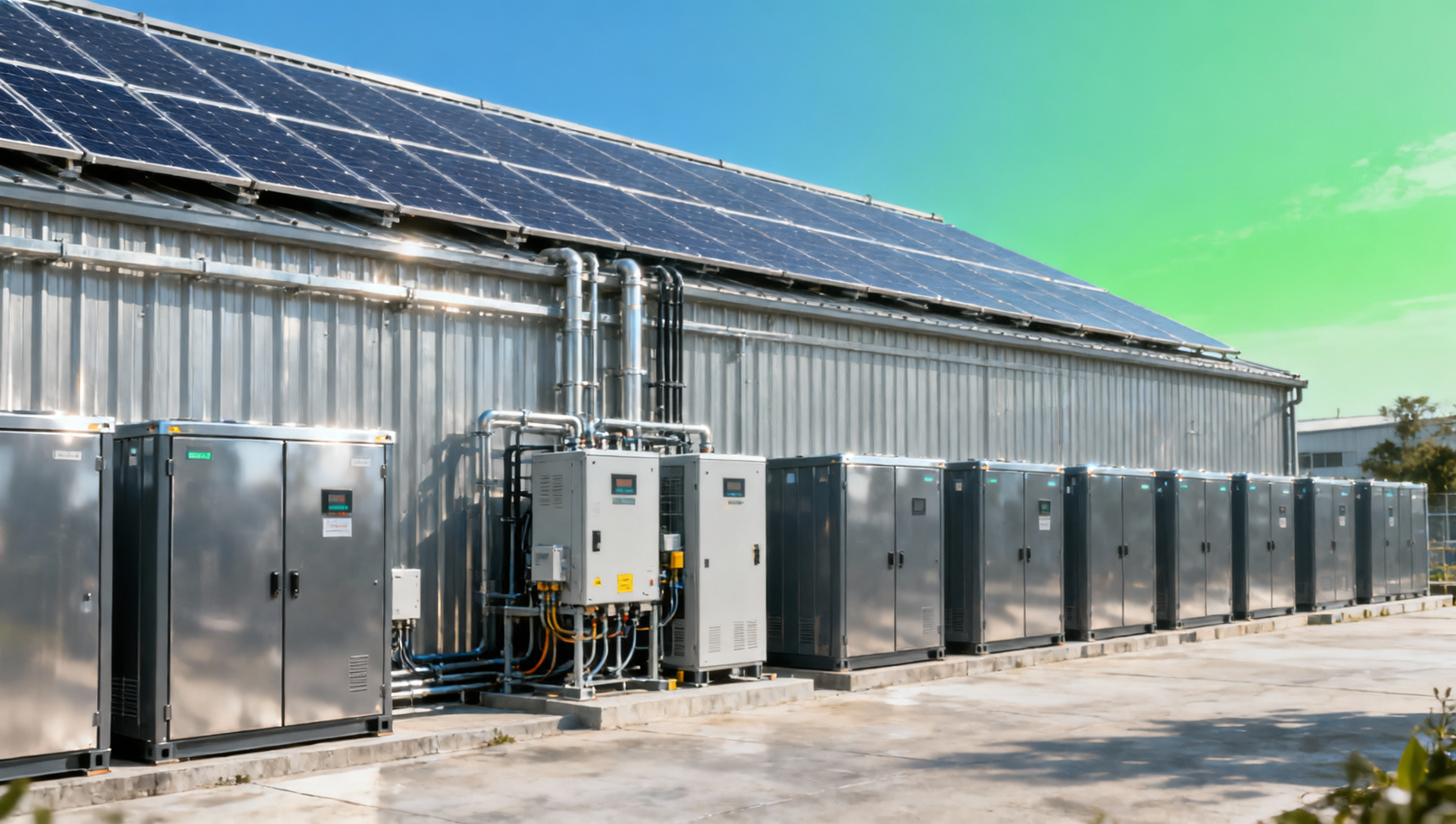
Their strongest use cases emerge where structural load is limited, roof penetration must be minimized, or partial shading is hard to avoid. In many commercial sites, especially aging warehouses and logistics facilities, roof reinforcement can add 15%–30% to the total project budget. Thin film solutions may reduce or eliminate that extra civil work.
They also tend to perform more consistently under diffuse light and high-temperature conditions. While exact results vary by chemistry and module design, decision-makers often evaluate thin film when daytime operating temperatures regularly exceed 35°C and rooftop surface temperatures can reach 60°C or more.
For remote assets such as telecom shelters, water pumping stations, security infrastructure, and temporary industrial camps, ease of transport can be a decisive factor. A lighter module format can cut handling time, reduce the number of installers needed per shift, and simplify logistics in sites with limited crane access.
Typical scenarios where thin film is worth evaluating
- Low-load commercial rooftops where added dead load must stay within strict engineering limits.
- Curved or irregular surfaces on industrial buildings, transport equipment, and portable structures.
- Hot climates where lower temperature sensitivity may protect daytime energy yield.
- Sites with intermittent shading from vents, ducts, parapets, or adjacent equipment.
- Off grid solar systems that prioritize installation flexibility and stable field performance over maximum module efficiency.
The table below summarizes where thin film solar cells generally compare favorably against more conventional PV options in commercial and industrial decision-making.
The main conclusion is straightforward: thin film solar cells work best where installation conditions are difficult, not merely where irradiance is high. If a project is constrained by heat, surface shape, rooftop load, or shading, they deserve serious technical review.
Thin Film vs Bifacial Solar Panels and Solar Microinverter Architectures
Thin film solar cells are often compared with bifacial solar panels, but the two are usually solving different engineering problems. Bifacial modules aim to capture additional energy from reflected light, often delivering stronger value in open ground-mount arrays, carports, or elevated structures with favorable albedo and controlled spacing.
Thin film, by contrast, becomes attractive when the mounting surface itself is the challenge. On a large logistics roof with multiple HVAC units, skylights, and traffic pathways, the practical gain from lightweight coverage may exceed the theoretical gain from rear-side generation. This is especially true when the roof geometry reduces rear irradiance opportunities.
Solar microinverters add another layer to the decision. They are not direct alternatives to thin film modules, but they influence system architecture. In highly segmented roofs with 10–20 separate orientations or frequent partial shading, microinverters can improve module-level optimization and simplify performance monitoring. However, they may also change maintenance workflows and capital allocation.
For enterprise buyers, the most effective comparison framework is not product against product, but project objective against system design. A thin film module paired with string inverters may be ideal for one retrofit, while monocrystalline or bifacial modules with microinverters may outperform in another scenario with fewer mechanical constraints.
Decision factors that matter more than headline efficiency
- Roof load capacity, including live load and wind uplift safety margin.
- Daily operating temperature and expected summer rooftop heat buildup.
- Shading frequency during peak production hours, especially between 10:00 and 15:00.
- Maintenance accessibility and the acceptable service interval over 10–20 years.
- Integration with storage, export limits, and monitoring requirements.
The following comparison table helps procurement and technical teams evaluate typical strengths by project type rather than by marketing claims alone.
A common mistake is to select modules solely on nameplate wattage. In many industrial deployments, the correct metric is delivered energy per constrained square meter, per kilogram of roof load, or per hour of maintenance exposure. That is where thin film can become commercially compelling.
Best Applications Across Commercial, Industrial, and Off Grid Projects
Commercial rooftops are among the strongest candidates for thin film solar cells, especially older buildings constructed 15–30 years ago. These sites often have membrane roofs, limited structural reserve, and rooftop equipment that makes rigid panel layout inefficient. Thin film systems can sometimes adapt to these conditions with fewer penetrations and shorter installation windows.
In industrial environments, thin film modules can support energy resilience strategies tied to peak shaving and commercial energy storage. Facilities with daytime cooling loads, batch processing equipment, or warehouse automation often consume the largest share of electricity during hot daylight hours. If heat reduces crystalline output significantly, thin film may provide a steadier yield profile.
Off grid solar systems present another practical use case. Remote surveillance towers, agricultural pumping stations, mining support infrastructure, and temporary construction compounds need dependable generation with manageable transport and deployment requirements. In these projects, shaving 20% off logistics complexity can be as important as gaining a few percentage points in module efficiency.
Thin film can also fit niche mobility and building-integrated applications, including portable shelters, containerized energy systems, and curved facade elements. In such cases, the technology is not chosen to maximize output from every square meter, but to make solar generation possible where standard modules are impractical.
Application screening checklist for project teams
Use thin film as a priority candidate when the project includes:
- Roof load constraints below the level preferred for conventional rack-and-panel systems.
- More than 4 major roof obstructions in every 500 square meters of usable area.
- Ambient temperatures frequently above 30°C during peak production months.
- Installation teams working under limited access, reduced lifting capacity, or tight shutdown windows.
- Operational needs that favor flexible deployment over maximum installed watt density.
The table below maps common business scenarios to the practical fit of thin film systems.
The buying implication is clear: thin film performs best where system viability depends on adaptability. If a standard rigid system already fits structurally, thermally, and spatially, another technology may provide better output density. But where constraints are real, thin film often moves a project from difficult to feasible.
What Technical and Financial Decision-Makers Should Evaluate Before Investing
Before approving a thin film project, enterprise teams should align technical review with commercial assumptions. A proper evaluation typically includes at least 5 dimensions: site structure, usable area, thermal environment, power electronics compatibility, and expected maintenance profile. Skipping any one of these can distort the business case.
Technical evaluators should begin with area efficiency versus available footprint. Because thin film solar cells can have lower conversion efficiency than premium crystalline products, the required surface area per installed kW may be higher. If a project has only 300 square meters of usable roof, every square meter matters. If it has 3,000 square meters and strict load restrictions, the balance shifts.
Financial approvers should assess total installed cost, not module cost alone. In many B2B projects, mounting structure, labor access, roof reinforcement, crane rental, outage coordination, and maintenance visits can account for a substantial share of CAPEX or OPEX. A module that costs more per watt may still lower the total project spend by reducing structural and installation overhead.
Quality and safety managers should verify environmental durability, fire performance, cable routing, and service access. They should also review the implications for inspections over a 12-month, 24-month, and 60-month horizon. For remote projects, replacement lead time and spare parts planning are often more important than headline output.
Core evaluation criteria before purchase approval
- Confirm structural load allowances and wind zone requirements with site engineering documentation.
- Estimate annual energy delivery under actual site temperature and shading conditions, not ideal lab assumptions.
- Check compatibility with string inverters, optimizers, or solar microinverters based on layout complexity.
- Model installation duration, access equipment needs, and production downtime risk.
- Review warranty terms, degradation expectations, and maintenance service availability in the target region.
Common procurement mistakes to avoid
- Comparing technologies only by efficiency percentage without considering heat and shading behavior.
- Ignoring balance-of-system savings that may offset higher module pricing.
- Assuming all flexible or lightweight modules have the same durability profile.
- Overlooking service access in distributed sites with limited local technician coverage.
A robust decision process usually takes 2–6 weeks for small commercial sites and 6–12 weeks for more complex multi-site portfolios. This timeline should include engineering validation, yield modeling, vendor comparison, and internal budget approval. Faster decisions are possible, but compressed review often increases downstream change-order risk.
Implementation, Risk Control, and Long-Term Performance Management
Deploying thin film solar cells successfully requires more than correct module selection. Site preparation, electrical architecture, attachment method, and maintenance planning all affect long-term output. For B2B operators, the implementation phase should be treated as a controlled engineering program rather than a simple product installation.
A typical rollout follows 4 stages: site audit, engineering design, installation and commissioning, then operational monitoring. Depending on project size, this can range from 10–20 working days for a compact off grid site to 8–14 weeks for a large commercial rooftop integrated with storage and demand management software.
Risk control begins with realistic environmental assumptions. Wind uplift, thermal cycling, moisture ingress, and cable management deserve detailed inspection. Projects in coastal, desert, or heavy-dust regions should also include a cleaning and inspection plan, often at intervals of every 3 months, 6 months, or after severe weather events.
Long-term value improves when monitoring is built into the design. Whether the system uses central inverters, string inverters, or solar microinverters, the owner should be able to track output deviations, downtime events, and maintenance actions. Even a 5% underperformance sustained over 24 months can materially affect project payback.
Recommended implementation workflow
- Conduct structural and electrical pre-surveys, including roof condition and cable route review.
- Validate production assumptions using local irradiance, temperature profile, and shading map.
- Finalize module, mounting, inverter, and battery configuration if storage is included.
- Commission the site with documented testing of insulation, polarity, output stability, and monitoring connectivity.
- Establish a service schedule with inspection records, cleaning criteria, and escalation response times.
FAQ for buyers and project teams
Are thin film solar cells better for every rooftop?
No. They are strongest where roof load, shape, temperature, or access constraints reduce the practicality of rigid crystalline modules. On a structurally robust roof with minimal shading and high area efficiency needs, crystalline options may still be more suitable.
Do they work well with commercial energy storage?
Yes, provided the DC and AC architecture is planned correctly. For facilities targeting daytime self-consumption, peak shaving, or backup resilience, thin film generation can pair effectively with storage if voltage window, inverter configuration, and monitoring logic are validated early in design.
How long does procurement and deployment usually take?
For standard commercial projects, vendor evaluation and design review may take 2–8 weeks, while procurement and installation can add another 3–10 weeks depending on site readiness, local permitting, and logistics. Remote or multi-site deployments often need longer contingency planning.
What should distributors and resellers focus on?
They should focus on application fit, installation support, warranty clarity, and compatibility with inverters and storage. In this segment, channel success depends less on pushing a generic module and more on guiding buyers toward the right project profile.
Thin film solar cells work best where conventional solar design runs into practical barriers: lightweight roofs, hot operating environments, irregular surfaces, remote assets, and installations where flexibility matters as much as output. Their value increases when teams evaluate total project cost, maintenance exposure, and deployment feasibility instead of module efficiency alone.
For procurement leaders, engineers, and project owners assessing off grid solar systems, commercial retrofits, or storage-linked energy strategies, the right choice depends on real site conditions and long-term operational priorities. To compare project-fit options, review technical tradeoffs, or explore tailored B2B energy solutions, contact TradeNexus Pro and get a customized evaluation for your next solar investment.
Get weekly intelligence in your inbox.
No noise. No sponsored content. Pure intelligence.
 Apr 18, 2026TradeNexus Pro Launches Global Compliance RadarTradeNexus Pro Launches Global Compliance Radar
 Apr 18, 2026JIS T 2304:2026 Takes Effect June 1, 2026 for IVD SoftwareJIS T 2304:2026 Takes Effect June 1, 2026 for IVD Software
 Pathway for Rehab Devices with AI Modules") Apr 18, 2026FDA Updates 510(k) Pathway for Rehab Devices with AI ModulesFDA Updates 510(k) Pathway for Rehab Devices with AI Modules
Apr 18, 2026FDA Updates 510(k) Pathway for Rehab Devices with AI ModulesFDA Updates 510(k) Pathway for Rehab Devices with AI Modules Apr 18, 2026India BIS Approves 3 Chinese IoT Labs for IS 16444:2026 CertificationIndia BIS Approves 3 Chinese IoT Labs for IS 16444:2026 Certification
 Apr 18, 2026THE Alliance Launches Green Slot Priority for China PortsTHE Alliance Launches Green Slot Priority for China Ports
 Apr 18, 2026TÜV Rheinland Releases Dual-Standard ESS Certification Guide for ChinaTÜV Rheinland Releases Dual-Standard ESS Certification Guide for China
 Apr 18, 2026Vietnam Imposes AD Duties on Chinese Electronic ComponentsVietnam Imposes AD Duties on Chinese Electronic Components
 Apr 18, 2026SASO Launches PV Carbon Footprint Labeling from July 2026SASO Launches PV Carbon Footprint Labeling from July 2026
 Apr 18, 2026U.S. Adds 17 Smart Warehouse Robot Components to Export Control ListU.S. Adds 17 Smart Warehouse Robot Components to Export Control List
 Apr 18, 2026EU Enforces EN IEC 62443-4-2:2026 for Industrial Control Devices from 18 Apr 2026EU Enforces EN IEC 62443-4-2:2026 for Industrial Control Devices from 18 Apr 2026
 Apr 17, 2026Temperature data loggers drift unpredictably inside lithium-ion battery storage enclosuresTemperature data loggers drift unpredictably inside lithium-ion battery storage enclosures
 Apr 17, 2026Are solar microinverters really worth the extra cost?Are solar microinverters really worth the extra cost?
 Apr 17, 2026Bifacial solar panels: How much more energy can they generate?Bifacial solar panels: How much more energy can they generate?
 Apr 17, 2026Gear manufacturing: How to optimize production for high precision?Gear manufacturing: How to optimize production for high precision?
 Apr 17, 2026Why power transmission components fail earlier than expectedWhy power transmission components fail earlier than expected
 Apr 17, 2026Linear motion systems: belt drive or ball screw for speed?Linear motion systems: belt drive or ball screw for speed?
 Apr 17, 2026Industrial bearing suppliers: what signals reliable quality?Industrial bearing suppliers: what signals reliable quality?
 Apr 17, 2026When pneumatic valves wholesale gets expensive laterWhen pneumatic valves wholesale gets expensive later
 Apr 17, 2026Hydraulic cylinder fabrication mistakes that cause oil leaksHydraulic cylinder fabrication mistakes that cause oil leaks
 Apr 17, 2026Heavy equipment manufacturing delays often start hereHeavy equipment manufacturing delays often start here
 Apr 17, 2026Custom heatsinks: when a larger size solves nothingCustom heatsinks: when a larger size solves nothing
 Apr 17, 2026Electronic enclosure fabrication: steel or aluminum?Electronic enclosure fabrication: steel or aluminum?
 Apr 17, 2026Automotive parts machining tolerances that drive up scrapAutomotive parts machining tolerances that drive up scrap
 Apr 17, 2026Medical device manufacturing changes under tighter traceabilityMedical device manufacturing changes under tighter traceability
 Apr 17, 2026How to Choose Solid State Batteries in 2026How to Choose Solid State Batteries in 2026
 Apr 17, 2026Are Solid State Batteries Worth the Cost Yet?Are Solid State Batteries Worth the Cost Yet?
 Apr 17, 2026Commercial Energy Storage Sizing: What Matters Most?Commercial Energy Storage Sizing: What Matters Most?