Thin film solar cells: Are they the future of solar energy?
Thin Film Solar Cells: Definition and Market Overview
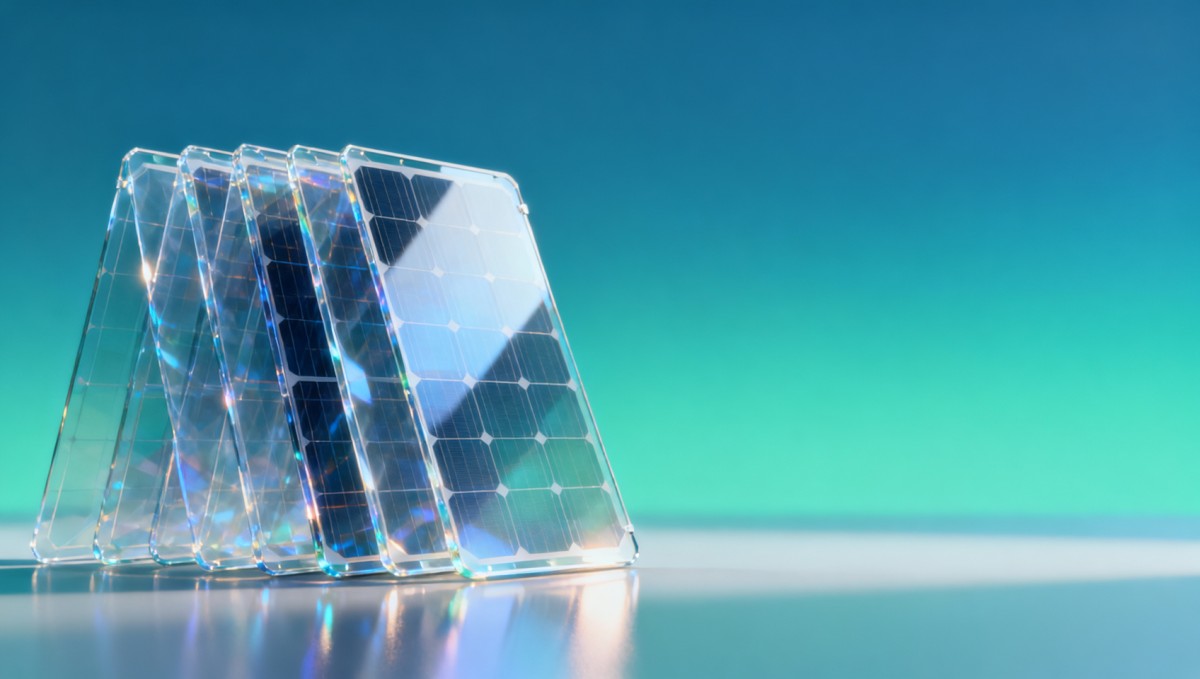
Thin film solar cells (TFSCs) represent a category of photovoltaic technology distinguished by their lightweight, flexible, and low-profile design. Unlike traditional crystalline silicon (c-Si) panels, which rely on rigid, thick silicon wafers, TFSCs use ultra-thin layers of semiconductor materials—such as cadmium telluride (CdTe), copper indium gallium selenide (CIGS), or amorphous silicon (a-Si)—deposited on substrates like glass, metal, or plastic. This structure enables TFSCs to achieve efficiencies ranging from 10% to 22%, depending on the material and manufacturing process, while offering advantages in portability, installation complexity, and aesthetic integration.
The global TFSC market has grown steadily, driven by demand for lightweight solar solutions in building-integrated photovoltaics (BIPV), portable power systems, and off-grid applications. According to industry reports, TFSCs accounted for approximately 8% of global solar installations in 2023, with a projected compound annual growth rate (CAGR) of 6–8% through 2030. This growth is fueled by advancements in material science, such as perovskite-based TFSCs, which have demonstrated laboratory efficiencies exceeding 30%, and by cost reductions in manufacturing processes like roll-to-roll printing.
For procurement directors and supply chain managers, TFSCs present unique opportunities and challenges. Their flexibility allows for installation on curved surfaces, such as vehicle roofs or architectural elements, while their low weight reduces structural load requirements. However, TFSCs typically have lower efficiency and shorter lifespans (20–25 years vs. 25–30 years for c-Si panels) and may require specialized handling during transportation and installation. These factors influence procurement decisions, particularly for projects with strict space, weight, or aesthetic constraints.
Application Scenarios: Where TFSCs Excel
Thin film solar cells are particularly well-suited for applications where traditional c-Si panels face limitations. One key scenario is BIPV, where TFSCs can be integrated into building facades, windows, or roofing materials without compromising structural integrity or design aesthetics. For example, a commercial office building in Singapore uses CIGS-based TFSCs on its glass curtain walls, generating 15% of its annual energy needs while maintaining a sleek, modern appearance. Similarly, TFSCs are ideal for portable power systems, such as solar-powered chargers for drones or remote sensors, where weight and flexibility are critical.
Off-grid and microgrid projects also benefit from TFSCs. In rural electrification initiatives, TFSCs can be deployed on lightweight, corrosion-resistant substrates like aluminum, reducing installation costs and enabling rapid deployment in areas with limited infrastructure. A case study from Kenya shows that TFSCs installed on school roofs provide reliable power for lighting and computers, improving educational outcomes while avoiding the need for expensive grid extensions. For enterprise decision-makers, these applications highlight TFSCs’ role in addressing energy access challenges in emerging markets.
Another emerging use case is in the automotive sector. TFSCs’ flexibility allows them to be integrated into vehicle roofs or body panels, supplementing electric vehicle (EV) battery systems. A pilot project by a major automaker in Germany uses a-Si TFSCs on EV roofs, adding up to 10% more range per charge under optimal sunlight conditions. While this technology is still in its early stages, it underscores TFSCs’ potential to disrupt traditional energy storage and transportation models.
Key Application Criteria for TFSCs
- Weight sensitivity: Projects with strict load limits, such as historic buildings or lightweight structures.
- Aesthetic integration: Applications requiring minimal visual impact, like architectural glass or vehicle panels.
- Portability: Systems needing frequent relocation, such as military field operations or disaster relief units.
- Off-grid accessibility: Remote areas where grid connection is impractical or prohibitively expensive.
Comparison Analysis: TFSCs vs. Bifacial Solar Panels
When evaluating TFSCs against bifacial solar panels—a competing technology that captures sunlight from both sides—several factors come into play. Bifacial panels, typically made of monocrystalline or polycrystalline silicon, offer higher efficiency (18–24%) and longer lifespans (25–30 years) than most TFSCs. They also perform well in reflective environments, such as snow-covered ground or white rooftops, where rear-side light capture boosts output by 10–30%. However, bifacial panels are heavier, rigid, and more expensive to manufacture, limiting their use in weight-sensitive or curved applications.
The table below compares TFSCs and bifacial panels across key procurement metrics:
For procurement teams, the choice between TFSCs and bifacial panels hinges on project priorities. If cost, weight, and flexibility are paramount—such as in a BIPV project with budget constraints—TFSCs may be the better option. Conversely, if efficiency and longevity are critical—like in a utility-scale solar farm aiming for maximum energy output over 25+ years—bifacial panels are likely preferable. Financial approval teams should also consider the total cost of ownership (TCO), including installation, maintenance, and replacement costs, when making decisions.
Technical Performance and Procurement Guide
The technical performance of TFSCs varies by material type. CdTe-based TFSCs, for example, dominate the utility-scale TFSC market due to their balance of efficiency (18–22%) and cost ($0.50–0.60 per watt). CIGS TFSCs offer slightly higher efficiency (20–22%) but at a higher cost ($0.60–0.70 per watt), making them suitable for niche applications requiring superior performance. Amorphous silicon (a-Si) TFSCs, while less efficient (8–10%), are the most cost-effective ($0.40–0.50 per watt) and are often used in low-power consumer electronics or portable chargers.
When procuring TFSCs, technical evaluators should prioritize three key parameters: efficiency, degradation rate, and temperature coefficient. Efficiency determines how much sunlight is converted into electricity, while degradation rate—typically 0.5–1% per year—affects long-term performance. The temperature coefficient, which measures how much efficiency drops as temperatures rise, is crucial for hot climates; CdTe TFSCs, for instance, have a lower temperature coefficient (-0.25% per °C) than CIGS (-0.35% per °C) or a-Si (-0.45% per °C), making them more resilient in high-heat environments.
Quality control is another critical factor. TFSCs are prone to microcracks during transportation or installation, which can reduce output by 5–10%. Reputable manufacturers use automated visual inspection systems and electroluminescence (EL) testing to detect defects before shipping. For project managers, this means verifying suppliers’ quality assurance processes and requesting sample panels for testing before bulk orders. Additionally, TFSCs require specialized inverters optimized for their lower voltage and current profiles; standard string inverters used with c-Si panels may not be compatible.
TFSC Procurement Checklist
- Verify material type (CdTe, CIGS, or a-Si) based on efficiency and cost requirements.
- Request degradation rate data and warranty terms (typically 20–25 years).
- Confirm temperature coefficient and performance in high-heat conditions.
- Inspect quality control measures, including EL testing and defect rates.
- Ensure compatibility with project-specific inverters and mounting systems.
Why Choose TradeNexus Pro for TFSC Insights?
TradeNexus Pro (TNP) is the ultimate resource for global B2B decision-makers navigating the complex TFSC market. Our platform provides deep topical authority through curated content from industry veterans and technical analysts, covering material innovations, manufacturing trends, and procurement best practices. For example, our recent report on perovskite-TFSC hybrid technology analyzed how combining perovskite layers with CdTe or CIGS can boost efficiencies to 25–30%, while our supplier directory helps procurement teams identify vetted manufacturers with proven track records in quality and reliability.
TNP also offers actionable tools for TFSC procurement, such as our TCO calculator, which compares upfront costs, degradation rates, and maintenance expenses across suppliers. For enterprise decision-makers, our market forecasts—updated quarterly—provide data-driven insights into regional demand shifts, policy changes, and emerging competitors. Whether you’re evaluating TFSCs for a BIPV project in Europe or a portable power system in Southeast Asia, TNP equips you with the information needed to make informed, strategic decisions.
To access our full suite of TFSC resources, including supplier comparisons, technical guides, and case studies, register for a free TNP account today. Our team is also available to assist with custom research requests, such as identifying TFSC suppliers with specific certifications (e.g., IEC 61215, UL 61730) or analyzing regional import/export trends. Let TNP be your strategic partner in unlocking the potential of thin film solar cells for your next project.
FAQs About Thin Film Solar Cells
Q1: What is the typical payback period for a TFSC installation?
The payback period for TFSCs varies by application and location. For utility-scale projects in sunny regions, payback can be as short as 4–6 years, while BIPV installations in commercial buildings may take 7–10 years due to higher upfront costs. Factors like local electricity rates, incentives, and degradation rates also influence payback.
Q2: Are TFSCs suitable for rooftop solar in residential areas?
TFSCs can be used for residential rooftops, especially in weight-sensitive or aesthetically constrained scenarios. However, their lower efficiency compared to c-Si panels means more roof space is required to generate the same output. Homeowners should evaluate their energy needs, roof capacity, and budget before choosing TFSCs over traditional panels.
Q3: How do TFSCs perform in cloudy or low-light conditions?
TFSCs generally perform better than c-Si panels in diffuse or low-light conditions due to their broader absorption spectrum. CdTe and CIGS TFSCs, in particular, can maintain 80–90% of their rated output under cloudy skies, making them viable for regions with variable weather patterns.
Get weekly intelligence in your inbox.
No noise. No sponsored content. Pure intelligence.
 Apr 18, 2026TradeNexus Pro Launches Global Compliance RadarTradeNexus Pro Launches Global Compliance Radar
 Apr 18, 2026JIS T 2304:2026 Takes Effect June 1, 2026 for IVD SoftwareJIS T 2304:2026 Takes Effect June 1, 2026 for IVD Software
 Pathway for Rehab Devices with AI Modules") Apr 18, 2026FDA Updates 510(k) Pathway for Rehab Devices with AI ModulesFDA Updates 510(k) Pathway for Rehab Devices with AI Modules
Apr 18, 2026FDA Updates 510(k) Pathway for Rehab Devices with AI ModulesFDA Updates 510(k) Pathway for Rehab Devices with AI Modules Apr 18, 2026India BIS Approves 3 Chinese IoT Labs for IS 16444:2026 CertificationIndia BIS Approves 3 Chinese IoT Labs for IS 16444:2026 Certification
 Apr 18, 2026THE Alliance Launches Green Slot Priority for China PortsTHE Alliance Launches Green Slot Priority for China Ports
 Apr 18, 2026TÜV Rheinland Releases Dual-Standard ESS Certification Guide for ChinaTÜV Rheinland Releases Dual-Standard ESS Certification Guide for China
 Apr 18, 2026Vietnam Imposes AD Duties on Chinese Electronic ComponentsVietnam Imposes AD Duties on Chinese Electronic Components
 Apr 18, 2026SASO Launches PV Carbon Footprint Labeling from July 2026SASO Launches PV Carbon Footprint Labeling from July 2026
 Apr 18, 2026U.S. Adds 17 Smart Warehouse Robot Components to Export Control ListU.S. Adds 17 Smart Warehouse Robot Components to Export Control List
 Apr 18, 2026EU Enforces EN IEC 62443-4-2:2026 for Industrial Control Devices from 18 Apr 2026EU Enforces EN IEC 62443-4-2:2026 for Industrial Control Devices from 18 Apr 2026
 Apr 17, 2026Temperature data loggers drift unpredictably inside lithium-ion battery storage enclosuresTemperature data loggers drift unpredictably inside lithium-ion battery storage enclosures
 Apr 17, 2026Are solar microinverters really worth the extra cost?Are solar microinverters really worth the extra cost?
 Apr 17, 2026Bifacial solar panels: How much more energy can they generate?Bifacial solar panels: How much more energy can they generate?
 Apr 17, 2026Gear manufacturing: How to optimize production for high precision?Gear manufacturing: How to optimize production for high precision?
 Apr 17, 2026Why power transmission components fail earlier than expectedWhy power transmission components fail earlier than expected
 Apr 17, 2026Linear motion systems: belt drive or ball screw for speed?Linear motion systems: belt drive or ball screw for speed?
 Apr 17, 2026Industrial bearing suppliers: what signals reliable quality?Industrial bearing suppliers: what signals reliable quality?
 Apr 17, 2026When pneumatic valves wholesale gets expensive laterWhen pneumatic valves wholesale gets expensive later
 Apr 17, 2026Hydraulic cylinder fabrication mistakes that cause oil leaksHydraulic cylinder fabrication mistakes that cause oil leaks
 Apr 17, 2026Heavy equipment manufacturing delays often start hereHeavy equipment manufacturing delays often start here
 Apr 17, 2026Custom heatsinks: when a larger size solves nothingCustom heatsinks: when a larger size solves nothing
 Apr 17, 2026Electronic enclosure fabrication: steel or aluminum?Electronic enclosure fabrication: steel or aluminum?
 Apr 17, 2026Automotive parts machining tolerances that drive up scrapAutomotive parts machining tolerances that drive up scrap
 Apr 17, 2026Medical device manufacturing changes under tighter traceabilityMedical device manufacturing changes under tighter traceability
 Apr 17, 2026How to Choose Solid State Batteries in 2026How to Choose Solid State Batteries in 2026
 Apr 17, 2026Are Solid State Batteries Worth the Cost Yet?Are Solid State Batteries Worth the Cost Yet?
 Apr 17, 2026Commercial Energy Storage Sizing: What Matters Most?Commercial Energy Storage Sizing: What Matters Most?