What Makes Portable Solar Panels Easier to Deploy Fast?
Fast deployment matters when teams need reliable off-grid power without delays. From portable solar panels and folding solar chargers to mppt controllers, solar charge controllers, and battery management systems, the right components can dramatically shorten setup time. This article explores the design features, integration choices, and field-ready power solutions that help operators, buyers, and project leaders deploy solar systems faster and with greater confidence.
What actually makes portable solar panels faster to deploy in the field?
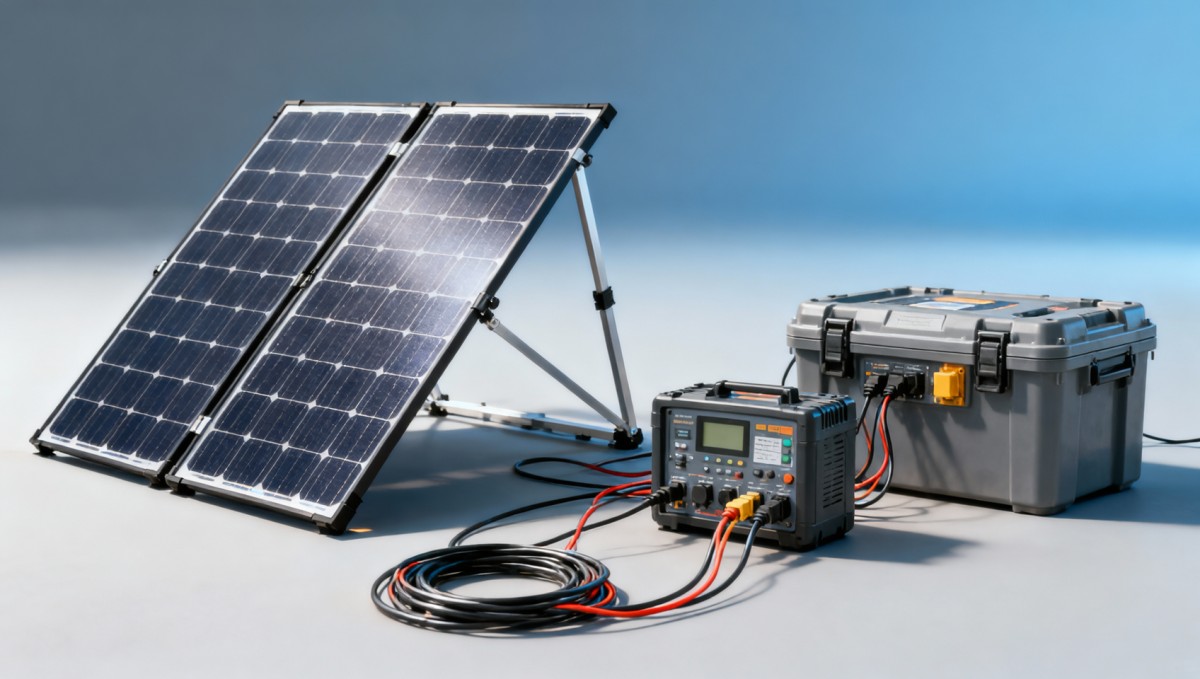
Speed in field deployment is rarely about one single component. In most portable solar panel systems, setup time depends on how quickly a team can unfold, position, connect, charge, and stabilize the power path. For operators working under time pressure, the difference between a 5-minute and a 25-minute setup can directly affect productivity, safety, and equipment uptime.
The fastest systems usually reduce decisions at the point of use. Pre-wired connectors, integrated kickstands, clearly labeled polarity, and compact transport formats help teams move from transport mode to live power with fewer manual checks. This is especially relevant in mixed-use B2B environments where users may not be solar specialists but still need dependable off-grid energy.
Portable solar panels become easier to deploy fast when they are designed as a complete field solution rather than as isolated hardware. A panel may be efficient on paper, but if the charge controller requires extra configuration, the cable set is too short, or battery protection is external and loosely integrated, the real deployment cycle slows down.
For procurement teams and project managers, a practical way to evaluate speed is to break deployment into 4 stages: transport, panel positioning, electrical connection, and stable output confirmation. Each stage contains friction points that can be engineered out through better product architecture and better system matching.
The 5 design traits that usually shorten setup time
- Foldable or modular structure that opens in 1–3 movements, reducing handling complexity for a single operator or a 2-person field crew.
- Pre-terminated cables with keyed connectors, which lowers wiring errors and speeds up first-time installation in temporary sites.
- Integrated support geometry, such as kickstands or quick-angle brackets, allowing faster adjustment under changing sun conditions.
- Matched solar charge controllers or mppt controllers that recognize battery profiles without lengthy manual programming.
- Protected transport packaging that doubles as a deployment case, minimizing unpacking steps and reducing handling damage risk.
In procurement reviews, these design traits matter more than headline wattage alone. A 200W portable solar panel that deploys cleanly in 8–10 minutes can create more operational value than a nominally higher-output unit that needs more accessories, more alignment effort, and more battery-side troubleshooting.
Why integrated power-chain design matters
A portable solar panel does not work in isolation. Fast deployment depends on the full DC chain: panel, connectors, solar charge controller, battery management system, storage unit, and load interface. If even one link is mismatched, setup may require voltage checks, firmware verification, or cable adaptation in the field.
This is why many buyers now prefer bundled or validated combinations. In sectors covered by TradeNexus Pro, such as green energy, smart electronics, and supply chain SaaS-enabled operations, procurement teams increasingly evaluate products as deployable systems instead of standalone SKUs. That approach reduces field uncertainty and improves repeatability across multiple sites.
Which portable solar panel configurations work best for different deployment scenarios?
Different use cases demand different definitions of “fast.” A service technician powering a compact communication device has different priorities than a project team supporting sensors, lighting, routers, laptops, and battery charging at a temporary field station. The right portable solar panel format depends on power level, transport method, operator skill, and expected runtime.
In practical B2B settings, three common deployment bands appear frequently: lightweight charging under 100W, mid-range field support around 100W–300W, and higher-capacity mobile power support from 300W–800W or more when paired with suitable storage. Each band changes the trade-off between weight, setup speed, and accessory requirements.
Buyers should also think about deployment frequency. A panel used once per quarter may tolerate a more manual setup sequence. A system opened every day or several times per week needs stronger hinges, faster cable management, and a battery management system that reduces repetitive safety checks.
The table below compares common portable solar panel formats by deployment profile rather than by marketing language. This helps project leads, distributors, and sourcing teams align product structure with actual field conditions.
This comparison shows why deployment speed should be measured against operational need. Lightweight folding solar chargers win on portability, but many B2B users need more than direct USB output. Mid-range systems often deliver the best balance for field teams because they can support batteries, communication hardware, and low-voltage tools without requiring a fully engineered microgrid.
Scenario-specific deployment priorities
For operators and field users
Users want systems they can carry, open, and trust quickly. They tend to value connector clarity, weather resistance, and low setup burden over laboratory efficiency. If the panel angle mechanism jams or the controller interface is confusing, real deployment slows immediately.
For procurement and commercial evaluators
Buyers need standardization across projects. A slightly higher initial unit cost may be justified if it reduces installation errors, training time, spare-part complexity, and downtime across 10, 20, or 50 distributed use points. Deployment speed should therefore be linked to labor cost and operational continuity, not only hardware price.
For distributors and channel partners
Resellers often benefit from products that are simple to demonstrate and easy to support remotely. A portable solar panel system with clear wiring logic, standard connector options, and a short commissioning checklist is easier to position in broad cross-industry markets.
What technical components reduce setup friction the most?
When teams ask why one portable solar panel deploys faster than another, the answer often lies in small engineering choices. Electrical compatibility, cable organization, controller intelligence, and battery-side protection all influence the time between unpacking and useful output. In many cases, these details matter more than panel chemistry or nominal power alone.
A key component is the mppt controller. Compared with simpler regulation methods, an MPPT unit can improve energy harvesting under changing sunlight and help maintain more stable charging behavior. More importantly for deployment speed, a well-matched controller reduces the need for manual tuning and helps the system reach productive charging faster after setup.
The solar charge controller and battery management system should also be treated as deployment tools, not just protection devices. A battery management system that handles overcharge, over-discharge, temperature protection, and balancing internally reduces the number of field checks required before operators connect loads.
The table below outlines technical elements that most directly affect field deployment speed, serviceability, and user confidence in portable solar panel solutions.
For decision-makers, the buying lesson is simple: deployment speed is engineered. It comes from reducing loose interfaces, reducing manual steps, and reducing ambiguity. A strong portable solar panel package should make the first 10 minutes in the field predictable, even when site conditions are not.
A practical 6-point technical checklist
- Verify operating voltage match between panel output, charge controller, and storage unit.
- Confirm whether the mppt controller is included, external, or optional.
- Check cable lengths for actual field spacing, not just bench-top demonstrations.
- Review ingress protection and expected outdoor temperature range for regular deployment.
- Assess whether the battery management system exposes useful status information to users.
- Ask how many steps are required from case opening to confirmed charging output.
These six checks are highly relevant across advanced manufacturing support teams, remote healthcare technology deployments, mobile smart electronics testing, and temporary logistics operations. TradeNexus Pro frequently sees that the fastest field systems are not necessarily the most complex; they are the best integrated.
How should buyers evaluate portable solar panels for procurement, rollout, and total operating value?
Procurement decisions around portable solar panels often stall because teams compare the wrong things. Wattage, folded size, and list price are visible, but deployment cost also includes labor time, training burden, accessory management, field reliability, and how quickly a distributor or internal team can standardize the solution across sites.
A useful procurement model is to review 3 layers at the same time: product structure, deployment workflow, and support readiness. Product structure covers panel and controller matching. Deployment workflow measures how many steps and how much skill are needed. Support readiness covers spare parts, documentation, sampling, and expected delivery windows such as 2–4 weeks for standard configurations or longer for customized kits.
For project managers and enterprise decision-makers, portable solar panel procurement should also consider rollout scale. A small pilot of 5 units may tolerate manual configuration. A multi-country or multi-site program of 30, 100, or more sets requires more disciplined packaging, labeling, battery documentation, and training consistency.
The following table provides a practical selection framework for buyers comparing portable solar panels, folding solar chargers, controller combinations, and storage-linked systems.
This evaluation framework helps separate nominal performance from deployable value. In many cases, a slightly more integrated portable solar panel package reduces total operating friction over 12–24 months, particularly where remote teams, rotating staff, or temporary sites are common.
Common procurement mistakes that slow deployment later
- Buying panels without confirming charge controller compatibility, which forces field adaptation and delays commissioning.
- Focusing on wattage while ignoring connector standards, resulting in extra accessories and user confusion.
- Choosing low-cost storage without reviewing battery management system protections for repetitive outdoor use.
- Skipping sample validation, even though a 1-unit or 2-unit pilot can reveal setup friction before larger rollout.
For global B2B buyers, this is where an intelligence-led platform adds value. TradeNexus Pro supports sourcing and strategy teams by helping them interpret technical differences in commercial terms: deployment time, scalability, supply risk, integration readiness, and cross-sector applicability.
What standards, field risks, and common misconceptions should teams review before purchase?
Portable solar panels are often presented as simple plug-and-play products, but field deployment still involves electrical safety, battery protection, transport considerations, and environmental exposure. Buyers do not need to overcomplicate the process, but they should verify whether the product set aligns with common commercial expectations for low-voltage power systems, outdoor use, and battery handling.
In practice, compliance review usually includes 3 areas: electrical safety and labeling, battery transportation or handling requirements where storage is included, and environmental durability for the intended use case. The exact standards can vary by market and product architecture, so suppliers should be asked to clarify what applies to the panel, controller, and battery separately.
A frequent misconception is that a higher-wattage portable solar panel automatically delivers faster real-world readiness. In reality, larger systems can add setup steps, heavier transport loads, and more demanding battery matching. Faster deployment often comes from lower complexity and better system fit, not from maximum panel area alone.
Another common misunderstanding is that all solar charge controllers behave similarly. They do not. Some are better suited to quick field deployment because they offer straightforward configuration, clearer indicators, and better tolerance for changing solar input. This is especially important in temporary or mobile installations where sunlight conditions and user experience levels vary widely.
FAQ for buyers, users, and project teams
How fast can a portable solar panel system usually be deployed?
For a compact folding solar charger, deployment may take only a few minutes. For a portable solar panel system with controller and battery connection, 8–15 minutes is a practical planning range for a trained user. Larger modular systems may take longer, especially if the array, controller, and storage unit are transported separately.
Is an MPPT controller always necessary?
Not always, but in many professional applications it is a strong choice. An mppt controller is especially useful when solar conditions vary, charging efficiency matters, or the battery bank needs more stable behavior. For fast deployment, its biggest advantage is often reduced adjustment burden and better real-world charging consistency.
What should buyers check when a battery is included?
Review the battery management system first. Confirm the protection functions, operating temperature expectations, status visibility, and connection logic. Also ask whether the battery and portable solar panel were tested as a matched configuration or merely bundled for convenience.
Are folding solar chargers enough for enterprise field use?
They can be, but usually only for lighter loads. If the application involves radios, laptops, sensors, lighting, network gear, or repeat daily charging, a more structured portable solar panel kit with a solar charge controller and storage support will usually be more practical. The right answer depends on load profile, working hours, and deployment frequency.
Why work with a market intelligence platform before selecting portable solar panel solutions?
Choosing portable solar panels is no longer just a hardware decision. For B2B organizations, it intersects with supply continuity, component compatibility, project rollout speed, and long-term serviceability. That is why many procurement leaders and project owners need more than product listings. They need structured market insight that connects technical choices to commercial outcomes.
TradeNexus Pro supports that process by focusing on the sectors shaping tomorrow’s industrial and digital economy, including green energy, smart electronics, advanced manufacturing, healthcare technology, and supply chain SaaS. This cross-sector viewpoint matters because portable solar panel demand increasingly comes from hybrid applications rather than from one traditional buyer category.
For operators, buyers, distributors, and enterprise decision-makers, TNP helps clarify what to ask before moving forward: Which portable solar panel architecture fits the use case? Which mppt controller or solar charge controller setup reduces field friction? What battery management system features are worth paying for? What sample process, documentation, and delivery planning should be confirmed before rollout?
If you are evaluating portable solar panels for faster deployment, contact TradeNexus Pro to discuss configuration logic, application fit, standard procurement checkpoints, likely delivery windows, sample validation planning, controller and battery matching, and the documentation needed for commercial comparison. That conversation is especially useful when you need to compare multiple suppliers, define a field-ready kit, or prepare a structured RFQ for portable off-grid power solutions.
Get weekly intelligence in your inbox.
No noise. No sponsored content. Pure intelligence.
 Apr 18, 2026TradeNexus Pro Launches Global Compliance RadarTradeNexus Pro Launches Global Compliance Radar
 Apr 18, 2026JIS T 2304:2026 Takes Effect June 1, 2026 for IVD SoftwareJIS T 2304:2026 Takes Effect June 1, 2026 for IVD Software
 Pathway for Rehab Devices with AI Modules") Apr 18, 2026FDA Updates 510(k) Pathway for Rehab Devices with AI ModulesFDA Updates 510(k) Pathway for Rehab Devices with AI Modules
Apr 18, 2026FDA Updates 510(k) Pathway for Rehab Devices with AI ModulesFDA Updates 510(k) Pathway for Rehab Devices with AI Modules Apr 18, 2026India BIS Approves 3 Chinese IoT Labs for IS 16444:2026 CertificationIndia BIS Approves 3 Chinese IoT Labs for IS 16444:2026 Certification
 Apr 18, 2026THE Alliance Launches Green Slot Priority for China PortsTHE Alliance Launches Green Slot Priority for China Ports
 Apr 18, 2026TÜV Rheinland Releases Dual-Standard ESS Certification Guide for ChinaTÜV Rheinland Releases Dual-Standard ESS Certification Guide for China
 Apr 18, 2026Vietnam Imposes AD Duties on Chinese Electronic ComponentsVietnam Imposes AD Duties on Chinese Electronic Components
 Apr 18, 2026SASO Launches PV Carbon Footprint Labeling from July 2026SASO Launches PV Carbon Footprint Labeling from July 2026
 Apr 18, 2026U.S. Adds 17 Smart Warehouse Robot Components to Export Control ListU.S. Adds 17 Smart Warehouse Robot Components to Export Control List
 Apr 18, 2026EU Enforces EN IEC 62443-4-2:2026 for Industrial Control Devices from 18 Apr 2026EU Enforces EN IEC 62443-4-2:2026 for Industrial Control Devices from 18 Apr 2026
 Apr 17, 2026Temperature data loggers drift unpredictably inside lithium-ion battery storage enclosuresTemperature data loggers drift unpredictably inside lithium-ion battery storage enclosures
 Apr 17, 2026Are solar microinverters really worth the extra cost?Are solar microinverters really worth the extra cost?
 Apr 17, 2026Bifacial solar panels: How much more energy can they generate?Bifacial solar panels: How much more energy can they generate?
 Apr 17, 2026Gear manufacturing: How to optimize production for high precision?Gear manufacturing: How to optimize production for high precision?
 Apr 17, 2026Why power transmission components fail earlier than expectedWhy power transmission components fail earlier than expected
 Apr 17, 2026Linear motion systems: belt drive or ball screw for speed?Linear motion systems: belt drive or ball screw for speed?
 Apr 17, 2026Industrial bearing suppliers: what signals reliable quality?Industrial bearing suppliers: what signals reliable quality?
 Apr 17, 2026When pneumatic valves wholesale gets expensive laterWhen pneumatic valves wholesale gets expensive later
 Apr 17, 2026Hydraulic cylinder fabrication mistakes that cause oil leaksHydraulic cylinder fabrication mistakes that cause oil leaks
 Apr 17, 2026Heavy equipment manufacturing delays often start hereHeavy equipment manufacturing delays often start here
 Apr 17, 2026Custom heatsinks: when a larger size solves nothingCustom heatsinks: when a larger size solves nothing
 Apr 17, 2026Electronic enclosure fabrication: steel or aluminum?Electronic enclosure fabrication: steel or aluminum?
 Apr 17, 2026Automotive parts machining tolerances that drive up scrapAutomotive parts machining tolerances that drive up scrap
 Apr 17, 2026Medical device manufacturing changes under tighter traceabilityMedical device manufacturing changes under tighter traceability
 Apr 17, 2026How to Choose Solid State Batteries in 2026How to Choose Solid State Batteries in 2026
 Apr 17, 2026Are Solid State Batteries Worth the Cost Yet?Are Solid State Batteries Worth the Cost Yet?
 Apr 17, 2026Commercial Energy Storage Sizing: What Matters Most?Commercial Energy Storage Sizing: What Matters Most?