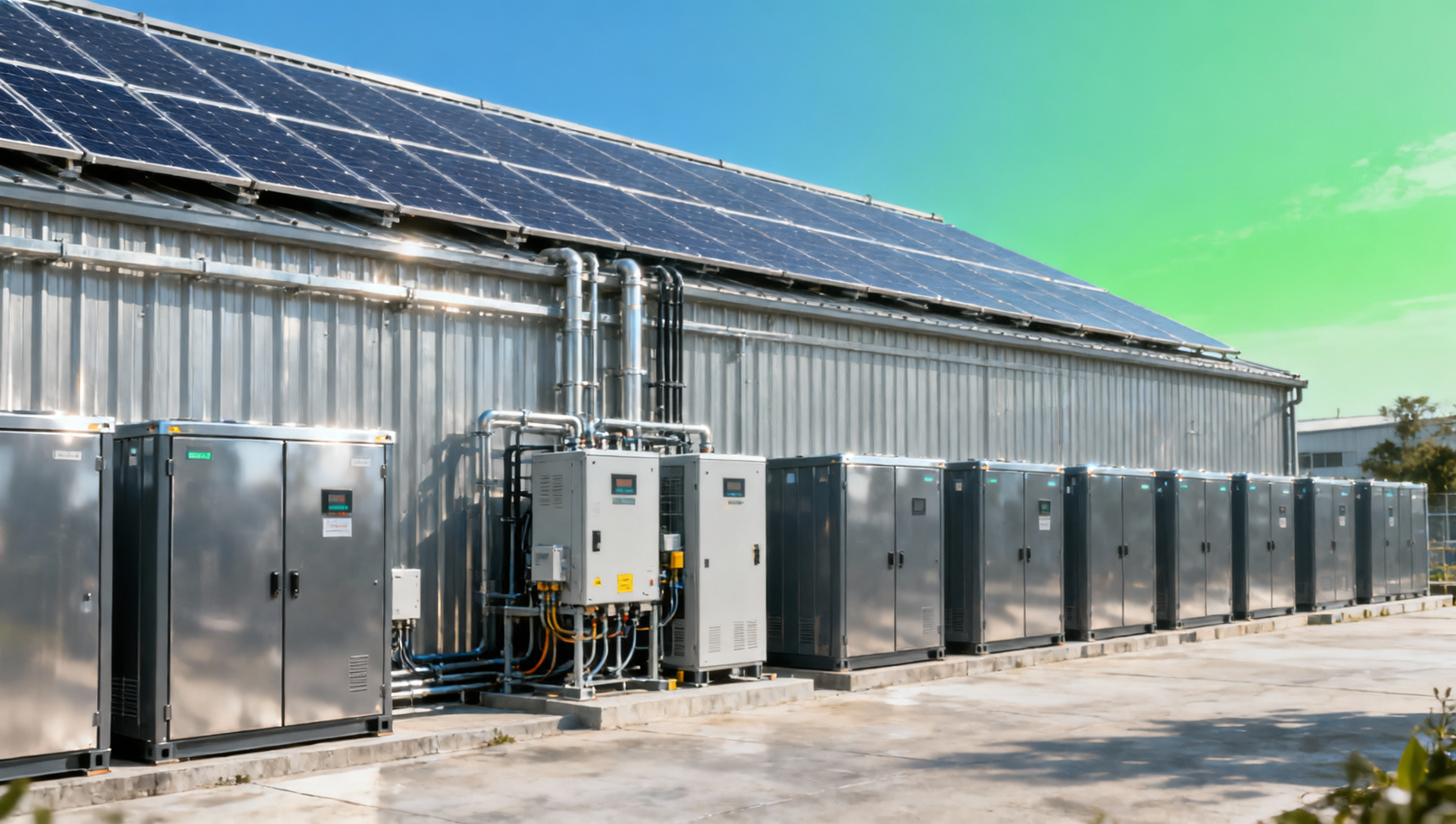
What often gets overlooked in off grid solar systems planning
When planning off grid solar systems, teams often focus on panel size and battery capacity while overlooking system integration, lifecycle cost, and site-specific risks. From sodium ion batteries and solid state batteries to solar microinverters, bifacial solar panels, thin film solar cells, and commercial energy storage, each choice affects reliability, ROI, and procurement decisions. This guide highlights the hidden planning factors that matter most.
For researchers, operators, technical evaluators, procurement teams, project managers, safety officers, distributors, and financial approvers, the planning challenge is rarely about choosing the “largest” system. It is about matching generation, storage, control logic, logistics, maintenance workload, and site risk into one workable energy architecture. A 10 kW array with a poorly matched inverter stack can underperform more than an 8 kW system designed around real load profiles.
In B2B settings, off grid solar systems must support uptime targets, procurement discipline, compliance review, and predictable operating cost over 5–15 years. That is especially important in agriculture, remote telecom sites, mining support facilities, healthcare outposts, logistics yards, and temporary industrial camps where every outage can affect service continuity and equipment safety.
Load Profile Accuracy Matters More Than Nameplate Capacity

One of the most overlooked issues in off grid solar systems planning is inaccurate demand estimation. Many teams calculate daily energy use in kWh but ignore peak starting loads, night demand concentration, and seasonal load shifts. A site that consumes 40 kWh per day may still fail if 60% of that use occurs after sunset or if motor starting current reaches 3–5 times rated load.
For technical assessment, the first step is not panel selection but a 7–30 day load audit. Critical loads should be separated from flexible loads. Refrigeration, water pumping, communications, security systems, and control equipment usually require priority power logic, while laundry, nonessential HVAC, and workshop tools may be shifted to daytime use.
Operators often underestimate parasitic consumption from routers, monitoring gateways, lighting controls, or standby power supplies. In smaller remote sites, these background loads can represent 8%–15% of daily consumption. Over a 24-hour cycle, that hidden demand changes battery autonomy calculations and may require a larger inverter or a different control strategy.
Key load categories to map before design freeze
- Base load: devices running 24/7, such as network equipment, sensors, and essential lighting.
- Cyclic load: pumps, compressors, refrigeration units, or process devices with repeated duty cycles.
- Surge load: motors and power tools that may draw 2x–6x rated current for a few seconds.
- Critical load: systems that cannot tolerate more than 1–5 minutes of interruption.
- Deferred load: tasks that can run only when solar production is high, improving battery life.
The table below shows how load shape, not just total daily consumption, changes equipment decisions. This is a common checkpoint for procurement and finance teams because it affects both capex and long-term battery replacement timing.
The main takeaway is simple: a technically sound off grid solar system starts with demand mapping at 15-minute or hourly intervals, not a rough total on a spreadsheet. That level of detail helps project leaders avoid overbuying modules while still protecting uptime.
Battery Chemistry, Autonomy, and Temperature Risks Are Often Misread
Battery selection is no longer a basic lithium-versus-lead-acid decision. Buyers now compare lithium iron phosphate, sodium ion batteries, emerging solid state batteries, and hybrid commercial energy storage configurations. What often gets overlooked is that chemistry choice should follow duty cycle, temperature range, charging behavior, transport constraints, and replacement planning rather than trend value alone.
For example, sodium ion batteries are attracting interest for supply diversification and safety positioning, but project teams should still verify volumetric energy density, low-temperature charging behavior, local service support, and rack footprint. Solid state batteries may be promising in the long term, yet for many current off grid deployments, procurement lead time and field-service maturity remain more important than laboratory potential.
Autonomy planning is another weak point. Many systems are sized for 1 day of storage when the site needs 2–3 days during cloudy periods, poor logistics conditions, or generator-free operation. In remote medical, telecom, or industrial control sites, the right autonomy target is usually set by risk tolerance, criticality, and replenishment options, not by minimizing upfront battery cost.
Battery planning questions procurement teams should ask
Cycle life versus usable capacity
A battery quoted at 10 kWh nominal is not necessarily 10 kWh usable. Depth of discharge, temperature derating, reserve margin, and inverter conversion losses may reduce practical usable energy by 10%–25%. That changes true delivered energy cost over the project life.
Ambient conditions and enclosure design
A battery room operating above 35°C for extended periods can accelerate aging. Dust, humidity, and poor ventilation increase failure risk for contactors, busbars, and BMS electronics. Enclosures, thermal management, and ingress protection are planning items, not afterthoughts.
Replacement strategy
A system designed for 8–12 years should have a documented battery replacement path. Teams should confirm whether future pack expansion is allowed, whether mixed-age strings are acceptable, and how firmware compatibility will be managed.
The comparison below helps technical evaluators and finance approvers connect battery chemistry to operational priorities instead of marketing claims.
For most enterprise buyers, the better question is not “Which battery is newest?” but “Which storage platform keeps critical loads stable for the next 3,000–8,000 cycles under actual site conditions?” That framing supports better procurement and safer project execution.
Solar Module and Inverter Choices Must Match Site Physics, Not Brochures
Panel selection is frequently reduced to wattage and price per watt, yet site geometry and operating environment can be more decisive. Bifacial solar panels may improve yield where there is strong ground reflectivity and clean spacing, but the gain is limited if installation height, rear-side clearance, or surface albedo is poor. Thin film solar cells can offer advantages in specific heat or shading conditions, but they require a realistic balance-of-system review.
The inverter architecture is equally important. Solar microinverters can improve module-level visibility and mitigate mismatch losses in complex roof layouts, but they also change maintenance access, spare part strategy, and communication topology. For larger off grid sites, a centralized or hybrid inverter approach may simplify service and battery integration.
Technical evaluation should include voltage windows, string behavior at low temperatures, harmonic sensitivity of connected loads, and the site’s future expansion plan. A system that starts at 20 kW and grows to 35 kW over 24 months should not be locked into an inverter scheme that makes expansion costly or electrically awkward.
A practical module and inverter review workflow
- Assess shading, dust, wind loading, and available mounting area.
- Check whether energy production is daytime aligned or battery-heavy.
- Review module technology against heat, glare, and cleaning frequency.
- Confirm inverter compatibility with battery management and remote monitoring.
- Model at least one future capacity expansion scenario before final procurement.
The table below summarizes common technology choices and the less visible planning criteria behind them.
The most important conclusion is that off grid solar systems are not modular by default just because product catalogs are. Physical layout, serviceability, and control compatibility should be reviewed before any component is approved for purchase.
Integration, Monitoring, and Safety Planning Decide Long-Term Reliability
A well-sized array and battery bank can still fail commercially if system integration is weak. In off grid projects, faults often come from communication mismatch, poor grounding, inadequate surge protection, inconsistent firmware management, and incomplete commissioning documentation. These issues do not always appear during day-one testing, but they create recurring service calls within the first 6–18 months.
Remote monitoring should not be treated as optional. For fleets of distributed systems, 24/7 visibility into state of charge, charging source, inverter alarms, enclosure temperature, and daily yield is essential for operational continuity. Even a basic dashboard with alarm thresholds can cut troubleshooting time from days to hours, especially when sites are more than 100 km from the nearest service base.
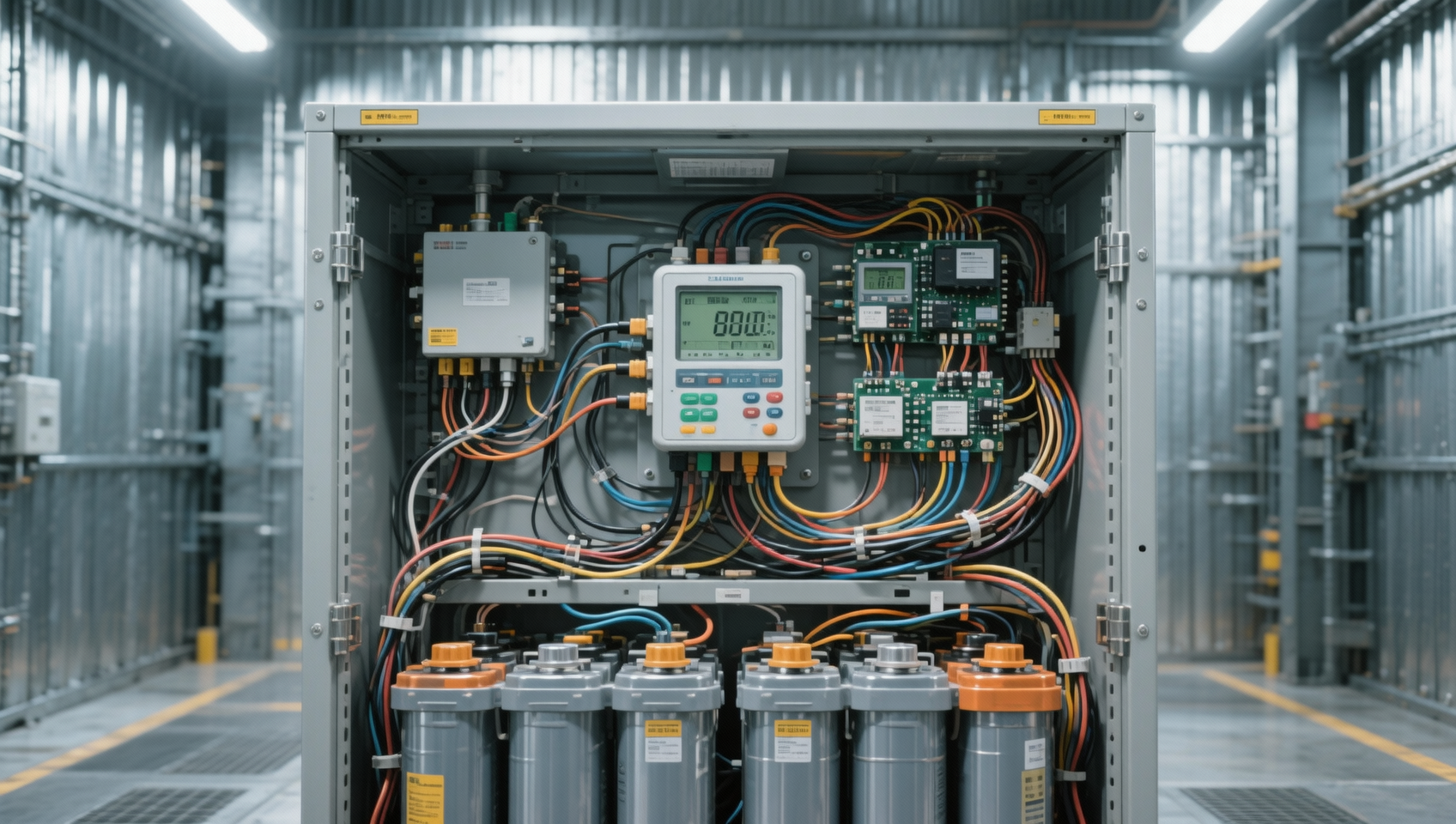
Safety managers should also review DC isolation, cable routing, enclosure ingress protection, battery ventilation, fire response procedures, and lockout-tagout practices. For remote facilities, spare fuses and breakers may not be available locally, so bill-of-material decisions directly affect repair time and downtime exposure.
Minimum integration checklist before handover
- Battery, inverter, and monitoring gateway communication protocols verified under live operation.
- Surge protection and earthing reviewed for both AC and DC sides.
- Alarm thresholds configured for low SOC, high temperature, and communication loss.
- Single-line diagrams, as-built drawings, and spare parts list delivered to site owner.
- Operator training completed in at least 2 layers: routine use and fault response.
Why commissioning documents are strategic, not administrative
Project teams frequently overlook document control. Without clear baseline settings, later troubleshooting becomes slower and more expensive. A commissioning pack should record firmware versions, test results, protection settings, sensor calibration points, and acceptance criteria. That information supports warranty claims, maintenance planning, and any future system upgrade.
Safety and quality need the same visibility as performance
Quality control teams should inspect torque records, cable labeling, terminal temperature under load, and enclosure sealing. A visually clean installation can still hide poor crimping or insufficient strain relief. In high-dust or coastal environments, those details can determine whether the site runs reliably for 10 years or starts failing in year 2.
Lifecycle Cost, Procurement Timing, and Service Support Shape Real ROI
Capital cost is only one layer of value in off grid solar systems planning. The more meaningful metric is lifecycle cost across equipment replacement, maintenance travel, downtime losses, and inventory strategy. A lower bid may become the higher-cost option if battery replacement arrives in year 4 instead of year 8, or if service response takes 10 days because parts are not locally stocked.
Procurement teams should compare at least 4 dimensions: initial capex, expected operating life, serviceability, and supply chain resilience. This matters more in volatile markets where component lead times can move from 2–4 weeks to 12–20 weeks. For project managers, those delays can affect commissioning windows, contractor mobilization, and seasonal energy availability.
Finance approvers also benefit from a scenario-based review. Instead of asking only whether the project meets a budget cap, they should compare three cases: lowest upfront cost, balanced lifecycle cost, and high-resilience design. The balanced option often delivers the strongest business case because it reduces emergency generator use, labor-intensive maintenance, and avoidable outages.
Procurement decision points that are often underestimated
Commercial energy storage projects, even at modest scale, require clearer vendor due diligence than many buyers expect. Teams should confirm spare parts availability, after-sales response times, compatibility roadmaps, packaging for remote transport, and whether commissioning support is remote, on-site, or hybrid. These details directly affect risk-adjusted ROI.
Distributors and agents should also pay attention to product standardization across their portfolio. A platform strategy with repeatable battery racks, inverter families, and monitoring tools can simplify training and reduce inventory complexity by 20%–30% across multiple customer projects.
A simple ROI screening model
- Estimate annual diesel offset or avoided grid-extension cost.
- Add expected battery and inverter replacement intervals.
- Include maintenance trips, cleaning frequency, and remote monitoring subscription costs.
- Assign a downtime value for critical operations such as cold chain, connectivity, or process control.
- Compare 5-year and 10-year cost scenarios before award.
Organizations that want better project outcomes should evaluate off grid solar systems as long-term operating infrastructure, not one-time electrical purchases. For teams tracking green energy investments across multiple sectors, that approach aligns technical performance with procurement discipline and enterprise risk control.
Common Questions From Buyers, Engineers, and Site Operators
How much storage autonomy is usually appropriate?
For low-risk daytime operations, 1 day of autonomy may be acceptable. For remote critical loads, 2–3 days is a more common planning range. If logistics are uncertain, weather is unstable, or the site cannot tolerate downtime, hybrid backup planning should also be considered.
Are solar microinverters suitable for all off grid solar systems?
Not always. They are useful in complex layouts with varied orientations and partial shading, but larger or more service-sensitive off grid installations may benefit from centralized or hybrid inverter architectures. The right answer depends on maintenance access, battery integration, and expansion plans.
When do bifacial solar panels make sense?
They make the most sense when the site supports rear-side irradiance capture through proper height, spacing, and reflective ground conditions. Without those factors, the added cost may not deliver meaningful yield improvement.
What is the biggest planning mistake in commercial energy storage for off grid use?
The most common mistake is separating storage sizing from load behavior and service planning. Battery capacity alone does not ensure uptime. Temperature control, inverter compatibility, monitoring depth, and replacement logistics are just as important.
What often gets overlooked in off grid solar systems planning is rarely a single component. The real gaps are in load profiling, battery duty matching, site-specific module selection, integration discipline, and lifecycle procurement logic. Teams that address those five areas early are more likely to achieve stable performance, lower unplanned maintenance, and stronger long-term ROI.
For organizations evaluating green energy investments across advanced manufacturing, supply chain infrastructure, healthcare technology sites, and remote operating environments, disciplined planning creates measurable value long after installation. If you need a clearer framework for supplier comparison, system architecture review, or market-driven technology evaluation, now is the right time to move from assumptions to data-backed decisions.
Connect with TradeNexus Pro to explore deeper procurement intelligence, compare evolving storage and solar technologies, and get a more informed path toward reliable off grid solar systems. Contact us to discuss your application, request a tailored evaluation framework, or learn more about strategic sourcing and solution planning.
Get weekly intelligence in your inbox.
No noise. No sponsored content. Pure intelligence.
 Apr 18, 2026TradeNexus Pro Launches Global Compliance RadarTradeNexus Pro Launches Global Compliance Radar
 Apr 18, 2026JIS T 2304:2026 Takes Effect June 1, 2026 for IVD SoftwareJIS T 2304:2026 Takes Effect June 1, 2026 for IVD Software
 Pathway for Rehab Devices with AI Modules") Apr 18, 2026FDA Updates 510(k) Pathway for Rehab Devices with AI ModulesFDA Updates 510(k) Pathway for Rehab Devices with AI Modules
Apr 18, 2026FDA Updates 510(k) Pathway for Rehab Devices with AI ModulesFDA Updates 510(k) Pathway for Rehab Devices with AI Modules Apr 18, 2026India BIS Approves 3 Chinese IoT Labs for IS 16444:2026 CertificationIndia BIS Approves 3 Chinese IoT Labs for IS 16444:2026 Certification
 Apr 18, 2026THE Alliance Launches Green Slot Priority for China PortsTHE Alliance Launches Green Slot Priority for China Ports
 Apr 18, 2026TÜV Rheinland Releases Dual-Standard ESS Certification Guide for ChinaTÜV Rheinland Releases Dual-Standard ESS Certification Guide for China
 Apr 18, 2026Vietnam Imposes AD Duties on Chinese Electronic ComponentsVietnam Imposes AD Duties on Chinese Electronic Components
 Apr 18, 2026SASO Launches PV Carbon Footprint Labeling from July 2026SASO Launches PV Carbon Footprint Labeling from July 2026
 Apr 18, 2026U.S. Adds 17 Smart Warehouse Robot Components to Export Control ListU.S. Adds 17 Smart Warehouse Robot Components to Export Control List
 Apr 18, 2026EU Enforces EN IEC 62443-4-2:2026 for Industrial Control Devices from 18 Apr 2026EU Enforces EN IEC 62443-4-2:2026 for Industrial Control Devices from 18 Apr 2026
 Apr 17, 2026Temperature data loggers drift unpredictably inside lithium-ion battery storage enclosuresTemperature data loggers drift unpredictably inside lithium-ion battery storage enclosures
 Apr 17, 2026Are solar microinverters really worth the extra cost?Are solar microinverters really worth the extra cost?
 Apr 17, 2026Bifacial solar panels: How much more energy can they generate?Bifacial solar panels: How much more energy can they generate?
 Apr 17, 2026Gear manufacturing: How to optimize production for high precision?Gear manufacturing: How to optimize production for high precision?
 Apr 17, 2026Why power transmission components fail earlier than expectedWhy power transmission components fail earlier than expected
 Apr 17, 2026Linear motion systems: belt drive or ball screw for speed?Linear motion systems: belt drive or ball screw for speed?
 Apr 17, 2026Industrial bearing suppliers: what signals reliable quality?Industrial bearing suppliers: what signals reliable quality?
 Apr 17, 2026When pneumatic valves wholesale gets expensive laterWhen pneumatic valves wholesale gets expensive later
 Apr 17, 2026Hydraulic cylinder fabrication mistakes that cause oil leaksHydraulic cylinder fabrication mistakes that cause oil leaks
 Apr 17, 2026Heavy equipment manufacturing delays often start hereHeavy equipment manufacturing delays often start here
 Apr 17, 2026Custom heatsinks: when a larger size solves nothingCustom heatsinks: when a larger size solves nothing
 Apr 17, 2026Electronic enclosure fabrication: steel or aluminum?Electronic enclosure fabrication: steel or aluminum?
 Apr 17, 2026Automotive parts machining tolerances that drive up scrapAutomotive parts machining tolerances that drive up scrap
 Apr 17, 2026Medical device manufacturing changes under tighter traceabilityMedical device manufacturing changes under tighter traceability
 Apr 17, 2026How to Choose Solid State Batteries in 2026How to Choose Solid State Batteries in 2026
 Apr 17, 2026Are Solid State Batteries Worth the Cost Yet?Are Solid State Batteries Worth the Cost Yet?
 Apr 17, 2026Commercial Energy Storage Sizing: What Matters Most?Commercial Energy Storage Sizing: What Matters Most?