When bifacial solar panels deliver less than expected
Bifacial solar panels can promise higher yields, yet real-world performance often falls short when site design, albedo, shading, mounting height, and system integration are misjudged. For buyers, engineers, and project managers evaluating bifacial solar panels alongside solar microinverters, off grid solar systems, and commercial energy storage, understanding these performance gaps is essential to making reliable, cost-effective energy decisions.
In B2B energy projects, underperformance rarely comes from one dramatic failure. More often, it comes from a chain of small planning errors: a roof with poor rear-side reflectivity, rows placed too close together, cable routing that increases mismatch, or an inverter strategy that fails to capture variable rear-side gain. A project modeled for a 10% to 20% bifacial boost can end up delivering only 3% to 8% in actual operation.
That gap matters to procurement teams, technical evaluators, finance approvers, and EPC managers because return on investment, payback period, and storage sizing all depend on realistic yield assumptions. When bifacial solar panels are specified without a full-system perspective, expected gains may not justify the higher module, structure, or installation cost.
This article explains why bifacial solar panels sometimes deliver less than expected, how to evaluate the true performance drivers, and what practical steps help buyers and project leaders avoid specification mistakes across commercial, industrial, and hybrid energy systems.
Why bifacial solar panels underperform in real projects
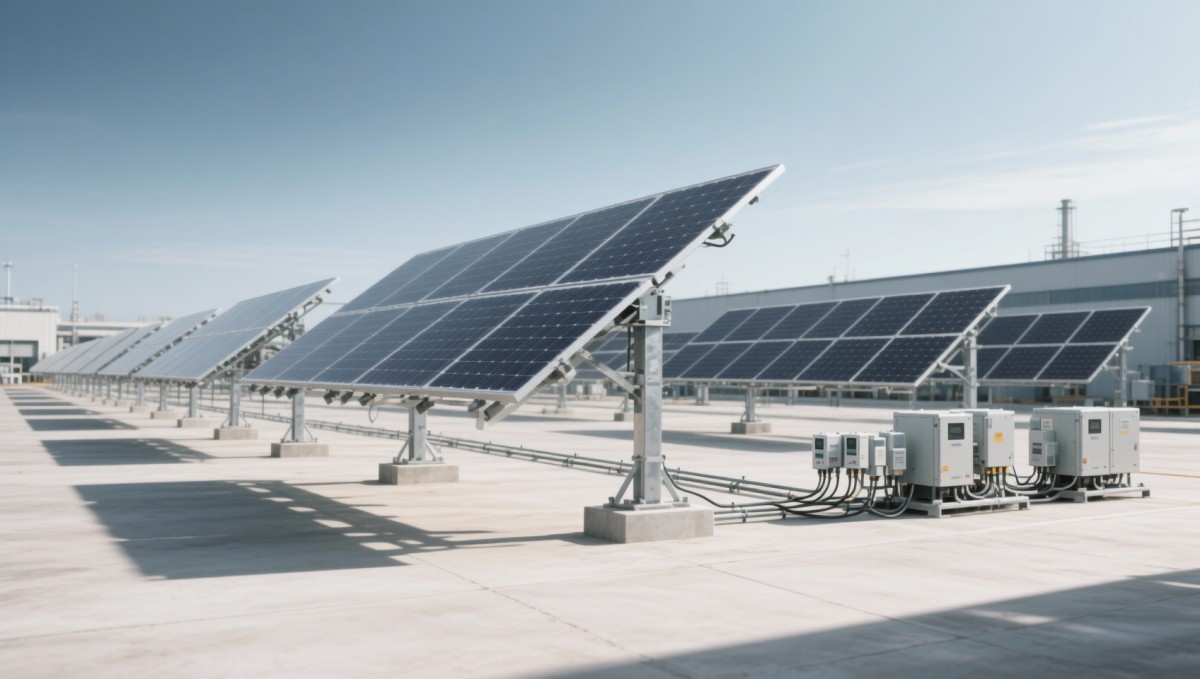
The central promise of bifacial solar panels is simple: they generate power from both the front and rear sides. In controlled conditions, rear-side contribution can be meaningful. In the field, however, actual gain depends on at least 5 variables working together: ground reflectivity, array height, row spacing, shading profile, and electrical design. If even 2 of these are poorly matched, the projected advantage declines quickly.
One common issue is overstated albedo assumptions. A simulation may assume a reflectivity of 0.5 to 0.7 for bright surfaces, but many industrial sites operate closer to 0.15 to 0.3 due to dark roofing, dust, gravel aging, or seasonal moisture. That difference can cut rear-side energy input significantly, especially in low-clearance rooftop systems.
Mounting geometry is another major factor. Bifacial solar panels generally benefit from greater clearance and better airflow, but some projects keep module height too low in order to reduce steel cost or simplify wind-load compliance. When ground clearance drops below roughly 0.8 m in many open-field layouts, rear irradiance becomes harder to capture consistently, particularly if vegetation or cable trays create irregular shadowing.
Row-to-row design also affects performance. If designers compress spacing to maximize DC capacity per hectare, the rear side may spend more hours in partial shading, especially in winter sun angles. In some layouts, a 5% increase in land-use density can reduce bifacial gain enough to erase the expected revenue benefit over a 12- to 15-year financial model.
Electrical architecture matters as much as mechanical layout. Bifacial solar panels can produce uneven gains across strings because rear-side irradiance is not uniform. In arrays with complex shading or mixed orientation, using the wrong inverter topology may increase mismatch losses. This is where solar microinverters or module-level power electronics can improve capture in selected projects, while in uniform utility-style arrays a string-based design may still be more economical.
The most frequent sources of forecast error
- Using laboratory bifaciality assumptions instead of site-specific rear-side energy modeling.
- Ignoring seasonal albedo shifts caused by rain, dust, snow absence, or surface degradation.
- Applying rooftop design rules to ground-mounted or carport installations without adjustment.
- Oversizing strings based on front-side nameplate expectations without checking clipping risk during high-reflection periods.
- Treating bifacial gain as a fixed percentage rather than a dynamic operating range.
Typical expectation versus field reality
The table below summarizes how projected and actual outcomes can diverge when site factors are not validated early. These are common planning ranges rather than universal outcomes, but they help explain why some business cases disappoint after commissioning.
The key conclusion is that bifacial solar panels should not be purchased as a simple module upgrade. They need to be evaluated as part of a site-specific energy system. A procurement decision based only on nameplate power and a generic gain assumption can distort project economics from day one.
How site conditions change bifacial energy yield
Site conditions determine whether bifacial solar panels are a strong asset or an overpriced specification. Ground-mounted systems on bright surfaces, elevated canopies, and certain carport applications often perform better than dense commercial rooftops. In practice, the same module can produce materially different outcomes across two sites located in the same solar resource zone.
Albedo is often discussed, but not always measured with enough discipline. White membranes, pale concrete, and reflective gravel can support stronger rear-side contribution than dark bitumen roofs or compacted soil. Yet reflectivity also changes over time. Dust deposition, oil residue, ponding water, and plant growth can lower effective reflectance within 6 to 18 months, reducing the long-term gain used in initial modeling.
Shading deserves equal attention. Front-side shading is easier to visualize, but rear-side shading can be subtle and persistent. Support rails, junction boxes, cable management components, nearby walls, and even inverter station placement can create nonuniform rear exposure. Because bifacial solar panels rely on diffuse and reflected light from multiple angles, these obstructions can create complex yield losses not captured in simplified layouts.
Mounting height is another variable with direct financial impact. Raising modules from 0.5 m to 1.2 m can improve rear-side access in some ground systems, but this may increase steel usage, wind engineering requirements, and installation labor. For project managers, the right question is not whether a higher structure improves performance, but whether the additional kWh over 20 to 25 years exceeds the added balance-of-system cost.
Climate and maintenance frequency also influence yield. Snow can increase reflectivity in some regions, but only seasonally. Dusty logistics parks, mining-adjacent facilities, and high-traffic industrial zones may need cleaning every 4 to 8 weeks during dry periods. If cleaning plans are not budgeted, the projected gain from bifacial solar panels may gradually narrow versus conventional monofacial modules.
Site suitability indicators for technical teams
Before approving a bifacial design, technical assessment teams should evaluate measurable conditions rather than relying on generic sales assumptions. The following table provides a practical screening framework for early-stage project filtering.
This type of screening helps procurement and finance teams avoid a common mistake: selecting bifacial solar panels for prestige or trend alignment rather than for measurable site advantage. A disciplined pre-feasibility review can save months of redesign and improve the credibility of business-case approvals.
A practical site review checklist
- Measure or estimate actual surface reflectivity under operating conditions, not just at handover.
- Model seasonal sun angles and rear-side obstructions over at least 12 months.
- Check whether the support structure can maintain the intended clearance after civil and drainage constraints.
- Review cleaning access, maintenance frequency, and vegetation management costs.
- Stress-test project economics using low, medium, and high bifacial gain scenarios.
System integration: microinverters, off grid solar systems, and storage
Bifacial solar panels should be assessed as part of the wider system, not as an isolated module choice. Their energy profile affects inverter loading, clipping behavior, battery charging windows, and control strategy. A project that looks strong at the module level may still disappoint if the downstream architecture cannot absorb variable rear-side production efficiently.
In commercial arrays with irregular shading, solar microinverters can help recover energy where bifacial solar panels experience nonuniform rear irradiance. Module-level conversion reduces string mismatch and improves visibility for operations teams. However, the added electronics, maintenance planning, and unit-level replacement strategy must be justified. For a clean, uniformly exposed ground array, string inverters may still provide lower total installed cost per watt.
In off grid solar systems, bifacial modules can improve daytime harvest if site conditions are favorable, but the benefit only matters if battery capacity, charge controllers, and load profile are sized accordingly. If the battery reaches full charge by midday in a 48 V or high-voltage storage setup, additional bifacial energy may be clipped or wasted unless discretionary loads are shifted into that window.
Commercial energy storage changes the equation further. Bifacial solar panels can lengthen useful charging periods by capturing morning and late-afternoon reflected light under the right geometry. Yet if storage dispatch is designed around unrealistic yield assumptions, the battery may cycle less often than planned, weakening the projected savings from peak shaving, backup readiness, or demand-charge control.
For enterprise decision-makers, the right question is not whether bifacial technology is better in theory, but whether the complete PV-plus-storage architecture converts additional rear-side irradiance into bill savings, resilience value, or export revenue. That requires alignment between module behavior, inverter strategy, and load management.
Integration options and where they fit best
The table below compares typical integration approaches used with bifacial solar panels in B2B settings. Final selection should be based on site shading, O&M capability, and lifecycle cost rather than product trend alone.
The practical takeaway is that bifacial solar panels create the most value when the rest of the system is designed to use their variability rather than ignore it. Projects that model module gains but skip inverter and storage coordination often miss the very savings they used to justify procurement.
Questions to ask before approving integration design
- Will rear-side variability create string mismatch that module-level electronics could reduce?
- Does the battery have enough usable capacity to capture midday surplus during high-reflection periods?
- Are clipping losses modeled for both front-side and bifacial-enhanced production windows?
- Can the monitoring platform isolate module, string, and storage performance by time of day?
Procurement, commissioning, and performance-risk control
For procurement teams, the biggest risk with bifacial solar panels is paying for potential that the site cannot unlock. A disciplined tender process should define expected gain ranges, site assumptions, installation constraints, and measurement criteria before purchase orders are issued. If rear-side performance is left vague, commercial comparisons become inconsistent and supplier bids become difficult to evaluate fairly.
Procurement specifications should require clarity on bifaciality, recommended mounting conditions, mechanical compatibility, cable routing, and monitoring granularity. They should also distinguish between module premium and total project premium. A module that is 4% to 8% more expensive may trigger a larger system-wide cost increase once structure height, labor, and cleaning access are included.
Commissioning is equally important. If acceptance testing only checks front-side electrical output, early warning signs of underperformance can be missed. B2B owners should define 3 layers of verification: physical installation review, electrical configuration validation, and post-energization performance tracking across at least 30 to 90 days. This is especially relevant where bifacial solar panels are paired with solar microinverters or storage controls.
Operations teams should also prepare a maintenance plan that reflects the actual environment. Cleaning frequency, vegetation control, rear-side inspection access, and data review cadence all affect long-term yield. In high-dust zones, moving from quarterly cleaning to monthly cleaning may recover enough energy to justify the extra O&M spend, but that decision should be made with a documented threshold.
For finance approvers and project sponsors, the safest path is scenario-based analysis. Instead of using one optimistic bifacial uplift number, compare low, base, and high production cases. This makes capex approval more resilient and reduces disputes later between procurement, EPC partners, and operations teams.
Key procurement checkpoints
- Request site-specific gain assumptions rather than brochure-level bifacial uplift claims.
- Compare at least 3 cost layers: module price, balance-of-system cost, and 20-year O&M implications.
- Define commissioning criteria that include layout, shading, monitoring, and early performance review.
- Confirm whether storage and inverter settings are based on realistic rather than best-case generation profiles.
FAQ for buyers, engineers, and project managers
How much extra energy should bifacial solar panels really add?
In many commercial and industrial projects, a realistic planning range is often around 3% to 12%, though some highly favorable sites can perform above that. If a proposal assumes 15% to 20% gain, teams should verify albedo, mounting height, row spacing, and shading inputs carefully before accepting the forecast.
Are bifacial solar panels always better for rooftops?
No. Dense rooftops with dark surfaces, low clearance, parapet shading, and constrained maintenance access may deliver limited rear-side benefit. In such cases, high-efficiency monofacial modules or a different inverter strategy may offer better value per installed watt.
When do solar microinverters make more sense with bifacial modules?
They are often more attractive where module-level conditions vary significantly, such as mixed roof planes, partial obstructions, or distributed commercial assets. If exposure is highly uniform, the added component count may not deliver enough incremental value to offset higher system complexity.
What should off grid solar systems consider before using bifacial panels?
Battery size, controller limits, and daytime load absorption matter most. If storage is undersized or loads are inflexible, the additional energy produced by bifacial solar panels may not translate into better autonomy or fuel savings.
What is the safest way to evaluate a supplier proposal?
Ask for site assumptions, gain sensitivity ranges, layout drawings, cleaning strategy, and integration logic with inverters and storage. A strong proposal should explain where the extra energy comes from, what conditions are required, and how performance will be verified after commissioning.
Bifacial solar panels can be a strong commercial choice, but only when the site, structure, inverter architecture, and storage logic are aligned with how rear-side generation actually behaves. For buyers and technical teams, the most reliable projects are those built on measured assumptions, realistic gain ranges, and clear commissioning criteria rather than optimistic generic uplift figures.
If you are evaluating bifacial solar panels, solar microinverters, off grid solar systems, or commercial energy storage for a new procurement cycle or project upgrade, TradeNexus Pro can help you compare options through a practical B2B lens. Contact us to discuss your application, request a tailored sourcing and evaluation framework, or explore more high-value energy solutions for your market.
Get weekly intelligence in your inbox.
No noise. No sponsored content. Pure intelligence.
 Apr 18, 2026TradeNexus Pro Launches Global Compliance RadarTradeNexus Pro Launches Global Compliance Radar
 Apr 18, 2026JIS T 2304:2026 Takes Effect June 1, 2026 for IVD SoftwareJIS T 2304:2026 Takes Effect June 1, 2026 for IVD Software
 Pathway for Rehab Devices with AI Modules") Apr 18, 2026FDA Updates 510(k) Pathway for Rehab Devices with AI ModulesFDA Updates 510(k) Pathway for Rehab Devices with AI Modules
Apr 18, 2026FDA Updates 510(k) Pathway for Rehab Devices with AI ModulesFDA Updates 510(k) Pathway for Rehab Devices with AI Modules Apr 18, 2026India BIS Approves 3 Chinese IoT Labs for IS 16444:2026 CertificationIndia BIS Approves 3 Chinese IoT Labs for IS 16444:2026 Certification
 Apr 18, 2026THE Alliance Launches Green Slot Priority for China PortsTHE Alliance Launches Green Slot Priority for China Ports
 Apr 18, 2026TÜV Rheinland Releases Dual-Standard ESS Certification Guide for ChinaTÜV Rheinland Releases Dual-Standard ESS Certification Guide for China
 Apr 18, 2026Vietnam Imposes AD Duties on Chinese Electronic ComponentsVietnam Imposes AD Duties on Chinese Electronic Components
 Apr 18, 2026SASO Launches PV Carbon Footprint Labeling from July 2026SASO Launches PV Carbon Footprint Labeling from July 2026
 Apr 18, 2026U.S. Adds 17 Smart Warehouse Robot Components to Export Control ListU.S. Adds 17 Smart Warehouse Robot Components to Export Control List
 Apr 18, 2026EU Enforces EN IEC 62443-4-2:2026 for Industrial Control Devices from 18 Apr 2026EU Enforces EN IEC 62443-4-2:2026 for Industrial Control Devices from 18 Apr 2026
 Apr 17, 2026Temperature data loggers drift unpredictably inside lithium-ion battery storage enclosuresTemperature data loggers drift unpredictably inside lithium-ion battery storage enclosures
 Apr 17, 2026Are solar microinverters really worth the extra cost?Are solar microinverters really worth the extra cost?
 Apr 17, 2026Bifacial solar panels: How much more energy can they generate?Bifacial solar panels: How much more energy can they generate?
 Apr 17, 2026Gear manufacturing: How to optimize production for high precision?Gear manufacturing: How to optimize production for high precision?
 Apr 17, 2026Why power transmission components fail earlier than expectedWhy power transmission components fail earlier than expected
 Apr 17, 2026Linear motion systems: belt drive or ball screw for speed?Linear motion systems: belt drive or ball screw for speed?
 Apr 17, 2026Industrial bearing suppliers: what signals reliable quality?Industrial bearing suppliers: what signals reliable quality?
 Apr 17, 2026When pneumatic valves wholesale gets expensive laterWhen pneumatic valves wholesale gets expensive later
 Apr 17, 2026Hydraulic cylinder fabrication mistakes that cause oil leaksHydraulic cylinder fabrication mistakes that cause oil leaks
 Apr 17, 2026Heavy equipment manufacturing delays often start hereHeavy equipment manufacturing delays often start here
 Apr 17, 2026Custom heatsinks: when a larger size solves nothingCustom heatsinks: when a larger size solves nothing
 Apr 17, 2026Electronic enclosure fabrication: steel or aluminum?Electronic enclosure fabrication: steel or aluminum?
 Apr 17, 2026Automotive parts machining tolerances that drive up scrapAutomotive parts machining tolerances that drive up scrap
 Apr 17, 2026Medical device manufacturing changes under tighter traceabilityMedical device manufacturing changes under tighter traceability
 Apr 17, 2026How to Choose Solid State Batteries in 2026How to Choose Solid State Batteries in 2026
 Apr 17, 2026Are Solid State Batteries Worth the Cost Yet?Are Solid State Batteries Worth the Cost Yet?
 Apr 17, 2026Commercial Energy Storage Sizing: What Matters Most?Commercial Energy Storage Sizing: What Matters Most?