Why thin film solar cells fit some roofs better than silicon
When roof load limits, shading patterns, or design flexibility rule the decision, thin film solar cells can outperform conventional silicon in ways many buyers overlook. For project managers, procurement teams, and technical evaluators comparing off grid solar systems, solar microinverters, and bifacial solar panels, understanding where thin film technology fits best helps reduce installation risk, improve energy planning, and align system choice with long-term commercial goals.
In commercial and industrial solar planning, the best module is not always the one with the highest nameplate efficiency. Roof geometry, membrane condition, dead load limits, partial shading, glare constraints, and installation speed can matter just as much as watts per square meter. Thin film solar cells enter that discussion when conventional crystalline silicon creates structural or design compromises that raise lifecycle risk.
For B2B buyers, the decision is rarely technical in isolation. Procurement teams need predictable supply, engineering teams need feasible layouts, finance approvers need defensible payback assumptions, and operations managers need manageable maintenance plans over 10–25 years. This article explains where thin film technology fits, where it does not, and how to evaluate it against silicon for practical roof applications.
Why roof conditions can change the solar technology decision
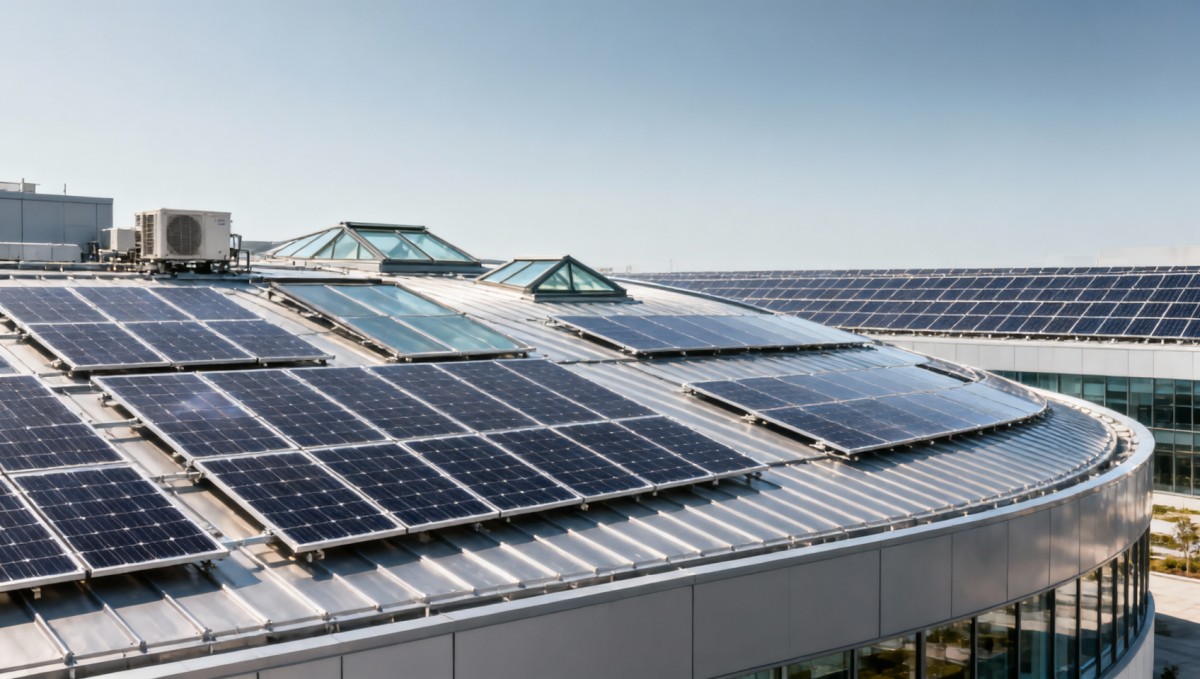
Many rooftop projects begin with a simple target such as 100kW, 500kW, or 2MW, but roof conditions quickly narrow the options. A building with a load allowance of only 10–15 kg/m² may not comfortably accept a standard framed silicon system once racking, ballast, and walkway requirements are included. In those cases, lightweight thin film assemblies can reduce structural stress and simplify engineering approval.
Shading is another decision driver. On roofs interrupted by HVAC units, parapets, vents, skylights, or telecom equipment, thin film solar cells can maintain more stable output under diffuse light or irregular exposure, depending on product architecture and system design. While silicon still dominates total market volume, thin film can be operationally useful where energy yield consistency matters more than peak module efficiency.
Temperature also affects performance. Conventional silicon modules generally lose output as module temperature rises, often in the range of around -0.30% to -0.45% per °C above standard test conditions. Thin film technologies often show a lower temperature coefficient, which can help on dark flat roofs in hot regions where summer surface temperatures exceed 60°C.
Common rooftop constraints that favor thin film
- Low structural reserve on aging warehouses, logistics centers, or retrofitted factories.
- Curved, uneven, or membrane roofs where flexible integration reduces mounting complexity.
- Partial shading through the day, especially on dense urban commercial buildings.
- Projects with glare sensitivity near airports, highways, hospitals, or neighboring offices.
- Sites where installation downtime must be minimized to 3–7 days per roof section.
For project leaders, this means technology selection should begin with roof reality, not module marketing. A lower-efficiency module can still deliver a stronger business case if it avoids reinforcement costs, shortens installation schedules, or reduces waterproofing disruption.
Thin film vs silicon: where the trade-offs are most visible
The clearest comparison is not “better” versus “worse,” but “better fit” versus “forced fit.” Silicon modules typically offer higher efficiency, often around 19%–23% for modern commercial products, which helps when roof area is limited. Thin film modules or laminates may operate at lower efficiency ranges, but they can compensate in specific conditions through lighter weight, lower thermal losses, or easier surface adaptation.
Procurement teams should also look beyond module cost per watt. Installed cost per usable kilowatt can shift when a roof needs structural reinforcement, extra ballast, complex tilt framing, or labor-intensive penetrations. In some retrofit cases, avoiding those steps can save 8%–20% on balance-of-system and site work, even if the module itself is not the cheapest line item.
The table below compares typical rooftop decision factors. Exact figures vary by product design, climate, and mounting method, but the ranges help non-specialist stakeholders frame the trade-offs before detailed engineering review.
The key takeaway is that silicon usually wins when area is scarce and the roof is structurally robust. Thin film becomes compelling when engineering constraints, heat, or installation profile make standard framed arrays less practical. That is why experienced buyers compare total project fit, not just front-end efficiency.
How microinverters and system architecture affect the comparison
On partially shaded rooftops, module-level power electronics such as solar microinverters can improve output visibility and limit mismatch losses in silicon systems. However, they also add component count and maintenance considerations. In thin film deployments, design strategies may rely more on string layout, low-profile installation, and roof coverage uniformity than on module-level electronics.
A practical screening rule
If a roof has less than 65% usable solar area after obstructions, silicon with optimized electronics may remain the stronger path. If structural load, membrane protection, or low-profile coverage is the primary constraint, thin film deserves early-stage evaluation before the project budget is locked.
Best-fit applications for thin film on commercial roofs
Thin film is often a better match for large, low-slope commercial roofs where area is available but structural tolerance is limited. Warehouses, distribution hubs, cold-chain buildings, and light manufacturing facilities are common examples. These sites may have 5,000–50,000 m² of roof space, yet still face restrictions on added load because of existing membrane systems or older structural designs.
It can also work well where visual profile matters. Some municipalities, healthcare campuses, and premium industrial parks prefer installations that minimize tilt angles, edge visibility, and glare concerns. Thin film solutions with low-rise attachment methods can support those requirements while preserving roof drainage and service access routes.
For off grid solar systems, thin film may be selected in niche cases where the roof or shelter structure cannot support heavier framed modules. That said, off-grid buyers must check energy density carefully. If battery charging space is tight and every square meter counts, silicon usually remains more favorable despite higher weight.
Application scenarios and decision logic
The following table helps stakeholders match roof and project conditions to the more suitable technology path. It is especially useful during pre-feasibility reviews, when engineering and sourcing teams need a quick go or no-go framework.
In simple terms, thin film performs best when space is adequate but structural, thermal, or architectural constraints are severe. It is not the universal answer, but it can be the lowest-risk answer for a very specific category of roofs that many sourcing teams initially classify as unsuitable for solar altogether.
Three buyer groups that benefit most
- Facility owners seeking rooftop solar without major structural retrofit costs.
- Engineering contractors handling membrane roofs with strict waterproofing controls.
- Distributors and EPC teams needing differentiated solutions for hard-to-fit projects.
Evaluation checklist for procurement, engineering, and finance teams
A reliable procurement process should compare technologies using at least 6 checkpoints: structural impact, energy density, temperature behavior, shading response, installation method, and serviceability. Without that structure, teams often overvalue module efficiency and underestimate permitting, labor, or roof remediation costs.
For technical evaluators, the first filter is roof suitability. Check dead load capacity, membrane age, wind uplift requirements, and maintenance access widths. On many industrial sites, walkways of 0.6–1.2 meters and spacing around rooftop equipment meaningfully reduce usable area. This changes how attractive high-efficiency silicon versus broad-coverage thin film may be.
Finance teams should model at least 3 scenarios: base case, hot-weather case, and partial-shading case. They should also distinguish module efficiency from system yield. A 21% silicon module on a compromised roof may not outperform a lower-efficiency thin film installation if the former requires suboptimal placement, higher shading losses, or project delays of 4–8 weeks for structural rework.
Recommended cross-functional evaluation sequence
- Complete roof survey and structural screening before requesting final pricing.
- Define usable area after setbacks, walkways, equipment zones, and fire code access.
- Compare at least 2 system architectures, including one low-load option.
- Model annual energy, summer derating, and partial-shade behavior.
- Review installation method against roof warranty and downtime tolerance.
- Align warranty terms, inspection intervals, and replacement strategy.
Quality and safety teams should also confirm whether the installation approach introduces additional roof penetrations, electrical exposure points, or maintenance hazards. In regulated sectors such as healthcare technology facilities or smart electronics plants, roof access plans and shutdown windows can influence system choice as much as energy economics.
Common selection mistakes to avoid
- Choosing by module wattage alone without evaluating total installed mass per m².
- Assuming bifacial solar panels are always superior on flat roofs with low albedo surfaces.
- Ignoring summer heat impact in regions where rooftop temperatures remain elevated for 5–6 months.
- Overlooking roof replacement timing when the membrane has fewer than 7–10 years of expected life left.
Implementation, risk control, and long-term operating value
After technology selection, project success depends on execution discipline. Thin film projects can move quickly when they match the roof, but they still require careful sequencing across engineering, procurement, installation, and commissioning. For many commercial rooftops, a practical delivery window is 2–6 weeks for design and sourcing, followed by phased installation depending on site access and weather.
Risk control starts with documentation. Buyers should request roof compatibility confirmation, wiring layout review, maintenance access plans, and realistic degradation assumptions. They should also confirm inspection intervals, often every 6–12 months, and define who is responsible for cleaning, electrical checks, and waterproofing review after severe weather events.
Because thin film is often chosen for constrained roofs, its value shows up in avoided problems: fewer structural interventions, less intrusive mounting, and lower design friction on complex surfaces. Those avoided costs can be as important as direct kWh output, especially for enterprise portfolios managing multiple facilities across different regions.
Operational focus areas after commissioning
From a portfolio perspective, thin film can open project opportunities that would otherwise stall in engineering review. For distributors, EPC firms, and enterprise energy managers, that means a broader solution set and a higher conversion rate on difficult rooftops. The right choice is not the most familiar technology, but the one that matches structural reality, operational priorities, and financial thresholds.
FAQ for decision-makers
Is thin film better for every flat commercial roof?
No. If the roof is strong, unobstructed, and space-constrained, silicon often provides better energy density. Thin film is most attractive when low load, low profile, heat tolerance, or design flexibility outweigh the need for maximum watts per square meter.
Can thin film replace bifacial solar panels in all projects?
No. Bifacial solar panels can perform well where rear-side irradiance is meaningful, such as elevated systems above reflective surfaces. On dark membrane roofs with low reflectivity and strict load limits, that bifacial advantage may be modest, making thin film more practical.
What should procurement teams request before approving a supplier?
At minimum, request roof compatibility details, expected system weight, installation method, maintenance schedule, output assumptions under local temperature conditions, and a clear explanation of warranty scope. A proper review usually involves 4–6 technical documents before final approval.
Thin film solar cells fit some roofs better than silicon because rooftop projects are constrained by far more than module efficiency. Load limits, thermal conditions, shading patterns, installation profile, and roof geometry can all shift the commercial answer. For technical evaluators and procurement leaders, the smart path is to compare total project fit, not just rated watts.
For organizations navigating green energy sourcing, distributed generation planning, or multi-site rooftop feasibility, a structured comparison can prevent expensive redesigns and reduce deployment risk. If you need support assessing thin film, silicon, off grid solar systems, solar microinverters, or bifacial solar panels for a specific commercial roof, contact TradeNexus Pro to get a tailored evaluation framework and explore more solution-focused market intelligence.
Get weekly intelligence in your inbox.
No noise. No sponsored content. Pure intelligence.
 Apr 18, 2026TradeNexus Pro Launches Global Compliance RadarTradeNexus Pro Launches Global Compliance Radar
 Apr 18, 2026JIS T 2304:2026 Takes Effect June 1, 2026 for IVD SoftwareJIS T 2304:2026 Takes Effect June 1, 2026 for IVD Software
 Pathway for Rehab Devices with AI Modules") Apr 18, 2026FDA Updates 510(k) Pathway for Rehab Devices with AI ModulesFDA Updates 510(k) Pathway for Rehab Devices with AI Modules
Apr 18, 2026FDA Updates 510(k) Pathway for Rehab Devices with AI ModulesFDA Updates 510(k) Pathway for Rehab Devices with AI Modules Apr 18, 2026India BIS Approves 3 Chinese IoT Labs for IS 16444:2026 CertificationIndia BIS Approves 3 Chinese IoT Labs for IS 16444:2026 Certification
 Apr 18, 2026THE Alliance Launches Green Slot Priority for China PortsTHE Alliance Launches Green Slot Priority for China Ports
 Apr 18, 2026TÜV Rheinland Releases Dual-Standard ESS Certification Guide for ChinaTÜV Rheinland Releases Dual-Standard ESS Certification Guide for China
 Apr 18, 2026Vietnam Imposes AD Duties on Chinese Electronic ComponentsVietnam Imposes AD Duties on Chinese Electronic Components
 Apr 18, 2026SASO Launches PV Carbon Footprint Labeling from July 2026SASO Launches PV Carbon Footprint Labeling from July 2026
 Apr 18, 2026U.S. Adds 17 Smart Warehouse Robot Components to Export Control ListU.S. Adds 17 Smart Warehouse Robot Components to Export Control List
 Apr 18, 2026EU Enforces EN IEC 62443-4-2:2026 for Industrial Control Devices from 18 Apr 2026EU Enforces EN IEC 62443-4-2:2026 for Industrial Control Devices from 18 Apr 2026
 Apr 17, 2026Temperature data loggers drift unpredictably inside lithium-ion battery storage enclosuresTemperature data loggers drift unpredictably inside lithium-ion battery storage enclosures
 Apr 17, 2026Are solar microinverters really worth the extra cost?Are solar microinverters really worth the extra cost?
 Apr 17, 2026Bifacial solar panels: How much more energy can they generate?Bifacial solar panels: How much more energy can they generate?
 Apr 17, 2026Gear manufacturing: How to optimize production for high precision?Gear manufacturing: How to optimize production for high precision?
 Apr 17, 2026Why power transmission components fail earlier than expectedWhy power transmission components fail earlier than expected
 Apr 17, 2026Linear motion systems: belt drive or ball screw for speed?Linear motion systems: belt drive or ball screw for speed?
 Apr 17, 2026Industrial bearing suppliers: what signals reliable quality?Industrial bearing suppliers: what signals reliable quality?
 Apr 17, 2026When pneumatic valves wholesale gets expensive laterWhen pneumatic valves wholesale gets expensive later
 Apr 17, 2026Hydraulic cylinder fabrication mistakes that cause oil leaksHydraulic cylinder fabrication mistakes that cause oil leaks
 Apr 17, 2026Heavy equipment manufacturing delays often start hereHeavy equipment manufacturing delays often start here
 Apr 17, 2026Custom heatsinks: when a larger size solves nothingCustom heatsinks: when a larger size solves nothing
 Apr 17, 2026Electronic enclosure fabrication: steel or aluminum?Electronic enclosure fabrication: steel or aluminum?
 Apr 17, 2026Automotive parts machining tolerances that drive up scrapAutomotive parts machining tolerances that drive up scrap
 Apr 17, 2026Medical device manufacturing changes under tighter traceabilityMedical device manufacturing changes under tighter traceability
 Apr 17, 2026How to Choose Solid State Batteries in 2026How to Choose Solid State Batteries in 2026
 Apr 17, 2026Are Solid State Batteries Worth the Cost Yet?Are Solid State Batteries Worth the Cost Yet?
 Apr 17, 2026Commercial Energy Storage Sizing: What Matters Most?Commercial Energy Storage Sizing: What Matters Most?