Wind generator kits look simple, but sizing is where costs rise
Wind generator kits may look straightforward, but real project costs rise quickly when sizing, site conditions, storage, and control components are misjudged. For buyers comparing wind generator kits, hydro turbine generators, mppt controllers, solar charge controllers, bms boards, and iot energy monitors, this guide explains how proper specification supports net zero solutions, reduces procurement risk, and improves long-term system performance.
In B2B procurement, the visible kit price is only the first layer of cost. The larger financial impact often comes from undersized towers, overestimated wind resources, mismatched batteries, poor controller selection, and weak monitoring architecture. A project that looks affordable at 3 kW can become materially more expensive once installers add stronger foundations, diversion load protection, hybrid charging logic, and remote diagnostics.
For sourcing teams, engineers, distributors, and financial approvers, the key question is not whether a wind generator kit is available. The real question is whether the system is specified to match the site, load profile, compliance expectations, and lifecycle budget over 5–15 years. That is where procurement risk either narrows or expands.
This article examines the cost drivers behind wind generator kit selection, compares related balance-of-system components, and outlines how organizations can make more reliable decisions across green energy projects, hybrid power deployments, and decentralized net zero solutions.
Why system sizing changes total project economics
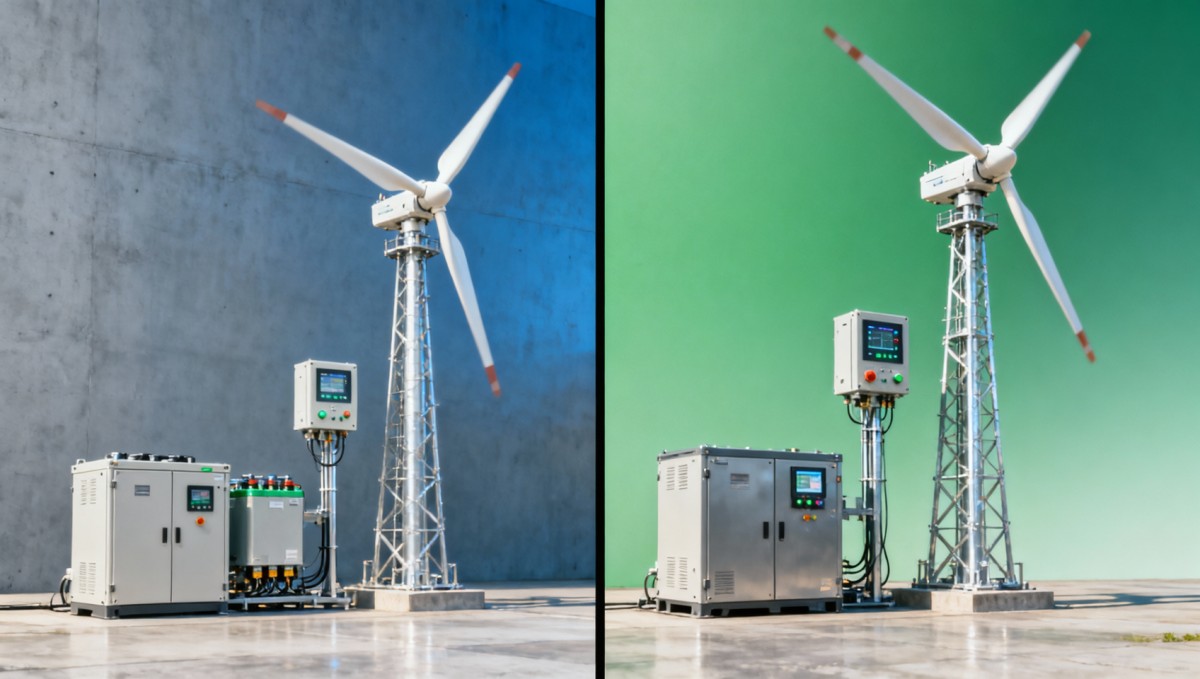
Many buyers start with rated turbine output, such as 1 kW, 5 kW, or 10 kW, and assume that higher nameplate power directly translates into better value. In practice, actual energy yield depends on average wind speed, turbulence intensity, tower height, and usable battery storage. A turbine rated at 5 kW may deliver far less than expected if the annual average wind speed is closer to 4.5 m/s than 7.5 m/s.
This gap matters because low production forces compensating investment elsewhere. Buyers may need larger battery banks, additional solar input, backup generators, or more frequent maintenance visits. In remote commercial applications, one sizing error can affect logistics, spare parts planning, and uptime targets across a 12–36 month operating window.
There is also a structural cost effect. A bigger rotor often requires a taller tower, stronger guying, heavier cabling, and more robust braking or dump load control. That means the jump from a small wind generator kit to a mid-range commercial system is rarely linear. Equipment cost may rise by 30%–50%, while installed cost can rise by 60%–120% depending on terrain and civil work.
For procurement teams comparing wind generator kits with hydro turbine generators or solar-led hybrid systems, the most important metric is not only capex per unit. It is cost per usable kilowatt-hour under site-specific operating conditions. That requires data collection before purchasing, not after commissioning problems begin.
Common sizing variables that are underestimated
The following factors regularly cause budget expansion when they are not addressed early in the engineering and sourcing process.
- Average and seasonal wind profile: a site with 6.5 m/s annual average wind behaves very differently from one with 4.8 m/s, even if peak gusts look impressive.
- Load profile timing: telecom, pumping, lighting, and sensor networks may require power stability over 8–24 hours rather than peak generation at night.
- Battery autonomy target: 1 day, 2 days, or 3 days of backup changes the battery budget and the bms board specification.
- Hybrid architecture: projects that combine wind with PV, hydro, or diesel backup need coordinated mppt controllers, solar charge controllers, and system protections.
- Access and service conditions: if a site is 200 km from the service base, maintenance design should prioritize remote fault visibility and replaceable modules.
A practical pre-procurement review usually includes at least 4 input groups: resource data, electrical demand, installation constraints, and service expectations. Skipping even one of these categories often shifts cost downstream into rework, delays, or poor asset utilization.
Typical cost expansion points
The table below shows where apparently simple wind projects tend to accumulate extra cost after the initial quotation stage.
The main takeaway is simple: buying by rated wattage alone is a weak procurement method. Buyers should budget for the whole operating envelope, including control strategy, storage depth, installation conditions, and service visibility.
How wind kits interact with storage, charge control, and hybrid generation
A wind generator kit rarely operates as a standalone asset in commercial use. In most realistic applications, it is part of a wider distributed energy system that may include lithium batteries, lead-acid banks, solar modules, hydro turbine generators, inverter-chargers, and cloud-connected monitoring tools. The procurement value lies in how these components work together, not in isolated component pricing.
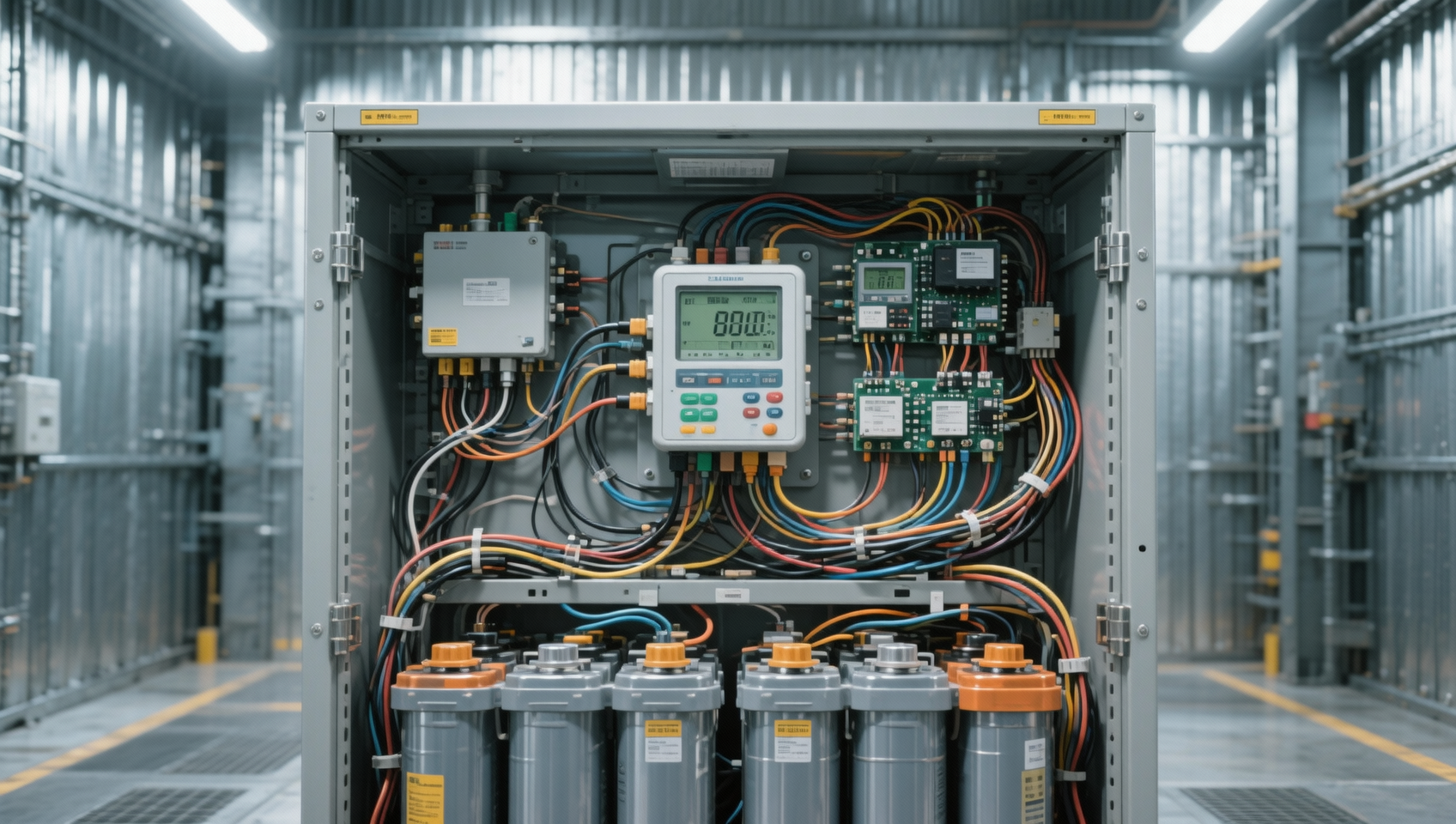
Battery selection is especially important. A 48 V system with 200 Ah storage has a very different risk profile from a 96 V architecture with modular lithium packs and a programmable bms board. If the battery management logic cannot coordinate charge acceptance, temperature protection, and cell balancing, the battery may age faster than planned and reduce project payback.
Controllers also need closer scrutiny. MPPT controllers are commonly associated with solar inputs, while wind systems often need dedicated diversion load or braking strategies because excess energy cannot simply be disconnected under high wind conditions. In hybrid systems, the relationship between solar charge controllers and wind regulation must be mapped clearly to avoid charge conflict, overvoltage events, or unstable battery behavior.
For multi-source sites, hydro turbine generators can provide a useful comparison point. Hydro often offers more stable output where water flow is dependable, while wind may be more seasonal or turbulent. In some regions, a smaller wind unit paired with micro-hydro and solar can deliver better annual reliability than a larger wind-only installation.
Component roles in a hybrid net zero solution
The table below helps non-design stakeholders understand how major components affect performance, risk, and OPEX in hybrid energy procurement.
For finance and operations teams, integration quality often matters more than buying each component at the lowest line-item price. A lower-cost controller paired with a weak BMS can create battery replacement costs within 18–36 months, offsetting any initial savings.
Recommended review points before issuing a PO
- Confirm the system voltage architecture, such as 24 V, 48 V, or higher commercial DC platforms.
- Check whether the controller supports the required battery chemistry and charge profile.
- Verify if the BMS board communicates with the inverter or only provides basic protection.
- Ask how the wind turbine handles overspeed, high gust events, and diversion loading.
- Define monitoring requirements, including 1-minute, 5-minute, or 15-minute data intervals.
These checks are particularly relevant for enterprise buyers managing multiple sites. Standardizing control logic and monitoring architecture across 10, 20, or 50 installations can reduce training burden and improve spare parts planning.
Site conditions, compliance, and operational risk
Wind projects become expensive when site reality is discovered too late. A catalog image does not reveal turbulence from nearby buildings, salt exposure near coastal assets, icing risk in cold regions, or foundation complexity in rocky terrain. These factors affect not only performance but also procurement timing, installation method, and long-term safety obligations.
For quality control personnel and project managers, site review should include at least 6 checkpoints: wind resource assessment, ground condition, corrosion exposure, electrical protection plan, maintenance access, and local permitting requirements. In some jurisdictions, tower height thresholds above 10 m, 15 m, or 20 m may trigger additional approvals or engineering sign-off.
Safety management is equally important. Rotating equipment, battery storage, and power electronics create a combined risk environment. Poor cable routing, inadequate grounding, and underspecified disconnects can increase fire, fault, or shock risk. For organizations running remote or unmanned sites, the absence of alarm reporting can delay incident response and magnify losses.
Operational risk also has a supply chain angle. If a system uses non-standard connectors, proprietary control boards, or difficult-to-source replacement blades, downtime can stretch from a few days to 4–8 weeks. Buyers should therefore treat maintainability and parts availability as commercial issues, not only technical ones.
Risk categories that should be reviewed before approval
- Environmental risk: corrosion, dust, icing, humidity, lightning exposure, and temperature swings from -10°C to 45°C or beyond.
- Mechanical risk: vibration, tower fatigue, overspeed events, and maintenance access constraints for cranes or climbing teams.
- Electrical risk: surge events, grounding errors, battery overcharge, controller mismatch, and DC isolation weakness.
- Commercial risk: lead time volatility, spare part dependence, warranty scope limitations, and unclear service responsibilities.
- Data risk: absent remote monitoring, poor alarm logic, and low-quality sensor inputs that prevent predictive maintenance.
A disciplined buyer should convert these into measurable acceptance criteria. For example, define spare parts lead times under 30 days, battery operating temperature thresholds, communication interface requirements, and field response expectations within 48–72 hours where feasible.
What distributors and enterprise buyers should ask suppliers
The most useful supplier conversations go beyond brochure performance. Ask for operating conditions, maintenance intervals, replaceable parts list, and recommended inspection frequency. A turbine that requires blade inspection every 6 months may be suitable for accessible industrial sites, but not for remote mountain telecom assets.
Suppliers should also explain how the system behaves during abnormal conditions. That includes high wind shutdown, battery full-state management, controller fail-safe logic, and restart conditions after faults. These details materially affect downtime, warranty disputes, and service cost forecasting.
Procurement framework: how to compare offers without missing hidden cost
When multiple quotations arrive, buyers often compare generator rating, battery capacity, and headline price. That is necessary, but it is not enough. A stronger B2B procurement method compares total delivered value across 5 dimensions: energy yield, integration quality, serviceability, data visibility, and lifecycle risk.
This approach is especially useful for business evaluators and financial approvers who may not work directly with renewable hardware. If two suppliers quote similar prices for a 5 kW wind generator kit, but one includes monitoring, battery protections, and a clearer spare parts structure, the second offer may carry lower cost over a 7–10 year horizon.
Delivery structure also matters. Some projects need complete kits, while others require modular sourcing through distributors, EPC partners, or regional warehouses. Lead times can vary from 2–4 weeks for standard controllers to 8–12 weeks for towers, customized battery cabinets, or integrated hybrid control panels.
A disciplined comparison process reduces internal friction as well. It gives engineering, procurement, finance, and safety teams a shared framework, making approval faster and reducing the risk of late-stage objections.
Practical comparison matrix for B2B sourcing
The matrix below can be adapted for RFQ review, distributor screening, or internal capex approval discussions.
A clear comparison matrix makes it easier to defend purchasing decisions internally. It also helps distributors position solutions around customer outcomes rather than only unit price.
A 5-step evaluation process
- Define the site load in daily kWh, critical load priority, and minimum uptime target.
- Validate resource assumptions using local wind and, if relevant, hydro or solar input data.
- Align generator size with storage, controller logic, and battery chemistry.
- Review installation, compliance, and maintenance constraints before final commercial approval.
- Negotiate spare parts, technical documentation, and monitoring support as part of the supply scope.
For enterprise-scale buyers, this process improves repeatability. It also reduces the chance that projects are approved based on incomplete technical assumptions or optimistic production claims.
Implementation, maintenance, and long-term decision value
Even a well-sized wind generator kit can underperform if implementation discipline is weak. Commissioning should verify mechanical installation, electrical protection, battery communication, charging logic, and data transmission. In many commercial deployments, the first 30–90 days are the most important period for detecting installation errors or controller behavior issues.
Maintenance planning should be defined during procurement, not as an afterthought. Typical service tasks include visual inspection, fastener checks, blade condition review, bearing noise observation, cable inspection, grounding verification, and controller alarm review. Depending on the site, these tasks may be scheduled every 6 months or every 12 months.
IoT energy monitors now play a strategic role in reducing service cost. Remote dashboards can track power output, battery state, fault logs, and environmental trends across multiple assets. For organizations managing distributed infrastructure, this data helps identify underperforming sites, prioritize field visits, and support warranty discussions with suppliers.
From a business perspective, the best project is not always the largest one. Often, the most effective net zero solution is the one that fits the site, load, service model, and budget discipline. A smaller but well-integrated hybrid system can outperform an oversized wind-only design in both uptime and lifecycle cost control.
FAQ for buyers and project teams
How do I know if a wind generator kit is too small or too large?
Start with daily energy demand, peak load, and required backup duration. Then compare that with site wind conditions and expected seasonal variation. If the turbine rating looks high but battery autonomy is under 1 day and the wind profile is inconsistent, the project may still be undersized. If civil work, tower size, and dump load requirements grow sharply while annual energy use stays modest, the system may be oversized.
When should hydro turbine generators be considered instead of wind?
Hydro is worth evaluating when water flow is stable across most of the year and site conditions support safe installation. In locations with predictable flow, micro-hydro can offer steadier output than wind and reduce storage pressure. The decision should compare seasonal resource reliability, installation access, permitting, and maintenance burden.
Why are BMS boards and controllers so important in renewable kits?
Because batteries are often among the most expensive replaceable assets in the system. A capable BMS board protects cells from overvoltage, undervoltage, overheating, and imbalance. Properly matched controllers help maintain charge stability. If these components are weak or incompatible, battery life can drop significantly and unplanned replacement costs may arrive much earlier than expected.
What delivery timeline should commercial buyers plan for?
Standard electronic components may ship in 2–4 weeks, but towers, custom battery cabinets, and integrated control assemblies can extend project timelines to 8–12 weeks or longer. Site surveys, permitting, and installation access can add additional time. Buyers should align procurement milestones with civil work and commissioning plans rather than only component availability.
Wind generator kits only look simple when the project is viewed at catalog level. In actual B2B deployment, system sizing, storage design, controller compatibility, site conditions, and monitoring strategy determine whether the asset delivers value or creates avoidable cost. Buyers who evaluate the full system architecture are better positioned to support net zero solutions, reduce procurement risk, and maintain predictable operating performance over the long term.
TradeNexus Pro helps procurement leaders, technical teams, and commercial decision-makers assess complex supply options across green energy, smart electronics, and industrial integration. If you are comparing wind generator kits, hydro turbine generators, battery management components, or remote energy monitoring solutions, contact us to discuss your application, request a tailored sourcing framework, or explore more solution-ready market insights.
Get weekly intelligence in your inbox.
No noise. No sponsored content. Pure intelligence.
 Apr 18, 2026TradeNexus Pro Launches Global Compliance RadarTradeNexus Pro Launches Global Compliance Radar
 Apr 18, 2026JIS T 2304:2026 Takes Effect June 1, 2026 for IVD SoftwareJIS T 2304:2026 Takes Effect June 1, 2026 for IVD Software
 Pathway for Rehab Devices with AI Modules") Apr 18, 2026FDA Updates 510(k) Pathway for Rehab Devices with AI ModulesFDA Updates 510(k) Pathway for Rehab Devices with AI Modules
Apr 18, 2026FDA Updates 510(k) Pathway for Rehab Devices with AI ModulesFDA Updates 510(k) Pathway for Rehab Devices with AI Modules Apr 18, 2026India BIS Approves 3 Chinese IoT Labs for IS 16444:2026 CertificationIndia BIS Approves 3 Chinese IoT Labs for IS 16444:2026 Certification
 Apr 18, 2026THE Alliance Launches Green Slot Priority for China PortsTHE Alliance Launches Green Slot Priority for China Ports
 Apr 18, 2026TÜV Rheinland Releases Dual-Standard ESS Certification Guide for ChinaTÜV Rheinland Releases Dual-Standard ESS Certification Guide for China
 Apr 18, 2026Vietnam Imposes AD Duties on Chinese Electronic ComponentsVietnam Imposes AD Duties on Chinese Electronic Components
 Apr 18, 2026SASO Launches PV Carbon Footprint Labeling from July 2026SASO Launches PV Carbon Footprint Labeling from July 2026
 Apr 18, 2026U.S. Adds 17 Smart Warehouse Robot Components to Export Control ListU.S. Adds 17 Smart Warehouse Robot Components to Export Control List
 Apr 18, 2026EU Enforces EN IEC 62443-4-2:2026 for Industrial Control Devices from 18 Apr 2026EU Enforces EN IEC 62443-4-2:2026 for Industrial Control Devices from 18 Apr 2026
 Apr 17, 2026Temperature data loggers drift unpredictably inside lithium-ion battery storage enclosuresTemperature data loggers drift unpredictably inside lithium-ion battery storage enclosures
 Apr 17, 2026Are solar microinverters really worth the extra cost?Are solar microinverters really worth the extra cost?
 Apr 17, 2026Bifacial solar panels: How much more energy can they generate?Bifacial solar panels: How much more energy can they generate?
 Apr 17, 2026Gear manufacturing: How to optimize production for high precision?Gear manufacturing: How to optimize production for high precision?
 Apr 17, 2026Why power transmission components fail earlier than expectedWhy power transmission components fail earlier than expected
 Apr 17, 2026Linear motion systems: belt drive or ball screw for speed?Linear motion systems: belt drive or ball screw for speed?
 Apr 17, 2026Industrial bearing suppliers: what signals reliable quality?Industrial bearing suppliers: what signals reliable quality?
 Apr 17, 2026When pneumatic valves wholesale gets expensive laterWhen pneumatic valves wholesale gets expensive later
 Apr 17, 2026Hydraulic cylinder fabrication mistakes that cause oil leaksHydraulic cylinder fabrication mistakes that cause oil leaks
 Apr 17, 2026Heavy equipment manufacturing delays often start hereHeavy equipment manufacturing delays often start here
 Apr 17, 2026Custom heatsinks: when a larger size solves nothingCustom heatsinks: when a larger size solves nothing
 Apr 17, 2026Electronic enclosure fabrication: steel or aluminum?Electronic enclosure fabrication: steel or aluminum?
 Apr 17, 2026Automotive parts machining tolerances that drive up scrapAutomotive parts machining tolerances that drive up scrap
 Apr 17, 2026Medical device manufacturing changes under tighter traceabilityMedical device manufacturing changes under tighter traceability
 Apr 17, 2026How to Choose Solid State Batteries in 2026How to Choose Solid State Batteries in 2026
 Apr 17, 2026Are Solid State Batteries Worth the Cost Yet?Are Solid State Batteries Worth the Cost Yet?
 Apr 17, 2026Commercial Energy Storage Sizing: What Matters Most?Commercial Energy Storage Sizing: What Matters Most?