Custom Sheet Metal Fabrication Mistakes That Slow Assembly
In custom sheet metal fabrication, small design and process mistakes can create major assembly delays, increase rework, and raise production costs. For operators and production teams, understanding these common errors is essential to improving fit, function, and workflow efficiency. This article explores the most frequent issues that slow assembly and shows how smarter fabrication decisions can support faster, more reliable results.
Why do small errors in custom sheet metal fabrication create such big assembly delays?
In day-to-day production, assembly rarely slows down because of one dramatic failure. More often, delays come from small mismatches that stack up across cutting, bending, hole placement, hardware insertion, and final fit-up. In custom sheet metal fabrication, even a 0.5 mm hole offset or a bend angle drifting by 1 to 2 degrees can force operators to stop, re-check parts, open slots manually, or request rework. That disrupts takt time, increases handling, and creates uncertainty on the line.
For operators, the real problem is not just dimensional error. It is the way one error affects the next station. A part that arrives slightly warped may still look acceptable at inspection, but once it reaches a subassembly cell, the misalignment can block fastener insertion, interfere with brackets, or make cable routing impossible. This is why custom sheet metal fabrication must be evaluated not only for part accuracy, but also for assembly readiness.
Another reason delays grow quickly is that fabricated parts often interact with multiple purchased components, such as PEM hardware, hinges, latches, seals, displays, and wire harnesses. If one sheet metal feature is poorly designed, it can compromise 3 to 5 downstream installation steps. In sectors like advanced manufacturing, smart electronics, and healthcare equipment, where enclosure tolerances are tighter and mixed-material assemblies are common, these hidden delays become even more expensive.
What does assembly-ready fabrication actually mean?
Assembly-ready custom sheet metal fabrication means the part can move from fabrication to the line with minimal adjustment, no ad hoc trimming, and predictable fit with mating components. It includes dimensional stability, hole accuracy, bend consistency, edge condition, hardware access, and enough tolerance planning for coatings or inserts. In practical terms, operators should be able to assemble parts within the planned cycle time, whether that is 45 seconds in a high-volume cell or 8 to 12 minutes in a complex low-volume build.
- Parts align with fixtures without forcing or shimming.
- Fasteners enter cleanly on the first attempt in most cycles.
- Bends and formed features do not block tools or operator access.
- Surface finish and edge quality do not create safety or cosmetic rework.
When teams evaluate custom sheet metal fabrication through this lens, the conversation shifts from “Was the part made to print?” to “Can the part be assembled reliably at speed?” That change is often where measurable productivity gains begin.
Which design mistakes most often slow assembly?
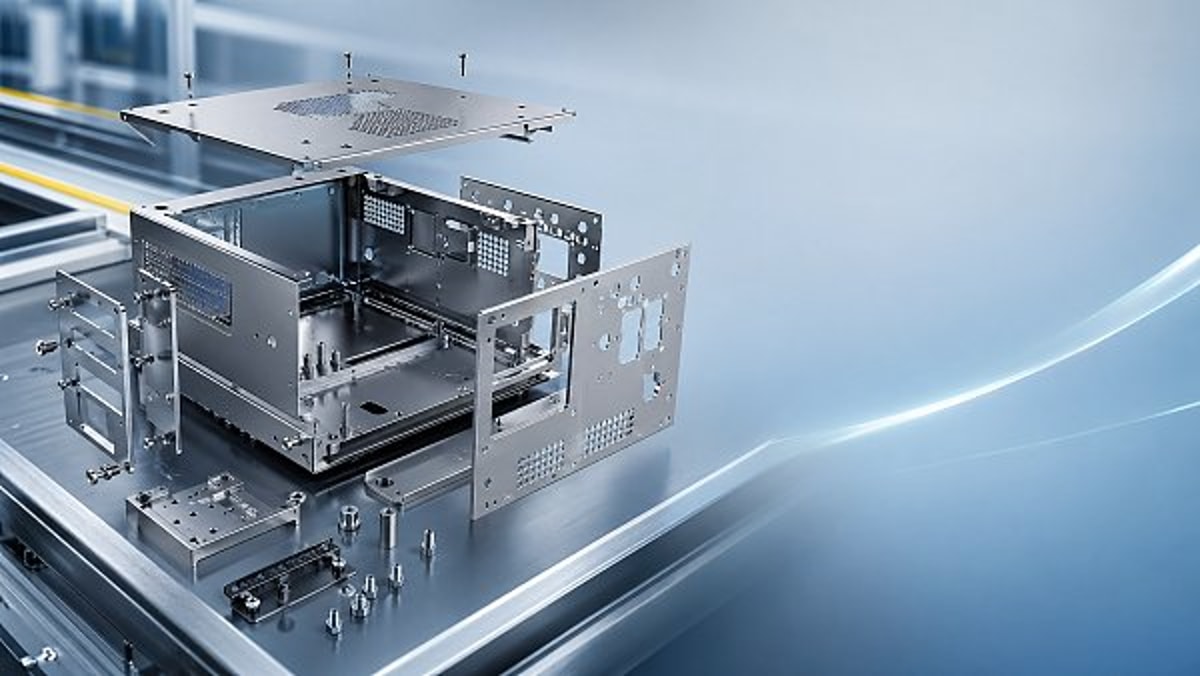
The most common delays start in design. Operators frequently inherit parts that technically can be fabricated but are difficult to assemble in real conditions. Typical issues include bend lines placed too close to holes, flange depths too short for tooling clearance, tabs and slots with overly tight fit, and hardware locations that block drivers or press tools. In custom sheet metal fabrication, design for manufacturability and design for assembly need to be addressed together, not as separate review steps.
A common example is hole placement near bends. If a hole is too close to a bend radius, the material can distort during forming, turning a round hole into an oval or shifting center position enough to affect screw alignment. Depending on material thickness and bend method, a practical clearance zone often needs to be at least 1.5 to 3 times material thickness from the bend tangent. Ignoring this can create repeated fastening problems on the line.
Another design issue is insufficient tolerance stack planning. Operators may receive two parts that both pass individual inspection, yet still fail to align when stacked with hinges, studs, spacers, and coated surfaces. This happens when each feature sits near the edge of tolerance and no one reviews the cumulative effect across the full assembly. In custom sheet metal fabrication, tolerance stack-up is one of the most overlooked causes of hidden assembly friction.
Which design errors should operators watch for first?
Operators can often spot recurring design-related assembly issues before engineering formally revises a drawing. The checklist below covers the problems most likely to create stoppages, retries, or slow manual corrections.
This table shows why assembly teams should report repeat issues in terms of feature behavior, not just “bad part” complaints. When the exact interaction is documented, custom sheet metal fabrication improvements become faster and more precise.
How can design reviews reduce rework before production starts?
A useful review method is to identify 5 to 10 critical-to-assembly features before release. These may include hinge hole centers, latch interfaces, display cutouts, grounding points, and bend-to-edge relationships. If those features are checked in prototype builds and first-article samples, many line-side corrections can be prevented before volume production.
It also helps to simulate operator access, not just CAD fit. A part may look acceptable in a digital model but still be difficult to install with gloved hands, angled screwdrivers, or torque tools. In sectors such as supply chain equipment enclosures or healthcare carts, this is especially important because compact layouts often leave less than 25 mm of working space around fasteners or connectors.
How do process and material mistakes in custom sheet metal fabrication affect the assembly line?
Even with a good design, process variation can undermine assembly performance. Material springback, inconsistent bend sequencing, poor flat pattern compensation, burrs, heat distortion from cutting, and unstable hardware insertion all create downstream delays. Operators usually see these issues as “hard fit,” “misaligned door,” or “fastener not starting,” but the root cause often begins earlier in the fabrication route.
Material choice also matters more than many teams expect. For example, 1.0 mm stainless steel and 1.0 mm mild steel may share nominal thickness, yet they respond differently during forming and hardware insertion. Aluminum may reduce weight but can need different support for thread strength and flatness control. In custom sheet metal fabrication, switching material without adjusting tooling, bend allowance, or fastening strategy can add days of avoidable troubleshooting during launch.
Coatings are another frequent source of delay. Powder coating or plating can add thickness that tightens slots, shifts grounding performance, or changes press-fit hardware retention. A coating build of only 60 to 120 microns may seem minor, but on a close-fit tab-slot or stacked bracket interface, it can be enough to create binding. Operators then spend extra time scraping, forcing, or sorting parts that should have mated cleanly from the start.
Which process controls usually have the biggest effect on assembly speed?
The answer depends on product type, but several process controls consistently have a strong impact across advanced manufacturing, smart electronics housings, and industrial enclosures. Teams should pay close attention to the following points:
- First-piece bend verification for every critical setup, especially when angle tolerance is tighter than plus or minus 1 degree.
- Routine burr inspection on laser-cut or punched edges that contact seals, wiring, or operator hands.
- Press-fit hardware validation after coating if hardware is inserted before finishing.
- Flatness checks on large panels, especially above 400 mm length where distortion becomes more visible during assembly.
When these controls are stable, custom sheet metal fabrication supports smoother cell balancing and fewer manual exceptions. The result is not only better quality, but also more predictable labor planning.
What warning signs tell operators that assembly delays are caused by fabrication, not by the assembly team?
This is a practical question on many shop floors. Operators are often the first to feel the problem, but they may not have immediate data to prove whether the issue comes from assembly method, purchased components, or custom sheet metal fabrication. Several warning signs can help isolate the source more quickly.
If the same workstation experiences the same interference on multiple units from the same lot, fabrication variation is a likely suspect. Likewise, if operators need to loosen several fasteners to make a door close, widen holes during fit-up, or apply force for tab engagement, the issue is probably dimensional or geometric rather than procedural. A single training gap behaves differently from a repeated lot-specific pattern.
Another sign is when alternate parts from another batch assemble normally under the same operator and tooling conditions. In many facilities, a simple A/B comparison using 3 to 5 parts from two lots can quickly show whether the bottleneck comes from fabrication consistency. This saves time compared with debating operator technique without evidence.
What quick checks should be done on the floor?
Before escalating a problem, operators and supervisors can use a short decision table to check whether the delay likely links back to custom sheet metal fabrication. This creates a common language between production, quality, and supplier teams.
This type of quick diagnosis reduces blame-based discussions and shortens the time to corrective action. In many operations, that alone can cut troubleshooting loops from several shifts down to a single review meeting.
Why is feedback timing important?
If operator feedback reaches fabrication or sourcing teams within the first 24 to 48 hours of a recurring issue, the supplier can often review tooling wear, setup records, or batch-specific material behavior before the trail goes cold. Delayed reporting makes root cause harder to confirm and increases the risk of repeating the same problem in the next release.
Clear feedback should include the part number, lot, station, mating component, observed symptom, and whether the issue affects all units or only a subset such as 2 out of 10. Those details are far more useful than broad statements like “assembly is difficult.”
How can teams prevent these mistakes before they reach volume production?
Prevention works best when design, fabrication, quality, and assembly teams review the product as one system. In custom sheet metal fabrication, launch problems often happen because each function optimizes its own task in isolation. Engineering checks CAD. Fabrication checks machine feasibility. Assembly checks fit only after parts arrive. By then, the correction cost is much higher.
A better approach is to build a simple pre-production gate around critical risks. For example, teams can review material, bend count, hardware type, coating impact, and key assembly interfaces before releasing a package to full production. Even a 30-minute cross-functional review can prevent weeks of rework if the product includes tight cosmetic requirements or multi-part alignment features.
Prototype learning is especially valuable when the product includes more than 15 to 20 fabricated features on a single enclosure, or when mating components come from several suppliers. In those situations, custom sheet metal fabrication should not be judged only by part-level conformance. It should be validated in a real or pilot assembly condition.
What should be confirmed before placing or scaling an order?
Before approving a repeat build or new sourcing package, operators and production leaders should help confirm a focused list of practical checkpoints. These reduce surprises during ramp-up and improve communication with fabricators.
- Critical dimensions linked directly to assembly time are identified and measured consistently.
- Material grade, thickness range, and finish sequence are locked and documented.
- Coating allowance is included for tabs, slots, grounding areas, and cosmetic interfaces.
- Tool access has been checked for screwdriving, riveting, and hardware installation.
- Pilot samples have been assembled under realistic station conditions, not just bench inspection.
When these points are confirmed early, custom sheet metal fabrication becomes easier to scale with fewer line interruptions, more stable throughput, and better first-pass assembly performance.
What are the most useful FAQs operators ask about custom sheet metal fabrication delays?
Operators often need direct answers, not broad theory. The short FAQ summary below collects frequent judgment questions that come up during production support, supplier communication, and launch reviews. It is especially useful when teams need a fast reference during issue escalation.
These questions highlight a practical truth: the fastest improvements in custom sheet metal fabrication usually come from better feature-level feedback, not from broad assumptions about operator error or supplier capability.
What is the main takeaway for production teams?
If assembly is slowing down, do not wait for a major failure to trigger action. Repeated micro-delays such as second-attempt fastening, forced alignment, slot binding, or panel adjustment are early indicators that the fabrication process or design intent needs correction. Tracking just 3 to 5 recurring symptoms over a two-week period can reveal patterns that justify design review or supplier process adjustment.
For operators, the goal is not to become design engineers. It is to recognize the signals that point back to custom sheet metal fabrication and communicate them in a structured way. That supports faster root-cause analysis, more stable launch performance, and fewer repeated disruptions on the line.
Why choose us if you need support with custom sheet metal fabrication decisions?
TradeNexus Pro helps procurement teams, production leaders, and industrial operators make clearer decisions around complex supply chains and fabrication-dependent products. Our industry focus allows us to examine custom sheet metal fabrication from the perspective of real assembly outcomes, sourcing risk, production readiness, and practical implementation across advanced manufacturing, electronics, healthcare technology, green energy systems, and supply chain equipment.
If you need to move from recurring assembly problems to a more stable fabrication strategy, we can help you frame the right questions before your next RFQ, pilot build, or supplier review. Useful discussion points include parameter confirmation, tolerance priorities, material and finish selection, delivery lead time expectations, prototype evaluation, sample support, and quotation communication for custom builds.
Contact us if you want to discuss custom sheet metal fabrication issues that are affecting fit, function, or assembly speed. A focused conversation around drawings, critical features, production volume, finish requirements, and target lead times can help your team reduce rework and improve line efficiency before the next build cycle begins.
Get weekly intelligence in your inbox.
No noise. No sponsored content. Pure intelligence.
 May 01, 2026Beijing’s New E-Bike Rules Trigger Dual-Certification Demand for China’s Swappable Battery CabinetsBeijing’s New E-Bike Rules Trigger Dual-Certification Demand for China’s Swappable Battery Cabinets
 May 01, 2026GNA’s GEO Service Assessment Elevates AI Search as Digital Procurement Metric for Chinese ExportersGNA’s GEO Service Assessment Elevates AI Search as Digital Procurement Metric for Chinese Exporters
 May 01, 20262026 China Cycle Expo: Chinese EPS Systems Achieve UL 2849:2026 Full Certification2026 China Cycle Expo: Chinese EPS Systems Achieve UL 2849:2026 Full Certification
 May 01, 2026GB 42236-2026 Enforces EV Charger Efficiency & Overload Protection from May 2026GB 42236-2026 Enforces EV Charger Efficiency & Overload Protection from May 2026
 May 01, 2026GB/T 43790-2026 Drone EMC Standard Effective May 2026GB/T 43790-2026 Drone EMC Standard Effective May 2026
 May 01, 20262026 Foshan Tanzhou Auto Industry Expo Opens2026 Foshan Tanzhou Auto Industry Expo Opens
 May 01, 2026China’s New Hazardous Chemicals Safety Law Takes Effect May 2026China’s New Hazardous Chemicals Safety Law Takes Effect May 2026
 May 01, 2026New Maritime and Fisheries Laws Take Effect May 1, 2026New Maritime and Fisheries Laws Take Effect May 1, 2026
 May 01, 2026Supply Chain Automation Works Best Where Delays RepeatSupply Chain Automation Works Best Where Delays Repeat
 May 01, 2026High Strength Steel Forgings: What Should Be Tested First?High Strength Steel Forgings: What Should Be Tested First?
 May 01, 2026Automotive Steel Forging: Cost Pressure vs Part ReliabilityAutomotive Steel Forging: Cost Pressure vs Part Reliability
 May 01, 2026Why High Durability Steel Forgings Fail Earlier Than ExpectedWhy High Durability Steel Forgings Fail Earlier Than Expected
 May 01, 2026Construction Aluminum Extrusions: Which Finish Lasts Longer?Construction Aluminum Extrusions: Which Finish Lasts Longer?
 May 01, 2026Lightweight Aluminum Extrusions: Where Savings Really HappenLightweight Aluminum Extrusions: Where Savings Really Happen
 May 01, 2026Aerospace Aluminum Extrusions Need More Than Low WeightAerospace Aluminum Extrusions Need More Than Low Weight
 May 01, 2026Precision Lathe Turning Problems That Show Up After AssemblyPrecision Lathe Turning Problems That Show Up After Assembly
 May 01, 2026High Precision Lathe Turning: Tolerance Claims to VerifyHigh Precision Lathe Turning: Tolerance Claims to Verify
 May 01, 2026When CNC Lathe Turning Is Better Than General MachiningWhen CNC Lathe Turning Is Better Than General Machining
 May 01, 2026Medical Device Prototyping Needs More Than SpeedMedical Device Prototyping Needs More Than Speed
 May 01, 20263D Printing Prototyping: Fast Turnaround or Better Finish?3D Printing Prototyping: Fast Turnaround or Better Finish?
 May 01, 2026Low Cost Rapid Prototyping: Where Quality Gets LostLow Cost Rapid Prototyping: Where Quality Gets Lost
 May 01, 2026Quick EV Charger Installation Still Needs Site ChecksQuick EV Charger Installation Still Needs Site Checks
 May 01, 2026Public Parking EV Chargers: What Slows Installation DownPublic Parking EV Chargers: What Slows Installation Down
 May 01, 2026Choosing a Lithium Ion Battery Manufacturer in ChinaChoosing a Lithium Ion Battery Manufacturer in China
 May 01, 2026How to Vet a Lithium Ion Battery OEM SupplierHow to Vet a Lithium Ion Battery OEM Supplier
 May 01, 2026EV Lithium Ion Batteries: Range Is Not the Only MetricEV Lithium Ion Batteries: Range Is Not the Only Metric
 May 01, 2026Lithium Ion ESS Batteries: Safety Details Worth CheckingLithium Ion ESS Batteries: Safety Details Worth Checking