Gear Manufacturing: Which Process Delivers Best Accuracy?
In gear manufacturing, accuracy determines performance, lifespan, and cost efficiency across demanding industrial applications. From high-volume production to precision-critical components, choosing the right process matters. This article examines which methods deliver the best tolerances, surface finish, and repeatability, while also showing where advanced solutions such as wire edm services can support tighter specifications and smarter manufacturing decisions.
For operators, quality teams, sourcing managers, technical evaluators, and project leaders, the central question is rarely about one process in isolation. It is about matching geometry, material, tolerance, batch size, inspection requirements, and total landed cost to the right manufacturing route. A process that is ideal for a gearbox prototype may be inefficient for a 50,000-piece automotive run, while a cost-effective roughing method may fail in a medical, robotics, or aerospace transmission where micron-level consistency matters.
In practice, gear accuracy is influenced by at least 6 variables: machine capability, cutter condition, workholding rigidity, thermal stability, material distortion, and finishing strategy. That is why comparing hobbing, shaping, milling, grinding, honing, skiving, broaching, and EDM requires more than a simple ranking. The best answer depends on the target quality grade, application risk, and whether the buyer values speed, repeatability, or post-process flexibility.
How Gear Accuracy Is Defined in Real Production
Before comparing manufacturing methods, buyers should clarify what “best accuracy” actually means. In industrial procurement, accuracy usually covers tooth profile error, lead error, pitch error, runout, surface roughness, and consistency from part to part. A gear can look acceptable visually yet still fail noise, backlash, or load-distribution requirements once assembled into a gearbox.
Many production teams evaluate gears against recognized quality systems such as AGMA or DIN classes. As a practical rule, rough cutting processes may suit moderate accuracy targets, while finishing operations are needed when requirements move into tighter classes. For example, a general industrial drive may tolerate a broader error band than an EV reduction gear, where noise, vibration, and repeatability are scrutinized over thousands of cycles.
Surface finish also matters. A Ra value around 1.6–3.2 µm may be acceptable for some standard gears after cutting, but high-performance gear sets often require smoother surfaces, sometimes below 0.8 µm after grinding or honing. Better finish reduces friction, improves lubrication behavior, and supports quieter operation in precision assemblies.
Another factor is process stability across batch size. A prototype run of 10 pieces can be adjusted manually with close supervision. A production order of 5,000 to 50,000 pieces demands process capability, in-process checks, and predictable tool wear compensation. That is why financial approvers and operations managers should evaluate not only nominal tolerance, but also whether the process can hold it repeatedly over a 2-week or 8-week production window.
Key Accuracy Metrics to Review
- Tooth profile deviation and lead deviation, especially for helical and high-speed gears.
- Pitch variation and total composite error, which affect meshing smoothness and backlash.
- Runout and concentricity, often critical when gears mate with shafts, splines, or bearings.
- Surface roughness after cutting and finishing, typically reviewed in Ra or Rz values.
- Heat-treatment distortion risk, particularly for hardened steels above 50 HRC.
Why inspection planning changes the process choice
If a buyer requires first-article reporting, in-process SPC checks every 30 or 50 pieces, and final gear measurement reports, some processes become easier to control than others. This is especially relevant for global B2B supply chains where parts may be exported across regions and validated again by the end user. A process with slightly higher machining cost can still be the better decision if it lowers rejection rate from 4% to below 1%.
Which Manufacturing Processes Deliver the Tightest Tolerances
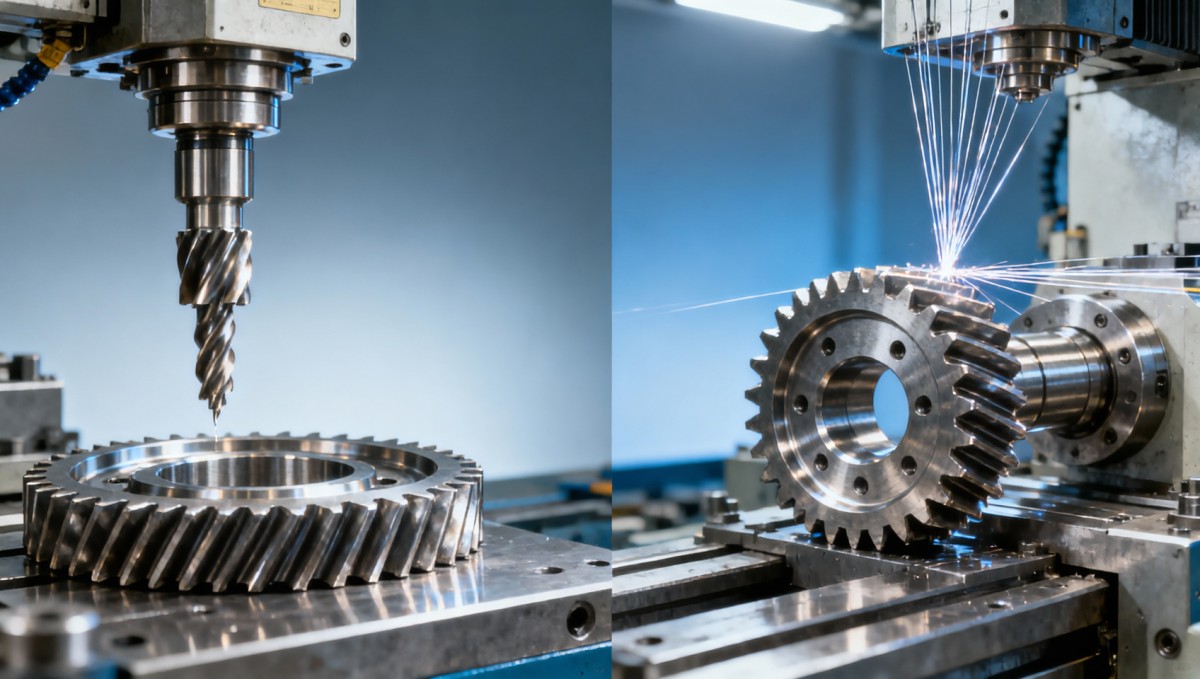
No single gear manufacturing process dominates every application. Hobbing remains one of the most efficient methods for external gears in medium to high volumes. Shaping is often chosen for internal gears or designs that cannot be reached easily with a hob. Milling is flexible for prototypes and complex, lower-volume jobs, but usually cannot match the finish and cycle efficiency of dedicated gear-cutting methods in serial production.
For hardened gears or applications demanding superior profile accuracy, grinding is commonly the benchmark. Gear grinding can hold very tight geometry after heat treatment and is often used when distortion must be corrected. Honing and superfinishing may follow grinding to improve surface texture and reduce noise. Power skiving has also gained attention because it combines productivity with strong accuracy potential for internal and external gears, especially in automotive and e-mobility programs.
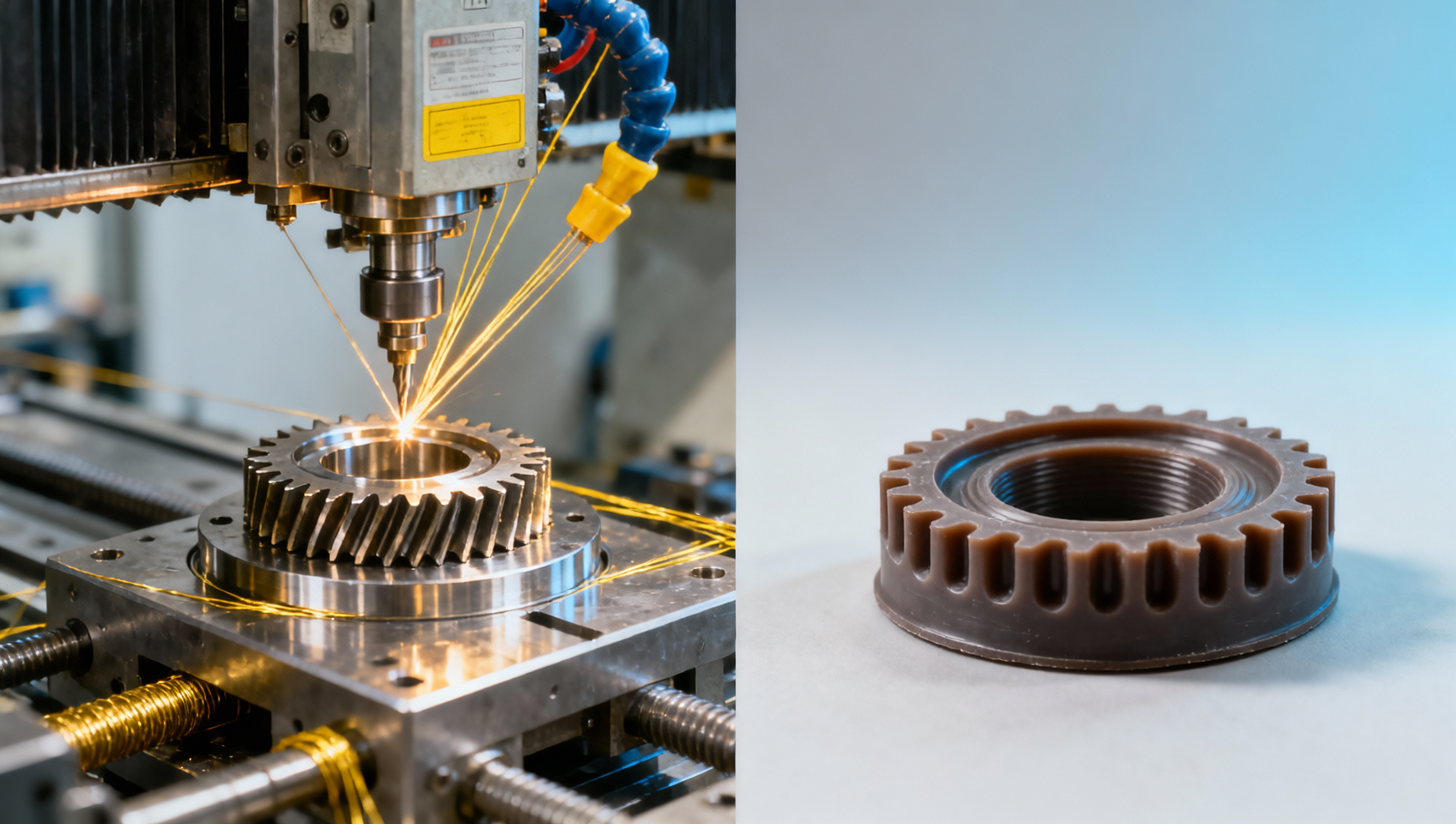
Wire EDM services are not usually the first choice for high-volume standard gears, but they are highly valuable for precision prototypes, difficult materials, thin sections, special tooth forms, and tooling components. In cases where burr control, sharp internal geometry, or minimal cutting force matters, EDM can support tighter feature control than conventional cutting. It is particularly useful when the gear or related component has geometry that is difficult to broach, shape, or grind economically in low quantities.
For procurement and engineering teams, the practical decision is to separate rough generation from final accuracy creation. In many projects, one process generates the tooth form, while a second process secures the final tolerance band. That two-stage approach may add 10%–25% to process cost, but it often reduces downstream warranty, assembly rework, and field failure exposure.
Process Comparison by Accuracy and Production Fit
The table below compares common methods by typical use, achievable accuracy range in practical production, and key trade-offs that matter to technical and commercial decision-makers.
The main conclusion is clear: grinding often delivers the highest final gear accuracy in demanding applications, but hobbing, shaping, skiving, and EDM each outperform alternatives in specific geometry and volume conditions. The winning process is the one that reaches the required class and repeatability at the lowest total manufacturing risk, not simply the lowest machining rate per hour.
Where wire EDM adds strategic value
Wire EDM becomes especially relevant in 4 situations: prototype validation, intricate internal contours, hardened materials that challenge conventional tools, and low-volume specialty applications where tooling investment is hard to justify. For enterprise buyers, this means faster design iterations, reduced custom cutter cost, and a more practical path when annual demand is 20, 100, or 500 pieces instead of tens of thousands.
What Actually Determines Accuracy Beyond the Named Process
A common sourcing mistake is assuming that process name alone guarantees precision. In reality, machine condition, fixturing, tool wear management, coolant control, and operator discipline often decide whether a supplier consistently hits specification. Two vendors may both offer gear grinding, yet one may hold stable results within a tight band while the other struggles because of thermal drift or weak inspection feedback loops.
Material behavior is another major variable. Carburized steel, nitrided alloys, powder metal, stainless grades, and nonferrous materials react differently during machining and heat treatment. Distortion after hardening can erase the benefit of accurate rough cutting. That is why high-specification gears often use a planned stock allowance before final grinding or honing, commonly within controlled ranges such as 0.05–0.30 mm depending on size and heat-treatment route.
Workholding rigidity becomes more important as gear diameter decreases or tooth geometry becomes more delicate. Thin-walled gears, clutch components, and compact smart-electronics drive parts can deform under clamp force. In such cases, low-force processes or carefully designed fixtures may improve real-world accuracy more than switching from one cutting technology to another.
Inspection capability closes the loop. Without gear analyzers, CMM correlation, master calibration, and documented acceptance criteria, even a capable machine cell may deliver uneven output. Quality leaders should ask how often tooling offsets are updated, how first-off approval is documented, and whether process capability is reviewed every shift, every lot, or at another fixed frequency.
Critical Variables Buyers Should Verify
- Machine age, maintenance status, and whether the line is dedicated or mixed-use for multiple product types.
- Tooling management, including wear tracking after a defined number of parts or cutting hours.
- Heat-treatment coordination, with distortion allowance planned before finishing.
- Inspection method, including gear measurement reports, SPC checkpoints, and final release criteria.
- Traceability discipline, especially for export supply chains, regulated sectors, and multi-site programs.
Typical capability checkpoints
A practical audit can be done in 5 checkpoints: drawing review, process map, trial sample inspection, control plan review, and packaging validation. For many B2B buyers, this structured review prevents costly surprises such as heat-treatment distortion, burr formation, incorrect datum strategy, or mismatched inspection standards between supplier and customer locations.
How to Choose the Right Process by Application, Volume, and Budget
The right gear manufacturing process depends on the intersection of 4 commercial realities: annual volume, target tolerance, material condition, and acceptable lead time. A distributor serving aftermarket machinery may prioritize fast turnaround and broad compatibility. A healthcare technology manufacturer may accept higher piece cost in exchange for traceability, low noise, and stable repeatability. An enterprise program manager may need a phased route that starts with prototype flexibility and then shifts to production efficiency.
For low-volume projects under roughly 50–200 pieces, flexible methods such as CNC milling, shaping, or wire EDM often make sense, especially when the design may change after first testing. For medium volumes in the 500–5,000 range, hobbing, shaping, or skiving become more attractive because cycle time and tooling amortization are easier to justify. For high volumes above 10,000 units, production cells with dedicated cutters, automation, and finishing controls generally offer the strongest unit economics.
Budget decisions should include more than the quoted machining price. Buyers should compare setup time, scrap exposure, heat-treatment coordination, secondary finishing, gear inspection cost, and the financial impact of delayed approval. A lower-cost route that requires repeated correction can become more expensive once rework, freight, and line-stop risk are included.
This is where strategic sourcing platforms and technical intelligence matter. Decision-makers increasingly compare process capability with supply chain resilience, not only unit price. A supplier able to support drawing optimization, pilot runs in 7–15 days, and documented control plans may create more value than a vendor offering a marginally cheaper quote with unclear metrology capability.
Selection Matrix for B2B Buyers
The following matrix helps technical teams, finance reviewers, and project owners align process choice with production goals.
The pattern is straightforward: high precision does not always mean choosing the slowest or most expensive process. It means selecting the route that fits the application life cycle, quality threshold, and batch economics with the least hidden risk.
Questions procurement teams should ask suppliers
- What tolerance range is held before and after heat treatment?
- What is the normal lead time for samples, pilot lots, and production lots?
- Which features are measured 100%, and which are sampled by lot?
- What process is used if the gear requires lower noise or improved surface finish later?
- Can the supplier shift from prototype to serial production without changing the inspection baseline?
Common Risks, Misconceptions, and a Smarter Procurement Approach
One misconception is that the highest nominal accuracy always produces the best business result. In many industrial programs, chasing an unnecessarily tight tolerance increases cost, extends delivery by 1–3 weeks, and narrows the supplier pool without improving end-use performance. Engineering and purchasing should first identify which gear features are function-critical and which can remain within standard commercial ranges.
Another risk is ignoring downstream assembly context. A gear may pass individual measurement but still create noise if shaft alignment, bearing fit, or mating gear quality is inconsistent. That is why project managers should review the complete transmission stack-up rather than sourcing gears as isolated components. In cross-border supply chains, tolerance language on drawings should also be aligned clearly to avoid interpretation gaps between regions or plants.
Buyers also underestimate the value of process transparency. A quote that lists only “gear cutting” gives limited decision support. A stronger supplier response explains whether the route includes rough generation, heat treatment, final finishing, deburring, inspection frequency, and packaging protection. That level of detail helps financial approvers compare like-for-like offers instead of reacting to incomplete pricing.
For organizations tracking future supply opportunities, the trend is toward integrated manufacturing decisions. Precision, scalability, digital inspection records, and process flexibility are increasingly evaluated together. This is especially relevant across advanced manufacturing, smart electronics, and healthcare technology, where smaller drives and quieter motion systems raise the bar for gear quality and verification discipline.
FAQ for Technical and Commercial Teams
Which process usually delivers the best final gear accuracy?
For many hardened, high-performance gears, grinding is the leading final-accuracy process because it corrects distortion and improves tooth geometry after heat treatment. However, it is not automatically the best commercial choice for every part. Low-volume specialty gears may be better served by wire EDM or precision shaping when geometry, material, or tooling cost changes the value equation.
When should wire EDM services be considered for gear-related work?
Wire EDM is especially useful when the part has complex internal forms, burr-sensitive areas, hardened material, or annual demand too low to justify dedicated tooling. It is also effective for tooling inserts, prototype gears, and precision features that must avoid cutting force distortion. Typical decision points arise when batch size is below 100–300 units or when design revisions are still likely.
What lead time should buyers expect?
Lead time varies by process and project maturity. Prototype samples may be feasible in 7–15 days if material is available and inspection requirements are clear. Production lots with heat treatment, grinding, and full reporting may require 3–6 weeks or longer. Buyers should always separate machining time from total project lead time, because metrology, outside processing, and approval cycles often drive the real schedule.
What should quality teams prioritize during supplier approval?
Focus on 4 areas: process flow transparency, measurement capability, traceability, and response to nonconformance. Ask for sample reports, control plans, gauge strategy, and how corrective actions are documented. A supplier that can explain process controls in detail is usually easier to scale across multiple purchase orders and program stages.
In gear manufacturing, the best accuracy comes from the right combination of process capability, material strategy, finishing method, and inspection discipline. Grinding often leads for final precision, while hobbing, shaping, skiving, and wire EDM each offer clear advantages in the right geometry, volume, and budget range. For buyers and engineering teams, the smartest decision is to evaluate not only tolerance on paper, but repeatability, lead time, distortion risk, and full-process transparency.
TradeNexus Pro helps global decision-makers compare manufacturing options with greater technical clarity and supply chain confidence. If you are assessing gear production routes, validating a new supplier, or exploring advanced solutions such as wire EDM services for tighter specifications, contact us to discuss your application, request a tailored sourcing framework, or learn more about precision manufacturing solutions aligned to your industry goals.
Get weekly intelligence in your inbox.
No noise. No sponsored content. Pure intelligence.
 Apr 18, 2026TradeNexus Pro Launches Global Compliance RadarTradeNexus Pro Launches Global Compliance Radar
 Apr 18, 2026JIS T 2304:2026 Takes Effect June 1, 2026 for IVD SoftwareJIS T 2304:2026 Takes Effect June 1, 2026 for IVD Software
 Pathway for Rehab Devices with AI Modules") Apr 18, 2026FDA Updates 510(k) Pathway for Rehab Devices with AI ModulesFDA Updates 510(k) Pathway for Rehab Devices with AI Modules
Apr 18, 2026FDA Updates 510(k) Pathway for Rehab Devices with AI ModulesFDA Updates 510(k) Pathway for Rehab Devices with AI Modules Apr 18, 2026India BIS Approves 3 Chinese IoT Labs for IS 16444:2026 CertificationIndia BIS Approves 3 Chinese IoT Labs for IS 16444:2026 Certification
 Apr 18, 2026THE Alliance Launches Green Slot Priority for China PortsTHE Alliance Launches Green Slot Priority for China Ports
 Apr 18, 2026TÜV Rheinland Releases Dual-Standard ESS Certification Guide for ChinaTÜV Rheinland Releases Dual-Standard ESS Certification Guide for China
 Apr 18, 2026Vietnam Imposes AD Duties on Chinese Electronic ComponentsVietnam Imposes AD Duties on Chinese Electronic Components
 Apr 18, 2026SASO Launches PV Carbon Footprint Labeling from July 2026SASO Launches PV Carbon Footprint Labeling from July 2026
 Apr 18, 2026U.S. Adds 17 Smart Warehouse Robot Components to Export Control ListU.S. Adds 17 Smart Warehouse Robot Components to Export Control List
 Apr 18, 2026EU Enforces EN IEC 62443-4-2:2026 for Industrial Control Devices from 18 Apr 2026EU Enforces EN IEC 62443-4-2:2026 for Industrial Control Devices from 18 Apr 2026
 Apr 17, 2026Temperature data loggers drift unpredictably inside lithium-ion battery storage enclosuresTemperature data loggers drift unpredictably inside lithium-ion battery storage enclosures
 Apr 17, 2026Are solar microinverters really worth the extra cost?Are solar microinverters really worth the extra cost?
 Apr 17, 2026Bifacial solar panels: How much more energy can they generate?Bifacial solar panels: How much more energy can they generate?
 Apr 17, 2026Gear manufacturing: How to optimize production for high precision?Gear manufacturing: How to optimize production for high precision?
 Apr 17, 2026Why power transmission components fail earlier than expectedWhy power transmission components fail earlier than expected
 Apr 17, 2026Linear motion systems: belt drive or ball screw for speed?Linear motion systems: belt drive or ball screw for speed?
 Apr 17, 2026Industrial bearing suppliers: what signals reliable quality?Industrial bearing suppliers: what signals reliable quality?
 Apr 17, 2026When pneumatic valves wholesale gets expensive laterWhen pneumatic valves wholesale gets expensive later
 Apr 17, 2026Hydraulic cylinder fabrication mistakes that cause oil leaksHydraulic cylinder fabrication mistakes that cause oil leaks
 Apr 17, 2026Heavy equipment manufacturing delays often start hereHeavy equipment manufacturing delays often start here
 Apr 17, 2026Custom heatsinks: when a larger size solves nothingCustom heatsinks: when a larger size solves nothing
 Apr 17, 2026Electronic enclosure fabrication: steel or aluminum?Electronic enclosure fabrication: steel or aluminum?
 Apr 17, 2026Automotive parts machining tolerances that drive up scrapAutomotive parts machining tolerances that drive up scrap
 Apr 17, 2026Medical device manufacturing changes under tighter traceabilityMedical device manufacturing changes under tighter traceability
 Apr 17, 2026How to Choose Solid State Batteries in 2026How to Choose Solid State Batteries in 2026
 Apr 17, 2026Are Solid State Batteries Worth the Cost Yet?Are Solid State Batteries Worth the Cost Yet?
 Apr 17, 2026Commercial Energy Storage Sizing: What Matters Most?Commercial Energy Storage Sizing: What Matters Most?