Gear Manufacturing Costs: What Drives the Price?
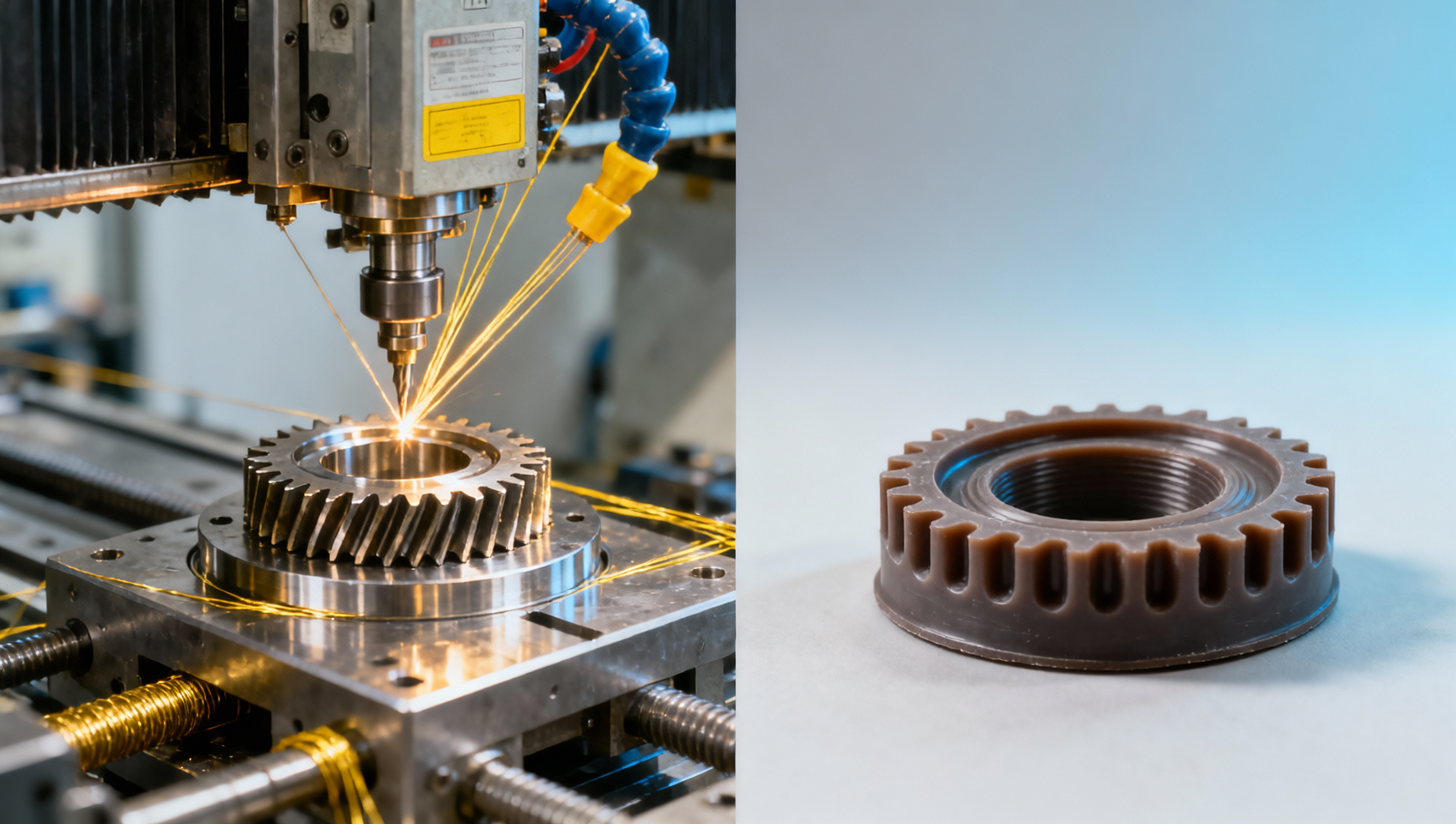
Gear manufacturing costs are shaped by far more than raw materials alone. From design complexity and tolerance demands to heat treatment, tooling, and production volume, every step affects pricing and long-term value. For buyers comparing gear manufacturing with precision processes like wire edm services or sourcing adjacent components such as custom molded rubber, understanding these cost drivers is essential to making smarter technical and commercial decisions.
In B2B sourcing, the quoted price of a gear rarely tells the full story. A lower unit price can hide higher inspection costs, longer lead times, increased scrap risk, or more downtime in the field. For procurement teams, technical evaluators, quality managers, and financial approvers, the real objective is not simply to buy gears cheaply, but to buy gears that meet load, noise, wear, and reliability targets at the right total cost.
This article breaks down the major factors that drive gear manufacturing costs, explains where price differences come from, and outlines practical steps to evaluate suppliers and specifications. Whether the application is industrial machinery, renewable energy systems, medical devices, robotics, or automotive subassemblies, the same cost logic applies: complexity, precision, process route, volume, and risk control all influence the final number.
Material Selection and Gear Geometry Set the First Cost Baseline
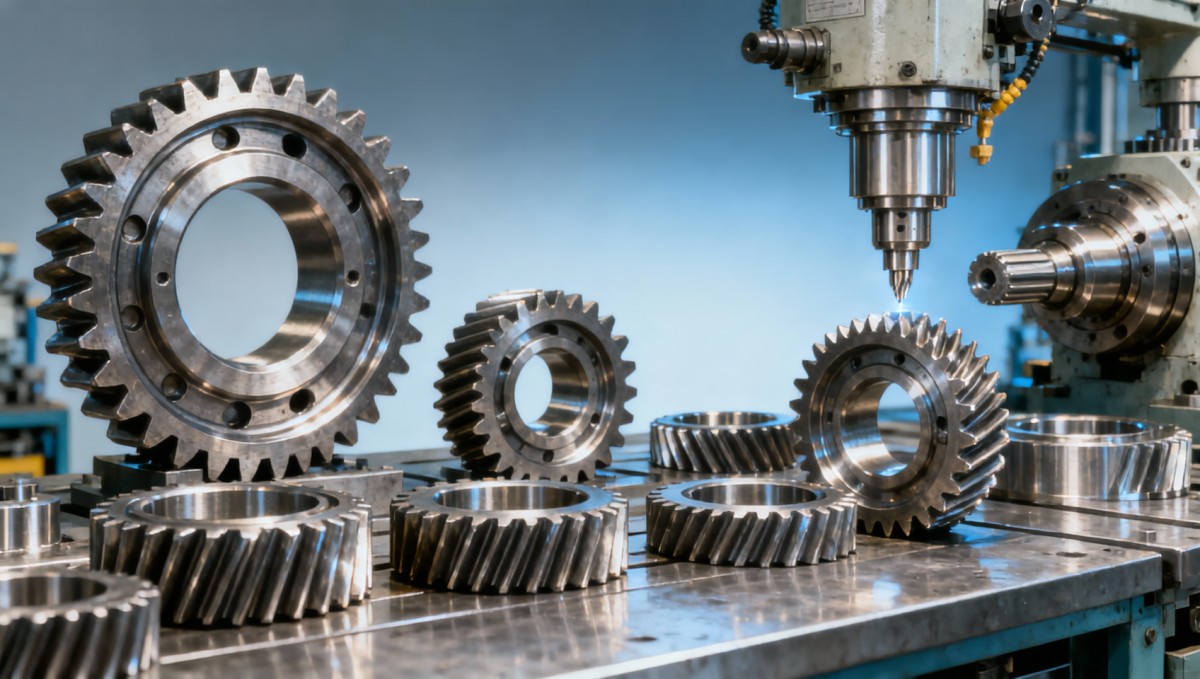
Material is the starting point of gear manufacturing costs, but it is only one layer of the pricing structure. Common gear materials include carbon steel, alloy steel, stainless steel, brass, bronze, engineering plastics, and specialty alloys. A simple spur gear in medium-carbon steel will usually cost less than a carburized alloy steel helical gear because the raw stock, machining behavior, and downstream heat-treatment requirements are very different.
Geometry has a direct effect on production time. Spur gears are generally less expensive than helical, bevel, or worm gears because the tooth form is easier to machine and inspect. As soon as the design includes angled teeth, crowned flanks, internal teeth, fine modules, or custom hub features, machine setup becomes more demanding. Even a 10% increase in geometry complexity can create a much larger increase in setup and inspection time when tolerances are tight.
Size also matters in both directions. Very large gears require more material, larger machine envelopes, and slower cycle times. Very small gears, especially those below module 1 or used in high-speed smart electronics or healthcare technology devices, may require micro-machining, specialized cutters, and finer quality verification. In both cases, the cost per piece rises because equipment utilization becomes more constrained.
From a procurement perspective, one of the most common mistakes is to compare two gear quotes without aligning design scope. A quote based on a rough-machined blank and another based on a fully ground, heat-treated, inspected gear are not comparable. Technical teams should confirm at least 6 baseline items before reviewing price: material grade, tooth form, module or DP, hardness target, tolerance class, and required documentation.
How design features influence unit price
Several design features increase manufacturing cost because they add cycle time, tooling wear, or quality risk:
- Thin web sections that require careful clamping and increase distortion risk during heat treatment.
- Internal splines, keyways, relief grooves, and threaded hubs that need extra operations after tooth cutting.
- Helix angles above 15° to 25°, which often increase machining and inspection complexity.
- Profile modifications such as tip relief or crowning for high-load and low-noise applications.
- Concentricity or runout limits below 0.02 mm, which may force secondary grinding or lapping.
The table below shows how common gear variables typically change cost behavior in industrial sourcing.
The key takeaway is that geometry and material do not act independently. A hard alloy with a fine-pitch helical profile carries a very different manufacturing route from a standard spur gear in mild steel. Buyers who define design intent clearly at RFQ stage can reduce pricing variance and avoid unnecessary engineering back-and-forth.
Tolerance, Surface Finish, and Heat Treatment Drive Precision Costs
Once material and basic design are fixed, precision requirements become one of the strongest cost multipliers in gear manufacturing. Tighter tolerances mean slower machining, more in-process checks, and often more advanced finishing methods. A gear acceptable for low-speed conveyor duty may not need the same profile accuracy as a gearbox component running at 3,000 rpm or above in smart manufacturing equipment.
Heat treatment adds another major layer of cost and risk. Through-hardening, induction hardening, carburizing, nitriding, and stress relieving all affect hardness, distortion, wear resistance, and downstream grinding needs. For example, a carburized gear may require additional stock allowance before hardening and post-heat-treatment finishing after distortion correction. That means more machining stages, more inspection points, and potentially a 15% to 40% increase in total processing cost depending on size and quality level.
Surface finish is closely tied to performance. Applications involving noise control, heavy load transfer, or long duty cycles may require grinding, honing, shaving, or lapping. These finishing processes improve meshing behavior and reduce transmission error, but they also extend production time. In sectors such as healthcare technology or advanced robotics, where backlash and quiet operation matter, buyers often accept higher precision costs to reduce field failure risk.
Inspection requirements must be priced in as well. If the purchase order requires full traceability, hardness records, material certificates, first article inspection, gear chart outputs, or 100% dimensional verification, the supplier’s quality workload increases. For a small batch of 20 to 50 parts, documentation cost per unit can be disproportionately high because setup and reporting time are spread across fewer pieces.
Typical precision-related cost multipliers
The following factors usually move a gear from a standard-cost part into a premium-cost category:
- Runout and concentricity requirements below 0.02 mm.
- Low-noise transmission applications that require profile correction and final grinding.
- Hardness targets above 58 HRC after carburizing or other case-hardening methods.
- Batch traceability by heat number, lot, and inspection record.
- Sector-specific cleanliness or documentation needs for regulated or critical equipment.
The table below helps procurement and engineering teams map common process choices to cost and performance outcomes.
In practice, many cost disputes come from underestimating how precision affects downstream operations. A drawing that looks only slightly stricter on paper can trigger a completely different process route. That is why technical review before RFQ approval is essential for project managers and finance teams alike.
Tooling, Setup Time, and Production Volume Explain Large Quote Gaps
Production volume is one of the clearest reasons why gear manufacturing costs vary so widely. A prototype batch of 5 pieces may carry engineering, setup, and tooling charges that make each unit appear expensive. The same part ordered at 500 or 5,000 units often has a much lower unit cost because fixed preparation costs are distributed across more parts. This is especially important for distributors, OEM buyers, and project-based sourcing teams working through pilot, validation, and ramp-up phases.
Tooling includes cutters, fixtures, inspection masters, soft jaws, special mandrels, broaches, and sometimes custom gauges. If a gear profile uses a standard hob or standard shaping tool, the supplier can often quote more competitively. If the tooth profile, module, pressure angle, or root form is non-standard, the supplier may need dedicated tooling with lead times of 2 to 6 weeks before production even begins.
Setup time is another hidden cost driver. CNC turning, hobbing, shaping, deburring, heat-treatment preparation, and final inspection each require machine changeover and operator time. For low-volume production, setup can represent a large share of total cost. That is why some suppliers recommend batching orders or annual blanket releases instead of frequent micro-orders. A planned quarterly release schedule can reduce administrative and setup cost compared with 12 fragmented monthly purchase orders.
Capacity utilization also affects price. Suppliers tend to quote differently when their machines are loaded at 70% versus 95%. Urgent orders, weekend overtime, external heat-treatment slots, and premium freight can all raise the actual cost even when the base manufacturing route remains unchanged. Finance approvers should therefore ask whether the quotation reflects normal lead time or expedited production.
When low volume becomes expensive
Low-volume production often makes sense for new product introduction, but buyers should understand where the premium comes from:
- Programming and tooling setup may be almost the same for 10 parts as for 100 parts.
- Inspection documentation takes a fixed amount of engineering time regardless of batch size.
- Minimum lot charges from outside heat-treatment or coating vendors still apply.
- Material purchase minimums may exceed actual prototype consumption.
Practical sourcing strategies
To control volume-related cost, many B2B buyers use a staged sourcing plan. First, validate the design with a small batch. Second, freeze critical features and simplify non-critical ones. Third, negotiate forecast-based pricing for 6 to 12 months once demand becomes predictable. This approach reduces redesign waste while giving suppliers enough visibility to optimize setup and procurement.
For applications adjacent to precision machining supply chains, such as assemblies that also use wire edm services or custom molded rubber parts, consolidated sourcing can also lower cost. Shared logistics, coordinated quality plans, and synchronized production schedules reduce overhead that would otherwise be spread across separate vendors.
Supplier Capability, Quality Control, and Lead Time Shape Total Cost of Ownership
The lowest quoted manufacturing cost does not always translate into the lowest ownership cost. Supplier capability affects consistency, process control, and delivery reliability. If a supplier lacks stable gear cutting capacity, metrology capability, or heat-treatment management, the buyer may face rework, shipment delays, or field issues that cost far more than the initial unit savings.
Quality control should be evaluated as a process, not just as a final inspection line on the quote. Strong suppliers control material incoming checks, in-process tooth verification, hardness validation, and final dimensional release. They also understand which features are functional and which are cosmetic. This matters for quality teams because over-inspection can inflate cost, while under-control can cause scrap rates to rise above acceptable levels such as 2% to 5% in repeat production.
Lead time reliability is equally important for project managers and supply chain teams. A nominal 3-week lead time means little if actual deliveries drift to 5 or 6 weeks. In industries such as advanced manufacturing and green energy, a delayed gear can hold up assembly, commissioning, or maintenance windows. The cost of downtime, missed installation dates, or line stoppage may be much greater than a 5% to 10% unit price difference.
Commercial terms can also influence the real cost picture. Payment terms, packaging level, export documentation, Incoterms, and after-sales response all affect risk. For global sourcing programs, procurement leaders should assess whether a supplier can support change notifications, revision control, replacement shipments, and engineering communication within 24 to 72 hours when an issue appears.
Supplier evaluation matrix for gear sourcing
The table below provides a practical framework for comparing gear suppliers beyond headline price.
This evaluation approach is particularly useful for enterprise decision-makers who must balance procurement, quality, and operational risk. In many cases, the best-value supplier is not the cheapest quote, but the one with the most stable process and the clearest communication path.
How Buyers Can Reduce Gear Manufacturing Costs Without Sacrificing Performance
Reducing gear manufacturing costs does not mean cutting quality blindly. The more effective approach is to remove non-essential cost while preserving functional performance. Many gears are overspecified because drawings are copied forward from older projects, legacy tolerances remain untouched, or design teams do not revisit assumptions after field data becomes available.
The first opportunity is design-for-manufacturing review. Buyers and engineering teams should identify which features are truly performance-critical. Not every face needs a premium finish, not every gear needs grinding, and not every application requires the highest hardness range. If the duty cycle, torque, and speed profile allow it, relaxing one or two non-critical features can reduce cost significantly while keeping reliability within target.
The second opportunity is process matching. For instance, if the application does not require ultra-low backlash, a hobbed and heat-treated gear may be sufficient without final grinding. Likewise, a standard material grade available locally may lower both material cost and lead time compared with an imported specialty alloy. These decisions should always be tied to the actual service environment, including temperature, lubrication, shock load, and expected life in hours or cycles.
The third opportunity is commercial planning. Better forecasting, standardized documentation, and bundled sourcing can reduce administrative waste. A buyer who provides a 6-month rolling forecast, frozen drawing revisions, and agreed inspection formats usually receives more stable pricing than a buyer issuing urgent, constantly changing spot orders.
Five practical cost-control actions
- Review whether tolerance bands below 0.02 mm are truly required for the application.
- Standardize modules, pressure angles, and bore features where possible to use common tooling.
- Separate prototype and mass-production strategy instead of forcing one process route for both.
- Align inspection scope with function, using full reports only on critical dimensions and launch stages.
- Compare total landed cost, including freight, duty, scrap risk, and delay exposure, not unit price alone.
Common buyer misconceptions
A frequent misconception is that higher hardness always means better value. In reality, over-hardening may increase brittleness or require additional finishing that the application does not need. Another misconception is that the lowest MOQ quote is always best for flexibility. Small lots can be useful, but repeated low-volume orders often produce the highest total annual cost once setup, freight, and approval workload are included.
For cross-functional teams, the strongest purchasing outcome usually comes from early collaboration among engineering, sourcing, quality, and finance. When these groups align on 4 core questions—what the gear must do, what variation is acceptable, how soon it is needed, and what risk is tolerable—cost decisions become much more rational.
FAQ: Questions buyers often ask about gear pricing
How much does batch size affect gear manufacturing costs?
It can be a major factor. Moving from a 10-piece prototype batch to a 500-piece production batch can sharply reduce unit price because setup, tooling, and documentation are spread over more parts. The actual reduction depends on part complexity, heat treatment, and inspection level.
Why do two suppliers quote very different prices for the same drawing?
Differences usually come from process assumptions. One supplier may include grinding, full reports, and outsourced heat treatment, while another may assume only basic machining and sampling inspection. Always compare scope line by line, including hardness, finish, documentation, packaging, and lead time.
When is a premium gear worth the added cost?
A premium gear is justified when failure risk, downtime cost, noise control, or regulatory demands are high. Examples include precision gearboxes, high-duty automation systems, medical devices, and energy equipment where replacement cost or service interruption exceeds the price difference of a better gear.
Gear manufacturing costs are driven by a layered mix of material choice, geometry, tolerance level, heat treatment, tooling, batch size, supplier capability, and delivery conditions. For B2B buyers, the most reliable way to control price is to define functional requirements clearly, challenge unnecessary specification tightness, and evaluate total cost of ownership rather than unit price in isolation.
TradeNexus Pro helps procurement leaders, technical evaluators, and enterprise teams make better sourcing decisions across advanced manufacturing and adjacent supply chains. If you are comparing gear suppliers, refining an RFQ package, or evaluating related processes such as wire edm services and custom molded rubber sourcing, now is the right time to get a clearer decision framework. Contact us to discuss your application, request a tailored sourcing perspective, or explore more industrial supply solutions.
Get weekly intelligence in your inbox.
No noise. No sponsored content. Pure intelligence.
 Apr 18, 2026TradeNexus Pro Launches Global Compliance RadarTradeNexus Pro Launches Global Compliance Radar
 Apr 18, 2026JIS T 2304:2026 Takes Effect June 1, 2026 for IVD SoftwareJIS T 2304:2026 Takes Effect June 1, 2026 for IVD Software
 Pathway for Rehab Devices with AI Modules") Apr 18, 2026FDA Updates 510(k) Pathway for Rehab Devices with AI ModulesFDA Updates 510(k) Pathway for Rehab Devices with AI Modules
Apr 18, 2026FDA Updates 510(k) Pathway for Rehab Devices with AI ModulesFDA Updates 510(k) Pathway for Rehab Devices with AI Modules Apr 18, 2026India BIS Approves 3 Chinese IoT Labs for IS 16444:2026 CertificationIndia BIS Approves 3 Chinese IoT Labs for IS 16444:2026 Certification
 Apr 18, 2026THE Alliance Launches Green Slot Priority for China PortsTHE Alliance Launches Green Slot Priority for China Ports
 Apr 18, 2026TÜV Rheinland Releases Dual-Standard ESS Certification Guide for ChinaTÜV Rheinland Releases Dual-Standard ESS Certification Guide for China
 Apr 18, 2026Vietnam Imposes AD Duties on Chinese Electronic ComponentsVietnam Imposes AD Duties on Chinese Electronic Components
 Apr 18, 2026SASO Launches PV Carbon Footprint Labeling from July 2026SASO Launches PV Carbon Footprint Labeling from July 2026
 Apr 18, 2026U.S. Adds 17 Smart Warehouse Robot Components to Export Control ListU.S. Adds 17 Smart Warehouse Robot Components to Export Control List
 Apr 18, 2026EU Enforces EN IEC 62443-4-2:2026 for Industrial Control Devices from 18 Apr 2026EU Enforces EN IEC 62443-4-2:2026 for Industrial Control Devices from 18 Apr 2026
 Apr 17, 2026Temperature data loggers drift unpredictably inside lithium-ion battery storage enclosuresTemperature data loggers drift unpredictably inside lithium-ion battery storage enclosures
 Apr 17, 2026Are solar microinverters really worth the extra cost?Are solar microinverters really worth the extra cost?
 Apr 17, 2026Bifacial solar panels: How much more energy can they generate?Bifacial solar panels: How much more energy can they generate?
 Apr 17, 2026Gear manufacturing: How to optimize production for high precision?Gear manufacturing: How to optimize production for high precision?
 Apr 17, 2026Why power transmission components fail earlier than expectedWhy power transmission components fail earlier than expected
 Apr 17, 2026Linear motion systems: belt drive or ball screw for speed?Linear motion systems: belt drive or ball screw for speed?
 Apr 17, 2026Industrial bearing suppliers: what signals reliable quality?Industrial bearing suppliers: what signals reliable quality?
 Apr 17, 2026When pneumatic valves wholesale gets expensive laterWhen pneumatic valves wholesale gets expensive later
 Apr 17, 2026Hydraulic cylinder fabrication mistakes that cause oil leaksHydraulic cylinder fabrication mistakes that cause oil leaks
 Apr 17, 2026Heavy equipment manufacturing delays often start hereHeavy equipment manufacturing delays often start here
 Apr 17, 2026Custom heatsinks: when a larger size solves nothingCustom heatsinks: when a larger size solves nothing
 Apr 17, 2026Electronic enclosure fabrication: steel or aluminum?Electronic enclosure fabrication: steel or aluminum?
 Apr 17, 2026Automotive parts machining tolerances that drive up scrapAutomotive parts machining tolerances that drive up scrap
 Apr 17, 2026Medical device manufacturing changes under tighter traceabilityMedical device manufacturing changes under tighter traceability
 Apr 17, 2026How to Choose Solid State Batteries in 2026How to Choose Solid State Batteries in 2026
 Apr 17, 2026Are Solid State Batteries Worth the Cost Yet?Are Solid State Batteries Worth the Cost Yet?
 Apr 17, 2026Commercial Energy Storage Sizing: What Matters Most?Commercial Energy Storage Sizing: What Matters Most?