How to Validate Ultrasonic Welding for Production
Validating ultrasonic welding for production is more than a quality checklist—it is a strategic step toward stable output, lower risk, and faster scale-up. For manufacturers evaluating process reliability alongside gear manufacturing, wire edm services, or custom molded rubber integration, a robust validation plan helps ensure repeatable weld strength, compliance, and long-term cost control.
In a B2B manufacturing environment, ultrasonic welding validation affects far more than the weld itself. It influences scrap rate, customer approval, launch timing, labor planning, and the confidence of quality, procurement, and finance teams. A weak validation process can create hidden costs that only appear after production ramps, when rework, field issues, or delayed approvals become expensive to correct.
For operators, validation defines stable machine settings and clear acceptance limits. For technical evaluators, it confirms that tooling, materials, and fixture design can deliver repeatable energy transfer. For enterprise decision-makers and budget approvers, it provides a data-backed basis for investment, capacity planning, and supplier selection.
This guide explains how to validate ultrasonic welding for production, what parameters matter most, where common risks arise, and how cross-functional teams can move from sample success to controlled, scalable manufacturing.
Why Ultrasonic Welding Validation Matters Before Full Production
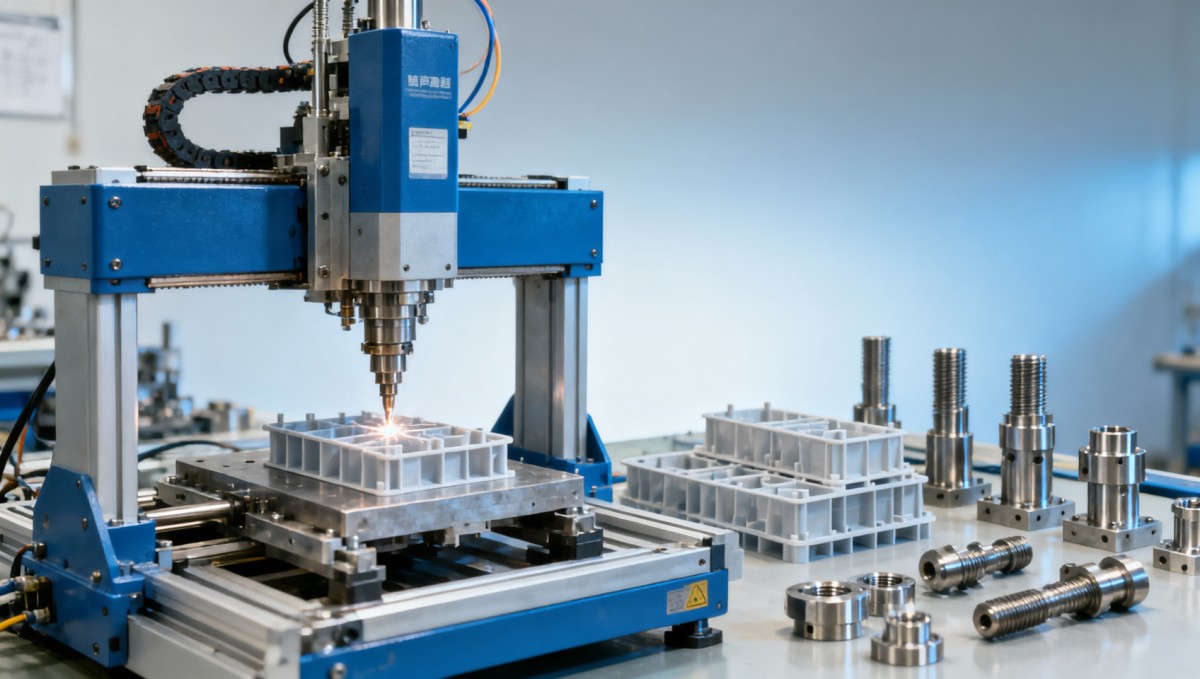
Ultrasonic welding is fast, clean, and highly repeatable when the process window is properly established. Yet production failures often happen because validation was limited to a few trial parts rather than a structured study. A weld that appears acceptable in a 20-piece pilot run may drift when production reaches 2,000 to 10,000 parts per shift, especially if material lots, ambient temperature, or operator handling vary.
In practical terms, validation confirms that the selected frequency, amplitude, pressure, weld time, hold time, and fixture design are capable of producing a consistent joint within defined acceptance criteria. For many assemblies, the acceptable process window is narrower than expected. A small shift in horn alignment or part positioning can reduce bond strength by 10% to 25%, even when the machine cycle still appears normal.
This is especially important in sectors such as smart electronics, healthcare components, and advanced manufacturing, where welded parts may support fluid sealing, electrical insulation, or dimensional stability. In these applications, cosmetic appearance alone is not enough. Validation should cover mechanical performance, visual standards, and process capability over multiple runs, shifts, and material batches.
From a business standpoint, early validation helps teams avoid late-stage changes. Adjusting horn geometry, fixture support, or part design after tooling release can add 2 to 6 weeks to a launch schedule. For procurement and project leaders, that delay may also affect downstream assembly schedules, logistics planning, and customer commitments.
Key goals of production validation
- Confirm that the weld meets defined strength, leak, appearance, or electrical isolation targets under normal production conditions.
- Establish a documented process window with upper and lower limits for core settings such as amplitude, pressure, energy, and cycle time.
- Demonstrate repeatability across at least 3 production runs, multiple operators when relevant, and more than 1 material lot.
- Create a clear baseline for training, troubleshooting, preventive maintenance, and change control.
Validation vs. simple sample approval
Sample approval is often limited to “does this part look and function acceptable today?” Validation asks a more demanding question: “can this process deliver acceptable parts repeatedly over time, at target volume, with acceptable variation?” That distinction is what separates a promising laboratory result from a production-ready manufacturing process.
Build the Validation Plan Around Materials, Tooling, and Critical Parameters
A reliable ultrasonic welding validation plan begins with process definition. Teams should first identify the polymer or material family, part geometry, weld joint style, and end-use requirement. Semi-crystalline and amorphous plastics behave differently during energy transfer, and mixed-material assemblies often require tighter control. If inserts, membranes, conductive elements, or custom molded rubber interfaces are involved, validation should account for those interfaces as separate risk points.
The next step is to define critical process parameters. In most industrial setups, the high-impact variables include machine frequency, amplitude percentage, trigger force, weld pressure, weld time or energy mode, hold time, and collapse distance. Typical validation plans test these factors in controlled ranges rather than changing all variables at once. A common approach is to screen 3 to 5 settings per variable to find the stable operating window before final confirmation runs.
Tooling should be validated as rigorously as machine settings. Horn material, horn face profile, booster ratio, fixture rigidity, and part support all influence energy delivery. If the fixture allows even slight rocking or uneven support, the weld may pass on one cavity position and fail on another. This is why dimensional checks on nests and contact surfaces are often as important as weld parameter records.
Cross-functional input matters here. Operators can identify loading variability, quality teams can define measurable acceptance criteria, and engineering can determine whether the design includes proper energy directors or joint features. Finance and project managers also benefit from this structured plan because it reduces trial-and-error costs during ramp-up.
Core inputs to define before testing
Before running validation, document the manufacturing baseline in a controlled format. The table below outlines common elements that should be fixed or tracked before formal production approval begins.
The key takeaway is that validation should be built on controlled inputs rather than operator intuition. If these baseline elements are not locked before testing, the team may mistake random short-term success for a robust process.
Recommended parameter review sequence
- Verify part dimensions and moisture condition before machine setup.
- Check horn and fixture alignment, then run a short setup batch of 10 to 30 parts.
- Adjust amplitude and pressure first, because these usually have the strongest effect on energy transfer.
- Refine weld time or energy setting, followed by hold time and collapse limits.
- Run confirmation batches under normal operator conditions and record all results.
A Practical Qualification Method: IQ, OQ, and PQ for Ultrasonic Welding
For organizations that require formal process control, ultrasonic welding validation is often organized into Installation Qualification (IQ), Operational Qualification (OQ), and Performance Qualification (PQ). This framework is especially useful in regulated or high-traceability sectors, but it also benefits general industrial manufacturing by creating a disciplined path from machine setup to production approval.
IQ confirms that the equipment and tooling are installed correctly. That includes checking machine configuration, power supply, horn and booster compatibility, calibration status, pneumatic stability, safety guarding, and software settings where applicable. Even in less regulated factories, this step prevents common startup errors such as incorrect booster ratio, unstable air pressure below target, or missing maintenance records.
OQ establishes the acceptable operating window. This is where teams test the upper and lower limits of major parameters and identify where failures begin. For example, amplitude may be tested across a 50% to 80% range, while hold time might be assessed from 0.2 to 1.0 seconds depending on part geometry. The goal is not only to find a setting that works, but also to understand how much variation the process can tolerate.
PQ then verifies long-run performance under realistic production conditions. This usually includes multiple batches, routine operators, standard material handling, and normal shift timing. A common PQ approach is to run 3 separate lots with predefined sample sizes and verify that failure rate, appearance, and critical measurements remain within specification.
Qualification framework at a glance
The following table shows how the three-stage qualification model can be applied to ultrasonic welding projects in production environments.
Using IQ, OQ, and PQ helps teams speak a common language across engineering, quality, and management. It also supports supplier and customer audits because the validation logic is clear, sequential, and evidence-based.
H4: Sample acceptance metrics to define during OQ and PQ
Acceptance metrics should match the function of the welded assembly. Typical measures include pull or peel force, burst pressure, leak rate, flash height, weld collapse distance, and visual defects per 100 parts. For some consumer or medical-adjacent components, teams may also include particulate limits, surface marking tolerance, or post-weld dimensional checks within ±0.1 mm to ±0.3 mm, depending on the design.
Where possible, define both minimum performance and alert thresholds. For example, if pull strength must stay above 180 N, an internal warning threshold at 200 N provides room for early correction before nonconformance occurs.
Testing, Documentation, and Risk Control During Validation
Testing should never be limited to visual inspection alone. A complete ultrasonic welding validation package includes destructive or functional testing, parameter records, operator observations, and traceability by batch. The exact methods depend on the application, but most production teams should combine at least 3 types of evidence: process data, part performance data, and visual or dimensional inspection data.
Documentation quality is equally important. A good validation report should show what was tested, who approved the protocol, which settings were used, how many samples were taken, what results were observed, and what control limits were finally released to production. If a customer complaint arises 6 or 12 months later, this documentation becomes critical for root-cause analysis and corrective action.
Risk control should also include maintenance and change management. Horn wear, fixture damage, air pressure drift, and material substitution are among the most common reasons a previously validated weld process starts to fail. Many plants review horn condition every 50,000 to 250,000 cycles depending on material abrasiveness, part geometry, and amplitude demand. A preventive check schedule reduces unplanned instability.
For sourcing and commercial teams, the lesson is clear: production-ready ultrasonic welding is not only about buying a machine. It requires a full control package that includes tooling governance, operator instructions, maintenance intervals, and approval rules for any process change.
Common failure modes and control actions
The table below outlines frequent ultrasonic welding validation risks and practical control actions that can be applied during pre-production and routine manufacturing.
A strong pattern emerges from these risks: most failures are preventable when validation includes not just initial testing, but also discipline around documentation, maintenance, and operator control.
H4: What should be included in the release package?
- Approved validation protocol and final report
- Released parameter sheet with target values and allowed ranges
- Tooling identification and revision record
- Inspection method, sample frequency, and reject criteria
- Maintenance checklist and change control procedure
How Buyers and Project Teams Should Evaluate a Production-Ready Welding Partner
When outsourcing welded assemblies or selecting an integration partner, buyers should assess more than machine capacity. A supplier may own modern ultrasonic welding systems, but that alone does not confirm production readiness. Procurement teams should ask how the supplier validates new parts, controls material variation, handles engineering changes, and documents release conditions. These questions matter as much as quoted unit cost.
For project managers and technical reviewers, supplier evaluation should include process engineering depth. Can the partner support Design for Manufacturability feedback before tooling is frozen? Can they explain whether time mode, energy mode, or collapse mode is more appropriate for the part? Do they maintain traceable records by lot and have a defined reaction plan when parts drift toward limits?
Finance approvers should also look at the total cost of poor validation. A lower initial quote may become more expensive if the supplier cannot maintain first-pass yield, causes frequent line stops, or requires repeated engineering interventions. In contrast, a supplier with disciplined validation may reduce hidden costs over a 12- to 24-month production lifecycle.
Distributors and agents can use the same framework when qualifying factories for customer programs. A documented validation methodology makes a supplier easier to represent because performance claims are backed by process evidence rather than sales language.
Supplier evaluation checklist
- Ask for the standard validation flow, including setup, trials, qualification, and release.
- Review how the supplier defines sample size, acceptance criteria, and retest conditions.
- Confirm whether tooling maintenance, horn inspection, and calibration are documented at fixed intervals.
- Verify change control for material substitution, tooling revision, software updates, or fixture replacement.
- Evaluate whether the supplier can support pilot, low-volume, and scaled production without changing the control logic.
H4: Questions worth asking during RFQ or technical review
A productive RFQ discussion should cover validation timing, expected pilot quantities, tooling lead time, and what tests are included in the quote. In many programs, early validation work takes 1 to 3 weeks after tooling readiness, while full qualification may take longer if leak testing, destructive testing, or multi-lot verification is required. Making these assumptions explicit helps avoid disputes later in the project.
Buyers should also ask whether the supplier can integrate ultrasonic welding into broader assembly flows that involve precision metal parts, molded elastomers, wire EDM components, or automated inspection. In advanced manufacturing, the value often comes from process integration rather than from a single isolated welding step.
FAQ: Common Questions About Validating Ultrasonic Welding for Production
Many teams understand the theory of ultrasonic welding but still face practical questions during launch, qualification, and supplier review. The answers below address frequent issues raised by engineers, quality teams, and commercial decision-makers.
How many samples are usually needed for validation?
There is no single universal number, because sample size depends on part criticality, test method, and customer requirements. In many industrial projects, teams begin with setup batches of 10 to 30 parts, then run formal OQ and PQ lots that may range from 30 to 100 pieces per condition or per lot. Higher-risk applications usually require more samples and more than 1 material batch.
What is the most common mistake during ultrasonic welding validation?
One of the most common mistakes is validating only the machine setting while ignoring fixture support, material condition, and operator handling. Another frequent error is approving a process based only on appearance without mechanical or functional testing. A weld can look acceptable yet still fail under load, pressure, or long-term use.
How often should a validated process be reviewed?
Review frequency depends on production volume and risk level. Many manufacturers perform first-off checks at the start of each shift, in-process checks every 2 to 4 hours, and formal process reviews after major changes such as horn replacement, fixture rework, or new material lots. A periodic capability review every quarter or every 6 months is also common for stable programs.
When should a process be revalidated?
Revalidation is typically required after significant changes to tooling, machine configuration, material grade, joint geometry, or end-use requirements. It may also be necessary if production data show recurring drift, elevated reject rates, or unexplained variation between lines or shifts. The trigger should be defined in the change control procedure before production release.
Validating ultrasonic welding for production is ultimately about proving repeatability under real operating conditions, not just achieving one successful trial. When manufacturers define critical parameters, qualify tooling, document IQ/OQ/PQ logic, and control risk after launch, they gain a more stable process, cleaner customer approvals, and better long-term cost performance.
For organizations operating across advanced manufacturing, smart electronics, healthcare technology, or integrated supply networks, a disciplined validation strategy also improves supplier alignment and project predictability. If you are reviewing ultrasonic welding capacity, scaling a new assembly, or comparing manufacturing partners, now is the right time to build a stronger validation roadmap.
Contact TradeNexus Pro to explore more production-focused insights, compare qualified manufacturing approaches, and get tailored guidance for your next ultrasonic welding or integrated assembly project.
Get weekly intelligence in your inbox.
No noise. No sponsored content. Pure intelligence.
 Apr 18, 2026TradeNexus Pro Launches Global Compliance RadarTradeNexus Pro Launches Global Compliance Radar
 Apr 18, 2026JIS T 2304:2026 Takes Effect June 1, 2026 for IVD SoftwareJIS T 2304:2026 Takes Effect June 1, 2026 for IVD Software
 Pathway for Rehab Devices with AI Modules") Apr 18, 2026FDA Updates 510(k) Pathway for Rehab Devices with AI ModulesFDA Updates 510(k) Pathway for Rehab Devices with AI Modules
Apr 18, 2026FDA Updates 510(k) Pathway for Rehab Devices with AI ModulesFDA Updates 510(k) Pathway for Rehab Devices with AI Modules Apr 18, 2026India BIS Approves 3 Chinese IoT Labs for IS 16444:2026 CertificationIndia BIS Approves 3 Chinese IoT Labs for IS 16444:2026 Certification
 Apr 18, 2026THE Alliance Launches Green Slot Priority for China PortsTHE Alliance Launches Green Slot Priority for China Ports
 Apr 18, 2026TÜV Rheinland Releases Dual-Standard ESS Certification Guide for ChinaTÜV Rheinland Releases Dual-Standard ESS Certification Guide for China
 Apr 18, 2026Vietnam Imposes AD Duties on Chinese Electronic ComponentsVietnam Imposes AD Duties on Chinese Electronic Components
 Apr 18, 2026SASO Launches PV Carbon Footprint Labeling from July 2026SASO Launches PV Carbon Footprint Labeling from July 2026
 Apr 18, 2026U.S. Adds 17 Smart Warehouse Robot Components to Export Control ListU.S. Adds 17 Smart Warehouse Robot Components to Export Control List
 Apr 18, 2026EU Enforces EN IEC 62443-4-2:2026 for Industrial Control Devices from 18 Apr 2026EU Enforces EN IEC 62443-4-2:2026 for Industrial Control Devices from 18 Apr 2026
 Apr 17, 2026Temperature data loggers drift unpredictably inside lithium-ion battery storage enclosuresTemperature data loggers drift unpredictably inside lithium-ion battery storage enclosures
 Apr 17, 2026Are solar microinverters really worth the extra cost?Are solar microinverters really worth the extra cost?
 Apr 17, 2026Bifacial solar panels: How much more energy can they generate?Bifacial solar panels: How much more energy can they generate?
 Apr 17, 2026Gear manufacturing: How to optimize production for high precision?Gear manufacturing: How to optimize production for high precision?
 Apr 17, 2026Why power transmission components fail earlier than expectedWhy power transmission components fail earlier than expected
 Apr 17, 2026Linear motion systems: belt drive or ball screw for speed?Linear motion systems: belt drive or ball screw for speed?
 Apr 17, 2026Industrial bearing suppliers: what signals reliable quality?Industrial bearing suppliers: what signals reliable quality?
 Apr 17, 2026When pneumatic valves wholesale gets expensive laterWhen pneumatic valves wholesale gets expensive later
 Apr 17, 2026Hydraulic cylinder fabrication mistakes that cause oil leaksHydraulic cylinder fabrication mistakes that cause oil leaks
 Apr 17, 2026Heavy equipment manufacturing delays often start hereHeavy equipment manufacturing delays often start here
 Apr 17, 2026Custom heatsinks: when a larger size solves nothingCustom heatsinks: when a larger size solves nothing
 Apr 17, 2026Electronic enclosure fabrication: steel or aluminum?Electronic enclosure fabrication: steel or aluminum?
 Apr 17, 2026Automotive parts machining tolerances that drive up scrapAutomotive parts machining tolerances that drive up scrap
 Apr 17, 2026Medical device manufacturing changes under tighter traceabilityMedical device manufacturing changes under tighter traceability
 Apr 17, 2026How to Choose Solid State Batteries in 2026How to Choose Solid State Batteries in 2026
 Apr 17, 2026Are Solid State Batteries Worth the Cost Yet?Are Solid State Batteries Worth the Cost Yet?
 Apr 17, 2026Commercial Energy Storage Sizing: What Matters Most?Commercial Energy Storage Sizing: What Matters Most?