Hydro turbine generators: when site conditions ruin output
Hydro turbine generators promise stable renewable output, but real-world site conditions often undermine efficiency, reliability, and ROI. For buyers, engineers, and project managers comparing net zero solutions, this article examines how water flow, head variation, sediment, and installation errors affect performance—and how tools like iot energy monitors and energy auditing tools support smarter evaluation and operational decisions.
In B2B hydro projects, the gap between nameplate capacity and delivered output is rarely caused by the generator alone. More often, the problem begins upstream: seasonal flow swings, incorrect head assumptions, abrasive solids, intake design flaws, civil tolerances, or weak monitoring. These factors affect small distributed systems, industrial self-generation plants, and utility-linked renewable assets alike.
For procurement teams, the risk is clear. A unit specified for 500 kW may spend much of the year operating at 55% to 75% of expected output if the site model is weak. For operators, poor site matching can mean vibration, cavitation, unplanned shutdowns, and higher maintenance intervals. For financial approvers, that translates into longer payback, uncertain cash flow, and avoidable retrofit costs.
The practical question is not whether hydro turbine generators can perform well. It is whether the site has been characterized with enough rigor to support the right turbine type, control logic, protection design, and monitoring architecture. That is where disciplined evaluation creates measurable gains.
Why site conditions matter more than brochure efficiency
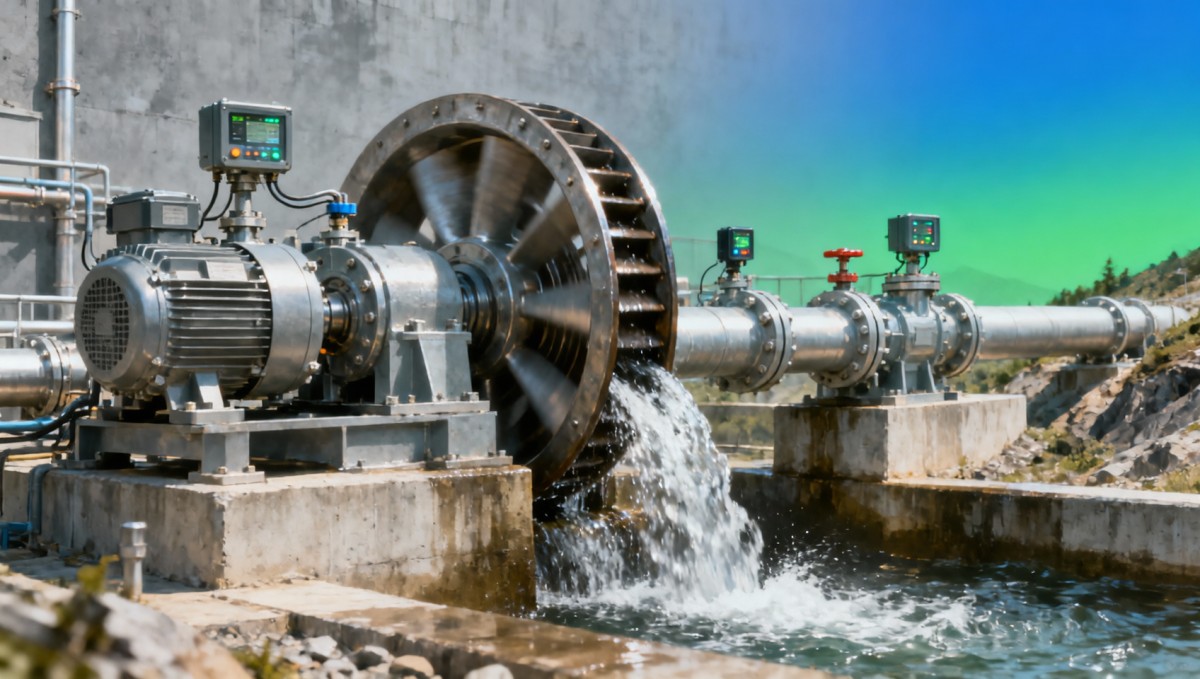
A hydro turbine generator may be sold with peak efficiency figures above 90%, but those values typically refer to a narrow operating window. Real projects must deal with variable flow, changing net head, intake losses, and mechanical wear. If actual site conditions sit outside the turbine’s efficient band for 4 to 8 months each year, annual energy yield can fall sharply even when equipment quality is acceptable.
The most important distinction is between design head and net head. Gross head might look attractive in early feasibility work, yet friction losses in penstocks, bends, screens, and valves often reduce usable head by 3% to 12%. On low-head sites, that loss can erase the expected advantage of a selected turbine type and shift the economics of the entire installation.
Flow duration is equally decisive. A site with strong peak flow for 2 months but weak flow for the remaining 10 months may not justify sizing purely for maximum output. Oversizing can leave the hydro turbine generator underloaded through much of the year, which lowers efficiency and can increase wear from unstable operation. In many projects, annual generation depends more on flow distribution than on peak flow volume.
Sediment and debris are another overlooked issue. Fine sand, silt, and gravel can erode runners, nozzles, guide vanes, and seals. In rivers with seasonal sediment spikes, component life may shorten from a typical 24-month inspection cycle to 6 to 12 months. This matters for procurement because a lower upfront equipment price can become more expensive once abrasion-related maintenance is included.
Installation geometry also affects output. Misalignment of shafting, poor concrete leveling, intake turbulence, or inaccurate sensor calibration can reduce conversion efficiency by several percentage points. In a project with tight margins, a 5% output loss combined with 7% more maintenance is enough to change investment approval outcomes.
Key site variables that change generator performance
Before final equipment selection, buyers and project teams should validate several technical variables rather than relying on a single hydrology summary. The list below is useful for pre-bid and pre-contract review.
- Flow profile across the year, ideally based on 12 months to 36 months of data rather than a short seasonal snapshot.
- Net head under different operating states, including dry season, wet season, and partial-load conditions.
- Sediment load, debris frequency, and likely abrasion intensity during high-flow events.
- Water chemistry, especially where corrosion, biofouling, or scaling may affect long-term reliability.
- Civil and hydraulic constraints such as intake geometry, penstock length, and allowable pressure fluctuation.
When these factors are quantified early, the hydro turbine generator can be selected around realistic annual energy yield instead of optimistic point performance. That improves both operational planning and board-level investment confidence.
How flow, head variation, and sediment reduce annual output
Three site conditions account for a large share of disappointing hydro results: unstable water flow, head fluctuation, and solid particle exposure. Each changes turbine behavior differently. Flow variation affects how often the unit can run near its best efficiency point. Head variation alters the hydraulic energy available. Sediment damages the physical surfaces that convert water energy into rotation.
For example, if minimum seasonal flow drops 40% below the design assumption, a turbine chosen for peak season may spend too many hours below its efficient operating range. In practical terms, the generator may still run, but annual kWh output per installed kW declines. That leads to lower revenue or weaker offset against purchased grid electricity.
Head variation can be equally serious on sites with long conveyance systems. Reservoir level shifts, intake submergence changes, and pipe friction at higher flow rates all affect delivered head. A project modeled at 28 meters may operate at 24 to 25 meters for extended periods. That 10% to 15% difference can alter turbine selection, control strategy, and expected payback.
Sediment introduces both immediate and cumulative losses. In abrasive waters, efficiency may decline gradually as runner edges erode. The decline might appear small at first, perhaps 1% to 3%, but after repeated high-silt seasons it can become a larger loss that triggers repair, coating renewal, or part replacement. For remote installations, the downtime cost can exceed the spare-part cost.
Typical site-condition impact pathways
The table below helps non-specialist stakeholders connect site conditions to commercial and operational consequences during hydro turbine generator evaluation.
The key takeaway is that hydro turbine generators should be evaluated on annual operating reality, not on isolated high-performance points. This is especially important for procurement teams comparing hydro with solar-plus-storage, diesel displacement, or broader net zero capital programs.
Common modeling mistakes
- Using average annual flow without checking monthly flow duration and low-flow availability.
- Assuming gross head is close enough to net head without hydraulic loss calculation.
- Ignoring sediment seasonality, especially in snowmelt, monsoon, or flood-prone basins.
- Applying standard efficiency curves to a site with highly variable operating conditions.
These errors are common in early-stage business cases. Correcting them before final vendor negotiation reduces change orders and limits disputes over whether the equipment or the site caused the underperformance.
Installation and commissioning errors that quietly destroy ROI
Even where hydrology is sound, hydro turbine generators can lose output because of avoidable installation mistakes. Commissioning problems do not always produce immediate failure. More often, they create a persistent 2% to 8% efficiency penalty, recurring alarms, or component stress that only becomes visible after several months of operation.
Alignment is one example. Minor angular or parallel misalignment between turbine and generator shafts can increase bearing load, vibration, and seal wear. In small and medium systems, errors greater than a few tenths of a millimeter may not stop startup, but they often shorten service intervals. This is especially risky where site teams rely on local civil contractors without specialist hydro experience.
Control tuning is another hidden issue. Governors, inverters, protection settings, and load controls need to match hydraulic behavior. Poor tuning can cause hunting, unstable frequency response, pressure fluctuation, or nuisance trips. That affects both energy capture and asset life, particularly in systems serving variable industrial loads or weak grids.
Intake and penstock workmanship also matter. Rough internal surfaces, sharp bends, air entrainment, leakage, or underdesigned supports increase hydraulic loss and risk. Where pipe supports are weak, vibration from pressure transients can build over time. A project that looks complete at handover may face avoidable remedial work within the first 6 to 18 months.
Instrumentation quality often receives too little budget attention. Yet if flow meters, pressure sensors, temperature probes, and electrical metering are poorly calibrated, the site team cannot distinguish between true performance loss and measurement error. That weakens maintenance decisions and complicates warranty discussions.
Commissioning checkpoints for project teams
A practical commissioning framework should cover mechanical, hydraulic, electrical, and data-validation stages. The following sequence is useful across many hydro turbine generator projects.
- Verify civil dimensions, intake geometry, and penstock integrity against as-built drawings before wet testing.
- Check shaft alignment, coupling condition, lubrication paths, and vibration baseline at no-load and loaded states.
- Validate governor and protection settings across at least 3 operating points: minimum load, nominal load, and high-flow condition.
- Calibrate flow and power measurement so performance testing has defensible reference data.
- Record 7 to 30 days of monitored operation before final acceptance wherever site schedule permits.
This staged approach helps buyers separate equipment defects from site execution issues. It also supports clearer acceptance criteria in EPC, OEM, or integrator contracts.
Smarter evaluation with iot energy monitors and energy auditing tools
Digital monitoring does not fix a poor site, but it makes poor assumptions visible much earlier. For hydro turbine generators, iot energy monitors can track generation output, operating hours, load factor, voltage behavior, and alarm history in near real time. When paired with hydraulic and environmental sensors, they help project teams understand whether the plant is underperforming because of water conditions, mechanical losses, or control settings.
Energy auditing tools add a second layer of value. They organize measured performance against design expectations and operating schedules. For example, an audit can compare monthly generation, specific yield, downtime categories, and auxiliary consumption over a 90-day or 180-day period. This makes investment review more objective for finance teams and more actionable for engineers.
For distributed industrial energy users, the combination is especially useful. A factory considering hydro as part of a net zero roadmap may need to compare hydro generation against process load profiles, purchased electricity tariffs, and backup power costs. Iot energy monitors provide interval data; energy auditing tools turn that data into decision support.
The most valuable outputs are not dashboards alone but exception insights: when output deviates by more than 5% from expected conditions, when vibration rises above baseline, when screen blockage causes recurring flow reduction, or when sediment-heavy periods justify a modified maintenance schedule. These insights can reduce avoidable downtime and improve contract governance.
What to monitor in a hydro asset
A strong monitoring scope should combine electrical, hydraulic, and mechanical indicators. Procurement teams can use the table below when reviewing system architecture from OEMs, integrators, or plant operators.
The commercial advantage of these tools is transparency. Instead of debating underperformance from assumptions alone, stakeholders can review time-stamped operating evidence. That is particularly valuable in cross-border projects, multi-party EPC structures, and distributed energy portfolios.
Where digital tools create the most value
- During the first 3 to 6 months after commissioning, when defects and tuning issues are easiest to identify.
- On sites with strong seasonal variation, where monthly analysis is more useful than annual averages.
- In procurement reviews, when comparing retrofit, upgrade, or maintenance contract options.
- For enterprise decision-makers building a wider net zero or distributed energy strategy.
In short, iot energy monitors and energy auditing tools improve not only operational visibility but also the quality of financial and procurement decisions around hydro turbine generators.
Procurement, risk control, and project selection criteria
Buying a hydro turbine generator is not just an equipment transaction. It is a site-dependent infrastructure decision with long operating life and multiple risk owners. Procurement directors, project managers, and business evaluators should therefore structure vendor review around site fit, support capability, and data transparency as much as purchase price.
A useful starting point is to compare offers using annual energy yield assumptions, not only turbine efficiency claims. Ask how the supplier models flow variation, net head loss, sediment exposure, and part-load performance. If two proposals have similar capex but one provides clearer assumptions and stronger monitoring integration, the latter often offers lower lifecycle risk.
Service and spare parts planning also deserve early attention. In remote or harsh sites, a 2-week delay for seals, bearings, nozzles, or control components can have significant revenue impact. Buyers should clarify lead times, critical spare recommendations, and field support response windows before contract award, not after startup problems emerge.
Quality and safety stakeholders should verify how the system handles overspeed protection, emergency shutdown, pressure relief, intake blockage, and safe isolation for maintenance. These are not secondary details. They affect regulatory compliance, worker safety, and insurance acceptance in many jurisdictions.
For distributors, agents, and channel partners, the same logic applies. Selling hydro turbine generators into unsuitable sites may win short-term orders but damage long-term market trust. Better channel performance comes from matching technology to site reality and supporting customers with credible pre-sale evaluation.
Decision framework for buyers and approvers
The table below summarizes a practical evaluation matrix that can be used by procurement teams, technical reviewers, and financial approvers during vendor comparison.
A disciplined selection framework reduces the chance that hydro turbine generators are judged by factory claims alone. For most enterprise buyers, bankable performance comes from the combination of site intelligence, installation quality, and monitoring readiness.
Frequently asked questions for B2B hydro projects
How much site data is enough before procurement?
A minimum of 12 months is often better than relying on a short campaign, but 24 to 36 months is stronger where seasonality is pronounced. If long-term measured data is unavailable, teams should document assumptions clearly and include risk allowances in the business case.
Can a hydro turbine generator still be viable on a variable-flow site?
Yes, but only if the turbine type, control strategy, and expected annual energy yield are aligned with the flow duration curve. Variable-flow sites often need more careful part-load evaluation and stronger monitoring from day one.
When should energy auditing tools be introduced?
Ideally during design and commissioning planning, not after a performance dispute begins. The first 90 days of operating data are often the most revealing period for detecting mismatch, tuning errors, and hidden losses.
What is the biggest procurement mistake?
Treating hydro turbine generators like standardized equipment rather than site-specific systems. Lowest upfront price can become the highest lifecycle cost if flow assumptions, head losses, sediment exposure, and support logistics are not properly evaluated.
Hydro turbine generators remain an important renewable power option, but their success depends on a disciplined reading of site reality. Water flow, head variation, sediment, installation quality, and data visibility all influence output, availability, and project economics far more than a brochure efficiency figure suggests.
For information researchers, operators, procurement teams, project leaders, and enterprise decision-makers, the strongest projects are those that combine sound hydrological assessment, practical commissioning control, and ongoing visibility through iot energy monitors and energy auditing tools. That combination supports better technical choices and more credible investment decisions.
If you are evaluating hydro assets, supplier options, or distributed energy opportunities across renewable and industrial sectors, TradeNexus Pro can help you compare solutions with greater clarity. Contact us to discuss your site conditions, request a tailored evaluation framework, or explore more decision-ready insights for your next project.
Get weekly intelligence in your inbox.
No noise. No sponsored content. Pure intelligence.
 Apr 18, 2026TradeNexus Pro Launches Global Compliance RadarTradeNexus Pro Launches Global Compliance Radar
 Apr 18, 2026JIS T 2304:2026 Takes Effect June 1, 2026 for IVD SoftwareJIS T 2304:2026 Takes Effect June 1, 2026 for IVD Software
 Pathway for Rehab Devices with AI Modules") Apr 18, 2026FDA Updates 510(k) Pathway for Rehab Devices with AI ModulesFDA Updates 510(k) Pathway for Rehab Devices with AI Modules
Apr 18, 2026FDA Updates 510(k) Pathway for Rehab Devices with AI ModulesFDA Updates 510(k) Pathway for Rehab Devices with AI Modules Apr 18, 2026India BIS Approves 3 Chinese IoT Labs for IS 16444:2026 CertificationIndia BIS Approves 3 Chinese IoT Labs for IS 16444:2026 Certification
 Apr 18, 2026THE Alliance Launches Green Slot Priority for China PortsTHE Alliance Launches Green Slot Priority for China Ports
 Apr 18, 2026TÜV Rheinland Releases Dual-Standard ESS Certification Guide for ChinaTÜV Rheinland Releases Dual-Standard ESS Certification Guide for China
 Apr 18, 2026Vietnam Imposes AD Duties on Chinese Electronic ComponentsVietnam Imposes AD Duties on Chinese Electronic Components
 Apr 18, 2026SASO Launches PV Carbon Footprint Labeling from July 2026SASO Launches PV Carbon Footprint Labeling from July 2026
 Apr 18, 2026U.S. Adds 17 Smart Warehouse Robot Components to Export Control ListU.S. Adds 17 Smart Warehouse Robot Components to Export Control List
 Apr 18, 2026EU Enforces EN IEC 62443-4-2:2026 for Industrial Control Devices from 18 Apr 2026EU Enforces EN IEC 62443-4-2:2026 for Industrial Control Devices from 18 Apr 2026
 Apr 17, 2026Temperature data loggers drift unpredictably inside lithium-ion battery storage enclosuresTemperature data loggers drift unpredictably inside lithium-ion battery storage enclosures
 Apr 17, 2026Are solar microinverters really worth the extra cost?Are solar microinverters really worth the extra cost?
 Apr 17, 2026Bifacial solar panels: How much more energy can they generate?Bifacial solar panels: How much more energy can they generate?
 Apr 17, 2026Gear manufacturing: How to optimize production for high precision?Gear manufacturing: How to optimize production for high precision?
 Apr 17, 2026Why power transmission components fail earlier than expectedWhy power transmission components fail earlier than expected
 Apr 17, 2026Linear motion systems: belt drive or ball screw for speed?Linear motion systems: belt drive or ball screw for speed?
 Apr 17, 2026Industrial bearing suppliers: what signals reliable quality?Industrial bearing suppliers: what signals reliable quality?
 Apr 17, 2026When pneumatic valves wholesale gets expensive laterWhen pneumatic valves wholesale gets expensive later
 Apr 17, 2026Hydraulic cylinder fabrication mistakes that cause oil leaksHydraulic cylinder fabrication mistakes that cause oil leaks
 Apr 17, 2026Heavy equipment manufacturing delays often start hereHeavy equipment manufacturing delays often start here
 Apr 17, 2026Custom heatsinks: when a larger size solves nothingCustom heatsinks: when a larger size solves nothing
 Apr 17, 2026Electronic enclosure fabrication: steel or aluminum?Electronic enclosure fabrication: steel or aluminum?
 Apr 17, 2026Automotive parts machining tolerances that drive up scrapAutomotive parts machining tolerances that drive up scrap
 Apr 17, 2026Medical device manufacturing changes under tighter traceabilityMedical device manufacturing changes under tighter traceability
 Apr 17, 2026How to Choose Solid State Batteries in 2026How to Choose Solid State Batteries in 2026
 Apr 17, 2026Are Solid State Batteries Worth the Cost Yet?Are Solid State Batteries Worth the Cost Yet?
 Apr 17, 2026Commercial Energy Storage Sizing: What Matters Most?Commercial Energy Storage Sizing: What Matters Most?