Industrial Packaging Robots: When Manual Packing Costs More
Manual packing often looks cheaper on paper, but rising labor costs, inconsistency, downtime, and safety risks tell a different story. For procurement teams, engineers, and operations leaders evaluating industrial packaging robots, the real question is not upfront price, but total cost per unit, throughput stability, and long-term scalability in competitive global supply chains.
In many factories, warehouses, and contract packaging environments, manual end-of-line work still depends on labor-intensive tasks such as picking, orienting, carton loading, case packing, palletizing, labeling coordination, and rework handling. The hidden cost is not only wages. It includes training time, shift gaps, variable packing quality, injury exposure, overtime spikes, and the operational drag caused by frequent changeovers.
Industrial packaging robots are no longer limited to high-volume automotive or electronics plants. Today they are widely assessed by food processors, medical device packers, consumer goods manufacturers, e-commerce fulfillment operators, and multi-SKU exporters that need repeatability, traceability, and faster response to changing order profiles. For decision-makers, the practical issue is whether robotic packing improves the economics of every packed unit over 12, 24, and 36 months.
For the audience TradeNexus Pro serves, including operators, technical evaluators, buyers, project leaders, finance reviewers, quality teams, and distribution partners, the answer depends on measurable factors: cycle time, payload, footprint, uptime target, integration effort, maintenance planning, and the ability to support future throughput expansion without rebuilding the line from scratch.
Why Manual Packing Becomes More Expensive Than Expected
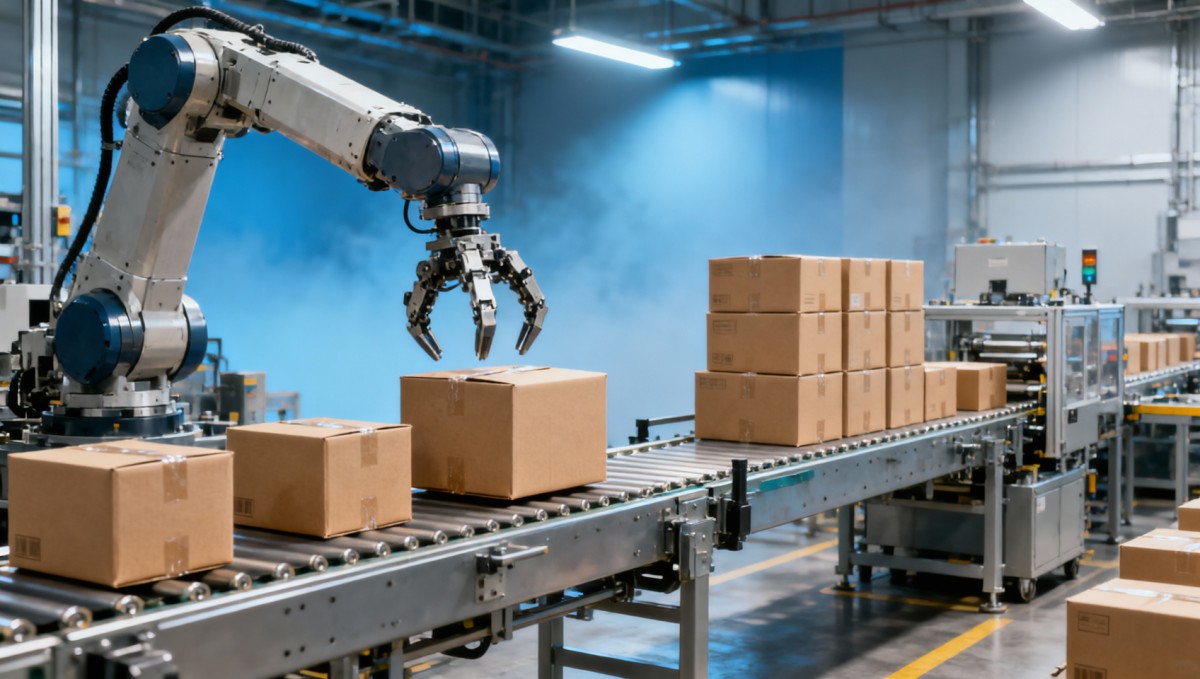
Manual packing cost is often underestimated because procurement spreadsheets usually focus on hourly wage rates rather than the full operating picture. A line that appears low cost at 6 to 10 operators per shift may become significantly more expensive once absenteeism, training, overtime, error correction, and seasonal labor premiums are added. In sectors with 2 or 3 shifts per day, the yearly labor exposure rises quickly.
There is also the issue of throughput volatility. A manual team may pack 12 cartons per minute during a stable run, then fall to 8 or 9 cartons per minute when fatigue, product variation, or shift changes occur. That variation affects upstream machine utilization and downstream shipping schedules. When production planning depends on narrow dispatch windows, a 10% to 20% output fluctuation can create avoidable backlog and expedite costs.
Quality inconsistency is another hidden cost. Uneven case loading, wrong orientation, damaged primary packs, poor sealing presentation, and labeling mismatch can increase reject rates. Even a defect range of 1% to 3% becomes costly at scale. For regulated or premium product categories, rework labor and inspection overhead can exceed the savings that manual packing seemed to offer at the start of the project.
Safety and ergonomics matter as well. Repetitive lifting, twisting, and awkward reach motions increase the probability of strain injuries. The direct cost is not limited to compensation or medical leave. It also includes temporary staffing, production slowdown, and quality disruption during workforce replacement. In fast-moving packaging cells, reducing repetitive manual handling by even 50% can improve operational resilience.
The Cost Elements Buyers Often Miss
Before comparing manual packing with industrial packaging robots, teams should map the full cost structure instead of using labor rate alone. A realistic review usually includes at least 6 cost categories.
- Direct labor across all shifts, including overtime and temporary staffing premiums.
- Training and onboarding time, especially in facilities with turnover above 10% to 15% annually.
- Packing errors, product damage, and rework labor linked to inconsistency.
- Downtime during shift handovers, breaks, and labor shortages.
- Safety-related costs, ergonomic interventions, and insurance exposure.
- Lost production opportunity when output cannot scale during demand peaks.
The comparison below shows why apparent savings can disappear after the first year of operation.
The key takeaway is that manual packing may remain viable for very low-volume or highly irregular tasks, but once throughput becomes stable and labor dependency spreads across multiple shifts, industrial packaging robots usually offer a more predictable cost structure and stronger long-term control.
Where Industrial Packaging Robots Create Measurable Value
The strongest business case for industrial packaging robots appears in environments with repetitive motion, moderate to high throughput, and a need for consistent pack presentation. Typical candidates include case packing lines running 15 to 40 picks per minute, palletizing cells handling 8 to 20 cases per minute, and mixed-SKU lines where software-driven recipe management reduces manual adjustment time.
For operators and line managers, robotic packaging reduces physically demanding tasks and shifts labor toward supervision, replenishment, exception handling, and quality checks. For engineering teams, the value lies in repeatability and data visibility. A robotic cell can be tied into sensors, conveyors, barcode readers, checkweighers, and reject systems, making it easier to trace where errors originate and how often they occur.
For procurement and finance teams, the value is best expressed through total cost per packed unit. If a manual line needs 8 workers across 2 shifts and a robotic alternative reduces that to 2 or 3 support operators, the savings profile becomes meaningful even after accounting for tooling, maintenance parts, integrator support, and training. Payback windows in many packaging projects are assessed within 18 to 36 months rather than a few weeks.
Quality and brand protection also matter. Industrial packaging robots can maintain stable pack patterns, handle fragile products with tuned grippers, and reduce mishandling during transfer. In export-driven supply chains, cleaner and more consistent secondary packaging helps reduce transit damage claims and improves downstream warehouse handling efficiency.
Typical Use Cases Across Multi-Industry Packaging Operations
Not every task needs the same robotic approach. Selection depends on product geometry, packaging format, cycle speed, and changeover frequency.
The table highlights a common pattern: robotics delivers the greatest value where labor intensity overlaps with quality sensitivity and throughput discipline. That is why industrial packaging robots are increasingly evaluated not as a labor substitution tool alone, but as a production control asset.
Signals That a Packaging Line Is Ready for Automation
- The same packing task repeats for more than 60% of scheduled production hours.
- Labor availability is unstable across 2 or more shifts.
- Packaging errors, rework, or product damage exceed an internal threshold such as 1% to 2%.
- Demand peaks require overtime or temporary labor for 3 months or more per year.
- Ergonomic risk assessments show repeated lifting, reach, or twist motions beyond acceptable limits.
If several of these signals are present, the decision should move from “Can we automate?” to “Which robotic architecture fits our product mix and financial target?”
How to Evaluate Industrial Packaging Robots for Procurement and Engineering
A sound evaluation process must balance technical feasibility with commercial discipline. Many failed automation projects result from selecting a robot based only on payload or speed while ignoring product variability, infeed conditions, or tooling complexity. The best purchasing decisions usually compare at least 4 dimensions: process fit, integration scope, lifecycle cost, and service support.
Process fit starts with the product and package. Teams should review pack dimensions, weight range, orientation requirements, primary package rigidity, carton style, and acceptable cycle rate. A robot that handles 20 kg may still be a poor fit if the gripper cannot deal with thin film-wrapped items or if the line requires frequent changeovers between 6 pack formats in one shift.
Integration scope is equally important. Industrial packaging robots rarely work alone. They depend on conveyors, guarding, HMI, sensors, end-of-arm tooling, code reading, reject logic, and line control handshakes. A low initial equipment quote can become expensive if integration exclusions add 15% to 30% during installation. Buyers should ask for a clear boundary definition before approval.
Lifecycle cost should include preventive maintenance frequency, spare parts lead times, operator training needs, software backup procedures, and remote diagnostics availability. For global supply chains, a 48-hour spare part response versus a 2-week delay can have a major impact on service continuity. Finance teams should therefore review not only capital expenditure but also the annual support model.
Core Selection Criteria
The checklist below helps align procurement, engineering, operations, and quality teams before a final sourcing decision.
- Define actual line speed requirements in units per minute, not best-case estimates.
- Confirm payload, reach, and gripper suitability for the full product range, not only the main SKU.
- Review changeover time target, such as under 10 minutes or under 20 minutes, depending on line complexity.
- Check footprint and access for cleaning, maintenance, and safe manual intervention.
- Map communication needs with upstream and downstream equipment.
- Evaluate vendor training, commissioning plan, and support coverage by region.
A structured comparison table can prevent late-stage surprises and improve budget approval quality.
For enterprise buyers, the best proposal is rarely the cheapest quote. It is the option with the clearest performance definition, realistic integration scope, and controllable lifecycle risk.
Implementation, Risk Control, and Realistic ROI Planning
Successful deployment of industrial packaging robots depends as much on implementation discipline as on equipment selection. A typical project may run for 8 to 20 weeks depending on cell complexity, site readiness, guarding requirements, and software integration. Delays often occur not because the robot is late, but because conveyors, electrical drops, compressed air, or product samples were not ready for testing.
Project managers should break the rollout into defined stages. Early simulation or proof-of-concept work is useful when products are unstable, slippery, deformable, or visually inconsistent. In these cases, the gripper and infeed design deserve as much attention as the robot arm itself. A technically strong robot can still underperform if product presentation to the pick point is inconsistent.
Risk control should also include acceptance criteria. Teams should agree in advance on target throughput, changeover time, reject rate, safety interlocks, and operator handoff requirements. For example, a site acceptance plan might specify 95% to 98% sustained runtime during a controlled test window, or recipe changeover under 15 minutes with trained staff. Clear targets reduce disputes and protect both buyer and supplier.
ROI planning should be conservative. It is better to model savings using base-case assumptions than best-case projections. Include direct labor reduction, reduced rework, lower injury exposure, improved throughput stability, and possible floor-space optimization, but also include training, maintenance, tooling replacement, and support costs. This approach produces a finance case that can survive executive review.
A Practical 5-Step Deployment Framework
- Baseline the current line: labor count, units per hour, defect rate, downtime causes, and changeover time.
- Validate technical fit: product handling tests, gripper assessment, line interface mapping, and safety concept review.
- Lock project scope: FAT and SAT criteria, training deliverables, spare parts package, and documentation requirements.
- Commission in phases: dry run, live product run, supervised ramp-up, and operator handover.
- Track post-launch results for 30, 60, and 90 days against the approved business case.
Common Mistakes That Increase Payback Time
- Using peak theoretical speed rather than sustained line speed for ROI calculations.
- Ignoring the cost of infeed correction, carton quality variation, or unstable upstream processes.
- Underestimating operator training and maintenance ownership in the first 4 to 12 weeks.
- Choosing a rigid design for a product portfolio that changes every quarter.
- Approving a quote without a detailed interface and responsibility matrix.
When these risks are managed early, industrial packaging robots can move from a capital expenditure debate to a supply chain performance improvement program with measurable operational benefits.
Frequently Asked Questions for Buyers and Plant Teams
Many organizations reach the same questions when comparing manual packing and automated packaging cells. The answers below reflect the issues most often raised by operations, engineering, quality, and commercial reviewers.
How do we know if our packaging volume is high enough for robotics?
There is no single threshold, but robotic automation becomes easier to justify when the task is repetitive, runs across multiple shifts, and causes ongoing labor strain or inconsistency. Even moderate lines in the 10 to 20 units-per-minute range may qualify if changeovers are manageable and labor costs are rising. Volume alone should not drive the decision; stability and labor dependency matter just as much.
Are industrial packaging robots only suitable for large enterprises?
No. Smaller manufacturers, contract packers, and regional exporters increasingly adopt compact robotic cells when they face labor shortages, product damage, or the need for more consistent end-of-line output. The stronger fit is not company size but process repeatability, packaging complexity, and growth outlook over the next 2 to 3 years.
What should finance teams review beyond capital price?
Finance reviewers should look at annual labor savings, maintenance budget, tooling wear, spare parts policy, training scope, expected uptime, and the cost of lost output if the line remains manual. They should also ask how sensitive the payback model is to lower-than-expected throughput or delayed ramp-up. A credible case usually includes base, moderate, and stress scenarios.
How long does implementation usually take?
A straightforward packaging robot cell may be planned and installed in roughly 8 to 12 weeks, while more complex multi-SKU lines or integrated palletizing systems may require 12 to 20 weeks. The timeline depends on guarding, controls integration, site readiness, sample availability, and acceptance testing requirements. Planning discipline often has a bigger impact than hardware lead time alone.
What should quality and safety teams verify before sign-off?
They should verify guarding layout, emergency stop logic, operator access zones, product handling integrity, and repeatability under real production conditions. Quality teams should also review pack orientation accuracy, seal-area protection, barcode or label interaction if applicable, and reject handling logic. These checks are especially important in sectors where packaging presentation affects downstream compliance or customer acceptance.
Manual packing may still have a place in low-volume or highly unpredictable workflows, but in many modern production environments it costs more than expected once variability, labor pressure, safety exposure, and quality drift are fully measured. Industrial packaging robots help convert end-of-line operations from a labor-sensitive bottleneck into a more stable, scalable, and data-driven process.
For procurement leaders, engineers, project owners, and finance approvers, the best decisions come from evaluating total cost per unit, realistic throughput, integration scope, and post-installation support rather than purchase price alone. That is where a strategic intelligence approach creates value across sourcing, operations, and long-term capacity planning.
If you are assessing industrial packaging robots for your facility, TradeNexus Pro can help you compare solution paths, clarify supplier conversations, and frame a stronger business case for approval. Contact us to explore tailored packaging automation insights, review technical considerations, and identify the right next step for your production environment.
Get weekly intelligence in your inbox.
No noise. No sponsored content. Pure intelligence.
 Apr 18, 2026TradeNexus Pro Launches Global Compliance RadarTradeNexus Pro Launches Global Compliance Radar
 Apr 18, 2026JIS T 2304:2026 Takes Effect June 1, 2026 for IVD SoftwareJIS T 2304:2026 Takes Effect June 1, 2026 for IVD Software
 Pathway for Rehab Devices with AI Modules") Apr 18, 2026FDA Updates 510(k) Pathway for Rehab Devices with AI ModulesFDA Updates 510(k) Pathway for Rehab Devices with AI Modules
Apr 18, 2026FDA Updates 510(k) Pathway for Rehab Devices with AI ModulesFDA Updates 510(k) Pathway for Rehab Devices with AI Modules Apr 18, 2026India BIS Approves 3 Chinese IoT Labs for IS 16444:2026 CertificationIndia BIS Approves 3 Chinese IoT Labs for IS 16444:2026 Certification
 Apr 18, 2026THE Alliance Launches Green Slot Priority for China PortsTHE Alliance Launches Green Slot Priority for China Ports
 Apr 18, 2026TÜV Rheinland Releases Dual-Standard ESS Certification Guide for ChinaTÜV Rheinland Releases Dual-Standard ESS Certification Guide for China
 Apr 18, 2026Vietnam Imposes AD Duties on Chinese Electronic ComponentsVietnam Imposes AD Duties on Chinese Electronic Components
 Apr 18, 2026SASO Launches PV Carbon Footprint Labeling from July 2026SASO Launches PV Carbon Footprint Labeling from July 2026
 Apr 18, 2026U.S. Adds 17 Smart Warehouse Robot Components to Export Control ListU.S. Adds 17 Smart Warehouse Robot Components to Export Control List
 Apr 18, 2026EU Enforces EN IEC 62443-4-2:2026 for Industrial Control Devices from 18 Apr 2026EU Enforces EN IEC 62443-4-2:2026 for Industrial Control Devices from 18 Apr 2026
 Apr 17, 2026Temperature data loggers drift unpredictably inside lithium-ion battery storage enclosuresTemperature data loggers drift unpredictably inside lithium-ion battery storage enclosures
 Apr 17, 2026Are solar microinverters really worth the extra cost?Are solar microinverters really worth the extra cost?
 Apr 17, 2026Bifacial solar panels: How much more energy can they generate?Bifacial solar panels: How much more energy can they generate?
 Apr 17, 2026Gear manufacturing: How to optimize production for high precision?Gear manufacturing: How to optimize production for high precision?
 Apr 17, 2026Why power transmission components fail earlier than expectedWhy power transmission components fail earlier than expected
 Apr 17, 2026Linear motion systems: belt drive or ball screw for speed?Linear motion systems: belt drive or ball screw for speed?
 Apr 17, 2026Industrial bearing suppliers: what signals reliable quality?Industrial bearing suppliers: what signals reliable quality?
 Apr 17, 2026When pneumatic valves wholesale gets expensive laterWhen pneumatic valves wholesale gets expensive later
 Apr 17, 2026Hydraulic cylinder fabrication mistakes that cause oil leaksHydraulic cylinder fabrication mistakes that cause oil leaks
 Apr 17, 2026Heavy equipment manufacturing delays often start hereHeavy equipment manufacturing delays often start here
 Apr 17, 2026Custom heatsinks: when a larger size solves nothingCustom heatsinks: when a larger size solves nothing
 Apr 17, 2026Electronic enclosure fabrication: steel or aluminum?Electronic enclosure fabrication: steel or aluminum?
 Apr 17, 2026Automotive parts machining tolerances that drive up scrapAutomotive parts machining tolerances that drive up scrap
 Apr 17, 2026Medical device manufacturing changes under tighter traceabilityMedical device manufacturing changes under tighter traceability
 Apr 17, 2026How to Choose Solid State Batteries in 2026How to Choose Solid State Batteries in 2026
 Apr 17, 2026Are Solid State Batteries Worth the Cost Yet?Are Solid State Batteries Worth the Cost Yet?
 Apr 17, 2026Commercial Energy Storage Sizing: What Matters Most?Commercial Energy Storage Sizing: What Matters Most?