Lean Manufacturing Consulting Works Best When Bottlenecks Are Visible
Lean manufacturing consulting delivers the strongest results when production bottlenecks are not guessed at, but made visible through process data, workflow observation, and measurable operational constraints. For information researchers comparing improvement strategies, this is the key principle to understand: lean does not create value by applying generic tools everywhere. It creates value by identifying where flow is blocked, where capacity is lost, and where variation is damaging throughput, cost, and service performance.
That matters because many manufacturers already know they have waste, delays, overtime, quality losses, or underused assets. What they often do not know is which problem is the real system constraint. Without that clarity, improvement programs can become broad, expensive, and slow to prove their worth. When bottlenecks are visible, lean manufacturing consulting becomes far more targeted, easier to justify, and more likely to produce measurable gains.
For procurement leaders, supply chain managers, operations analysts, and enterprise decision-makers evaluating external advisory support, the practical question is not whether lean principles sound compelling. It is whether a consulting engagement can uncover the few operational constraints that matter most, prioritize interventions correctly, and translate those changes into throughput, resilience, and ROI. This article explains why visible bottlenecks are the foundation of effective lean work, how consultants make them visible, and how organizations can judge whether an engagement is likely to deliver real business value.
Why visible bottlenecks determine whether lean manufacturing consulting works
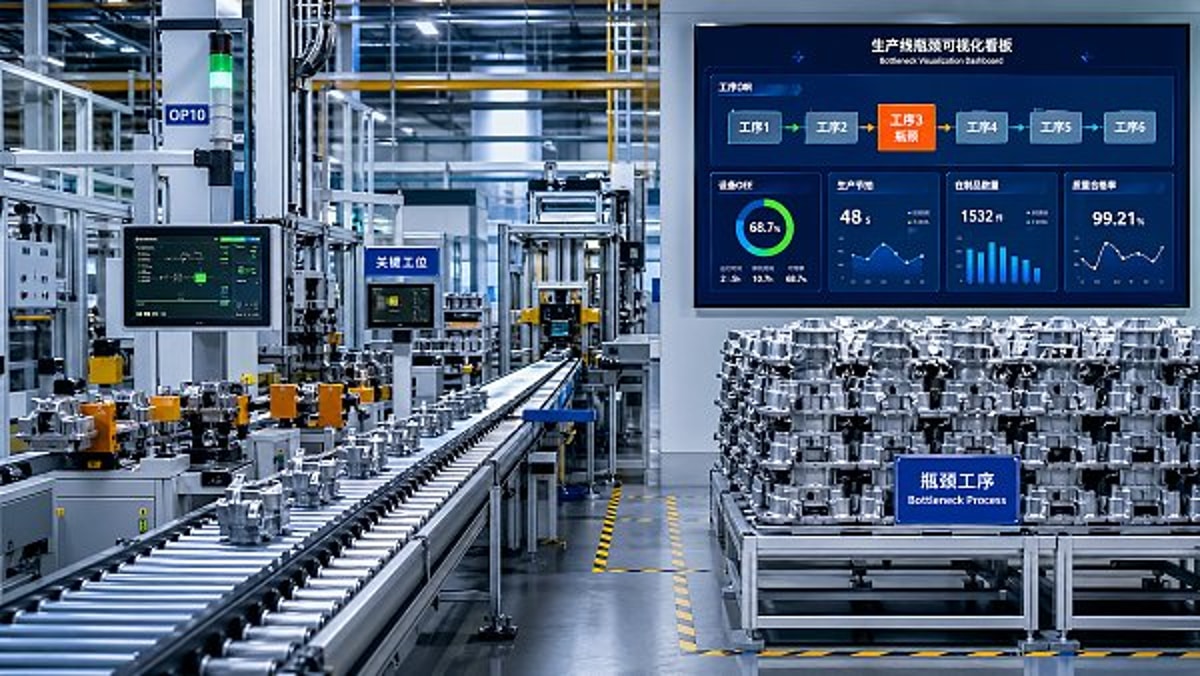
The central promise of lean manufacturing consulting is improved flow. In practice, flow improves only when the system’s limiting points are understood. A bottleneck is the part of the process that restricts overall output, creates queues, increases waiting time, and amplifies downstream and upstream waste. If consultants and internal teams cannot see that constraint clearly, they risk improving noncritical steps while the true source of delay remains untouched.
This is one reason some lean initiatives produce enthusiasm but limited financial impact. Teams may run 5S events, redesign layouts, standardize work instructions, or introduce visual controls in several areas. Those steps are not useless, but if they are not aligned to the main operational constraint, the plant may still miss shipments, carry too much work-in-progress, or rely on expediting to stay afloat. The company gets activity, not transformation.
Visible bottlenecks change that dynamic. Once the constraint is verified, consulting efforts can shift from broad improvement rhetoric to precise system-level action. The conversation becomes concrete: Which machine family limits throughput? Which approval step creates waiting? Which changeover pattern starves downstream operations? Which supplier handoff keeps disrupting flow? That precision is where lean manufacturing consulting starts to justify its cost.
What information-focused readers usually want to know before they trust a lean initiative
Readers in the research phase are usually not looking for motivational summaries of lean. They want to know how to tell whether a consulting engagement will be strategic rather than generic. Their core concerns tend to include four questions: how the bottleneck will be identified, what business outcomes can realistically improve, how long results may take, and what risks can undermine the effort.
They also want to understand whether lean applies only to the factory floor or whether it addresses cross-functional friction such as planning errors, engineering delays, procurement variability, maintenance reliability, and quality escalation loops. In modern manufacturing, the most damaging bottleneck is not always a machine. It may be information latency, scheduling instability, a test-and-release queue, or poor synchronization between suppliers and production.
Another common concern is whether consultants will impose a fixed playbook. Sophisticated buyers know that operational environments differ by sector, product mix, process maturity, compliance burden, automation level, and demand volatility. They are therefore looking for evidence that the advisory approach is diagnostic first, tool-driven second. The strongest consulting work begins with visibility, not templates.
How bottlenecks become visible: the methods that create actionable clarity
In effective engagements, visibility is built through a combination of quantitative and qualitative analysis. Consultants typically start by mapping value streams, reviewing production and quality data, studying order-to-delivery flow, and observing actual work at the gemba. This matters because ERP data alone may not reveal hidden queues, rework loops, informal workarounds, or scheduling behaviors that shape the real constraint.
Several indicators help expose bottlenecks quickly: chronic queue buildup in front of a process step, recurring overtime in one area, low schedule attainment, high work-in-progress, extended changeover times, frequent unplanned downtime, repeated expedite requests, and poor first-pass yield. In office or hybrid production environments, the equivalent signs may include approval backlogs, engineering release delays, recurring supplier rescheduling, or quality signoff bottlenecks.
The most useful consultants do not stop at naming the visible symptom. They test whether the suspected bottleneck truly governs system performance. For example, if one line appears overloaded, they examine whether the constraint is machine capacity, labor flexibility, maintenance discipline, material availability, quality escapes, or planning logic. That distinction matters because each cause demands a different intervention and leads to a different ROI profile.
What manufacturers gain when consultants focus on the true constraint
When lean manufacturing consulting is anchored in visible bottlenecks, the first gain is better prioritization. Instead of scattering resources across many “improvement opportunities,” leadership can direct time, capital, and process redesign toward the few leverage points that influence throughput and delivery performance most. This reduces initiative fatigue and makes internal alignment easier.
The second gain is faster and more defensible results. Improving the true bottleneck often affects several metrics at once: lead time, output, service level, labor productivity, WIP, and sometimes quality. Because the link between intervention and outcome is clearer, the business case becomes easier to communicate to stakeholders. This is especially useful in organizations where operational spending competes with digital, commercial, or expansion investments.
The third gain is resilience. A visible bottleneck is not just a current productivity issue; it is a vulnerability map. If one process, supplier interface, or decision stage repeatedly constrains flow, it represents a risk under demand surges, component shortages, talent gaps, or maintenance disruptions. By relieving that constraint, manufacturers do more than increase efficiency. They strengthen continuity and responsiveness across the supply chain.
Common bottleneck types that are often missed in early assessments
Many companies assume bottlenecks are always tied to equipment capacity, but in complex manufacturing systems the picture is broader. One overlooked category is changeover loss. A machine may appear to have enough theoretical capacity, yet frequent product switches and long setup times can make it the effective constraint. Consultants who understand mix complexity can often unlock capacity without major capital investment.
Another commonly missed bottleneck is quality containment. If products move quickly through fabrication but then wait in inspection, test, or rework, the true system constraint may sit in quality operations rather than production itself. This is particularly relevant in regulated or high-spec sectors such as healthcare technology, electronics, and advanced manufacturing, where release discipline can slow flow more than machining or assembly.
Planning and material synchronization are also frequent hidden constraints. Production lines may underperform not because operators lack discipline, but because schedules are unstable, component arrivals are misaligned, or forecast changes ripple through the plant without proper control. In such cases, lean manufacturing consulting works best when it integrates supply chain logic with shop floor reality rather than treating them as separate worlds.
How to judge whether a consulting approach is likely to deliver measurable value
For decision-makers evaluating providers, one practical test is whether the consultant can explain how they will establish a baseline before recommending solutions. Credible engagements begin with current-state measurement: throughput, takt alignment, queue time, OEE patterns, changeover losses, yield, schedule attainment, and inventory flow. Without a baseline, claims of improvement are hard to verify and difficult to scale across sites.
A second test is whether the provider links lean tools to economic outcomes. It is not enough to promise visual management or Kaizen activity. Buyers should expect a clear view of which interventions are intended to increase capacity, reduce lead time, lower conversion cost, stabilize delivery, or defer capex. The value of lean manufacturing consulting rises sharply when the operational language connects directly to business performance.
A third test is implementation realism. Strong consultants know that the bottleneck may move once the first constraint is relieved. They therefore design phased roadmaps, governance routines, and review cycles that help internal teams adapt. This makes the engagement more durable. The goal is not a one-time workshop, but a repeatable capability for identifying and managing constraints as conditions change.
Where lean manufacturing consulting fits best across different industrial contexts
In high-mix, low-volume manufacturing, visible bottlenecks often emerge from scheduling complexity, setup time, and engineering variation. Here, consulting value may come from flow segmentation, product family analysis, and smarter release controls rather than simple line balancing. Researchers comparing providers should look for evidence of experience beyond repetitive mass production environments.
In high-volume operations, the emphasis may shift toward uptime, cycle stability, standardized work, and in-line quality control. Bottlenecks are often easier to see in the form of queue buildup or recurring downtime, but solving them may require tighter coordination among maintenance, production, and supply planning. In these settings, even small gains at the constraint can create large output increases.
In supply chain-intensive sectors, the most important bottleneck may sit across organizational boundaries. Supplier lead-time variability, inbound material shortages, packaging release delays, and logistics handoff failures can all act like manufacturing constraints. This is why modern lean consulting is increasingly cross-functional. It must account for information flow and partner coordination, not just internal workstation efficiency.
Risks, limitations, and misconceptions researchers should keep in mind
One misconception is that all visible bottlenecks can be solved quickly. Some can, especially when the issue is poor sequencing, unclear standards, or unmanaged WIP. Others involve technology limits, qualification requirements, facility constraints, or deep supplier dependency. Effective consultants should distinguish between fast operational wins and structural constraints that require longer-term investment decisions.
Another risk is overemphasis on local optimization. A team may improve a department’s speed while increasing instability elsewhere. For example, pushing more units through one operation can flood inspection, warehouse staging, or final test. This is why system thinking is essential. Lean manufacturing consulting works best when it follows end-to-end flow rather than celebrating isolated efficiency gains.
There is also a human factor. Visible bottlenecks can challenge entrenched assumptions, departmental ownership, or incentive structures. If data reveals that the true constraint lies outside the area initially blamed, resistance may appear. The best consulting engagements therefore combine analytics with change leadership, frontline engagement, and transparent governance. Visibility creates opportunity, but it also requires organizational maturity to act on what is revealed.
What a strong outcome looks like after the bottleneck is made visible
A strong outcome is not simply a cleaner factory or a more active improvement board. It is a measurable shift in system performance tied to a verified constraint. That could mean shorter order lead times, more stable schedule attainment, reduced expedite costs, improved capacity utilization, lower WIP, fewer quality loops, or deferred capital expenditure because hidden capacity was recovered.
Just as important, the organization should come away with a clearer decision model. Teams should know how to recognize the next emerging bottleneck, what data to monitor, how to escalate abnormalities, and how to connect lean routines with strategic planning. In this sense, the best consulting work strengthens internal intelligence, not only external dependence on advisors.
For information researchers, this is the most useful lens: judge lean manufacturing consulting by its ability to convert operational opacity into operational clarity. If the engagement makes constraints visible, quantifies their impact, and aligns improvement work to those leverage points, the probability of real value rises significantly. If it stays generic, the risk of low-impact activity remains high.
Conclusion: visibility is the difference between lean theory and lean results
Lean manufacturing consulting is most effective when bottlenecks are visible because visibility turns broad improvement ambition into focused operational action. It shows where flow is truly breaking down, where waste is being amplified, and where management attention will have the greatest effect. For manufacturers facing margin pressure, supply uncertainty, and rising service expectations, that clarity is more than a process benefit. It is a strategic advantage.
For researchers evaluating whether lean support is worth exploring, the practical takeaway is straightforward. Look beyond general promises of efficiency and ask how the consulting approach identifies constraints, validates root causes, prioritizes interventions, and measures business outcomes. The more clearly a provider can answer those questions, the more likely the engagement will generate tangible value.
In the end, visible bottlenecks do not merely expose what is wrong. They reveal where progress is possible. And that is precisely where lean manufacturing consulting delivers its strongest and most credible results.
Get weekly intelligence in your inbox.
No noise. No sponsored content. Pure intelligence.
 May 01, 2026Beijing’s New E-Bike Rules Trigger Dual-Certification Demand for China’s Swappable Battery CabinetsBeijing’s New E-Bike Rules Trigger Dual-Certification Demand for China’s Swappable Battery Cabinets
 May 01, 2026GNA’s GEO Service Assessment Elevates AI Search as Digital Procurement Metric for Chinese ExportersGNA’s GEO Service Assessment Elevates AI Search as Digital Procurement Metric for Chinese Exporters
 May 01, 20262026 China Cycle Expo: Chinese EPS Systems Achieve UL 2849:2026 Full Certification2026 China Cycle Expo: Chinese EPS Systems Achieve UL 2849:2026 Full Certification
 May 01, 2026GB 42236-2026 Enforces EV Charger Efficiency & Overload Protection from May 2026GB 42236-2026 Enforces EV Charger Efficiency & Overload Protection from May 2026
 May 01, 2026GB/T 43790-2026 Drone EMC Standard Effective May 2026GB/T 43790-2026 Drone EMC Standard Effective May 2026
 May 01, 20262026 Foshan Tanzhou Auto Industry Expo Opens2026 Foshan Tanzhou Auto Industry Expo Opens
 May 01, 2026China’s New Hazardous Chemicals Safety Law Takes Effect May 2026China’s New Hazardous Chemicals Safety Law Takes Effect May 2026
 May 01, 2026New Maritime and Fisheries Laws Take Effect May 1, 2026New Maritime and Fisheries Laws Take Effect May 1, 2026
 May 01, 2026Supply Chain Automation Works Best Where Delays RepeatSupply Chain Automation Works Best Where Delays Repeat
 May 01, 2026High Strength Steel Forgings: What Should Be Tested First?High Strength Steel Forgings: What Should Be Tested First?
 May 01, 2026Automotive Steel Forging: Cost Pressure vs Part ReliabilityAutomotive Steel Forging: Cost Pressure vs Part Reliability
 May 01, 2026Why High Durability Steel Forgings Fail Earlier Than ExpectedWhy High Durability Steel Forgings Fail Earlier Than Expected
 May 01, 2026Construction Aluminum Extrusions: Which Finish Lasts Longer?Construction Aluminum Extrusions: Which Finish Lasts Longer?
 May 01, 2026Lightweight Aluminum Extrusions: Where Savings Really HappenLightweight Aluminum Extrusions: Where Savings Really Happen
 May 01, 2026Aerospace Aluminum Extrusions Need More Than Low WeightAerospace Aluminum Extrusions Need More Than Low Weight
 May 01, 2026Precision Lathe Turning Problems That Show Up After AssemblyPrecision Lathe Turning Problems That Show Up After Assembly
 May 01, 2026High Precision Lathe Turning: Tolerance Claims to VerifyHigh Precision Lathe Turning: Tolerance Claims to Verify
 May 01, 2026When CNC Lathe Turning Is Better Than General MachiningWhen CNC Lathe Turning Is Better Than General Machining
 May 01, 2026Medical Device Prototyping Needs More Than SpeedMedical Device Prototyping Needs More Than Speed
 May 01, 20263D Printing Prototyping: Fast Turnaround or Better Finish?3D Printing Prototyping: Fast Turnaround or Better Finish?
 May 01, 2026Low Cost Rapid Prototyping: Where Quality Gets LostLow Cost Rapid Prototyping: Where Quality Gets Lost
 May 01, 2026Quick EV Charger Installation Still Needs Site ChecksQuick EV Charger Installation Still Needs Site Checks
 May 01, 2026Public Parking EV Chargers: What Slows Installation DownPublic Parking EV Chargers: What Slows Installation Down
 May 01, 2026Choosing a Lithium Ion Battery Manufacturer in ChinaChoosing a Lithium Ion Battery Manufacturer in China
 May 01, 2026How to Vet a Lithium Ion Battery OEM SupplierHow to Vet a Lithium Ion Battery OEM Supplier
 May 01, 2026EV Lithium Ion Batteries: Range Is Not the Only MetricEV Lithium Ion Batteries: Range Is Not the Only Metric
 May 01, 2026Lithium Ion ESS Batteries: Safety Details Worth CheckingLithium Ion ESS Batteries: Safety Details Worth Checking