What Drives Cycle Time on Modern CNC Turning Centers
Cycle time is one of the clearest indicators of productivity, cost control, and delivery performance in modern machining. For project managers and engineering leads, understanding what drives cycle time on cnc turning centers is essential to improving throughput, reducing bottlenecks, and making smarter process decisions. This article explores the key factors that influence machining efficiency and how teams can optimize them for better operational results.
Why Cycle Time Matters More Than Machine Speed Alone
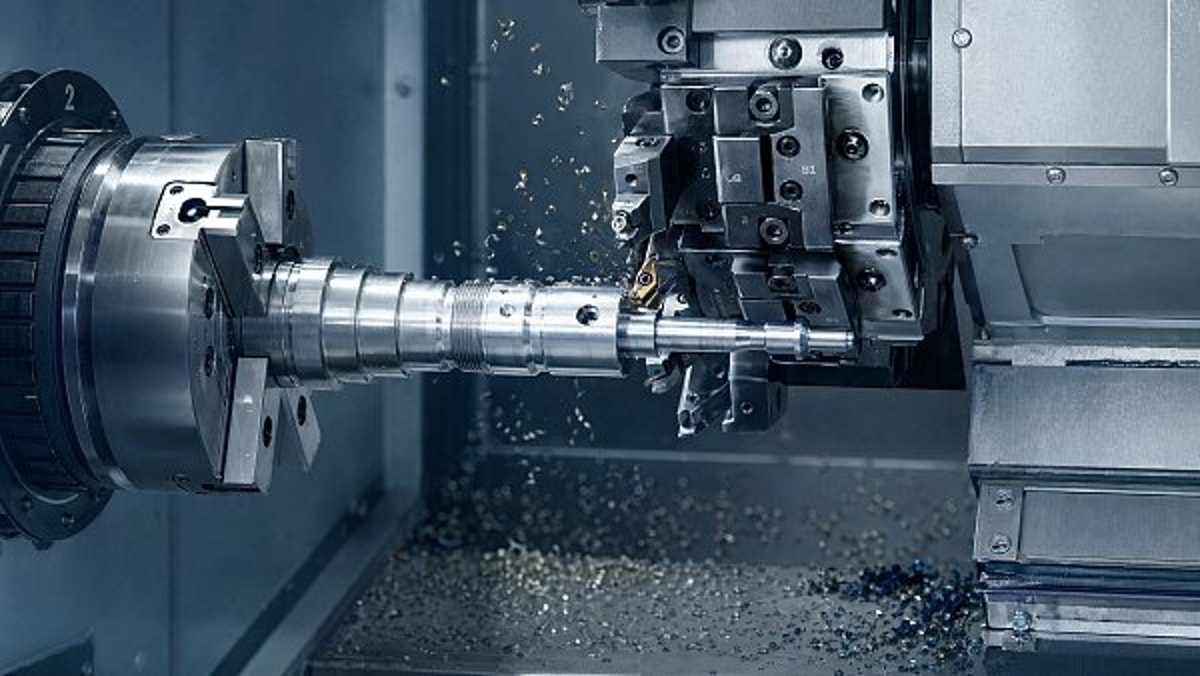
When buyers, project managers, or production leaders ask how to reduce machining lead time, they are rarely asking only about spindle RPM or feed rate. What they usually want to know is why one part takes longer than expected, why delivery dates slip, and which changes will actually improve output without creating quality risks. On modern cnc turning centers, cycle time is shaped by a combination of cutting conditions, setup strategy, machine configuration, tooling choices, programming quality, and operator consistency.
The most important practical takeaway is this: cycle time is not driven by a single variable. Faster cutting parameters may reduce active cutting time, but overall part completion time can still remain high if changeovers are long, toolpaths are inefficient, probing is excessive, or part handling introduces delays. For project leads responsible for cost, schedule, and customer commitments, the right question is not simply “How fast can the machine cut?” but “What is consuming total production time per good part?”
This distinction matters in quoting, capacity planning, and process improvement. A shop may invest in advanced equipment and still miss throughput goals if programming practices are inconsistent or if machine utilization is interrupted by waiting, verification, and manual intervention. Understanding the true drivers behind cycle time allows teams to prioritize the highest-value improvements instead of chasing isolated technical adjustments that deliver only marginal gains.
What Actually Makes Up Cycle Time on CNC Turning Centers
For management and engineering teams, cycle time should be broken into several components rather than treated as one number. The first is actual cutting time, which includes roughing, finishing, grooving, threading, drilling, boring, and any live-tool milling or secondary operations done in the same setup. This is the portion most people focus on first, because it is easy to see and often easy to simulate.
The second component is non-cutting machine time. This includes turret indexing, rapid traverses, spindle acceleration and deceleration, tailstock motion, chuck open-close sequences, bar feed motion, part transfer between spindles, and tool changes. On complex parts, non-cutting actions can consume a surprisingly large share of total cycle time, especially when programs contain unnecessary repositioning or conservative safety movements.
The third component is support time around the machine cycle. This includes loading and unloading, in-process gauging, first-piece inspection, chip clearing, offset corrections, and operator response time. For low-volume or high-mix production, setup and verification time may dominate the total cost picture even if the machine cycle itself is competitive. This is why project stakeholders should evaluate both “cycle time per part” and “total time to complete the job.”
How Part Design and Material Choice Influence Machining Time
One of the biggest cycle time drivers begins before the machine is even programmed: the design of the part itself. Deep grooves, tight internal radii, long unsupported diameters, fine surface finish requirements, thin-wall geometries, and multiple concentric tolerances all add machining complexity. In many cases, cycle time rises not because the machine lacks capability, but because the part requires slower, more stable, and more carefully controlled operations.
Material selection is equally influential. Aluminum, brass, alloy steels, stainless steels, titanium, Inconel, and engineering plastics each behave differently under cutting forces, heat, and chip formation. A material that work-hardens easily or generates stringy chips often requires more conservative feeds, specialized insert geometry, higher coolant performance, and additional chip management stops. That directly affects both cutting speed and process reliability.
For engineering project leaders, this means design-for-manufacturability discussions can have immediate schedule value. If a tolerance can be widened, a corner can be modified, a length-to-diameter ratio can be reduced, or a material can be substituted without harming function, cycle time can drop substantially. These decisions often deliver more value than trying to force an aggressive parameter change later in production.
Machine Configuration: Why Not All Turning Centers Deliver the Same Throughput
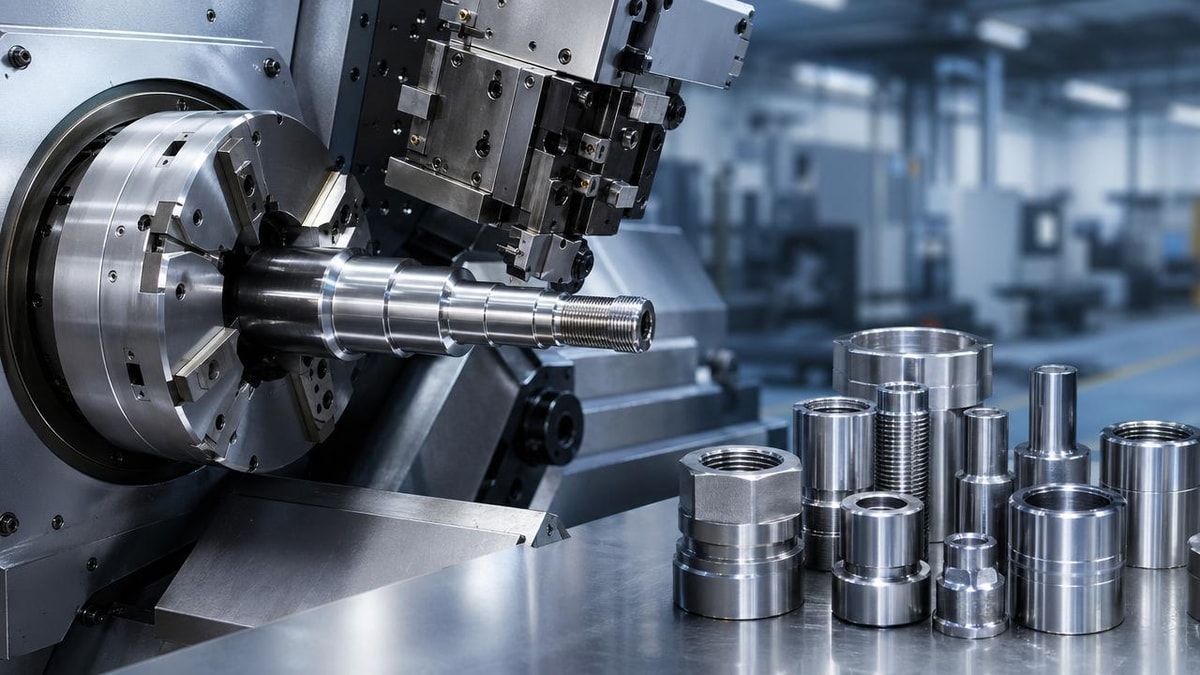
Modern cnc turning centers vary widely in architecture, and machine configuration has a direct impact on cycle time. A basic two-axis lathe may be suitable for straightforward turned components, but a machine with a sub-spindle, Y-axis, live tooling, dual turrets, or automated bar feeding can eliminate secondary operations and reduce handling time. In many production environments, the fastest process is not the one with the shortest pure cut time, but the one that completes the part in fewer setups.
That said, more capable equipment does not automatically guarantee shorter cycles. Additional axes and functions only create value if the process is engineered to use them effectively. A sub-spindle transfer, for example, adds its own timing sequence, and live-tool operations may be slower than dedicated milling equipment if they are not properly matched to the part. The right machine choice depends on volume, geometry, tolerance stack-up, labor availability, and downstream process requirements.
For project managers evaluating capital equipment or supplier capability, the key is to compare total process routes, not just machine specifications. Ask whether the machine can consolidate operations, reduce work-in-process movement, improve first-pass yield, and maintain stable unattended runtime. These factors often matter more than advertised spindle power or maximum rapid traverse speed when cycle time is evaluated at the business level.
Tooling, Tool Life, and Cutting Data: The Core Drivers of Active Machining Time
Tool selection remains one of the most visible cycle time levers. Insert grade, chipbreaker geometry, nose radius, coating, holder rigidity, overhang, coolant delivery, and tool path strategy all affect how aggressively the process can run. If the tool is unstable, generates poor chip control, or wears unpredictably, teams are forced to slow down the program to protect quality and avoid scrap. That can make the quoted cycle time impossible to achieve in real production.
At the same time, chasing maximum speed is not always the smartest decision. A highly aggressive cut may reduce seconds on one operation but increase insert consumption, require more frequent stoppages, and create thermal variation that affects dimensions. From a project economics perspective, the best process often balances cutting speed with predictable tool life and minimal intervention. Stable cycle time is usually more valuable than a theoretical best-case cycle that cannot be maintained across shifts.
Experienced manufacturing teams also review whether the right tools are being used for roughing versus finishing, whether combination tools can reduce tool changes, and whether high-pressure coolant or specialized geometries can improve chip evacuation. Small tooling decisions often compound across thousands of parts. This is especially important in production cells where unattended operation is expected, because poor chip control can erase any gains made through faster feeds and speeds.
Programming Quality Often Separates Fast Shops from Efficient Shops
Programming has an outsized influence on cycle time, especially on complex parts or multitasking machines. Two programs can produce the same part to the same print, yet one may run significantly faster because it minimizes air cutting, reduces redundant retracts, shortens approach paths, synchronizes operations better, and uses more efficient roughing patterns. This is where advanced CAM strategy and shop-floor programming discipline become critical.
On modern turning centers, inefficient code often hides in non-cutting motion. Excessive safe-position moves, unnecessary dwell times, repeated spindle orientation calls, and conservative transfer sequences can quietly add many seconds to every part. Over a large batch, those seconds become hours of lost capacity. Engineering leads should therefore treat program optimization as a recurring productivity initiative, not a one-time launch activity.
Simulation and digital verification help, but they should be tied to real machine feedback. A simulated cycle may look excellent while the actual machine loses time due to acceleration limits, servo behavior, chip evacuation pauses, or probing routines. The strongest shops compare programmed expectations with measured runtime, then continuously refine code based on actual production data. That closed-loop approach is what turns programming from documentation into a strategic performance tool.
Setup, Changeover, and Workholding Can Dominate Total Time in High-Mix Production
For many project-driven manufacturing environments, setup efficiency matters as much as per-part cycle time. If production involves frequent part changes, prototype runs, or low-to-medium volumes, a machine may spend more time being prepared than actually cutting. In these cases, reducing setup duration can create greater throughput gains than shaving a few seconds from the machining cycle.
Workholding strategy is central here. Standard jaws, quick-change systems, collet setups, modular fixturing, preset tooling, and repeatable offset management all influence how quickly a turning center can be brought back into production. Poor workholding can also force conservative cutting conditions due to chatter or part distortion, creating a double penalty of longer setup and slower cutting. This is why process engineers should evaluate workholding not only as a clamping issue, but as a cycle time driver.
First-article approval processes also deserve attention. If every changeover requires prolonged proving-out, manual offset tuning, and extensive inspection at the machine, production responsiveness will suffer. Shops that standardize setup sheets, tool libraries, probing routines, and verification methods are better able to compress launch time while maintaining confidence in quality. For project managers working under schedule pressure, this predictability is often as important as raw spindle output.
Automation, Operator Intervention, and the Reality of Throughput
Automation can reduce cycle-related losses, but only when it addresses the right constraint. Bar feeders, gantry loaders, robotic tending, parts catchers, in-machine probing, and automatic tool monitoring can all improve effective output by reducing manual handling and idle time. However, automation should be assessed on the basis of actual bottlenecks. If the real issue is unstable tooling or frequent dimensional drift, adding part loading automation alone may not improve delivered throughput.
Operator dependence remains an important factor even on advanced equipment. Different operators may handle offsets, chip removal, inspection frequency, tool wear response, and restart procedures differently. That variation creates inconsistency in actual cycle time and can undermine scheduling accuracy. Standard work, training, and machine-side visual instructions are therefore not just labor tools; they are process control tools that directly affect productivity.
From a management perspective, the goal is to distinguish between machine cycle time and realized production rate. A turning center may have an excellent programmed cycle but still underperform because of waiting between parts, delayed material replenishment, inspection queues, or shift-change gaps. Improving throughput requires looking at the full operating system around the machine, not just the machine itself.
How Project Managers Should Evaluate and Improve Cycle Time
For project managers and engineering decision-makers, the most useful approach is to break cycle time improvement into a structured review. First, identify whether the main constraint is cutting time, non-cutting time, setup time, or production interruption. Second, determine whether the root cause sits in design, machine capability, tooling, programming, workholding, or labor process. Third, prioritize actions based on return, implementation effort, and risk to quality or delivery.
Several practical metrics can support better decisions. Track spindle utilization, average setup time, first-pass yield, tool life consistency, operator touch time, and actual versus quoted cycle time. Also measure cycle stability, not just average speed. A process that runs in 4.5 minutes sometimes and 6 minutes at other times may be less valuable than a process that consistently runs in 5 minutes, especially in delivery-sensitive production environments.
Finally, improvement efforts should align with the business objective. If the goal is to win more work, reducing quoted lead time may matter most. If the goal is margin expansion, focus on labor reduction, setup compression, and process consolidation. If the goal is customer retention, prioritize reliability and on-time performance. Understanding what drives cycle time on cnc turning centers becomes most powerful when it is connected to the outcome the business actually needs.
Conclusion: The Fastest Cycle Is the One That Balances Speed, Stability, and Business Value
Cycle time on modern cnc turning centers is driven by far more than cutting parameters alone. Part geometry, material behavior, machine configuration, tooling strategy, program efficiency, setup methods, automation level, and operator consistency all contribute to the final result. For project leaders, the smartest path is to evaluate total production time per acceptable part, not just spindle-on time in isolation.
In practice, the best improvements often come from a combination of design-for-manufacturing choices, better program optimization, reduced non-cutting motion, stronger setup discipline, and more stable tooling performance. These changes help
Get weekly intelligence in your inbox.
No noise. No sponsored content. Pure intelligence.
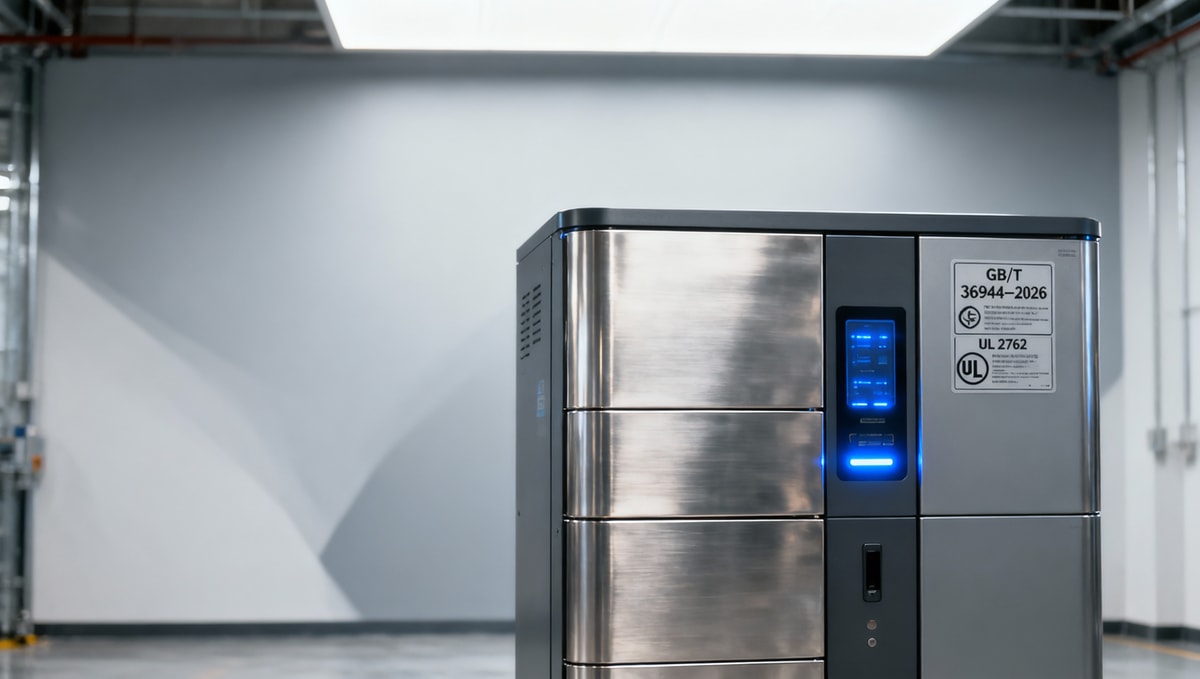
 May 01, 2026Beijing’s New E-Bike Rules Trigger Dual-Certification Demand for China’s Swappable Battery CabinetsBeijing’s New E-Bike Rules Trigger Dual-Certification Demand for China’s Swappable Battery Cabinets
 May 01, 2026GNA’s GEO Service Assessment Elevates AI Search as Digital Procurement Metric for Chinese ExportersGNA’s GEO Service Assessment Elevates AI Search as Digital Procurement Metric for Chinese Exporters
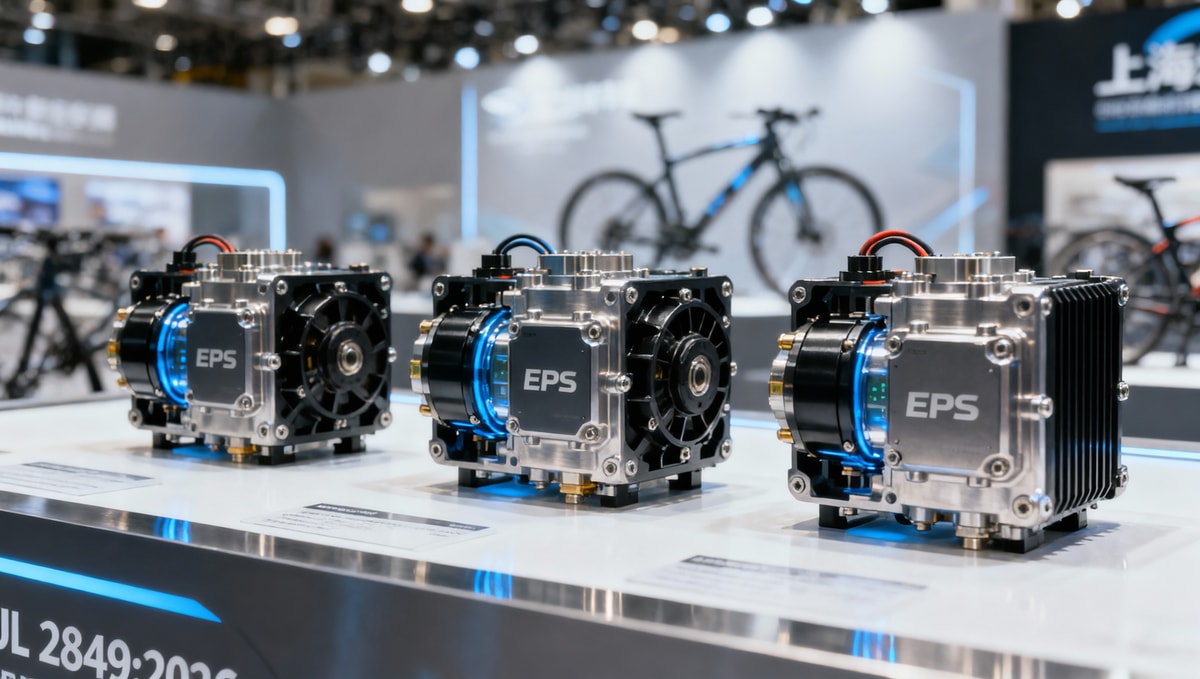
 May 01, 20262026 China Cycle Expo: Chinese EPS Systems Achieve UL 2849:2026 Full Certification2026 China Cycle Expo: Chinese EPS Systems Achieve UL 2849:2026 Full Certification
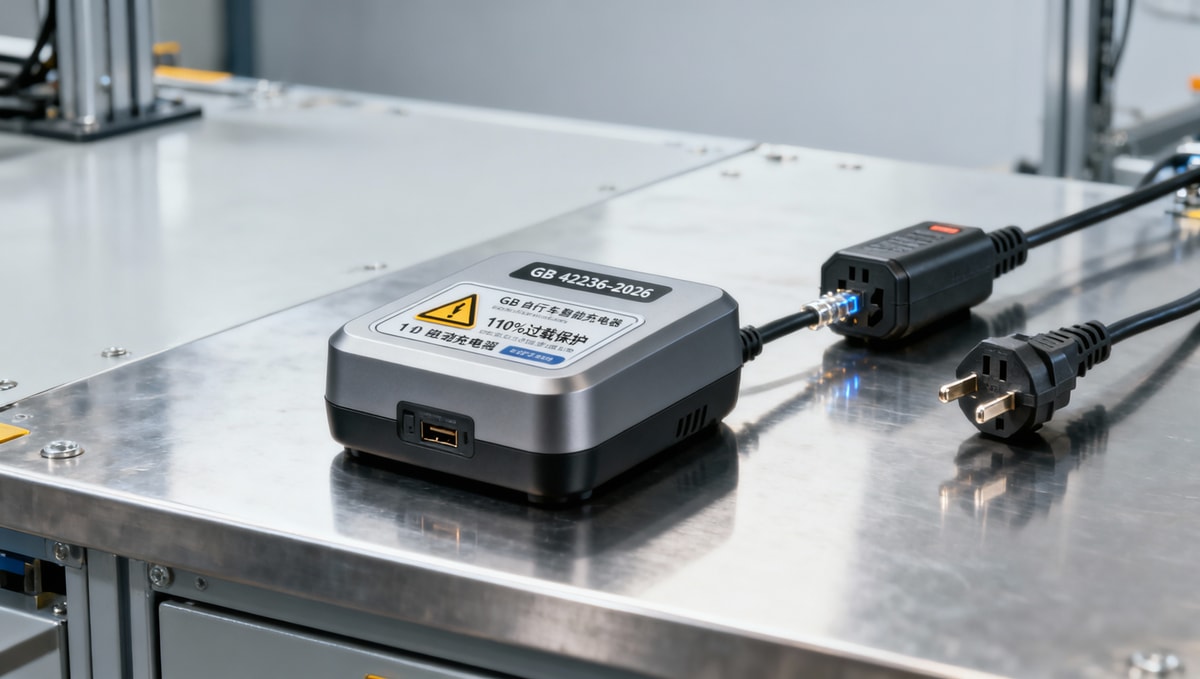
 May 01, 2026GB 42236-2026 Enforces EV Charger Efficiency & Overload Protection from May 2026GB 42236-2026 Enforces EV Charger Efficiency & Overload Protection from May 2026
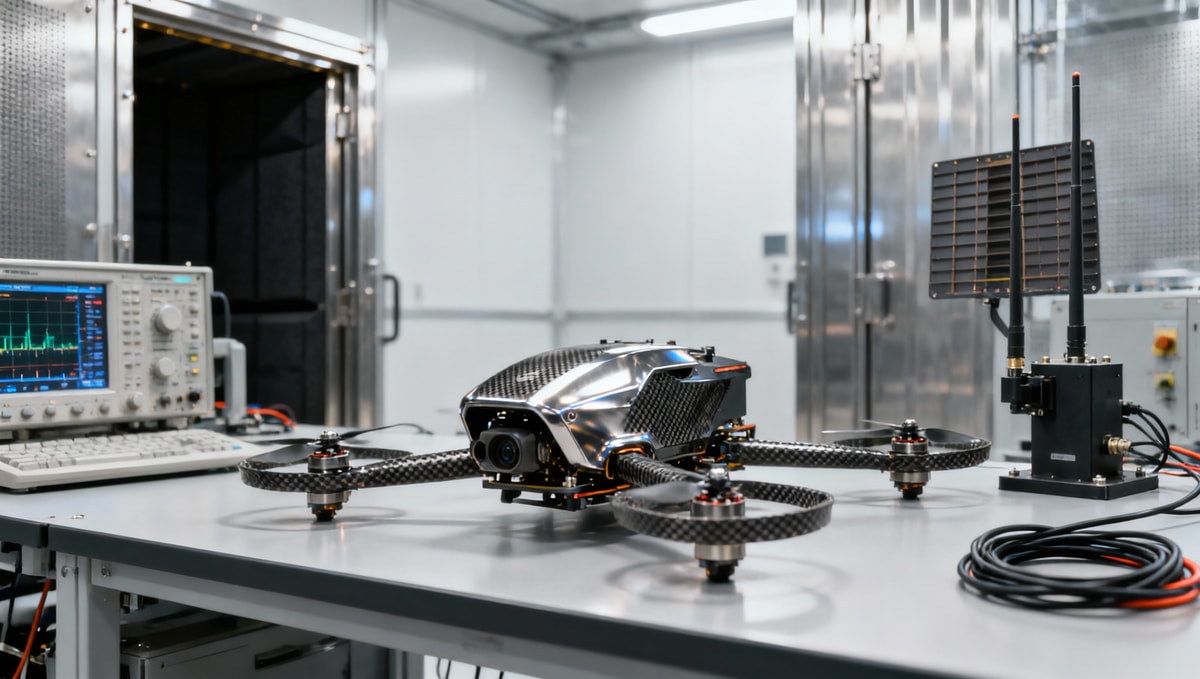
 May 01, 2026GB/T 43790-2026 Drone EMC Standard Effective May 2026GB/T 43790-2026 Drone EMC Standard Effective May 2026
 May 01, 20262026 Foshan Tanzhou Auto Industry Expo Opens2026 Foshan Tanzhou Auto Industry Expo Opens
 May 01, 2026China’s New Hazardous Chemicals Safety Law Takes Effect May 2026China’s New Hazardous Chemicals Safety Law Takes Effect May 2026
 May 01, 2026New Maritime and Fisheries Laws Take Effect May 1, 2026New Maritime and Fisheries Laws Take Effect May 1, 2026
 May 01, 2026Supply Chain Automation Works Best Where Delays RepeatSupply Chain Automation Works Best Where Delays Repeat
 May 01, 2026High Strength Steel Forgings: What Should Be Tested First?High Strength Steel Forgings: What Should Be Tested First?
 May 01, 2026Automotive Steel Forging: Cost Pressure vs Part ReliabilityAutomotive Steel Forging: Cost Pressure vs Part Reliability
 May 01, 2026Why High Durability Steel Forgings Fail Earlier Than ExpectedWhy High Durability Steel Forgings Fail Earlier Than Expected
 May 01, 2026Construction Aluminum Extrusions: Which Finish Lasts Longer?Construction Aluminum Extrusions: Which Finish Lasts Longer?
 May 01, 2026Lightweight Aluminum Extrusions: Where Savings Really HappenLightweight Aluminum Extrusions: Where Savings Really Happen
 May 01, 2026Aerospace Aluminum Extrusions Need More Than Low WeightAerospace Aluminum Extrusions Need More Than Low Weight
 May 01, 2026Precision Lathe Turning Problems That Show Up After AssemblyPrecision Lathe Turning Problems That Show Up After Assembly
 May 01, 2026High Precision Lathe Turning: Tolerance Claims to VerifyHigh Precision Lathe Turning: Tolerance Claims to Verify
 May 01, 2026When CNC Lathe Turning Is Better Than General MachiningWhen CNC Lathe Turning Is Better Than General Machining
 May 01, 2026Medical Device Prototyping Needs More Than SpeedMedical Device Prototyping Needs More Than Speed
 May 01, 20263D Printing Prototyping: Fast Turnaround or Better Finish?3D Printing Prototyping: Fast Turnaround or Better Finish?
 May 01, 2026Low Cost Rapid Prototyping: Where Quality Gets LostLow Cost Rapid Prototyping: Where Quality Gets Lost
 May 01, 2026Quick EV Charger Installation Still Needs Site ChecksQuick EV Charger Installation Still Needs Site Checks
 May 01, 2026Public Parking EV Chargers: What Slows Installation DownPublic Parking EV Chargers: What Slows Installation Down
 May 01, 2026Choosing a Lithium Ion Battery Manufacturer in ChinaChoosing a Lithium Ion Battery Manufacturer in China
 May 01, 2026How to Vet a Lithium Ion Battery OEM SupplierHow to Vet a Lithium Ion Battery OEM Supplier
 May 01, 2026EV Lithium Ion Batteries: Range Is Not the Only MetricEV Lithium Ion Batteries: Range Is Not the Only Metric
 May 01, 2026Lithium Ion ESS Batteries: Safety Details Worth CheckingLithium Ion ESS Batteries: Safety Details Worth Checking