Where Industrial 3D Printing Saves Time but Adds Risk
Industrial 3D printing can compress lead times, speed prototyping, and reduce tooling delays, making it highly attractive for project leaders under delivery pressure. Yet the same flexibility can introduce quality variance, certification gaps, cybersecurity concerns, and supplier dependency. For project managers, the real challenge is knowing when additive manufacturing creates measurable advantage—and when hidden risks can disrupt cost, compliance, and execution.
When does industrial 3D printing create real project value?
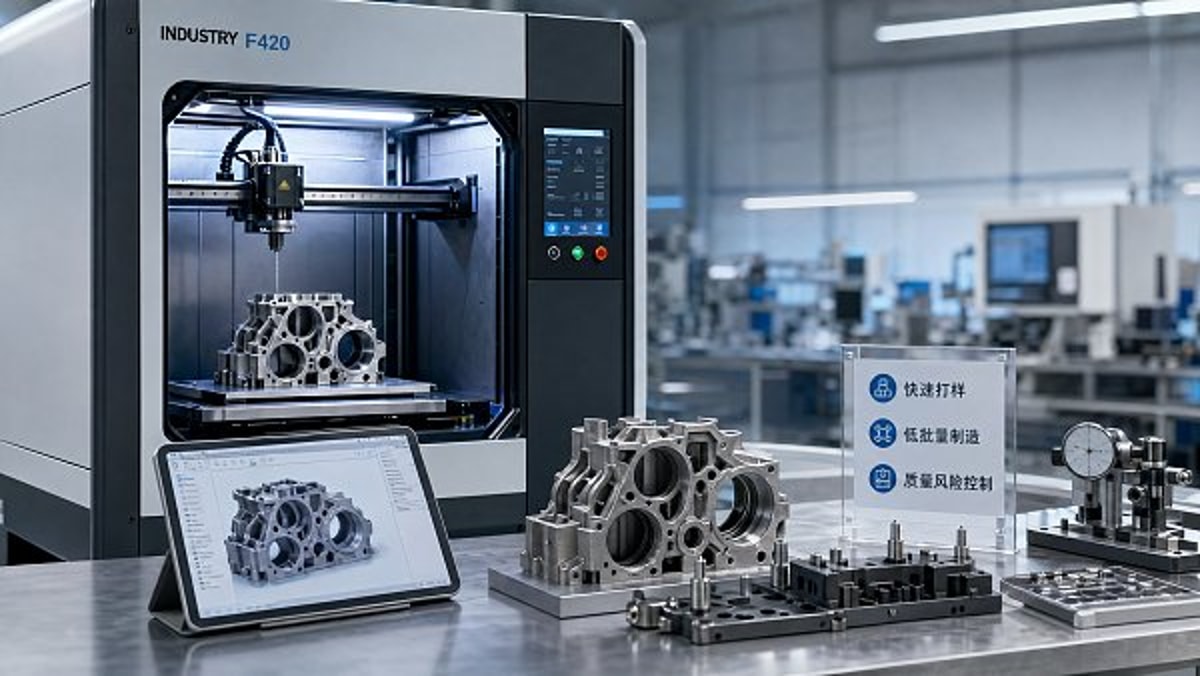
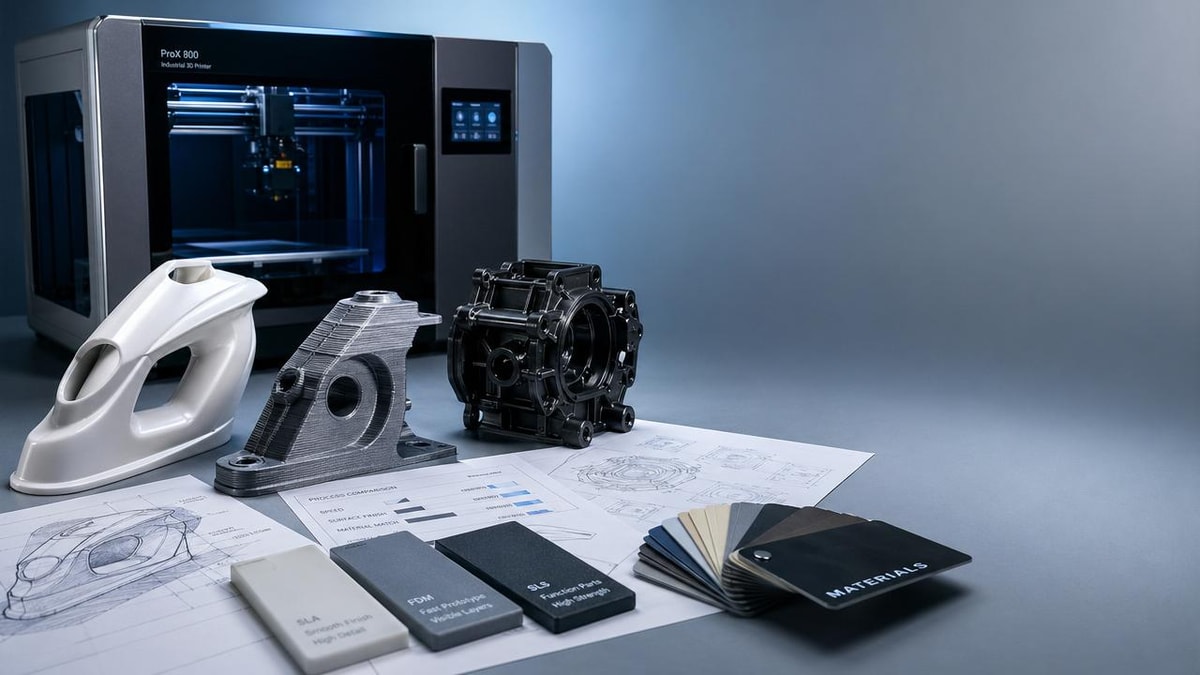
For project managers, industrial 3D printing is not simply a faster way to make parts. It is a different production logic. Instead of investing first in molds, dies, or complex machining setups, teams can move directly from CAD to functional parts in as little as 24–72 hours for simple prototypes and roughly 5–15 business days for more demanding industrial components, depending on geometry, material, and post-processing requirements.
That speed matters most when a project is facing design iteration, service-part shortages, pilot production, or late engineering changes. In these cases, industrial 3D printing can reduce waiting time between design approval and physical validation. It also helps cross-functional teams align earlier, because procurement, engineering, quality, and operations can inspect the same part before committing to broader production decisions.
However, time saved at the front end can be lost later if the process is chosen without the right controls. Additive manufacturing often requires extra review across 3 stages: file preparation, build execution, and post-processing. If tolerances, surface finish, material traceability, or testing criteria are undefined at the start, the schedule benefit can disappear during rework, inspection disputes, or customer approval delays.
Where project teams typically gain the fastest return
The strongest use cases tend to share one trait: they avoid expensive tooling while preserving acceptable technical performance. This is common in advanced manufacturing, healthcare devices, smart electronics housings, green energy brackets, and maintenance parts in supply chain operations. The value is especially visible for low-volume builds, design validation, and assemblies that benefit from part consolidation.
- Prototype programs that need 2–5 design iterations within a single month rather than a traditional tooling cycle.
- Bridge production where annual demand is still uncertain and volumes remain in the tens, hundreds, or low thousands.
- Replacement components for legacy equipment when original tooling no longer exists or minimum order quantities are too high.
- Complex geometries that would require multiple machining operations, welded subassemblies, or multi-part fixtures.
For B2B decision-makers, the question is not whether industrial 3D printing is innovative. The question is whether it shortens the critical path of a project without adding uncontrolled technical or supply risk. That is where structured market intelligence becomes valuable. TradeNexus Pro helps procurement and engineering teams evaluate process fit, supplier depth, and delivery exposure before speed becomes a liability.
Which scenarios save time—and which ones add hidden risk?
Not every urgent part should go through industrial 3D printing. The schedule advantage is strongest when the part is hard to tool, needed quickly, or still evolving. Risk rises when the application demands strict repeatability, regulated documentation, long production runs, or highly predictable unit economics. Project leaders should assess both schedule compression and execution exposure before approving additive manufacturing as a default path.
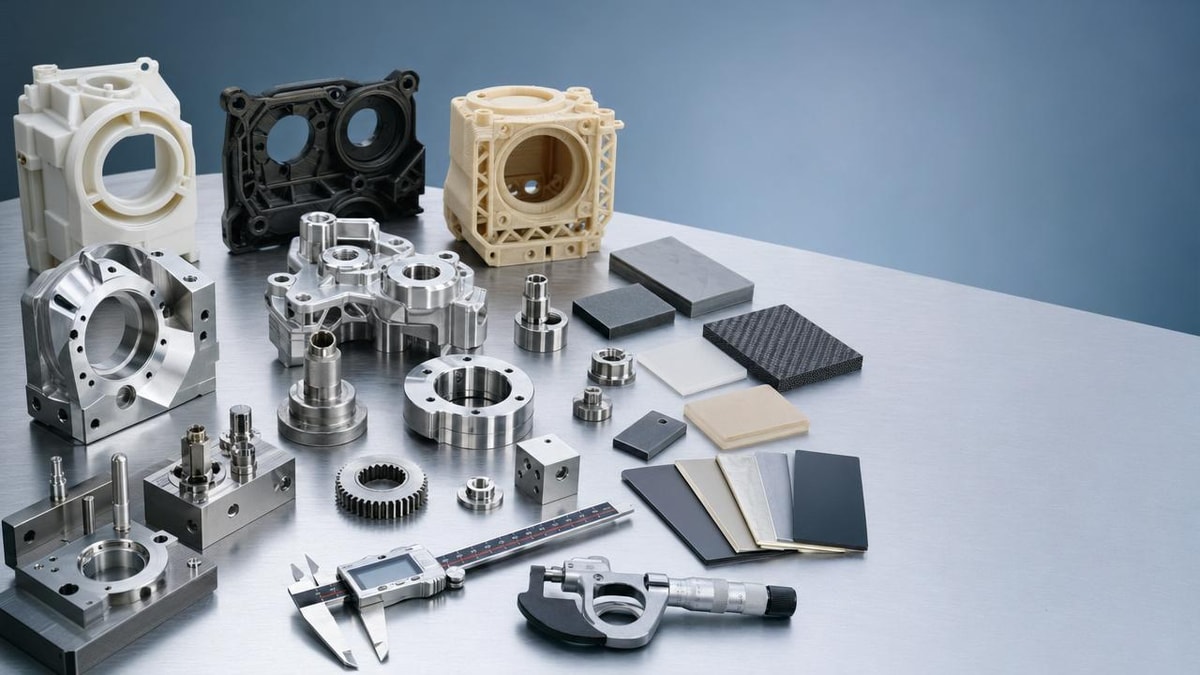
In practical terms, the decision often depends on 4 variables: volume, material requirement, validation burden, and downstream finishing. A polymer fixture with moderate tolerance may move quickly through additive production. A load-bearing metal component for a regulated environment may require additional testing, heat treatment, machining, and documentation that adds 1–3 weeks beyond the initial print cycle.
The table below compares common project situations where industrial 3D printing tends to save time versus situations where it may introduce delays or operational risk.
The pattern is clear: industrial 3D printing saves the most time when change is frequent and volume is limited. Risk increases when the part must perform with narrow process variation over repeated builds. For engineering project leaders, this is less about enthusiasm for a technology and more about matching manufacturing logic to project stage and compliance burden.
Common warning signs before approval
Teams should slow down and review assumptions if any of the following appear during sourcing or planning:
- The supplier cannot define achievable tolerances by process, such as whether the part can reliably hold a range like ±0.2 mm, ±0.5 mm, or tighter after finishing.
- Material naming is vague and no clear path exists for certificates, lot traceability, or downstream test documentation.
- The design requires machining, polishing, coating, or heat treatment, but those steps are not included in the delivery schedule.
- The file contains proprietary geometry and the vendor has no visible process for access control, transfer security, or file retention limits.
How should project managers evaluate industrial 3D printing suppliers?
Supplier selection is where many industrial 3D printing projects succeed or fail. A supplier that prints quickly but cannot manage repeatability, post-processing, or documentation may create more schedule volatility than it removes. Project managers should evaluate vendors across at least 5 dimensions: process fit, material capability, quality control, data security, and delivery communication.
This evaluation matters across industries. In smart electronics, dimensional consistency and enclosure finish may dominate. In healthcare technology, traceability and validation become central. In green energy or advanced manufacturing, mechanical performance and environment resistance may take priority. The right supplier is not just the fastest operator; it is the one whose capability matches the part’s technical and commercial risk profile.
The procurement table below gives project leaders a practical framework for comparing industrial 3D printing vendors before issuing a purchase order or moving to pilot production.
A disciplined sourcing approach also improves internal alignment. Procurement wants price clarity, engineering wants performance, and operations want reliable delivery. Industrial 3D printing often crosses all three priorities. A platform like TradeNexus Pro is useful because it helps teams compare supplier positioning, sector relevance, and technical maturity using a market-intelligence lens rather than isolated vendor claims.
A practical 6-point selection checklist
- Define the part function first: prototype, fixture, bridge production, or end-use component.
- Set acceptance criteria early: tolerance range, surface finish, documentation, and test needs.
- Ask for sample lead time and repeat-build capability, not only first-part speed.
- Review post-processing steps and whether they add 2 days or 2 weeks to the real delivery plan.
- Check digital security controls for CAD files, especially on outsourced cross-border projects.
- Map an alternative supplier if the component affects launch, maintenance, or field service continuity.
What cost, compliance, and implementation issues are often underestimated?
One of the most common misconceptions about industrial 3D printing is that it is always cheaper because it removes tooling. In reality, it shifts cost structure rather than eliminating cost. Early-stage savings may come from avoiding molds, reducing assembly count, and shortening engineering loops. But additional expenses can appear in orientation studies, support removal, machining, surface finishing, nondestructive testing, qualification, or repeated print trials.
For project managers, the more useful question is not “What is the part price?” but “What is the delivered, approved part cost at the required schedule?” A printed part that arrives in 7 days but needs another 10 days for inspection correction or documentation completion may cost more in project impact than a slower but more stable alternative. That is especially true when launch windows or service commitments are fixed.
Compliance is another underestimated area. Depending on application, teams may need material certificates, batch traceability, process records, dimensional reports, or customer-specific validation packages. General standards such as ISO 9001 quality systems may support supplier discipline, while sector-specific expectations can be much stricter. Industrial 3D printing should therefore be reviewed as a controlled manufacturing workflow, not just a fabrication service.
Typical implementation stages for lower-risk adoption
A phased approach often works better than direct scale-up. Most organizations can reduce risk by moving through 4 implementation stages rather than treating additive manufacturing as a one-step replacement for conventional production.
- Stage 1: Feasibility review over 3–5 business days, covering geometry, material, tolerance, and commercial purpose.
- Stage 2: Prototype or sample build, usually 1–2 weeks, to verify fit, function, and finishing assumptions.
- Stage 3: Pilot batch, often 10–100 units, to evaluate repeatability, inspection workload, and logistics readiness.
- Stage 4: Controlled release for bridge or end-use production with approved documentation and backup sourcing plan.
Where conventional alternatives may still be better
If demand becomes stable and high-volume, injection molding, casting, stamping, or CNC machining may provide stronger unit economics and more predictable repeatability. Industrial 3D printing remains powerful, but it should compete on the right battlefield: speed, complexity, low-volume agility, and supply continuity. When those advantages fade, traditional processes often regain the lead.
This is where comparative market visibility matters. TradeNexus Pro supports enterprise buyers and project leaders by connecting process trends, supplier intelligence, and sector-specific sourcing considerations across advanced manufacturing, green energy, smart electronics, healthcare technology, and supply chain software environments. That broader context helps teams avoid short-term wins that create long-term operational friction.
FAQ: what should project leaders ask before using industrial 3D printing?
How do I know whether industrial 3D printing is suitable for end-use parts?
Start with function, load, environment, and compliance needs. If the part faces mechanical stress, heat, chemicals, or regulatory review, ask whether the selected process and material can support those conditions with documented consistency. Many projects begin with prototypes and move to end-use only after a pilot batch confirms repeatability over multiple builds and post-processing cycles.
What lead time should I expect?
For industrial 3D printing, sample parts may ship in 2–7 days when geometry is simple and finishing is limited. Functional industrial parts often require 1–3 weeks once build scheduling, finishing, and inspection are included. Metal parts, certified materials, or customer-specific documentation can extend the timeline further. Always ask for total delivery time, not just print time.
What are the biggest hidden risks in procurement?
The most common hidden risks are inconsistent quality between builds, unclear tolerance expectations, missing material traceability, and digital file exposure. A fifth risk is supplier dependency. If only one vendor can produce the part and the project is time-critical, your schedule may depend on one machine queue or one site’s operating stability.
Which documents should I request before approval?
Request a formal quotation with process details, material designation, estimated lead time, finishing scope, and inspection method. For more demanding applications, ask about certificate availability, traceability approach, dimensional reporting, and revision control for design files. If the part affects regulated products or safety-related assemblies, document review should happen before purchase release, not after first delivery.
Why work with TradeNexus Pro when evaluating industrial 3D printing?
Industrial 3D printing decisions rarely sit inside one department. Engineering focuses on performance, procurement on supplier risk, and project leadership on schedule certainty. TradeNexus Pro helps connect those priorities through sector-focused intelligence, technical content, and strategic visibility across the industries where additive manufacturing is changing sourcing behavior most rapidly.
For project managers and engineering leads, TNP is useful when the decision goes beyond a simple vendor search. You may need to compare process options, assess which applications justify additive manufacturing, understand common qualification barriers, or identify where supply chain concentration adds execution risk. Those are not generic buying questions. They require market context and industry-specific interpretation.
If your team is reviewing industrial 3D printing for prototypes, bridge production, service parts, or end-use applications, TradeNexus Pro can support discussions around 6 concrete areas: process selection, material suitability, delivery timing, supplier evaluation, documentation requirements, and sourcing alternatives. This is especially valuable when projects span multiple regions or involve cross-functional approval.
What you can discuss with us
- How to determine whether industrial 3D printing or a conventional process better fits your volume and timeline.
- What technical parameters should be confirmed before RFQ release, including tolerance, finishing, and material documentation.
- How to compare supplier options for urgent builds, pilot batches, or sector-specific compliance needs.
- What lead-time assumptions are realistic for samples, pilot runs, and documented industrial parts.
- How to reduce project risk through backup sourcing, qualification planning, and digital file control.
If you are under pressure to shorten development cycles without opening new quality or compliance gaps, contact TradeNexus Pro for a focused discussion. We can help you clarify selection criteria, review delivery assumptions, compare sourcing paths, and frame the right questions before industrial 3D printing becomes part of a critical project workflow.
Get weekly intelligence in your inbox.
No noise. No sponsored content. Pure intelligence.
 May 01, 2026Beijing’s New E-Bike Rules Trigger Dual-Certification Demand for China’s Swappable Battery CabinetsBeijing’s New E-Bike Rules Trigger Dual-Certification Demand for China’s Swappable Battery Cabinets
 May 01, 2026GNA’s GEO Service Assessment Elevates AI Search as Digital Procurement Metric for Chinese ExportersGNA’s GEO Service Assessment Elevates AI Search as Digital Procurement Metric for Chinese Exporters
 May 01, 20262026 China Cycle Expo: Chinese EPS Systems Achieve UL 2849:2026 Full Certification2026 China Cycle Expo: Chinese EPS Systems Achieve UL 2849:2026 Full Certification
 May 01, 2026GB 42236-2026 Enforces EV Charger Efficiency & Overload Protection from May 2026GB 42236-2026 Enforces EV Charger Efficiency & Overload Protection from May 2026
 May 01, 2026GB/T 43790-2026 Drone EMC Standard Effective May 2026GB/T 43790-2026 Drone EMC Standard Effective May 2026
 May 01, 20262026 Foshan Tanzhou Auto Industry Expo Opens2026 Foshan Tanzhou Auto Industry Expo Opens
 May 01, 2026China’s New Hazardous Chemicals Safety Law Takes Effect May 2026China’s New Hazardous Chemicals Safety Law Takes Effect May 2026
 May 01, 2026New Maritime and Fisheries Laws Take Effect May 1, 2026New Maritime and Fisheries Laws Take Effect May 1, 2026
 May 01, 2026Supply Chain Automation Works Best Where Delays RepeatSupply Chain Automation Works Best Where Delays Repeat
 May 01, 2026High Strength Steel Forgings: What Should Be Tested First?High Strength Steel Forgings: What Should Be Tested First?
 May 01, 2026Automotive Steel Forging: Cost Pressure vs Part ReliabilityAutomotive Steel Forging: Cost Pressure vs Part Reliability
 May 01, 2026Why High Durability Steel Forgings Fail Earlier Than ExpectedWhy High Durability Steel Forgings Fail Earlier Than Expected
 May 01, 2026Construction Aluminum Extrusions: Which Finish Lasts Longer?Construction Aluminum Extrusions: Which Finish Lasts Longer?
 May 01, 2026Lightweight Aluminum Extrusions: Where Savings Really HappenLightweight Aluminum Extrusions: Where Savings Really Happen
 May 01, 2026Aerospace Aluminum Extrusions Need More Than Low WeightAerospace Aluminum Extrusions Need More Than Low Weight
 May 01, 2026Precision Lathe Turning Problems That Show Up After AssemblyPrecision Lathe Turning Problems That Show Up After Assembly
 May 01, 2026High Precision Lathe Turning: Tolerance Claims to VerifyHigh Precision Lathe Turning: Tolerance Claims to Verify
 May 01, 2026When CNC Lathe Turning Is Better Than General MachiningWhen CNC Lathe Turning Is Better Than General Machining
 May 01, 2026Medical Device Prototyping Needs More Than SpeedMedical Device Prototyping Needs More Than Speed
 May 01, 20263D Printing Prototyping: Fast Turnaround or Better Finish?3D Printing Prototyping: Fast Turnaround or Better Finish?
 May 01, 2026Low Cost Rapid Prototyping: Where Quality Gets LostLow Cost Rapid Prototyping: Where Quality Gets Lost
 May 01, 2026Quick EV Charger Installation Still Needs Site ChecksQuick EV Charger Installation Still Needs Site Checks
 May 01, 2026Public Parking EV Chargers: What Slows Installation DownPublic Parking EV Chargers: What Slows Installation Down
 May 01, 2026Choosing a Lithium Ion Battery Manufacturer in ChinaChoosing a Lithium Ion Battery Manufacturer in China
 May 01, 2026How to Vet a Lithium Ion Battery OEM SupplierHow to Vet a Lithium Ion Battery OEM Supplier
 May 01, 2026EV Lithium Ion Batteries: Range Is Not the Only MetricEV Lithium Ion Batteries: Range Is Not the Only Metric
 May 01, 2026Lithium Ion ESS Batteries: Safety Details Worth CheckingLithium Ion ESS Batteries: Safety Details Worth Checking