CNC Turning Centers vs Milling for Complex Round Parts
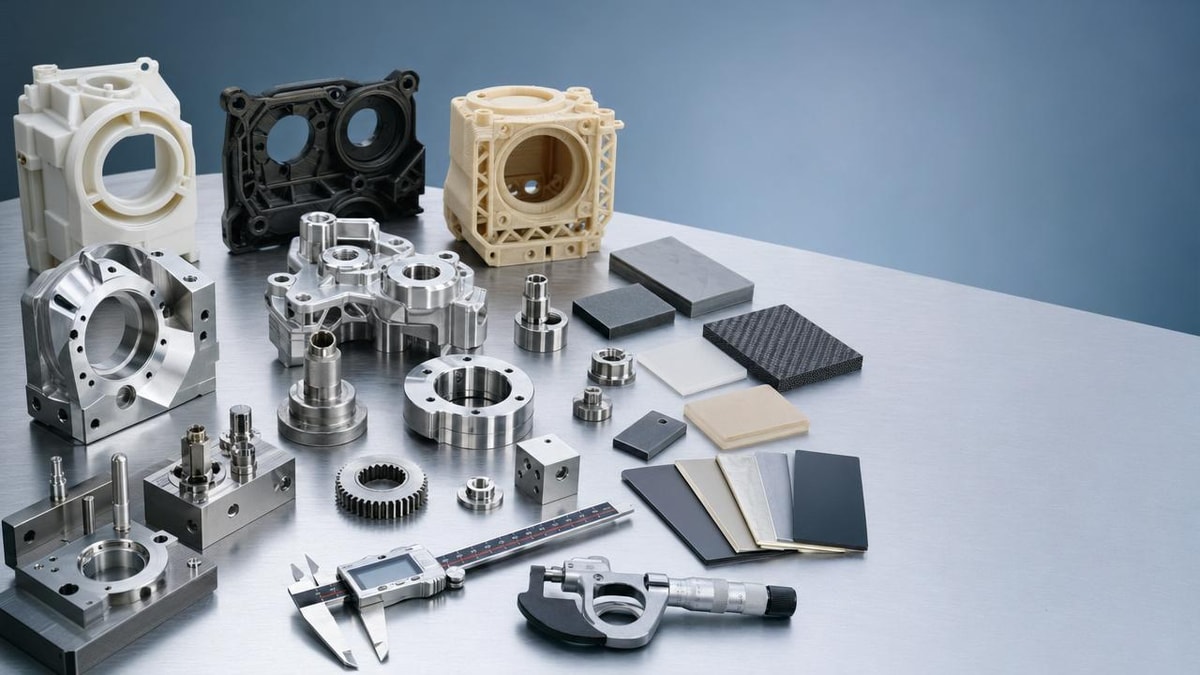
When evaluating complex round components, choosing between cnc turning centers and milling can directly affect precision, cycle time, and total production cost. For technical evaluators, the real challenge lies in matching geometry, tolerance requirements, and process efficiency with the right machine strategy. This article compares both approaches to help you identify the most effective solution for high-accuracy, high-volume round part manufacturing.
Why a checklist-based evaluation works better for complex round parts
For technical assessment teams, the main risk is not simply choosing the wrong machine category. The bigger issue is overlooking one or two process variables that later drive scrap, extra setups, unstable tolerances, or long lead times. A checklist-based review makes decision-making more reliable because it forces comparison across geometry, tolerance stack-up, spindle direction, workholding, and downstream inspection requirements.
This matters most in industries where complex round parts appear in pumps, connectors, medical housings, sensor bodies, shafts, couplings, sleeves, and precision fasteners. In many sourcing programs, a part that looks “mostly round” may still contain off-axis holes, keyways, flats, threads, grooves, or interrupted surfaces. Those mixed features often determine whether cnc turning centers can complete the part in 1 setup, or whether milling requires 2 to 4 setups to achieve the same geometry.
A practical evaluation also helps procurement and engineering teams align production strategy with volume. For example, a batch of 200 prototype pieces may justify a different process than an annual demand of 50,000 units. In medium-to-high volume manufacturing, even a cycle time difference of 20 to 40 seconds per part can significantly change landed cost, machine loading, and delivery confidence.
The checklist below frames the first decision points that should be confirmed before reviewing quotations or approving a machining route.
- Confirm whether the part’s primary form is rotational and whether the critical datums are concentric to the centerline.
- Identify how many non-round features exist and whether they are axial, radial, or angularly indexed.
- Check tolerance zones, especially roundness, cylindricity, runout, and positional tolerance below 0.05 mm.
- Review expected production volume, material type, and maximum acceptable cycle time per part.
- Determine whether one-hit machining, sub-spindle transfer, live tooling, or post-machining secondary operations will be needed.
For B2B evaluators working through global supplier options, this checklist approach also improves quote comparability. It reduces the chance that one supplier prices a simple turned route while another assumes a multi-axis milled route with higher tooling and setup complexity.
Core decision checklist: when cnc turning centers should be your first option
As a first rule, cnc turning centers should be evaluated before milling whenever the part is predominantly cylindrical and most functional dimensions reference the rotational axis. This is because turning naturally generates diameters, shoulders, tapers, grooves, threads, and face features with high concentricity. For many complex round parts, that built-in process alignment is the fastest route to repeatability.
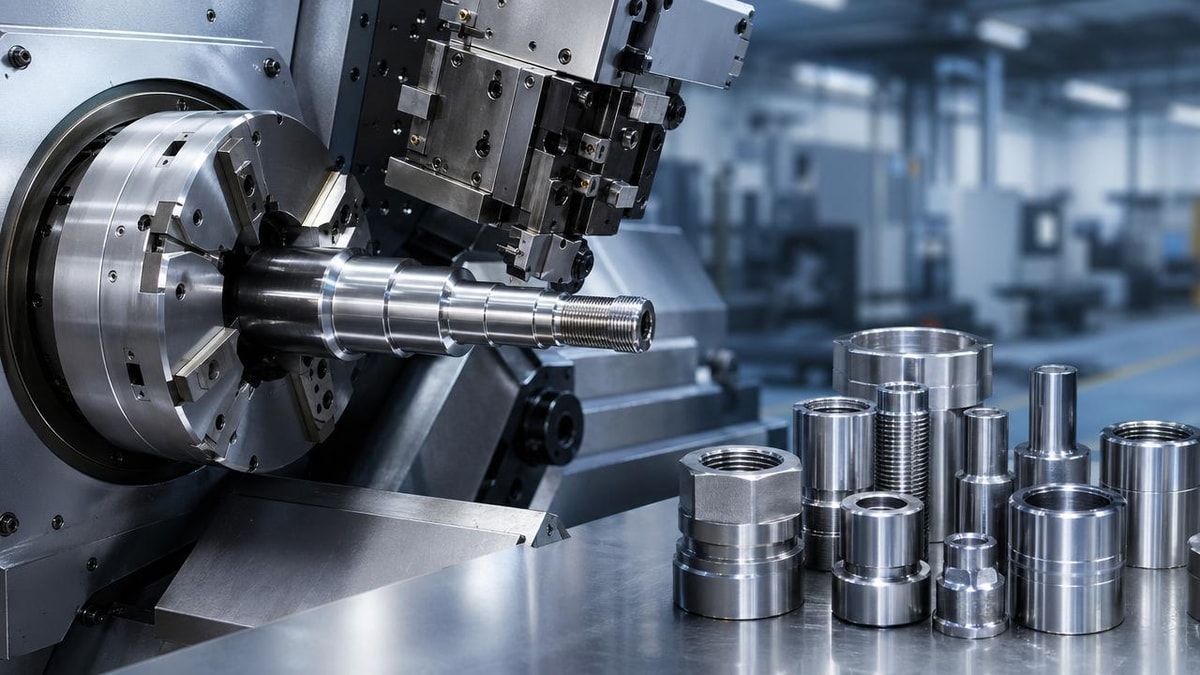
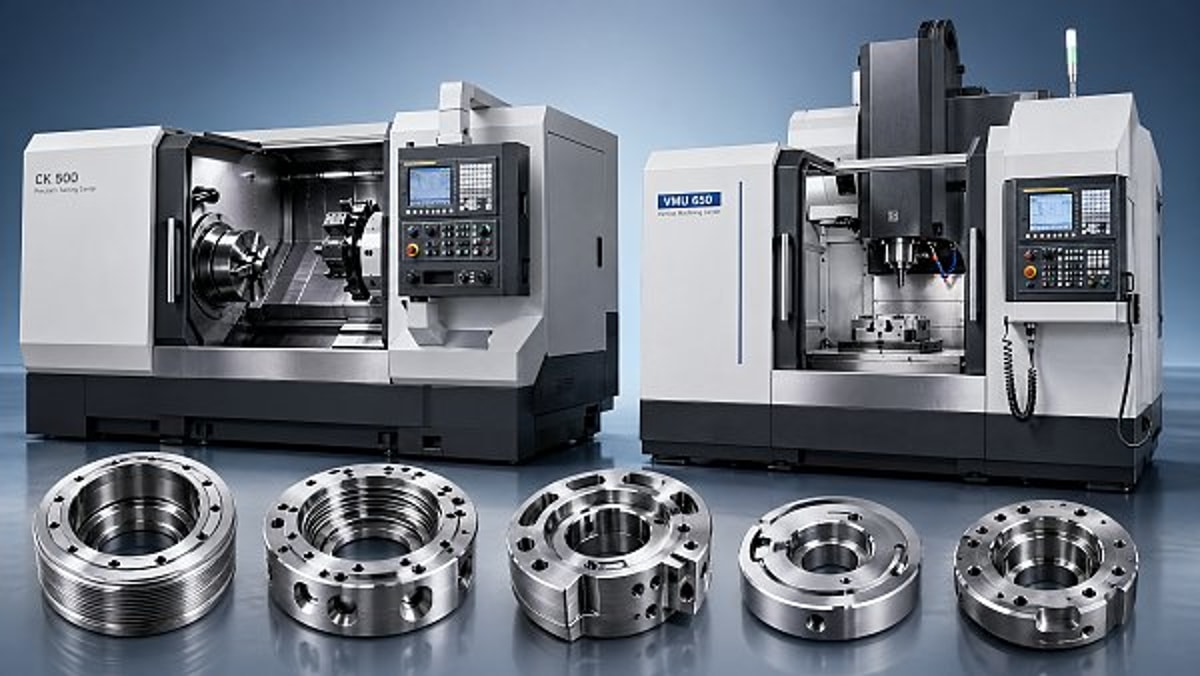
Modern cnc turning centers are no longer limited to simple lathe work. With live tooling, Y-axis travel, C-axis indexing, sub-spindles, and bar feeders, they can produce a large share of mixed-geometry parts in one machine envelope. In practical sourcing terms, this often means fewer setups, lower handling risk, and improved consistency across runs of 1,000 to 100,000 pieces.
The strongest process fit appears when the part has a round base profile, requires tight concentricity, and includes moderate secondary features rather than deeply sculpted 3D contours. In such cases, cnc turning centers usually outperform standard milling in both cycle time and centerline accuracy.
Primary fit indicators for cnc turning centers
Use the following points as a go/no-go screening list before you move into machine capability discussions or supplier qualification.
- The part has more than 60% to 70% of its geometry defined by OD, ID, shoulders, faces, grooves, or threads.
- Critical dimensions are diametric or axial, with runout requirements commonly below 0.03 mm to 0.08 mm.
- Off-center features are limited to flats, cross holes, slots, milled pockets, or indexed hole patterns that live tooling can handle.
- The production plan benefits from bar work, chucking automation, or complete front-and-back machining in one cycle.
- The material is commonly turned, such as aluminum alloys, carbon steels, stainless grades, brass, copper alloys, and many engineering plastics.
The table below can help technical evaluators quickly compare where cnc turning centers and milling typically perform best on complex round part requirements.
The most important takeaway is that cnc turning centers should not be seen only as a “diameter machine.” In many sourcing scenarios, they are the more complete platform for complex round parts, especially when cycle reduction and centerline integrity carry higher weight than freeform contouring.
When milling becomes the better choice for round components
Milling should move to the front of the decision process when the “round part” label hides a high percentage of non-rotational features. This happens often in actuator housings, valve bodies, robotic couplings, instrument enclosures, and hybrid components where the base stock may be round but the functional geometry is not. If the part needs large planar areas, sculpted pockets, compound angles, or 3D surfaces, milling often becomes more efficient and less restrictive.
The threshold is not purely visual. A part can remain circular in external appearance while demanding extensive tool access from multiple orientations. Once that feature density grows, a machining center with 4-axis or 5-axis motion may reduce fixture changes more effectively than forcing all operations into cnc turning centers with limited milling reach. This is especially true when angular features exceed 6 to 8 indexed positions or when deep pocketing dominates the cycle.
Technical evaluators should also account for surface generation requirements. Milling often delivers better process flexibility for freeform transitions, asymmetric cavities, and local sealing faces that do not align naturally to the spindle axis of a turning process.
Checkpoints that favor milling
- The part includes complex pockets, open cavities, or non-axisymmetric profiles across more than one face.
- Critical features are referenced to prismatic datums instead of the central axis.
- The required surfaces include compound angles or 3D toolpaths that are inefficient to create with live tooling.
- The part is low volume, high mix, or prototype-heavy, where flexible fixturing matters more than bar-fed throughput.
- Secondary features would force repeated reclamping on turning equipment, increasing tolerance transfer risk.
A practical caution for hybrid parts
One common sourcing mistake is assuming that any part made from round bar stock belongs on cnc turning centers. Stock shape should not determine process choice on its own. The correct evaluation starts with finished feature relationships, not raw material form. If 40% to 50% of machining time would be spent generating prismatic or sculpted features, milling may produce a more stable route even if the blank begins as a cylinder.
In supplier reviews, ask for an estimated split of turning time versus milling time. When the secondary milling portion becomes dominant, the cost benefit of a turning-led strategy can erode quickly.
Parameter and cost checklist: what to compare before approving a process route
Once geometry fit is clear, the next step is to compare process economics and risk. Technical evaluators should avoid looking only at unit price. For complex round parts, total manufacturing performance depends on setup count, scrap sensitivity, tool life, gauging method, unattended running potential, and lead time stability. A slightly higher machine-hour rate may still win if it reduces handling and lowers inspection burden.
For many production programs, the most relevant cost drivers are easy to identify early. They usually include raw material utilization, spindle utilization, feature density, tolerance severity, and whether in-process transfer is required. A process route that saves 10% on machining time but doubles in-process inspection points may not be the better industrial choice.
The table below provides a structured comparison framework that is useful during supplier RFQ review or internal process validation.
This comparison shows why technical evaluation should be process-based rather than machine-label-based. A well-equipped turning platform can absorb features that would otherwise create fixture complexity on a machining center, while milling can protect feature access and reduce programming compromise when shape complexity expands beyond axisymmetric logic.
Minimum data package to request from suppliers
Before validating whether cnc turning centers or milling is the better route, prepare a compact but complete technical package. This shortens quoting cycles and improves manufacturability feedback quality.
- 2D drawing with GD&T, material grade, finish requirements, and critical-to-function dimensions.
- 3D model showing all non-round features, especially hidden pockets or angular details.
- Estimated annual volume, lot size, and release pattern, such as monthly or quarterly demand.
- Inspection expectations, including first article, in-process checks, and final measurement reports.
- Any downstream assembly constraints, such as sealing surfaces, press-fit zones, or thread engagement depth.
In many RFQ situations, the absence of this data creates bigger pricing variation than the machine choice itself.
Common overlooked risks when comparing cnc turning centers and milling
Even experienced teams can miss process risks when evaluating complex round parts under time pressure. The most common problem is treating the drawing as a static geometry document instead of a process behavior map. Features that seem minor on paper can have major influence on workholding stability, chip evacuation, burr control, and final gauging strategy.
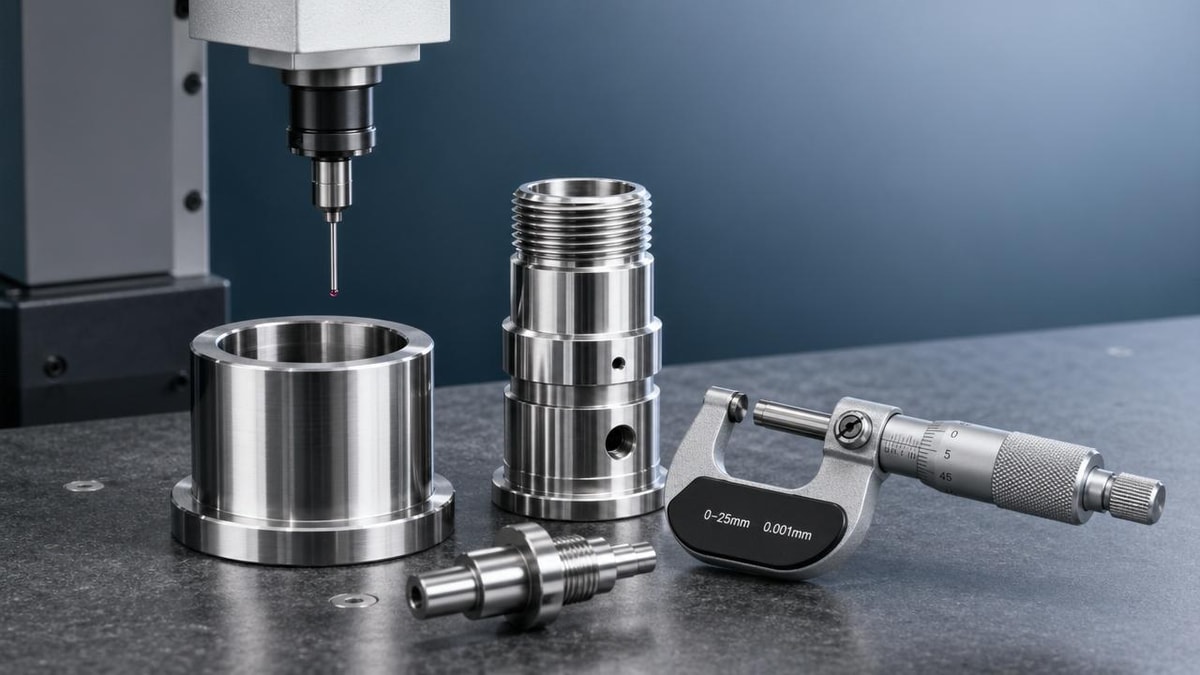
For cnc turning centers, one overlooked issue is the effect of interrupted cuts and asymmetrical feature loading. A part with cross-drilled openings, deep slots, or partial wall sections may generate vibration or deformation if the turning sequence is not properly staged. Another issue is cutoff integrity for small parts under 25 mm diameter or thin-wall parts where parting forces can distort the final face.
For milling, the biggest blind spots often involve datum transfer and fixture-induced variation. A round part clamped in multiple orientations may lose the natural coaxial reference that cnc turning centers maintain more easily. This is especially risky when the tolerance chain includes bore-to-OD alignment, thread-to-seat concentricity, or total runout below 0.05 mm.
Risk reminder checklist for technical evaluators
- Do not evaluate machine choice without identifying the functional datum system of the finished part.
- Check whether tolerance callouts are process-friendly or whether they force unnecessary secondary operations.
- Review whether burr-sensitive features, sealing edges, or thin walls appear near the final clamping points.
- Ask if the proposed route supports in-cycle probing or if all verification is offline, which can add delay.
- Confirm whether the supplier plans soft jaws, custom fixtures, or standard workholding, because this affects both cost and lead time.
Lead time and change management reminder
Lead time is not only about machine availability. Tooling build, fixture design, first article validation, and process capability tuning can add 1 to 3 weeks depending on part complexity. If your design is likely to change after prototype approval, milling may offer more flexibility during early phases, while cnc turning centers may become more economical after geometry stabilizes for serial production.
This is why many technical sourcing teams use a phased approach: prototype on flexible equipment, then migrate to a turning-dominant route once annual demand and tolerances are locked.
Execution guide: how to make the final decision with confidence
If you need a simple decision path, start by ranking the part on three axes: rotational dominance, non-round feature density, and tolerance criticality. When rotational dominance is high, non-round features are moderate, and centerline relationships drive performance, cnc turning centers are usually the lead candidate. When shape complexity and multi-face access dominate, milling should take priority.
A second step is to request alternative process proposals from qualified suppliers. Ask each supplier to quote both a preferred route and an alternate route when feasible. This often reveals hidden assumptions about setup count, automation level, and inspection burden. In global sourcing programs, the best commercial outcome frequently comes from comparing 2 to 3 technically valid methods rather than accepting a single machining logic.
Finally, evaluate manufacturability in the context of your broader supply chain. A process that looks ideal in theory may be weak if it depends on uncommon fixtures, low-availability tooling, or a narrow pool of capable suppliers. For strategic procurement teams, process resilience matters almost as much as unit cost.
Fast decision checklist
- Map all critical features to the finished functional datum system.
- Estimate the percentage of turning-type versus milling-type operations.
- Compare setup count, expected cycle time, and inspection complexity.
- Review the route against target volume, from prototype lots to 10,000-plus annual pieces.
- Select the option that delivers stable tolerance control with the lowest total process risk.
Why work with us for technical evaluation and supplier matching
TradeNexus Pro supports technical evaluators, procurement leaders, and industrial sourcing teams that need more than basic machining descriptions. We focus on helping decision-makers compare process routes, supplier capabilities, and manufacturing tradeoffs with practical intelligence tailored to real B2B sourcing conditions across advanced manufacturing and related sectors.
If you are assessing cnc turning centers for complex round parts, we can help you structure the right technical discussion before you commit to volume sourcing. That includes support around parameter confirmation, process selection, supplier screening, lead time expectations, customization feasibility, and the practical implications of tolerances, materials, and part geometry on production stability.
Contact us if you need help comparing cnc turning centers versus milling for a specific part family. You can prepare a drawing, 3D file, target quantity, material, required tolerance range, and any certification or inspection expectations. From there, we can help you clarify the most suitable route, align quote requests, discuss sample support, and streamline communication on pricing, delivery windows, and custom manufacturing options.
Get weekly intelligence in your inbox.
No noise. No sponsored content. Pure intelligence.
 May 01, 2026Beijing’s New E-Bike Rules Trigger Dual-Certification Demand for China’s Swappable Battery CabinetsBeijing’s New E-Bike Rules Trigger Dual-Certification Demand for China’s Swappable Battery Cabinets
 May 01, 2026GNA’s GEO Service Assessment Elevates AI Search as Digital Procurement Metric for Chinese ExportersGNA’s GEO Service Assessment Elevates AI Search as Digital Procurement Metric for Chinese Exporters
 May 01, 20262026 China Cycle Expo: Chinese EPS Systems Achieve UL 2849:2026 Full Certification2026 China Cycle Expo: Chinese EPS Systems Achieve UL 2849:2026 Full Certification
 May 01, 2026GB 42236-2026 Enforces EV Charger Efficiency & Overload Protection from May 2026GB 42236-2026 Enforces EV Charger Efficiency & Overload Protection from May 2026
 May 01, 2026GB/T 43790-2026 Drone EMC Standard Effective May 2026GB/T 43790-2026 Drone EMC Standard Effective May 2026
 May 01, 20262026 Foshan Tanzhou Auto Industry Expo Opens2026 Foshan Tanzhou Auto Industry Expo Opens
 May 01, 2026China’s New Hazardous Chemicals Safety Law Takes Effect May 2026China’s New Hazardous Chemicals Safety Law Takes Effect May 2026
 May 01, 2026New Maritime and Fisheries Laws Take Effect May 1, 2026New Maritime and Fisheries Laws Take Effect May 1, 2026
 May 01, 2026Supply Chain Automation Works Best Where Delays RepeatSupply Chain Automation Works Best Where Delays Repeat
 May 01, 2026High Strength Steel Forgings: What Should Be Tested First?High Strength Steel Forgings: What Should Be Tested First?
 May 01, 2026Automotive Steel Forging: Cost Pressure vs Part ReliabilityAutomotive Steel Forging: Cost Pressure vs Part Reliability
 May 01, 2026Why High Durability Steel Forgings Fail Earlier Than ExpectedWhy High Durability Steel Forgings Fail Earlier Than Expected
 May 01, 2026Construction Aluminum Extrusions: Which Finish Lasts Longer?Construction Aluminum Extrusions: Which Finish Lasts Longer?
 May 01, 2026Lightweight Aluminum Extrusions: Where Savings Really HappenLightweight Aluminum Extrusions: Where Savings Really Happen
 May 01, 2026Aerospace Aluminum Extrusions Need More Than Low WeightAerospace Aluminum Extrusions Need More Than Low Weight
 May 01, 2026Precision Lathe Turning Problems That Show Up After AssemblyPrecision Lathe Turning Problems That Show Up After Assembly
 May 01, 2026High Precision Lathe Turning: Tolerance Claims to VerifyHigh Precision Lathe Turning: Tolerance Claims to Verify
 May 01, 2026When CNC Lathe Turning Is Better Than General MachiningWhen CNC Lathe Turning Is Better Than General Machining
 May 01, 2026Medical Device Prototyping Needs More Than SpeedMedical Device Prototyping Needs More Than Speed
 May 01, 20263D Printing Prototyping: Fast Turnaround or Better Finish?3D Printing Prototyping: Fast Turnaround or Better Finish?
 May 01, 2026Low Cost Rapid Prototyping: Where Quality Gets LostLow Cost Rapid Prototyping: Where Quality Gets Lost
 May 01, 2026Quick EV Charger Installation Still Needs Site ChecksQuick EV Charger Installation Still Needs Site Checks
 May 01, 2026Public Parking EV Chargers: What Slows Installation DownPublic Parking EV Chargers: What Slows Installation Down
 May 01, 2026Choosing a Lithium Ion Battery Manufacturer in ChinaChoosing a Lithium Ion Battery Manufacturer in China
 May 01, 2026How to Vet a Lithium Ion Battery OEM SupplierHow to Vet a Lithium Ion Battery OEM Supplier
 May 01, 2026EV Lithium Ion Batteries: Range Is Not the Only MetricEV Lithium Ion Batteries: Range Is Not the Only Metric
 May 01, 2026Lithium Ion ESS Batteries: Safety Details Worth CheckingLithium Ion ESS Batteries: Safety Details Worth Checking