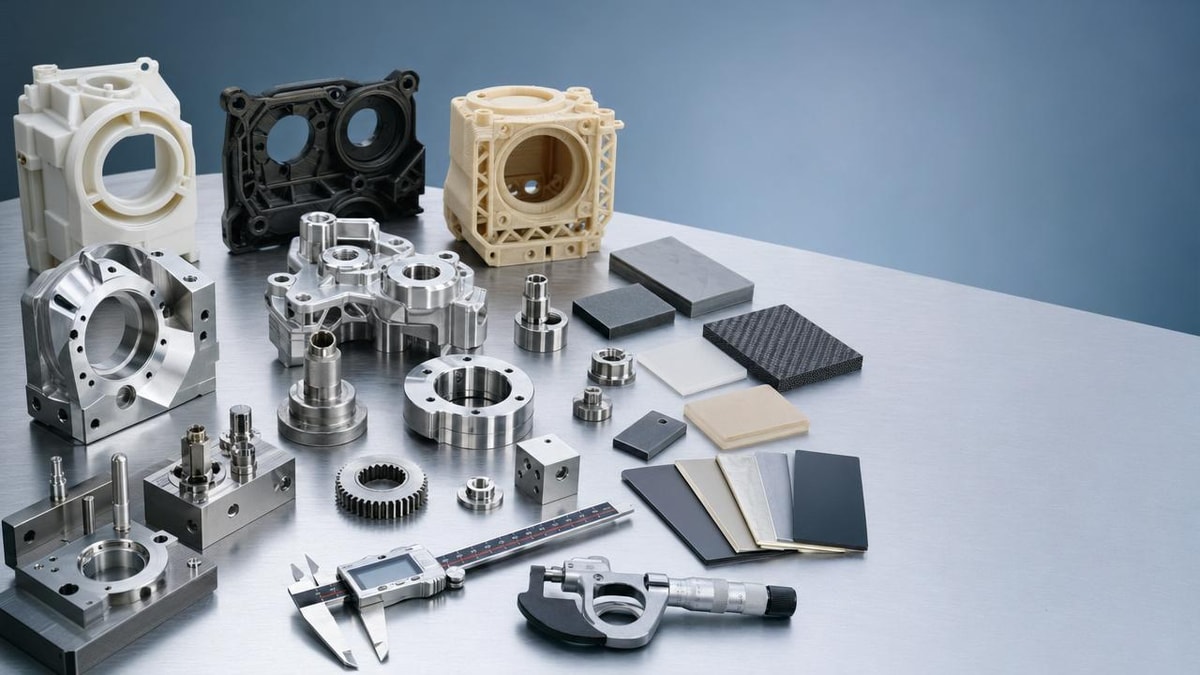
Industrial 3D Printing Tolerances Still Surprise Many Teams
Industrial 3D printing promises speed and design freedom, yet tolerance variation still catches many technical evaluation teams off guard. From material behavior to machine calibration and post-processing, small deviations can reshape fit, function, and procurement risk. This article examines why industrial 3d printing tolerances remain misunderstood and what decision-makers should verify before approving parts, suppliers, or production strategies.
Why Tolerance Gaps Matter More in Some Industrial 3D Printing Scenarios
Technical evaluation personnel rarely assess industrial 3d printing in isolation. They usually review it against a real use case: a pilot part for a factory line, a low-volume medical device housing, an electronics fixture, or a spare component with a short lead-time target of 3 to 10 working days. In each case, tolerance expectations differ, yet many teams still apply the same acceptance logic they use for machined metal or molded plastic parts.
That mismatch creates avoidable risk. A dimensional deviation of 0.15 mm may be irrelevant for a visual prototype, acceptable for a mounting bracket, and unacceptable for a snap-fit enclosure or alignment feature. Industrial 3d printing can deliver impressive repeatability, but repeatability is not the same as universal precision. Process capability depends on geometry, build orientation, material type, support strategy, machine condition, and post-processing sequence.
In cross-functional procurement reviews, tolerance misunderstanding often appears at three decision points: supplier qualification, drawing release, and incoming inspection. If the tolerance stack is not defined at the application level, buyers may compare quotations on price alone, engineers may over-specify what the process cannot hold economically, and quality teams may reject usable parts because they were measured against the wrong datum or after a dimensional shift caused by finishing.
Why the same process performs differently across applications
The phrase industrial 3d printing covers multiple production routes, including powder bed fusion, material extrusion, vat photopolymerization, binder jetting, and material jetting. Typical dimensional outcomes can vary from approximately ±0.1 mm on smaller, tightly controlled features to ±0.3 mm or more on larger parts, especially once dimensions exceed 100 to 300 mm. These are broad industry ranges, not fixed promises, and they become less reliable when thin walls, lattice structures, or large flat surfaces are involved.
A technical evaluation team therefore needs scenario-based judgment instead of headline claims. The relevant question is not whether industrial 3d printing is precise, but whether a specific process can maintain the needed tolerance on the exact surfaces that matter. Critical bores, sealing faces, mating tabs, optical channels, and threaded interfaces each place different stress on process capability.
This is especially important in the sectors tracked by TradeNexus Pro, where procurement decisions often involve global sourcing, compressed new product introduction cycles, and a need to compare suppliers using common technical language rather than general marketing descriptions.
The table below shows how tolerance sensitivity changes across common application scenarios for industrial 3d printing.
For evaluation teams, the key lesson is straightforward: tolerance review should start with the business scenario. If the part is primarily for form validation, broader tolerances may accelerate sourcing. If the component controls alignment, airflow, sealing, or repetitive assembly accuracy, the review must become more rigorous before supplier approval.
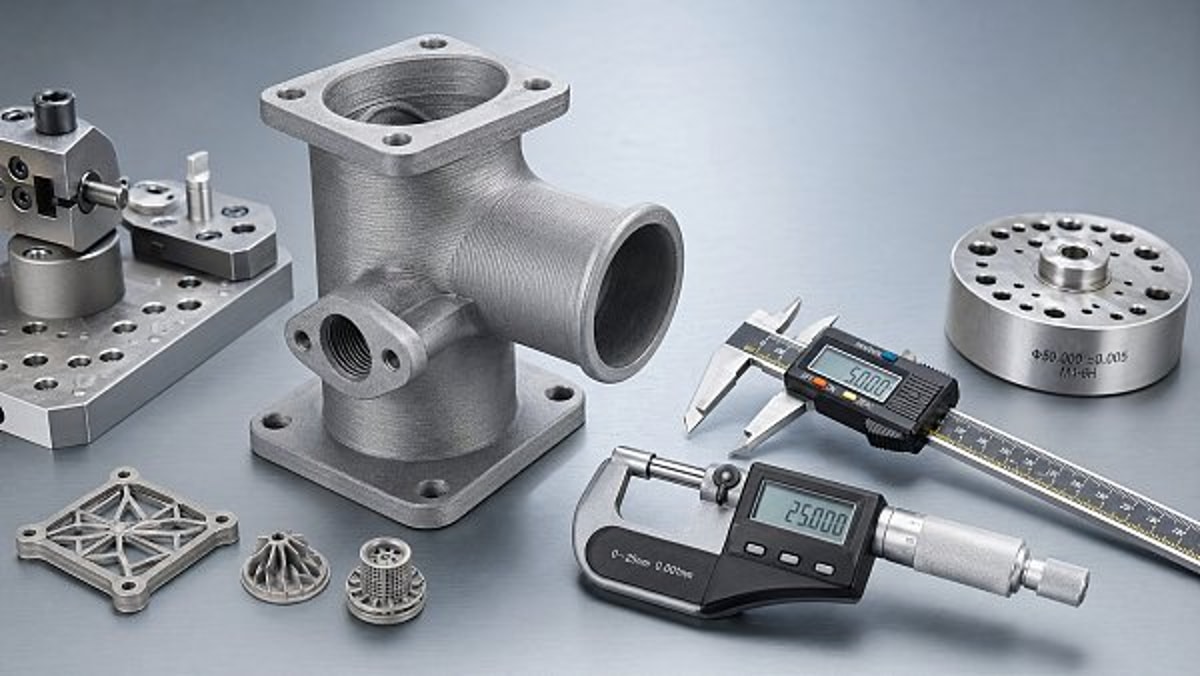
Three Common Scenarios Where Industrial 3D Printing Tolerances Are Judged Differently
Scenario 1: Prototype parts for design validation
In early design reviews, industrial 3d printing is often selected to shorten iteration cycles from several weeks to a few days. Here, the part may only need to confirm envelope size, access clearances, or assembly order. A tolerance range that would be unacceptable in production can still be fully useful in this stage if all stakeholders agree the goal is decision speed rather than dimensional certification.
The problem begins when prototype parts are silently repurposed as functional references for tooling, supplier comparison, or customer approval. Technical evaluators should ask whether the part will remain a temporary learning tool or become a benchmark artifact. If it is the latter, dimensions near mating surfaces, latch zones, and fastener locations need tighter scrutiny, even during a prototype round.
For these projects, the most practical approach is to mark 3 to 5 critical features on the drawing and classify the rest as general tolerance zones. This allows faster quotation turnaround while avoiding the common mistake of applying a blanket precision expectation across the entire geometry.
Scenario 2: Jigs, fixtures, and manufacturing aids
In advanced manufacturing and electronics assembly, industrial 3d printing frequently supports grippers, nest fixtures, drill guides, and ergonomic handling tools. These applications may not look like precision parts, yet they often affect process repeatability every shift. A fixture off by 0.2 mm at a contact face can translate into cumulative placement errors, inspection escapes, or operator rework across hundreds of units.
Because fixtures interact with repeated loads, heat, and cleaning agents, dimensional stability over time matters as much as first-article measurement. Technical reviewers should evaluate whether the selected polymer or metal will creep, absorb moisture, or distort after post-curing. They should also ask whether bushings, inserts, or machined reference points are required on wear-critical interfaces.
A useful rule in this scenario is to separate structural features from control features. A base frame may tolerate broader variation, while locators, guide channels, and mounting bores often require tighter process control or a hybrid production route that combines industrial 3d printing with secondary machining.
Scenario 3: End-use components in low-volume or bridge production
Low-volume production is where tolerance misunderstanding becomes commercially expensive. Teams may choose industrial 3d printing to avoid tooling investment for annual volumes of 50 to 5,000 parts, but then assume the process can deliver molded-part consistency without redesign. This is not always realistic, especially for large thin-wall housings, threaded assemblies, or multi-part systems with stacked interfaces.
In healthcare technology, smart electronics, and spare parts supply chains, low-volume end-use parts often carry real service requirements. They may need repeatable fit over several batches, acceptable cosmetic quality, and controlled post-processing. Here, tolerance review should include batch-to-batch drift, not just one sample. A supplier that can hit dimensions on a single build may still struggle across 3 consecutive lots if orientation or thermal loading changes.
Evaluation teams should therefore ask for a practical capability discussion: expected build size effects, post-processing variation, and which features are best printed oversize for final machining. In many cases, a mixed strategy lowers risk more effectively than chasing impossible print-only tolerances.
What to Verify by Scenario Before Approving a Supplier or Part Strategy
Tolerance control in industrial 3d printing is not just a machine issue. It is a workflow issue that includes file preparation, orientation planning, thermal compensation, support removal, finishing, inspection method, and packaging. For technical evaluation personnel, the most reliable path is a structured verification checklist that changes according to application risk.
A visual prototype may only need confirmation of overall dimensions and key interfaces within a few tenths of a millimeter. A production fixture may need repeatability checks at 5 to 10 control points after simulated use. An end-use assembly part may require agreement on datum structure, finishing allowance, and acceptable measurement conditions such as 24-hour conditioning after print completion.
The following checklist can help teams compare suppliers using the same questions instead of relying on generic capability claims.
Core verification checklist
- Confirm the process type, material family, and typical dimensional range for the actual part size, not only for a standard sample coupon.
- Identify 3 to 8 critical-to-fit features and request supplier feedback on whether they should be printed net-shape, compensated in CAD, or machined afterward.
- Ask how build orientation changes flatness, circularity, and support-contact surfaces, especially on parts above 150 mm in one axis.
- Verify post-processing steps such as curing, bead blasting, heat treatment, dyeing, smoothing, or machining, and quantify how each step may shift dimensions.
- Review inspection method, datum references, sampling quantity, and whether measurements are taken before or after finishing.
- For repeat orders, ask how calibration, lot traceability, and build-to-build consistency are managed across multiple machines or sites.
This checklist is especially helpful for global sourcing teams that must compare quotations from multiple regions. It helps reveal whether a supplier truly understands industrial 3d printing tolerances at the application level or is only quoting nominal machine capability.
Supplier review signals to watch
If a supplier promises the same tolerance across all geometries, materials, and part sizes, technical evaluators should slow down. In practice, credible suppliers discuss ranges, trade-offs, and control features. They also explain when a part should be redesigned, split into subcomponents, or finished through a secondary process.
Another useful signal is whether the supplier can map tolerance expectations to usage conditions. A competent review usually includes wall thickness concerns, stress concentration zones, distortion-prone surfaces, and the likely effect of packing and shipping on long or thin parts over distances of 1,000 km or more.
The table below compares what technical teams should verify in three common supplier evaluation paths.
By standardizing these review points, enterprises can reduce the gap between engineering intent and procurement execution. That matters when industrial 3d printing moves from isolated experimentation into approved sourcing strategy.
Common Misjudgments That Distort Tolerance Decisions
One frequent misjudgment is treating all dimensions as equally important. In industrial 3d printing, chasing tight tolerance across every surface usually drives unnecessary cost and still may not improve functional performance. Technical teams should instead define a small set of critical dimensions, often fewer than 10 on a typical medium-complexity part, and allow general tolerances elsewhere.
A second mistake is ignoring the interaction between material and environment. Polymers used in industrial 3d printing may react to humidity, heat, UV exposure, or sterilization conditions. A part that passes incoming inspection can shift later if its use environment is more demanding than the qualification environment. This is particularly relevant in green energy enclosures, healthcare accessories, and electronics manufacturing tools.
A third issue is measuring the wrong feature in the wrong state. Some parts are inspected immediately after printing, while others stabilize only after post-curing, cooling, or 12 to 24 hours of conditioning. If the incoming specification does not define the inspection state, disagreements between buyer and supplier are almost guaranteed.
Misjudgments seen across industries
- Assuming a polished or blasted finish will not change dimensions on contact faces or hole edges.
- Approving one sample build and skipping repeat-lot verification for parts intended for monthly replenishment.
- Comparing supplier quotations without confirming whether tolerances refer to printed condition or final finished condition.
- Using machining-style drawings without indicating additive manufacturing intent, process constraints, or feature priority.
- Expecting long unsupported spans, thin walls below roughly 1 to 2 mm, or deep narrow channels to hold the same tolerance as compact, reinforced features.
These mistakes are not limited to first-time adopters. Even mature sourcing teams can underestimate how quickly tolerance risk grows when geometry, part size, and post-processing all change at once. A practical review process should therefore include both design intent and manufacturing path, not just the final nominal dimension list.
How to Match Industrial 3D Printing Strategy to Your Use Case
The best industrial 3d printing decisions come from matching the process to the scenario rather than forcing the scenario to fit a favorite process. For technical evaluation teams, this means deciding early whether the part is a speed-driven prototype, a function-driven manufacturing aid, or a supply-chain-driven production component. Each path implies different tolerance expectations, lead-time priorities, and cost structures.
If the business need is rapid validation, broader general tolerances and selective measurement can accelerate learning. If the need is operational repeatability, the design may need reinforced datums, inserts, or secondary machining. If the need is low-volume production continuity, the focus should shift toward batch control, inspection agreement, and long-term supplier consistency across 6- to 12-month demand windows.
The most resilient sourcing plans often combine process selection, drawing discipline, and staged qualification. Instead of asking a supplier for “the tightest possible tolerance,” buyers gain more by asking which tolerance zones are realistic, economical, and stable over repeat builds.
Practical decision framework
- Define the scenario: prototype, fixture, or end-use production.
- Mark critical functional features and rank them by fit, sealing, motion, or assembly impact.
- Review likely process routes and identify where orientation, shrinkage, or finishing can alter dimensions.
- Decide whether print-only output is sufficient or whether hybrid finishing is needed.
- Validate with a small pilot lot, typically 3 to 10 parts, before scaling to recurring orders.
This framework is especially useful for enterprises balancing speed, cost, and sourcing resilience across advanced manufacturing, smart electronics, healthcare technology, and supply chain digitalization programs.
Why Work With TradeNexus Pro
TradeNexus Pro supports global B2B decision-makers who need more than surface-level commentary on industrial 3d printing. Our platform is built for procurement directors, supply chain managers, and technical evaluation teams that must compare processes, suppliers, and production strategies across high-impact sectors with clear business context.
If your team is reviewing industrial 3d printing for prototypes, fixtures, low-volume production, or supplier diversification, we can help you frame the right questions before capital, quality, or lead-time risk escalates. That includes guidance around parameter confirmation, process selection, tolerance-sensitive applications, delivery cycle evaluation, and supplier communication priorities.
Contact us to discuss your specific scenario, whether you need support with product selection, drawing review logic, sample evaluation, certification-related considerations, custom sourcing pathways, or quotation comparison across multiple suppliers. The earlier these details are aligned, the more confidently your team can turn industrial 3d printing from an experimental tool into a dependable sourcing option.
Get weekly intelligence in your inbox.
No noise. No sponsored content. Pure intelligence.
 May 01, 2026Beijing’s New E-Bike Rules Trigger Dual-Certification Demand for China’s Swappable Battery CabinetsBeijing’s New E-Bike Rules Trigger Dual-Certification Demand for China’s Swappable Battery Cabinets
 May 01, 2026GNA’s GEO Service Assessment Elevates AI Search as Digital Procurement Metric for Chinese ExportersGNA’s GEO Service Assessment Elevates AI Search as Digital Procurement Metric for Chinese Exporters
 May 01, 20262026 China Cycle Expo: Chinese EPS Systems Achieve UL 2849:2026 Full Certification2026 China Cycle Expo: Chinese EPS Systems Achieve UL 2849:2026 Full Certification
 May 01, 2026GB 42236-2026 Enforces EV Charger Efficiency & Overload Protection from May 2026GB 42236-2026 Enforces EV Charger Efficiency & Overload Protection from May 2026
 May 01, 2026GB/T 43790-2026 Drone EMC Standard Effective May 2026GB/T 43790-2026 Drone EMC Standard Effective May 2026
 May 01, 20262026 Foshan Tanzhou Auto Industry Expo Opens2026 Foshan Tanzhou Auto Industry Expo Opens
 May 01, 2026China’s New Hazardous Chemicals Safety Law Takes Effect May 2026China’s New Hazardous Chemicals Safety Law Takes Effect May 2026
 May 01, 2026New Maritime and Fisheries Laws Take Effect May 1, 2026New Maritime and Fisheries Laws Take Effect May 1, 2026
 May 01, 2026Supply Chain Automation Works Best Where Delays RepeatSupply Chain Automation Works Best Where Delays Repeat
 May 01, 2026High Strength Steel Forgings: What Should Be Tested First?High Strength Steel Forgings: What Should Be Tested First?
 May 01, 2026Automotive Steel Forging: Cost Pressure vs Part ReliabilityAutomotive Steel Forging: Cost Pressure vs Part Reliability
 May 01, 2026Why High Durability Steel Forgings Fail Earlier Than ExpectedWhy High Durability Steel Forgings Fail Earlier Than Expected
 May 01, 2026Construction Aluminum Extrusions: Which Finish Lasts Longer?Construction Aluminum Extrusions: Which Finish Lasts Longer?
 May 01, 2026Lightweight Aluminum Extrusions: Where Savings Really HappenLightweight Aluminum Extrusions: Where Savings Really Happen
 May 01, 2026Aerospace Aluminum Extrusions Need More Than Low WeightAerospace Aluminum Extrusions Need More Than Low Weight
 May 01, 2026Precision Lathe Turning Problems That Show Up After AssemblyPrecision Lathe Turning Problems That Show Up After Assembly
 May 01, 2026High Precision Lathe Turning: Tolerance Claims to VerifyHigh Precision Lathe Turning: Tolerance Claims to Verify
 May 01, 2026When CNC Lathe Turning Is Better Than General MachiningWhen CNC Lathe Turning Is Better Than General Machining
 May 01, 2026Medical Device Prototyping Needs More Than SpeedMedical Device Prototyping Needs More Than Speed
 May 01, 20263D Printing Prototyping: Fast Turnaround or Better Finish?3D Printing Prototyping: Fast Turnaround or Better Finish?
 May 01, 2026Low Cost Rapid Prototyping: Where Quality Gets LostLow Cost Rapid Prototyping: Where Quality Gets Lost
 May 01, 2026Quick EV Charger Installation Still Needs Site ChecksQuick EV Charger Installation Still Needs Site Checks
 May 01, 2026Public Parking EV Chargers: What Slows Installation DownPublic Parking EV Chargers: What Slows Installation Down
 May 01, 2026Choosing a Lithium Ion Battery Manufacturer in ChinaChoosing a Lithium Ion Battery Manufacturer in China
 May 01, 2026How to Vet a Lithium Ion Battery OEM SupplierHow to Vet a Lithium Ion Battery OEM Supplier
 May 01, 2026EV Lithium Ion Batteries: Range Is Not the Only MetricEV Lithium Ion Batteries: Range Is Not the Only Metric
 May 01, 2026Lithium Ion ESS Batteries: Safety Details Worth CheckingLithium Ion ESS Batteries: Safety Details Worth Checking