OEM Machined Parts: Where Tolerance Issues Start
In OEM machined parts, tolerance issues rarely begin on the shop floor alone—they often start with unclear specifications, supplier capability gaps, and fragmented sourcing decisions. For buyers evaluating OEM consumer electronics, medical grade silicone, clear aligner manufacturing, or even orthopedic braces, understanding where dimensional risk enters the process is critical to cost, quality, and delivery. This article explores the hidden root causes behind tolerance failures and how smarter procurement can prevent them.
For operators, engineers, procurement managers, commercial evaluators, quality teams, and executive approvers, tolerance is not just a drawing note. It affects assembly yield, regulatory compliance, field performance, warranty exposure, and total landed cost. A part that misses a ±0.02 mm requirement may still look acceptable visually, yet trigger fit failures, sealing leaks, vibration, sensor drift, or packaging rejects across multiple downstream processes.
In cross-sector OEM programs, the challenge becomes larger because tolerance expectations differ sharply by application. A housing for smart electronics may prioritize cosmetic flatness and mating features, while a component used in healthcare technology may require tighter dimensional consistency, documented process control, and traceability across 3 to 5 production stages. That is why tolerance problems should be treated as a sourcing-system issue, not only a machining issue.
Tolerance Problems Usually Start Before Production
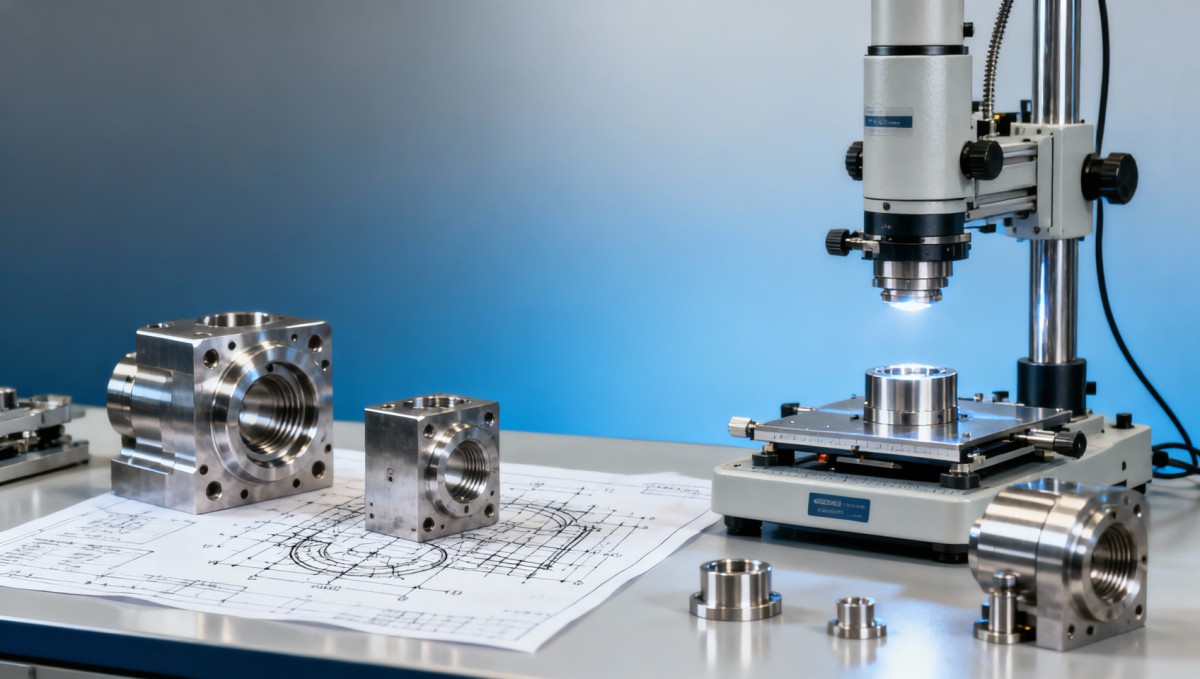
Many OEM machined parts fail tolerance targets because the original input package is incomplete. Drawings may define nominal dimensions but omit datum strategy, critical-to-function features, surface finish interaction, or inspection method. When one supplier interprets a hole location from a general note and another interprets it from a fixture setup, the result is not a minor paperwork issue. It can create a 0.05 mm to 0.20 mm deviation that compounds during assembly.
This is common in mixed procurement environments where sourcing teams compare quotes from 3 to 6 vendors across different regions. A lower unit price may hide a capability gap in machine stability, tool wear control, fixturing repeatability, or in-process measurement. In sectors such as consumer electronics, orthopedic products, and silicone-metal hybrid assemblies, even a small mismatch between design intent and supplier interpretation can generate scrap, rework, or delayed PPAP-style approval cycles.
Tolerance risk also increases when procurement splits parts between prototype and mass production suppliers without a controlled transfer plan. A prototype shop may hold ±0.01 mm on low volume using extra setup time, but a production supplier targeting 10,000 to 50,000 units per batch may optimize cycle time differently. If manufacturability is not reviewed early, the mass-production process may fail to replicate prototype dimensions consistently.
Another overlooked source is material behavior. Aluminum, stainless steel, PEEK, titanium, and medical-grade silicone inserts all respond differently to clamping force, thermal variation, and post-processing. If tolerance is defined without considering material movement during machining, coating, sterilization preparation, or packaging compression, the final delivered dimension may drift outside the usable range even when the machine process appears stable.
Early-stage failures that create downstream dimensional risk
- Incomplete drawings with missing datums, geometric tolerances, or critical feature ranking.
- RFQ packages that specify material grade but not post-machining finish or inspection frequency.
- Supplier selection based on price only, without Cp/Cpk expectation, gauge capability, or machine envelope review.
- Engineering changes released in revision B or C but not synchronized across procurement, quality, and production.
Why this matters for B2B buyers
If a component costs $4 but creates a $40 assembly interruption, tolerance management becomes a business issue, not only a technical issue. Procurement directors and financial approvers should evaluate dimensional risk at the same time they review tooling cost, MOQ, and lead time. In many programs, a 2-week delay caused by re-qualification is more expensive than a 5% to 8% higher piece price from a capable supplier.
Where Specification Quality Breaks Down in Cross-Industry OEM Sourcing
Specification quality often degrades when teams work across mechanical, quality, sourcing, and commercial functions without a shared tolerance logic. Engineering may define the ideal design window, but sourcing may send only a simplified PDF to bidders. Quality may expect first article inspection on 100% of critical dimensions, while the supplier assumes sampling at 5 pieces per lot. These gaps are manageable only if identified before tooling release and production planning.
The issue is especially visible in products that blend precision machining with elastomers, molded components, electronics, or wearable medical interfaces. A machined metal core used inside a clear aligner device, orthopedic brace component, or smart device enclosure may need tolerance coordination with soft material compression, adhesive thickness, or PCB stack-up. If the tolerance stack is reviewed in isolation, the final assembly may fail despite every single part appearing “within print.”
A practical rule is to classify dimensions into at least 3 levels: critical-to-function, critical-to-assembly, and reference only. Without this ranking, suppliers tend to over-control easy dimensions and under-control the features that actually affect sealing, fastening, alignment, or motion. That leads to inefficient cost structures and unreliable process outcomes.
Typical specification gaps and procurement impact
The table below highlights how common documentation weaknesses create measurable sourcing and quality consequences across OEM machined parts programs.
The key takeaway is that documentation discipline directly influences quotation quality, manufacturing stability, and commercial predictability. Buyers who standardize RFQ packages usually reduce supplier interpretation variance significantly, especially during NPI and low-to-mid volume launches.
A stronger RFQ package should include
- Revision-controlled drawings with datums, material condition, and finish notes.
- A list of 5 to 15 critical dimensions that require enhanced inspection.
- Expected lot size, annual volume, and acceptable process window for prototype versus production.
- Required measurement method, such as CMM, plug gauge, optical inspection, or functional fixture.
This level of detail helps technical evaluators compare like-for-like offers and allows project managers to align tooling, validation, and incoming inspection resources before the first shipment arrives.
How Supplier Capability Gaps Turn Small Deviations Into Large Business Losses
Not every machine shop that can produce a part sample can sustain a controlled tolerance in commercial volumes. Capability should be reviewed across equipment, process engineering, metrology, operator discipline, change control, and subcontractor management. A supplier may own 3-axis and 5-axis machining centers, yet still struggle with repeatability if fixtures are manually reset, tools are not life-tracked, or inspection data is recorded only at shift end.
For procurement teams, the risk is often hidden by acceptable first samples. Early samples can be hand-tuned, selectively measured, or produced under low-load conditions. Once the order moves to 2 shifts, 20 machines, or multiple subcontracted finishing vendors, tolerance spread can widen quickly. This is why supplier capability should be verified at the process level rather than judged only by a polished sample and a competitive quotation.
Healthcare technology and smart electronics programs are particularly sensitive because tolerance drift can affect functional reliability and audit readiness. If traceability is weak, the buyer may be unable to isolate suspect lots within 24 hours. That can increase containment cost, delay customer shipments, and create internal conflict between quality, sourcing, and finance teams.
Supplier capability factors buyers should compare
Before awarding business, use a structured capability review instead of a simple price ranking. The table below can support cross-functional supplier evaluation.
The strongest suppliers are not always those with the most machines. They are the ones that can explain how they hold a tolerance over 1,000, 10,000, or 100,000 parts, how often they measure, and what action they take when a trend approaches the control limit. For many B2B buyers, that level of transparency is a better predictor of long-term cost than the initial quoted unit price.
Four signs of a mature machining partner
- Critical features are checked at defined intervals, such as every 30, 60, or 120 parts depending on process risk.
- Out-of-trend data triggers containment before nonconforming product reaches final packaging.
- Secondary processes like anodizing, heat treatment, and laser marking are controlled within the same quality plan.
- Supplier engineers can discuss tolerance stack-up, not only machine runtime and price.
A Smarter Procurement Framework for Reducing Tolerance Risk
Tolerance control improves when procurement shifts from transactional buying to structured technical-commercial alignment. That means the sourcing process should validate not only “Can the supplier make it?” but also “Can the supplier make it repeatedly at the required cost, lead time, and quality level?” This approach is essential in multi-category sourcing environments where machined parts interface with molded parts, medical silicone, electronics modules, or wearable assemblies.
A practical framework can be built around 5 stages: specification review, supplier capability assessment, pilot validation, launch control, and ongoing performance monitoring. Each stage should include at least one technical checkpoint and one commercial checkpoint. For example, before PO release, the team should confirm critical dimensions, expected annual volume, sampling logic, and the cost impact of tighter-than-necessary tolerances.
This matters because over-tolerancing can be as damaging as under-specification. If a part is quoted at ±0.005 mm but the assembly can tolerate ±0.03 mm, the buyer may be paying for slower cycle times, premium tooling, and higher rejection rates with no functional benefit. Conversely, a loose drawing can create hidden cost through customer complaints, delayed line starts, and emergency air shipments.
Recommended procurement workflow
- Define functional tolerances and rank critical features before RFQ release.
- Shortlist suppliers based on process fit, not only region or quoted price.
- Run pilot lots of 30 to 300 pieces to validate repeatability and assembly performance.
- Agree on control plan, sampling frequency, and deviation escalation time, ideally within 24 hours.
- Track ppm trend, on-time delivery, and dimensional incidents by revision and lot number.
Decision criteria by stakeholder
Different stakeholders evaluate tolerance risk differently. Operators care about fit and handling. Quality teams look for repeatability and traceability. Procurement tracks supply continuity. Finance cares about total cost and disruption avoidance. Executive decision-makers focus on strategic resilience. A well-run sourcing project translates tolerance from a drawing concept into cross-functional decision criteria.
For global B2B teams using intelligence-led sourcing, platforms such as TradeNexus Pro add value by helping decision-makers compare sector-specific manufacturing capabilities, identify sourcing patterns, and reduce fragmentation between technical review and commercial negotiation. That is increasingly important in advanced manufacturing and healthcare-adjacent supply chains, where supplier visibility can influence lead time, compliance readiness, and brand risk.
FAQ: Common Questions Buyers Ask About OEM Machined Part Tolerances
How tight should tolerances be for OEM machined parts?
They should be only as tight as function requires. General machining features may be acceptable at ±0.05 mm to ±0.10 mm, while precision mating or sealing features may need ±0.01 mm to ±0.02 mm depending on material, geometry, and assembly method. The correct range depends on part size, process capability, finish thickness, and end-use risk.
What is the most common sourcing mistake?
A common mistake is treating all quoted suppliers as technically equivalent once the drawing is shared. In reality, two suppliers can quote the same part within 48 hours yet have very different capability in metrology, fixture design, SPC discipline, and subcontractor control. The cost gap may be 5% to 15%, but the quality gap can be far larger over a 12-month supply cycle.
How long does tolerance validation usually take?
For low-complexity parts, initial validation may take 1 to 2 weeks after sample availability. For parts involving finishing, regulatory documentation, or multi-part assembly checks, 3 to 6 weeks is more realistic. Buyers should budget time for first article review, measurement feedback, corrective action, and at least one controlled re-run if the part is function-critical.
What documents should buyers request before approving production?
At minimum, request dimensional reports for critical features, material confirmation, process flow, inspection plan, and revision-controlled drawing acknowledgment. For higher-risk programs, also ask for gauge calibration evidence, capability discussion for critical dimensions, and change notification rules covering tooling, machine transfer, subcontracting, and finish variation.
Tolerance issues in OEM machined parts rarely begin with a single operator or a single machine. They usually start upstream, where specifications are simplified, supplier capability is assumed rather than verified, and sourcing decisions are split across disconnected teams. The most effective buyers reduce risk by aligning design intent, process capability, inspection logic, and commercial terms before volume production begins.
For organizations sourcing across advanced manufacturing, smart electronics, healthcare technology, and adjacent OEM categories, a disciplined tolerance strategy can protect yield, lead time, and total cost at the same time. If you need deeper supplier insight, structured sourcing intelligence, or a clearer path to evaluating OEM manufacturing partners, contact TradeNexus Pro to explore tailored solutions, compare capability signals, and get support for your next procurement decision.
Get weekly intelligence in your inbox.
No noise. No sponsored content. Pure intelligence.
 Apr 18, 2026TradeNexus Pro Launches Global Compliance RadarTradeNexus Pro Launches Global Compliance Radar
 Apr 18, 2026JIS T 2304:2026 Takes Effect June 1, 2026 for IVD SoftwareJIS T 2304:2026 Takes Effect June 1, 2026 for IVD Software
 Pathway for Rehab Devices with AI Modules") Apr 18, 2026FDA Updates 510(k) Pathway for Rehab Devices with AI ModulesFDA Updates 510(k) Pathway for Rehab Devices with AI Modules
Apr 18, 2026FDA Updates 510(k) Pathway for Rehab Devices with AI ModulesFDA Updates 510(k) Pathway for Rehab Devices with AI Modules Apr 18, 2026India BIS Approves 3 Chinese IoT Labs for IS 16444:2026 CertificationIndia BIS Approves 3 Chinese IoT Labs for IS 16444:2026 Certification
 Apr 18, 2026THE Alliance Launches Green Slot Priority for China PortsTHE Alliance Launches Green Slot Priority for China Ports
 Apr 18, 2026TÜV Rheinland Releases Dual-Standard ESS Certification Guide for ChinaTÜV Rheinland Releases Dual-Standard ESS Certification Guide for China
 Apr 18, 2026Vietnam Imposes AD Duties on Chinese Electronic ComponentsVietnam Imposes AD Duties on Chinese Electronic Components
 Apr 18, 2026SASO Launches PV Carbon Footprint Labeling from July 2026SASO Launches PV Carbon Footprint Labeling from July 2026
 Apr 18, 2026U.S. Adds 17 Smart Warehouse Robot Components to Export Control ListU.S. Adds 17 Smart Warehouse Robot Components to Export Control List
 Apr 18, 2026EU Enforces EN IEC 62443-4-2:2026 for Industrial Control Devices from 18 Apr 2026EU Enforces EN IEC 62443-4-2:2026 for Industrial Control Devices from 18 Apr 2026
 Apr 17, 2026Temperature data loggers drift unpredictably inside lithium-ion battery storage enclosuresTemperature data loggers drift unpredictably inside lithium-ion battery storage enclosures
 Apr 17, 2026Are solar microinverters really worth the extra cost?Are solar microinverters really worth the extra cost?
 Apr 17, 2026Bifacial solar panels: How much more energy can they generate?Bifacial solar panels: How much more energy can they generate?
 Apr 17, 2026Gear manufacturing: How to optimize production for high precision?Gear manufacturing: How to optimize production for high precision?
 Apr 17, 2026Why power transmission components fail earlier than expectedWhy power transmission components fail earlier than expected
 Apr 17, 2026Linear motion systems: belt drive or ball screw for speed?Linear motion systems: belt drive or ball screw for speed?
 Apr 17, 2026Industrial bearing suppliers: what signals reliable quality?Industrial bearing suppliers: what signals reliable quality?
 Apr 17, 2026When pneumatic valves wholesale gets expensive laterWhen pneumatic valves wholesale gets expensive later
 Apr 17, 2026Hydraulic cylinder fabrication mistakes that cause oil leaksHydraulic cylinder fabrication mistakes that cause oil leaks
 Apr 17, 2026Heavy equipment manufacturing delays often start hereHeavy equipment manufacturing delays often start here
 Apr 17, 2026Custom heatsinks: when a larger size solves nothingCustom heatsinks: when a larger size solves nothing
 Apr 17, 2026Electronic enclosure fabrication: steel or aluminum?Electronic enclosure fabrication: steel or aluminum?
 Apr 17, 2026Automotive parts machining tolerances that drive up scrapAutomotive parts machining tolerances that drive up scrap
 Apr 17, 2026Medical device manufacturing changes under tighter traceabilityMedical device manufacturing changes under tighter traceability
 Apr 17, 2026How to Choose Solid State Batteries in 2026How to Choose Solid State Batteries in 2026
 Apr 17, 2026Are Solid State Batteries Worth the Cost Yet?Are Solid State Batteries Worth the Cost Yet?
 Apr 17, 2026Commercial Energy Storage Sizing: What Matters Most?Commercial Energy Storage Sizing: What Matters Most?