Signs a CNC Turning Center Is Wrong for Your Part Mix
Not every shop benefits from investing in cnc turning centers, especially when part complexity, batch variability, and tolerance demands shift beyond their sweet spot. For enterprise decision-makers, recognizing these mismatch signals early can prevent costly underutilization, workflow bottlenecks, and weak ROI. This article outlines the practical signs that a CNC turning center may be the wrong fit for your current part mix.
What usually makes cnc turning centers a strong fit, and where do they start to fail?
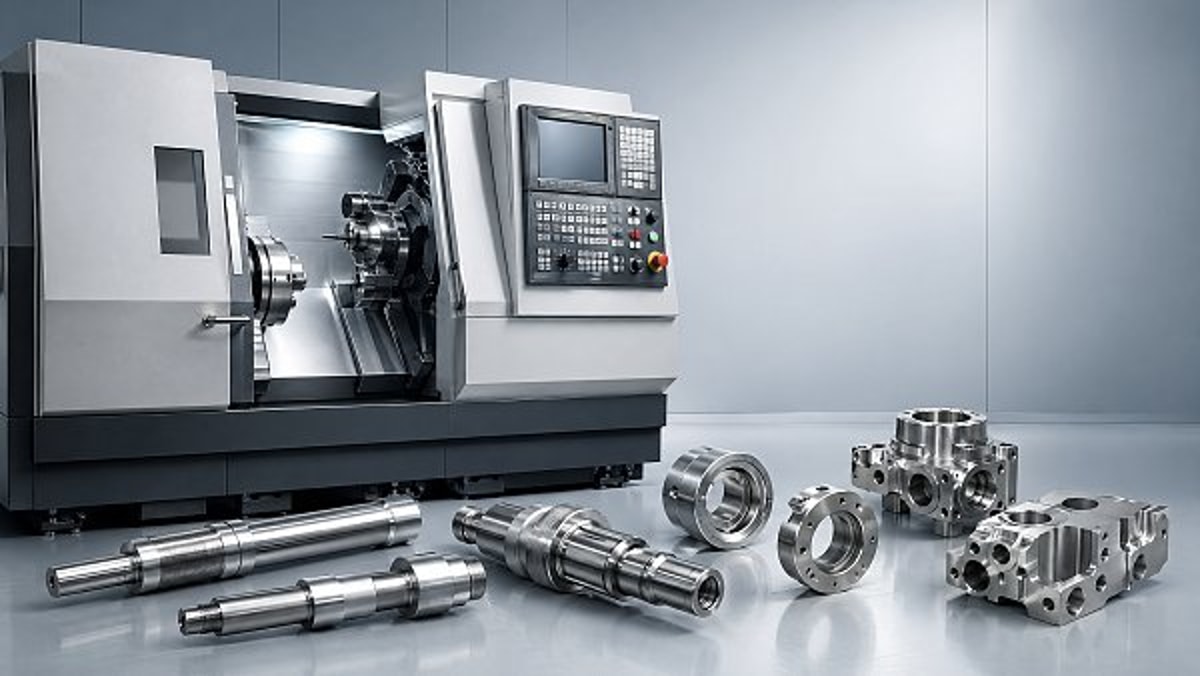
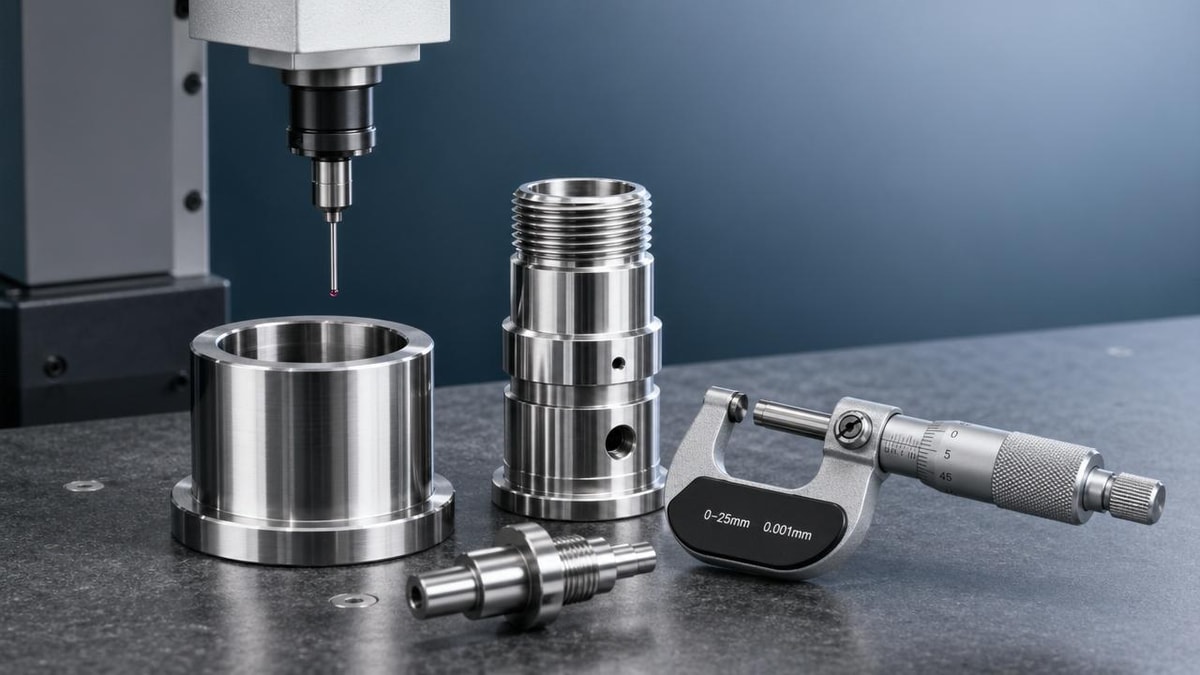
Cnc turning centers are built around rotational parts. They perform well when a large share of production involves shafts, bushings, threaded parts, sleeves, rings, and similar geometries that can be completed in 1–3 primary chucking operations. For procurement leaders and plant managers, that baseline matters because machine utilization depends less on brochure specifications and more on part-family alignment.
The mismatch begins when the part mix drifts toward prismatic features, frequent engineering changes, highly interrupted cuts, or repeated secondary operations outside the machine envelope. In many mixed-manufacturing environments, a turning center can appear productive on paper yet create hidden delays once parts require extra milling, additional inspection steps, or manual repositioning every few batches.
A practical rule used in many sourcing reviews is to examine the next 12–24 months of expected orders rather than the last 3 months alone. If more than half of forecasted parts require substantial off-center milling, multi-face machining, or non-rotational datum strategies, the value case for cnc turning centers becomes weaker. The problem is not machine quality; it is process fit.
Decision-makers in advanced manufacturing, healthcare technology, smart electronics, and green energy supply chains often face this issue when product portfolios evolve faster than equipment plans. A machine that matched last year’s demand may no longer support today’s mix of low-volume prototypes, frequent revision cycles, and tighter quality documentation requirements.
Three conditions where fit is usually strongest
- Stable families of round parts with repeatable diameters, lengths, and thread patterns across medium to high batch sizes.
- Operations that can be consolidated into turning, drilling, boring, and limited live-tool work within one machine cycle.
- Tolerance schemes that are demanding but still achievable without excessive re-clamping, such as common concentricity and runout controls managed in a single setup.
If your operating reality falls outside those conditions more than once or twice per month, the issue is worth escalating beyond the production team and into capital planning. That is where structured market intelligence and cross-sector benchmarking become useful, especially for enterprises balancing equipment ROI with supply chain resilience.
What are the clearest signs the machine is wrong for your current part mix?
The first sign is a rising share of parts that need secondary processing on machining centers, grinders, or manual stations. If 30%–40% of jobs leave the cnc turning center only to wait for additional feature creation, datum correction, or deburring work, the process is no longer truly consolidated. What looks like spindle time efficiency can become lead-time inflation across the cell.
A second sign is batch volatility. Cnc turning centers tend to justify themselves best when setup amortization is spread across predictable runs. If your production calendar is dominated by short runs of 10–50 pieces, repeated changeovers, and weekly schedule reshuffling, setup labor can outweigh cutting advantages. In those cases, flexibility may matter more than raw turning speed.
The third sign is tolerance stacking caused by multiple handoffs. This often appears in parts that require turned diameters plus milled flats, cross-holes, slots, or off-axis features with tight positional relationships. If quality teams are repeatedly correcting issues after second or third operations, the root problem may be process architecture rather than operator performance.
A fourth sign is low spindle utilization relative to ownership cost. Many companies focus on machine uptime, but utilization should be viewed together with profitable part coverage. If a turning center runs only 1 shift out of 2, or spends several hours each week waiting for programs, fixtures, or approved revisions, the capital is under-leveraged even if maintenance remains acceptable.
Operational signals procurement teams should request
Before approving another machine or renewing a cell strategy, ask operations for four concrete data points covering at least 8–12 recent weeks. These indicators often expose whether cnc turning centers are carrying the right mix or masking workflow problems.
When two or more of these signals trend upward over a quarter, the issue deserves a broader sourcing and production review. Enterprises using TradeNexus Pro often compare these signals across suppliers and regions before committing to expansion, because a machine mismatch can ripple into delivery risk, quote accuracy, and customer service performance.
A quick decision test
- If most urgent jobs involve non-round features first, not turned diameters first, question the core machine choice.
- If fixture engineering keeps increasing while batch sizes keep shrinking, flexibility is becoming more valuable than dedicated turning throughput.
- If quality risk rises each time a part moves between 2–3 machines, the process chain may be structurally wrong.
How do cnc turning centers compare with other process options?
For enterprise buyers, the real question is rarely whether cnc turning centers are good machines. The question is whether they outperform alternatives for the exact geometry mix, revision frequency, and delivery profile your business is facing. In sectors with short product life cycles, a more flexible process sometimes produces better total economics even when single-part cycle time is longer.
Typical alternatives include multitasking mill-turn platforms, vertical or horizontal machining centers for prismatic-heavy parts, and strategic outsourcing for low-repeat hybrid geometries. Each route changes the tradeoff between setup time, fixture complexity, labor intensity, and quality control. That is why equipment comparison should be done at job-family level, not machine-spec level.
When teams compare options, they should review at least 5 dimensions: feature completeness, setup count, takt stability, inspection burden, and operator dependency. These factors often influence margin more than spindle power or maximum bar capacity, particularly in mixed-order environments.
The table below summarizes where cnc turning centers tend to lose ground when the part mix shifts away from their natural advantage.
The main lesson is simple: if more value comes from reducing setups than from maximizing pure turning speed, cnc turning centers may not be the best next investment. This is especially relevant for enterprise networks serving multiple sectors, where product families change faster than traditional capital plans.
Where cross-sector buyers see the issue first
In healthcare technology, documentation burden and revision control often magnify the cost of secondary operations. In smart electronics, miniaturized parts may require precise feature relationships that are difficult to maintain after multiple handoffs. In green energy and advanced manufacturing, larger components can shift between turning-dominant and milling-dominant requirements as design standards evolve over 2–3 product generations.
That is why procurement teams increasingly rely on platform-based intelligence rather than isolated vendor claims. A strategic view of supplier capability, process suitability, and regional manufacturing trends helps prevent equipment assumptions from turning into long-term sourcing constraints.
What should buyers evaluate before purchasing or reallocating cnc turning centers?
A disciplined procurement review should start with part-family segmentation. Group your active and forecasted parts into at least 3 bands: turning-dominant, hybrid turning-milling, and prismatic-heavy. Then examine annual volume, average lot size, setup recurrence, and quality hold points for each band. Without this segmentation, even a technically sound machine quote can support the wrong operating model.
The next step is to map process risk. Review how many parts need 2 setups, 3 setups, or outsourced finishing. Also review whether critical dimensions are created in the same setup or transferred between machines. For many decision-makers, the hidden cost is not scrap alone; it is engineering review time, schedule slippage, and customer-facing delivery uncertainty.
Lead time should also be tested realistically. A quoted machine delivery of 12–20 weeks does not equal production readiness. Programming, tooling, first article approval, operator training, and process validation can add another 2–6 weeks depending on complexity. If your customer demand is moving now, an alternative sourcing path may protect revenue better than waiting for internal capacity to stabilize.
For regulated or quality-sensitive sectors, buyers should confirm whether the production route supports traceability, inspection planning, and repeatable control plans. Even when no special industry certification is specified, common quality frameworks such as ISO-aligned documentation practices still influence supplier approval and downstream audit confidence.
Five procurement questions that reduce wrong-fit risk
- What percentage of forecasted parts can be completed on cnc turning centers without additional critical-feature transfer?
- How often do engineering changes alter fixturing, tooling paths, or inspection plans within a 90-day window?
- Is the business case built on stable medium-volume demand, or on assumptions that may disappear after one product cycle?
- Would a flexible hybrid machine, or a qualified supply partner, lower total risk despite a higher unit processing cost?
- How will this investment affect on-time delivery, quality escapes, and working capital over the next 4 quarters?
Organizations that use TNP for sourcing intelligence often combine these questions with supplier capability mapping. That approach is useful when internal production, dual sourcing, and regional partner selection must be evaluated together rather than as isolated purchasing events.
A simple evaluation matrix for enterprise teams
Use a weighted review before you commit capital or redirect work. The matrix below is not a universal scorecard, but it helps align engineering, operations, procurement, and finance around the same decision language.
If the warning signs outweigh the fit indicators in 2 or more rows, a fresh capacity strategy is usually justified. That strategy may still include cnc turning centers, but not as the default answer for every new program.
What are the common misconceptions and practical next steps?
One common misconception is that adding live tooling automatically solves a bad part mix. It helps in some cases, but it does not eliminate all setup complexity, axis limitations, or feature-access constraints. Another misconception is that low machine purchase price guarantees lower total cost. In reality, repeated handoffs, extra inspection, and schedule disruption can outweigh the initial savings within a few quarters.
A third misconception is that underutilization can always be fixed by taking on more external work. That strategy can support capacity absorption, but it also introduces quoting risk and quality variability if incoming jobs do not match the machine’s ideal envelope. Capacity filling is not the same as strategic fit.
A more reliable next step is to run a 3-stage review: analyze the current part mix, compare alternative process routes, and validate the commercial scenario against customer demand over the next 6–12 months. This sequence keeps the discussion grounded in operational facts rather than assumptions about machine capability.
For global B2B enterprises, the additional advantage comes from connecting internal findings with external market visibility. That is where TNP supports decision-makers: by turning fragmented supplier, technology, and sector information into a clearer sourcing and investment picture across advanced manufacturing and adjacent industries.
FAQ: buyer-focused questions about cnc turning centers
How do I know if our part mix is too variable for cnc turning centers?
Look for three indicators over a rolling 8–12 week period: high setup frequency, many short runs below roughly 50 pieces, and a growing share of jobs requiring secondary milling or corrective handling. When all three appear together, the machine may be technically capable but commercially mismatched.
Are cnc turning centers still a good choice for tight tolerances?
Yes, often they are, especially when critical turned features are produced in one setup. The concern arises when tolerance relationships depend on features created across 2–3 different machines or clamping stages. In that situation, process transfer can become the larger source of risk.
What should procurement request from operations before approving a purchase?
Request part-family segmentation, setup frequency, secondary operation rate, utilization by shift, and first-pass quality trends. Also ask for a realistic readiness timeline including programming, tooling, and validation. A machine quoted at 14 weeks may not support stable production until several weeks later.
When is outsourcing a better option than buying more cnc turning centers?
Outsourcing is often worth considering when demand is irregular, bridge capacity is needed for 1–2 quarters, or the part family is too specialized to keep internal utilization stable. The right supplier network can reduce capital exposure while preserving delivery continuity, provided qualification and documentation controls are in place.
Why work with us when evaluating equipment fit, sourcing options, and next-step strategy?
TradeNexus Pro helps enterprise decision-makers move beyond generic machine comparisons. Our value lies in connecting technical suitability with supplier capability, sector demand shifts, and commercial timing. That matters when you are not just buying equipment, but protecting delivery performance, margin stability, and sourcing flexibility across multiple markets.
If you are reviewing cnc turning centers for a new program or questioning the fit of existing assets, we can support a more informed decision path. Typical consultation topics include part-family assessment, sourcing model comparison, supplier discovery, production route benchmarking, and risk review for mixed-volume manufacturing environments.
You can also engage TNP to clarify practical questions before investment or supplier onboarding: expected lead-time ranges, typical qualification checkpoints, documentation expectations, sample support strategy, and how to compare internal production against external partner capacity. These are the issues that often decide ROI long before the first part is cut.
Contact us if you need structured input on parameter confirmation, supplier shortlisting, quote comparison, delivery-cycle review, custom sourcing strategies, or quality and compliance expectations for your target sector. For decision-makers navigating complex part mixes, the fastest savings often come from choosing the right production path before committing to the wrong machine.
Get weekly intelligence in your inbox.
No noise. No sponsored content. Pure intelligence.
 May 01, 2026Beijing’s New E-Bike Rules Trigger Dual-Certification Demand for China’s Swappable Battery CabinetsBeijing’s New E-Bike Rules Trigger Dual-Certification Demand for China’s Swappable Battery Cabinets
 May 01, 2026GNA’s GEO Service Assessment Elevates AI Search as Digital Procurement Metric for Chinese ExportersGNA’s GEO Service Assessment Elevates AI Search as Digital Procurement Metric for Chinese Exporters
 May 01, 20262026 China Cycle Expo: Chinese EPS Systems Achieve UL 2849:2026 Full Certification2026 China Cycle Expo: Chinese EPS Systems Achieve UL 2849:2026 Full Certification
 May 01, 2026GB 42236-2026 Enforces EV Charger Efficiency & Overload Protection from May 2026GB 42236-2026 Enforces EV Charger Efficiency & Overload Protection from May 2026
 May 01, 2026GB/T 43790-2026 Drone EMC Standard Effective May 2026GB/T 43790-2026 Drone EMC Standard Effective May 2026
 May 01, 20262026 Foshan Tanzhou Auto Industry Expo Opens2026 Foshan Tanzhou Auto Industry Expo Opens
 May 01, 2026China’s New Hazardous Chemicals Safety Law Takes Effect May 2026China’s New Hazardous Chemicals Safety Law Takes Effect May 2026
 May 01, 2026New Maritime and Fisheries Laws Take Effect May 1, 2026New Maritime and Fisheries Laws Take Effect May 1, 2026
 May 01, 2026Supply Chain Automation Works Best Where Delays RepeatSupply Chain Automation Works Best Where Delays Repeat
 May 01, 2026High Strength Steel Forgings: What Should Be Tested First?High Strength Steel Forgings: What Should Be Tested First?
 May 01, 2026Automotive Steel Forging: Cost Pressure vs Part ReliabilityAutomotive Steel Forging: Cost Pressure vs Part Reliability
 May 01, 2026Why High Durability Steel Forgings Fail Earlier Than ExpectedWhy High Durability Steel Forgings Fail Earlier Than Expected
 May 01, 2026Construction Aluminum Extrusions: Which Finish Lasts Longer?Construction Aluminum Extrusions: Which Finish Lasts Longer?
 May 01, 2026Lightweight Aluminum Extrusions: Where Savings Really HappenLightweight Aluminum Extrusions: Where Savings Really Happen
 May 01, 2026Aerospace Aluminum Extrusions Need More Than Low WeightAerospace Aluminum Extrusions Need More Than Low Weight
 May 01, 2026Precision Lathe Turning Problems That Show Up After AssemblyPrecision Lathe Turning Problems That Show Up After Assembly
 May 01, 2026High Precision Lathe Turning: Tolerance Claims to VerifyHigh Precision Lathe Turning: Tolerance Claims to Verify
 May 01, 2026When CNC Lathe Turning Is Better Than General MachiningWhen CNC Lathe Turning Is Better Than General Machining
 May 01, 2026Medical Device Prototyping Needs More Than SpeedMedical Device Prototyping Needs More Than Speed
 May 01, 20263D Printing Prototyping: Fast Turnaround or Better Finish?3D Printing Prototyping: Fast Turnaround or Better Finish?
 May 01, 2026Low Cost Rapid Prototyping: Where Quality Gets LostLow Cost Rapid Prototyping: Where Quality Gets Lost
 May 01, 2026Quick EV Charger Installation Still Needs Site ChecksQuick EV Charger Installation Still Needs Site Checks
 May 01, 2026Public Parking EV Chargers: What Slows Installation DownPublic Parking EV Chargers: What Slows Installation Down
 May 01, 2026Choosing a Lithium Ion Battery Manufacturer in ChinaChoosing a Lithium Ion Battery Manufacturer in China
 May 01, 2026How to Vet a Lithium Ion Battery OEM SupplierHow to Vet a Lithium Ion Battery OEM Supplier
 May 01, 2026EV Lithium Ion Batteries: Range Is Not the Only MetricEV Lithium Ion Batteries: Range Is Not the Only Metric
 May 01, 2026Lithium Ion ESS Batteries: Safety Details Worth CheckingLithium Ion ESS Batteries: Safety Details Worth Checking