When Micro Machining Is the Only Practical Option
When tolerances shrink beyond the reach of conventional methods, micro machining becomes the only practical option for producing intricate features, critical medical components, and next-generation electronic parts. For technical evaluators, understanding where micro machining delivers measurable advantages in precision, material flexibility, and production feasibility is essential to making informed sourcing and process decisions.
In advanced manufacturing and cross-sector B2B sourcing, the decision to use micro machining is rarely about novelty. It is usually driven by a hard technical limit: a feature too small for standard milling, a burr tolerance too risky for implantable parts, or a thermal impact too damaging for miniature conductive paths. For procurement teams and technical reviewers, the real question is not whether micro machining is impressive, but when it is the only practical path to repeatable output.
That question matters across the sectors tracked by TradeNexus Pro, especially advanced manufacturing, healthcare technology, and smart electronics. Whether evaluating prototype feasibility, supplier capability, or scale-up risk, technical evaluators need a clear framework that links micro feature geometry, material behavior, inspection requirements, and delivery economics. The sections below focus on exactly that decision logic.
Where Conventional Machining Stops and Micro Machining Starts
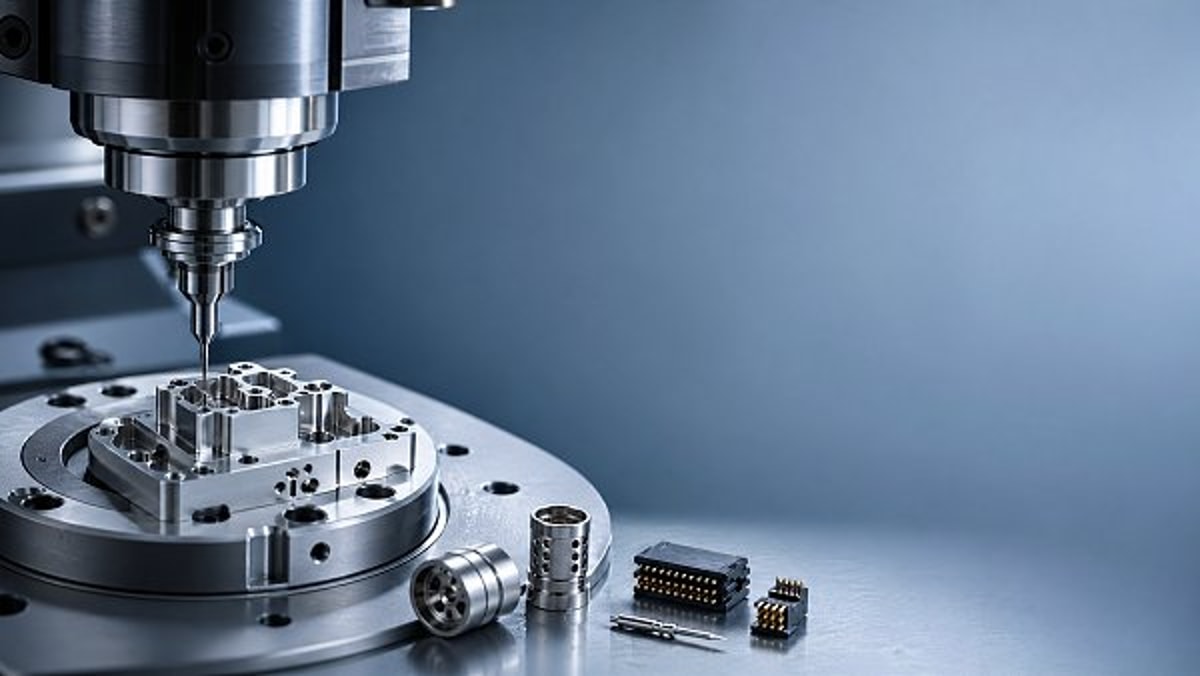
Micro machining generally enters the discussion when features move into the sub-millimeter range and process stability becomes more important than nominal machine power. In many industrial buying scenarios, a practical threshold appears when holes fall below 0.5 mm, slot widths approach 100–300 microns, or edge radii must remain tightly controlled across batches of 500 to 5,000 parts.
At those scales, traditional machining often produces three recurring problems: tool deflection, uncontrolled heat, and poor chip evacuation. Each can distort geometry even when the machine itself is highly capable. A standard process that holds ±0.02 mm on larger parts may struggle to maintain ±0.005 mm on miniature features, especially in stainless steel, titanium, copper alloys, or engineered polymers.
For technical evaluators, the key point is that micro machining is not defined only by part size. It is defined by the relationship between feature scale, surface integrity, and allowable variation. A 20 mm component can still require micro machining if it includes 80-micron channels, thin-wall sections below 0.15 mm, or critical intersections that cannot tolerate burr formation.
Typical trigger conditions
Several design conditions commonly trigger the need for micro machining in industrial sourcing reviews:
- Feature sizes below 500 microns that must be produced with repeatable edge quality.
- Tolerances tighter than ±10 microns on critical paths, bores, or sealing interfaces.
- Part geometries that combine fragile walls, high aspect ratios, and complex internal structures.
- Applications where post-processing is limited because deburring or polishing could destroy function.
These triggers are especially common in minimally invasive medical devices, micro-connectors, fluid control components, sensor housings, and miniature tooling inserts. In such cases, process selection becomes a feasibility issue, not just a cost comparison.
Comparison of process boundaries
The table below helps technical evaluators distinguish when standard precision machining may still be sufficient and when micro machining becomes the safer sourcing decision.
The main takeaway is that micro machining should be evaluated as a risk-reduction process for small-scale features. It often prevents downstream scrap, failed validation, and supplier changeovers that become far more expensive than the initial process premium.
Industries and Part Types That Depend on Micro Machining
Micro machining matters most when product function depends on tiny, consistent features rather than overall part volume. In healthcare technology, common examples include catheter components, surgical device tips, implantable anchors, and miniature bone screws. In smart electronics, the list includes connector pins, shielding details, micro-housings, and heat-sensitive conductive structures.
Advanced manufacturing also relies on micro machining for tooling inserts, nozzles, sensor carriers, micro-valves, and pilot-run parts used in validation programs. In these categories, feature integrity can affect fluid flow, electrical continuity, mechanical engagement, or sterility performance. A dimensional drift of 8–12 microns may look minor on paper but still cause field failure or assembly rejection.
Technical evaluators should also recognize the cross-industry overlap. A micro machined titanium part for healthcare may involve similar process controls to a stainless or copper-alloy part used in electronics or precision energy equipment. What changes is not always the machine platform; it is the documentation depth, cleanliness requirement, and acceptance criteria.
Application signals that justify the process
In sourcing reviews, the following signals usually indicate that micro machining should be part of the shortlist rather than a fallback option:
- Functional micro-features cannot be enlarged without changing product performance.
- Alternative processes such as stamping, molding, or EDM create unacceptable geometry or material tradeoffs.
- Prototype and low-to-mid volume production, often from 50 to 10,000 units, must preserve design intent before scale-up.
- Inspection plans require optical or tactile verification at the micron level, making uncontrolled secondary finishing unacceptable.
These signals are especially relevant when a buyer is balancing design freedom against qualification risk. Micro machining can support faster engineering iteration because it avoids hard tooling in early phases while still producing production-like geometries.
Common sector examples
The table below summarizes where micro machining is frequently selected and what technical outcome it is expected to protect.
Across these sectors, the commercial value of micro machining often comes from enabling a design that alternative processes cannot deliver within the required tolerance and validation window. That is why technical evaluation must consider application fit before unit price.
How to Evaluate a Micro Machining Supplier Beyond Basic Capability Claims
A supplier that says it can machine small parts is not necessarily equipped for true micro machining. Technical evaluators should look for evidence of controlled spindle behavior, tooling strategy, material-specific programming, metrology capability, and process documentation. The difference between a successful launch and a 6-week delay often sits in these operational details rather than in the equipment list alone.
For example, a supplier may quote a nominal tolerance of ±5 microns, but the more useful question is whether that tolerance is maintained across the full batch, after tool wear, and at the most fragile feature. A credible review should ask for first-article reporting logic, sampling frequency, typical lot sizes, and how the supplier manages tool replacement intervals during runs of 200, 1,000, or 3,000 pieces.
Material behavior is equally important. Micro machining titanium, nitinol, stainless steel, ceramics, PEEK, and copper alloys requires very different approaches to heat management and edge stability. If a supplier cannot explain process adjustments by material family, the technical risk is usually higher than the initial quote suggests.
Five evaluation dimensions
- Metrology depth: confirm whether optical systems, vision measurement, or micro-CMM methods are available for features below 0.2 mm.
- Tool life control: ask how frequently tools are monitored or replaced and whether offsets are updated in-process.
- Process validation: review first-article inspection, in-process checks, and final acceptance criteria for critical dimensions.
- Material experience: verify prior work with the same alloy, polymer, or medical-grade substrate family.
- Scale readiness: determine whether the same process can support prototype, pilot, and low-volume production without requalification.
These five dimensions create a practical screening framework. They also help purchasing and engineering teams speak the same language during RFQ review, especially when comparing suppliers with very different pricing structures.
Supplier screening checklist
The checklist below can be used during technical assessment or supplier qualification meetings.
A strong supplier should be able to answer these questions with process detail, not generic quality language. For technical evaluators, that is usually the clearest sign that the supplier understands micro machining as a controlled discipline rather than a marketing label.
Cost, Lead Time, and Production Feasibility in Real Procurement Decisions
Micro machining often carries a higher quoted piece price, but technical evaluators should assess total feasibility cost instead of comparing line-item rates in isolation. A part that fails qualification, needs repeated deburring, or shifts suppliers after pilot production can generate schedule damage far beyond an initial 10% to 25% price difference. In many programs, the more relevant metric is validated yield at the required geometry.
Lead time also needs context. Prototype micro machined parts may take 7–15 business days depending on material availability, tolerance complexity, and inspection burden. Repeat production can compress to 2–4 weeks if tooling strategy and quality documentation are already established. However, parts requiring complex fixture development, optical validation, or material traceability will typically need longer planning windows.
Volume matters as well. Micro machining is often ideal for prototypes, bridge production, and low-to-mid volume runs. For annual demand above 50,000 or 100,000 units, alternative processes may become commercially attractive if they can preserve the same geometry and surface outcome. The crossover point depends on scrap tolerance, regulatory burden, and how much design flexibility must be retained.
A practical feasibility model
When comparing sourcing routes, technical teams can use a four-part feasibility model:
- Can the required feature be produced consistently at the target tolerance?
- Can the feature be measured without destructive inspection or excessive delay?
- Can the process scale from sample to batch without major redesign?
- Can total program risk be contained within launch timing and quality expectations?
If the answer to any of these is no under conventional machining, micro machining becomes the practical option even if the headline cost is higher. This is especially true in product launches where missing a validation gate by 3 to 6 weeks is more damaging than a modest process premium.
Common procurement mistake
One frequent mistake is treating micro machining as a last resort after a standard process fails. In reality, early process alignment can reduce redesign loops, supplier churn, and qualification waste. The better approach is to screen for micro-feature risk at the drawing review stage, especially when the design includes blind micro-holes, thin ribs, narrow channels, or fragile interfaces below 0.2 mm.
Another mistake is assuming all miniature parts belong in the same cost category. Some micro machined parts are expensive because of material behavior; others because of inspection intensity or fixture complexity. Technical evaluators should separate these cost drivers to make better sourcing decisions and avoid rejecting a viable process for the wrong reason.
Implementation Risks, FAQs, and a Better Decision Framework
The biggest implementation risks in micro machining are usually hidden in specification quality. Drawings may call for extreme tolerances on non-functional features, omit surface integrity priorities, or fail to identify which dimensions are truly critical to fit, flow, or electrical behavior. This can cause over-processing, inflated cost, and unnecessary supplier disagreement during quoting.
A better decision framework starts with three filters: function, inspectability, and scale. First, identify which micro-features directly affect product performance. Second, confirm how each feature will be measured within the required acceptance window. Third, match the process to the expected production profile, whether that is 20 prototype units, 2,000 pilot units, or a staged ramp into larger manufacturing volumes.
This approach helps technical evaluators avoid both overbuying and under-specifying. It also creates cleaner communication between engineering, procurement, and supplier quality teams, which is especially important in globally distributed B2B supply chains.
FAQ: How small is small enough to require micro machining?
There is no single cutoff, but many sourcing teams begin evaluating micro machining when features drop below 0.5 mm or when tolerances tighten to around ±0.01 mm and below. The more important threshold is functional sensitivity. If a slight burr, heat mark, or dimensional drift can impair performance, micro machining should be reviewed early.
FAQ: Which materials are commonly suitable?
Typical materials include stainless steels, titanium alloys, aluminum alloys, copper alloys, PEEK, and other engineered polymers. Suitability depends on feature geometry, required finish, and thermal behavior. A material that machines well at normal scale may behave very differently once feature sizes move into the 100-micron range.
FAQ: What should buyers request in an RFQ?
An effective RFQ should include critical dimensions, target tolerances, material grade, expected annual volume, first-article requirements, and any restrictions on burrs, heat effects, or secondary finishing. If possible, buyers should also indicate which 3 to 5 dimensions are function-critical. That improves quote quality and reduces the chance of misaligned process assumptions.
FAQ: When should an alternative process be considered?
Alternative processes may be considered when annual volume is very high, feature geometry is stable, and a molded, etched, stamped, or EDM-based route can achieve the same functional result. Even then, the transition should be validated carefully, because miniature features often reveal quality problems only after assembly or field use.
Micro machining becomes the only practical option when miniature features, tight tolerances, material sensitivity, and validation requirements converge beyond the safe reach of conventional methods. For technical evaluators, the right decision depends on more than machine capability. It requires a disciplined review of feature scale, inspection method, supplier process control, and program-level feasibility.
For organizations operating across advanced manufacturing, healthcare technology, smart electronics, and related B2B supply chains, a structured evaluation of micro machining can prevent costly redesigns and qualification delays. To assess supplier fit, compare process options, or develop a sourcing strategy aligned with your part geometry and production goals, contact TradeNexus Pro to get a tailored solution review and explore more precision manufacturing insights.
Get weekly intelligence in your inbox.
No noise. No sponsored content. Pure intelligence.
 May 01, 2026Beijing’s New E-Bike Rules Trigger Dual-Certification Demand for China’s Swappable Battery CabinetsBeijing’s New E-Bike Rules Trigger Dual-Certification Demand for China’s Swappable Battery Cabinets
 May 01, 2026GNA’s GEO Service Assessment Elevates AI Search as Digital Procurement Metric for Chinese ExportersGNA’s GEO Service Assessment Elevates AI Search as Digital Procurement Metric for Chinese Exporters
 May 01, 20262026 China Cycle Expo: Chinese EPS Systems Achieve UL 2849:2026 Full Certification2026 China Cycle Expo: Chinese EPS Systems Achieve UL 2849:2026 Full Certification
 May 01, 2026GB 42236-2026 Enforces EV Charger Efficiency & Overload Protection from May 2026GB 42236-2026 Enforces EV Charger Efficiency & Overload Protection from May 2026
 May 01, 2026GB/T 43790-2026 Drone EMC Standard Effective May 2026GB/T 43790-2026 Drone EMC Standard Effective May 2026
 May 01, 20262026 Foshan Tanzhou Auto Industry Expo Opens2026 Foshan Tanzhou Auto Industry Expo Opens
 May 01, 2026China’s New Hazardous Chemicals Safety Law Takes Effect May 2026China’s New Hazardous Chemicals Safety Law Takes Effect May 2026
 May 01, 2026New Maritime and Fisheries Laws Take Effect May 1, 2026New Maritime and Fisheries Laws Take Effect May 1, 2026
 May 01, 2026Supply Chain Automation Works Best Where Delays RepeatSupply Chain Automation Works Best Where Delays Repeat
 May 01, 2026High Strength Steel Forgings: What Should Be Tested First?High Strength Steel Forgings: What Should Be Tested First?
 May 01, 2026Automotive Steel Forging: Cost Pressure vs Part ReliabilityAutomotive Steel Forging: Cost Pressure vs Part Reliability
 May 01, 2026Why High Durability Steel Forgings Fail Earlier Than ExpectedWhy High Durability Steel Forgings Fail Earlier Than Expected
 May 01, 2026Construction Aluminum Extrusions: Which Finish Lasts Longer?Construction Aluminum Extrusions: Which Finish Lasts Longer?
 May 01, 2026Lightweight Aluminum Extrusions: Where Savings Really HappenLightweight Aluminum Extrusions: Where Savings Really Happen
 May 01, 2026Aerospace Aluminum Extrusions Need More Than Low WeightAerospace Aluminum Extrusions Need More Than Low Weight
 May 01, 2026Precision Lathe Turning Problems That Show Up After AssemblyPrecision Lathe Turning Problems That Show Up After Assembly
 May 01, 2026High Precision Lathe Turning: Tolerance Claims to VerifyHigh Precision Lathe Turning: Tolerance Claims to Verify
 May 01, 2026When CNC Lathe Turning Is Better Than General MachiningWhen CNC Lathe Turning Is Better Than General Machining
 May 01, 2026Medical Device Prototyping Needs More Than SpeedMedical Device Prototyping Needs More Than Speed
 May 01, 20263D Printing Prototyping: Fast Turnaround or Better Finish?3D Printing Prototyping: Fast Turnaround or Better Finish?
 May 01, 2026Low Cost Rapid Prototyping: Where Quality Gets LostLow Cost Rapid Prototyping: Where Quality Gets Lost
 May 01, 2026Quick EV Charger Installation Still Needs Site ChecksQuick EV Charger Installation Still Needs Site Checks
 May 01, 2026Public Parking EV Chargers: What Slows Installation DownPublic Parking EV Chargers: What Slows Installation Down
 May 01, 2026Choosing a Lithium Ion Battery Manufacturer in ChinaChoosing a Lithium Ion Battery Manufacturer in China
 May 01, 2026How to Vet a Lithium Ion Battery OEM SupplierHow to Vet a Lithium Ion Battery OEM Supplier
 May 01, 2026EV Lithium Ion Batteries: Range Is Not the Only MetricEV Lithium Ion Batteries: Range Is Not the Only Metric
 May 01, 2026Lithium Ion ESS Batteries: Safety Details Worth CheckingLithium Ion ESS Batteries: Safety Details Worth Checking