Additive Manufacturing Services for Low-Volume Parts
For procurement and evaluation teams seeking faster, smarter sourcing, additive manufacturing services offer a practical path to low-volume parts without the cost burden of traditional tooling. From rapid iteration to supply chain flexibility, these solutions help businesses validate designs, reduce lead times, and improve purchasing decisions in increasingly complex manufacturing environments.
Why low-volume sourcing is changing faster than many buyers expected
Across advanced manufacturing, electronics, healthcare devices, energy hardware, and industrial support equipment, low-volume procurement is no longer treated as a temporary exception. It is becoming a regular sourcing category. Shorter product life cycles, regional inventory strategies, and more frequent engineering updates are pushing buyers to source batches of 10, 50, or 500 parts with far greater urgency than in previous years.
This shift matters because conventional production methods often work best when tooling can be amortized over thousands of units. When demand is uncertain, design maturity is still evolving, or launch timing is compressed into 2 to 6 weeks, tooling-heavy processes may create more risk than value. In these cases, additive manufacturing services move from a prototyping option to a strategic supply solution for low-volume parts.
Procurement teams are also under pressure to reduce hidden cost exposure. The quoted unit price alone no longer tells the full story. Evaluation now includes setup expense, tooling lead time, design change cost, minimum order quantity, expedited freight risk, and the operational impact of delayed validation. That wider lens is one reason additive manufacturing services are gaining attention in cross-functional sourcing reviews.
Key market signals procurement teams are seeing
- More RFQs involve pilot runs, bridge production, spare parts, or pre-certification builds rather than full mass production.
- Engineering teams increasingly expect first articles in days rather than the 4 to 10 weeks common in tool-based programs.
- Supplier selection now weighs digital workflow capability, DFM feedback speed, and material traceability alongside price.
- Distributed manufacturing and regional sourcing are becoming more relevant for service parts and urgent replenishment.
For business evaluators, the important takeaway is not that every part should be 3D printed. The real change is that additive manufacturing services are now being considered much earlier in sourcing strategy, especially where demand volatility, customization, or time-to-decision has become a commercial constraint.
How the sourcing profile is shifting
The table below highlights how low-volume part sourcing expectations are changing and why this creates a stronger use case for additive manufacturing services.
The pattern is clear: buyers are not abandoning conventional manufacturing, but they are widening the approved sourcing mix. Additive manufacturing services are increasingly positioned as a bridge between concept, validation, launch readiness, and post-launch service continuity.
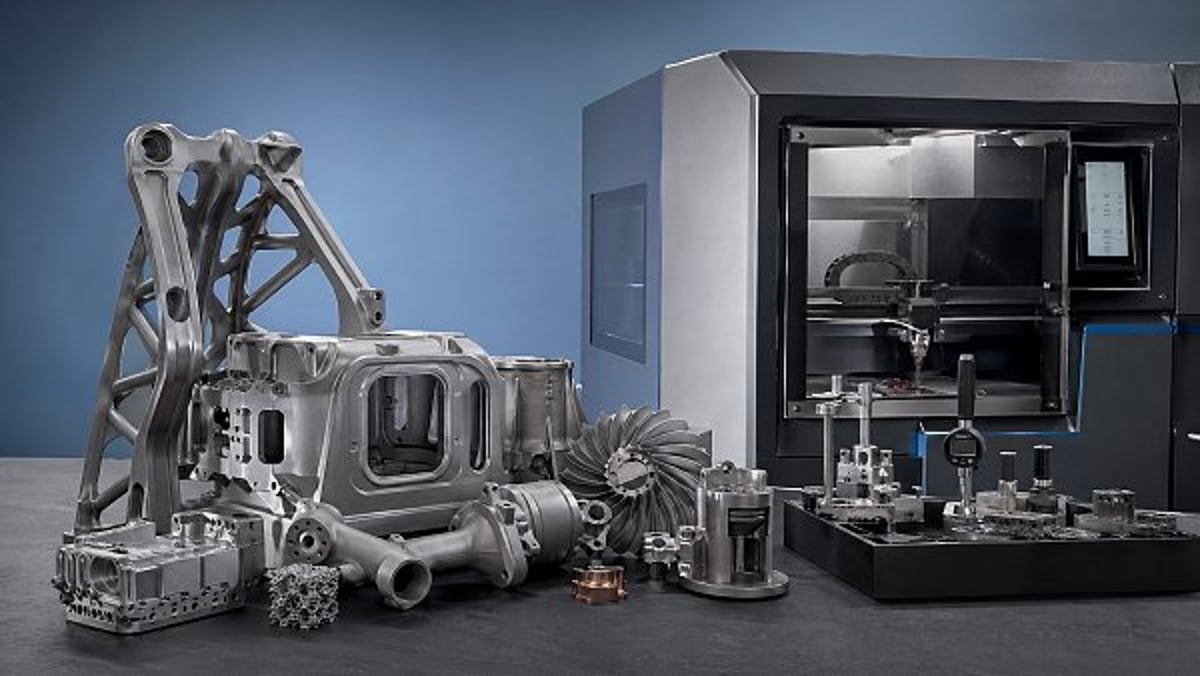
What is driving the rise of additive manufacturing services for low-volume parts
Several overlapping drivers are behind this trend. The first is product complexity. As assemblies become more compact, lightweight, and functionally integrated, buyers are evaluating parts that may be difficult or inefficient to machine or mold in early phases. Additive manufacturing services allow internal channels, lattice structures, part consolidation, and customized geometries to be assessed without waiting for tooling.
The second driver is demand uncertainty. In sectors influenced by regulatory review, project-based deployment, or staged market rollout, procurement often cannot justify high upfront tooling for initial quantities. A low-volume order of 20 to 200 units may only represent the first decision point, not the final demand forecast. In that environment, flexible unit economics can be more valuable than the lowest theoretical cost at scale.
The third driver is risk containment. When a design update arrives late in the process, traditional methods can trigger tool modification, scrap exposure, and launch delay. Additive manufacturing services reduce the financial penalty of iteration. That does not eliminate engineering discipline, but it changes how teams manage revision cycles and approval gates.
The main forces behind current adoption
For evaluation teams, it helps to separate the trend into operational drivers rather than viewing it as a general technology preference.
These drivers do not affect every part equally. They are strongest where design flexibility, speed, and moderate volume matter more than ultra-low unit cost. That is why procurement teams should evaluate additive manufacturing services by application fit, not by broad enthusiasm or broad rejection.
Where the strongest pull is coming from
- Bridge manufacturing between prototype approval and full-scale production.
- Custom fixtures, housings, brackets, and service components with changing specifications.
- Replacement parts where annual demand may remain below 100 units.
- Applications requiring multiple design variants without committing to multiple tools.
In practical terms, additive manufacturing services are gaining ground where uncertainty has become part of the operating model. For business evaluators, that is a stronger decision signal than any single technology claim.
How these changes affect procurement, engineering, and supplier evaluation
The most immediate impact is on how procurement defines value. In a traditional RFQ, the lowest piece price may dominate comparison. In low-volume programs, however, the evaluation matrix usually expands to include 6 to 10 factors: lead time, file readiness, revision handling, material options, post-processing, dimensional consistency, traceability, inspection support, and scale-up path. Additive manufacturing services often perform well when that broader matrix is used.
Engineering teams also experience a change in workflow. Because additive processes can move directly from CAD to production, design feedback arrives earlier and more frequently. This improves decision speed, but it also requires clearer alignment on tolerances, surface finish, load expectations, and acceptable anisotropy for each process. A part that is suitable for one additive method may not be ideal for another.
Supplier evaluation becomes more technical as a result. Buyers are no longer just reviewing a factory profile. They are assessing digital manufacturing readiness, material portfolio relevance, process validation logic, and communication speed during the quotation stage. In many cases, the first 48 to 72 hours of technical response reveal as much as the commercial quote itself.
What business evaluators should examine first
- Part suitability: geometry complexity, target volume, mechanical requirements, and critical tolerances.
- Service scope: printing only, or full support including DFM review, finishing, assembly, and inspection.
- Commercial fit: lot size economics, revision policy, sampling cost, and reorder convenience.
- Operational fit: delivery reliability, packaging for fragile geometries, and communication discipline.
Comparison points that matter in low-volume decisions
The table below can help procurement teams structure supplier comparisons for additive manufacturing services without over-focusing on headline pricing.
This comparison method improves sourcing discipline. It also prevents a common mistake: selecting a supplier based on broad additive capability without checking whether the proposed process, finish, and inspection level actually match the part’s functional requirements.
Another important impact is budget planning. In many organizations, additive manufacturing services sit between prototype and production cost centers. That can create internal confusion during approval. The better approach is to evaluate them as a risk-adjusted sourcing tool, especially when faster decisions can avoid downstream delay costs that exceed the part price itself.
What to watch next as additive manufacturing services mature
The next phase is likely to be defined less by novelty and more by integration. Buyers are increasingly interested in whether additive manufacturing services connect smoothly to qualification workflows, ERP-driven purchasing, approved material specifications, and repeat-order controls. As the market matures, the commercial advantage will come from reliability and clarity, not only from technical capability.
A second trend is segmentation by use case. Procurement teams are becoming more precise about where additive belongs: rapid tooling inserts, low-volume end-use parts, spare parts digitization, custom enclosures, lightweight structural components, or design-validation hardware. This matters because each category has different acceptance criteria, from cosmetic expectations to tolerance bands to documentation depth.
A third trend is hybrid sourcing. Rather than replacing CNC machining, casting, or molding, additive manufacturing services are increasingly used alongside them. For example, a buyer may validate 30 units additively, order 200 bridge parts while tooling is underway, and then transition to a higher-volume process once demand stabilizes. That staged model is becoming a practical sourcing pattern in many industries.
Signals worth tracking over the next 12 to 24 months
- More suppliers offering structured DFM feedback before quotation acceptance.
- Broader adoption of repeatable post-processing standards for customer-facing parts.
- Greater buyer emphasis on digital inventory and spare-part libraries.
- Closer comparison between additive manufacturing services and short-run CNC or urethane casting in sourcing models.
A practical decision framework
If your team is reviewing whether additive manufacturing services should become part of a standard sourcing pathway, use the following checkpoints:
- Confirm annual and per-order volume ranges, especially whether demand is below 500 units or split across several design revisions.
- Map the true cost of waiting for tooling, including test delays, launch slippage, and inventory mismatch.
- Review which part families benefit from geometry freedom, consolidation, or customization.
- Assess supplier readiness for documentation, finishing, packaging, and repeat-order consistency.
- Create a transition plan for parts that may later move to molding, machining, or casting at higher volumes.
This approach helps organizations avoid both extremes: overusing additive where conventional production is better, or missing opportunities where additive manufacturing services can reduce risk, shorten decision cycles, and strengthen sourcing agility.
How TradeNexus Pro helps businesses evaluate the right path
For procurement leaders and evaluation teams, the challenge is rarely a lack of options. The challenge is deciding which options fit the business case, the timing, and the downstream supply model. TradeNexus Pro supports that judgment by focusing on the sectors where low-volume sourcing decisions increasingly shape commercial outcomes: advanced manufacturing, smart electronics, healthcare technology, green energy, and supply chain SaaS-enabled operations.
Our coverage is designed for decision-makers who need more than surface-level vendor discovery. We examine the commercial implications of technology shifts, sourcing tradeoffs, production transitions, and market signals that affect real procurement choices. In the case of additive manufacturing services, that means helping buyers understand not just what is possible, but when it makes operational and financial sense for low-volume parts.
If your organization is currently comparing low-volume manufacturing routes, a structured discussion can save time before RFQs multiply. Typical evaluation topics include material and process fit, sample strategy, target tolerances, post-processing expectations, likely delivery windows, and whether a part should remain in additive production or transition to another method after the first 50, 100, or 500 units.
Why choose us
TradeNexus Pro brings an industry-focused perspective that helps business evaluators connect technical sourcing options with commercial reality. We are positioned to support discussions around additive manufacturing services with a deeper view of market direction, supply chain change, and sector-specific sourcing priorities rather than generic directory-style information.
If you need support, contact us to discuss parameter confirmation, low-volume part selection, process comparison, delivery cycle expectations, customization scenarios, documentation needs, sample planning, and quotation communication. For teams managing complex supplier evaluation, these early clarifications often improve both sourcing speed and decision quality.
In a market where product timelines are shorter and sourcing conditions are less predictable, additive manufacturing services deserve a place in the evaluation framework. The key is to assess them with clear criteria, realistic application boundaries, and a forward-looking sourcing strategy.
Get weekly intelligence in your inbox.
No noise. No sponsored content. Pure intelligence.
 May 01, 2026Beijing’s New E-Bike Rules Trigger Dual-Certification Demand for China’s Swappable Battery CabinetsBeijing’s New E-Bike Rules Trigger Dual-Certification Demand for China’s Swappable Battery Cabinets
 May 01, 2026GNA’s GEO Service Assessment Elevates AI Search as Digital Procurement Metric for Chinese ExportersGNA’s GEO Service Assessment Elevates AI Search as Digital Procurement Metric for Chinese Exporters
 May 01, 20262026 China Cycle Expo: Chinese EPS Systems Achieve UL 2849:2026 Full Certification2026 China Cycle Expo: Chinese EPS Systems Achieve UL 2849:2026 Full Certification
 May 01, 2026GB 42236-2026 Enforces EV Charger Efficiency & Overload Protection from May 2026GB 42236-2026 Enforces EV Charger Efficiency & Overload Protection from May 2026
 May 01, 2026GB/T 43790-2026 Drone EMC Standard Effective May 2026GB/T 43790-2026 Drone EMC Standard Effective May 2026
 May 01, 20262026 Foshan Tanzhou Auto Industry Expo Opens2026 Foshan Tanzhou Auto Industry Expo Opens
 May 01, 2026China’s New Hazardous Chemicals Safety Law Takes Effect May 2026China’s New Hazardous Chemicals Safety Law Takes Effect May 2026
 May 01, 2026New Maritime and Fisheries Laws Take Effect May 1, 2026New Maritime and Fisheries Laws Take Effect May 1, 2026
 May 01, 2026Supply Chain Automation Works Best Where Delays RepeatSupply Chain Automation Works Best Where Delays Repeat
 May 01, 2026High Strength Steel Forgings: What Should Be Tested First?High Strength Steel Forgings: What Should Be Tested First?
 May 01, 2026Automotive Steel Forging: Cost Pressure vs Part ReliabilityAutomotive Steel Forging: Cost Pressure vs Part Reliability
 May 01, 2026Why High Durability Steel Forgings Fail Earlier Than ExpectedWhy High Durability Steel Forgings Fail Earlier Than Expected
 May 01, 2026Construction Aluminum Extrusions: Which Finish Lasts Longer?Construction Aluminum Extrusions: Which Finish Lasts Longer?
 May 01, 2026Lightweight Aluminum Extrusions: Where Savings Really HappenLightweight Aluminum Extrusions: Where Savings Really Happen
 May 01, 2026Aerospace Aluminum Extrusions Need More Than Low WeightAerospace Aluminum Extrusions Need More Than Low Weight
 May 01, 2026Precision Lathe Turning Problems That Show Up After AssemblyPrecision Lathe Turning Problems That Show Up After Assembly
 May 01, 2026High Precision Lathe Turning: Tolerance Claims to VerifyHigh Precision Lathe Turning: Tolerance Claims to Verify
 May 01, 2026When CNC Lathe Turning Is Better Than General MachiningWhen CNC Lathe Turning Is Better Than General Machining
 May 01, 2026Medical Device Prototyping Needs More Than SpeedMedical Device Prototyping Needs More Than Speed
 May 01, 20263D Printing Prototyping: Fast Turnaround or Better Finish?3D Printing Prototyping: Fast Turnaround or Better Finish?
 May 01, 2026Low Cost Rapid Prototyping: Where Quality Gets LostLow Cost Rapid Prototyping: Where Quality Gets Lost
 May 01, 2026Quick EV Charger Installation Still Needs Site ChecksQuick EV Charger Installation Still Needs Site Checks
 May 01, 2026Public Parking EV Chargers: What Slows Installation DownPublic Parking EV Chargers: What Slows Installation Down
 May 01, 2026Choosing a Lithium Ion Battery Manufacturer in ChinaChoosing a Lithium Ion Battery Manufacturer in China
 May 01, 2026How to Vet a Lithium Ion Battery OEM SupplierHow to Vet a Lithium Ion Battery OEM Supplier
 May 01, 2026EV Lithium Ion Batteries: Range Is Not the Only MetricEV Lithium Ion Batteries: Range Is Not the Only Metric
 May 01, 2026Lithium Ion ESS Batteries: Safety Details Worth CheckingLithium Ion ESS Batteries: Safety Details Worth Checking