Custom Sheet Metal Fabrication or Standard Parts?
Choosing between custom sheet metal fabrication and standard parts can significantly affect cost, lead time, product performance, and supply chain resilience. For business evaluators, the right decision depends on application complexity, volume requirements, compliance demands, and long-term sourcing strategy. This article explores how to assess both options strategically to support smarter procurement and stronger operational outcomes.
Why This Decision Is Becoming More Strategic in Today’s Supply Chains
In the past, the choice between custom sheet metal fabrication and standard parts was often treated as a narrow engineering or purchasing issue. That is changing. Across advanced manufacturing, electronics enclosures, green energy systems, medical support equipment, and industrial infrastructure, procurement teams are now making this decision under tighter lead-time windows, more volatile material pricing, and stricter quality expectations.
A few trend signals stand out. First, product development cycles in many sectors have compressed to 3–9 months for pilot programs and 12–18 months for scaled launches. Second, regional supply chain diversification has made buyers more sensitive to single-source standard components. Third, low-volume and mid-volume production runs, often between 100 and 10,000 units, are becoming more common as companies test markets before full rollout.
These shifts make custom sheet metal fabrication more relevant than it was even five years ago. At the same time, standard parts remain attractive where interchangeability, quick replenishment, and established vendor catalogs reduce sourcing friction. For business evaluators, the key is not asking which option is universally better, but which option creates the best commercial outcome under current market conditions.
The practical impact extends beyond unit price. Decisions now influence design flexibility, tooling investment, inspection burden, shipping efficiency, and the ability to respond when specifications change after field testing. In other words, the custom-versus-standard decision has moved upstream into strategic planning rather than staying only in the purchase order stage.
Current Market Signals Procurement Teams Are Tracking
- More fragmented demand, with pilot orders often starting below 500 units before scaling.
- Shorter tolerance and compliance review cycles, especially in electronics, healthcare-adjacent equipment, and energy hardware.
- Higher pressure to localize or dual-source fabricated components within 2–3 regional supplier bases.
- Rising need for enclosure, bracket, panel, and chassis designs that fit compact or modular product architectures.
For organizations evaluating supply options, these signals suggest that custom sheet metal fabrication should be judged not only by fabrication cost, but also by responsiveness, redesign capability, and long-term supply resilience.
What Is Driving the Shift Toward More Customization
Several forces are pushing more buyers to revisit custom sheet metal fabrication. Product differentiation is one. In sectors such as smart electronics and clean energy hardware, dimensions, heat dissipation, cable routing, EMI shielding, and assembly fit can all require geometry that off-the-shelf parts cannot provide without compromise. This turns metal fabrication from a support process into a design enabler.
Another driver is lifecycle cost visibility. Standard parts often look economical at the quotation stage, especially when purchased from broad catalogs. Yet total cost can rise if adapters, secondary machining, extra fasteners, or assembly workarounds are required. In many cases, a custom fabricated bracket or panel can eliminate 2–4 downstream steps, reduce installation time, and lower the risk of fit-related rework.
The digitalization of sourcing also plays a role. Faster CAD exchange, nested cutting optimization, and more accessible CNC laser, punching, and bending capacity have reduced the barrier to entry for custom work. For prototype and bridge-production scenarios, lead times of 7–21 days are now realistic in many markets, depending on finish, complexity, and inspection requirements.
Key Drivers Behind the Customization Trend
The table below summarizes the main forces influencing whether buyers move toward custom sheet metal fabrication or remain with standard parts.
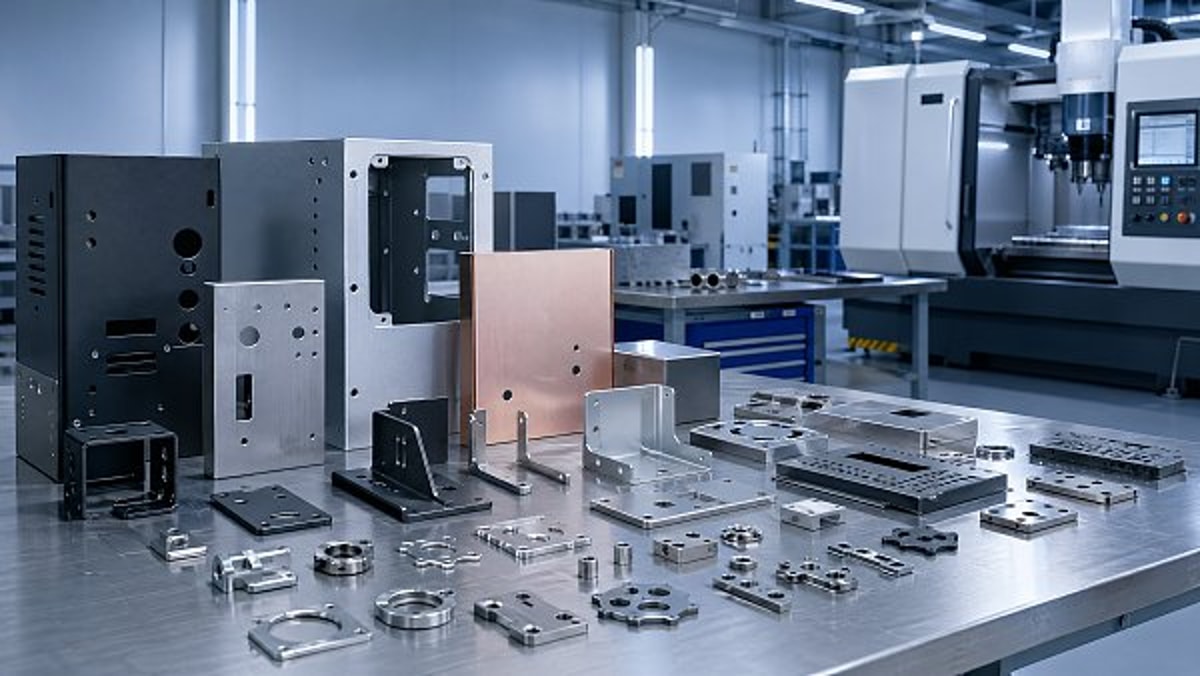
The takeaway is not that customization is replacing standardization everywhere. It is that more buyers now need a hybrid sourcing logic. A project may use standard fasteners, hinges, and rails, while relying on custom sheet metal fabrication for housings, support frames, battery trays, front panels, or machine guards where fit and function matter most.
Where Material and Process Choices Influence the Decision
Material availability matters. Mild steel, stainless steel, and aluminum remain the most common choices, but thickness ranges such as 0.8 mm to 6.0 mm can dramatically change fabrication method, finish quality, and cost. Surface treatment requirements such as powder coating, anodizing, plating, or passivation can also extend lead time by 3–10 days, which should be reflected in sourcing plans.
For standard parts, comparable constraints exist but are less visible upfront. Buyers may discover that a stocked enclosure lacks the required ingress protection, thermal ventilation pattern, or mounting orientation. In those situations, the apparent simplicity of standard sourcing can disappear quickly once modifications are requested.
How the Choice Affects Cost, Lead Time, and Operational Risk
Business evaluators usually begin with landed cost, but a better approach is to compare total operational impact across at least five dimensions: unit price, non-recurring engineering effort, lead-time stability, assembly efficiency, and quality risk. Custom sheet metal fabrication may involve upfront drawing review and sample approval, yet it can reduce hidden expenses later in the program.
Lead time is another critical variable. Standard parts can ship in days if inventory exists, but delivery may stretch unexpectedly if backorders occur or if the required specification is not stocked in the right region. By contrast, custom sheet metal fabrication often starts with a clear production window. Typical prototype lead times may range from 5–15 working days, while repeat production may run 2–6 weeks depending on capacity, finishing, and logistics.
Risk concentration should also be measured. If a standard part comes from a narrow supplier base or depends on a specific imported format, substitution may be difficult. A well-documented custom design, especially one built around common sheet grades and standard fabrication processes, can sometimes be transferred to alternate suppliers more easily than buyers assume.
Decision Comparison for Procurement and Operations
The table below provides a practical side-by-side comparison for evaluation teams assessing custom sheet metal fabrication against standard parts.
The main insight is that lower visible purchase complexity does not always mean lower business risk. In many programs, especially those with evolving specifications or integration demands, custom sheet metal fabrication offers more controllability over final outcomes than standard parts do.
Common Hidden Costs to Watch
- Extra assembly labor caused by poor fit between standard components and surrounding structures.
- Secondary machining or drilling required after receiving stock parts.
- Packaging inefficiency and freight cost increases due to non-optimized dimensions.
- Field maintenance delays when replacement parts need adaptation rather than direct installation.
For evaluators, the right cost model should look at 12-month or 24-month ownership impact, not only the first invoice value.
Which Applications Are Moving Faster Toward Custom Solutions
Not every application requires customization. However, the strongest movement toward custom sheet metal fabrication is visible where integration density, compliance requirements, or environmental exposure are increasing. This includes equipment housings, electrical control cabinets, battery enclosures, telecom brackets, medical cart structures, machine covers, and thermal management assemblies.
In green energy systems, compact layouts and outdoor exposure often require precise venting, reinforced mounting points, and corrosion-conscious finishes. In smart electronics, internal space constraints push teams toward tailored panel geometry and cable access features. In healthcare-adjacent devices, cleaning considerations and surface finish consistency can make custom stainless solutions more practical than adapted stock formats.
At the same time, standard parts still dominate in repeatable support functions such as generic trays, basic mounting brackets, common hardware interfaces, and non-critical protective covers. The most efficient sourcing strategy usually separates high-value custom geometry from low-risk standard accessories.
Application-Based Evaluation Logic
- Choose custom sheet metal fabrication first when dimensional accuracy, fit with adjacent assemblies, surface treatment, or access design directly affects product function.
- Choose standard parts first when the application is low-risk, easily replaceable, and does not force workarounds during assembly.
- Use a hybrid approach when the core structure needs customization but hinges, latches, fasteners, rails, and consumables can stay standardized.
Signals That Standard Parts May No Longer Be Enough
Several operational signals indicate that a catalog-based approach is losing effectiveness. Repeated requests for modification, recurring assembly complaints, thermal or vibration issues, and frequent packaging redesign are all meaningful indicators. If the same issue appears in 2–3 purchasing cycles, the organization should reassess whether custom sheet metal fabrication would create a cleaner long-term solution.
Another sign is engineering dependency. When teams repeatedly design around available parts instead of around product requirements, innovation slows. For companies managing differentiated products, that constraint can become more expensive than a carefully controlled custom sourcing program.
How Business Evaluators Should Make the Decision in 2025 and Beyond
The strongest procurement decisions now combine trend awareness with a structured qualification process. Business evaluators should avoid framing custom sheet metal fabrication as a premium option by default. In many cases, it is simply the better-matched sourcing method for current market realities: shorter product cycles, more localized production, and higher integration demands.
A practical review should begin with specification stability. If the design is still moving, standard parts may create false efficiency because each revision forces adaptation. If requirements are locked and stock availability is strong across multiple suppliers, standard parts may remain the more economical route. The decision should also include tolerance sensitivity, finish requirements, inspection level, and expected annual demand bands.
Supplier readiness matters as much as part choice. A qualified custom fabrication partner should be able to discuss manufacturability, material substitution boundaries, bend radius implications, finish options, packaging protection, and documentation flow. Likewise, a standard-parts source should show inventory reliability, revision traceability, and replacement continuity across regions.
A 6-Point Review Framework
Before finalizing sourcing direction, evaluators can use the following framework to compare options objectively.
This framework helps shift the discussion from isolated price comparison to strategic fit. That is especially important for organizations building supply chains that must perform under changing regional, technical, and demand conditions.
What to Monitor Going Forward
Over the next 12–24 months, buyers should watch three indicators closely: regional fabrication capacity, material lead-time volatility, and the speed of engineering change requests. If these factors continue to intensify, custom sheet metal fabrication will likely become even more central in sourcing strategies for differentiated products and infrastructure hardware.
The best response is preparation rather than reaction. Build decision criteria early, separate critical geometry from commodity hardware, and evaluate suppliers not only on quote speed but also on technical communication, documentation quality, and change-management discipline.
Why Work With Us on Your Evaluation
At TradeNexus Pro, we help business evaluators make better sourcing decisions by connecting market insight with practical supplier assessment logic. If your team is reviewing custom sheet metal fabrication against standard parts, we can support a more informed evaluation across cost structure, manufacturability, lead-time assumptions, application fit, and sourcing risk.
You can contact us to discuss parameter confirmation, product selection logic, expected delivery cycles, customization pathways, surface treatment considerations, sampling support, and quotation comparisons across sourcing models. This is particularly useful when your application spans multiple sectors such as advanced manufacturing equipment, smart electronics enclosures, healthcare-support structures, or green energy assemblies.
If you want to understand whether custom sheet metal fabrication is the right strategic choice for your next program, reach out with your drawings, target volumes, tolerance expectations, material preferences, and compliance needs. Our team can help you clarify the decision points before you commit to a supplier path.
Get weekly intelligence in your inbox.
No noise. No sponsored content. Pure intelligence.
 May 01, 2026Beijing’s New E-Bike Rules Trigger Dual-Certification Demand for China’s Swappable Battery CabinetsBeijing’s New E-Bike Rules Trigger Dual-Certification Demand for China’s Swappable Battery Cabinets
 May 01, 2026GNA’s GEO Service Assessment Elevates AI Search as Digital Procurement Metric for Chinese ExportersGNA’s GEO Service Assessment Elevates AI Search as Digital Procurement Metric for Chinese Exporters
 May 01, 20262026 China Cycle Expo: Chinese EPS Systems Achieve UL 2849:2026 Full Certification2026 China Cycle Expo: Chinese EPS Systems Achieve UL 2849:2026 Full Certification
 May 01, 2026GB 42236-2026 Enforces EV Charger Efficiency & Overload Protection from May 2026GB 42236-2026 Enforces EV Charger Efficiency & Overload Protection from May 2026
 May 01, 2026GB/T 43790-2026 Drone EMC Standard Effective May 2026GB/T 43790-2026 Drone EMC Standard Effective May 2026
 May 01, 20262026 Foshan Tanzhou Auto Industry Expo Opens2026 Foshan Tanzhou Auto Industry Expo Opens
 May 01, 2026China’s New Hazardous Chemicals Safety Law Takes Effect May 2026China’s New Hazardous Chemicals Safety Law Takes Effect May 2026
 May 01, 2026New Maritime and Fisheries Laws Take Effect May 1, 2026New Maritime and Fisheries Laws Take Effect May 1, 2026
 May 01, 2026Supply Chain Automation Works Best Where Delays RepeatSupply Chain Automation Works Best Where Delays Repeat
 May 01, 2026High Strength Steel Forgings: What Should Be Tested First?High Strength Steel Forgings: What Should Be Tested First?
 May 01, 2026Automotive Steel Forging: Cost Pressure vs Part ReliabilityAutomotive Steel Forging: Cost Pressure vs Part Reliability
 May 01, 2026Why High Durability Steel Forgings Fail Earlier Than ExpectedWhy High Durability Steel Forgings Fail Earlier Than Expected
 May 01, 2026Construction Aluminum Extrusions: Which Finish Lasts Longer?Construction Aluminum Extrusions: Which Finish Lasts Longer?
 May 01, 2026Lightweight Aluminum Extrusions: Where Savings Really HappenLightweight Aluminum Extrusions: Where Savings Really Happen
 May 01, 2026Aerospace Aluminum Extrusions Need More Than Low WeightAerospace Aluminum Extrusions Need More Than Low Weight
 May 01, 2026Precision Lathe Turning Problems That Show Up After AssemblyPrecision Lathe Turning Problems That Show Up After Assembly
 May 01, 2026High Precision Lathe Turning: Tolerance Claims to VerifyHigh Precision Lathe Turning: Tolerance Claims to Verify
 May 01, 2026When CNC Lathe Turning Is Better Than General MachiningWhen CNC Lathe Turning Is Better Than General Machining
 May 01, 2026Medical Device Prototyping Needs More Than SpeedMedical Device Prototyping Needs More Than Speed
 May 01, 20263D Printing Prototyping: Fast Turnaround or Better Finish?3D Printing Prototyping: Fast Turnaround or Better Finish?
 May 01, 2026Low Cost Rapid Prototyping: Where Quality Gets LostLow Cost Rapid Prototyping: Where Quality Gets Lost
 May 01, 2026Quick EV Charger Installation Still Needs Site ChecksQuick EV Charger Installation Still Needs Site Checks
 May 01, 2026Public Parking EV Chargers: What Slows Installation DownPublic Parking EV Chargers: What Slows Installation Down
 May 01, 2026Choosing a Lithium Ion Battery Manufacturer in ChinaChoosing a Lithium Ion Battery Manufacturer in China
 May 01, 2026How to Vet a Lithium Ion Battery OEM SupplierHow to Vet a Lithium Ion Battery OEM Supplier
 May 01, 2026EV Lithium Ion Batteries: Range Is Not the Only MetricEV Lithium Ion Batteries: Range Is Not the Only Metric
 May 01, 2026Lithium Ion ESS Batteries: Safety Details Worth CheckingLithium Ion ESS Batteries: Safety Details Worth Checking