Custom molded rubber: What factors affect its durability?
Material Composition: The Foundation of Durability
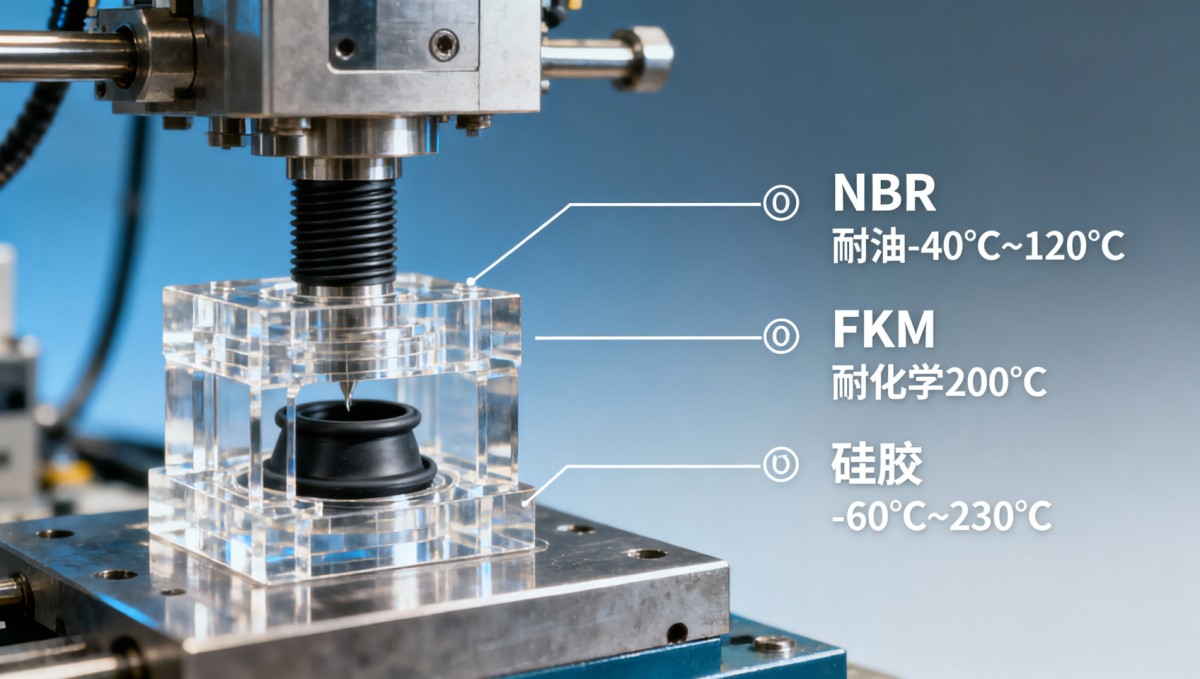
Custom molded rubber components derive their resilience from the precise formulation of base polymers and additives. The choice of rubber type—whether natural rubber (NR), nitrile rubber (NBR), silicone rubber (VMQ), or fluorocarbon rubber (FKM)—directly impacts performance in specific environments. For example, NBR excels in oil-resistant applications with a temperature range of -40°C to 120°C, while FKM maintains stability in chemical-heavy environments up to 200°C.
Additives such as carbon black (for UV resistance), plasticizers (for flexibility), and antioxidants (for aging prevention) further refine material properties. A typical automotive gasket formulation might include 60–70% base polymer, 20–30% fillers, and 5–10% processing aids. The ratio of these components determines whether a part withstands 50,000 compression cycles or fails prematurely under dynamic loads.
For procurement teams evaluating suppliers, verifying material certificates (e.g., ASTM D2000, ISO 37) is critical. TradeNexus Pro’s database of vetted manufacturers provides transparency into polymer grades and additive concentrations, enabling data-driven sourcing decisions for projects requiring compliance with UL, RoHS, or REACH standards.
Key Material Selection Criteria
- Temperature tolerance: Match rubber type to operational extremes (e.g., silicone for -60°C to 230°C)
- Chemical compatibility: Use FKM for aromatic hydrocarbons, EPDM for alkalis
- Compression set resistance: Prioritize formulations with ≤25% deformation after 70 hours at 70°C
Manufacturing Process: Precision Matters
The molding method—compression, transfer, or injection—influences part consistency and internal stresses. Injection molding, while costlier, achieves ±0.05mm tolerances critical for medical device seals, whereas compression molding suits large-volume, low-precision parts like automotive floor mats. Curing temperature and duration also play pivotal roles: under-curing leaves parts prone to cracking, while over-curing reduces elasticity.
A case study from TradeNexus Pro’s archive highlights a solar microinverter manufacturer that reduced field failures by 42% after switching to a supplier using computerized injection molding with real-time cavity pressure monitoring. This level of process control is particularly vital for components operating in off-grid solar systems, where replacement cycles may exceed 10 years.
The table above illustrates why engineering teams specifying seals for hydraulic systems (requiring ±0.05mm tolerances) must prioritize injection-molded suppliers. TradeNexus Pro’s supplier evaluation tools rank manufacturers based on their adoption of Industry 4.0 technologies like IoT-enabled presses, reducing the risk of process-induced defects.
Environmental Exposure: The Silent Killer
Even the most precisely manufactured rubber components degrade when exposed to UV radiation, ozone, or aggressive chemicals. For outdoor applications like solar panel mounting systems, UV stabilizers can extend service life from 5 to 15 years. Similarly, ozone-resistant grades (per ASTM D1149) are mandatory for components operating near electric motors or arc welders, where ozone concentrations can reach 0.1 ppm.
A TradeNexus Pro analysis of 2,300 field failure reports revealed that 38% of premature rubber failures stemmed from environmental mismatch. For instance, a supplier using standard NBR for a mining equipment application—where diesel exhaust and hydraulic fluids coexist—saw a 60% failure rate within 18 months. Switching to a hydrogenated nitrile rubber (HNBR) formulation resolved the issue, demonstrating the cost of overlooking environmental factors.
Environmental Resistance Checklist
- Identify all exposure types (chemical, thermal, mechanical)
- Quantify exposure levels (e.g., 500 ppm oil contact, 80°C continuous)
- Select rubber type with proven resistance via ASTM/ISO testing
Design Geometry: Form Follows Function
The shape of a custom rubber part determines how stresses distribute under load. Sharp corners act as stress concentrators, reducing fatigue life by up to 70% compared to rounded radii. A gear manufacturing client of TradeNexus Pro increased their molded rubber coupling lifespan from 12,000 to 50,000 cycles simply by modifying the design to include 0.5mm fillets at all transitions.
Wall thickness uniformity is equally critical. Variations exceeding ±15% can cause uneven curing, leading to porosity or voids. Advanced suppliers use finite element analysis (FEA) to simulate stress distribution before production, a service highlighted in TradeNexus Pro’s supplier profiles for high-reliability sectors like aerospace and medical devices.
The data above underscores why design reviews with experienced tooling engineers are non-negotiable for mission-critical applications. TradeNexus Pro’s platform connects procurement teams with suppliers offering design assistance services, reducing the risk of costly re-tooling after initial production runs.
Why Partner with TradeNexus Pro for Rubber Component Sourcing?
Navigating the complexities of custom molded rubber durability requires more than supplier directories—it demands actionable intelligence. TradeNexus Pro’s platform provides:
- Verified supplier profiles with detailed material capabilities and process controls
- Case studies demonstrating durability optimizations in advanced manufacturing and green energy
- Real-time market insights on rubber pricing trends and supply chain risks
For procurement directors evaluating suppliers for high-stakes projects, our platform offers a risk-mitigation framework unmatched by generic B2B marketplaces. Contact our team today to access supplier comparisons, material data sheets, and custom sourcing strategies tailored to your application’s durability requirements.
Next Steps for Optimized Sourcing
- Submit your application requirements via our RFQ tool
- Review matched suppliers with documented experience in your industry
- Schedule consultations with our technical analysts for material selection guidance
Get weekly intelligence in your inbox.
No noise. No sponsored content. Pure intelligence.
 Apr 18, 2026TradeNexus Pro Launches Global Compliance RadarTradeNexus Pro Launches Global Compliance Radar
 Apr 18, 2026JIS T 2304:2026 Takes Effect June 1, 2026 for IVD SoftwareJIS T 2304:2026 Takes Effect June 1, 2026 for IVD Software
 Pathway for Rehab Devices with AI Modules") Apr 18, 2026FDA Updates 510(k) Pathway for Rehab Devices with AI ModulesFDA Updates 510(k) Pathway for Rehab Devices with AI Modules
Apr 18, 2026FDA Updates 510(k) Pathway for Rehab Devices with AI ModulesFDA Updates 510(k) Pathway for Rehab Devices with AI Modules Apr 18, 2026India BIS Approves 3 Chinese IoT Labs for IS 16444:2026 CertificationIndia BIS Approves 3 Chinese IoT Labs for IS 16444:2026 Certification
 Apr 18, 2026THE Alliance Launches Green Slot Priority for China PortsTHE Alliance Launches Green Slot Priority for China Ports
 Apr 18, 2026TÜV Rheinland Releases Dual-Standard ESS Certification Guide for ChinaTÜV Rheinland Releases Dual-Standard ESS Certification Guide for China
 Apr 18, 2026Vietnam Imposes AD Duties on Chinese Electronic ComponentsVietnam Imposes AD Duties on Chinese Electronic Components
 Apr 18, 2026SASO Launches PV Carbon Footprint Labeling from July 2026SASO Launches PV Carbon Footprint Labeling from July 2026
 Apr 18, 2026U.S. Adds 17 Smart Warehouse Robot Components to Export Control ListU.S. Adds 17 Smart Warehouse Robot Components to Export Control List
 Apr 18, 2026EU Enforces EN IEC 62443-4-2:2026 for Industrial Control Devices from 18 Apr 2026EU Enforces EN IEC 62443-4-2:2026 for Industrial Control Devices from 18 Apr 2026
 Apr 17, 2026Temperature data loggers drift unpredictably inside lithium-ion battery storage enclosuresTemperature data loggers drift unpredictably inside lithium-ion battery storage enclosures
 Apr 17, 2026Are solar microinverters really worth the extra cost?Are solar microinverters really worth the extra cost?
 Apr 17, 2026Bifacial solar panels: How much more energy can they generate?Bifacial solar panels: How much more energy can they generate?
 Apr 17, 2026Gear manufacturing: How to optimize production for high precision?Gear manufacturing: How to optimize production for high precision?
 Apr 17, 2026Why power transmission components fail earlier than expectedWhy power transmission components fail earlier than expected
 Apr 17, 2026Linear motion systems: belt drive or ball screw for speed?Linear motion systems: belt drive or ball screw for speed?
 Apr 17, 2026Industrial bearing suppliers: what signals reliable quality?Industrial bearing suppliers: what signals reliable quality?
 Apr 17, 2026When pneumatic valves wholesale gets expensive laterWhen pneumatic valves wholesale gets expensive later
 Apr 17, 2026Hydraulic cylinder fabrication mistakes that cause oil leaksHydraulic cylinder fabrication mistakes that cause oil leaks
 Apr 17, 2026Heavy equipment manufacturing delays often start hereHeavy equipment manufacturing delays often start here
 Apr 17, 2026Custom heatsinks: when a larger size solves nothingCustom heatsinks: when a larger size solves nothing
 Apr 17, 2026Electronic enclosure fabrication: steel or aluminum?Electronic enclosure fabrication: steel or aluminum?
 Apr 17, 2026Automotive parts machining tolerances that drive up scrapAutomotive parts machining tolerances that drive up scrap
 Apr 17, 2026Medical device manufacturing changes under tighter traceabilityMedical device manufacturing changes under tighter traceability
 Apr 17, 2026How to Choose Solid State Batteries in 2026How to Choose Solid State Batteries in 2026
 Apr 17, 2026Are Solid State Batteries Worth the Cost Yet?Are Solid State Batteries Worth the Cost Yet?
 Apr 17, 2026Commercial Energy Storage Sizing: What Matters Most?Commercial Energy Storage Sizing: What Matters Most?